Two empires divided this ground for two hundred years, and the boundary ran along the Danube and the Sava through the point where Belgrade now stands. Everything north of the rivers was Habsburg until 1918; everything south of them was Ottoman until the last garrison left Belgrade in 1867. Serbia holds about 6.6 million people as of 1 January 2024 on landlocked ground in the Balkans, sovereign again since 5 June 2006, negotiating European Union membership since January 2014 and bound by a parliamentary resolution of December 2007 to join no military alliance without a referendum. The country that grew back across that line still shows the join, in its soils, its provinces, its alphabets and its treaties.
At a glance
Where it is
Where Serbia is, and what is around it
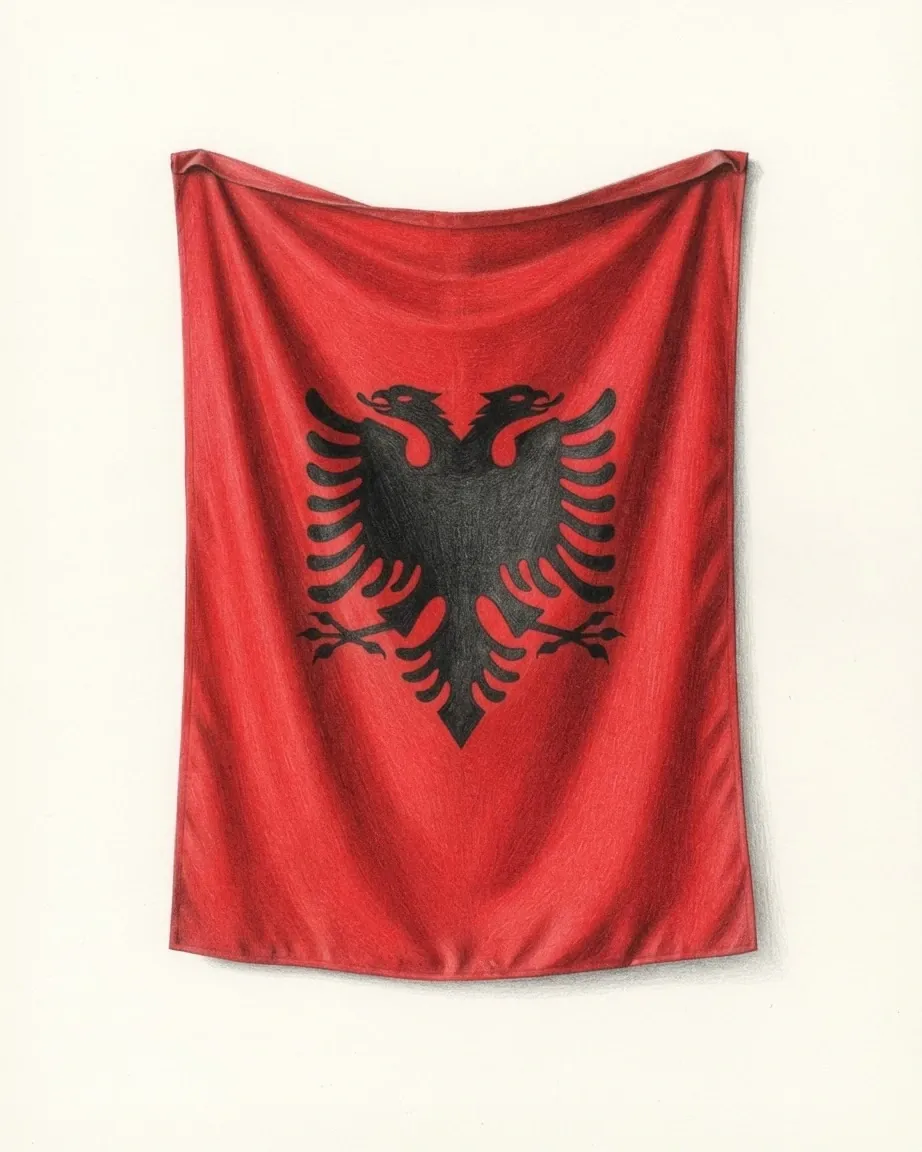
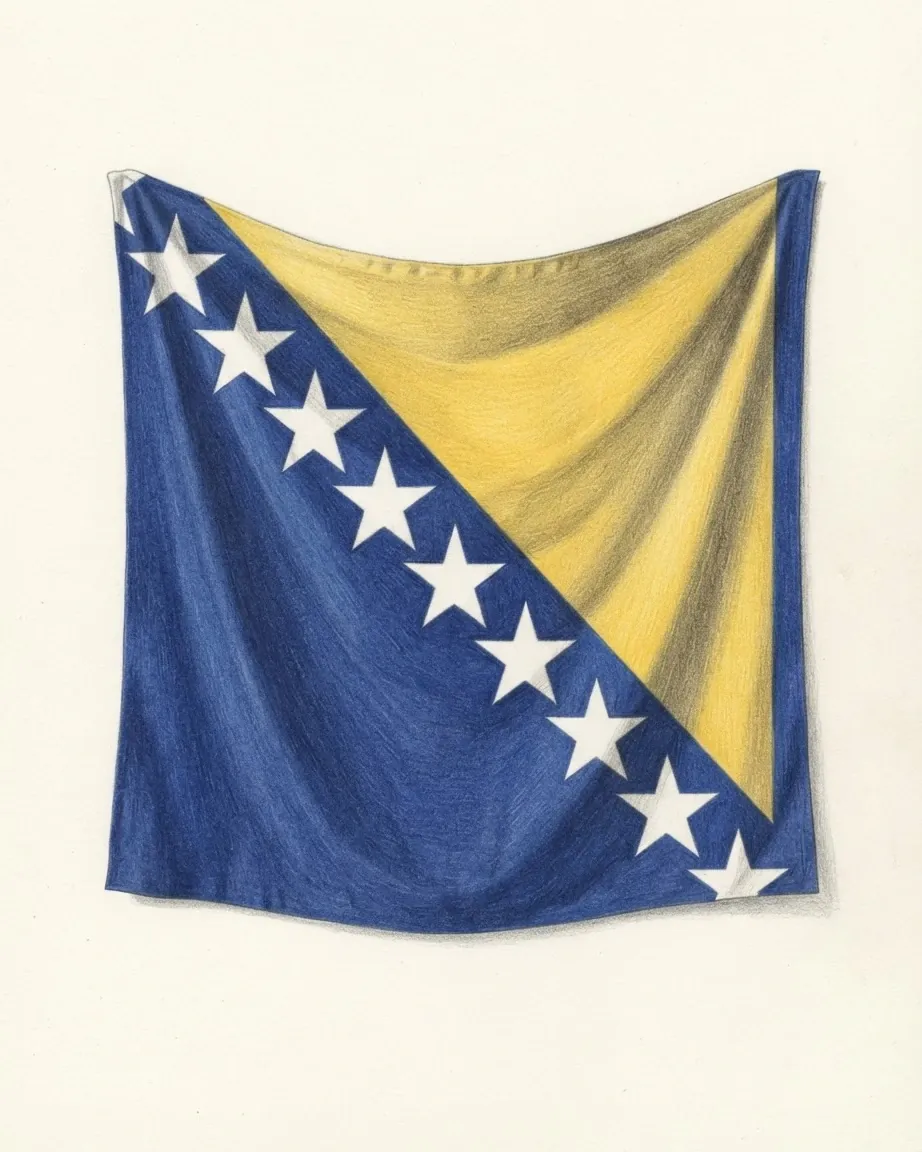
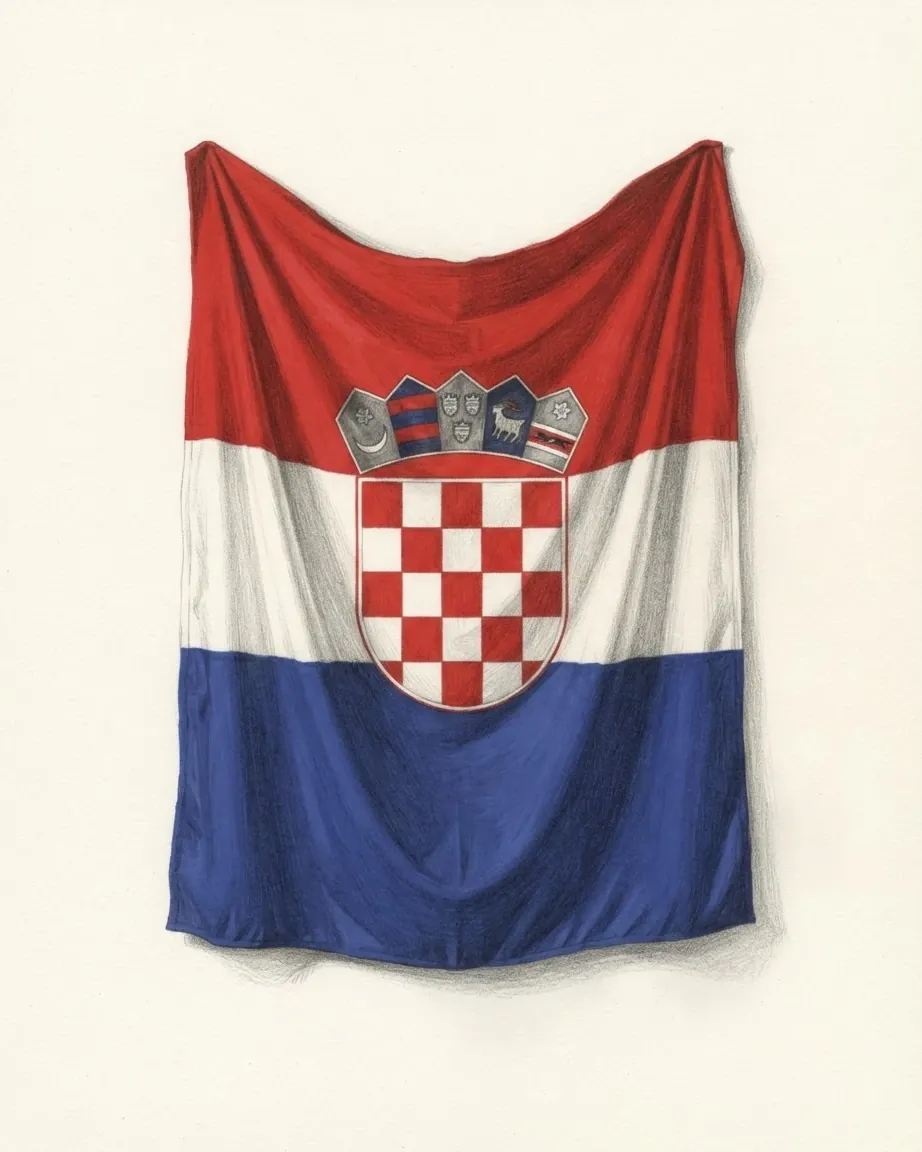
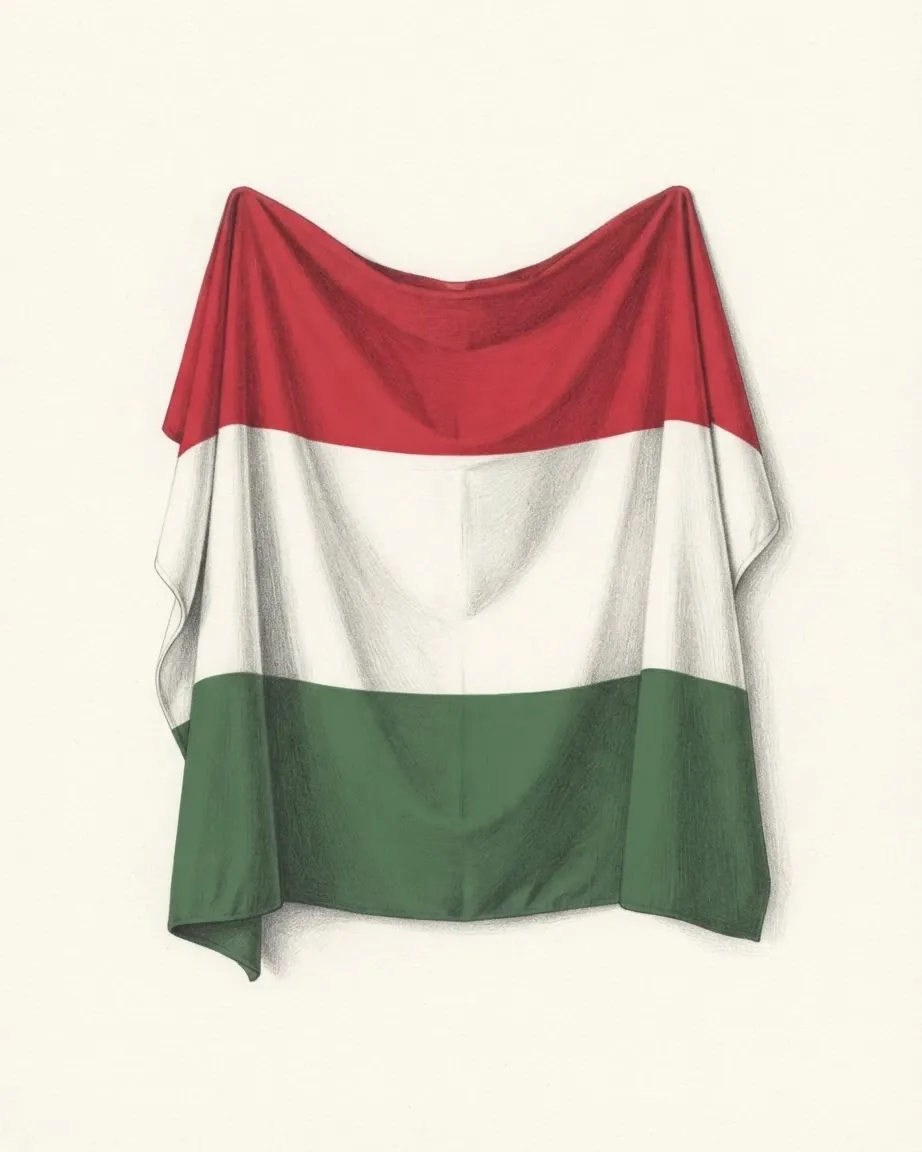
Serbia is landlocked. It shares a border with 9 countries, counted as shared borders, which includes neighbours across water.
 Albania
 Bosnia and Herzegovina
 Bulgaria
 Croatia
 Hungary
 Montenegro
 North Macedonia
 Romania
 Kosovo
Where the boundary between two empires ran
Belgrade stands at the point where the Sava joins the Danube, and for two centuries that junction was an international frontier. The land north of the two rivers, the province now called Vojvodina, passed to the Habsburg monarchy partly by the Treaty of Karlovci in 1699 and fully by the Treaty of Požarevac in 1718, and it was governed from Vienna and later Budapest until 1918. The land south of them stayed Ottoman. The last Turkish soldiers left the Belgrade fortress in 1867, and the Congress of Berlin recognised Serbian independence in 1878.
Two separate administrations, running for that long, left two different countries facing each other across the water. The ground underneath them was already different. The Vojvodina plains sit at 60 to 100 metres above sea level under a blanket of wind-blown loess, and their black earth soils carried steppe grassland until Austrian agricultural colonisation began in the eighteenth century. South of the Danube the soils are weakly acidic brown podzolics under oak and beech, and the Šumadija hills rise to between 600 and 1,100 metres. Šumadija means forested area, and those hills held the core of the medieval Serbian state.
The division survives the empires that drew it. Vojvodina is written into the current constitution as an autonomous province, its towns keep the art nouveau and revivalist centres built during the Habsburg period, and its farms are the large mechanised holdings that work the north's cereals and oilseeds. Central and southern Serbia are worked in smaller plots turned over to fruit and vegetables, and the monasteries that carry the country's medieval art stand there rather than in the plain. The country's landscape holds the rest of the pattern: about 92% of the territory drains into the Danube system, the northern third lies in the Pannonian Plain, and four separate mountain systems meet in what is left.
Why the state kept changing its name
For almost all of the period since 1815 the word Serbia has named something inside a larger state. The Principality of Serbia was an Ottoman vassal that governed itself; the Kingdom that replaced it in 1882 lasted thirty-six years before its own prince regent proclaimed the Kingdom of Serbs, Croats and Slovenes in Belgrade on 1 December 1918, and the Serbian state disappeared into it. After 1945 Serbia was one republic in a federation of six, alongside Slovenia, Croatia, Bosnia and Herzegovina, Montenegro and Macedonia, with Vojvodina and Kosovo as autonomous units inside its own borders.
| Period | What Serbia was called | What it sat inside |
|---|---|---|
| 1815 to 1882 | Principality of Serbia | Ottoman suzerainty until 1878 |
| 1882 to 1918 | Kingdom of Serbia | Sovereign, recognised in 1878 |
| 1918 to 1945 | No separate unit | Kingdom of Serbs, Croats and Slovenes, Yugoslavia from 1929 |
| 1945 to 1963 | People's Republic of Serbia | Federal People's Republic of Yugoslavia |
| 1963 to 1990 | Socialist Republic of Serbia | Socialist Federal Republic of Yugoslavia |
| 1990 to 2006 | Republic of Serbia | Federal Republic of Yugoslavia, then Serbia and Montenegro |
| Since 2006 | Republic of Serbia | Sovereign |
The last change came from outside. Montenegro voted for independence on 21 May 2006, with 55.4% in favour against a threshold of 55%, and declared it on 3 June. On 5 June 2006 the National Assembly in Belgrade assumed the jurisdiction of the departing union and declared Serbia its legal successor. The history article follows the whole sequence, from the Nemanjić kingdom of 1217 to the assembly session of 2006.
Who lives in Serbia and where
The 2022 census counted 6,647,003 people excluding Kosovo, and the register recorded 6,605,168 as of 1 January 2024. Serbs made up 80.6% of the census total. Hungarians, 184,442 of them, live mostly in northern Vojvodina; Bosniaks, 153,801, live mostly in the Sandžak region in the south-west; the Roma population was counted at 131,936. Fourteen minority languages are recognised, and a language takes official use in any municipality where its community passes 15% of the population.
Eastern Orthodoxy was professed by 81.1% of the population at the 2022 census, Islam by 4.2% and Catholicism by 3.9%, and the map of the three follows the map of the ethnic groups closely.
Where people live has changed faster than who they are. The urban share reached 62% in 2024, and Belgrade holds close to a fifth of the country's population in a single urban area, four times the population of Novi Sad. Its metropolitan area produced 41.7% of national income in 2025. Outside it the country is emptying: the crude birth rate was 9.1 per 1,000 in 2025 against a death rate of 14.9, the median age was 44.0 years, and average net migration over the past decade ran at a loss of about 12,000 people a year. Around 800,000 Serbian citizens and Serbia-born people were living abroad on recent estimates. Movement has run the other way too, and hard: roughly half a million Serb refugees arrived from Croatia, Bosnia and Kosovo during the 1990s, and some 53,000 Russian nationals took up residence after 2022.
What Serbs write and how they write it
Serbian is written in two alphabets at once. Cyrillic was standardised in the early nineteenth century on strict phonemic principles, one letter to one sound, and the Latin alphabet used for Serbian maps onto it letter for letter. The constitution makes Cyrillic the official script for legal and administrative use and leaves everyday choice open, so both appear on shopfronts, in newspapers and in books. A poll in 2014 found 47% of the population using Latin more often, 36% using Cyrillic, and 16% using the two equally.
What the language carries is mostly held in households. An Orthodox family venerates one patron saint inherited with the home, and the slava passes from father to son; UNESCO inscribed the custom in 2014. Five other Serbian entries on the intangible heritage list follow the same pattern, from a village round dance to a plum spirit distilled behind the house. The country also holds five World Heritage sites, including the Studenica monastery of the twelfth century and the Roman palace complex of Felix Romuliana. The culture article goes into the writing, the calendar, the food and the painting.
How Serbia governs itself and what it claims
The constitution adopted on 8 November 2006 names two autonomous provinces, and the state administers one of them. Kosovo's assembly declared independence on 17 February 2008. Serbia took the question to the United Nations General Assembly, which asked the International Court of Justice for an advisory opinion on 8 October 2008; the Court answered on 22 July 2010 that the declaration had not violated international law, and the General Assembly acknowledged the opinion's content on 9 September 2010. Serbia continues to claim the territory, and the question has stayed open ever since.
The country's alignments run in two directions at the same time, which is consistent with everything above. Serbia joined the United Nations on 1 November 2000 and the Council of Europe on 3 April 2003, applied for European Union membership on 22 December 2009, received candidate status on 1 March 2012 and opened accession talks on 21 January 2014. It joined NATO's Partnership for Peace in 2006 and has been an observer at the Collective Security Treaty Organisation since 2013. A parliamentary resolution of December 2007 made accession to any military alliance conditional on a referendum. The politics article sets out the institutions and the provinces.
How the economy faces in every direction
Serbia holds free trade agreements with the European Union, EFTA, China, Russia, Turkey, Kazakhstan and Belarus, and it belongs to CEFTA alongside the rest of the Western Balkans. Goods exports reached 37.3 billion dollars in 2025 against a GDP of about 100 billion dollars, and GDP per head was 15,262 dollars, or 33,910 in purchasing power terms. Growth ran at 2% in 2025, inflation at 3.9% and unemployment at 7.1%.
Ownership of the heavy industry reads like the list of trade partners. Copper at Bor is mined and smelted by the Chinese company Zijin, the Smederevo mill produced 1.4 million tonnes of crude steel in 2025, and the car plant at Kragujevac belongs to Stellantis. More than 20 billion euros of foreign direct investment has gone into manufacturing and mining since 2000. The category that outgrew all of it crosses no customs post: information technology services contributed roughly 8.5% of GDP and 5.3 billion dollars of exports in 2025. Agriculture accounts for 3.2% of GDP, and agricultural and food exports came to 5.8 billion dollars in 2024. The economy article works through the agreements and the owners.
Where visitors go and where Serbs go
Tourism amounts to about 3% of GDP. Accommodation recorded 4.4 million arrivals in 2024, of which 2.3 million were foreign, and almost two thirds of the foreign arrivals went to Belgrade alone. The domestic half of the industry goes somewhere else entirely: to the spa towns of Vrnjačka Banja, Palić and Banja Koviljača, and to the mountain resorts of Kopaonik, Zlatibor and Stara Planina, which fill with Serbs in both the ski season and the walking season.
Between the two sits the Danube, carrying cruise itineraries that run from Budapest and Vienna and stop at Belgrade, Novi Sad and the fortresses at Golubac and Ram. The Exit festival at Novi Sad and the trumpet festival at Guča draw their own audiences in summer. The travel article deals with the seasons, the regions and the ground transport.
What the two sides add up to
A country of about 6.6 million people as of 2024 that grew back across a line two empires drew through it, and that still shows the join: a plain and a mountain half, two alphabets, an autonomous province in the north and a claimed one in the south, a trade policy signed with everybody and a defence policy signed with nobody. Each of those has its own article, and the join is the thing they have in common.
Read
Everything about Serbia
Six articles, each answering one question and each written to be read on its own.
The record
What is measured about Serbia
Pages that nobody writes, built from the record and from the data files beside it.
Common questions
Questions about Serbia
Where is Serbia?
In the Balkans, with no coast, bordering Hungary, Romania, Bulgaria, North Macedonia, Croatia, Bosnia and Herzegovina and Montenegro, and a border with Albania that runs through Kosovo. The northern third lies in the Pannonian Plain and the rest is hill and mountain. Belgrade, the capital, stands at the confluence of the Sava and the Danube.
Is Serbia in the European Union?
No. Serbia applied on 22 December 2009, received candidate status on 1 March 2012 and opened accession talks on 21 January 2014, and negotiations were still running as of 2026. It is not in NATO either: a parliamentary resolution of December 2007 made joining any military alliance conditional on a referendum. Serbia joined the United Nations on 1 November 2000 and the Council of Europe on 3 April 2003.
Why does Serbian use two alphabets?
Cyrillic was standardised in the early nineteenth century on strict phonemic principles, one letter for one sound, and the Latin alphabet used for Serbian corresponds to it letter for letter. The constitution designates Cyrillic for legal and administrative use and leaves everyday choice to the writer. A 2014 poll found 47% using Latin more often, 36% using Cyrillic and 16% using both equally.
What happened to Yugoslavia?
Slovenia, Croatia, Bosnia and Herzegovina and Macedonia left the federation between 1991 and 1992. Serbia and Montenegro stayed together as the Federal Republic of Yugoslavia from 1992, reconstituted as the State Union of Serbia and Montenegro in 2003. Montenegro voted to leave on 21 May 2006 and declared independence on 3 June, and on 5 June 2006 the National Assembly in Belgrade declared Serbia the legal successor to the union.
What does Serbia produce?
Goods exports reached 37.3 billion dollars in 2025, led by vehicles, base metals, food, machinery and chemicals, and the single largest export category was information technology services at 5.3 billion dollars. Copper is mined at Bor, steel at Smederevo, cars at Kragujevac. The northern plain grows maize, wheat, sugar beet and oilseeds, and agricultural and food exports came to 5.8 billion dollars in 2024.
Nearby in the catalogue