Serbian
Language · official in 3 countries and territories
Serbian is written in two interchangeable alphabets, Cyrillic and Latin, a rare case of active digraphia. It is the standard variety of Serbo-Croatian used mainly by Serbs, built on the reforms Vuk Karadžić began in the early 19th century. Serbia makes it the national official language, and Bosnia and Herzegovina and Kosovo give it official status too.
The language on record
- Own name
- српски
- ISO 639-1
- SR
- ISO 639-3
- SRP
- Script
- Cyrillic
- Family
- South Slavic
- Official in
- 3 countries
Where Serbian is official
Serbia, where Serbian is the national language, and two places where Serbs are a minority whose language holds official status: Bosnia and Herzegovina, and Kosovo.
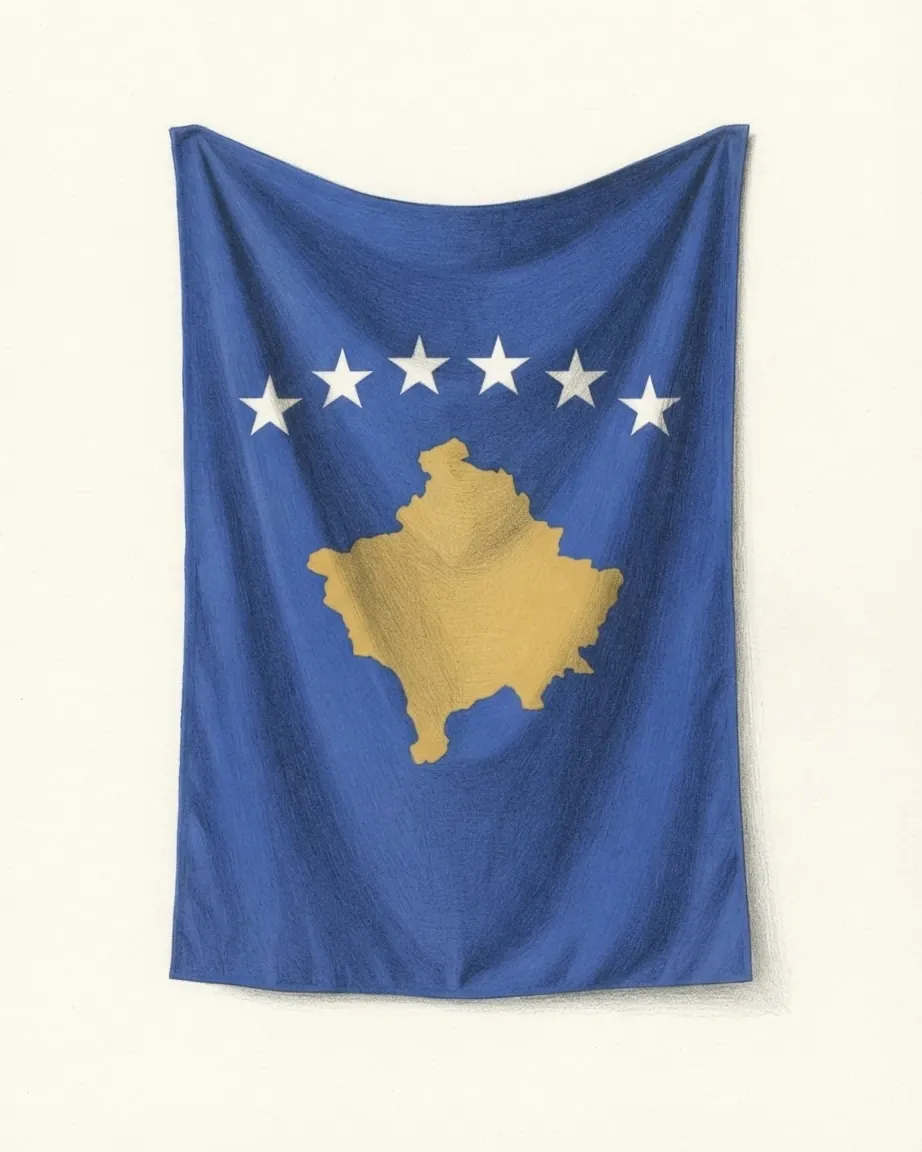
Official beside Serbian
About Serbian
What written Serbian looked like before the reform
For centuries the written language of the Serbs was a Serbian recension of Church Slavonic, used for medieval Serbian literature while the vernacular went into letters and documents. The oldest surviving texts in it date from the end of the 12th century. In the 18th century Serbs in the Habsburg Monarchy took up Russian Church Slavonic, and a hybrid called Slavonic-Serbian became the language of the educated until the first half of the 19th century.
How Vuk Karadžić rebuilt the written language
Karadžić set it aside and based the standard on folk speech, on the principle that words are written as they are spoken. He took his own Eastern Herzegovinian dialect as the base, over the objections of the church hierarchy in Sremski Karlovci, which found its grammar almost foreign. In 1819 he devised Serbian Cyrillic on the rule of one letter for each sound, dropping letters that matched nothing in speech and adding six new ones. With Đuro Daničić he signed the Vienna Literary Agreement of 1850, which laid the basis for Serbo-Croatian, though he only ever called the language Serbian. Despite the agreement, Serbs had by then settled on Ekavian pronunciation, the native speech of Belgrade and Novi Sad.
Which alphabet Serbs choose and when
The Constitution of Serbia makes Cyrillic the official script, and the law requires it in legal and government use. Everywhere else the choice is free. The Latin alphabet, designed by Ljudevit Gaj in the 1830s, matches the Cyrillic letter for letter, so a text converts between them without loss. Latin dominates logos and shop signs, while road signs carry both. In a poll of 2014, 47% said they used Latin more often, 36% mainly Cyrillic and 16% both equally.
How Serbian stands beside Bosnian and Croatian
All four standards, Serbian, Bosnian, Croatian and Montenegrin, rest on Shtokavian and are fully mutually intelligible. Their grammar and core vocabulary are nearly identical, and the differences are likened to those between British and American English. Montenegro recognises Serbian as a minority language, as do Croatia, North Macedonia, Romania, Hungary, the Czech Republic and Slovakia.
Common questions
Questions about Serbian
Why does Serbian have two alphabets?
Karadžić devised the Cyrillic alphabet in 1819 and Gaj the Latin one in the 1830s, and the two correspond letter for letter. Cyrillic is required only in law and government, and elsewhere people pick either.
Can Serbs and Croats understand each other?
Fully. Serbian and Croatian are standards built on the same Shtokavian dialect, with nearly identical grammar.
How many grammatical cases does Serbian have?
Seven: nominative, genitive, dative, accusative, vocative, instrumental and locative. Nouns fall into three declension types and three genders, and adjectives agree with their noun in number, gender and case, whether they stand before it or after.