The mountain that gave Montenegro its name looks down on a coast that came to the state late. Crna Gora, the Black Mountain, is named for the dense evergreen forest that once covered Mount Lovćen, and the principality governed from Cetinje behind it reached the Adriatic in 1878, when the Congress of Berlin granted it Bar and Ulcinj. Budva and the Bay of Kotor, held by Venice from 1420 to 1797, were added to the Montenegrin unit of the new Yugoslav kingdom in 1922. In April 2025 seaside resorts took 84.3% of the nights spent in Montenegro's hotels and other collective accommodation. Montenegro counted 617,213 people on 1 January 2022 on 13,883 square kilometres between the Dinaric mountains and the Adriatic.
At a glance
- Population
- 623 129
- Capital
- Podgorica
- Area
- 13 883km²
- Currency
- €EUR
- Official language
- Montenegrin
- Local time
- UTC+01:00
Where it is
Where Montenegro is, and what is around it
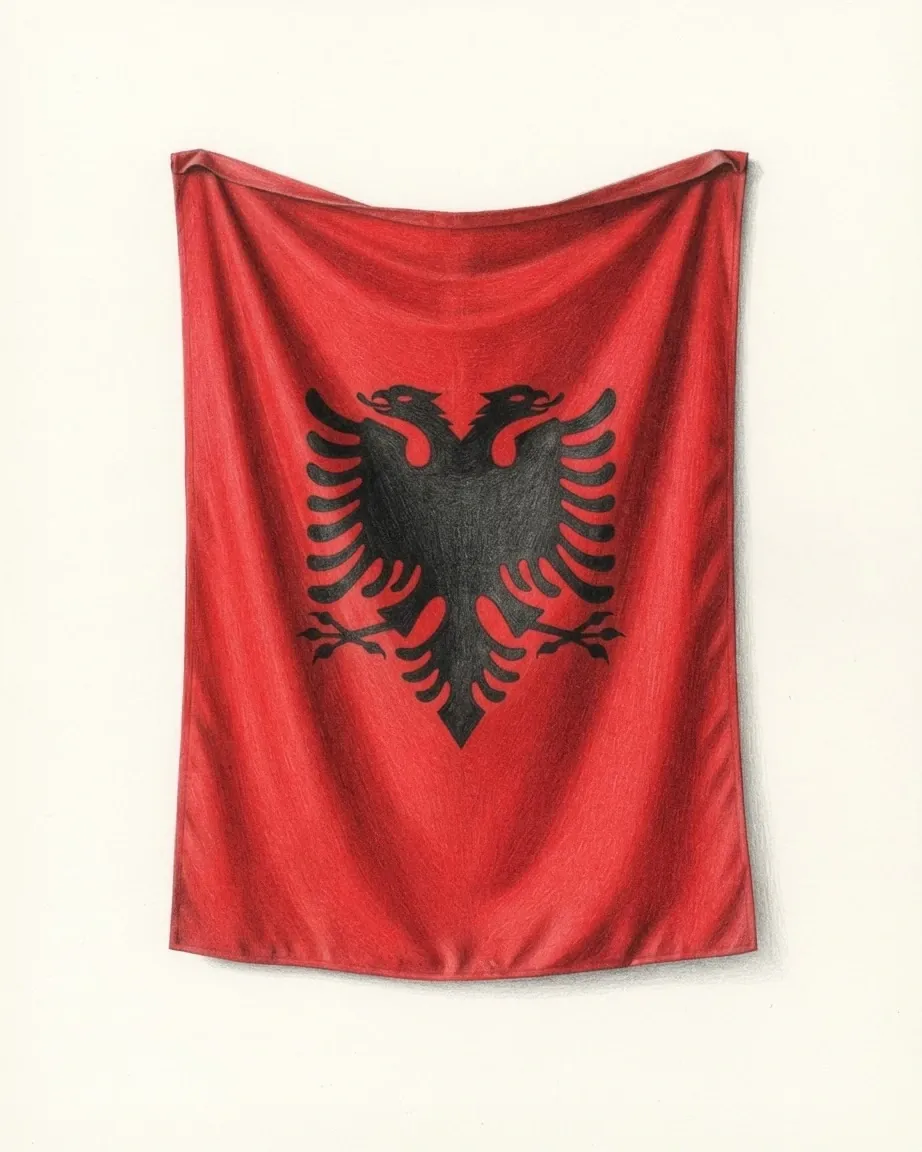
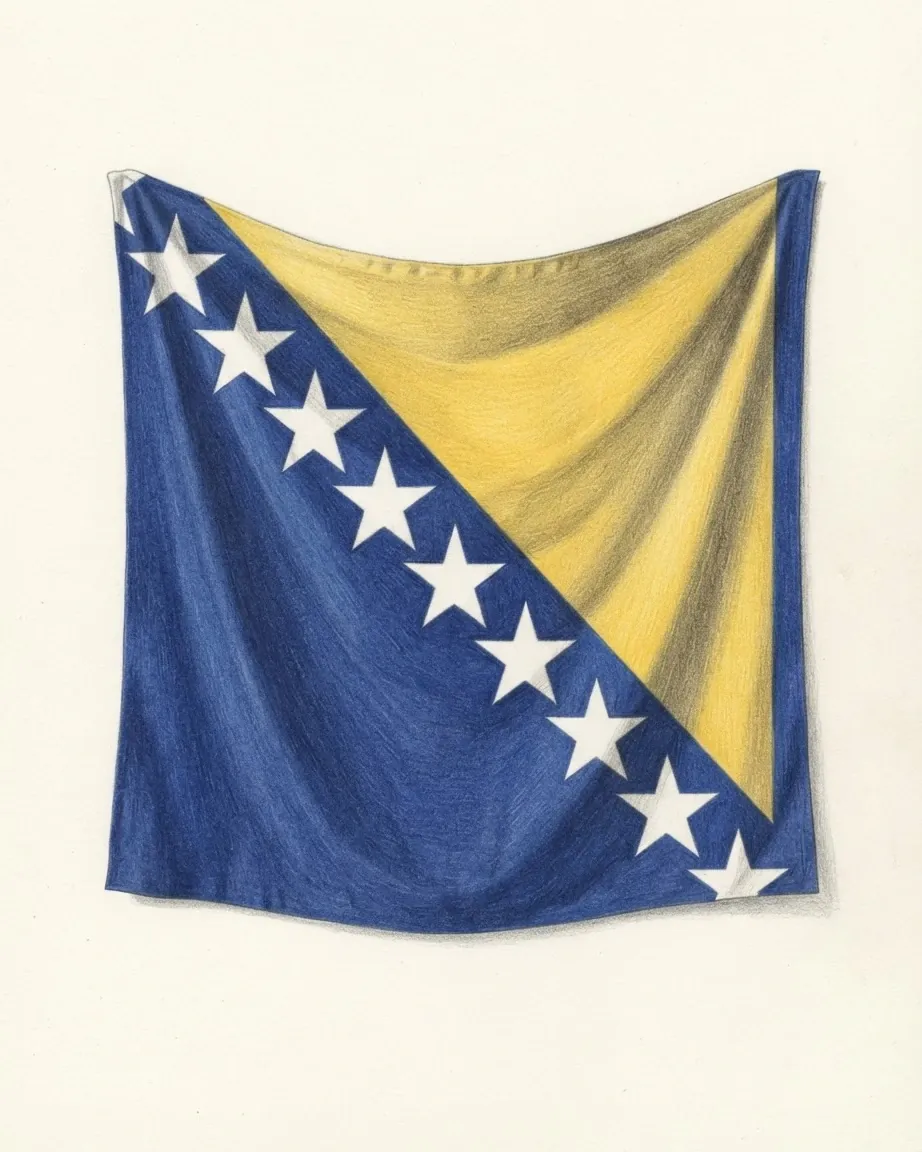
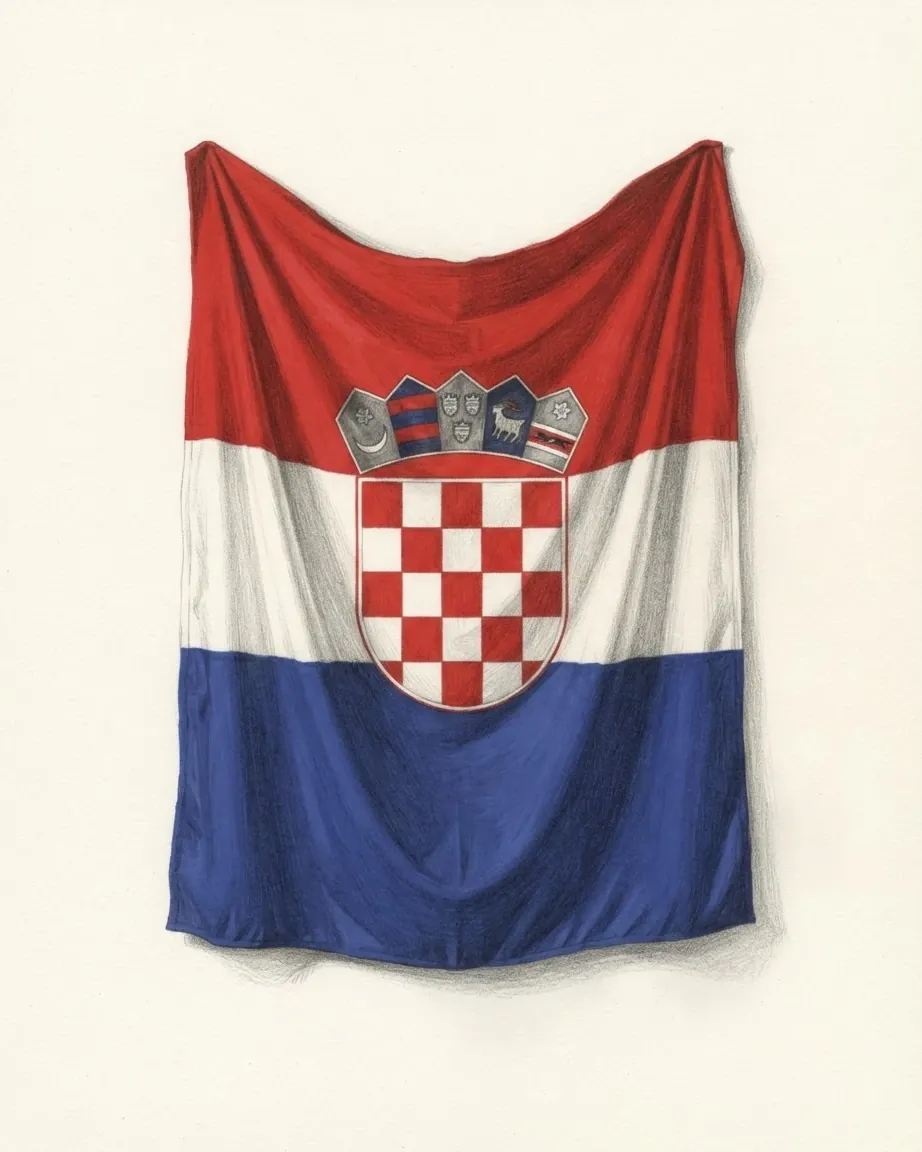
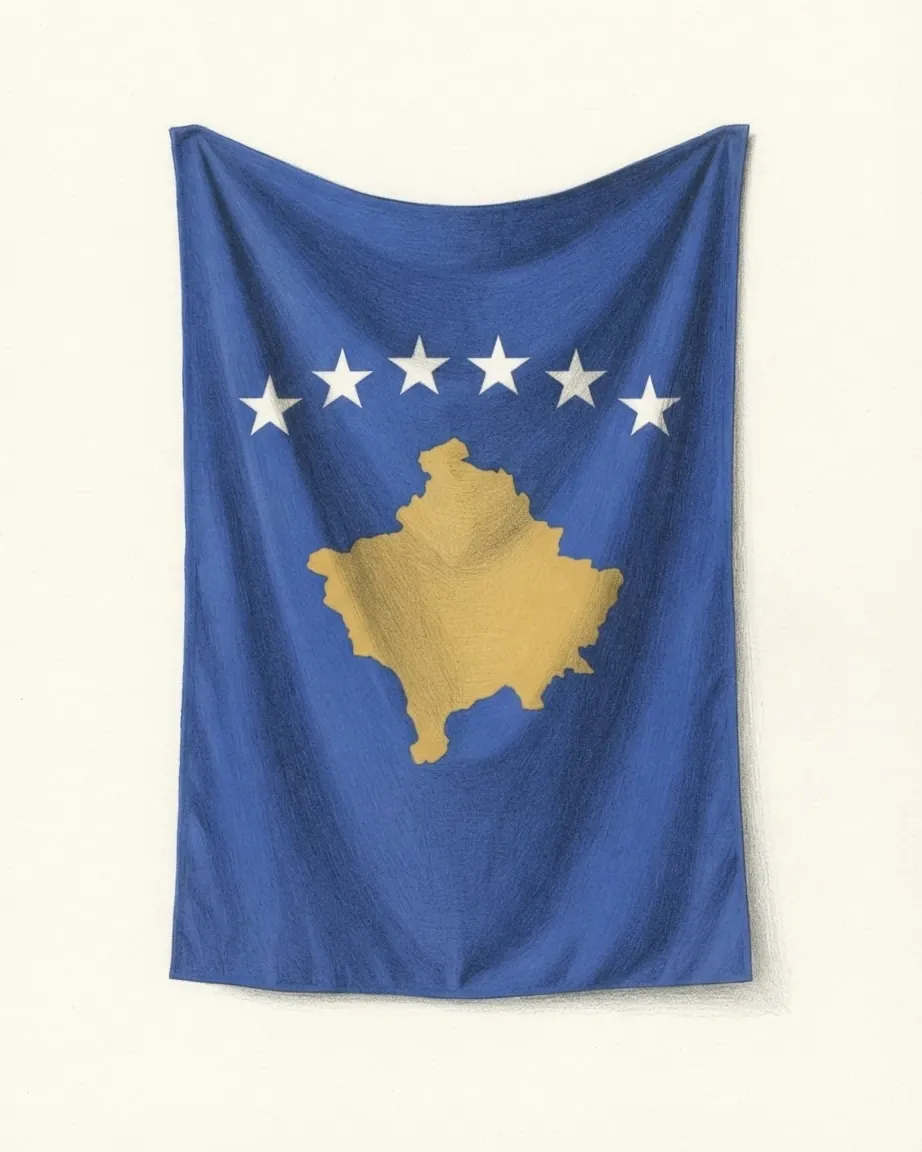
Montenegro has a coast. It shares a border with 5 countries, counted as shared borders, which includes neighbours across water.
 Albania
 Bosnia and Herzegovina
 Croatia
 Serbia
 Kosovo
How the Black Mountain lent Montenegro its name
The English name is a Venetian calque of Crna Gora, and Albanian speakers say Mali i Zi, which means the same thing. The phrase first appears in edicts of Stefan Uroš I addressed to the seat of the Zeta bishopric on Vranjina, an island in Lake Skadar. At first it covered only a small strip of land under the Paštrovići. It spread over the wider highlands after the Crnojević family took power in Upper Zeta in the fifteenth century, and when the Ottomans drove the Crnojevići out of Zeta they withdrew into the mountains above the Gulf of Kotor.
By the nineteenth century the core around Cetinje was called Old Montenegro, to tell it apart from the Brda, the highlands still under Ottoman rule. A printing press set up at Cetinje in 1494 produced the Oktoih that year, and from 1696 the House of Petrović-Njegoš ruled a semi-autonomous Montenegro, first as a theocracy and later as a secular principality. The coast below belonged to someone else: Venice held the Bay of Kotor and the shore around it from 1420 to 1797, inside the territory it called Venetian Albania. Its culture still carries both the Cetinje press and the Venetian towns.
When Montenegro reached the Adriatic coast
Montenegro joined Serbia against the Ottoman Empire in 1876, and Russia came in the following year. The Treaty of San Stefano gave Montenegro large gains, and the Congress of Berlin cut them back in 1878. Even so, the state came out recognised as independent and effectively doubled, adding 4,900 square kilometres and the ports of Bar and Ulcinj, known then as Antivari and Dulcigno. Britannica notes that the other great powers, wary of a Russian naval presence in the Mediterranean, restricted what the new ports could be used for. Trade still expanded. Nicholas I, prince since 1860, took the title of king in 1910.
The kingdom lasted eight years. In November 1918 an assembly deposed the king and joined the state to Serbia, and Montenegro: history sets out how that vote and the later referendums were contested. The coast was completed inside Yugoslavia. In 1922 Montenegro became the Oblast of Cetinje in the Kingdom of Serbs, Croats and Slovenes, with the coastal areas around Budva and the Bay of Kotor added to it. Italy annexed the Kotor area during its occupation from 1941.
| Year | What changed on the coast or in the capital |
|---|---|
| 1420 to 1797 | Venice holds the Bay of Kotor as part of Venetian Albania |
| 1696 | Petrović-Njegoš rule begins, inland behind Lovćen |
| 1878 | Congress of Berlin: 4,900 km² added, with Bar and Ulcinj |
| 1922 | Oblast of Cetinje takes in Budva and the Bay of Kotor |
| 1941 | Italy annexes the Kotor area |
| 1947 | Seat of the republic moves to Podgorica, renamed Titograd |
| 2006 | Independence declared on 3 June, with the whole coast |
Why the capital moved down to Podgorica
The Yugoslav federal state of Montenegro was founded on 15 November 1943 and became the People's Republic of Montenegro on 29 November 1945. In 1947 the seat of the republic moved from Cetinje to Podgorica, which sat better within the territory and was renamed Titograd after Tito. Youth work actions built a railway from Titograd to Nikšić and an embankment across Lake Skadar that linked the capital with the port of Bar. Britannica dates the completion of the line to Belgrade to 1976.
In the 1940s about seven eighths of Montenegrins were classed as rural, by Britannica's account, and by the early twenty-first century less than two fifths lived in rural areas. The World Bank put the urban share at 65.6% in 2025. Podgorica counted 150,977 people at the census of 2011. The constitution keeps both towns in its text: Article 5 makes Podgorica the capital and Cetinje the Old Royal Capital.
What lies behind the Montenegrin shore
The coastal plain is only 2 to 6 kilometres wide, and at the Bay of Kotor it disappears where Lovćen and Orjen come straight down to the water. Behind it the karst rises in bare limestone, and villages there sit mainly in the poljes, flat-floored basins in the rock, in houses most often built of stone and frequently laid without mortar. Red terra rossa soil gathers along the coast and in the karst hollows. The mountains climb to Zla Kolata in the Prokletije, 2,534 metres by the triangulation of 2018, on the border with Albania, and Lake Skadar fills a basin on the same border.
UNESCO lists the natural and culturo-historical region of Kotor, where a 1979 earthquake seriously damaged four Romanesque churches and the town walls, and Durmitor, founded as a national park in 1952, whose Tara gorge it describes as a long and mostly undisturbed canyon. Its landscape takes up the rain, the karst and the two drainage basins in full.
Who lives in Montenegro and how they describe themselves
The census of 2023 recorded no ethnic majority. Of those counted, 41.12% declared themselves Montenegrin, 32.93% Serb, 9.45% Bosniak, 4.97% Albanian and 2.06% Russian, by the release of the Statistical Office of Montenegro. On religion, 71.10% declared themselves Orthodox, 19.99% Islam and 3.27% Catholic.
The constitution adopted in 2007 makes Montenegrin the official language, puts Cyrillic and Latin on an equal footing, and places Serbian, Bosniac, Albanian and Croatian in official use as well. The census asked people to name their mother tongue in their own words, and 43.18% named Serbian and 34.52% Montenegrin. The distance between those answers is the subject of Montenegro: culture.
How Montenegro governs itself after the referendum
Montenegro left the Federal Republic of Yugoslavia in two steps. The Belgrade Agreement of 2002 turned the federation into the looser State Union of Serbia and Montenegro in 2003 and held back any independence referendum for at least three years. The vote came on 21 May 2006: 55.5% for independence on a turnout of 86.5%, against a threshold of 55% of valid votes. Independence was declared on 3 June 2006, and the constitution was adopted on 19 October 2007. Article 1 calls the state civil, democratic and ecological, a state of social justice under the rule of law.
The parliament has one chamber of 81 members elected for four years, and the president is directly elected for five. The constitution protects the state's independence with majorities larger than the one that won it, which is the argument of Montenegro: politics. Montenegro joined NATO on 5 June 2017 and has negotiated for membership of the European Union since 2012.
What Montenegro earns on its coast in euros
The currency moved away from Belgrade's as well. Early in 1999 the government looked for monetary independence, and on 2 November 1999 the German Mark became legal tender beside the dinar. It was the only legal tender from January 2001, and the euro has been the official means of payment since March 2002. The Central Bank of Montenegro issues none of it, and Montenegro: economy follows what that leaves the budget to absorb.
The World Bank measured output at 9.2 billion United States dollars in 2025, or 14,817 dollars a head, and 35,423 dollars a head at purchasing power parity. Growth was 2.7% that year and modelled unemployment 13.6%.
The hotel count points to the strip of coast the state gained last. In April 2025 guests spent 312,141 nights in collective accommodation, and 86.6% of them were spent by foreign tourists. Seaside resorts took 84.3% of those nights and the capital 10.6%. The monthly count leaves out private rooms and apartments, which the statistical office publishes once a year. Travel in Montenegro follows the coast from Herceg Novi to Ulcinj and then climbs into the mountains the hotel ledger barely records.
Read
Everything about Montenegro
Six articles, each answering one question and each written to be read on its own.
The record
What is measured about Montenegro
Pages that nobody writes, built from the record and from the data files beside it.
Common questions
Questions about Montenegro
What does the name Montenegro mean?
Black Mountain. The English form is a Venetian calque of Crna Gora, named for the dense evergreen forest that covered Mount Lovćen above the Bay of Kotor. The name first covered a small strip of land and spread over the highlands after the Crnojević family took power in Upper Zeta in the fifteenth century. In Albanian the country is Mali i Zi.
Which city is the capital of Montenegro, and why is Cetinje named in the constitution?
Podgorica is the capital, with 150,977 people at the 2011 census. Cetinje was the historic capital of the principality and the kingdom, and the seat of the republic moved to Podgorica in 1947. Article 5 of the constitution names Cetinje the Old Royal Capital.
When did Montenegro get its coastline?
In stages. The Congress of Berlin granted Bar and Ulcinj in 1878, and in 1922 the Oblast of Cetinje took in the coastal areas around Budva and the Bay of Kotor, which Venice had held from 1420 to 1797.
What currency does Montenegro use without being in the euro area?
The euro, the official means of payment since March 2002. The German Mark became legal tender beside the Yugoslav dinar on 2 November 1999 and was the only legal tender from January 2001. The Central Bank of Montenegro does not issue the currency, so the money in circulation depends on what enters and leaves the country, and Montenegro has negotiated for membership of the European Union since 2012 without joining the euro area.
Nearby in the catalogue