The flag of Montenegro
Zastava Crne Gore · since 2004
 Back to Montenegro
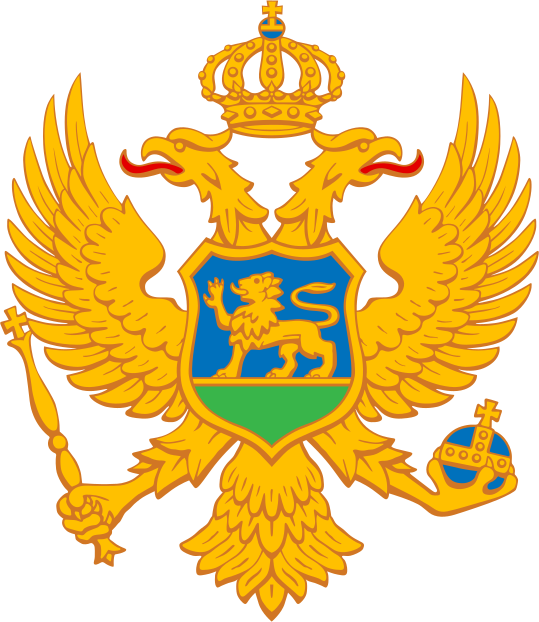
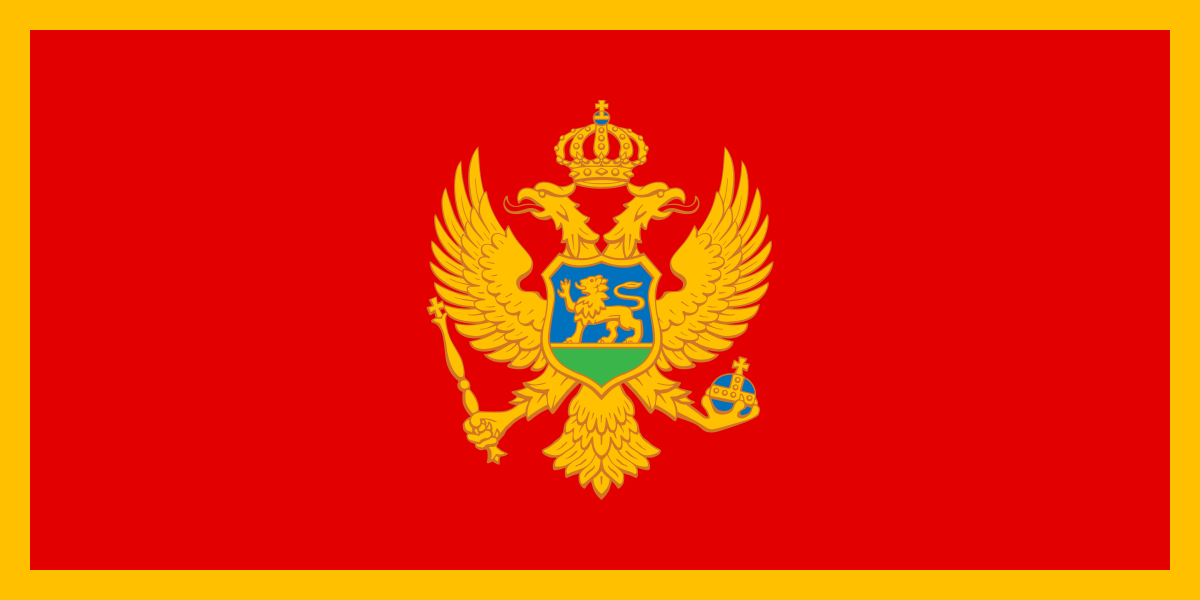
A red field with a gold border and the coat of arms in the centre: a gold double-headed eagle with a lion passant on its breast. Adopted on 13 July 2004, while Montenegro was still in a state union with Serbia, it revived the alaj-barjak, the great war flag of the Petrović dynasty, and replaced a red, light blue and white tricolour. It was kept at independence in 2006 and written into Article 4 of the Constitution of 2007.
At a glance
- Adopted
- 2004
- Proportion
- 1:2
- Colours
- Earlier flags
- 8
- Designer
- 1
The colours
The colours of the flag of Montenegro, in the order it has them
- 0180.1%
Red
crvenaThe field
- HEX
#E30000- RGB
227 0 0- CMYK
0 100 100 0- Pantone
186 C- RAL
3020
- 0219.9%
Gold
zlatnaThe border, the eagle and the lion
- HEX
#FFC000- RGB
255 192 0- CMYK
10 30 90 0- Pantone
117 C- RAL
1012
No law gives these codes. HEX and RGB are the colour this site draws the flag in; CMYK, Pantone and RAL are the values most often published for it.
Construction
How the flag is drawn
A red field inside a gold border, with the coat of arms at the centre: a crowned gold double-headed eagle holding a sceptre and an orb, with a shield on its breast showing a gold lion passant on green ground under a blue sky.
- Border
- Gold, 1/20 of the flag's height wide, painted on the cloth rather than a fringe
- Coat of arms
- Two thirds of the flag's height, its centre on the centre of the flag
- Forms
- Horizontal, mostly used outdoors, and vertical, mostly used indoors
Other forms
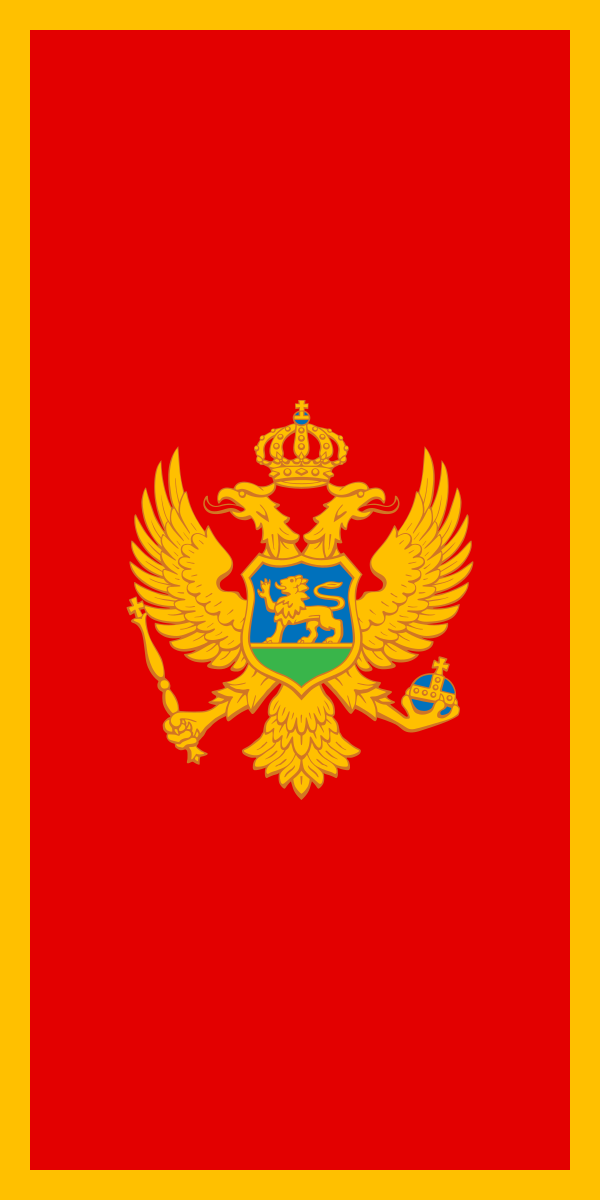
- Vertical flag
- The vertical form, mostly used indoors, with the arms kept upright.
Meaning
What each part stands for
- Red field with the arms
- The alaj-barjak, the great war flag, which the government presented as the state flag of the Principality and then the Kingdom until 1918. Surviving examples vary; some have a silver border and a white eagle
- Double-headed gold eagle
- The arms of the Crnojević dynasty, taken up by the Petrović dynasty. The Petrović eagle was silver, like Serbia's; one heraldist read the change to gold in 2004 as a way to tell the two apart
- Lion passant
- Came into Montenegrin use under Venetian rule, as the emblem of the Venetian authority
Who drew it
- Radoslav Rotković
- Credited with the design
History
How the flag of Montenegro got here
- 1451
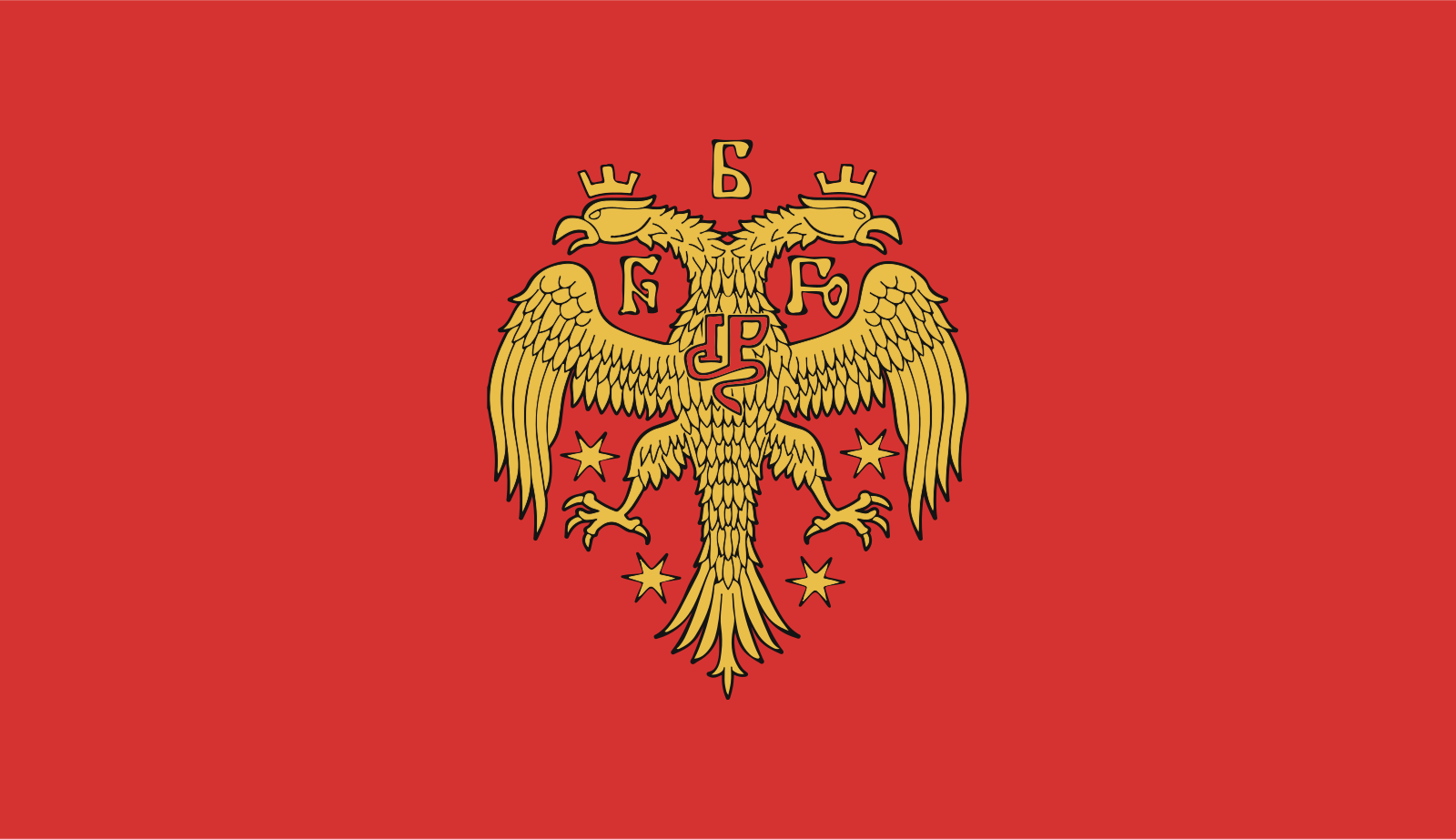
Zeta
1451 → 1496
A red flag with a gold double-headed eagle, for the medieval state of Zeta.
Image: Germenfer, CC BY-SA 4.0
- 1516
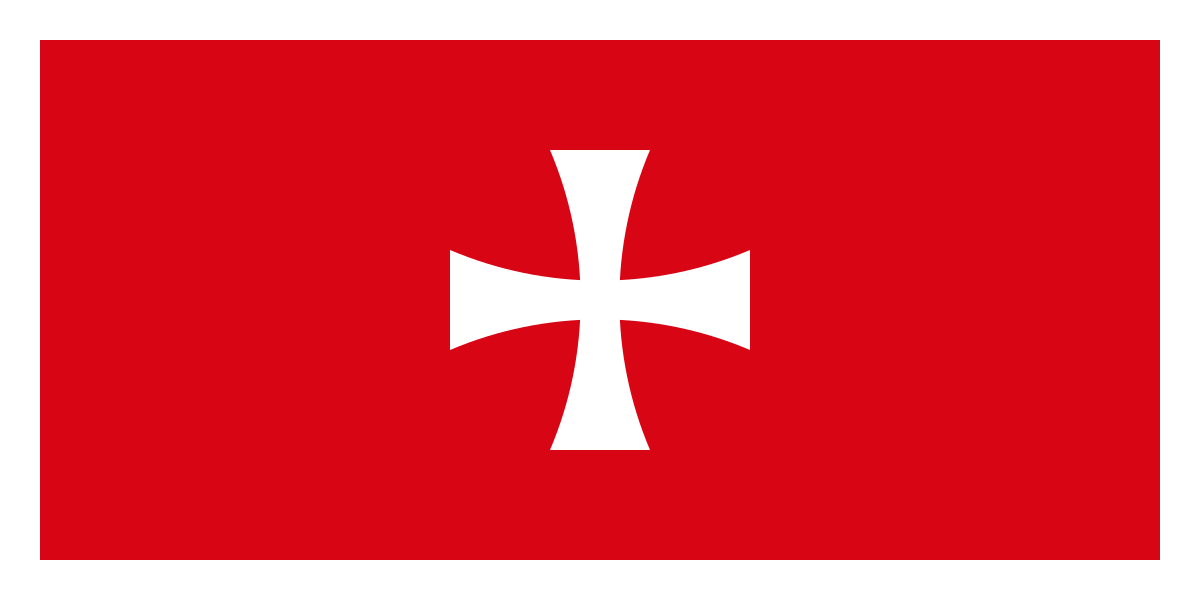
The Prince-Bishopric
1516 → 1852
A white cross pattée on red. The main flag was the alaj-barjak, the regimental colour, whose only symbol was a cross.
Image: Spesh531, CC BY-SA 3.0
- 1767

Šćepan Mali
1767 → 1773
The first written description of a Montenegrin flag: white, with a red frame and a gold cross on top of the staff.
Image: Desemeus, CC BY-SA 4.0
- 1852
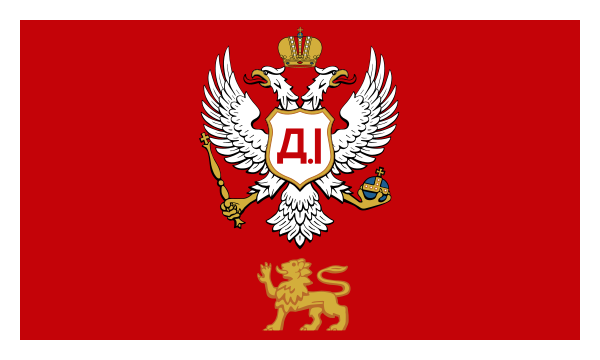
Prince Danilo
1852 → 1860
The cross gave way to a white double-headed eagle with the initials DI on its breast, over a lion passant, on red.
Image: B1mbo, CC BY-SA 4.0
- 1860
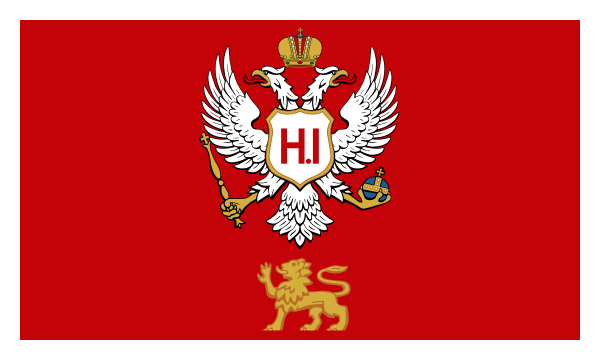
Prince Nikola
1860 → 1905
Danilo's flag with the initials changed to NI.
Image: B1mbo, CC BY-SA 4.0
- 1905
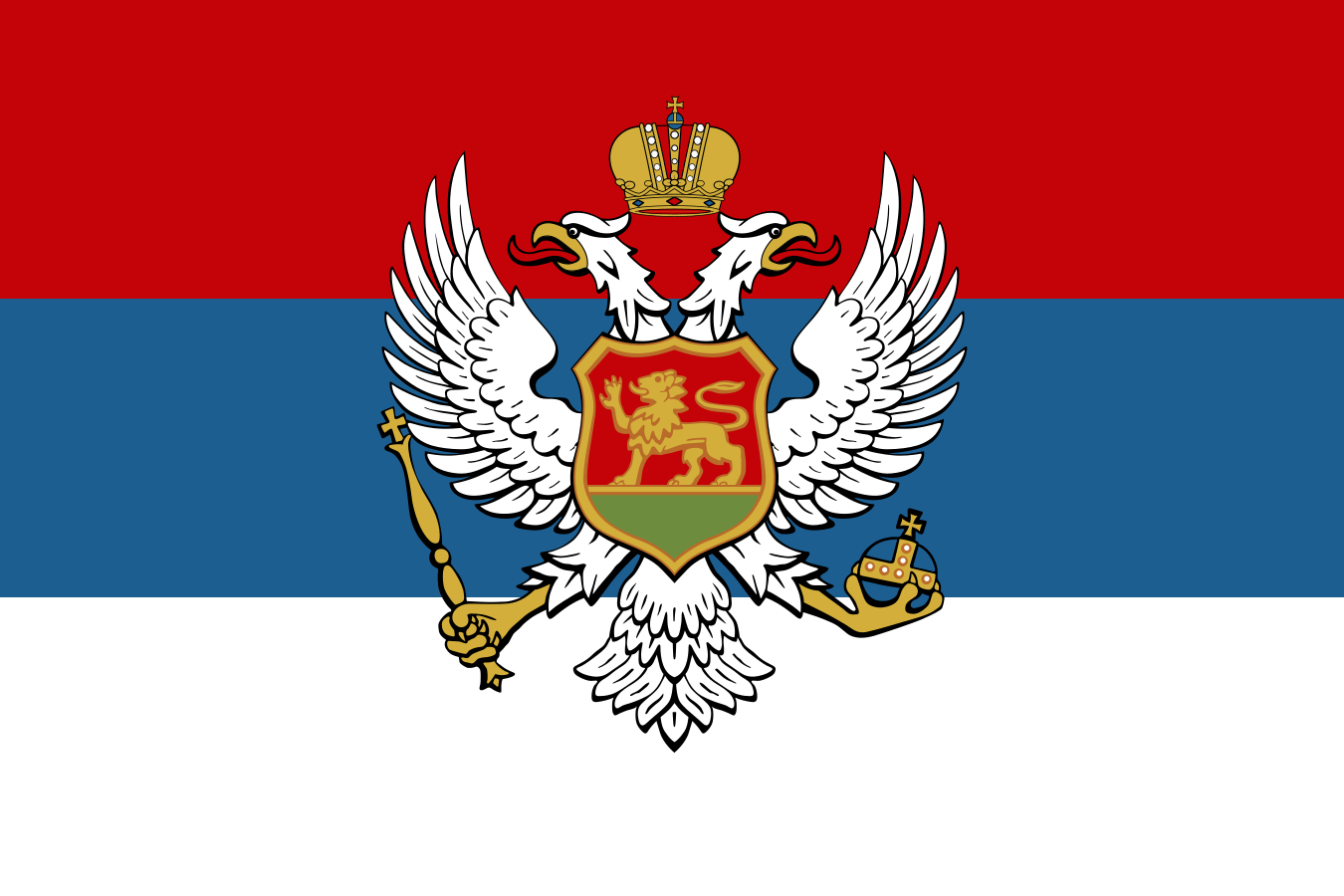
The red, blue and white tricolour
1905 → 1918
The state flag of the Principality and, from 1910, the Kingdom: red, blue and white with a white double-headed eagle. The plain tricolour was the civil flag. The colours follow the Serbian flag, itself the Russian tricolour reversed.
- 1946
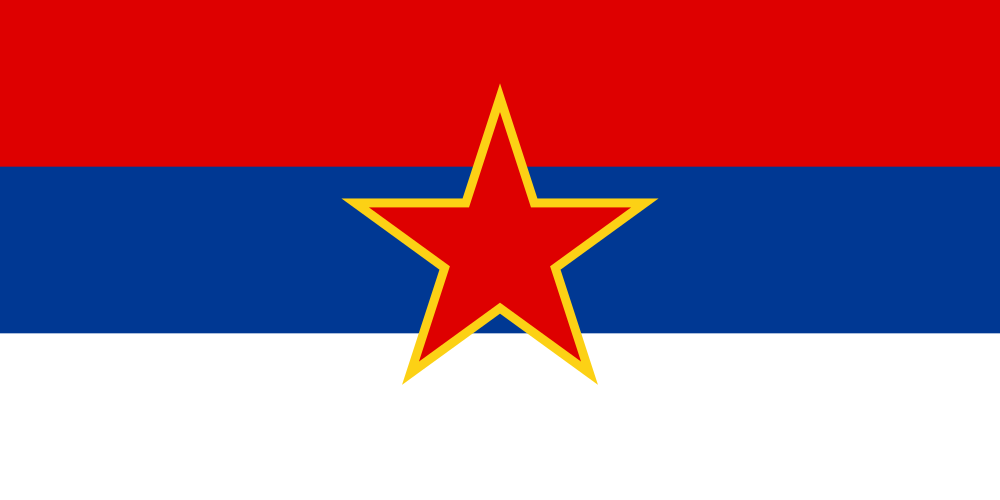
People's, then Socialist, Republic
1946 → 1993
The tricolour with a red star in place of the royal arms, as a republic of Yugoslavia. It was identical to the flag of Serbia.
- 1993
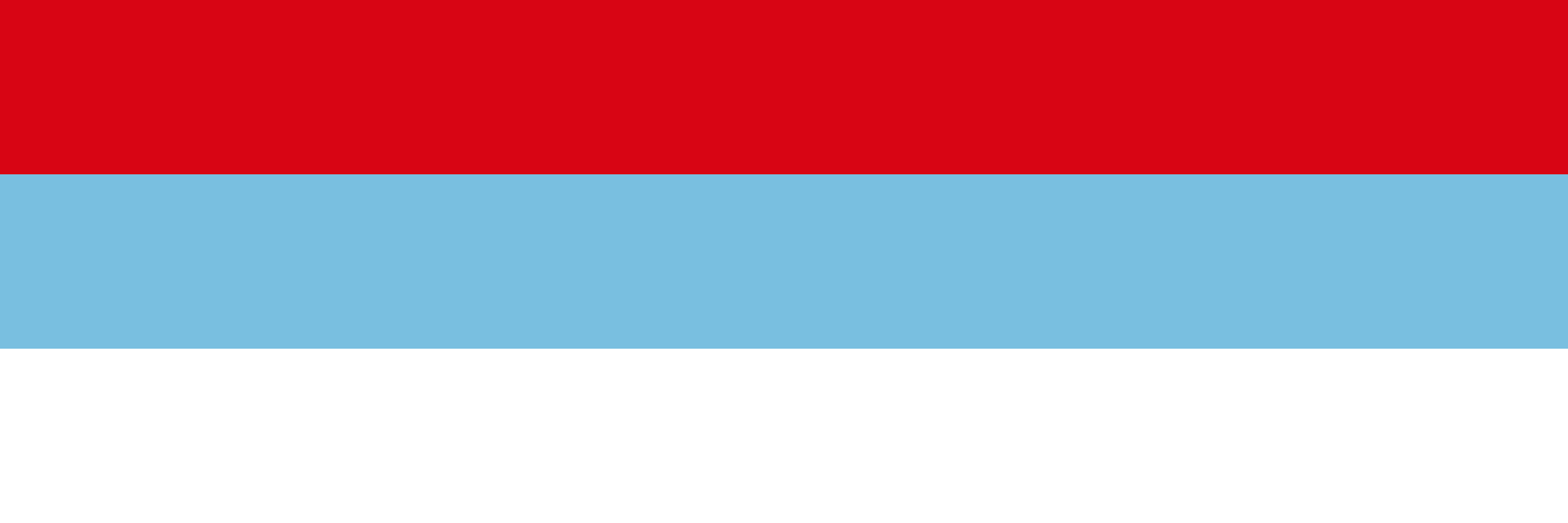
Republic of Montenegro
1993 → 13 Jul 2004
A horizontal tricolour of red, light blue and white in equal stripes at 1:3, inside the Federal Republic of Yugoslavia and then the State Union of Serbia and Montenegro.
Image: Zirland, CC BY-SA 2.5
- 2004
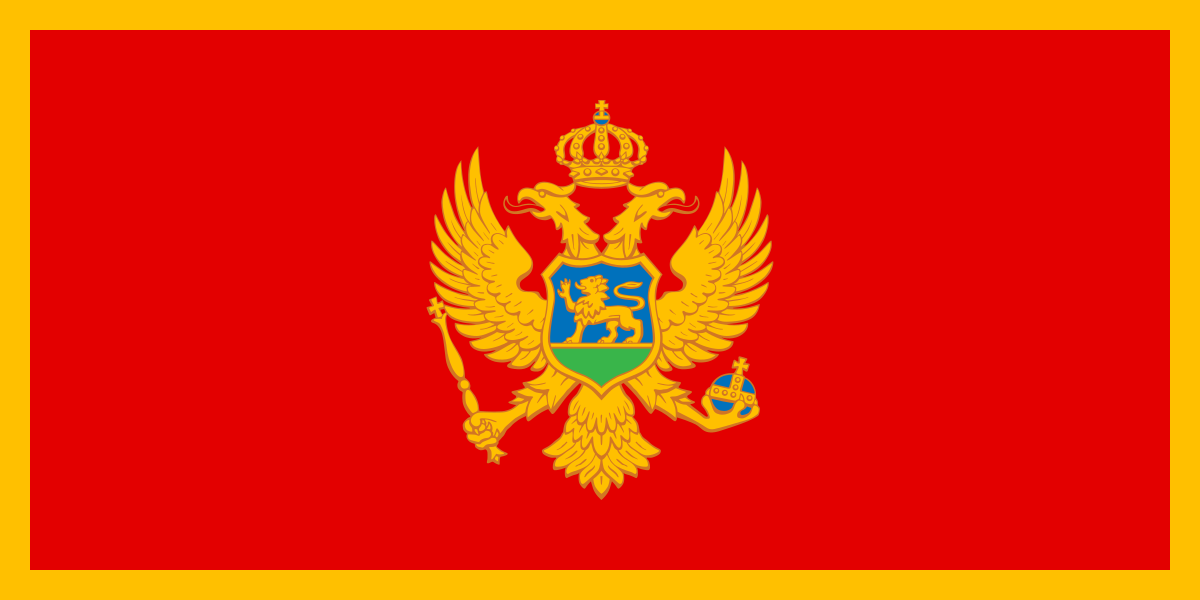
The red flag with the gold borderIn use
13 Jul 2004 → today
Adopted by the law on state symbols and first hoisted on state buildings in place of the tricolour. It became the flag of an independent state after the referendum of 21 May 2006 and was raised at the United Nations on 28 June 2006.
The law
What defines it, and who flies it
- 12 July 2004
Law on State Symbols and the Day of Statehood of Montenegro
Voted by the Assembly on 12 July 2004 and in force the next day, proclaimed Statehood Day. Gave the government 60 days to produce the full specification. Amended in 2011 and 2019.
- 16 September 2004
Decision on the standard of the flag of Montenegro
The specification, with construction details and colours in CMYK. Published on 17 September 2004. It settled that the zlatni obrub of the law is a painted border, not a fringe. A new decision on the standard followed on 6 March 2020.
- 19 October 2007
Constitution of Montenegro, Article 4
The flag of Montenegro is red with the coat of arms in the centre and a gold border.
In use
Flown permanently on the Parliament, the official premises of the President, the Prime Minister, the presiding judges of the highest courts, the Supreme State Attorney and the Ombudsman, and the President's residence
Flown on Statehood Day and other state holidays on buildings of state bodies, at missions abroad, on aircraft and ships, and at polling stations
Flown at half-mast on days of mourning declared by the government
Takes the place of honour when flown in Montenegro with the flags of other states or organisations, and may never touch the ground
Related flags
The flags it is confused with or comes from
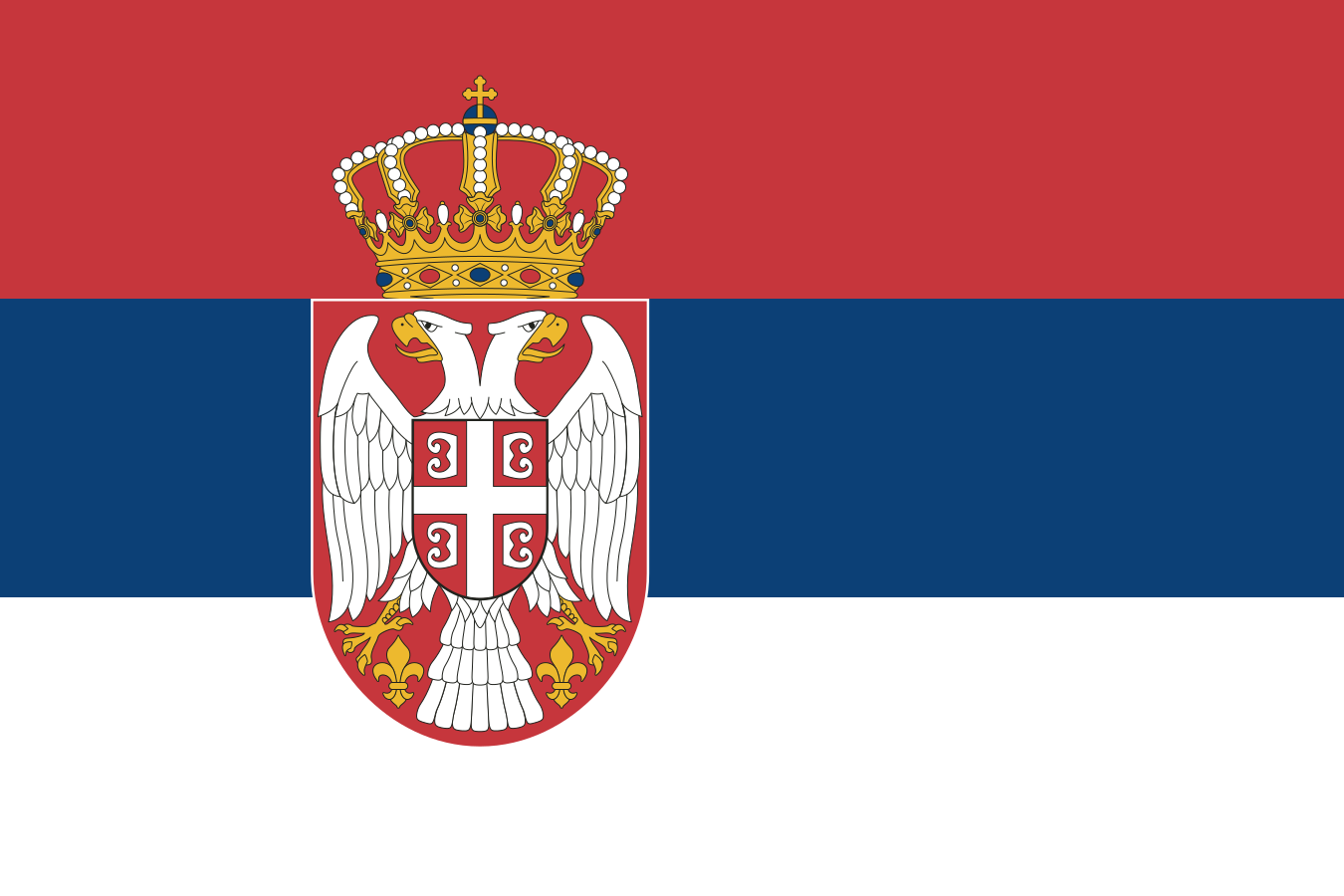 Serbia
- From 1946 to 1992 the two republics flew the same red, blue and white tricolour with a red star, and the 1905 tricolour followed Serbia's colours.
Coat of arms
The arms of Montenegro