The Central Election Commission published Albania's voter lists on 2 April 2025 with 3,713,761 registered voters, and the census taken two years earlier found 2,402,113 people living in the country. The difference is the part of the nation that lives somewhere else, and in May 2025 it voted by post for the first time, 245,935 registered voters in 85 countries. Albania counted 2,402,113 residents at its 2023 census, down from 2,821,977 in 2011, on 28,748 square kilometres between the Adriatic and the mountains of the Balkan interior.
At a glance
Where it is
Where Albania is, and what is around it
Albania has a coast. It shares a border with 5 countries, counted as shared borders, which includes neighbours across water.
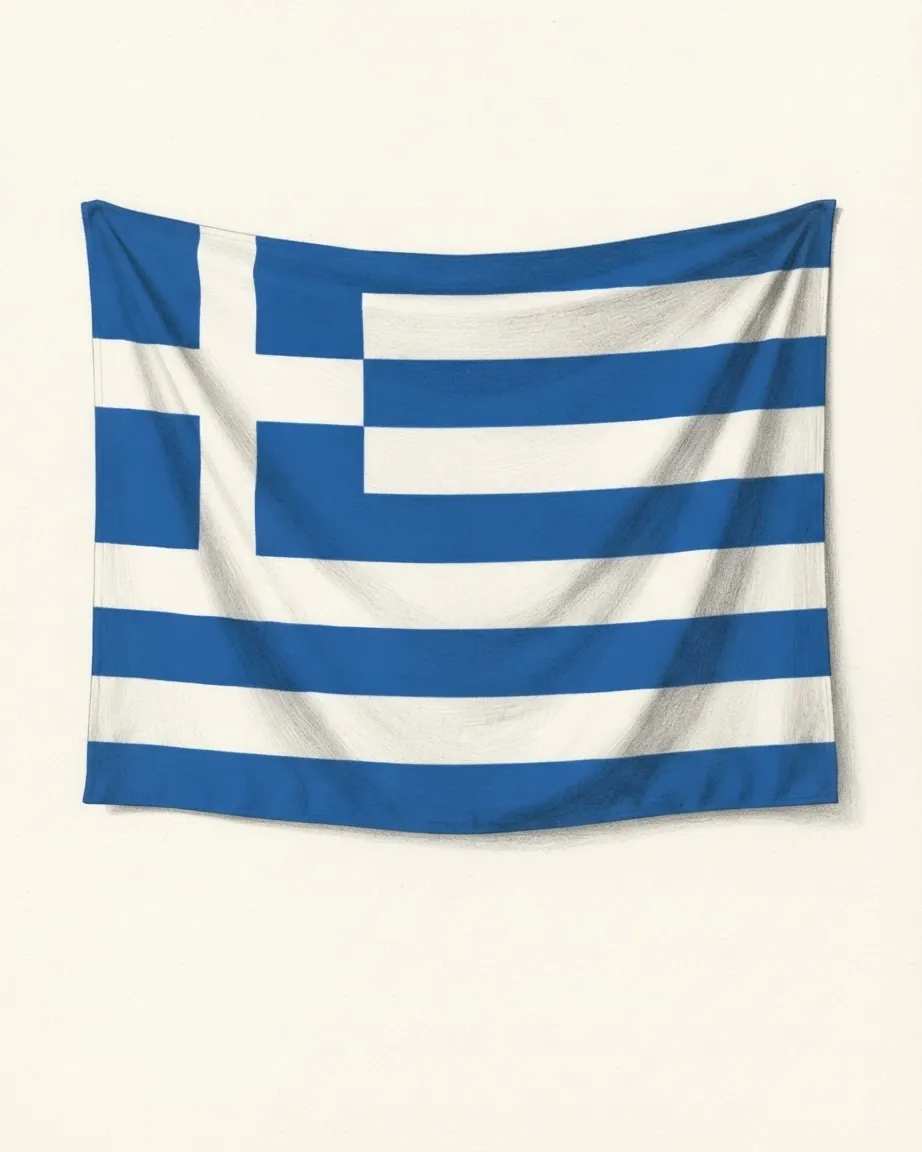
 Greece
 Montenegro
 North Macedonia
 Serbia
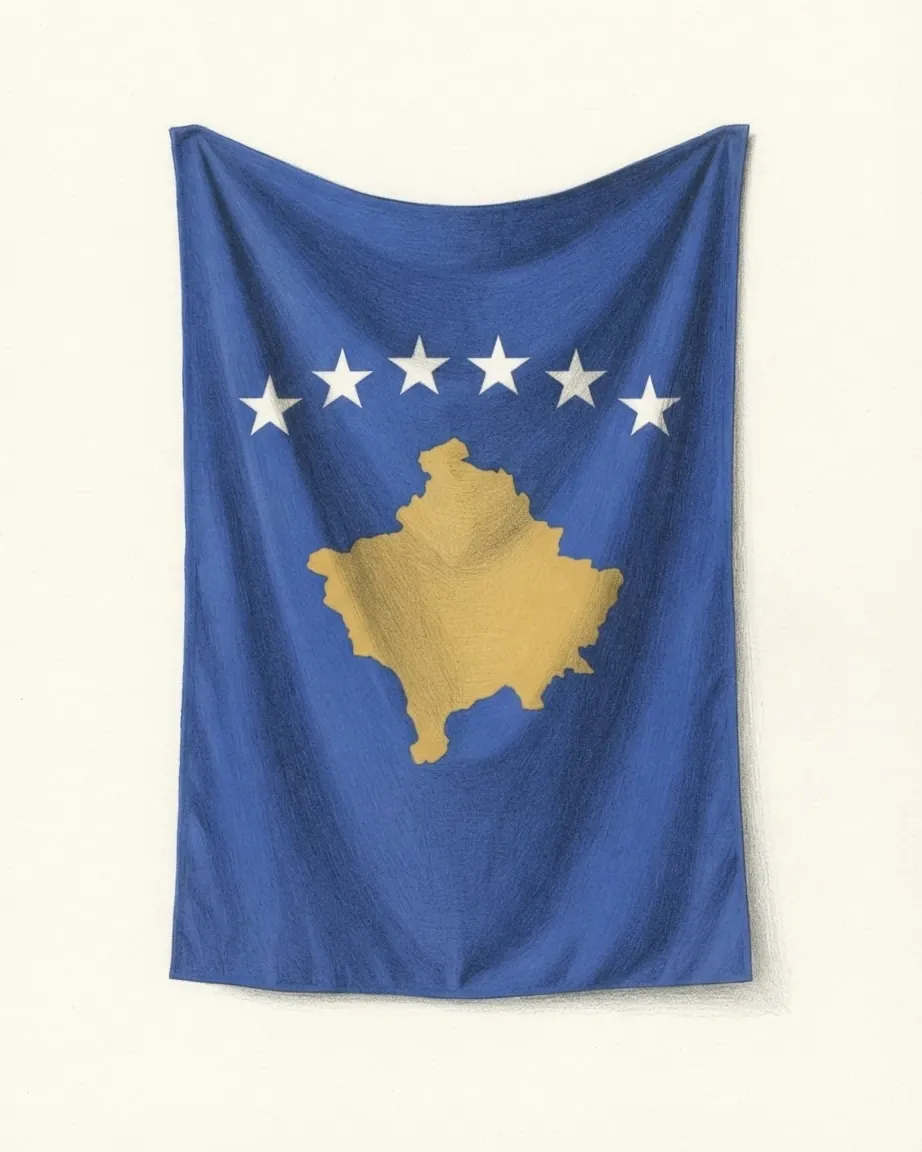
 Kosovo
Why the roll outgrew the country
The Central Election Commission published Albania's final voter lists on 2 April 2025 with 3,713,761 registered voters, a figure that includes citizens resident abroad. The census taken in 2023 found 2,402,113 people living in the country, down from 2,821,977 at the census of 2011. Both counts are official and they measure different populations: one the citizenry entitled to a ballot, the other the households an enumerator could reach.
The Institute of Statistics attributes the fall to declining fertility and rising emigration together, and expects the resident population to keep shrinking for at least another decade. As much as a third of the people born inside Albania's borders are estimated to live outside them. About seven million ethnic Albanians were reckoned to be alive in the world at the beginning of the twenty-first century, fewer than half of them within the boundaries of the Albanian state, because the frontiers settled at the Conference of London on 29 July 1913 left large Albanian populations in what are now Kosovo, North Macedonia, Montenegro, Serbia and Greece.
Those two counts met at the ballot box in the parliamentary election of 11 May 2025, the first at which citizens abroad could take part, and they took part by post. The out-of-country voter list published on 11 March 2025 held 245,935 voters in 85 countries, of whom 91,223 were registered in Italy and 68,386 in Greece, with Germany, the United States and the United Kingdom next. Some 41,000 applications were refused, mostly for want of a residence permit or proof of an address in the host country. At eight in the evening on election day the commission announced a turnout of 42.3%.
The people still in the country are concentrated in a corner of it. At the 2023 census the counties of Tirana and Durrës held about 41% of the population between them, 32% in Tirana and 9% in Durrës, while Gjirokastër and Kukës accounted for about 3% each. Spread evenly, the 2023 count would work out at 83.6 people to the square kilometre.
| The record in short | |
|---|---|
| Population | 2,402,113 at the 2023 census |
| Registered voters | 3,713,761 on the roll of 2 April 2025 |
| Area | 28,748 km² |
| Capital | Tirana, 389,323 people in 2023 |
| Highest point | Korab, 2,764 m |
| Coastline | about 476 km, Adriatic and Ionian |
| Currency | Albanian lek |
| Independence declared | 28 November 1912, at Vlorë |
| NATO | joined April 2009 |
How the mountains arrange the rest
The 28,748 square kilometres run from an Adriatic and Ionian coastline of about 476 kilometres up to Korab, 2,764 metres, on the eastern border. Average precipitation is about 1,485 millimetres a year and ranges between 600 and 3,000 millimetres depending on where the measurement is taken, with the Albanian Alps in the far north receiving at least 3,100 millimetres annually. Four glaciers were found in those mountains at about 2,000 metres, a low altitude for the latitude.
That rain is also the power supply. Electricity generation depends on hydroelectric plants, at Fierza, Koman and Vau i Dejës on the Drin in the north and at Banjë and Moglicë on the Devoll in the south, and in 2021 the country generated 5.31 billion kilowatt hours against consumption of 6.51 billion, importing the balance. A dry year is therefore an import year. The land itself carries the rest: the erosion, the coastal lagoons, the seismic record and the Vjosa.
Who kept promising to run Albania
An assembly of forty delegates meeting at Vlorë on 28 November 1912 declared Albania independent of the Ottoman Empire and set up a provisional government on 4 December. Vlorë was at that moment the only town the delegates controlled. Recognition came on 29 July 1913, and the six great powers granted it on terms: a European prince, a neutrality the powers jointly guaranteed, and an International Commission of Control made up of one representative from each power and one Albanian, which was to supervise the new state's organisation, finances and administration for ten years. Dutch officers were to organise the gendarmerie. The prince, Wilhelm of Wied, reached Durrës in March 1914 and had left before the year ended.
The arrangement set a pattern. Italian loans underwrote the interwar kingdom, Italy invaded on 7 April 1939, and on 12 April the Albanian parliament voted to depose King Zog and offer the crown to Victor Emmanuel III. The People's Socialist Republic that followed ran from 11 January 1946 to 29 April 1991 under a Party of Labour whose monopoly on power was written into the constitution. It declared itself the world's first atheist state in 1967 and was the only Warsaw Pact member to withdraw formally from the alliance before 1990, an act occasioned by the invasion of Czechoslovakia in August 1968.
Travel and visa restrictions made the country hard to enter and hard to leave for four decades. Among the concessions Ramiz Alia made under student and worker pressure after 1989 was the right of Albanian citizens to travel abroad, and in December 1990 he endorsed the creation of independent parties. The first multi-party elections were held on 31 March 1991 and the Republic of Albania was proclaimed on 29 April. Everything the voter roll now records about where Albanians live began in those two years. Albania: history follows the whole sequence of patrons and breaks.
Why outsiders sit inside the courts
The present constitution was approved by referendum on 22 November 1998, in a vote the opposition boycotted. It establishes a single chamber, the Kuvendi, of 140 deputies elected for four years, with a 1% nationwide threshold for a party or coalition to take part in seat allocation.
In 2016 that constitution acquired an annex which suspends parts of it. Every sitting judge and prosecutor in the country was made subject to a re-evaluation on assets, background and professional competence, watched by an International Monitoring Operation led by the European Commission. 47% of those assessed passed at first instance, the removals and resignations emptied benches faster than they could be refilled, and in 2023 only 60.5% of the vacancies created were filled. The first-instance decisions were completed in 2024.
That is the price Albania agreed to pay for the direction it has chosen. The country joined the United Nations in December 1955, became a NATO member in April 2009, was granted European Union candidate status in June 2014, held the first intergovernmental conference on accession in July 2022 and had opened all negotiating clusters by late 2025. Albania: politics sets out the institutions and what the vetting did to them.
What the country earns and owes
Albanian output is service work. Total services accounted for 49.10% of gross domestic product in 2025, and the World Bank recorded output of 30.5 billion United States dollars in that year, or 12,998 dollars a head, with growth of 3.8%, inflation of 2.1% and unemployment of 10.9%. Total exports reached 9.1 billion euros in 2024, up 11% on the year before, of which tourism revenue was 5 billion euros. Remittances came to 1 billion euros and foreign direct investment to 1.6 billion, external debt fell to 40.6% of gross domestic product, and the Bank of Albania held reserves of close to 7 billion euros.
The reason those balances are watched so closely sits in the recent record. By November 1996 the face value of what Albania's pyramid companies owed had reached 1.2 billion dollars, close to half of national output, in a country where three state banks held 90% of deposits under ceilings that stopped them lending. By March 1997 the government had lost control of the south, a million weapons had been looted from the armouries, and an Italian-led force entered under a United Nations mandate in April. Albania: economy works through what grew back.
What Albanians speak and what they believe
Albanian was given as the language spoken at home by 91.07% of respondents at the 2023 census. Getting it onto paper took longer than speaking it: attempts at an original alphabet ran through the period from 1750 to 1850, and a congress of Albanian intellectuals held at Manastir from 14 to 22 November 1908 settled on the Latin alphabet with the letters ë and ç and nine digraphs that is still in use. The first printed book in the language, Gjon Buzuku's Meshari, dates from 1555. Social relations were governed for centuries by the Kanun, a body of customary law transmitted orally.
Religion at the 2023 census divided into 1,101,718 Sunni Muslims, 332,155 believers of no denomination, 201,530 Catholics, 173,645 Orthodox, 115,644 Bektashi and 85,311 declared atheists, with 378,782 people giving no answer. The drone singing UNESCO calls Albanian folk iso-polyphony was proclaimed in 2005 and inscribed in 2008, and its own listing names the departure of young people to the cities and abroad as one of the pressures on it. Albania: culture takes up the language and the singing.
Who arrives and where they go
Albania counted about 11.7 million foreign visitors in 2024, against 500,000 in 2005 and an estimated 4.2 million in 2012. Kosovo alone supplied 45% of international arrivals, and around 70% of all non-resident visitors are estimated to be of Albanian origin.
So the arrivals figure and the voter roll describe overlapping people. Of the 2024 total, 8.0 million crossed a land border, 3.2 million came by air and 514,036 by sea, which is the shape of a boom carried by an Albanian-speaking world within driving distance of the country it left. Albania: travel sets out where the pressure falls and what the seasons do to it.
Read
Everything about Albania
Six articles, each answering one question and each written to be read on its own.
The record
What is measured about Albania
Pages that nobody writes, built from the record and from the data files beside it.
Common questions
Questions about Albania
How many people live in Albania?
The census taken in 2023 counted 2,402,113 residents, down from 2,821,977 at the 2011 census. The Institute of Statistics attributes the fall to declining fertility and rising emigration together and expects the resident figure to keep falling for at least another decade. The electoral roll published on 2 April 2025 is a different measure of the same nation, and it held 3,713,761 names because it counts citizens living abroad.
When did Albanians abroad first vote in a national election?
At the parliamentary election of 11 May 2025, which was the first to allow out-of-country voting and did it by post. The final out-of-country list, published on 11 March 2025, carried 245,935 voters in 85 countries, of whom 91,223 were registered in Italy and 68,386 in Greece. Some 41,000 further applications were refused, mostly for lack of a residence permit or proof of address abroad.
Where is Albanian electricity generated?
From water. Generation runs on hydroelectric plants on the Drin and the Devoll rivers, so the country's rainfall is also its power supply, and in 2021 it produced 5.31 billion kilowatt hours against consumption of 6.51 billion and imported the balance.
Is Albania a member of the European Union?
No. Albania was granted candidate status in June 2014, opened accession negotiations at the first intergovernmental conference in July 2022 and had opened all negotiating clusters by late 2025. It has been a member of the United Nations since December 1955 and of NATO since April 2009.
What language is spoken in Albania?
Albanian, which 91.07% of respondents at the 2023 census gave as the language spoken at home. Its single Latin alphabet was settled at a congress held at Manastir from 14 to 22 November 1908, after a century in which writers used Latin, Greek, Arabic, Cyrillic and several locally invented scripts.
Nearby in the catalogue