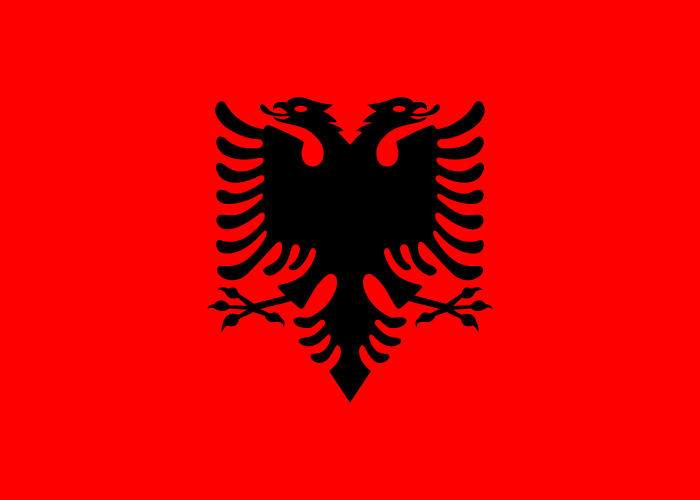
The flag of Albania
Flamuri i Shqipërisë · since 1992
 Back to Albania
A red field with a black double-headed eagle in the centre, known as the flag of Skanderbeg after the family standard he raised in 1443. It became the flag of the state at independence in 1912; regimes since have added a crown, fasces and a star to it and taken them away again, and the plain design was fixed by law in 2002.
At a glance
- Adopted
- 2002
- Proportion
- 5:7
- First hoisted
- 1912
- Colours
- Earlier flags
- 12
- Designer
- 1
The colours
The colours of the flag of Albania, in the order it has them
- 0188.8%
Red
e kuqeThe field
- HEX
#FF0000- RGB
255 0 0- CMYK
0 100 100 0- Pantone
2347 C
- 0211.2%
Black
e zezëThe eagle
- HEX
#000000- RGB
0 0 0- CMYK
0 0 0 100
No law gives these codes. HEX and RGB are the colour this site draws the flag in; CMYK, Pantone and RAL are the values most often published for it.
Construction
How the flag is drawn
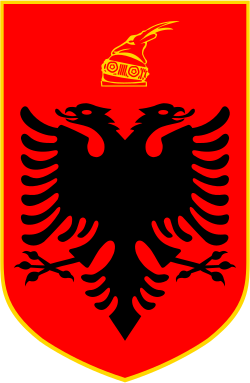
A blood-red field with a black double-headed eagle in the centre, its wings open to the sides, each wing with nine feathers and the tail with seven.
- Eagle
- Black, double-headed, in the centre of the field, with open wings
- Feathers
- Nine on each wing and seven on the tail
- Eagle size
- Not given in the published texts. The figure of Decision No. 473 that should show it is missing from the copies in circulation
Other forms
- Vertical flag
- Hung as a banner, with the eagle kept upright rather than turned through 90°.
- Civil ensign
- Three horizontal bands of red, black and red, in the proportion 2:3.
- Naval ensign
- The eagle on a white field, with a red stripe along the lower part of the flag.
- Presidential flag
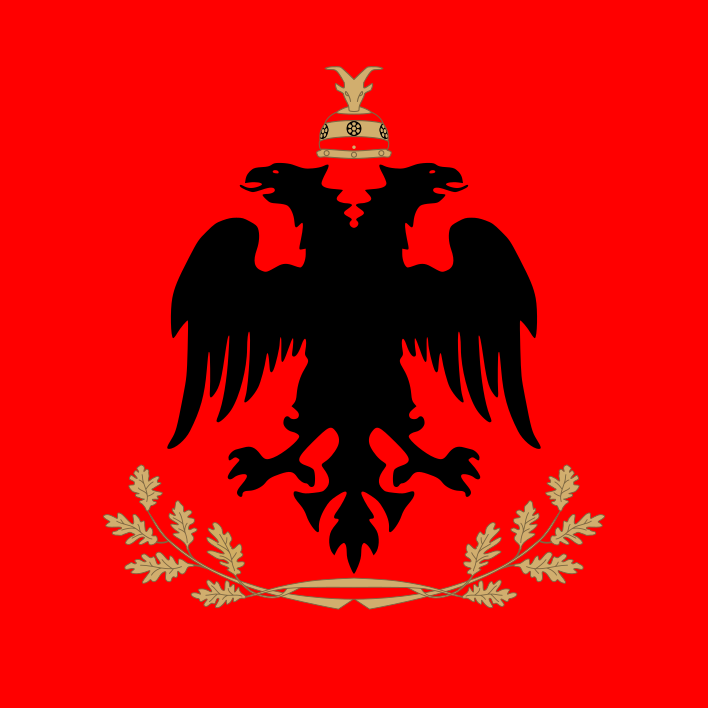
- Designed by Ylli Beqiri and presented on 11 July 2014: the black eagle on red with a golden helmet of Skanderbeg facing forward and golden oak leaves, 140 × 100 cm.

Meaning
What each part stands for
- Red
- The blood shed by earlier generations, and bravery, strength and valour
- Double-headed eagle
- The sovereign state of Albania. A symbol of Byzantine origin, used by Albanian noble families in the Middle Ages and taken by Skanderbeg from the Muzaka family
- Twenty-five feathers
- The twenty-five battles of Skanderbeg against the Ottoman Empire
Who drew it
- Sadik Kaceli
- Painter who drew the flag symbols of the People's Socialist Republic, the source of the modern eagle
History
How the flag of Albania got here
- 1443
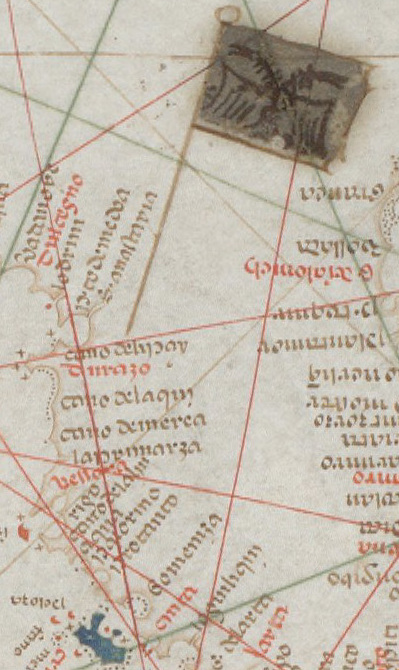
The flag of Skanderbeg
28 Nov 1443 → 1479
Skanderbeg raised his family's standard, a black double-headed eagle on red, when he proclaimed the Free Principality of Albania. It was the flag of the League of Lezhë, and his emblem with the eagle first appears in 1451.
- 1911
The flag of the national movement
6 Apr 1911 → 28 Nov 1912
Nationalists took up the eagle on red in the 19th century. At the Battle of Deçiq in 1911 Ded Gjo Luli raised it on the peak of Bratila, possibly the first time it had flown in Ottoman territory in more than 400 years.
- 1912
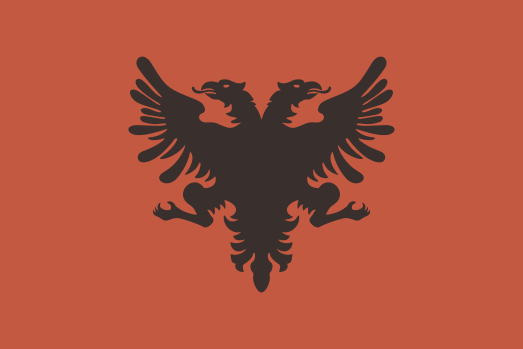
Independence
28 Nov 1912 → 1914
A flag was raised in Vlorë on the day independence was declared. Its appearance is not proven: one account has it as a flag Don Aladro Kastriota gave Eqrem bey Vlora in Paris, another as a flag sewn by Marigo Posio. The provisional government's flag was printed in colour in December 1912.
- 1914
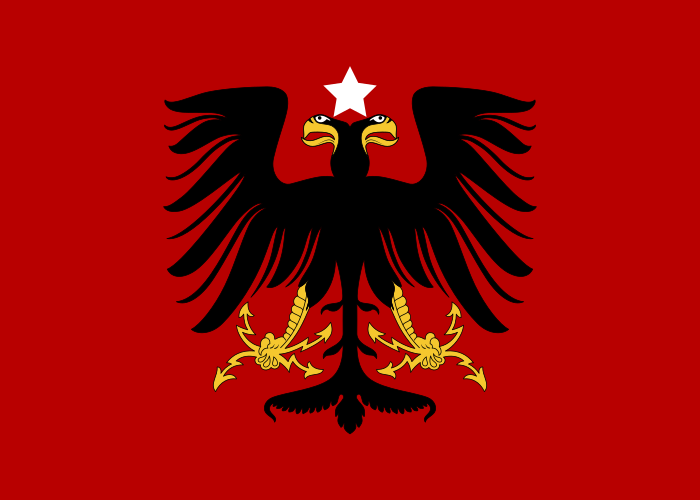
Principality of Albania
1914 → 1920
The eagle with a golden beak and claws, holding golden arrows, a white five-pointed star above its heads.
- 1920
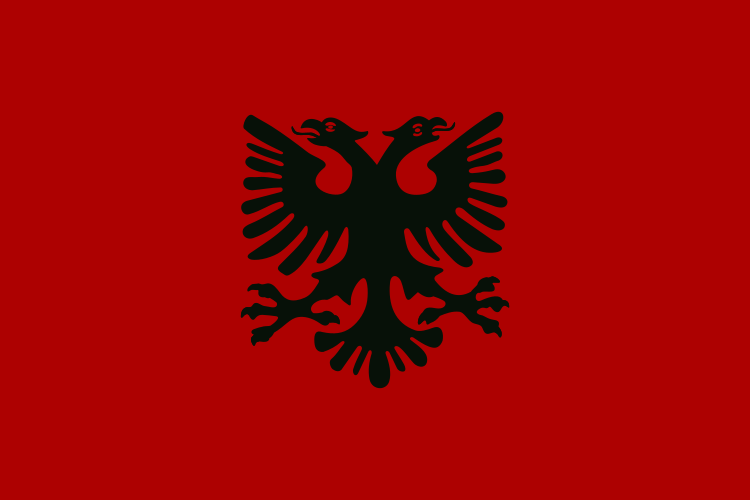
The plain eagle
1920 → 1926
A plain black eagle on red again. The flag carried at the Congress of Lushnjë in 1920 was dark red silk, 121 × 70 cm.
- 1925
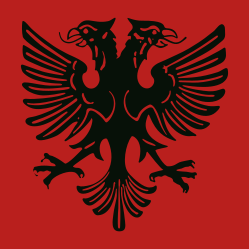
Albanian Republic
1925 → 1928
State symbols of the republic were drawn square, the flag among them.
- 1928
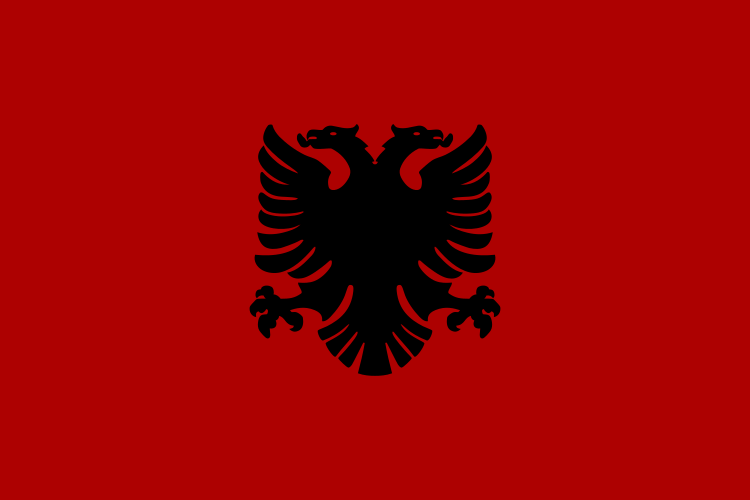
Albanian Kingdom
1928 → 1939
The helmet of Skanderbeg, which served as the royal crown, was set in gold above the eagle. The Fundamental Statute described the flag as red with a black two-headed eagle in the centre.
- 1939
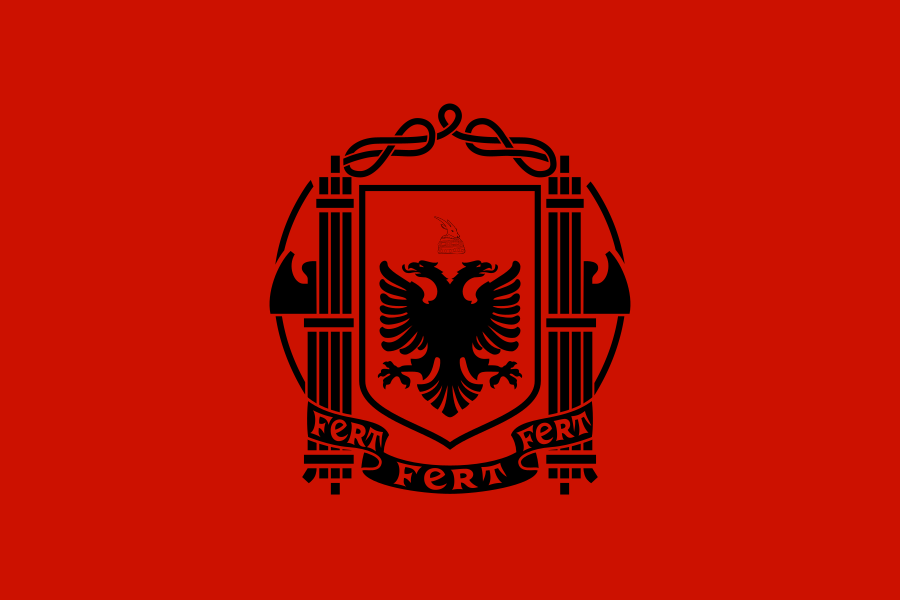
Italian occupation
1939 → 1943
The eagle and the helmet on a red shield between two black fasces, with the motto FERT beneath. The new flag was handed over on 4 December 1939.
- 1943
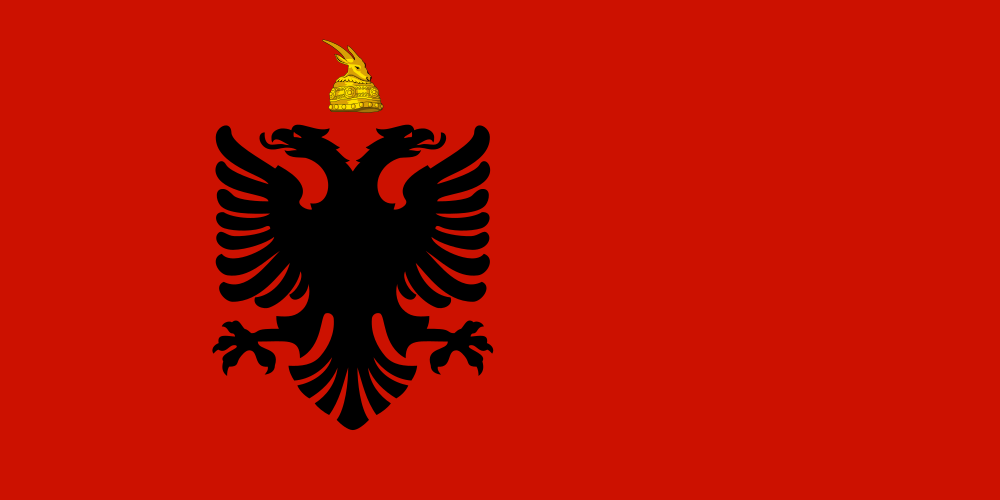
German occupation
1943 → 1944
The union with Italy was dissolved in October 1943 and the pre-Italian flags returned.
Image: SeNeKa, CC BY-SA 3.0
- 1944
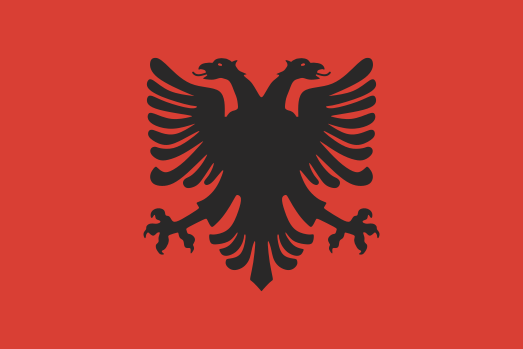
Democratic Government
1944 → 1946
The pre-war flag with a golden star in the upper hoist, first printed on 28 November 1944.
- 1946
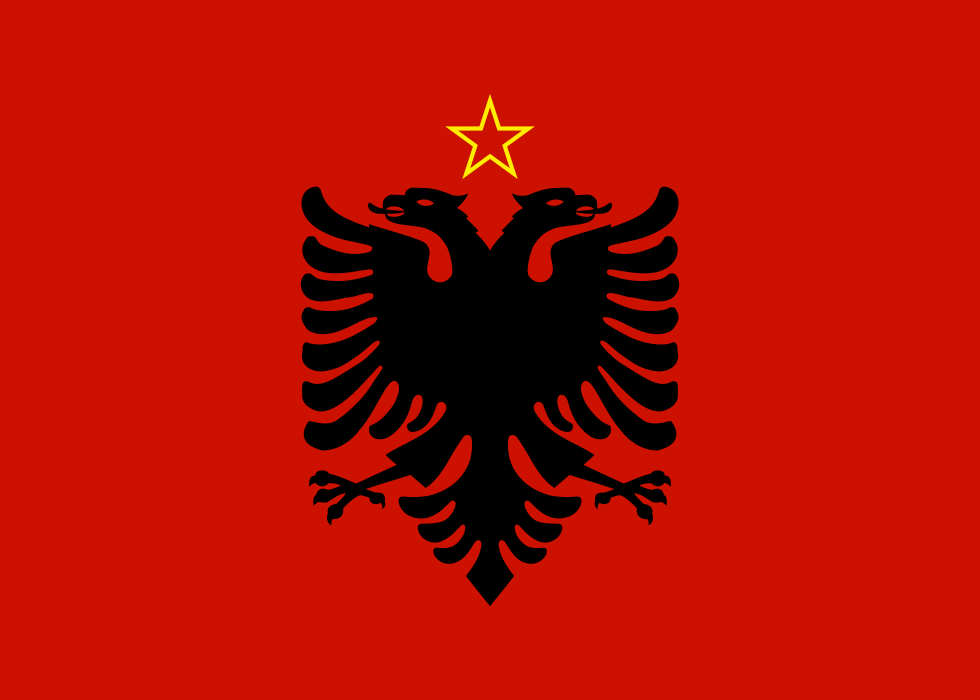
The star above the eagle
10 Jan 1946 → 7 Apr 1992
A red five-pointed star bordered in gold was set above the eagle's heads. The Constitution of 1976 gave the ratio as 1:1.40.
- 1992
The star removed
7 Apr 1992 → 22 Jul 2002
The Assembly voted to remove the star from the flag, restoring the black eagle on red.
- 2002
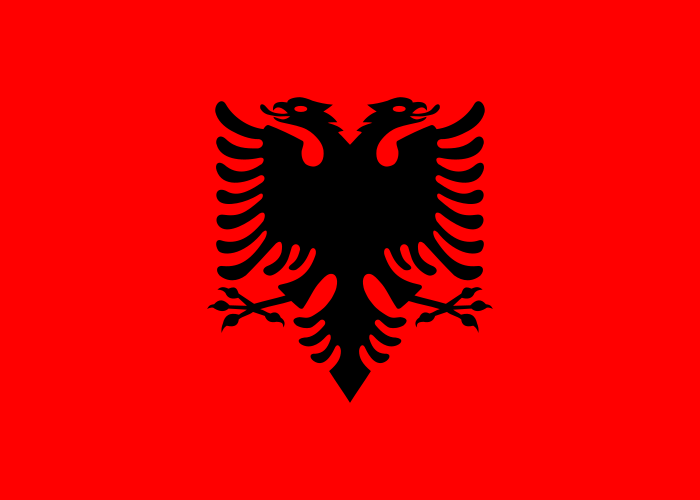
The standardised flagIn use
22 Jul 2002 → today
Law No. 8926 fixed the eagle, its feathers, the ratio of 1:1.4 and the colours.
The law
What defines it, and who flies it
- 22 November 1998
Constitution of the Republic of Albania, Article 14
The flag is red with a two-headed black eagle in the centre. Leaves its form and dimensions to a law.
- 22 July 2002
Law No. 8926 on the form and dimensions of the national flag, the anthem and the state emblem and their use, Articles II to IV
Describes the eagle and its feathers, sets the ratio at 1:1.4 and the colours in CMYK, and says who flies the flag and when.
- 10 July 2003
Decision No. 473 of the Council of Ministers
On the use of the flag inside and outside public institutions and the ratio of its dimensions. Confirms the vertical flag and the ratio of 1:1.4.
In use
Every Albanian citizen has the right to hold, raise or use the flag
Every public institution must display it inside or outside its premises, and a foreign flag may be raised only beside it and never larger
Used at ceremonial meetings with foreign representatives, on the buildings and vehicles of Albanian representatives abroad, and wherever Albania is officially represented
Raised at half-mast during national mourning declared by the Council of Ministers
Related flags
The flags it is confused with or comes from
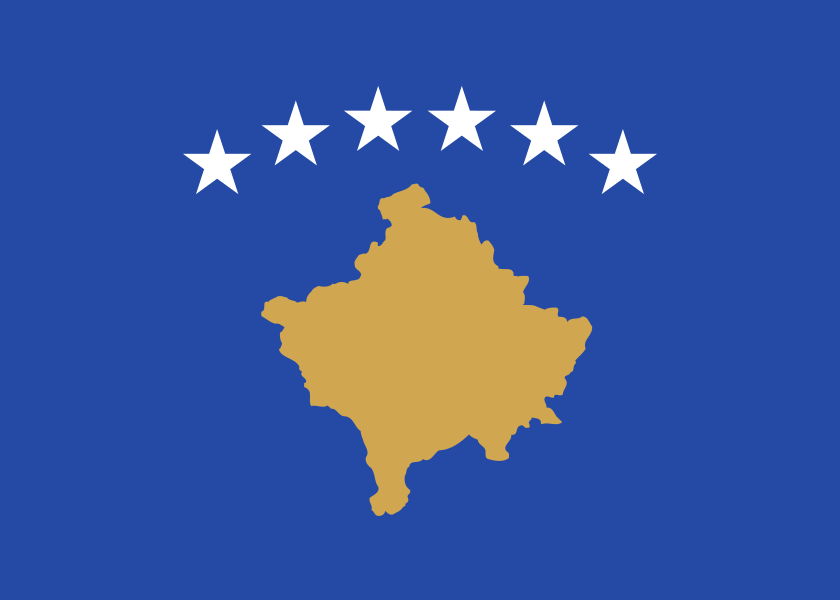 Kosovo
- Albanians in Kosovo flew the Albanian flag widely from 1969, and it was the symbol of the Republic of Kosova in the 1990s. Kosovo's own flag avoids any ethnic symbol.
Coat of arms
The arms of Albania