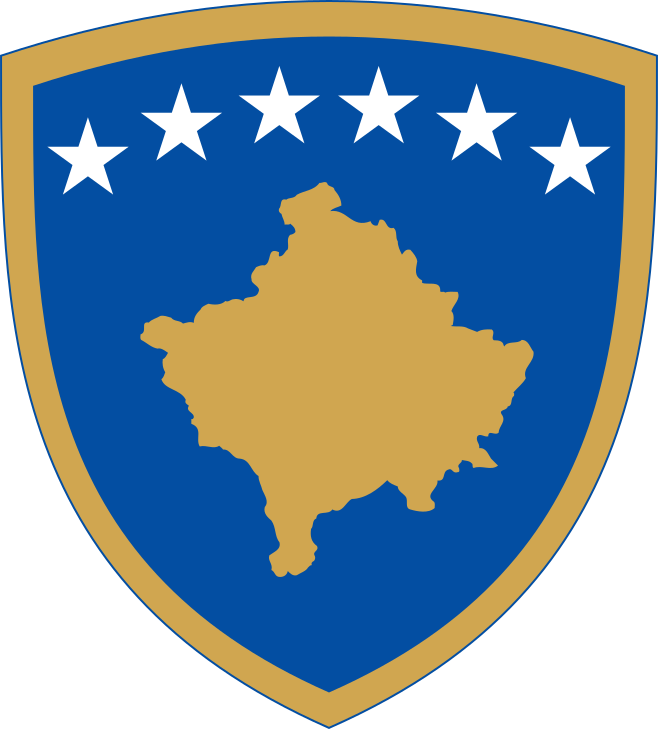
The flag of Kosovo
Flamuri i Kosovës · since 2008
 Back to Kosovo
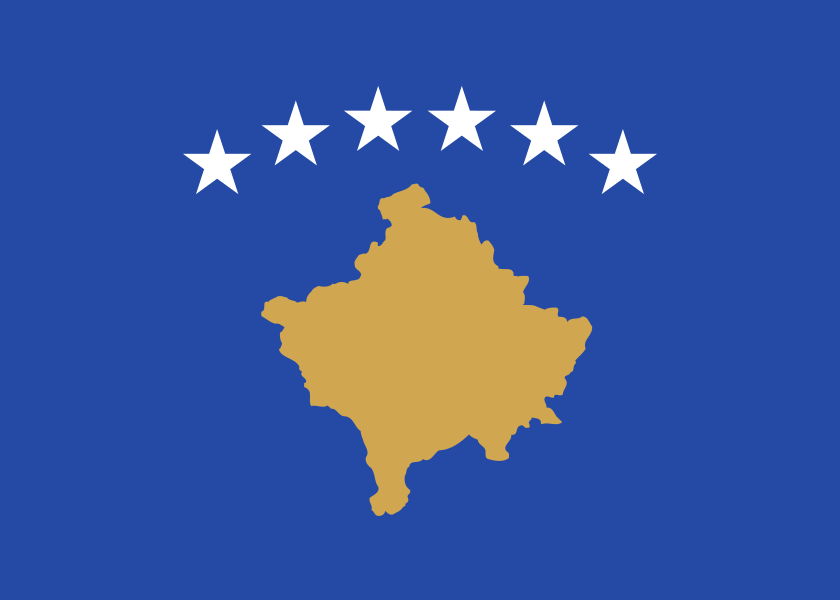
A blue field with a gold map of Kosovo under an arc of six white five-pointed stars. It was chosen from a competition run under the terms of the United Nations talks, which ruled out the double-headed eagles and the Albanian and Serbian colour schemes, and was adopted by the Assembly of Kosovo on 17 February 2008, the day it declared independence from Serbia. Serbia does not recognise that independence.
At a glance
- Adopted
- 2008
- Proportion
- 5:7
- Colours
- Earlier flags
- 4
- Designer
- 1
The colours
The colours of the flag of Kosovo, in the order it has them
- 0189.6%
Blue
bluField
- HEX
#244AA5- RGB
36 74 165- CMYK
100 80 0 0- Pantone
2133 C- RAL
5019
- 0210.4%
Gold
ariMap of Kosovo
- HEX
#D0A650- RGB
208 166 80- CMYK
0 20 60 20- RAL
1034
- 03
White
e bardhëSix stars
- HEX
#FFFFFF- RGB
255 255 255- CMYK
0 0 0 0
No law gives these codes. HEX and RGB are the colour this site draws the flag in; CMYK, Pantone and RAL are the values most often published for it.
Construction
How the flag is drawn
A blue field with a gold map of Kosovo in the centre and six equal white five-pointed stars in an arc above it.
- Table flag
- 16 × 23 cm
- Outdoor flag on a 10 m pole in the ground
- No larger than 350 × 490 cm
- Outdoor flag on a 10 m pole on a balcony
- 200 × 280 cm
- Indoor flag on a 2.5 m pole
- 107 × 150 or 150 × 210 cm
Other forms
- Vertical flag
- The national flag turned clockwise.
Meaning
What each part stands for
- Six stars
- Officially the six major communities: Albanians, Serbs, Bosniaks, Turks, Roma with Ashkali and Egyptians, and Gorani. An unofficial reading takes them as the six regions claimed in Albanian nationalist ideology
- Blue
- According to the designer, the aim of Euro-Atlantic integration
- Gold map
- According to the designer, Kosovo as a rich and peaceful country
Who drew it
- Muhamer Ibrahimi
- Winner of the 2007 competition, whose design the Assembly adopted in modified form
History
How the flag of Kosovo got here
- 1918
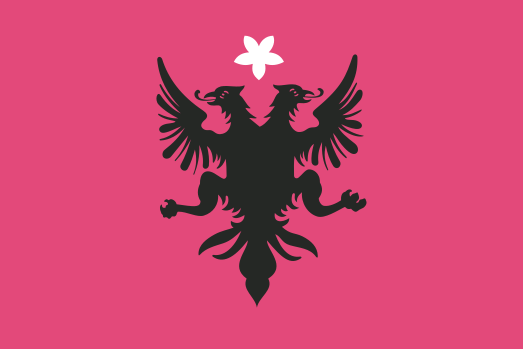
Committee for the National Defence of Kosovo
1918 → 1918
A flag used by the committee in 1918.
- 1969
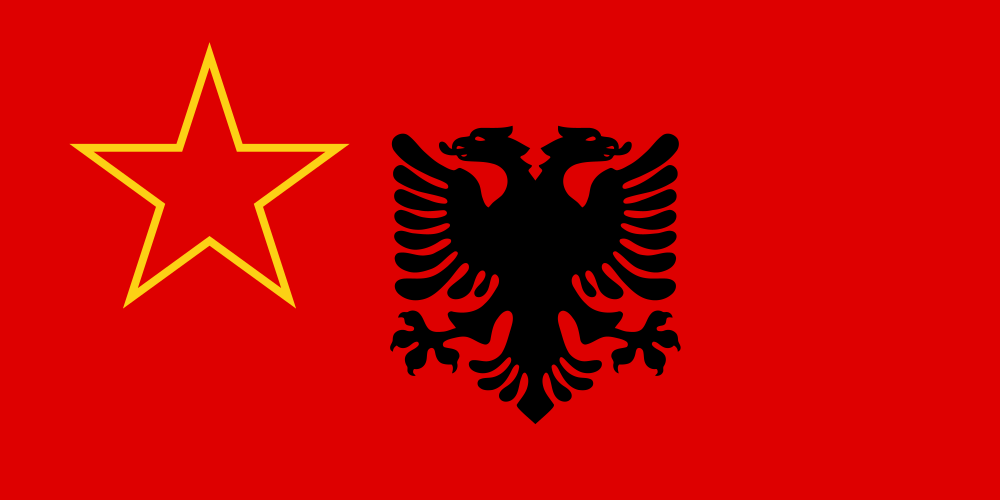
The Albanian flag with a red star
1969 → 1991
Until 1991 Kosovo had no flag of its own. Before 1969 only the flags of Yugoslavia and Serbia could fly legally; from 1969 Kosovo Albanians could use a variant of the Albanian flag charged with the red star found on all Yugoslav flags.
- 1991
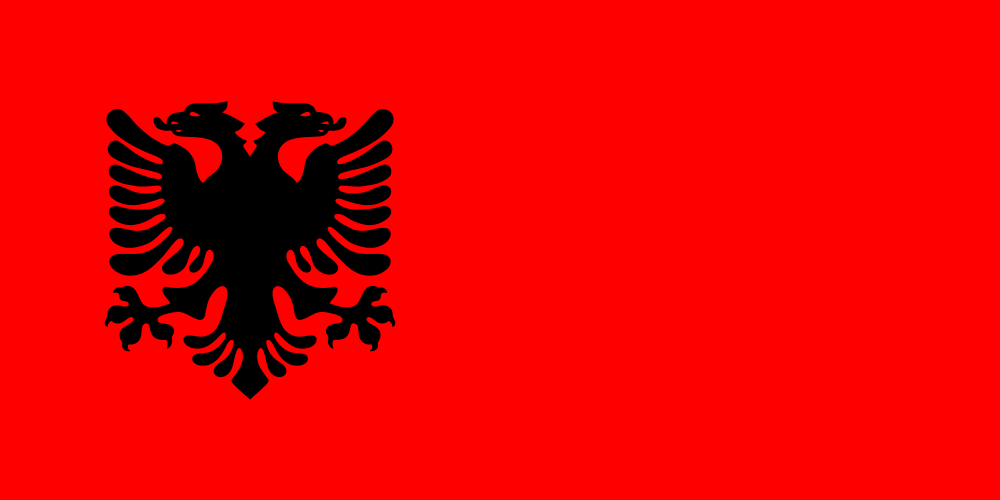
Republic of Kosova
1991 → Jun 1999
A red flag with a black double-headed eagle in the hoist half, a variant of the Albanian flag, seen mainly at referendums, elections and on television. It ended with Security Council Resolution 1244 and the creation of UNMIK.
- 1999
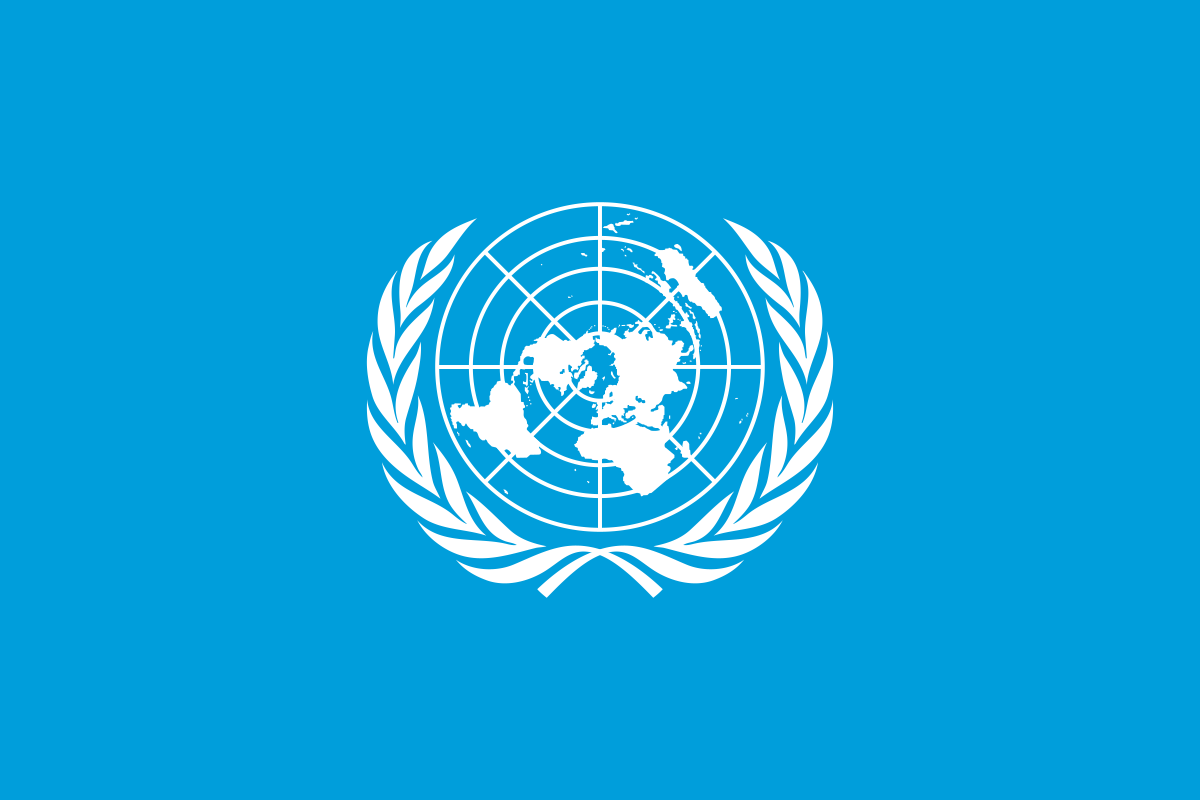
United Nations administration
Jun 1999 → 17 Feb 2008
The UN flag was flown for official purposes, and UNMIK authorised separate flags for the police, the Protection Corps and the provisional institutions. The Albanian flag was widely flown on public buildings against UN regulations.
- 2008
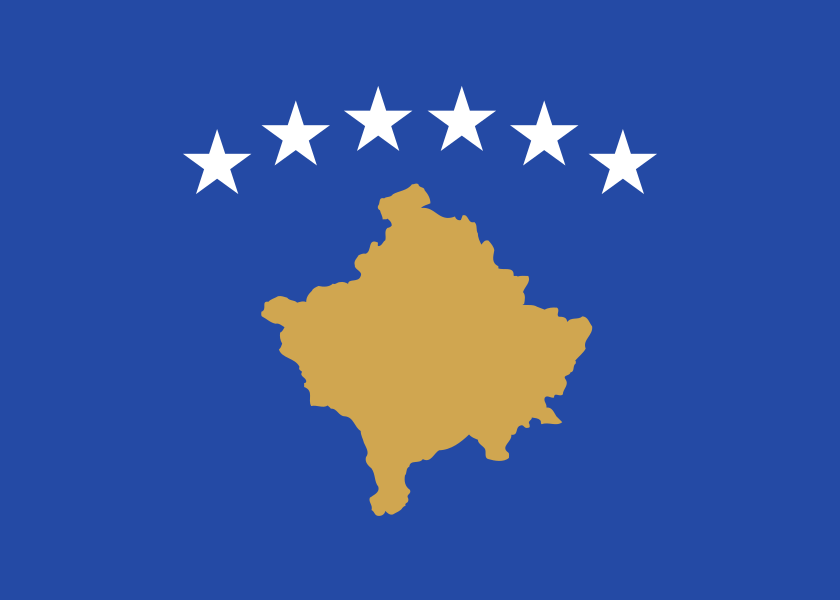
The flag of the Republic of KosovoIn use
17 Feb 2008 → today
The June 2007 competition drew 993 entries, all required to reflect Kosovo's several communities. The Assembly chose a variant of a blue flag with a white map and five stars of different sizes: a sixth star added, the stars made equal and white, the map made gold and larger, and the stars set in an arc above it.
The law
What defines it, and who flies it
- 17 February 2008
Vote of the Assembly of Kosovo on the state symbols
Adopted a variant of the first of the three designs the Kosovo Symbols Commission had selected.
In use
The flag of Albania remains widely flown by Kosovo Albanians, and the flag of Serbia by Kosovo Serbs, particularly in Serb-majority areas in the north
Serbia uses its own flag for the Autonomous Province of Kosovo and Metohija, which it claims under its 2006 Constitution
Related flags
The flags it is confused with or comes from
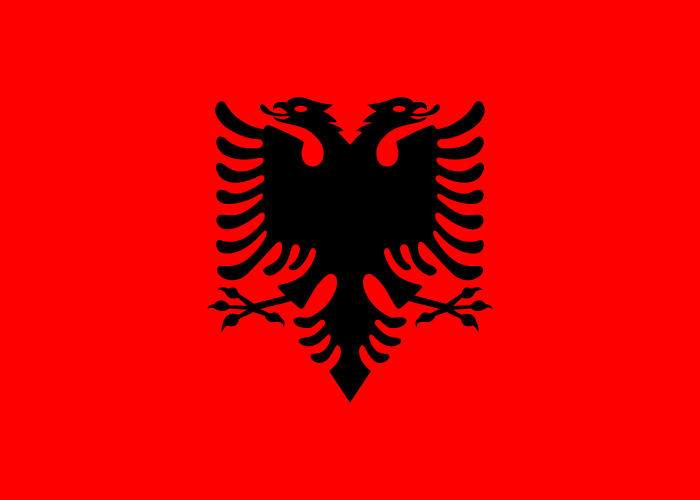 Albania
- The flag most Kosovo Albanians used before 2008 and still fly. Its red and black were excluded from the competition.
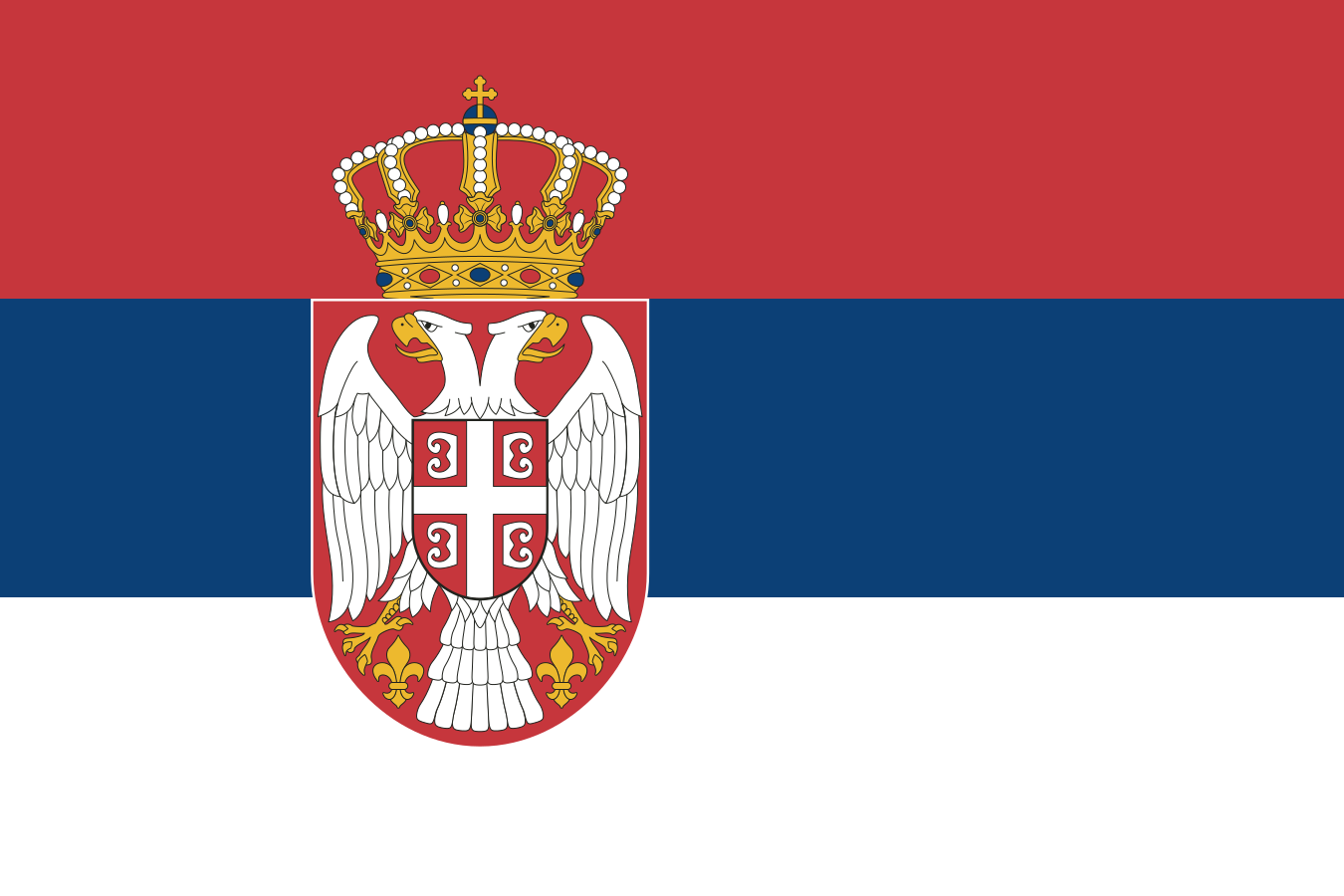 Serbia
- The flag of the state that claims Kosovo as a province. Its red, blue and white were excluded from the competition.
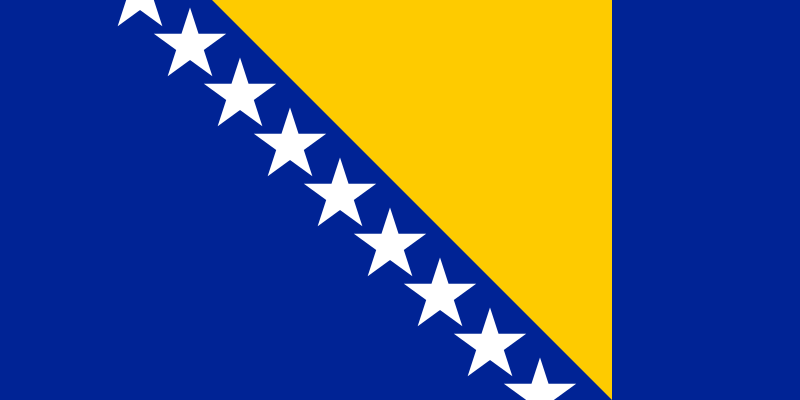 Bosnia and Herzegovina
- Named with Cyprus as similar to the map on a blue field that Kosovo used before independence.
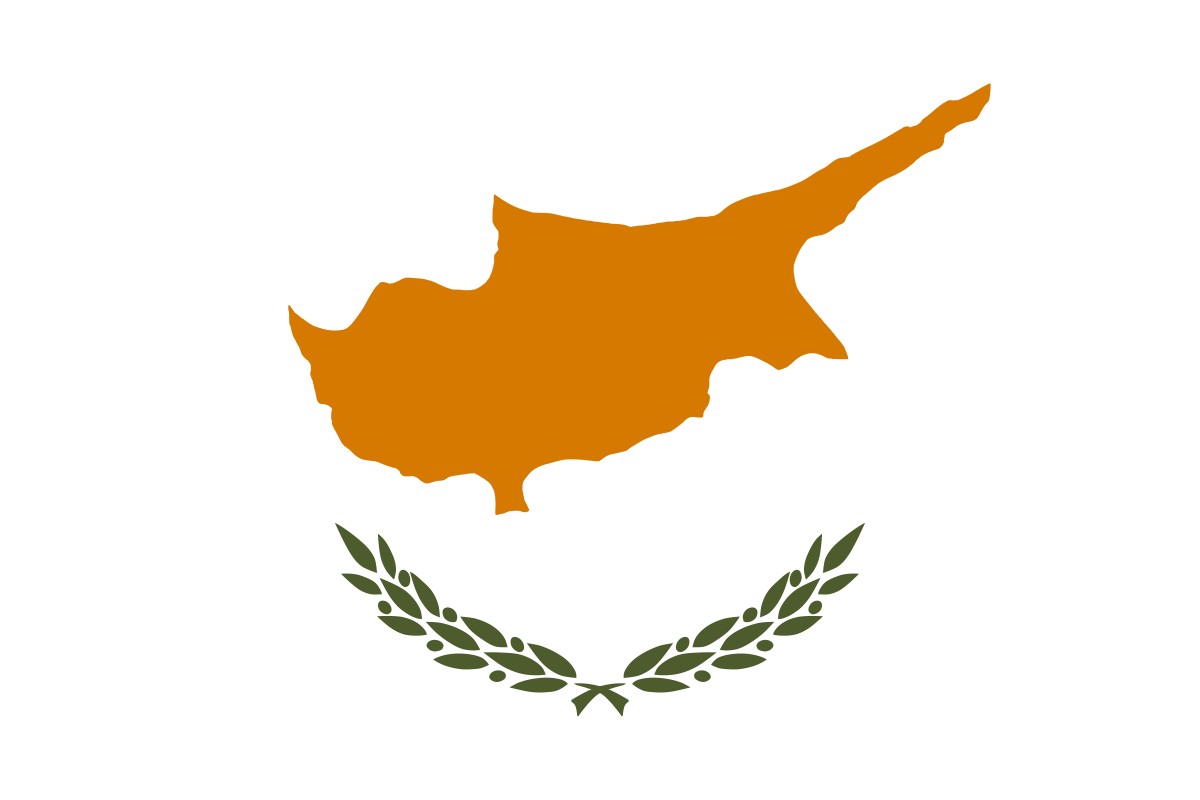 Cyprus
- A map of the country on its flag, named with Bosnia and Herzegovina as a similar design.
Coat of arms
The arms of Kosovo