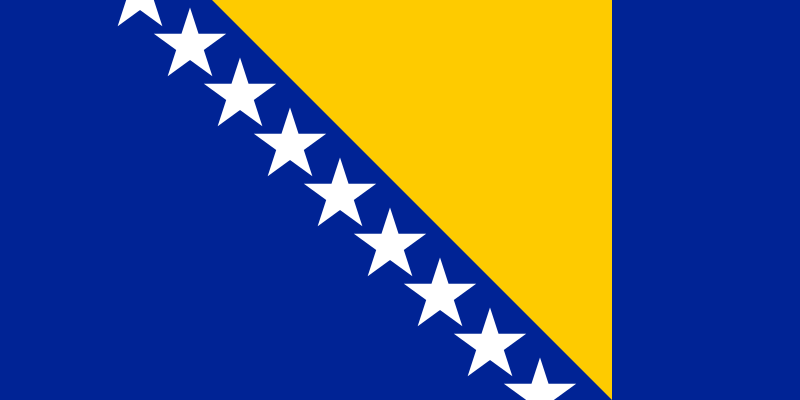
The flag of Bosnia and Herzegovina
Zastava Bosne i Hercegovine · since 1998
 Back to Bosnia and Herzegovina
A blue field with a yellow right triangle and a row of white stars along its hypotenuse, seven whole and two cut by the edges. Parliament could not agree on a flag after the Dayton Agreement, so the High Representative imposed this one on 4 February 1998; parliament passed it into law in 2001. The triangle stands for the three constituent peoples and the shape of the country, the blue and stars for Europe.
At a glance
- Adopted
- 1998
- Proportion
- 1:2
- Colours
- Earlier flags
- 5
- Designer
- 1
The colours
The colours of the flag of Bosnia and Herzegovina, in the order it has them
- 0171.5%
Blue
plavaThe field
- HEX
#002395- RGB
0 35 149- CMYK
100 87 11 1- Pantone
Dark Blue C
- 0225.1%
Yellow
žutaThe triangle
- HEX
#FECB00- RGB
254 203 0- CMYK
0 21 93 0- Pantone
116 C
- 033.4%
White
bijelaThe stars
- HEX
#FEFFFF- RGB
254 255 255- CMYK
0 0 0 0
No law gives these codes. HEX and RGB are the colour this site draws the flag in; CMYK, Pantone and RAL are the values most often published for it.
Construction
How the flag is drawn
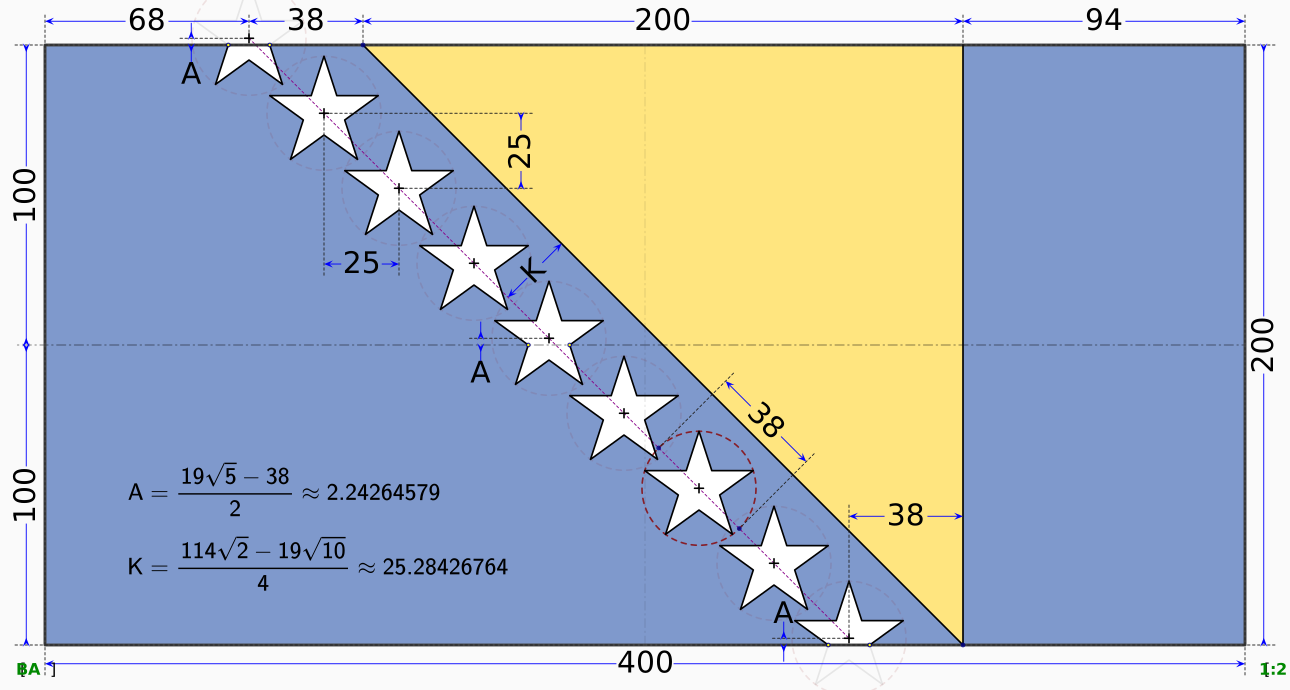
A blue field with a yellow triangle right of centre, and a row of white five-pointed stars running parallel to the triangle's left side from the top edge to the bottom edge.
- Triangle
- Isosceles, one side set at 45° to the edges of the flag
- Stars
- Nine regular five-pointed stars, one point upwards, evenly spaced along a line parallel to the triangle's left side: seven whole, two cut by the edges
- End stars
- Two inner points of the top star touch the top edge, and two inner points of the bottom star touch the bottom edge
- Middle star
- Its vertical centre line lies about 42% of the length from the hoist, measured from the official drawing. The drawing does not fix the stars' position against the triangle
Other forms
- Vertical flag
- The flag turned through 90° clockwise.
Meaning
What each part stands for
- Triangle
- Its three points stand for the three constituent peoples, Bosniaks, Croats and Serbs, and its shape for the approximate outline of the country
- Yellow
- The sun, a symbol of hope
- Blue and stars
- Europe, of which Bosnia and Herzegovina is a part. The stars are meant as an endless row, which is why the top and bottom ones are cut
Who drew it
- Mladen Kolobarić
- Led the independent commission of Bosnian academics and intellectuals that proposed the design in January 1998
History
How the flag of Bosnia and Herzegovina got here
- 1831
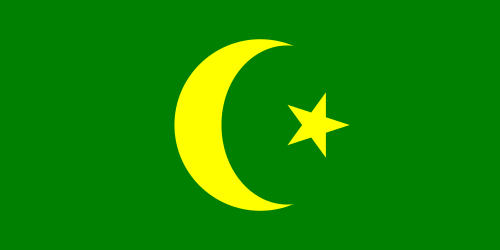
The fight for autonomy
Sept 1831 → Jun 1832
A green flag with a yellow crescent and five-pointed star, used by the movement led by Husein-kapetan Gradaščević. A green flag with a yellow crescent and star was flown again by the rebels of 1878.
Image: Froztbyte, CC BY-SA 3.0
- 1878
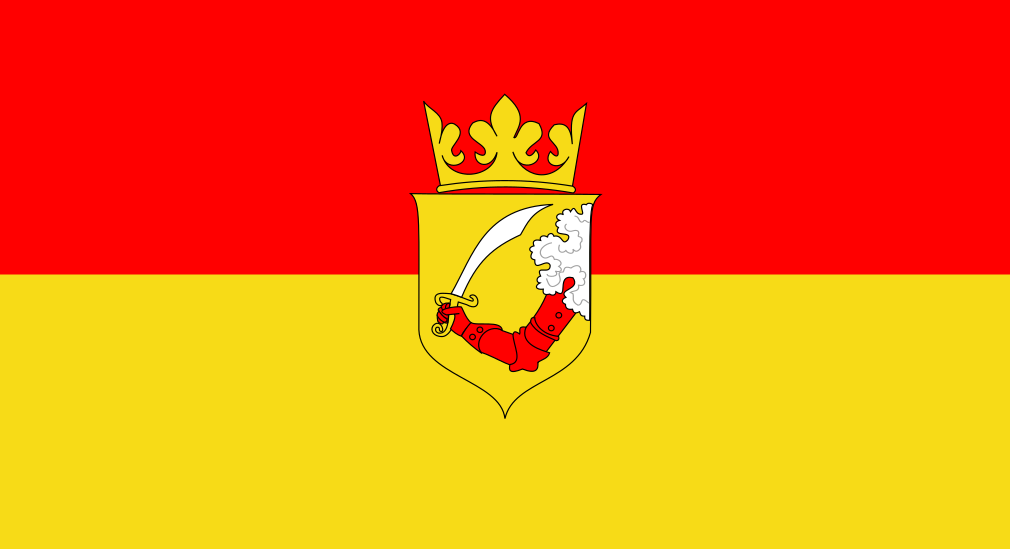
Austro-Hungarian administration
1878 → 1908
Red and yellow for Bosnia, yellow and red for Herzegovina, as with other lands of the monarchy. The Bosnian flag also carried an arm holding a sabre, a motif from the 14th-century arms of Hrvoje Vukčić Hrvatinić.
Image: Themightyquill ( talk ) Wappen_Bosnien-Herzegowina.png : H. Ströhl (1851-1919); Upload: David Liuzzo, CC BY-SA 3.0
- 1908
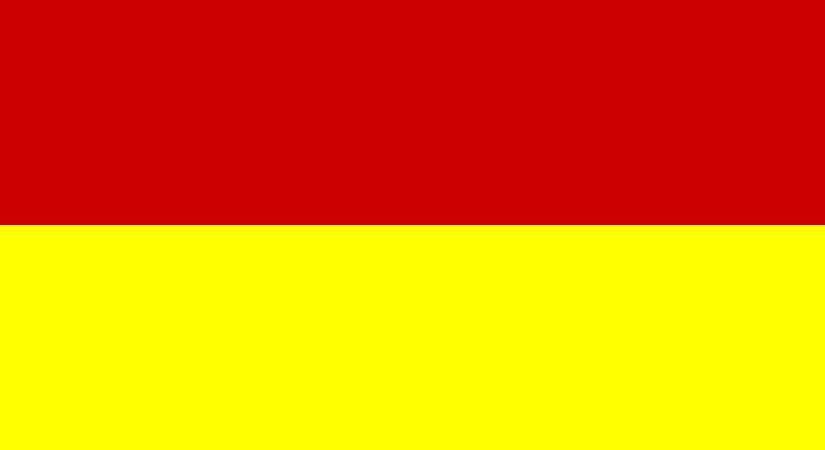
After annexation
1908 → 1918
Two equal horizontal bands, red over yellow for Bosnia and the reverse for Herzegovina.
- 1946
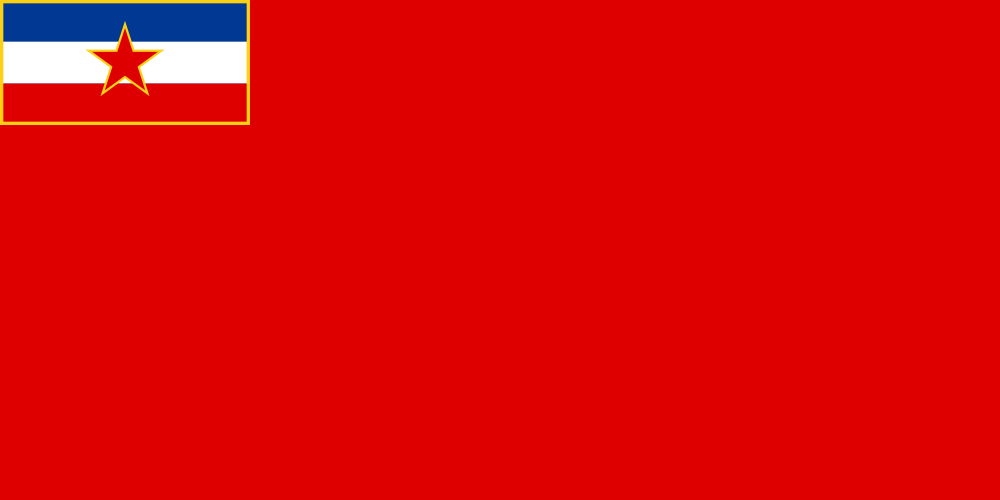
Socialist Republic
31 Dec 1946 → 4 May 1992
A red flag with the Yugoslav flag and its red star in the upper hoist corner, edged in gold, in the proportion 1:2. It was set by the Constitution of the People's Republic of 31 December 1946.
- 1992
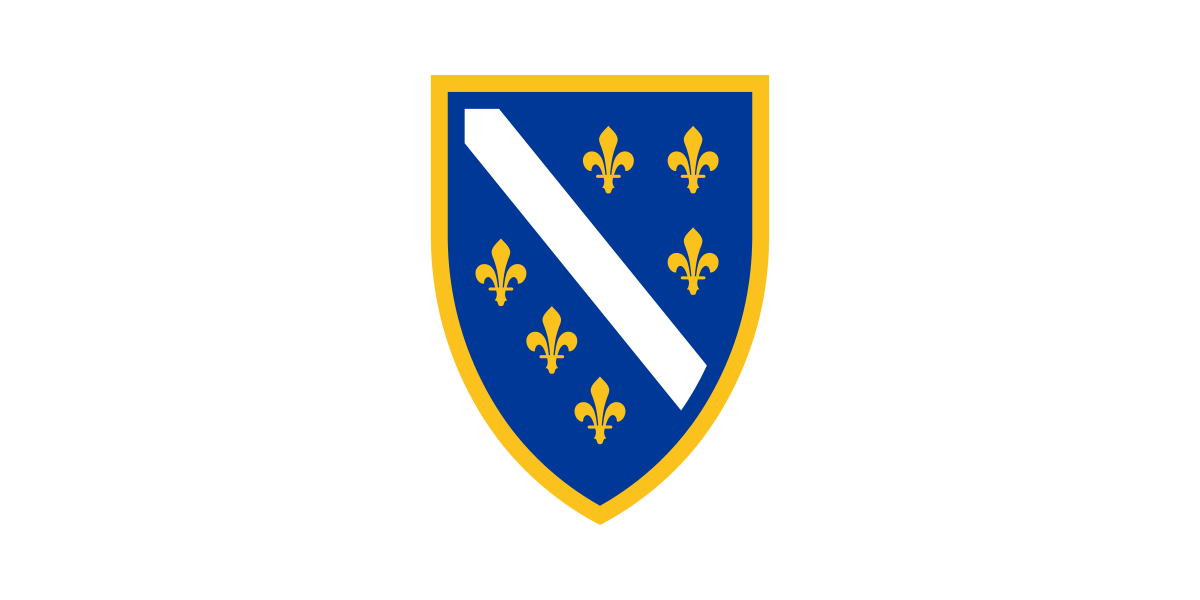
Republic of Bosnia and Herzegovina
4 May 1992 → 4 Feb 1998
A white flag with a blue shield of six golden lilies around a white bend, the arms of the Kotromanić kings, at 1:2. It was first shown officially outside the United Nations on 22 May 1992. Bosnian Serbs saw it as representing Bosniaks alone.
- 1998
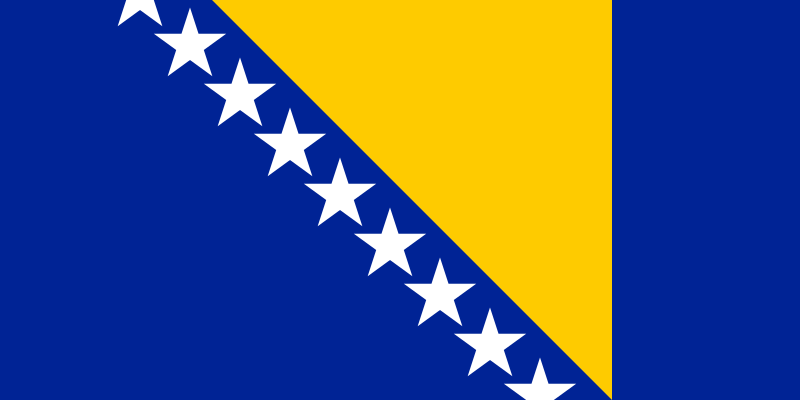
The flag of the Dayton stateIn use
4 Feb 1998 → today
The Dayton Agreement of 1995 left the flag open. A commission set up on 12 January 1998 offered three designs; on 3 February the House of Representatives gave the triangle and stars 16 votes to 1 with 16 abstentions, short of a majority, and the High Representative imposed it. It was raised outside the Presidency within hours, at the United Nations on 6 February and at the Nagano Winter Olympics the next day.
The law
What defines it, and who flies it
- 4 February 1998
Decision of the High Representative imposing the Law on the Flag of Bosnia and Herzegovina
Put the first of the commission's three designs into force with immediate effect, with its blue and yellow changed to those of the Council of Europe.
- 2001
Law on the Flag of Bosnia and Herzegovina, Article 3
Adopted by the Parliamentary Assembly and published in the Official Gazette on 3 August 2001. Describes the flag and sets the ratio at 1:2; the drawing and dimensions in its annex form part of it.
In use
Flown on all buildings of the Presidency, the Council of Ministers, the Parliamentary Assembly, the Constitutional Court, the Central Bank, the Central Election Commission and the other joint institutions
Flown on diplomatic and consular missions and at border crossings
Flown on official journeys and vehicles of the members of the Presidency, and at every international visit, competition or meeting where the country is represented
No other flag from within Bosnia and Herzegovina is displayed with it
Flown at or near the entrances of the barracks and buildings of the Armed Forces and the Ministry of Defence
Disrespect of the flag is a punishable offence
Coat of arms
The arms of Bosnia and Herzegovina