The Albanian lek
Currency · ALL · 1 country
Albania had no currency of its own until February 1926, when the National Bank of Albania introduced the lek. Ottoman piastres, Austro-Hungarian paper, Italian notes and Greek drachmas had circulated before it. The Bank of Albania issues it now, in notes from 200 to 10,000 lekë, and the hundredth, the qindarka, lost legal tender status in 1992.
No sign of its own
The record gives the lek no sign of its own. The Bank of Albania writes its notes as 200 Lekë, the figure followed by the plural of the name. Wikipedia records a plain L as a sign. The ISO code is ALL, and was ALK before 1990.
- ISO code
- ALL
- ISO number
- 008
- Decimals
- 2
An amount, written out
ALL 1,234
- ALL 1,234English
- 1234 LekëAlbanianAlbania
In English the code comes before the amount. Where the Albanian lek is used, it comes after the amount in Albania.
Where the Albanian lek is the official currency
Albania is its sole user. The Bank of Albania issues the notes and coins, and the 1996 notes remain legal tender beside the series brought in between 2019 and 2022.
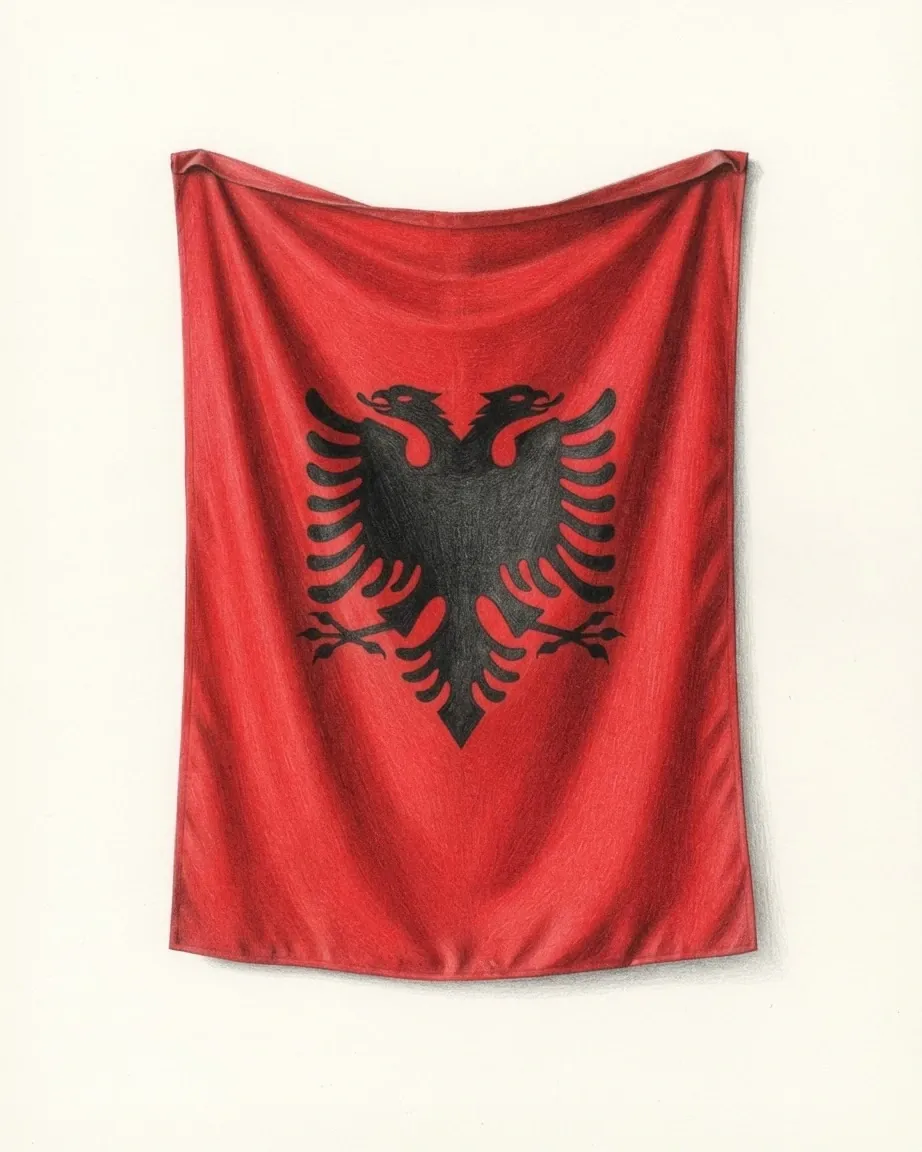
About the Albanian lek
Who issues the lek today
The Bank of Albania issues the notes and coins. Albania set up its two-level banking system in 1992, with the central bank at the first level and commercial banks below it.
The bank launched a new series of six notes in 2019 and brought it in over three years. The 200 and 5,000 lekë notes arrived on 30 September 2019, the 1,000 and a new 10,000 on 30 June 2021, and the 500 and 2,000 on 17 January 2022. The 200 is printed on a tougher material, which Wikipedia identifies as polymer. The older notes, approved in 1995 and issued from 1996, still circulate alongside them as legal tender, and the bank has said it will announce when each one stops. Both series keep the same theme: figures and turning points of Albanian history, each portrait set among scenes from its subject's life and era.
Coins of 1 to 50 lekë came in during 1995 and 1996. A bimetallic 100 lekë followed in 2000. A pelican sits in the centre of the 1 lek coin. The coins spell the plural Leke, with a plain e, where the notes print Lekë.
What Albanians paid with before the lek
Before the First World War the Ottoman piastre was in full circulation; then Austria-Hungary imposed its krone notes during its occupation, and most people kept to gold and silver piastres or bartered. In 1923 Italian paper passed in Shkodër, Durrës, Vlorë and Gjirokastër, and the drachma in Korçë, each at whatever local rate held against gold.
From 1926 to 1939 the lek stood on the gold standard, with its notes convertible to gold. The main unit in those years was the gold franc, worth five lek and used in foreign trade. The economist Alqi Naqellari, writing in the Tirana Times, says the first 5 lek note was printed in Naples and pulled after five days because the Albanian government objected to the single-headed Italian eagle on it.
Italy invaded in 1939. The gold reserves, 300,000 gold francs, went to the Reichsbank in Berlin. With the Italian lira brought in beside the lek at 1.25 lire to one lek, prices rose and the lek lost value.
How Albania dropped the franc and revalued the lek
A law decree of 7 July 1947 made the lek the only currency and took the franc out of circulation. In 1965 the state carried out a confiscatory reform at ten old lek to one new.
Socialist Albania also issued foreign exchange certificates, which could be spent only in designated shops. In 1992 cash ran short, and the state printed notes of 10 and 50 foreign currency lek, each lek valutë worth 50 lekë. They lasted a year before the 1992 series replaced them. The qindarka coins had already lost legal tender status on 1 January 1992, and nothing smaller than a lek has been issued since. ISO still lists the lek with two decimal places.
Why the currency is called lek
Two accounts compete. The official one, traced to debates in the Albanian parliament in 1922, names the currency after Lekë Dukagjini. The other points to Alexander the Great, shortened to Leka in Albanian, whose portrait sat on the obverse of the 1926 one lek coin with Alexander on horseback on the reverse. The word qindarkë comes either from the Albanian qind, a hundred, or from the Arabic qintār, a hundredweight.
Common questions
Questions about the Albanian lek
Is it lek or lekë?
Both are right, in different places. Lek is the singular, lekë the indefinite plural and lekët the definite plural. The Bank of Albania prints Lekë on its notes. The coins issued since 1995 drop the diaeresis and read Leke, a spelling Wikipedia calls incorrect.
Can old Albanian banknotes still be spent?
The series first issued in 1996 is still legal tender and circulates beside the notes introduced between 2019 and 2022. The Bank of Albania has said it will announce in advance the date each old denomination stops being legal tender, and that after that date the notes keep their value and can be exchanged at face value for new ones. The 100 lekë note has already gone: it stopped being legal tender at the end of 2011, and a coin of the same value took its place.
Who was the lek named after?
The official account, based on discussions in the Albanian parliament in 1922, names Lekë Dukagjini. A second account names Alexander the Great, called Leka in Albanian, whose portrait appeared on the first lek coin of 1926. Wikipedia records both, and gives the parliamentary one as official. The coin carried Alexander on horseback on its reverse.
What happened to the qindarka?
The qindarka was the hundredth of a lek. Aluminium coins of 5 to 50 qindarka were struck through the socialist years, in series of 1964, 1969 and 1988. All of them lost legal tender status on 1 January 1992, and the coins issued since 1995 start at one lek, so prices are now written in whole lekë.