Poland existed for eight centuries, was partitioned out of existence for one hundred and twenty-three years, and was reassembled after 1945 several hundred kilometres west of where it had been, with most of its population moved to match. Poland's 37,563,071 people as of the end of June 2024 occupy 312,683 square kilometres of largely flat ground between the Baltic and the Carpathians.
At a glance
- Population
- 36 435 861
- Capital
- Warsaw
- Area
- 312 683km²
- Currency
- złPLN
- Official language
- Polish
- Local time
- UTC+01:00
Where it is
Where Poland is, and what is around it
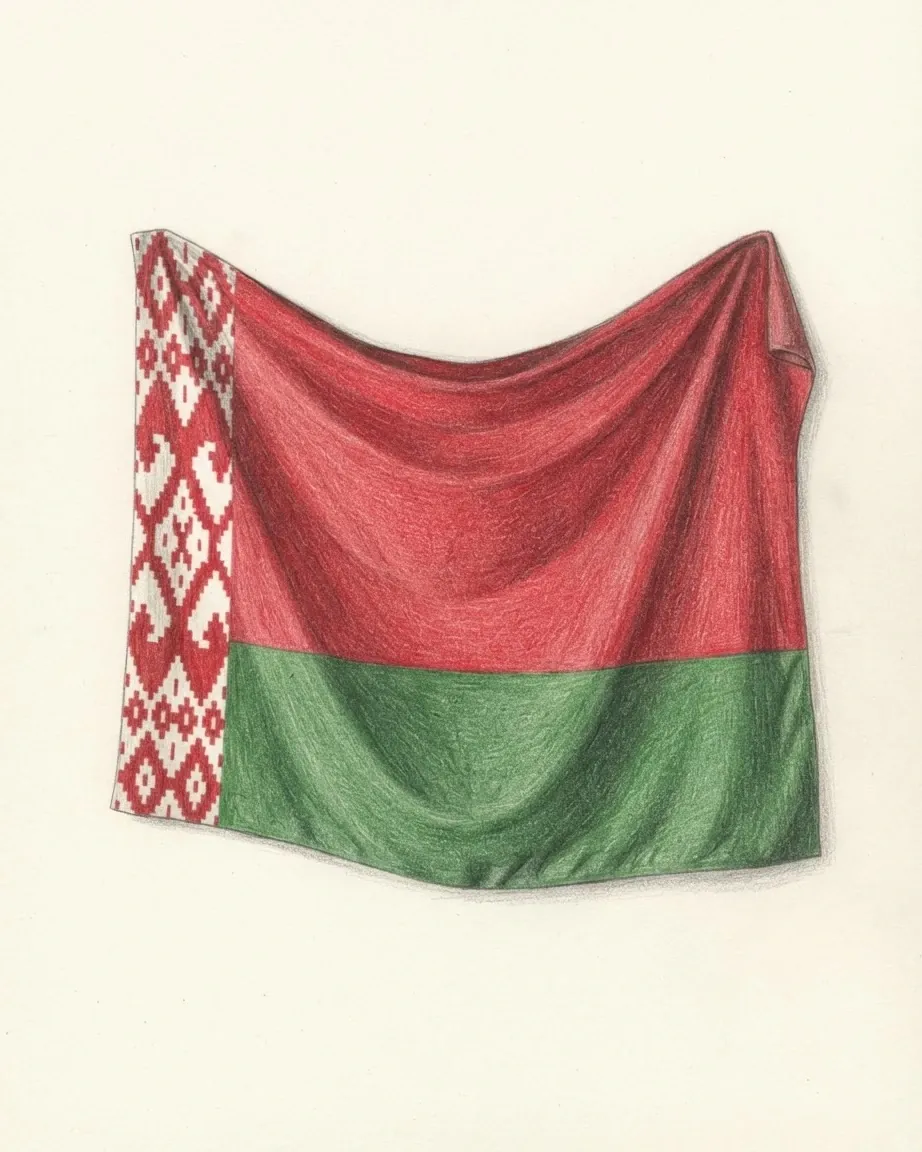
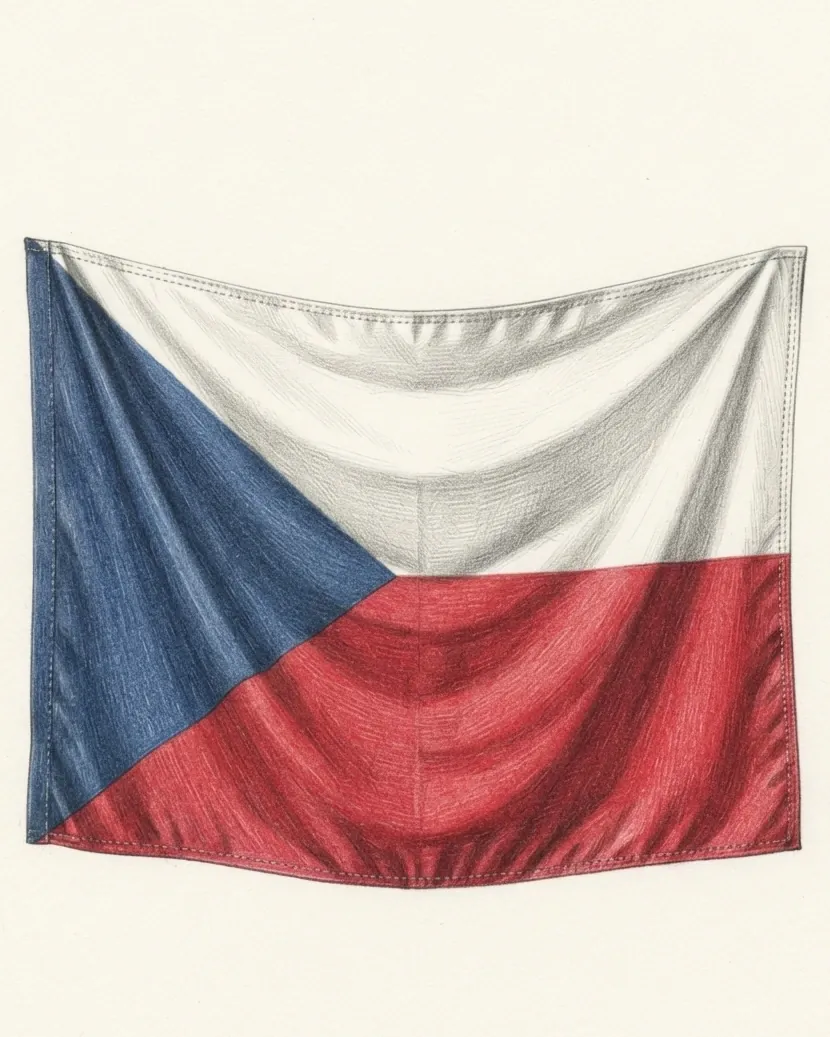
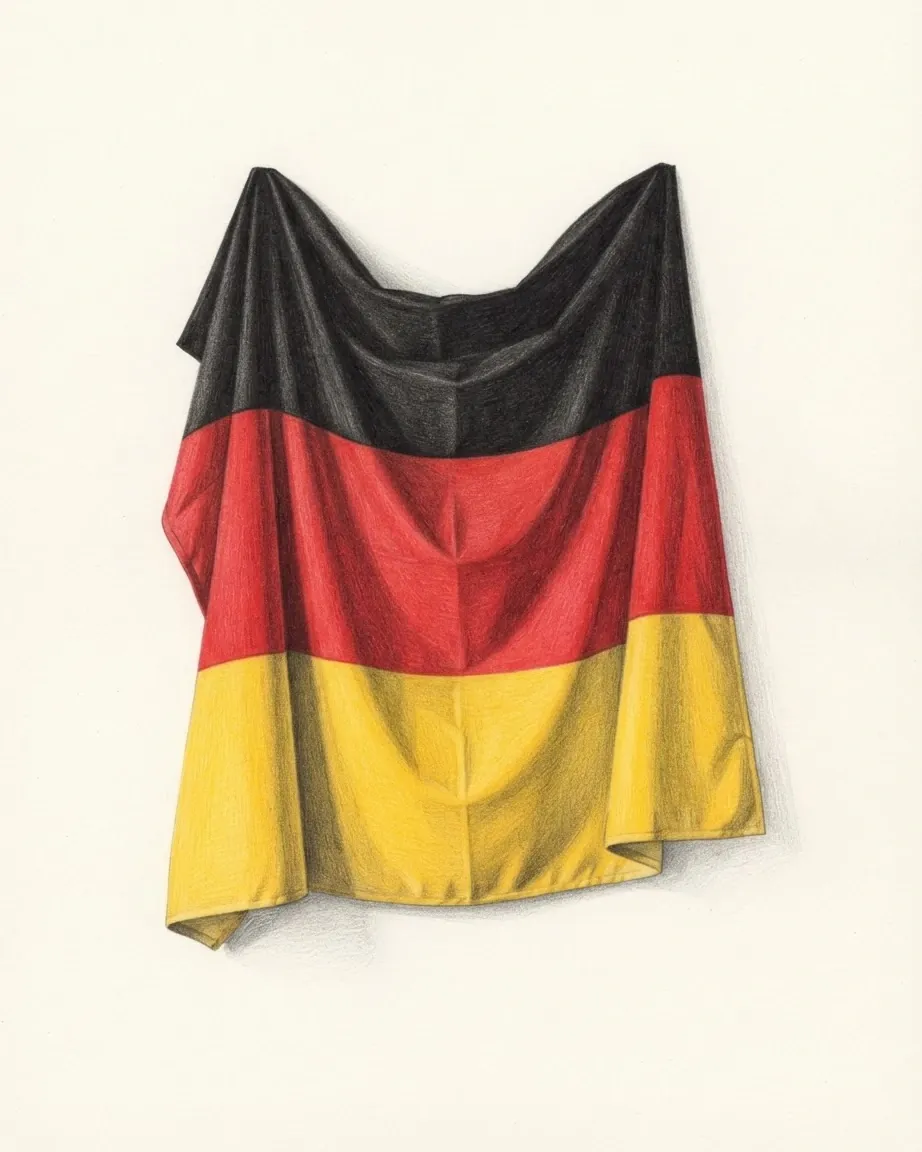
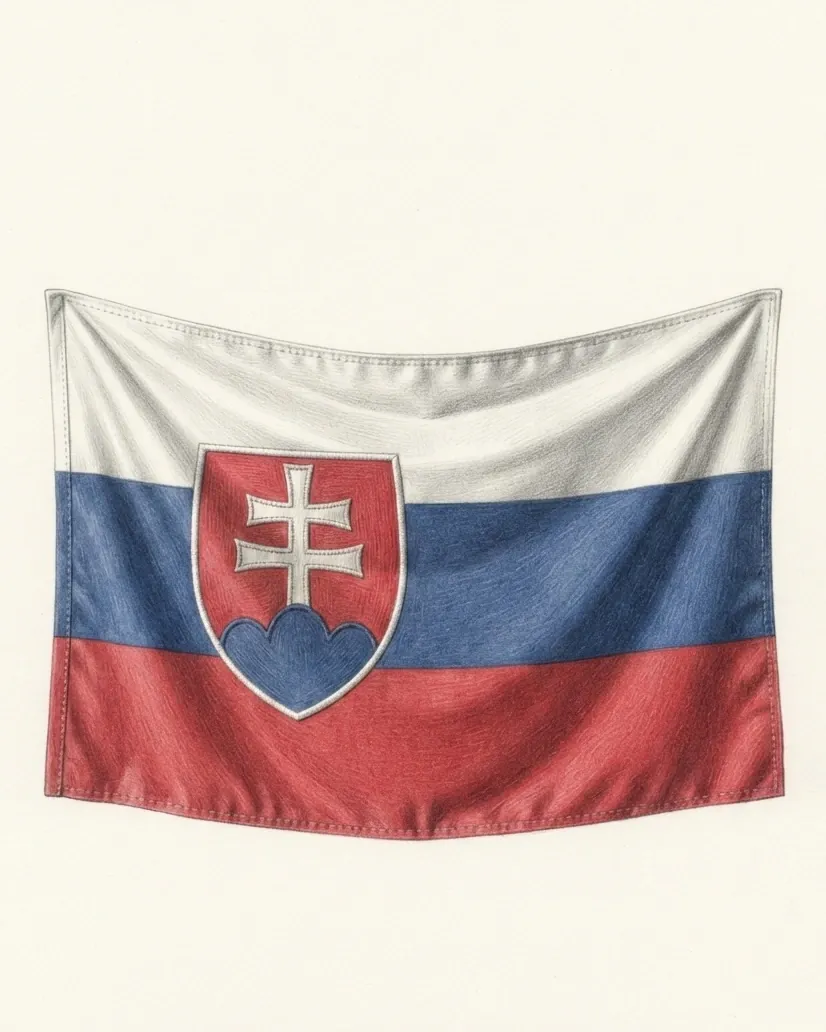
Poland has a coast. It shares a border with 7 countries, counted as shared borders, which includes neighbours across water.
 Belarus
 Czechia
 Germany
 Lithuania
 Russia
 Slovakia
 Ukraine
What lies between the Baltic and the Carpathians
Poland runs from the Baltic Sea to the Carpathians across 312,683 square kilometres of largely flat ground, holding 37,563,071 people as of the end of June 2024. It borders seven countries: Germany to the west, Czechia and Slovakia to the south, Ukraine and Belarus to the east, and Lithuania and the Russian exclave of Kaliningrad to the north-east. Most of those frontiers were settled after 1945, and several of the states behind them have changed their names in the years since.
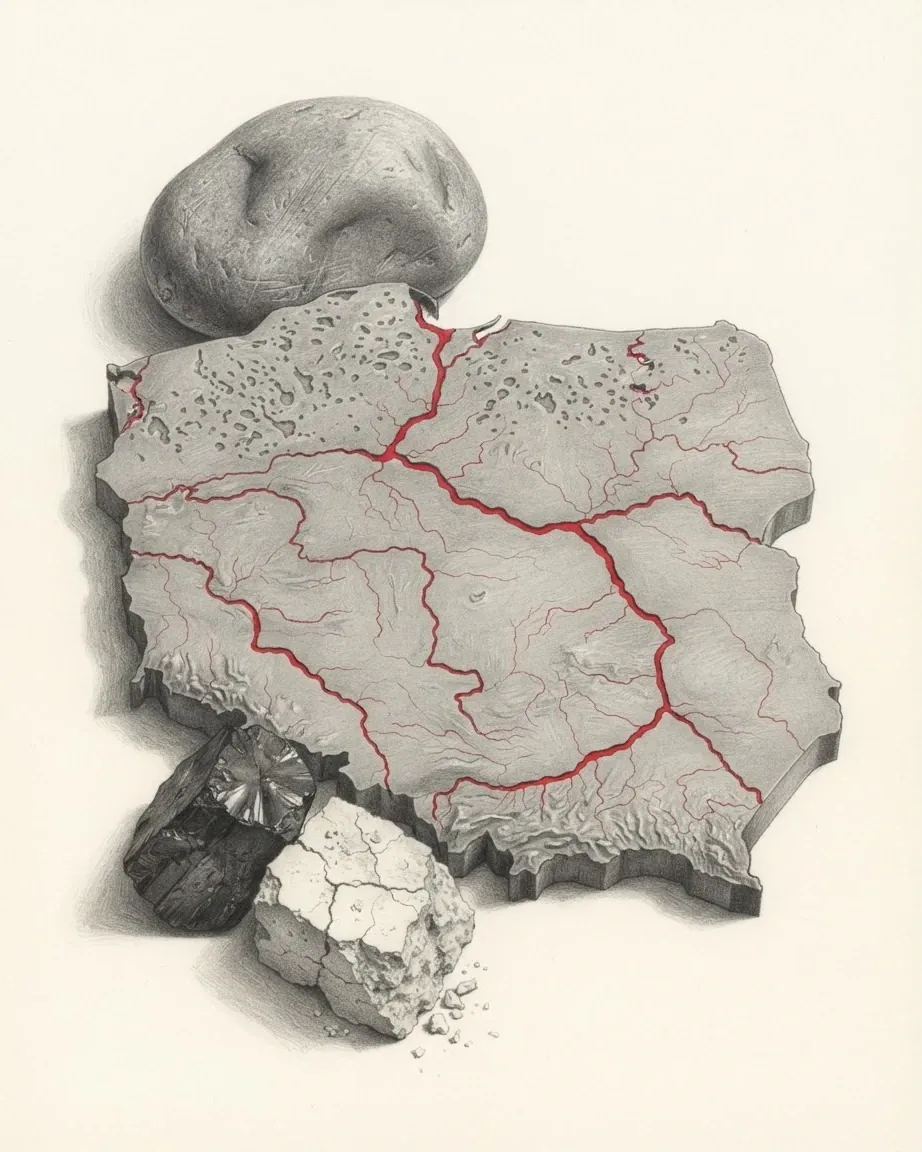
The land runs almost entirely flat from the Baltic to the southern rim, which is the eastern end of the North European Plain, and rises only at the very bottom of the country into the Sudetes and the Carpathians. The highest point is Rysy at 2,501 metres, in a Tatra range that occupies a small fraction of the territory. Poland: geography deals with the plain, the mountains and the rivers that drain them north.
Almost 97% of citizens give Polish as their first language.
Why the borders moved and the people with them
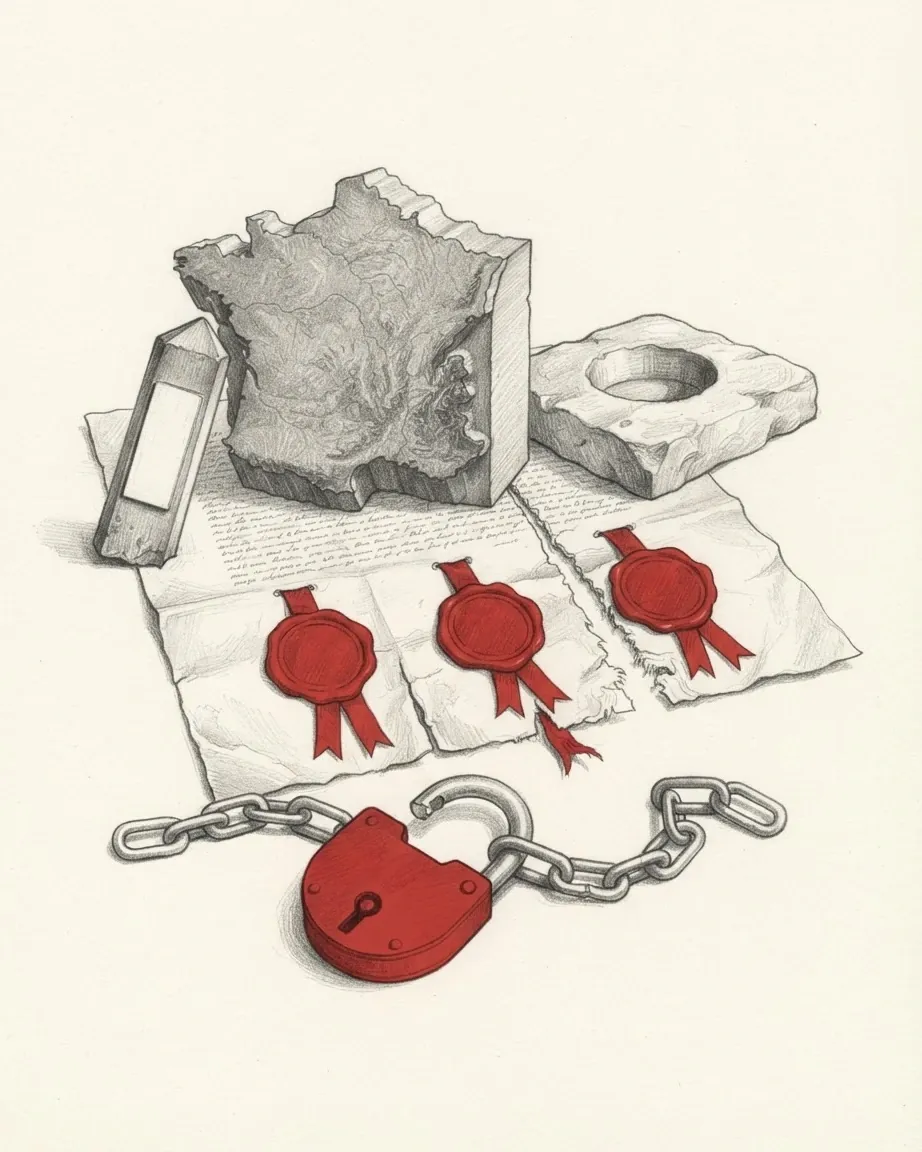
Poland has existed as a state, disappeared entirely, and been reassembled in a different place. Those are the three facts that organise everything else about it.
A Polish state converted to Christianity in 966 and grew into a commonwealth with Lithuania that was among the largest polities in Europe. Three neighbouring powers partitioned it out of existence in 1772, 1793 and 1795, and it did not appear on a map again for one hundred and twenty-three years, recovering independence on 11 November 1918.
The Second World War killed roughly a sixth of the population, including almost the entire Jewish community. The settlement that followed moved the whole country westward by several hundred kilometres, transferring German territory to Poland and Polish territory to the Soviet Union, and moved millions of people to match. The uniform country described above is the product of those five years. Poland: history follows the sequence from the baptism to 1989.
How a country with two mandates governs itself
Parliament makes governments and a directly elected president can stop them, and the tension between those two facts is the engine of Polish politics.
The Sejm has 460 seats filled proportionally with a threshold of 5%, or eight for a coalition, waived for registered national minorities. The Senate has 100 seats decided in single-member districts. The president is elected for five years and can veto legislation, which the Sejm overrides only with three fifths.
Two further features shape outcomes. A government cannot be voted out unless the motion names its successor, so cabinets fall at elections rather than between them. And the question of who selects the judicial members of the body that nominates judges has been an unresolved constitutional dispute since 2015, with sustained objections from the European Commission and European courts. Poland: politics sets out the chambers and the sixteen voivodeships beneath them.
What Poland makes and sells
| Indicator | Value | Measured |
|---|---|---|
| Output per person | $28,420 | 2025 |
| Output per person, at purchasing power | $54,262 | 2025 |
| Growth | 3.6% | 2025 |
| Unemployment | 3.0% | 2025 |
| Gini coefficient | 28.5 | 2023 |
Poland converted a planned economy into a market one in a single abrupt programme at the start of the 1990s, regained its pre-1989 output by 1995 ahead of every comparable country, and was the only European Union economy to avoid recession in 2008. Between 2010 and 2019 output grew by 38%.
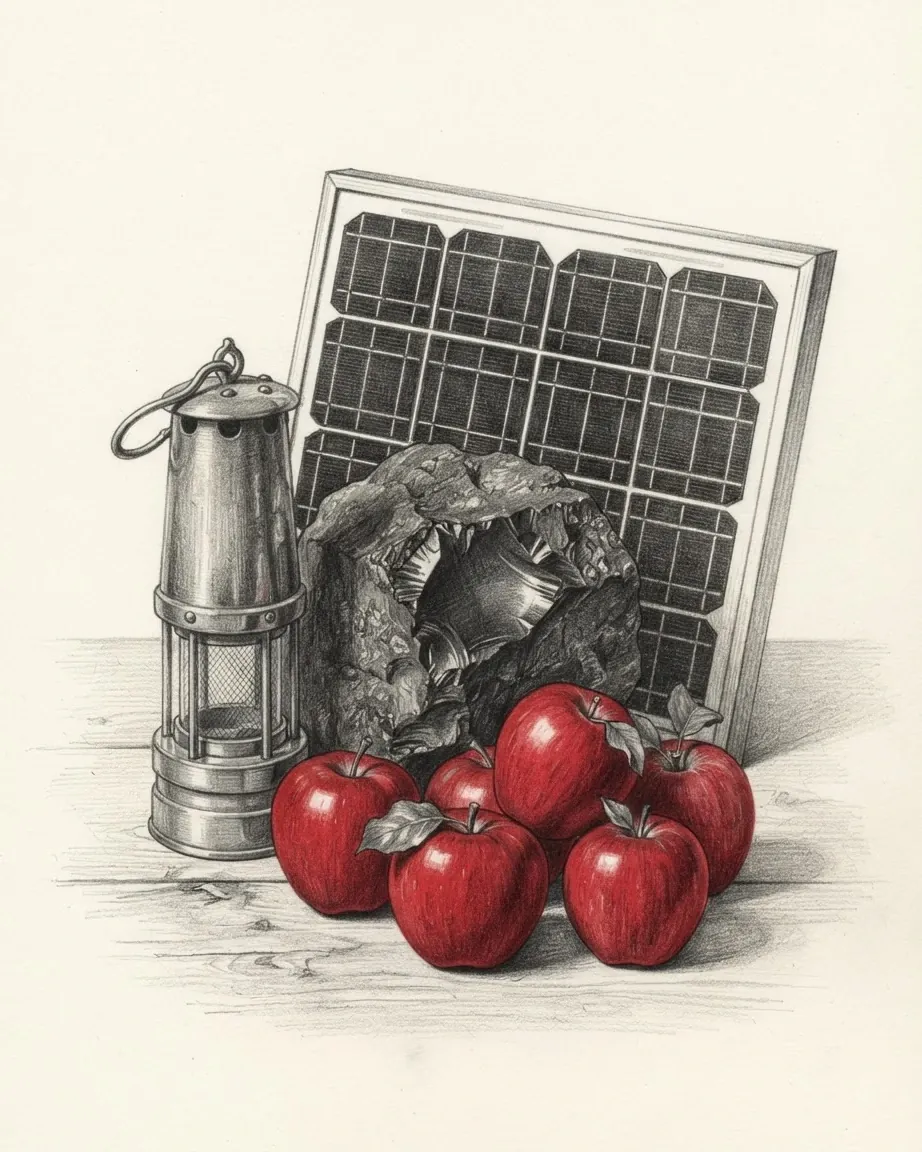
Exports are diversified across machinery, electronics, vehicles, furniture and plastics, with Germany taking the largest share, and agriculture is a substantial net exporter. The unresolved problem is energy: coal supplied 40% of total energy in 2020 and about 80% of electricity generation in 2021, the highest shares in the International Energy Agency, on a resource Poland has been importing since 2017. Poland: economy takes up the transition, the export mix and the pace of the energy shift.
What is believed and spoken here
Poland has been among the most religious countries in Europe and is changing quickly. Belief has held up: 87% described themselves as believers in 2021, down from 94% in 1992. Practice has not: regular practice stood at 43% of the population, and among young people it fell from almost 70% in the early 1990s to under 25%.
The literary tradition was built during the statelessness, when poets were treated as national spokesmen because there was no parliament to be one. Four Polish writers have taken the Nobel Prize in Literature. Poland: culture sets out the language, the literature, the collapse in practice and what is on the table.
What there is to see
Poland received 21.4 million foreign tourists in 2019, eighteenth in the world, on an industry it built for its own citizens long before anyone else arrived.
The two great cities offer the same centuries by opposite routes: Kraków came through the war with its medieval centre intact, and Warsaw's was rebuilt from paintings after deliberate destruction and is listed for the reconstruction itself. Beyond them are the Tatras, the Masurian lakes, a Baltic coast with a ten-week season, and the last substantial primeval lowland forest in Europe on the Belarusian border.
A share of arrivals no other European country matches comes for the sites of the twentieth century. Poland: travel works through the regions, the seasons and how far apart everything is.
Where Poland stands
Poland joined NATO in 1999 and the European Union on 1 May 2004, after a referendum in June 2003, and entered the Schengen area in 2007. It is in the OECD, the Council of Europe and the World Trade Organization, and it has kept its own currency rather than adopting the euro.
Its borders with Belarus, Ukraine and the Kaliningrad exclave put it on the eastern edge of both alliances, which has made defence, energy and border policy a single continuous subject rather than three separate ones. Since 2022 it has been among the principal destinations for people leaving Ukraine, and that movement has reshaped the labour force of an economy whose own birth rate has been below replacement for a generation.
Read
Everything about Poland
Six articles, each answering one question and each written to be read on its own.
The record
What is measured about Poland
Pages that nobody writes, built from the record and from the data files beside it.
Common questions
Questions about Poland
How big is Poland?
312,683 square kilometres, holding 37,563,071 people as of the end of June 2024. Kraków to Gdańsk is a comparable distance to London to Edinburgh.
Why did Poland disappear from the map?
Three neighbouring powers partitioned the Polish-Lithuanian Commonwealth between them in 1772, 1793 and 1795, and the state ceased to exist. It did not reappear for one hundred and twenty-three years, recovering independence on 11 November 1918.
Is Poland in the euro?
No. Poland joined the European Union on 1 May 2004 and the Schengen area in 2007, but retains the złoty. Keeping its own currency allowed the exchange rate to absorb shocks that euro members had to take through wages and employment.
Is Poland still Catholic?
Belief remains high and practice is falling fast. In 2021, 87% described themselves as believers against 94% in 1992, but regular practice was 43% of the population and under 25% among young people, down from almost 70% in the early 1990s.
What language do they speak in Poland?
Polish, given as a first language by nearly 97% of citizens. It is a West Slavic language written in the Latin alphabet with additional letters, and it is the most widely spoken Slavic language after Russian.
Nearby in the catalogue