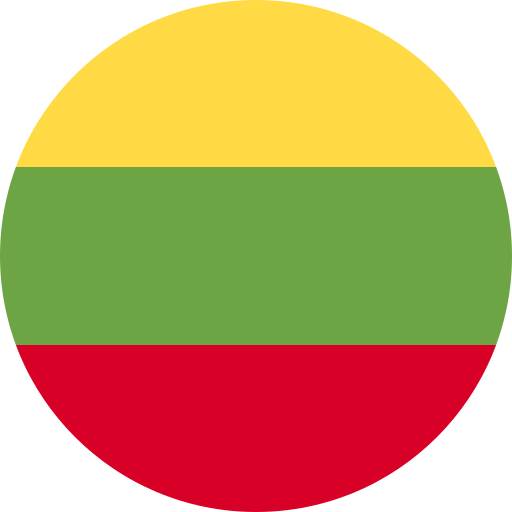
Lithuania was handed three ultimatums in twenty-seven months, by Poland in March 1938, by Germany on 20 March 1939 and by the Soviet Union on 14 June 1940, and accepted all three; the last of them ended the state for half a century. Lithuania holds about 2.86 million people on the eastern shore of the Baltic Sea, counted on 1 January 2023, independent again since 11 March 1990 and a member of the European Union, NATO and the eurozone. Much of what the republic has built since then addresses the conditions that made refusal impossible in 1940, from joining two alliances in 2004 to cutting the last synchronous link between its electricity grid and Russia's on 7 February 2025.
At a glance
- Population
- 2 888 774
- Capital
- Vilnius
- Area
- 65 300km²
- Currency
- €EUR
- Official language
- Lithuanian
- Local time
- UTC+02:00
Where it is
Where Lithuania is, and what is around it
Lithuania has a coast. It shares a border with 5 countries, counted as shared borders, which includes neighbours across water.
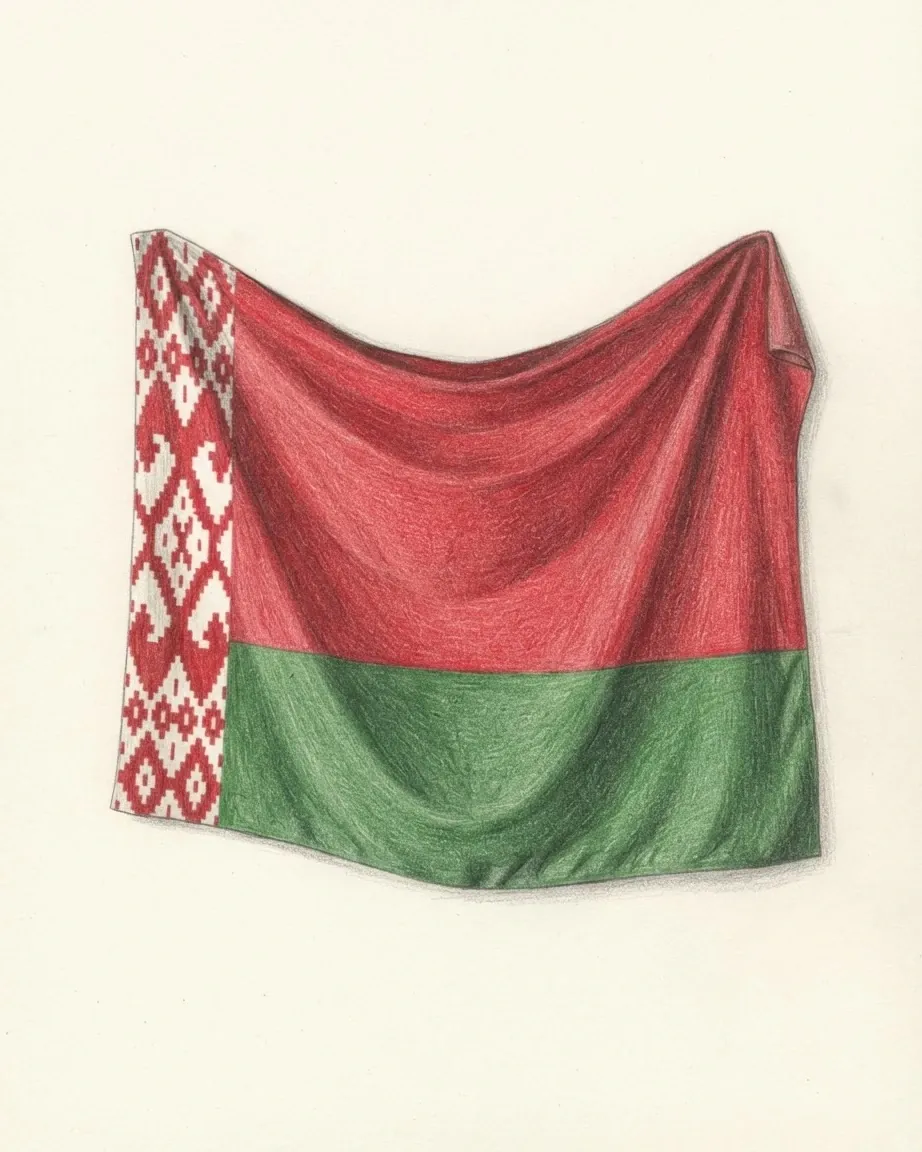
 Belarus
 Latvia
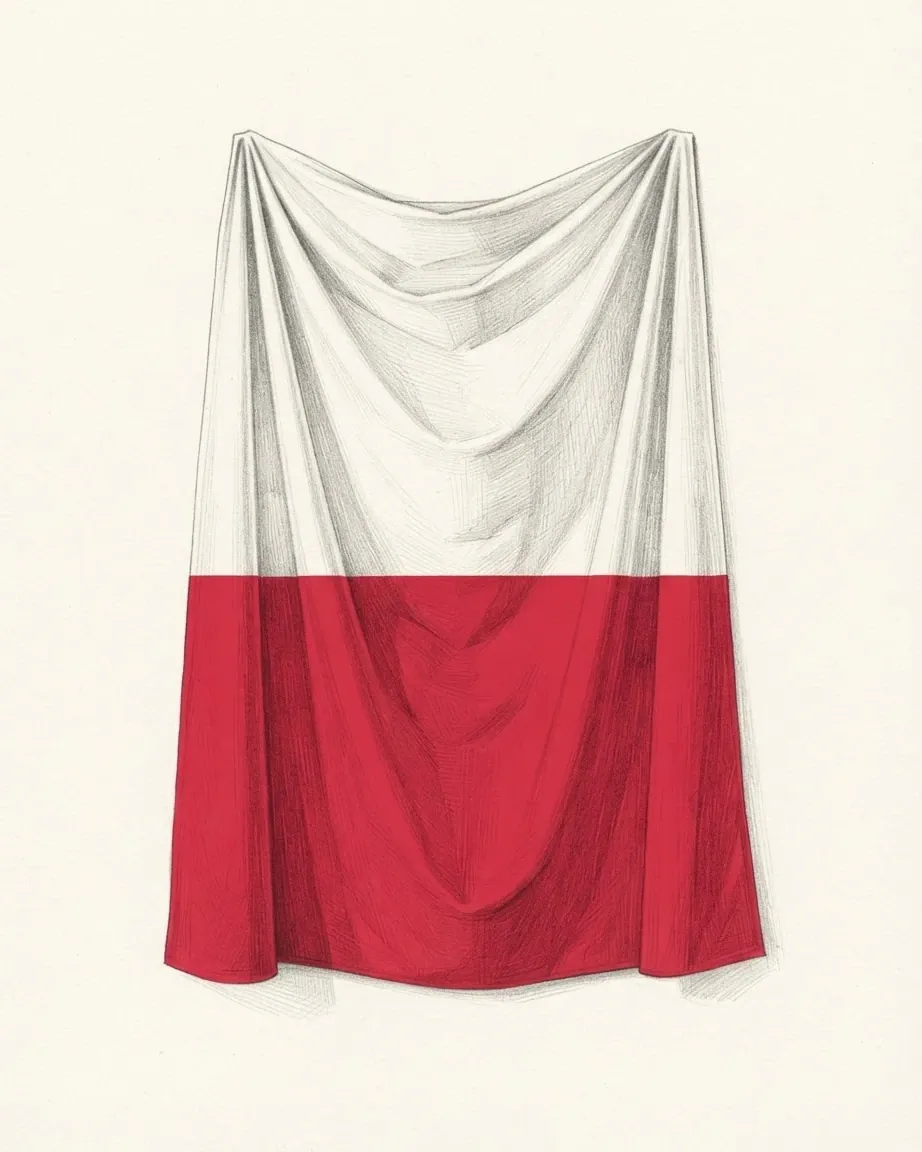
 Poland
 Russia
 Sweden
Why the government sat in Kaunas
The Lithuanian government left Vilnius in January 1919 and did not come back for twenty years. Polish self-defence forces took the city over from the withdrawing German army, the Red Army held it for most of 1919, and after the fighting of 1920 it remained under Polish administration. The Conference of Ambassadors awarded Vilnius to Poland in March 1923. Lithuania refused the award, broke off relations, and the two states were formally at war over the city from 1920 to 1938, a dispute that dominated Lithuanian foreign policy for the whole interwar period.
Kaunas got on with being a capital regardless. What was built there between 1919 and 1939 is now on the UNESCO World Heritage list, entered under the phrase UNESCO used for it, the architecture of optimism.
Vilnius came back on 10 October 1939, under a mutual assistance pact that admitted 20,000 Soviet troops to the country as the price. A slogan current at the time put the exchange as Vilnius won and Lithuania handed to the Russians. On 14 June 1940 the Soviet ultimatum demanded a new government and an unspecified number of further troops, 150,000 soldiers crossed the border, President Antanas Smetona left the country, and the Supreme Soviet of the Soviet Union completed the annexation on 3 August 1940.
| The demand | When it came | What was conceded |
|---|---|---|
| Polish ultimatum | March 1938 | Diplomatic relations on Poland's terms, the claim to Vilnius unsettled |
| German ultimatum | 20 March 1939 | The Klaipėda region, incorporated into the German Reich |
| Soviet ultimatum | 14 June 1940 | A new government, an open number of troops, and the state itself |
The Grand Duchy that came before all of this, the partitions that ended it in 1795, and what the occupations of the 1940s took are set out in the history article.
What the ice left to work with
There is almost no relief here. Lithuania's 65,300 square kilometres sit at the edge of the North European Plain, and the surface was laid down by the ice sheet that retreated between about 25,000 and 22,000 years before the present. What the ice left is moraine ridges in the west and the east, a lowland of clay between them, 2,833 lakes larger than a hectare and about 1,600 smaller ponds, and a summit at 294 metres. Rivers cross it slowly: the Nemunas runs 917 kilometres in all, rises in Belarus, and reaches the Baltic through a delta.
The land borders run 502 kilometres with Belarus, 453 with Latvia, 227 with the Kaliningrad exclave of Russia and 91 with Poland. The Polish stretch is the shortest of the four and carries heavy international traffic, because it is the only land connection to the rest of the European Union. The sea edge is 262 kilometres long, of which 108 kilometres is continental shore and the remainder belongs to a spit of moving sand.
Forest covers 32.8% of the country and the standard climate normal for 1991 to 2020 gives 7.4 degrees Celsius a year and 695 millimetres of rain. The soils, the water table and what grows on glacial sand are the subject of the geography article.
How a banned language outlasted its rulers
Printing Lithuanian in Latin letters was forbidden in the Russian Empire from 1864 to 1904. The language could legally be set only in Cyrillic, books in the Latin alphabet were burned, schools, churches, courts and newspapers faced heavy penalties for displaying Latin text, and offenders could be exiled to Siberia. Books were printed instead in East Prussia and carried back over the border by hand. The first book in Lithuanian, the catechism of Martynas Mažvydas, had also been printed abroad, in 1547.
Three Lithuanian practices sit on the UNESCO intangible heritage lists: cross-crafting and its symbolism, the multipart songs called sutartinės, and the Baltic song and dance celebrations. The pattern they share is portability. The Hill of Crosses near Šiauliai was bulldozed in 1961 and filled again by hand. On 23 August 1989, fifty years after the pact signed by Molotov and Ribbentrop, a human chain of about 600 kilometres joined Tallinn to Vilnius through Riga.
At the 2021 census 84.6% of the population recorded themselves as ethnic Lithuanians, 6.5% as Poles and 5% as Russians, and 74.2% as Roman Catholic. The language, the food and the calendar are covered in the culture article.
Why no office here holds full power
The constitution approved by referendum on 25 October 1992, with 56.75% of registered voters in favour, divided the executive between a directly elected president and a prime minister the parliament approves. The drafters had argued between a parliamentary republic and a presidency on the United States model, and the split is the compromise they reached. The interwar precedent was in front of them: the coup of December 1926 installed Antanas Smetona, who governed as an authoritarian president until June 1940.
The Seimas has 141 seats in one chamber, 71 filled in single-member districts and 70 from national lists over a 5% threshold, so a voter casts two ballots. The nine justices of the Constitutional Court serve a single nine-year term and are appointed by parliament from slates drawn up by three separate offices.
Lithuania joined NATO on 29 March 2004 and the European Union on 1 May 2004, entered the Schengen Area on 21 December 2007, adopted the euro on 1 January 2015 and joined the OECD in 2018. The institutions and the alliances are the subject of the politics article.
What the country earns its living from
Goods worth 44.31 billion euros left Lithuania in 2022, and 27.31 billion euros of that was of Lithuanian origin. The rest had arrived from somewhere else and gone out again. European Union member states took 62.2% of exports that year.
Carrying other people's cargo is a large part of the work. Truck driver was the most common occupation in 2025, at 6.4% of the workforce; the ice-free port at Klaipėda handles roughly 7,000 ships and 30 million tonnes of cargo a year; the railways carry about 50 million tonnes and take a share of national freight far above the European Union norm. The refinery at Mažeikiai, owned by a Polish company, has a capacity of 9 million tonnes a year.
Alongside that sits a manufacturing and research sector that sells almost everything it makes abroad. Lithuanian laser production runs at 90 to 95% exported, to more than 80 countries, as reported in 2026. Income per head reached 32,959 United States dollars in 2025, or 56,838 at purchasing power parity, with growth of 2.9% and inflation of 3.8% in the same year. The economy article follows the money in detail.
How Lithuania paid to unplug from Russia
The nuclear plant at Visaginas supplied 72% of the country's electricity and shut on 31 December 2009, a condition of the 2004 accession to the European Union. A floating gas terminal opened at Klaipėda in 2014 under the name Independence. Commercial electricity trade with Belarus was limited from November 2020, after a Belarusian reactor was built close to the border, and the Kaliningrad connection closed in May 2022.
The largest step was structural. The three Baltic prime ministers declared desynchronisation from the Russian-operated BRELL system a strategic priority in 2007; the decision to connect through Poland instead was taken in 2018; the switch happened on 7 February 2025 with no blackouts. The Baltic systems ran in island mode on domestic generation before joining the continental European area, and the physical link now runs through a single 400 kilovolt overhead line to Poland, with an undersea cable named Harmony Link planned for 2030.
Where the short season sends visitors
The Lithuanian year is lit unevenly. The 1991 to 2020 normal gives 1,917 hours of sunshine a year, 283 hours in May and again in July, and 29 hours in December. Almost everything a visitor comes for is arranged inside the bright half.
Five sites are on the World Heritage list: the old town of Vilnius, the Curonian Spit, the hill forts at Kernavė, the modernist architecture of Kaunas and the Lithuanian points of the Struve Geodetic Arc. Five national parks and thirty regional parks hold the lakes and forests, which are concentrated in the east. Foreign visitors made 1.7 million visits in 2018, a year in which 70% of Lithuanians took their holidays inside the country. Seasons, regions and arrival are covered in the travel article.
What the record adds up to
A state that was abolished in 1795, restored on 16 February 1918, abolished again in 1940 and restored on 11 March 1990, governed for nineteen of its interwar years from a city that was not its capital. Its language spent forty of those years illegal in its own alphabet and is now the sole official language of the republic. Since 1990 the country has been paying to make its remaining eastward connections optional, and the last of the physical ones was cut on 7 February 2025.
Read
Everything about Lithuania
Six articles, each answering one question and each written to be read on its own.
The record
What is measured about Lithuania
Pages that nobody writes, built from the record and from the data files beside it.
Common questions
Questions about Lithuania
Where is Lithuania?
On the eastern shore of the Baltic Sea, at the edge of the North European Plain, with 262 kilometres of sea edge and land borders of 502 kilometres with Belarus, 453 with Latvia, 227 with the Kaliningrad exclave of Russia and 91 with Poland. The capital, Vilnius, sits in the south-east of the country. The land is low throughout, with a highest point of 294 metres.
Was Lithuania part of the Soviet Union?
Yes, from 1940 to 1990. The Soviet ultimatum of 14 June 1940 brought in 150,000 troops, and the annexation was formalised on 3 August 1940, followed by German occupation from 1941 and a return of Soviet rule in 1944. The Supreme Soviet of the Lithuanian SSR proclaimed the restoration of the state on 11 March 1990, the first of the Soviet republics to do so, and international recognition followed on 6 September 1991.
Why was Kaunas the capital of Lithuania?
Because Vilnius was held by Poland. The government moved to Kaunas in January 1919 and the Conference of Ambassadors awarded Vilnius to Poland in March 1923, so Kaunas served as the temporary capital until 1939. The two states were formally at war over the city from 1920 to 1938. What Kaunas built in those years is now on the UNESCO World Heritage list.
What language is spoken in Lithuania?
Lithuanian, the sole official language and one of two surviving Baltic languages. Printing it in Latin letters was forbidden in the Russian Empire from 1864 to 1904, and books were printed in East Prussia and smuggled back over the border. At the 2021 census 84.6% of the population recorded themselves as ethnic Lithuanians, 6.5% as Poles and 5% as Russians.
Is Lithuania in the European Union and the euro?
Yes to both. Lithuania joined NATO on 29 March 2004 and the European Union on 1 May 2004, entered the Schengen Area on 21 December 2007, adopted the euro on 1 January 2015 as the nineteenth country to use it, and joined the OECD in 2018. On 7 February 2025 its electricity grid left the Russian-operated BRELL system and synchronised with continental Europe.
Nearby in the catalogue