Twice in a century this country existed mainly as a written record. Volunteers copying folk songs for Jakob Hurt in the 1880s sent in 12,400 pages and assembled a national culture on paper before there was any government to hold it, and from 1940 to 1991 a consulate general in New York and an embassy in London went on issuing documents in the name of a republic that held no territory. Estonia holds 1,369,995 people as of 1 January 2025 on 45,339 square kilometres of flat ground at the eastern edge of the Baltic, independent since 1918 and restored on 20 August 1991. The habit outlasted the occupation. The citizenship law of 1938 was put back into force in February 1992 and still decides who may vote, and more than half the ballots at the parliamentary election of March 2023 were cast over the internet.
At a glance
Where it is
Where Estonia is, and what is around it
Estonia has a coast. It shares a border with 2 countries, counted as shared borders, which includes neighbours across water.
 Latvia
 Russia
What the collectors wrote down first
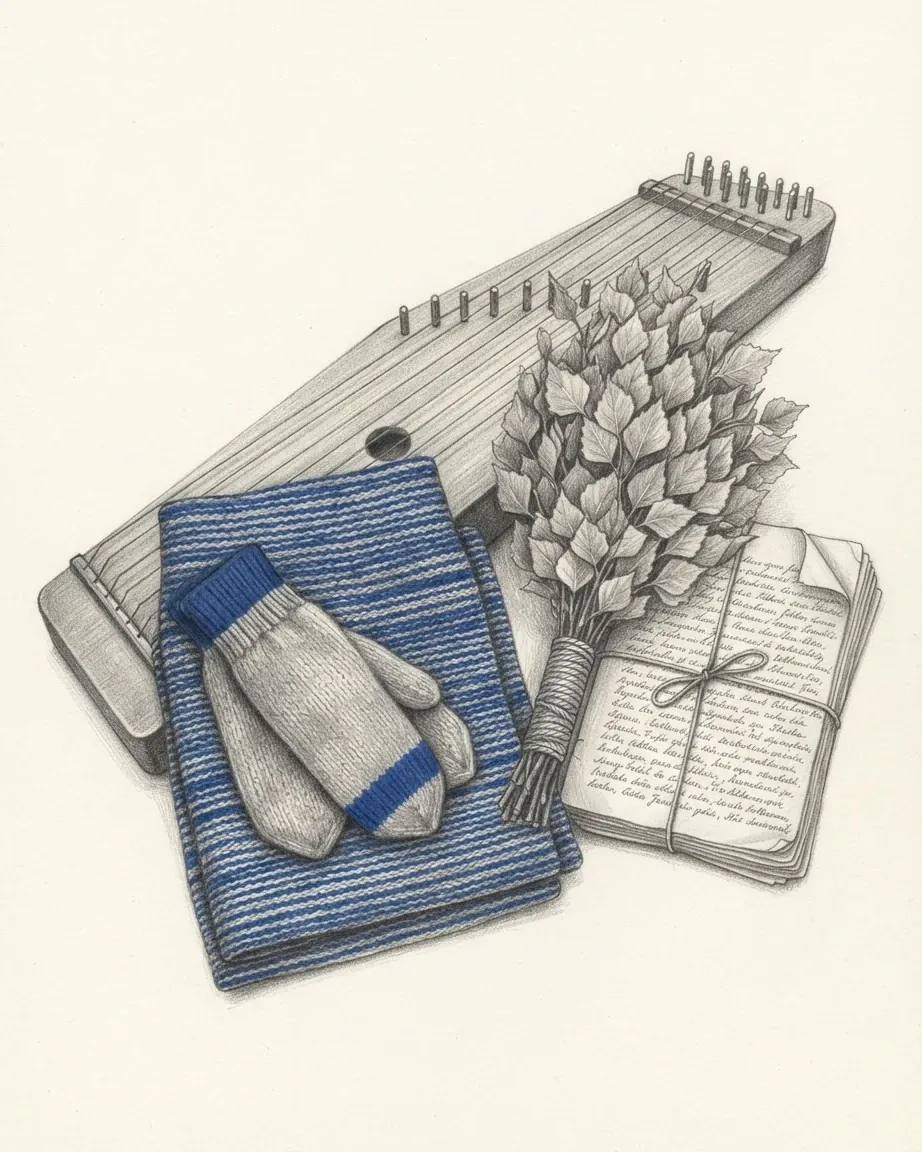
Jakob Hurt opened a nationwide folklore collection campaign in the 1880s, and volunteers sent him 12,400 pages. Matthias Johann Eisen had amassed about 90,000 pages by the early twentieth century. Both hoards sit in the Estonian Folklore Archives. Johann Voldemar Jannsen had begun publishing the first successful Estonian-language weekly in 1857 and popularised eestlane, Estonian, as a word a person might use of themselves; the national epic Kalevipoeg was published in 1862; and the first nationwide song festival met at Tartu in 1869.
The people doing the writing had no state of their own and no aristocracy of their own. Estonian belongs to the Finnic family, its closest large relative is Finnish, and its speakers were a peasantry under German-speaking landlords inside the Russian Empire. The movement they built was archival and educational first, and in 1878 it split, Hurt's wing keeping to culture and schooling while Carl Robert Jakobson's demanded political and economic rights.
The archive turned out to be the durable half. The celebration begun in 1869 still convenes every fifth year and still assembles as many as 40,000 singers and dancers, and UNESCO inscribed it in 2003 together with the Latvian and Lithuanian celebrations. Three more Estonian traditions carry inscriptions of their own: Seto polyphonic singing, the cultural space of Kihnu island, and the smoke sauna tradition of Võromaa. The culture article follows the collections forward into the language, the reading and the rye bread.
How a republic kept going without territory
Independence was declared at Pärnu on 23 February 1918 and read out in Tallinn the next day. The War of Independence that followed ended with the Treaty of Tartu on 2 February 1920, in which Soviet Russia renounced its claims to Estonian territory in perpetuity. Twenty years later that word was worth nothing: Estonia declared neutrality in 1939, was occupied in 1940, and was annexed as the Estonian Soviet Socialist Republic that August.
What the occupying power could not close is the reason the country dates itself as it does. On 8 August 1940 the government of the Estonian SSR ordered every Estonian embassy, consulate and honorary consulate wound up and their assets handed to Soviet representations, and in several countries this was duly carried out. In two it was not. The consulate general in New York worked without a break until 1991, under Johannes Kaiv until 1965 and then under Ernst Jaakson, whose service in the Estonian diplomatic corps ran to 79 years and who presented credentials as ambassador to the United States on 25 November 1991. August Torma remained ambassador in London until his death in 1971. A government in exile operated from Stockholm from 1944 until 1992, when Heinrich Mark, acting as president, handed his authority to Lennart Meri. The foreign ministry describes itself as the one Estonian institution that has worked continuously for a hundred years.
The staff who stayed behind paid for the continuity. Of the diplomats who had served the foreign ministry across its first two decades, 52 were arrested, 12 were executed and 31 died in prison camps or in exile. Deportation reached far wider than the ministry: about 20,000 Estonians were sent to Siberia in March 1949, and more than 56% of Estonian farms were collectivised in April 1949 alone.
The restoration was built out of the same legal material. Two million people formed a human chain 675.5 kilometres long across the three Baltic republics on 23 August 1989. A referendum in March 1991 returned 78.4% for independence, the declaration of 20 August 1991 was worded as a confirmation of a state that had never lawfully ended, Estonia was admitted to the United Nations on 17 September 1991, and the last Russian troops left on 31 August 1994. The history article sets out the doctrine of state continuity and what it has settled since, including a border treaty signed with Russia in May 2005 and never ratified in Moscow.
What flat and wet ground does here
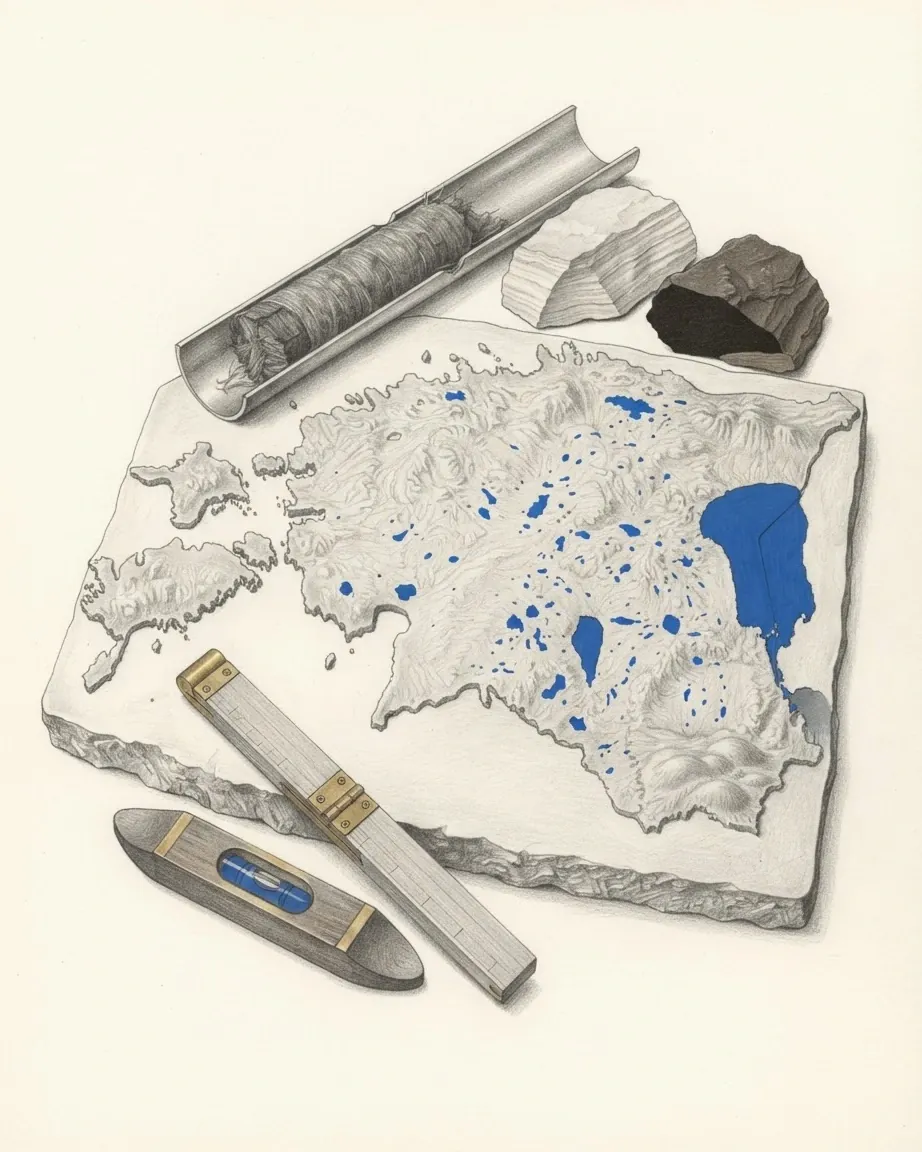
Nothing in Estonia stands more than 318 metres above the sea, at Suur Munamägi in the Haanja Upland, and the mean elevation is 50 metres. The territory covers 45,339 square kilometres, internal waters making up 4.6% of it, and the coastline runs 3,794 kilometres past 2,355 islands, 2,222 of them lying in the Baltic proper. Lake Peipus, 3,555 square kilometres of it, forms much of the boundary with Russia.
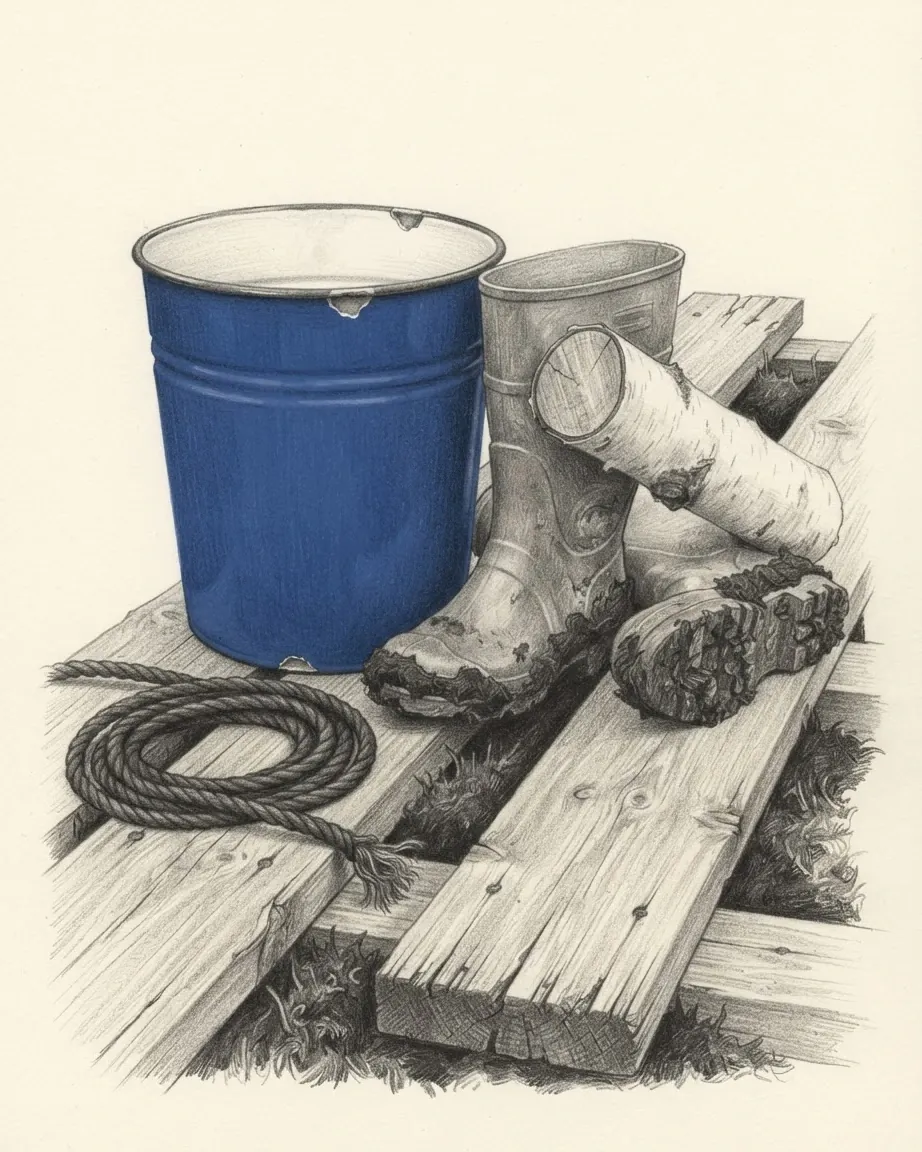
On ground that flat, in a climate where more water arrives than leaves, the water stays. Bogs and mires cover about 23% of the country, there are roughly 1,560 natural lakes, and only ten of the 7,000-odd rivers and streams exceed 100 kilometres. Forest covered 51.5% of the land area as of 2023, and protected areas cover 19.4% of the land, holding six national parks. The geography article follows the water from the ice sheet that dug the hollows to the peat now filling them.
Who the restored state counted as citizens
In February 1992, with amendments in January 1995, the Riigikogu put the citizenship law of 1938 back into force. On the continuity doctrine the republic had never ended, so its citizens were the citizens of 1940 and their descendants, and residents who had arrived during the Soviet decades had to naturalise. A new constitution was approved by referendum on 28 June 1992.
That reading of the law still organises the country's demography. Ethnic Estonians were 69.4% of the population at the 2021 census, against 68.3% in 2000 and 69.8% in 2011. The ethnic Russian minority came to about 24%, largely from Soviet-era immigration, and Ukrainians who arrived in 2022 to about 6%. The distribution is uneven: in Hiiumaa 98.4% of residents are ethnic Estonians, in Ida-Viru County about 20%.
Voting moved onto the internet early. Electronic voting was first used at the municipal elections of 2005, the ballot cast with the national identity card, the voter free to check and change it, and a paper ballot overriding it if both are used. Every permanent resident of Estonia elects a municipal council; only citizens elect the 101 seats of the Riigikogu. The politics article takes up the institutions and the two franchises in full.
| Membership | Joined |
|---|---|
| United Nations | 17 September 1991 |
| World Trade Organization | 13 November 1999 |
| NATO | 29 March 2004 |
| European Union | 1 May 2004 |
| Schengen Area | 21 December 2007 |
| Eurozone | 1 January 2011 |
What Estonia sells and what it burns
The country lives off two things with almost nothing in common. One is a sedimentary rock. Oil shale, mined in the north-east and burned for electricity in the stations at Narva, supplied around 70% of primary energy as of 2013 and contributed about 4% of GDP in 2012. Renewable sources produced 38.9% of Estonian electricity in 2024, against 15.6% in 2016, and the tailings at Sillamäe from half a century of shale and ore processing now yield around 3,000 tonnes of rare-earth oxides a year.
The other is the paperwork. A flat income tax was adopted in 1994 at 26% and cut in stages to 21% by 2008, profit kept inside a company is taxed at nothing until it is distributed, and the state that had put its own administration online in the 1990s began selling access to it. e-Residency, opened in 2014, has issued digital identities to more than 128,000 people from 185 countries, who have founded over 36,000 Estonian companies and generated 342 million euros of direct income for the state, 68 million of it in the first half of 2025. Measured GDP per head was 34,418 United States dollars in 2025, or 52,106 at purchasing power parity, on growth of 0.6%. The economy article sets out what happened to both halves after 2022.
How the calendar sorts a visit here
Terrain does very little sorting in a country whose highest ground is 318 metres. The calendar does it instead. Tallinn's longest day runs 18 hours and 40 minutes and its shortest 6 hours and 2 minutes, average monthly sunshine falls from 290 hours in August to 21 hours in December, and the annual mean temperature is 6.4 °C. Arrivals, domestic and foreign together, rose from 2.26 million in 2006 to 3.79 million in 2019, and tourism contributed 7.8% of GDP. The one event that gathers the whole country comes round once every fifth year. The travel article works through the seasons, the islands and the ferries.
Where the rest of it is written
Seven articles, and this is the short one. The occupation and the doctrine that outlasted it are in history, the water and the peat in geography, the franchise and the ballot in politics, the rock and the registry in economy, the collected song in culture, and the calendar in travel.
Read
Everything about Estonia
Six articles, each answering one question and each written to be read on its own.


The record
What is measured about Estonia
Pages that nobody writes, built from the record and from the data files beside it.
Common questions
Questions about Estonia
Where is Estonia?
On the eastern shore of the Baltic Sea in northern Europe, with Latvia to the south, Russia to the east, the Gulf of Finland to the north and the open Baltic to the west. The territory covers 45,339 square kilometres and includes 2,355 islands, of which 2,222 lie in the Baltic.
Why does Estonia date its independence to 1918 rather than 1991?
Because the restored state treats the Soviet annexation of August 1940 as unlawful, which means the republic declared on 24 February 1918 never ceased to exist in law. Most Western governments took that view throughout the occupation, Estonian consuls abroad kept issuing documents, and the declaration of 20 August 1991 was worded as a confirmation of the existing state.
What language do Estonians speak?
Estonian, a Finnic language whose closest large relative is Finnish and which is unrelated to Russian or Latvian. It was spoken by 84% of the population, 67% as a mother tongue and 17% as a foreign language. Russian is the first language of a minority concentrated in Tallinn and in Ida-Viru County.
Is Estonia in the European Union and the eurozone?
Yes to both. Estonia joined NATO on 29 March 2004 and the European Union on 1 May 2004, entered the Schengen Area on 21 December 2007 and adopted the euro on 1 January 2011. It had been admitted to the United Nations on 17 September 1991 and to the World Trade Organization on 13 November 1999.
What is Estonian e-Residency?
A government-issued digital identity that lets a person outside Estonia sign documents and run an Estonian company remotely. It carries no residence right and no citizenship. Opened in 2014, it had issued identities to more than 128,000 people from 185 countries by mid-2025, who had founded over 36,000 companies and produced 342 million euros of direct income for the state.
Nearby in the catalogue