The Baltic countries
Adam of Bremen derived the name of the Baltic Sea from balteus, the Latin for a belt, in a chronicle written about 1075. Georg Nesselmann borrowed the same word in 1845 for a language family. That later borrowing is where the edge of this grouping sits: Latvian and Lithuanian belong to the family, Estonian does not, and the catalogue files them together on the sea instead.
3 countries
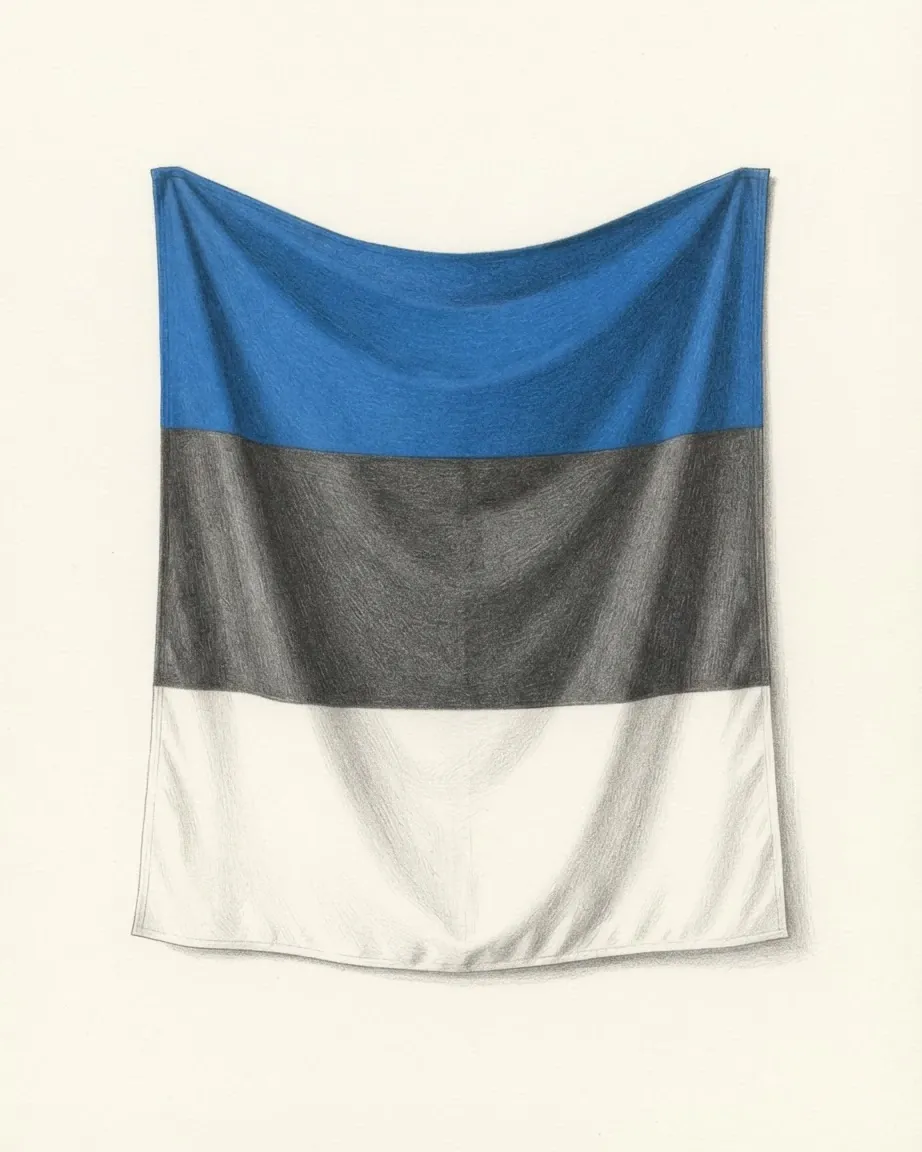
- EstoniaA Baltic republic of 1,369,995 people as of 1 January 2025 whose statehood survived occupation as a legal record, and whose voting and company registry now run the same way.
- LatviaLatvia holds 1,845,096 people as of 1 January 2026 on flat, wet ground on the Baltic, under a constitution of 1922 restored in 1991 after two rewritings of its population.
- LithuaniaThree ultimatums between 1938 and 1940 ended Lithuania's first republic. The state restored on 11 March 1990 has spent since then rearranging its connections westward.
Common questions
Questions about Baltic
Which countries are the Baltic states?
Estonia, Latvia and Lithuania, on the reading this catalogue applies, which files them by their position on the eastern shore of the Baltic Sea. The M49 standard of the UN Statistics Division has no Baltic subregion and files all of them under Northern Europe instead. A reading that follows the Baltic language family takes in only Latvia and Lithuania.
Why are they called Baltic?
After the sea. Adam of Bremen recorded the name Balticus for it in a chronicle written about 1075 and explained it from balteus, the Latin for a belt, because the water runs out in a long strip. Georg Nesselmann applied the same adjective to a language family in 1845, and it reached the countries later, by way of a German term for the Baltic German minority of the imperial provinces.
Is Estonia a Baltic country?
It depends on which sense of the word is in use. By position on the sea, and by the shared record of 1940, 1991 and 2004, Estonia is filed with Latvia and Lithuania here and by most geographies. By language it is not: Estonian is Finnic and belongs with Finnish, while Latvian and Lithuanian are the surviving members of the Baltic family Nesselmann named. Both readings are in print, and the catalogue takes no position on which is correct.
What was the Baltic Way?
A human chain of about 600 kilometres from Tallinn through Riga to Vilnius on 23 August 1989, held fifty years to the day after the secret protocol to the German-Soviet treaty of non-aggression was signed. UNESCO inscribed the documentary record of it on the Memory of the World Register in 2009. Four months later, on 24 December 1989, the Congress of People's Deputies of the Soviet Union declared the protocols invalid.
Do the Baltic countries all use the euro?
Yes, but they arrived at it separately. The euro replaced the Estonian kroon on 1 January 2011, the Latvian lats on 1 January 2014 and the Lithuanian litas on 1 January 2015. The accession dates that match exactly are elsewhere: NATO on 29 March 2004, the European Union on 1 May 2004, and the lifting of internal border checks under the Schengen rules on 21 December 2007.
Are the Baltic states the same as the Nordic countries?
No. The Nordic grouping is Denmark, Finland, Iceland, Norway and Sweden with their autonomous territories. The two sets meet in wider frameworks rather than in one another: the Council of the Baltic Sea States, founded at Copenhagen in 1992, seats both alongside Germany, Poland and the European Union, and the Baltic Assembly of 1991 was modelled on the Nordic Council.