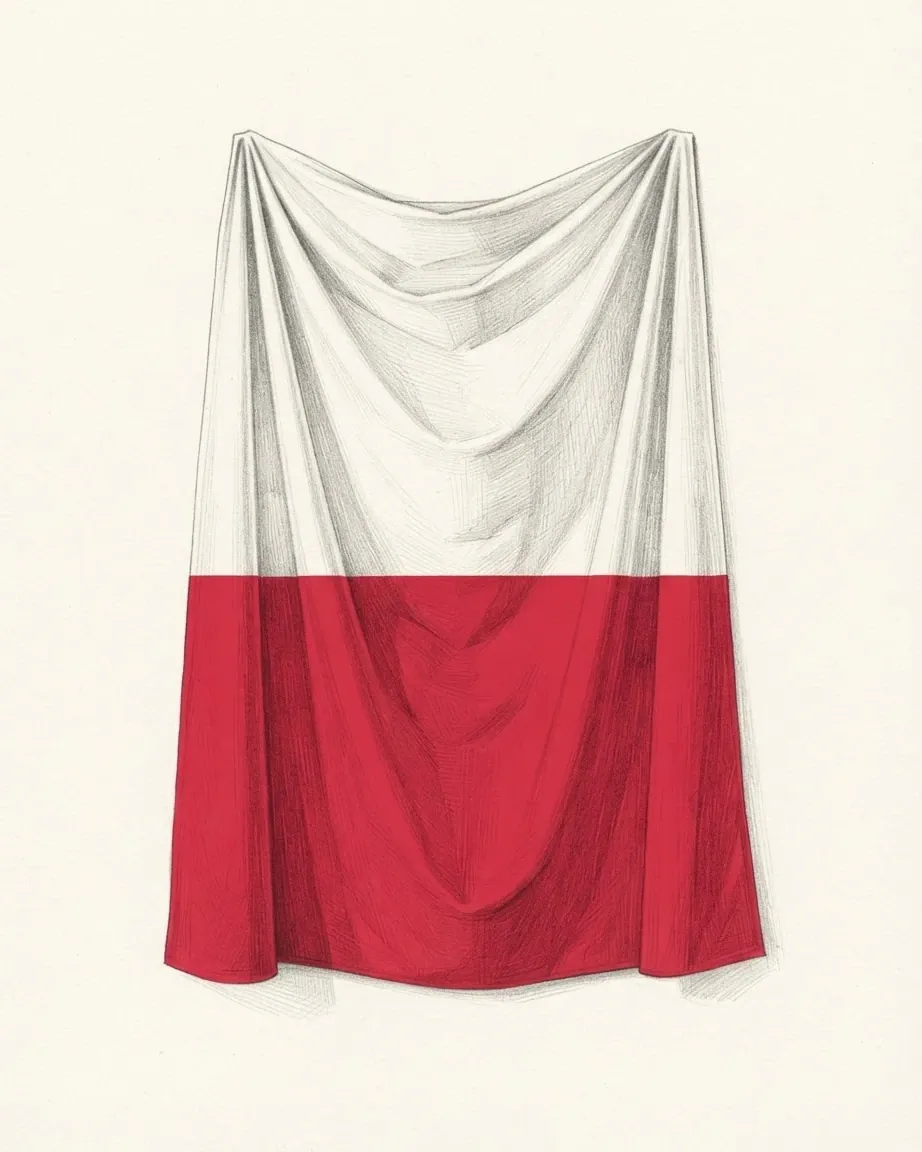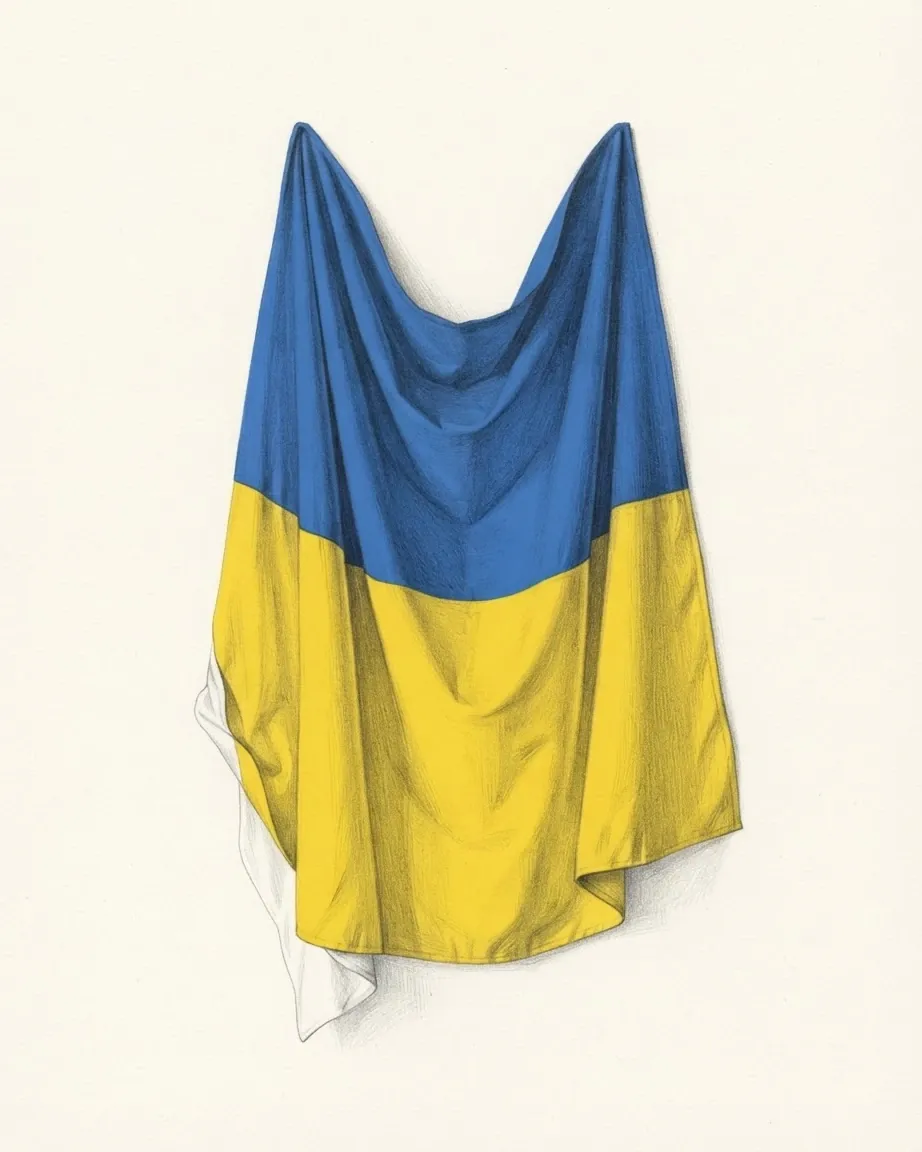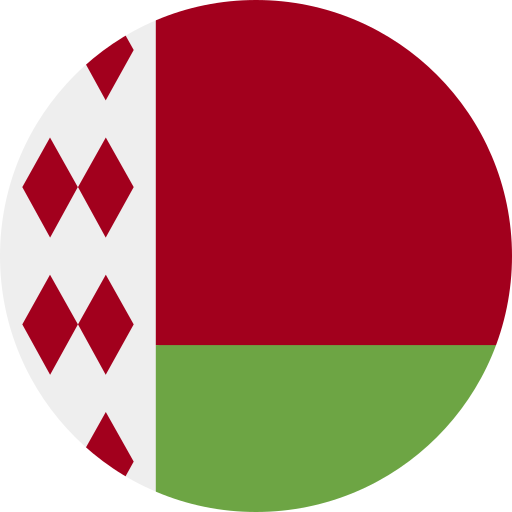
Between 1996 and 1999 Belarus signed treaties with Russia that called for a monetary union, a single citizenship and a common foreign and defence policy, and its independence has been lived inside that half-built union ever since. Its 207,600 square kilometres lie between Poland and Russia, and 9,056,080 people lived there on 1 January 2026. The country still issues its own rouble and holds its own seat at the United Nations, while flights to and from Russia are treated as internal and Russia accounted for 66% of Belarusian trade in 2024.
At a glance
- Population
- 9 056 080
- Capital
- Minsk
- Area
- 207 600km²
- Currency
- BYN
- Official languages
- Russian
- Local time
- UTC+03:00
Where it is
Where Belarus is, and what is around it
Belarus is landlocked. It shares a border with 5 countries, counted as shared borders, which includes neighbours across water.
 Lithuania
 Latvia
 Poland
 Russia
 Ukraine
Where Belarus lies and who lives in it
Belarus has no coast. Russia borders it to the east and north-east, Ukraine to the south, Poland to the west, and Lithuania and Latvia to the north-west. The country runs 560 kilometres from north to south and 650 from west to east, and the ground inside those distances barely rises: the highest point, Dzyarzhynskaya Hara, stands at 345 metres, and the lowest, on the Neman, at 90. About 40% of the land is forest. The Neman drains west to the Baltic, and the Pripyat runs east into the Dnieper and on to the Black Sea.
Minsk, the capital, held 1,995,091 people on 1 January 2026, a little over a fifth of the national total. The rest of the country is divided into six regions named after their administrative centres: Brest, Gomel, Grodno, Mogilev, Minsk and Vitebsk. The population fell by 0.5% in 2025.
The 2019 census counted 9.41 million people, 84.9% of them ethnic Belarusians, with Russians at 7.5%, Poles at 3.1% and Ukrainians at 1.7%. About a fifth of the land, mostly farmland and forest in the south-east, was affected by fallout from the Chernobyl accident across the Ukrainian border in 1986.
| The record in short | |
|---|---|
| Population | 9,056,080 on 1 January 2026 |
| Area | 207,600 km², 2.26% of it water |
| Capital | Minsk, 1,995,091 on 1 January 2026 |
| Highest point | Dzyarzhynskaya Hara, 345 m |
| Official languages | Belarusian and Russian |
| Currency | Belarusian rouble |
| Independence declared | 25 August 1991 |
| Russia's share of trade | 66% in 2024 |
The glacial plain and its marshes are a subject of their own, and so is what the fallout did to them.
How Belarus came out of a Soviet republic
For most of the medieval period the lands of present-day Belarus were ruled by city-states such as the Principality of Polotsk. Around 1300 they came under the Grand Duchy of Lithuania and then the Polish-Lithuanian Commonwealth, a period of about 500 years, and Russia took them in the partitions that ended it. Two states were declared on this territory in 1918 and 1919, a Belarusian People's Republic and a Soviet Byelorussian one, and the Soviet republic became a founding member of the Soviet Union in 1922.
The Second World War cost Belarus a quarter of its pre-war population, by the account in the Wikipedia history of the country, and about 9,200 villages were destroyed. In 1945 the Byelorussian republic joined the United Nations as one of its 51 original members, alongside the Ukrainian republic, although it remained part of the Soviet Union.
The Supreme Soviet declared sovereignty on 27 July 1990 and independence on 25 August 1991, and the republic took the name Republic of Belarus and joined the Commonwealth of Independent States. Britannica judges that it moved less vigorously than other Soviet republics to break away. A referendum on 14 May 1995 replaced the white-red-white flag of 1918 with a red and green one adapted from the Soviet flag and ended the exclusive status of Belarusian as the state language. Belarus: history follows the two founding lines and the flag that each of them kept.
What the union with Russia promised and delivered
The Union State was built by a series of treaties from 1996 to 1999. They called for monetary union, equal rights, single citizenship, and a common foreign and defence policy. Monetary union has been repeatedly delayed by the Belarusian side, no referendum date has been set for the union's draft constitution, and the two governments have argued over the petroleum trade. The Belarusian rouble is still the national currency.
Other parts of the union have gone further. Belarus joined the Collective Security Treaty Organization in 1994 and the Eurasian Economic Union in 2014, and flights between Belarus and Russia are treated as internal and pass through no border control. The economy leans east as well: Russia supplied oil and gas below market prices for years, and in 2024 it accounted for 66% of Belarusian trade against 11% for the countries of the European Union.
Defence moved furthest. In December 1994 Belarus signed the Budapest Memorandum and gave up the nuclear weapons on its territory, and the 2004 constitution set the aim of a nuclear-free zone and a neutral state. In February 2022 Russian forces invaded Ukraine from Belarusian soil and drove toward Kyiv. Britannica records that the referendum of 27 February 2022, held while that attack was under way, renounced neutral status and opened the way to a permanent Russian garrison that included nuclear weapons.
How power gathered in the Belarusian presidency
The constitution adopted on 15 March 1994 created the office of president, and the first election to it was held on 23 June and 10 July 1994. Three referendums have since revised the text. The vote of November 1996, whose legitimacy was widely disputed, removed key powers from parliament and extended the presidential term. The vote of October 2004 removed the limit of two terms, and the vote of February 2022 added a Belarusian People's Congress.
The National Assembly has two chambers, a House of Representatives of 110 directly elected deputies and a Council of the Republic drawn mostly from local councils. The Council of Europe has barred Belarus from membership since 1997. After the presidential election of August 2020 the European Union, the United Kingdom and the United States declined to recognise the declared result, and Britannica describes the street demonstrations that followed as the largest since the collapse of the Soviet Union. Belarus: politics sets out how law is made and who appoints the courts.
What the Belarusian economy runs on
Output in 2025 came to 93.4 billion United States dollars, or 10,279 dollars a head, and 34,716 dollars a head at purchasing power parity. Growth that year was 1.3%, inflation 6.6% and unemployment 3.4%. The World Bank projects growth of 1.1% in 2026 and 0.7 to 0.8% in 2027 and 2028. Income is spread evenly, at a Gini coefficient of 24.4 in 2020.
In 2024 the government directly employed 38.6% of the workforce, most of them in energy, mining, healthcare and education, and the Soviet factories that made tractors and trucks stayed in public hands after 1991. Potash is the one mineral of weight: Belarus produced 15% of the world's supply in 2024, through the state-owned Belaruskali.
Oil and gas from Russia, bought below market prices, amounted to a subsidy worth between 2% of output in 2016 and 20% in 2012, and Russian crude refined at Navapolacak and Mazyr feeds the chemical industry. A nuclear power plant that began operating in 2020 produced 35.8% of the country's electricity in 2024. Sanctions on state companies followed the 2020 election, and in April 2022 the European Union imposed trade sanctions for the country's part in the invasion of Ukraine, expanding them in August 2023. Belarus: economy takes the factories, the rouble crises and the software industry that grew up in Minsk.
The monetary picture at the end of 2025 was loose. A research monitor, macroby, found broad money in the fourth quarter of 2025 up 16.6% on a year earlier while real output grew 0.3%, and the National Bank raised its inflation target for 2026 from 5% to 7%.
Which language Belarus speaks at home
Article 17 of the constitution makes Belarusian and Russian the official languages, a position Russian has held since the referendum of 1995. In the 2019 census 54.1% of the population named Belarusian as their mother tongue, and 26% said they normally spoke it at home, against 71.4% for Russian.
Religion is split along an older line. Of the 58.9% of people who described themselves as religious in the 2011 census, about 82% were Eastern Orthodox, most of them within an exarchate of the Russian Orthodox Church, and Roman Catholicism is practised mostly in the western regions.
Four places in Belarus are on the UNESCO World Heritage List: Mir Castle, inscribed in 2000, the Radziwill complex at Nesvizh and the Struve Geodetic Arc, both in 2005, and Białowieża Forest, shared with Poland. Svetlana Alexievich won the Nobel Prize in Literature in 2015. Belarus: culture works through the language question, the two spellings and the village rites UNESCO has listed.
How visitors enter Belarus
The rules for visitors follow the same map as the union. Under the rules the state's travel portal set out in 2026, citizens of 76 countries may stay 30 days without a visa if they arrive and leave by air, through Minsk National Airport or one of the regional airports at Brest, Vitebsk, Gomel, Grodno and Mogilev. Citizens of Lithuania, Latvia and Poland have been able to cross by road since 2022 and stay up to 90 days, and the waiver for citizens of 38 states was extended into 2026.
The eastern side works differently. The visa-free rules do not apply to anyone flying to or from Russia, because those flights count as internal, and a foreigner who entered without a visa may transit to any third country except Russia. Belarus: travel covers the crossings, the zone around Brest and Grodno, and the health resorts Belarusians use.
Read
Everything about Belarus
Six articles, each answering one question and each written to be read on its own.
The record
What is measured about Belarus
Pages that nobody writes, built from the record and from the data files beside it.
Common questions
Questions about Belarus
Which languages are official in Belarus?
Belarusian and Russian, under Article 17 of the constitution. Russian gained that status in the referendum of 14 May 1995, which ended the exclusive position of Belarusian. In the 2019 census 54.1% of the population named Belarusian as their mother tongue, and 26% said they normally spoke it at home, against 71.4% for Russian.
How close is the union between Belarus and Russia?
Treaties from 1996 to 1999 created a Union State and called for monetary union, single citizenship and a common foreign and defence policy. Monetary union has been repeatedly delayed and no referendum date has been set for the draft constitution. Flights between the two count as internal, Russia accounted for 66% of Belarusian trade in 2024, and Russian forces attacked Ukraine from Belarusian soil in February 2022.
On what date did Belarus become independent?
Its Supreme Soviet declared independence on 25 August 1991, after declaring sovereignty on 27 July 1990. The official Independence Day is 3 July, the date in 1944 when the Red Army retook Minsk.
Which international organisations does Belarus belong to?
It has sat in the United Nations since 1945, when the Byelorussian republic joined as one of the 51 original members. It belongs to the Commonwealth of Independent States, the Collective Security Treaty Organization, the Eurasian Economic Union, the OSCE and the Non-Aligned Movement. The Council of Europe has barred it from membership since 1997, and it suspended its part in the European Union's Eastern Partnership on 28 June 2021.
Nearby in the catalogue