The Prut and the Dniester enclose about 88% of Moldova, and the questions the republic has argued over since independence on 27 August 1991 sit at one river or the other. Across the Prut lies Romania, which Bessarabia joined in 1918 and whose name for the shared language a Moldovan law of 16 March 2023 restored. Beyond the Dniester lies Transnistria, where Moldova lost de facto control in 1992 and where a ceasefire signed in July of that year still holds. The census of 8 April 2024 counted 2,409,207 residents on the land the state administers, and left Transnistria out.
At a glance
Where it is
Where Moldova is, and what is around it
Moldova is landlocked. It shares a border with 2 countries, counted as shared borders, which includes neighbours across water.
 Romania
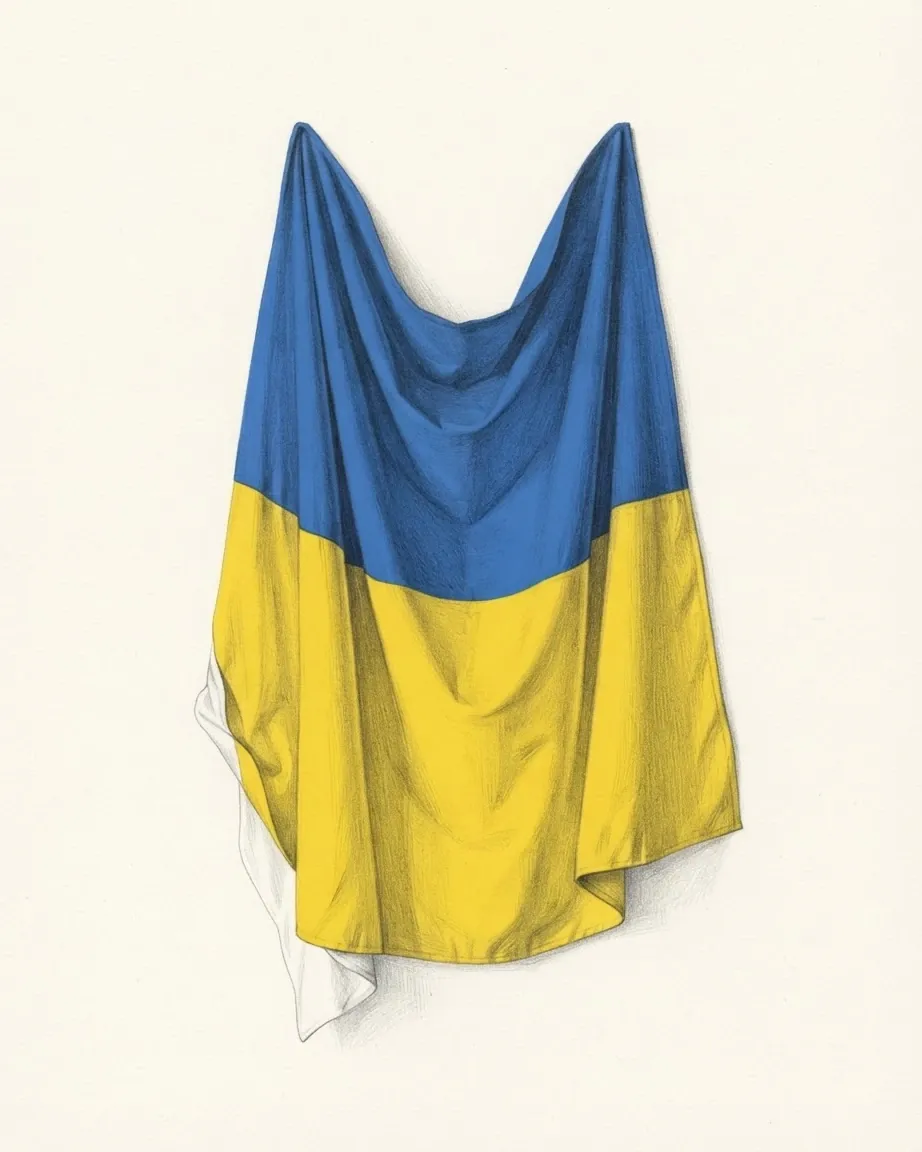
 Ukraine
What lies between Moldova's two rivers
Moldova covers 33,844 square kilometres of low, broken ground, and about 88% of it is Bessarabia, the land between the Prut in the west and the Dniester in the east. The remainder is a narrow strip on the Dniester's left bank. Nothing rises above Bălănești Hill, 430 metres high in the wooded Codri west of Chișinău, and chernozem, the black earth of the steppe, covers around three-quarters of the land. That soil decided where the forest was cleared and where the villages stand, and the geography article follows it from the Bălți Steppe in the north to the Bugeac Plain in the south.
Every river in the country drains south to the Black Sea. The Prut forms the entire western border with Romania and joins the Danube at the country's southern tip. The Dniester rises in Ukraine, crosses the east of Moldova and reaches the sea on Ukrainian territory, and at its closest point Moldova stops 3 kilometres short of the river's estuary. There is no coast.
In 1999 Moldova acquired a short frontage on the Danube from Ukraine, giving up a stretch of contested road in the east in exchange. The old village of Giurgiulești became a river port, and its terminal takes small seagoing vessels.
| The Prut | The Dniester | |
|---|---|---|
| Course in Moldova | The whole western border | Through the east, with short stretches of the Ukrainian border |
| What lies across it | Romania | Transnistria, then Ukraine |
| Where it ends | The Danube, at Giurgiulești | The Black Sea, in Ukraine |
| What it has divided | Moldavia in 1812 | The Soviet republic's two halves in 1992 |
The land borders run to 1,389 kilometres, 939 with Ukraine and 450 with Romania.
How the land between the rivers changed hands
The name comes from the Moldova River, in whose valley the Principality of Moldavia was founded in 1359. That state reached from Transylvania to the Dniester, and from 1538 it was a vassal of the Ottoman Empire. The republic holds only part of it. The Treaty of Bucharest of 28 May 1812 ended a Russo-Turkish war and gave the Russian Empire the eastern half of the principality, separated from the western part along the Prut, and Russia named its share Bessarabia.
In 1918 Bessarabia declared itself the Moldavian Democratic Republic and then united with Romania by decision of its assembly, the Sfatul Țării. The Soviet Union never recognised Romania's right to the province, and in 1924 it set up a Moldavian Autonomous Soviet Socialist Republic on Ukrainian territory across the Dniester, with Tiraspol as its capital. Under the Molotov-Ribbentrop Pact, Romania was compelled to cede Bessarabia in 1940, and on 2 August of that year the Moldavian SSR was formed from parts of Bessarabia and parts of the autonomous republic on the left bank. The whole territory was under Soviet control again by the end of August 1944.
The Soviet republic thus put two pieces of ground with different pasts under one law. The Declaration of Independence of 27 August 1991 denounced the Molotov-Ribbentrop Pact and declared that law of 2 August 1940 null and void. Moldova: history follows the whole sequence, including what each government did to the language.
Where the Moldovan state stops at the Dniester
The left bank had never been part of Bessarabia. In 1989 Russians and Ukrainians made up 51% of its population and Moldovans 40%, and on 2 September 1990 the authorities there made a formal declaration of sovereignty from Moldova. The conflict escalated through the spring of 1992 and turned in June, when a Russian military intervention on the separatist side drove back a Moldovan offensive. An agreement signed on 21 July 1992 ended the fighting and set up the Joint Control Commission, a peacekeeping force of 5,500 Moldovan, Transnistrian and Russian personnel. The OSCE opened its Mission to Moldova on 4 February 1993 to work toward a settlement.
The line of control follows the river only roughly. The city of Bender and several communes on the right bank stayed under the Transnistrian authorities, while Cocieri, Molovata Nouă and a few other left-bank communes stayed with the government in Chișinău. About 1,400 Russian troops were stationed in the territory in March 2022.
The two sides read the founding documents differently. Transnistria's advocates argue that the Soviet law of 1940 was the only legal act binding the left bank to Moldova, so the declaration that annulled it left no basis for Moldova's claim. Moldova's position, shared by the OSCE's participating states, is a settlement inside Moldova's internationally recognised borders with a special status for the region. Article 110 of the constitution allows the left bank special forms of autonomy by organic law. This catalogue records the dispute and takes no position on it.
How Moldova is governed from Chișinău
The constitution adopted on 28 July 1994 set up a parliamentary, unitary republic. Parliament has one chamber of 101 members, elected by proportional representation for four years. Between 2001 and 2015 it also chose the president, and the Constitutional Court ruled on 4 March 2016 that the amendment of 2000 behind that arrangement was unconstitutional, which returned the office to a two-round popular vote.
The south has its own autonomy. Parliament adopted a law on the special status of Gagauzia on 23 December 1994, with its administrative centre at Comrat, and the Gagauz, a Turkic-speaking people, made up about 4% of the population in the 2024 census. Article 11 of the constitution proclaims permanent neutrality.
The ties to the European Union came in dated steps. An association agreement with the European Union came fully into force on 1 July 2016, after provisional application from 1 September 2014, and brought a free trade area with it. Moldova applied for membership on 3 March 2022, the European Council granted candidate status on 23 June 2022, and accession negotiations opened formally in June 2024. A referendum of 20 October 2024 on writing the goal of membership into the constitution passed with 50.17% voting yes. The politics article covers the vacant presidency of 2009 to 2012 and the majorities that decide the constitution.
What the Moldovan economy lives on
Output came to 353.5 billion lei in 2025 by the preliminary figures of the national statistics office, up 2.4% in real terms on 2024. Converted, that was $8,622 a head in 2025, or $19,996 once prices are adjusted to purchasing power, and inflation ran at 7.8% the same year. The currency is the leu, introduced in 1993 to replace the Soviet rouble.
Much of the economy's recent history crossed one river or the other. Transnistria has been the source of much of Moldova's electricity, and the supply has been cut off at various times. Conflicts with Russia over Transnistria and over trade led it to interrupt gas shipments and ban Moldovan wine in 2006. Westward, the work went abroad: Moldovans left for jobs across Europe and beyond, and the diaspora counts include 285,000 in Romania in 2020, 188,923 in Italy in 2019 and 156,400 in Russia in 2010. The World Bank put personal remittances at 9.4% of GDP in 2025.
The banking system lost about $1 billion from three banks, Banca de Economii, Unibank and Banca Socială, in a fraud of 2014, and in the week before that year's parliamentary election more than $750 million left the three in three days. The IMF mission of December 2025 put the current account deficit at about 20% of GDP for the year, driven by imported goods and electricity. Moldova: economy works through the figures, the fraud and the European money.
What Moldovan culture shares across the Prut
The anthem is Limba noastră, "Our Language", and under the law of 2023 the holiday of 31 August, Our Language Day, is to be renamed Romanian Language Day. The 2014 census recorded about 90% of the population as Eastern Orthodox. Much of the living heritage is claimed on both banks of the Prut. UNESCO's intangible heritage list carries the men's group Colindat, a Christmas-time ritual, from 2013, and the practices of the first of March, the mărțișor, from 2017. The wall-carpet craft of 2016 and the embroidered altiță blouse of 2022 are both inscribed under the names of Romania and the Republic of Moldova. The cobza, a pear-shaped string instrument with a short neck, followed in 2025.
Wine is kept underground. At Mileștii Mici the galleries of an old limestone mine run over 200 kilometres, 55 of them used for making and storing wine at depths of 40 to 80 metres, and the galleries at Cricova stretch over 120 kilometres. Both stand on Moldova's Tentative List for World Heritage. Moldova: culture takes in the church, the writers, the kitchen and the music.
Where visitors to Moldova go
The one property on the World Heritage List is the Struve Geodetic Arc, inscribed in 2005. Orheiul Vechi, on the Tentative List, lies in the gorge of the lower Răut, 14 kilometres upstream of its confluence with the Dniester, where the river has cut meanders 7,000 metres long through the limestone around the Butuceni promontory. Citizens of the European Union can enter without a visa. The travel article deals with where guests sleep, when they come and how far the counted territory reaches.
Read
Everything about Moldova
Six articles, each answering one question and each written to be read on its own.
The record
What is measured about Moldova
Pages that nobody writes, built from the record and from the data files beside it.
Common questions
Questions about Moldova
Does the Moldovan census count the people of Transnistria?
No. Moldova lost de facto control of Transnistria in 1992, and the census of 8 April 2024 left the territory out. It counted 2,409,207 residents on the land the government administers, 567,038 of them in Chișinău, and recorded about 4% of them as Gagauz.
How is Moldova related to the medieval principality of Moldavia?
The Principality of Moldavia was founded in 1359 and reached from Transylvania to the Dniester. The Treaty of Bucharest of 28 May 1812 gave its eastern half, separated along the Prut, to the Russian Empire, which called it Bessarabia. Most of the present republic lies in that eastern half, and the western part of the old principality lies across the Prut in Romania.
When did Moldova apply to join the European Union?
On 3 March 2022. The European Council granted candidate status on 23 June 2022, EU leaders decided in December 2023 to open accession negotiations, and the Council approved the negotiating framework on 21 June 2024. The first intergovernmental conference followed four days later, and an association agreement with a free trade area had been fully in force since 1 July 2016.
How did a landlocked Moldova get a port on the Danube?
In 1999 it took a short frontage on the Danube from Ukraine and ceded a stretch of contested road in the east in exchange. The frontage made the village of Giurgiulești, at the confluence of the Prut and the Danube, into a river port whose terminal takes small seagoing vessels, with a route to the Black Sea.
Nearby in the catalogue