The flag of Moldova
Drapelul de Stat al Republicii Moldova · since 1990
 Back to Moldova
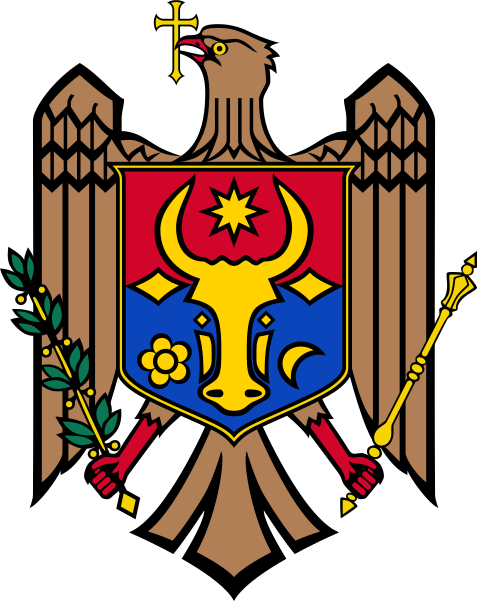
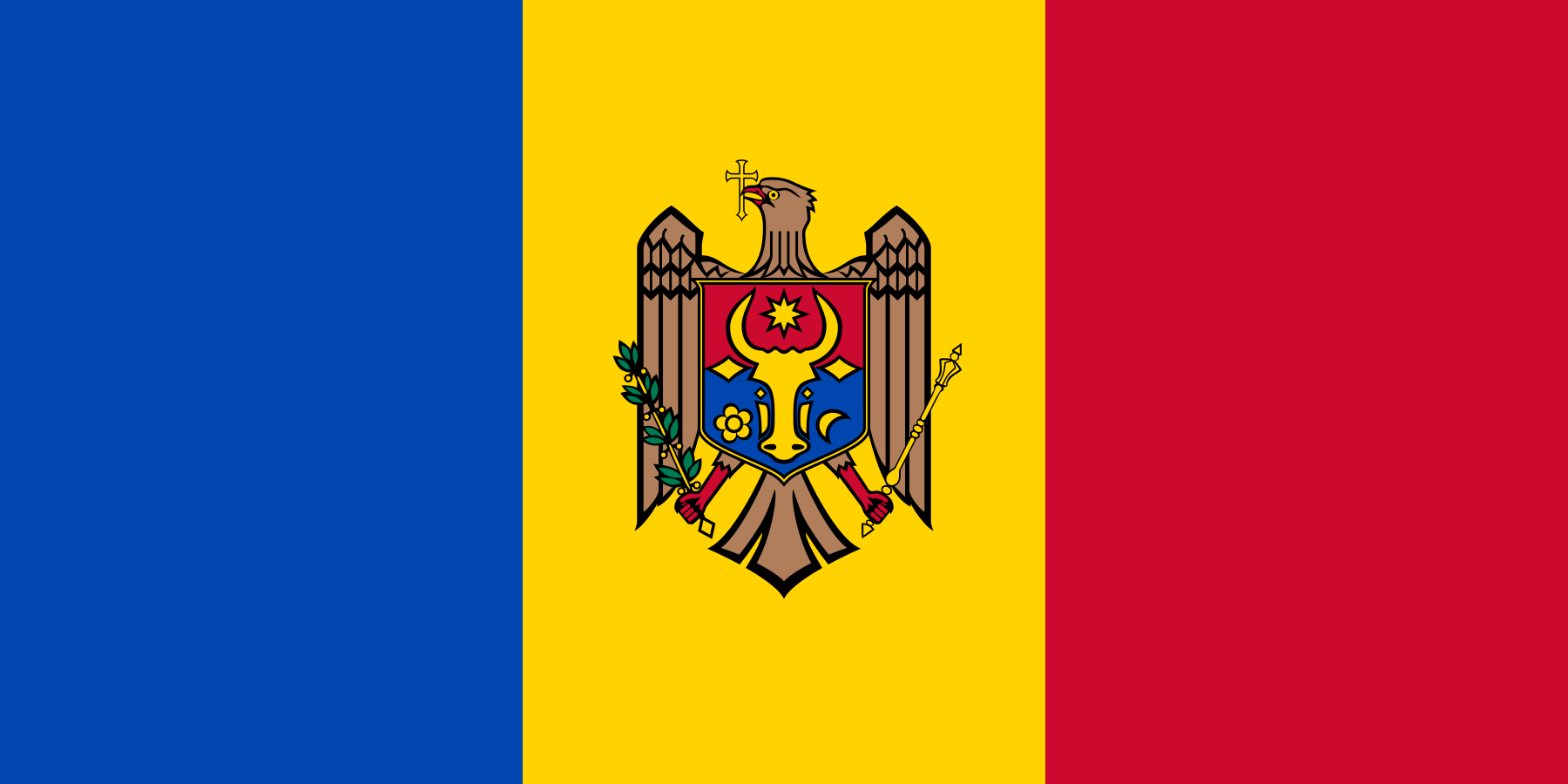
A vertical tricolour of blue, yellow and red with the state coat of arms on the yellow band: an eagle holding a cross and an olive branch, with the aurochs head of Moldavia on its breast. The colours are those of the Romanian tricolour, taken up in 1990 as the Soviet republic broke away; the flag is longer than Romania's at 1:2 and uses a lighter blue. A law of 2010 fixed the colours and made the reverse a mirror of the obverse.
At a glance
- Adopted
- 2010
- Proportion
- 1:2
- First hoisted
- 1990
- Colours
- Earlier flags
- 7
- Designer
- 1
The colours
The colours of the flag of Moldova, in the order it has them
- 0136.1%
Blue
albastruHoist band, and the upper half of the shield
- HEX
#0046AE- RGB
0 70 174- CMYK
97 81 0 0- Pantone
293 C
- 0227.7%
Yellow
galbenMiddle band, and the aurochs head, rose, crescent and star on the shield
- HEX
#FFD200- RGB
255 210 0- CMYK
1 15 100 0- Pantone
109 C
- 0336.2%
Red
roșuFly band, and the lower half of the shield
- HEX
#CC092F- RGB
204 9 47- CMYK
13 100 90 4- Pantone
186 C
No law gives these codes. HEX and RGB are the colour this site draws the flag in; CMYK, Pantone and RAL are the values most often published for it.
Construction
How the flag is drawn
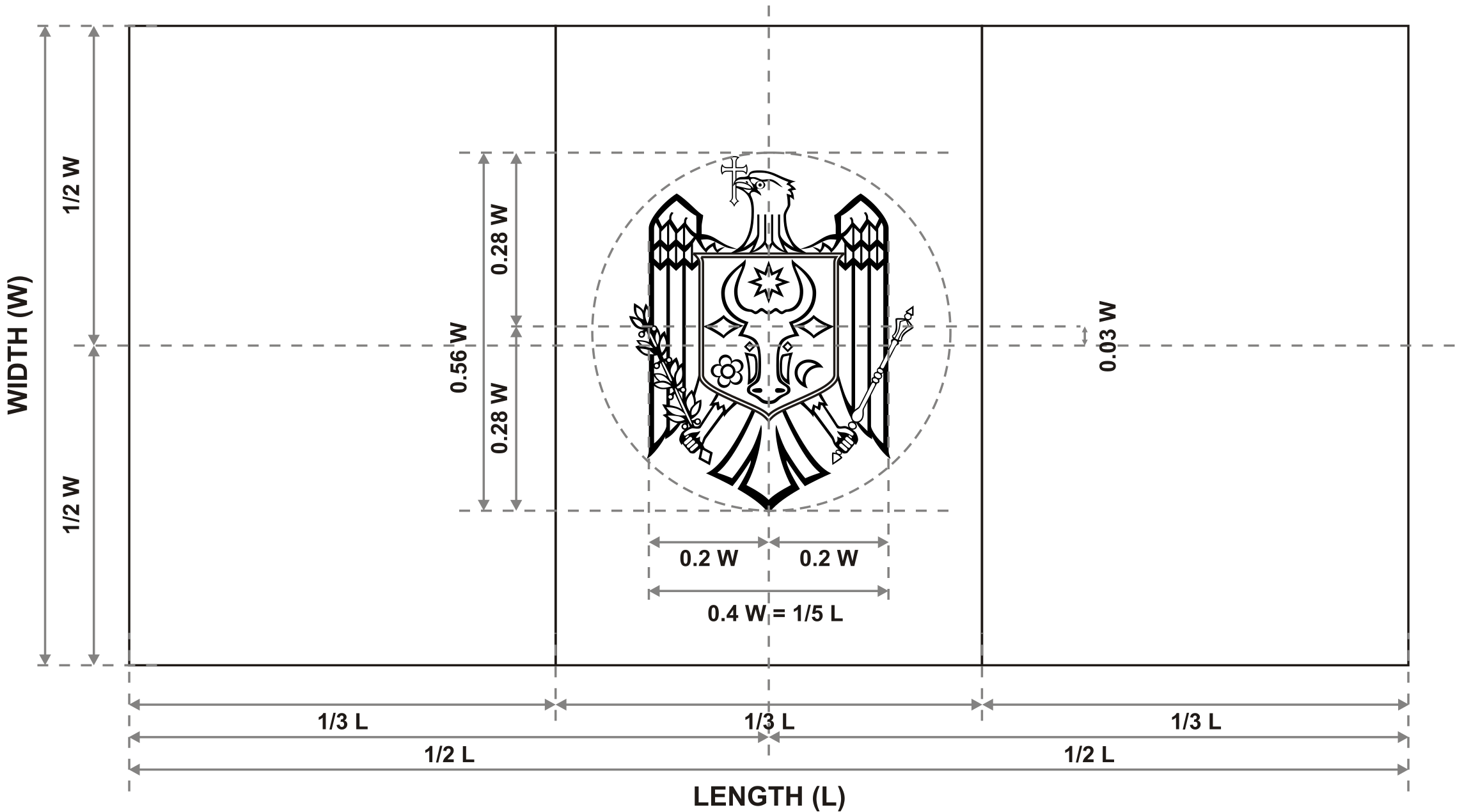
Three vertical bands of equal width, blue at the hoist, then yellow, then red, with the state coat of arms in the centre of the yellow band; the reverse is the mirror image.
- Bands
- Three, vertical and of equal width, blue at the hoist
- Coat of arms
- Centred on the yellow band; its width is one fifth of the flag's length
- Reverse
- A mirror image of the obverse, arms included, since 2010
Other forms
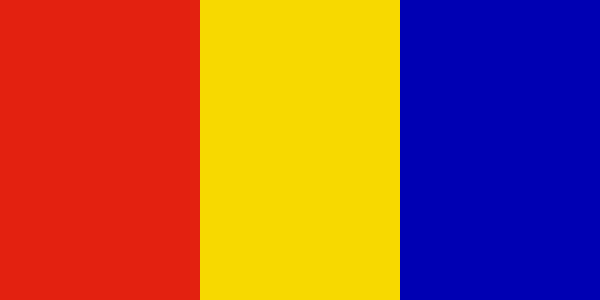
- Reverse before 2010
- From 1990 to 2010 the reverse was officially a plain tricolour without the arms, although flags with the arms on both sides were widely used.
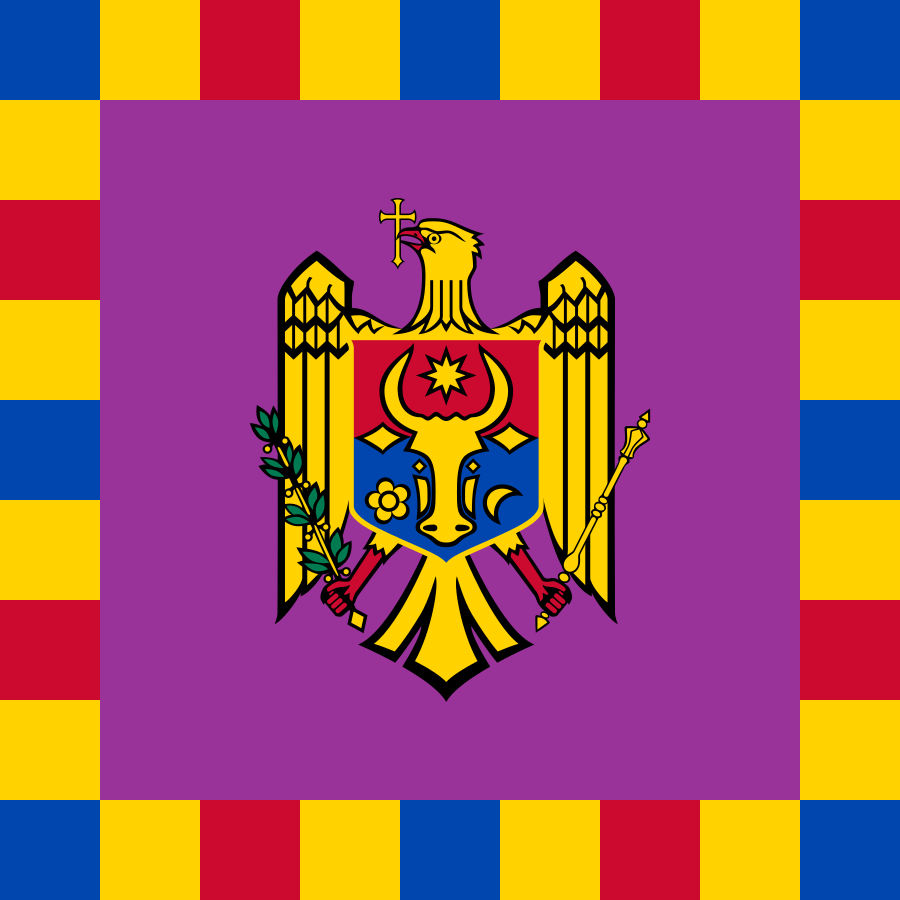
- Presidential standard
- Square and purple, with the coat of arms in gold and a border of squares, each 1/9 of the flag's width, in blue, yellow, red and yellow. Established in 2010 with the standards of the President of the Parliament, on red, and the Prime Minister, on blue.
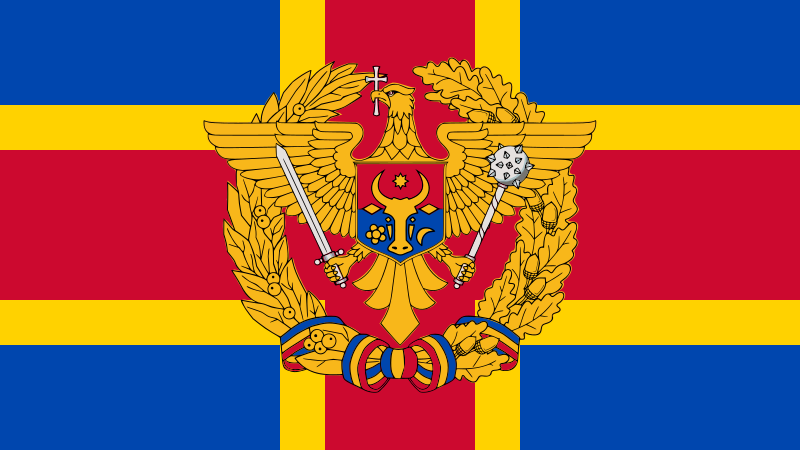
- Flag of the National Army
- Blue, with a red cross inside a larger yellow cross and the army emblem at the centre, at 2:3. The reverse carries the motto Pentru Onoare! Pentru Patrie! Pentru Tricolor!
Meaning
What each part stands for
- Blue, yellow and red
- The tricolour of the Romanians, for Moldova's national and cultural affinity with Romania. In 1848 the colours were read as liberty (the blue sky), justice (the golden fields) and fraternity (the blood of the people)
- The blue
- In 1990 the ultramarine of the Romanian flag was dropped for a lighter blue, taken from the wall paintings of Voroneț monastery, because so many similar tricolours already existed
- Eagle with cross and olive branch
- An eagle like Romania's, holding an Orthodox cross in its beak and an olive branch, for peace, in place of a sword
- Aurochs head
- The traditional symbol of Moldavia, flanked by a rose and a crescent with a star between the horns
Who drew it
- Gheorghe Vrabie
- Credited with the design
History
How the flag of Moldova got here
- 1359
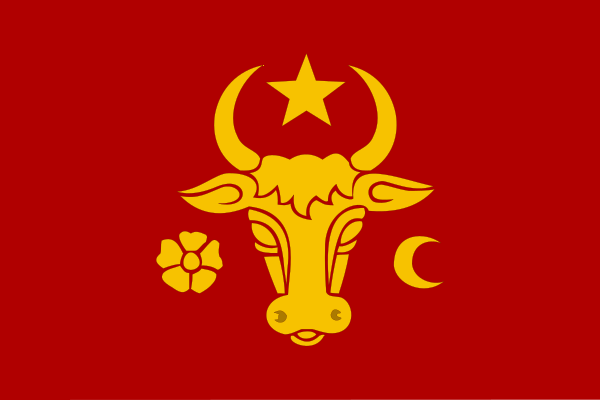
The banners of Moldavia
1359 → Undated
Moldavian flags are recorded from the reign of Bogdan, who defeated the Hungarian army under his banners in 1359. Under Stephen the Great each of the principality's 24 lands had its own banner, and the oldest surviving image of a Moldavian flag dates from 1467. Red, blue and yellow flags appear in sources from the 15th to the 19th century.
- 1831
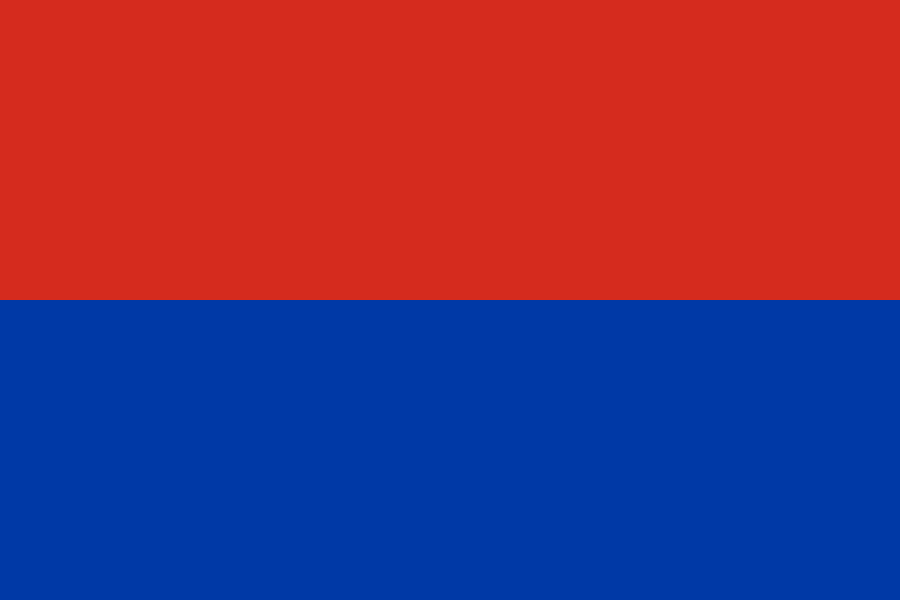
The principality's flag under its constitution
1831 → 1862
The principality's flag as its constitution described it. In 1848 revolutionaries in Moldavia and Wallachia adopted a horizontal blue, yellow and red tricolour.
- 1917
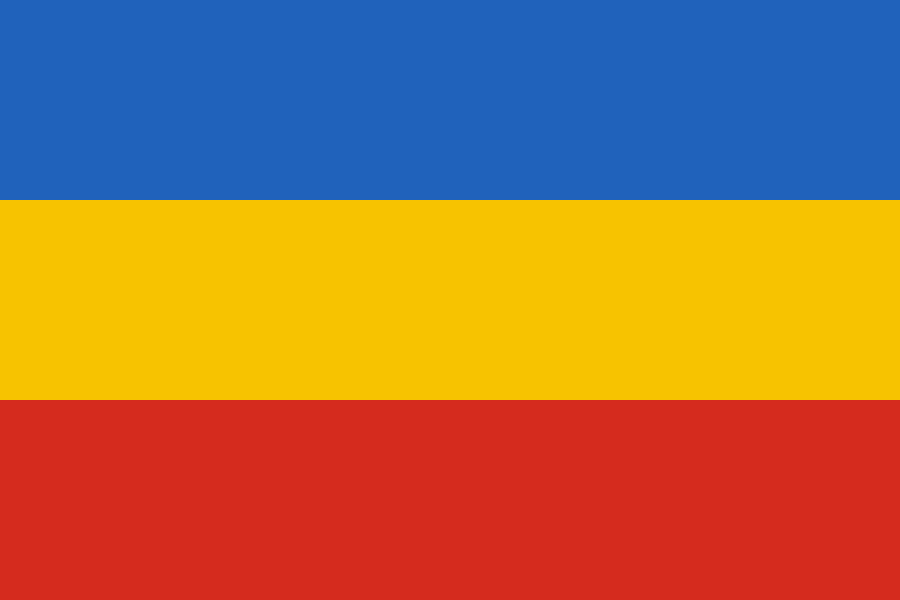
Moldavian Democratic Republic
1917 → 1918
From the spring of 1917 a horizontal tricolour flew in the towns and villages of Bessarabia and among Moldavian soldiers in Odesa, Kyiv and Sevastopol. The flags of the republic and of the Sfatul Țării carried the aurochs head.
- 1918
Part of Romania
1918 → 1940
After the Sfatul Țării voted for union with Romania in 1918, the Romanian flag of vertical red, yellow and blue bands flew between the Prut and the Dniester. Soviet occupation in 1940 replaced it with the flag of the Soviet Union, apart from July 1941 to 1944, when Romanian flags returned.
- 1952
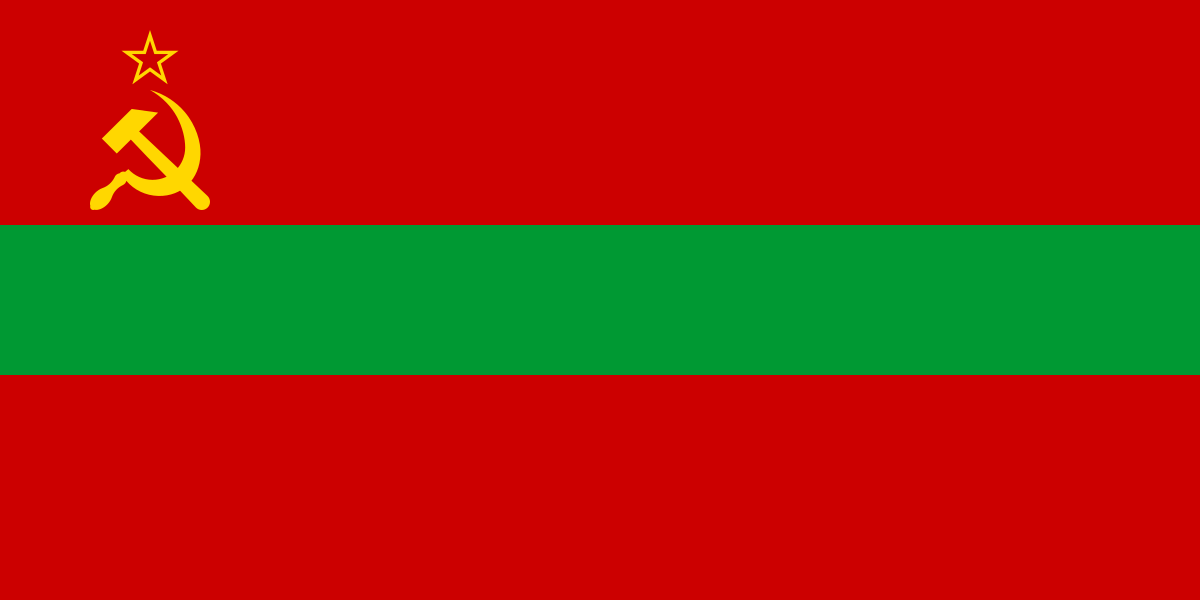
Moldavian SSR
11 Apr 1952 → 27 Apr 1990
Red with a narrower green band across the middle, and a gold hammer and sickle under a small star in the upper hoist corner. Under Soviet rule raising the tricolour was punished: pupils of a lyceum in Orhei who hoisted it on 24 January 1941 were shot, and a man who hung it from a sugar factory chimney near Bălți on 28 June 1966 served two years in a labour camp. The flag was later taken up by Transnistria.
- 1990
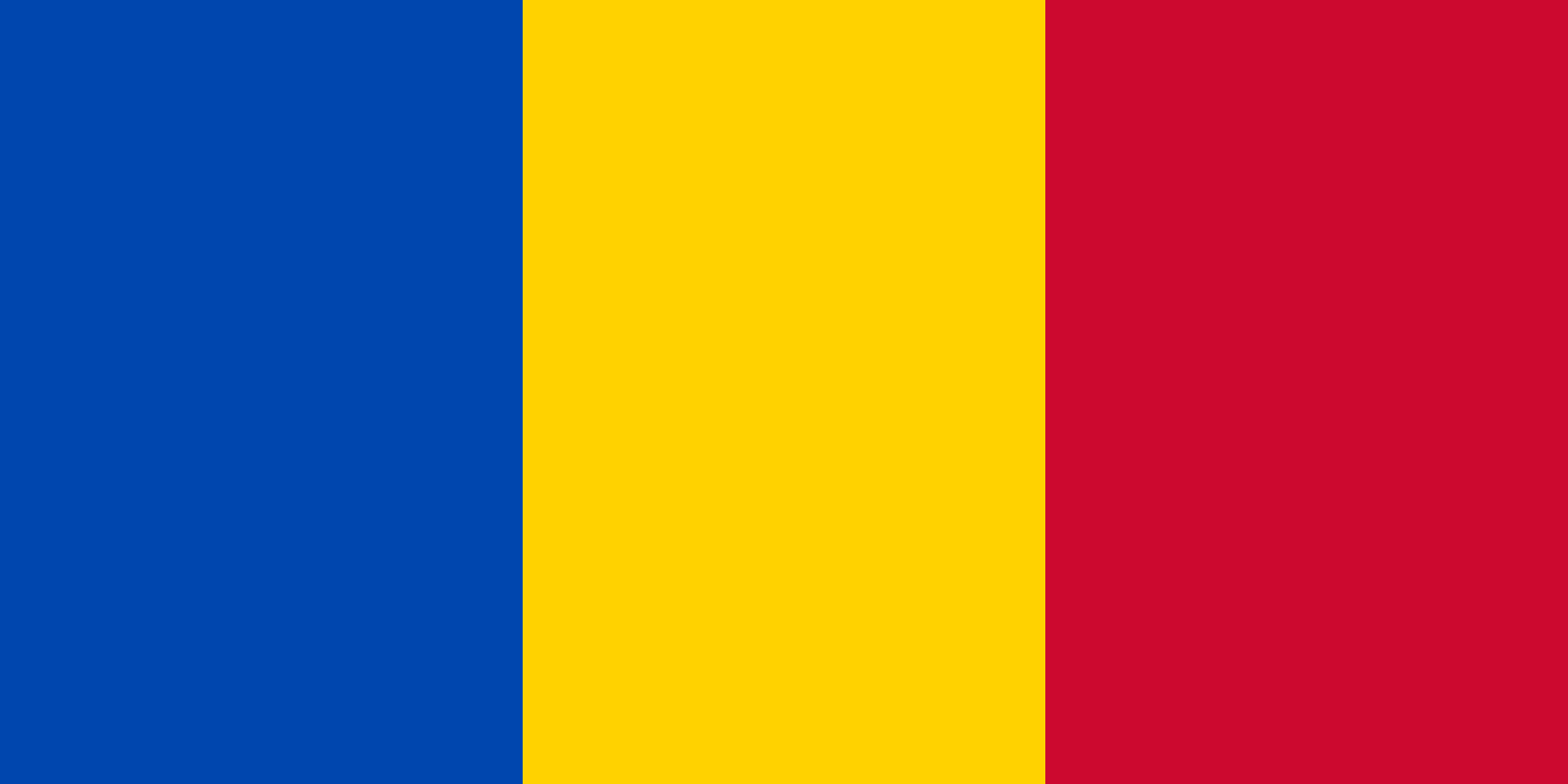
The tricolour without arms
27 Apr 1990 → 6 Nov 1990
The Supreme Soviet of the Moldavian SSR legislated the blue, yellow and red tricolour on 27 April 1990, with the coat of arms to be approved later. Gheorghe Ghimpu hoisted it on the Parliament building the same day.
- 1990
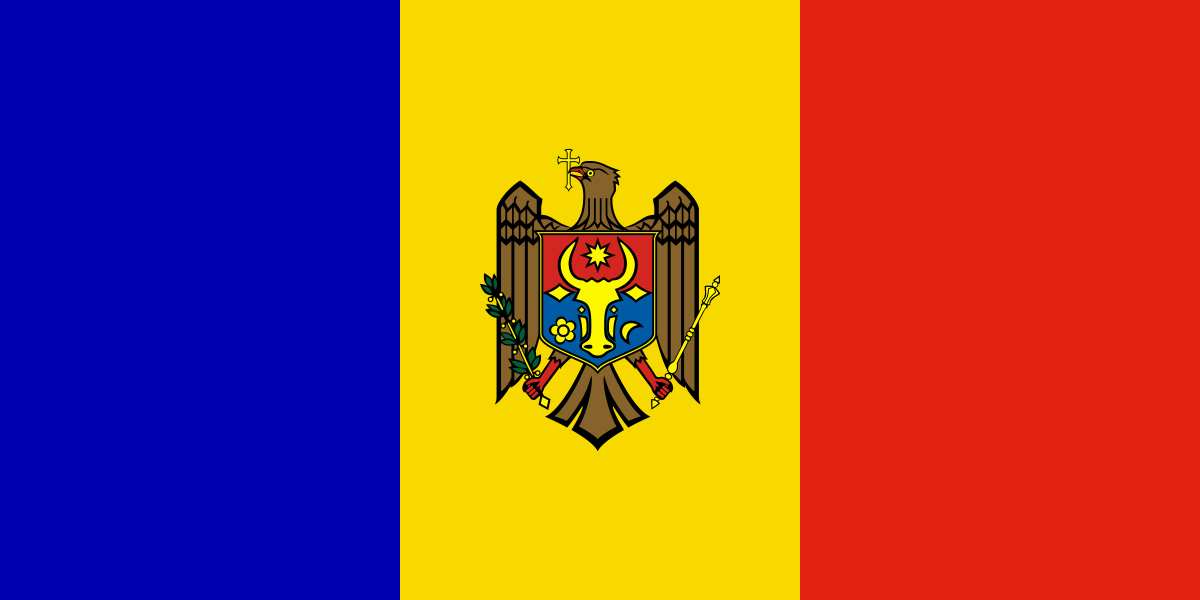
The tricolour with arms
6 Nov 1990 → 26 Nov 2010
The coat of arms was added to the yellow band on the obverse only; the colours were defined by the illustrations annexed to the regulation rather than named.
- 2010
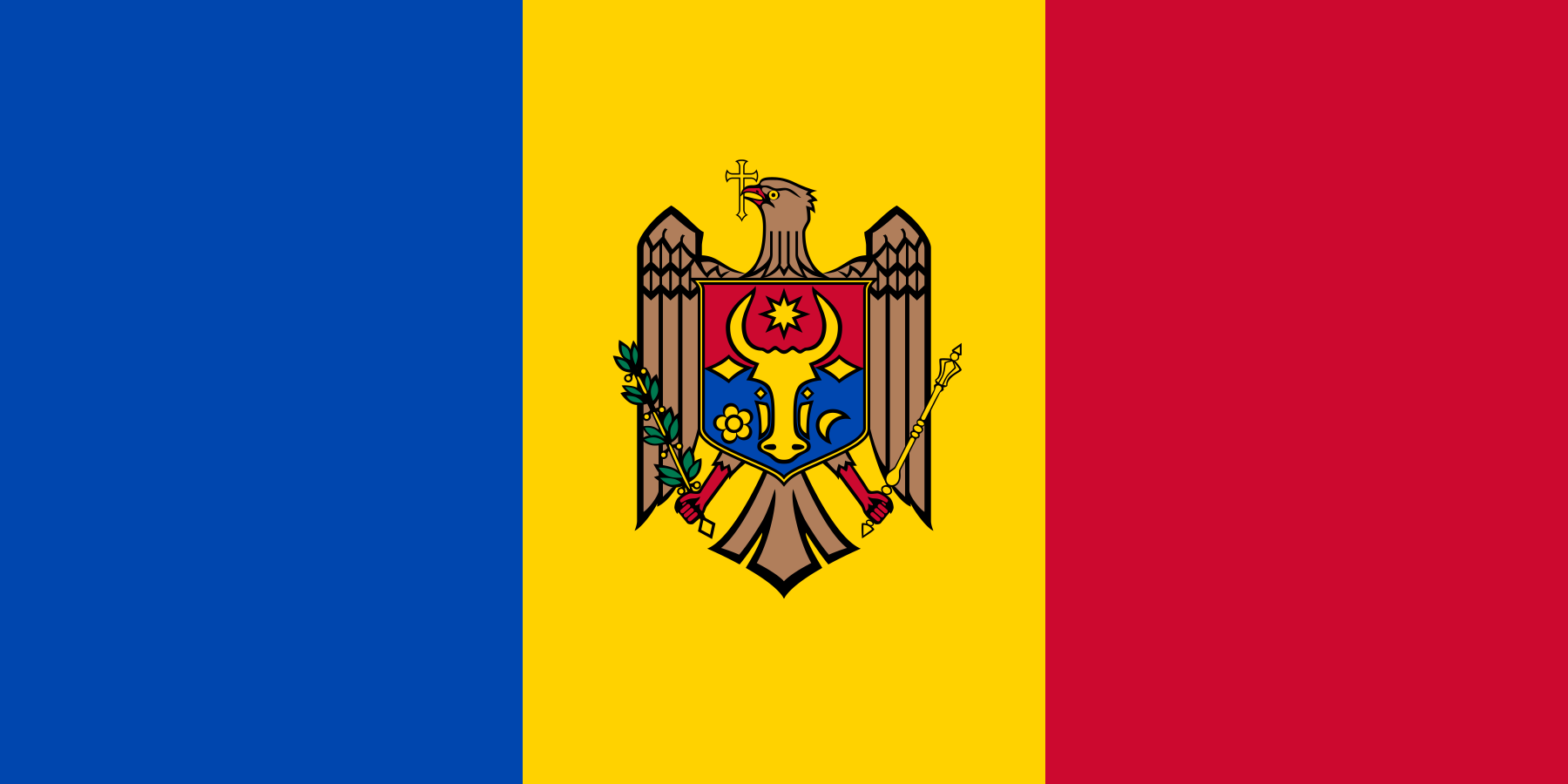
The flag under the 2010 lawIn use
26 Nov 2010 → today
Law No. 217 named and specified the colours and put the arms on both sides, the reverse mirrored. Proposals to replace the flag, among them one by the Party of Communists in 2010, were not adopted.
The law
What defines it, and who flies it
- 12 May 1990
Regulation on the State Flag, approved by Parliament Decision No. 17-XII
Described the flag, set the ratio at 1:2 and the width of the arms at one fifth of the flag's length, and listed where it is flown.
- 24 December 1991
Government Decision No. 716 approving guidelines for the Regulation on the State Flag
Sets the days and hours the flag is flown and how it is mounted on buildings.
- Undated
Constitution of the Republic of Moldova, Article 12
Defines the flag. Says nothing about its proportions.
- 17 September 2010
Law No. 217 on the State Flag of the Republic of Moldova
In force from 26 November 2010. Names the colours as Berlin blue, chrome yellow and vermilion, gives their values in annex 2, and makes the reverse a mirror image of the obverse.
In use
Flown permanently on the buildings of Parliament, the Presidency, the Government and local administration, and on buildings where Parliament or a local council is sitting
Flown by ministries, public institutions, businesses and homes on 8 March, 1 May, 9 May, 23 June, 27 August and 31 August, and on other days the government names
Mounted at no more than 45° from the facade with the lower edge at least 2.5 m above the ground; placed on the right when flown with another state's flag
The civil, state and war flag and ensign are the same flag; Flag Day has been 27 April since 2010
Related flags
The flags it is confused with or comes from
Coat of arms
The arms of Moldova