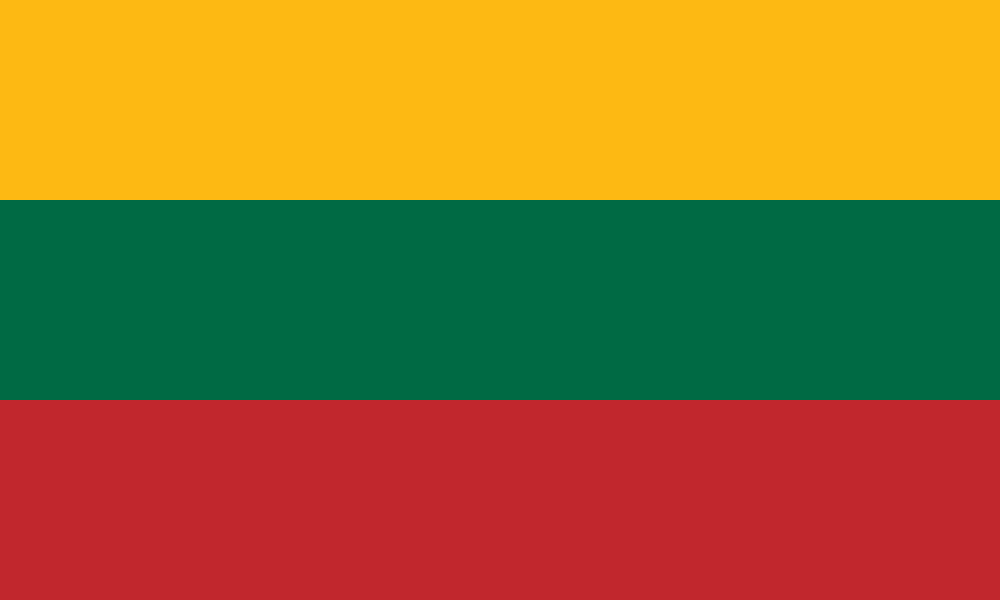
The flag of Lithuania
Lietuvos valstybės vėliava · since 2004
 Back to Lithuania
A horizontal tricolour of yellow, green and red, chosen in 1918 from the colours of folk weaving and traditional dress rather than from the coat of arms. Banned under Soviet rule, it was restored on 18 November 1988 in the Soviet 1:2 shape, and a law of 2004 returned it to 3:5 and gave the country a second, armorial state flag bearing the Vytis.
At a glance
- Adopted
- 2004
- Proportion
- 3:5
- Colours
- Earlier flags
- 5
- Designers
- 3
The colours
The colours of the flag of Lithuania, in the order it has them
- 0133.3%
Yellow
geltonaTop stripe
- HEX
#FDB913- RGB
253 185 19- CMYK
0 30 100 0- Pantone
1235 C
- 0233.3%
Green
žaliaMiddle stripe
- HEX
#006A44- RGB
0 106 68- CMYK
100 55 100 0- Pantone
349 C
- 0333.3%
Red
raudonaBottom stripe
- HEX
#C1272D- RGB
193 39 45- CMYK
25 100 100 0- Pantone
180 C
No law gives these codes. HEX and RGB are the colour this site draws the flag in; CMYK, Pantone and RAL are the values most often published for it.
Construction
How the flag is drawn
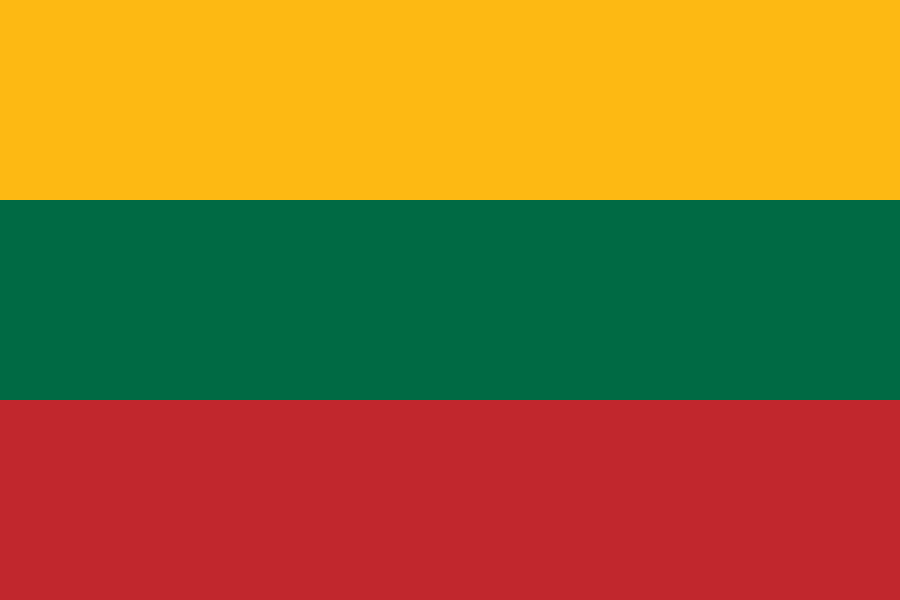
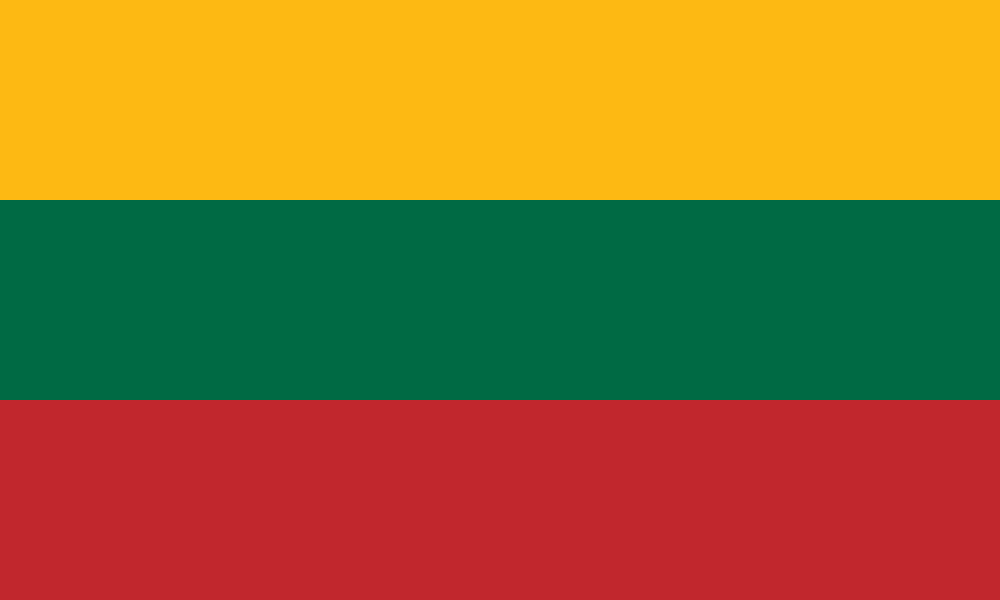
Three horizontal stripes of equal width: yellow at the top, green in the middle and red at the bottom.
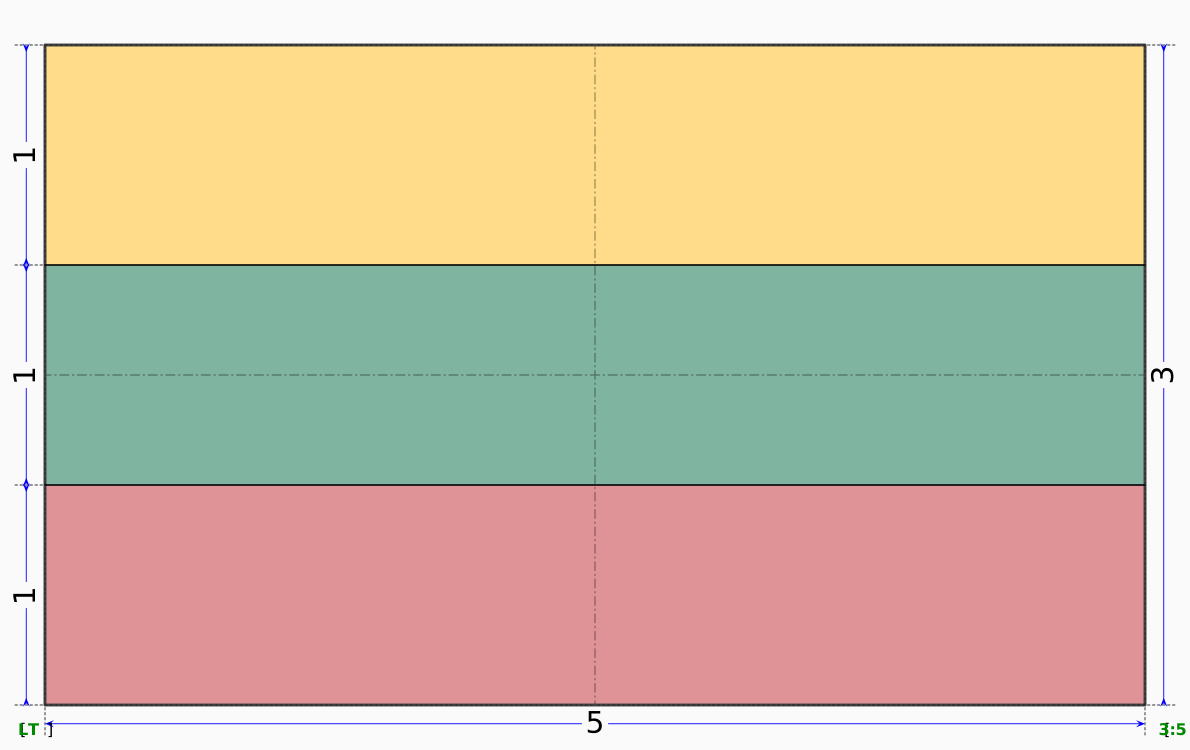
- Stripes
- Three, horizontal and of equal width
- Standard size
- 1 m wide and 1.7 m long for a flag flown on a building; other sizes keep the 3:5 ratio
- Vertical hanging
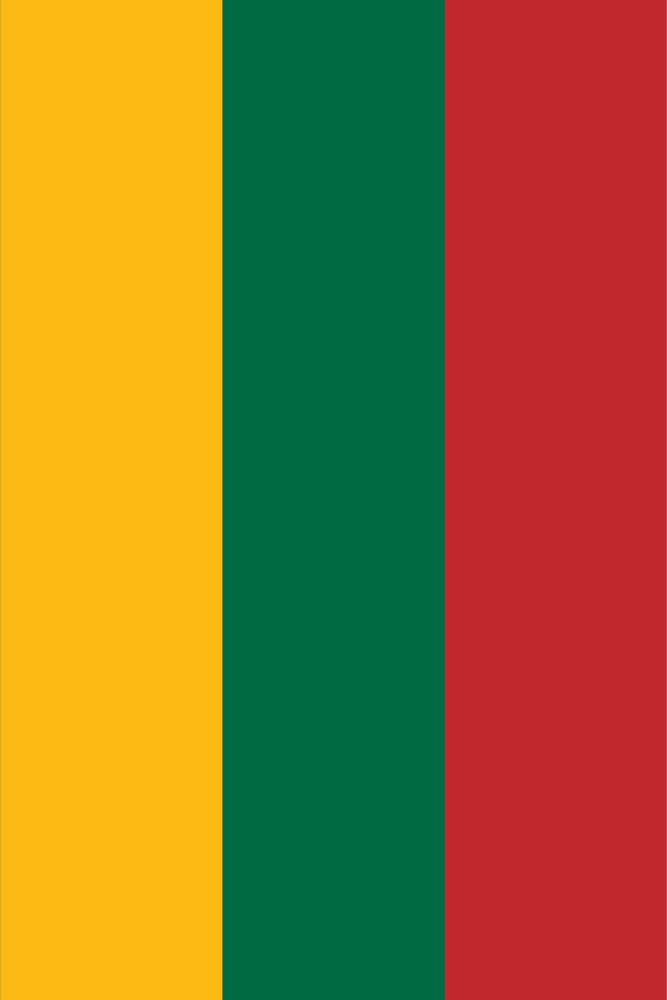
- Yellow on the heraldic right, which is the viewer's left, green in the middle and red on the heraldic left
Other forms
- Historical state flag
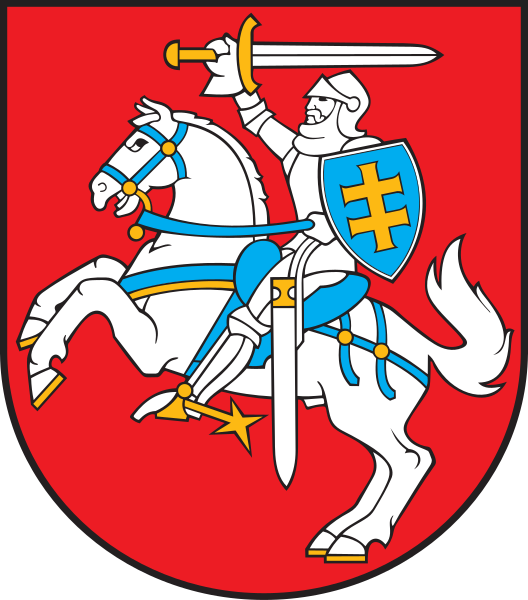
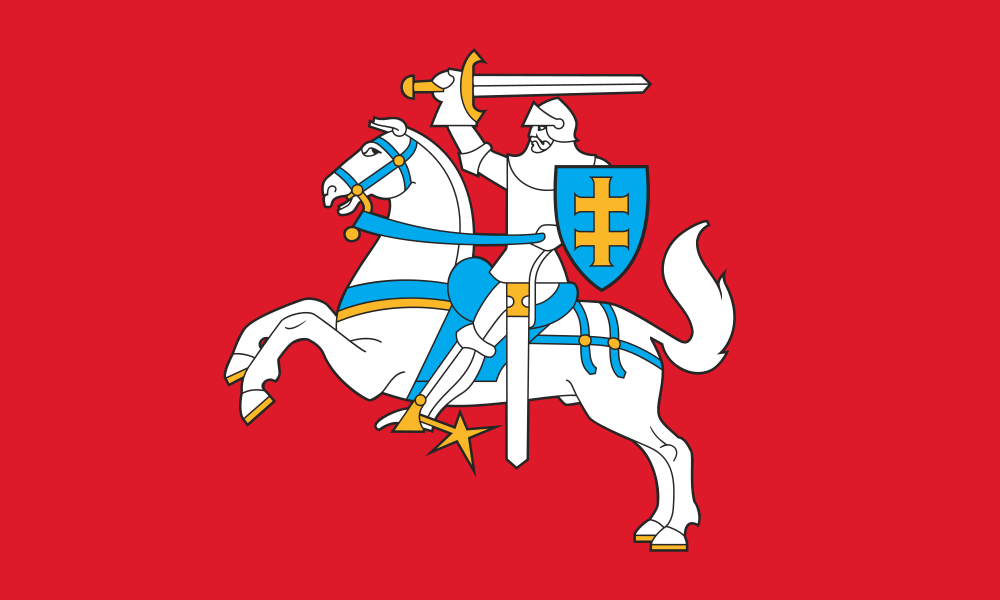
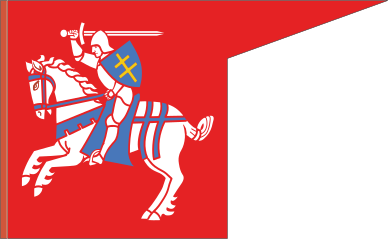
- Red, with the Vytis in the centre: a silver armoured knight on a white horse holding a silver sword over his head, a blue shield with a gold double cross at his shoulder. Made official by the law of 2004, in the same 3:5 ratio, and flown permanently at the Royal Palace of Lithuania in Vilnius, Trakai Island Castle and the Vytautas the Great War Museum in Kaunas. It is also the naval jack.
- Vertical flag
- The stripes run top to bottom with yellow on the viewer's left.
- Naval ensign
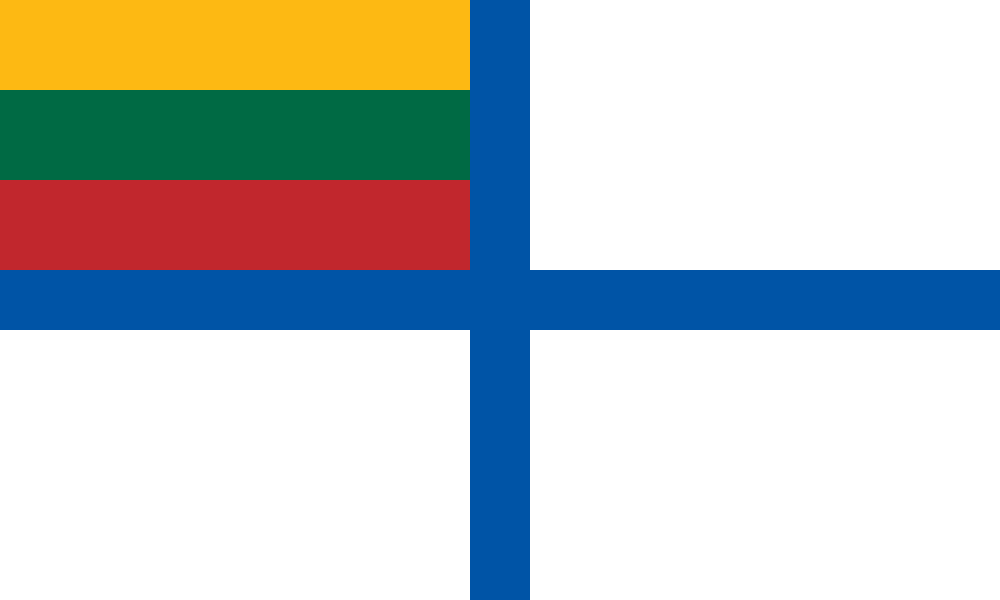
- White with a blue cross, each arm 1/10 of the ensign's width, and the national flag in the canton. In use since 25 May 1992.
- Presidential standard
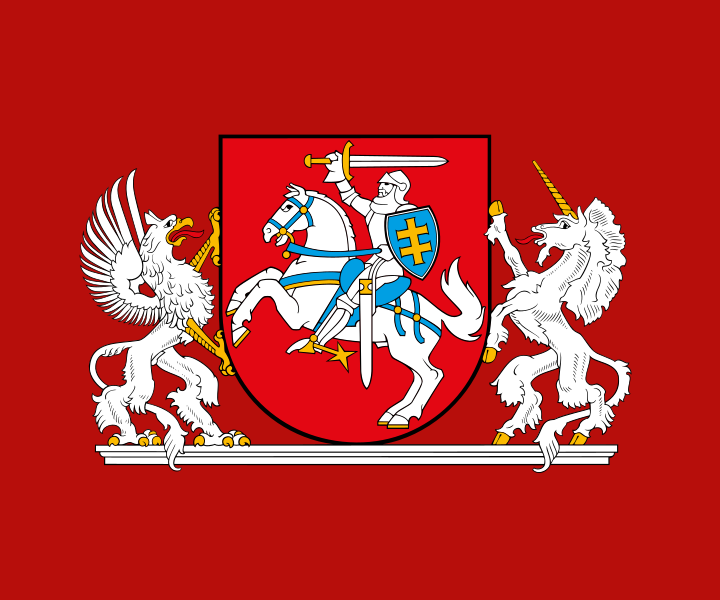
- The coat of arms supported by a griffin and a unicorn on a single-colour field, in a 1:1.2 ratio. The law calls the field purple; in practice it is dark red.
Meaning
What each part stands for
- Yellow
- The sun, light and prosperity. Daugirdas proposed it in 1917 to stand for the dawn
- Green
- The beauty of nature, forests and the countryside, liberty and hope
- Red
- The land, courage and the blood shed for the homeland
- The three colours together
- Taken from folk weaving, national costume and sashes, where green and red were the most common colours. They follow no rule of heraldry, which drew objections from 1918 until 1940
Who drew it
- Antanas Žmuidzinavičius
- Painter who drew the green and red flag that decorated the hall of the Vilnius Conference in 1917
- Tadas Daugirdas
- Archaeologist and heraldry expert who proposed adding a stripe of yellow, for the dawn
- Jonas Basanavičius
- Member of the Council of Lithuania commission that fixed the design on 19 April 1918, alongside Žmuidzinavičius and Daugirdas
History
How the flag of Lithuania got here
- 1410
The Vytis banner
1410 → Undated
At the Battle of Grunwald in 1410, Jan Długosz recorded, 30 of the 40 regiments of the Grand Duchy carried red banners with an armoured knight on horseback, the other ten the Columns of Gediminas. The red banner with the knight remained the flag of the Grand Duchy until the end of the 18th century.
Image: Alex Tora, CC BY 3.0
- 1918
The first tricolour
25 Apr 1918 → 15 Jun 1940
The Council of Lithuania adopted the yellow, green and red tricolour unanimously, at 2:3, on the commission's protocol of 19 April 1918. The constitutions of 1922 and 1928 named it the only state flag. In May 1940 a heraldic commission put a yellow, red and white replacement to the President, and the Soviet occupation of June 1940 ended the matter.
- 1940
Lithuanian SSR
1940 → 19 Jul 1953
A red flag with a gold hammer and sickle in the upper hoist corner under the words LIETUVOS TSR. The tricolour was banned, and flying it was punished.
- 1953
Lithuanian SSR, with bands
19 Jul 1953 → 18 Nov 1988
Red, with the hammer, sickle and star at the hoist, over a white band and a green band: 8/12, 1/12 and 3/12 of the flag's width. Public use of this flag has been illegal since Lithuania banned Soviet symbols in 2008.
- 1988
The tricolour restored
18 Nov 1988 → 1 Sept 2004
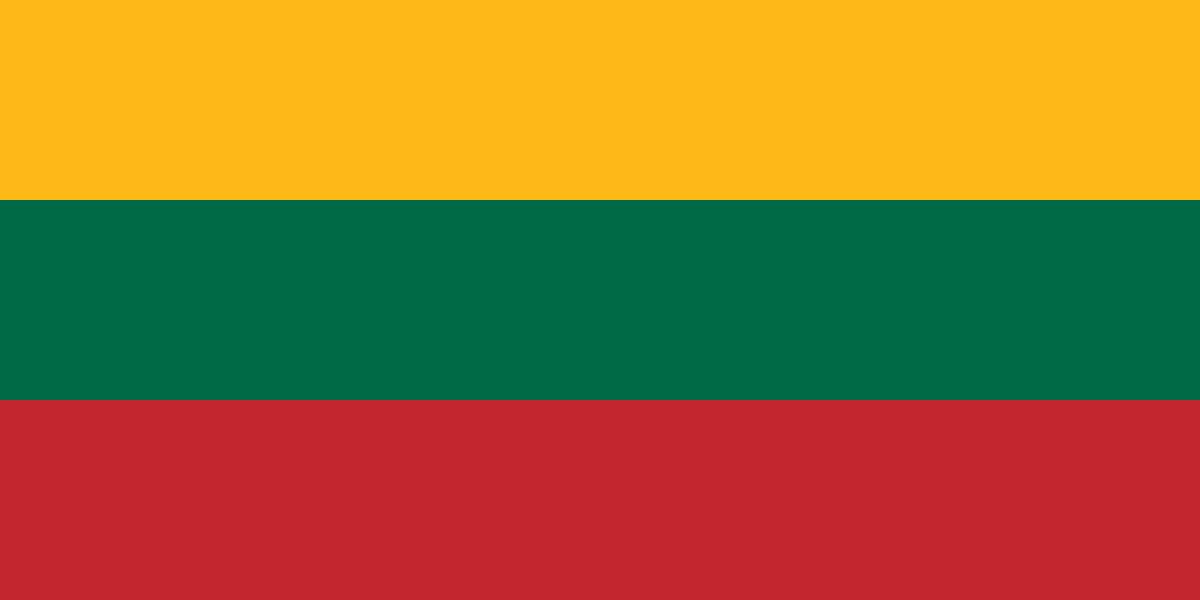
The tricolour flew at Sąjūdis rallies through the summer of 1988 and was hoisted on the Tower of Gediminas Castle on 7 October 1988. On 18 November the Supreme Council of the Lithuanian SSR amended the constitution to make it the state flag, with the Soviet 1:2 proportion, and on 25 January 1989 it approved the colour standard, recreated from interwar flags kept by museums and private people.
- 2004
The flag at 3:5In use
1 Sept 2004 → today
Law No. IX-2331 of 8 July 2004 changed the proportion from 1:2 to 3:5 and adopted the red Vytis banner as the historical state flag. It came into force on 1 September 2004.
The law
What defines it, and who flies it
- 25 October 1992
Constitution of the Republic of Lithuania, Article 15
Adopted by referendum. Names the colours of the flag as yellow, green and red and sets no proportion.
- 26 June 1991
Law No. I-1497 on the National Flag and Other Flags
Describes the flag and governs its sizes, use, protocol and manufacture.
- 8 July 2004
Law No. IX-2331 amending the flag law
Changed the proportion from 1:2 to 3:5 and made the historical armorial flag an official state flag. In force from 1 September 2004.
- Undated
Decision on the colours of the state flag and the flag of the President
Sets the colours in Pantone textile-paper shades.
In use
Flown day and night at the Seimas, the President's residence, the government and ministries, the courts, the Bank of Lithuania, the Tower of Gediminas Castle, municipal councils and border posts
Flown by other institutions, businesses and homes on national holidays, and on polling stations on election and referendum days
Lowered to one third of the mast for mourning, or, where it cannot be lowered, marked with a black ribbon 10 cm wide reaching the bottom of the flag
Takes precedence over every other flag, followed by the historical state flag, then foreign flags and the flag of the European Union
Related flags
The flags it is confused with or comes from
Coat of arms
The arms of Lithuania