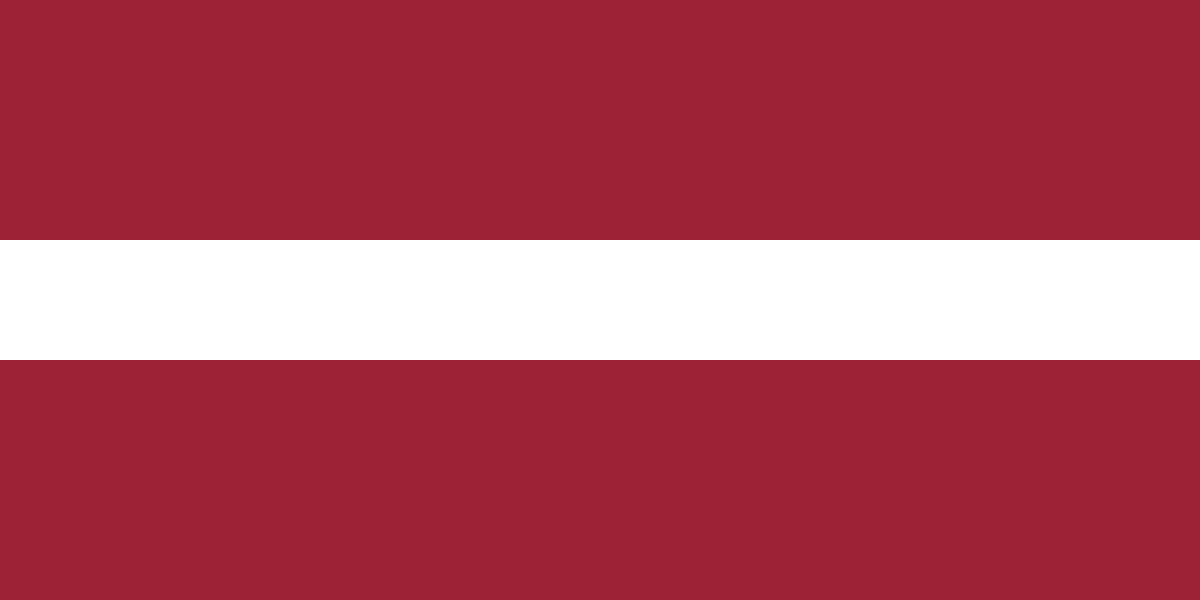
The flag of Latvia
Latvijas karogs · since 1923
 Back to Latvia
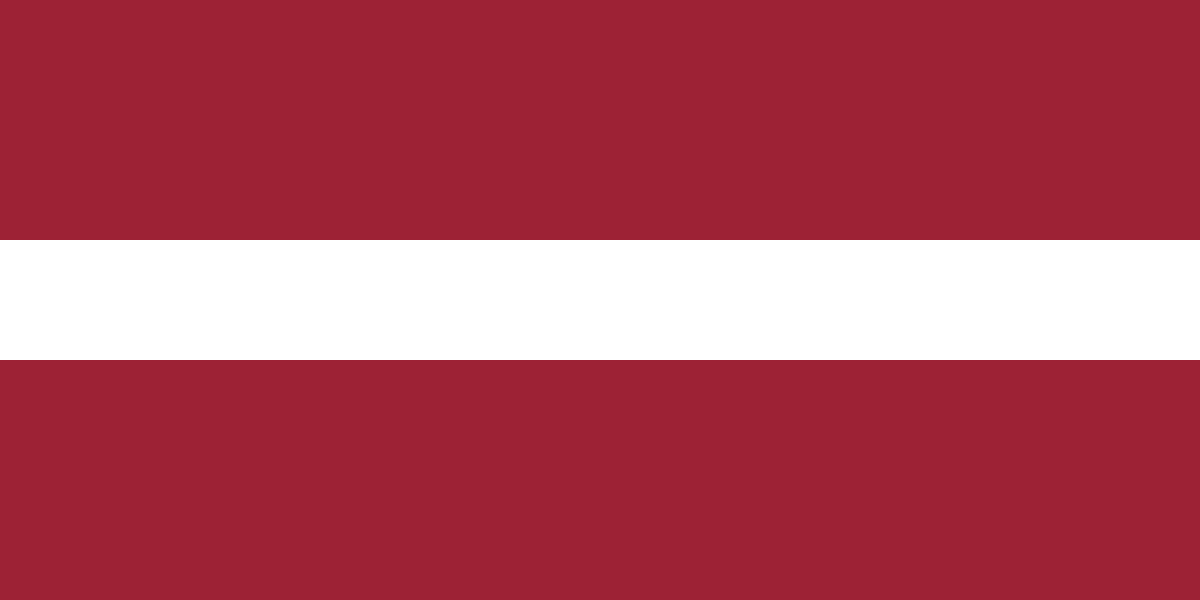
A carmine red field divided by a white horizontal stripe, the three bands in the ratio 2:1:2. The design rests on a line in the Rhymed Chronicle of Livonia about a red flag with a white stripe carried by men from Cēsis around 1279, was drawn in its modern form by Ansis Cīrulis in 1917 and was banned under Soviet rule. The dark red, which the law calls carmine, is the flag's most distinctive feature and was not tied to a Pantone value until 1995.
At a glance
- Adopted
- 1923
- Proportion
- 1:2
- Colours
- Earlier flags
- 4
- Designers
- 3
The colours
The colours of the flag of Latvia, in the order it has them
- 0180%
Carmine red
karmīnsarkansThe two outer bands
- HEX
#9D2235- RGB
157 34 53- CMYK
0 78 66 38- Pantone
201 C- RAL
3031
- 0220%
White
baltsThe middle stripe
- HEX
#FFFFFF- RGB
255 255 255- CMYK
0 0 0 0- Pantone
White
No law gives these codes. HEX and RGB are the colour this site draws the flag in; CMYK, Pantone and RAL are the values most often published for it.
Construction
How the flag is drawn
A carmine red field crossed horizontally by a white stripe; the upper red band, the white stripe and the lower red band are in the ratio 2:1:2.

- Bands
- Red, white, red, in widths of 2:1:2, so the white stripe is one fifth of the flag's height
- Red
- Pantone 19-1629 TPX or TC on fabric; Pantone 201 C in print and on screen
- Vertical flag
- The horizontal flag turned 90° clockwise
Other forms
- Textile flag
- The same flag in the textile red, Pantone 19-1629, darker and browner than the red used in print.
- Vertical flag
- The horizontal flag turned 90° clockwise.
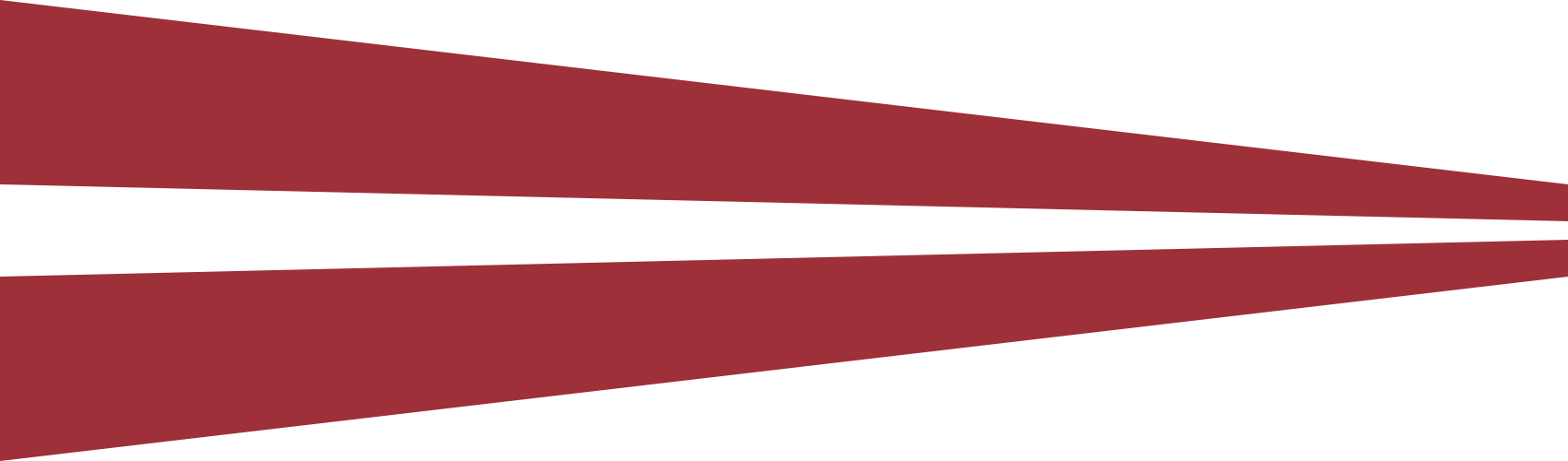
- State flag pennant
- A long tapering ribbon in the flag's colours and its 2:1:2 proportions, at 5:1, adopted on 21 April 2009 so that flagpoles need not stand empty.
- Presidential standard
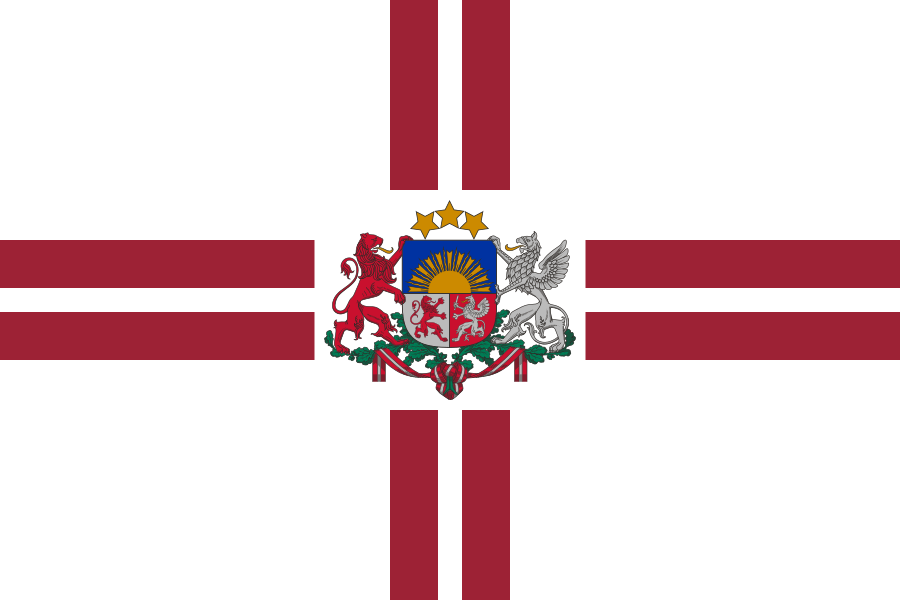
- White, with a cross in the red, white and red of the flag and a white panel at its centre bearing the coat of arms, at 3:2.


Meaning
What each part stands for
- Red
- The readiness of Latvians to give the blood of their hearts for freedom and to defend their country
- White
- Right and truth, the honour of free citizens and trustworthiness, as Kārlis Ulmanis described it before 1940
- Red, white, red
- A legend tells of a wounded Latgalian chief laid on a white sheet whose edges were stained with his blood; the sheet was carried as a flag in the next battle
Who drew it
- Ansis Cīrulis
- Artist whose 2:1:2 design the Latvian Art Promotion Association recommended as the model for all flags in May 1917
- Jānis Lapiņš
- Teacher who sketched the first red flag with a white stripe in the second half of 1916
- Marianna Straumane
- Teacher at a refugee children's shelter in Valmiera who embroidered Lapiņš's flag, with a sun in the upper hoist corner
History
How the flag of Latvia got here
- 1916
From the chronicle to the first flags
1916 → 15 Jun 1921
Jēkabs Jūsmiņš found the chronicle's red flag with a white stripe in the mid 19th century and Latvian students in Tartu took it up. In 1916 Marianna Straumane embroidered a bright red flag with a white stripe and a sun, which flew over the Valmiera Latvian Society in March 1917. In May 1917 the Art Promotion Association chose Cīrulis's 2:1:2 design, and red, white and red decorated the hall where the state was proclaimed on 18 November 1918.
- 1921
The flag of the first republic
15 Jun 1921 → 17 Jun 1940
The law of 15 June 1921 made the flag official with the coat of arms. A cabinet regulation of 25 August 1922 first described the red as dark red, carmine, at 3:2, and the Saeima changed the ratio to 2:1 when it passed the regulation as law in January 1923.
- 1940
Latvian SSR
17 Jun 1940 → 1953
A red flag with a gold hammer and sickle in the upper hoist corner under the letters LPSR. Making, keeping or flying the national flag was a crime, apart from a short period at the start of the German occupation in 1941.
- 1953
Latvian SSR, with waves
1953 → 27 Feb 1990
The Soviet red flag with blue wavy bands along the bottom for the sea. On 5 December 1963 the student Bruno Javoišs hung a home-made national flag, five metres long, from the radio tower in central Riga, where it flew for a day, and on 14 June 1988 Konstantīns Pupurs carried the flag through the centre of Riga.
- 1990
The flag restoredIn use
27 Feb 1990 → today
The red, white and red flag regained its status as the state flag on 27 February 1990. The State Flag Law of 2009 replaced the earlier rules, and the Pantone red changed from 1807 C, chosen by the Heraldic Commission on 11 April 1995, to 201 C on 21 April 2009.
The law
What defines it, and who flies it
- 15 June 1921
Law on the flag and coat of arms of the Republic of Latvia
Passed by the Constitutional Assembly. Set the proportions of the colours but no shades and no size.
- 20 January 1923
Law on the state, merchant, official and naval flags of Latvia
Passed by the Saeima on 16 January and proclaimed on 20 January. Set the ratio at 2:1 and described the red as dark red, carmine.
- 29 October 2009
Latvian State Flag Law
The law in force. Sets the proportions, the colour, the flag days, mourning and the order of precedence.
- 20 April 2010
Cabinet Regulation No. 405 on the application of the State Flag Law
Set Pantone 19-1629 TPX or TC for the red. Amended with effect from 1 January 2019 so that fabric flags keep 19-1629 and printed and digital flags use Pantone 201 C.
In use
Flown by public institutions, companies, associations and residential buildings on the days the law sets, among them 4 May and 18 November
Flown with a mourning mark on 25 March, 14 June, 17 June, 4 July and the first Sunday in December
Raised at sunrise and lowered at sunset when not flown continuously, at least 2.5 m above the ground on a white staff longer than the flag
In mourning, lowered to half-staff, or on a fixed staff marked with a black ribbon 1/20 of the flag's width
Related flags
The flags it is confused with or comes from

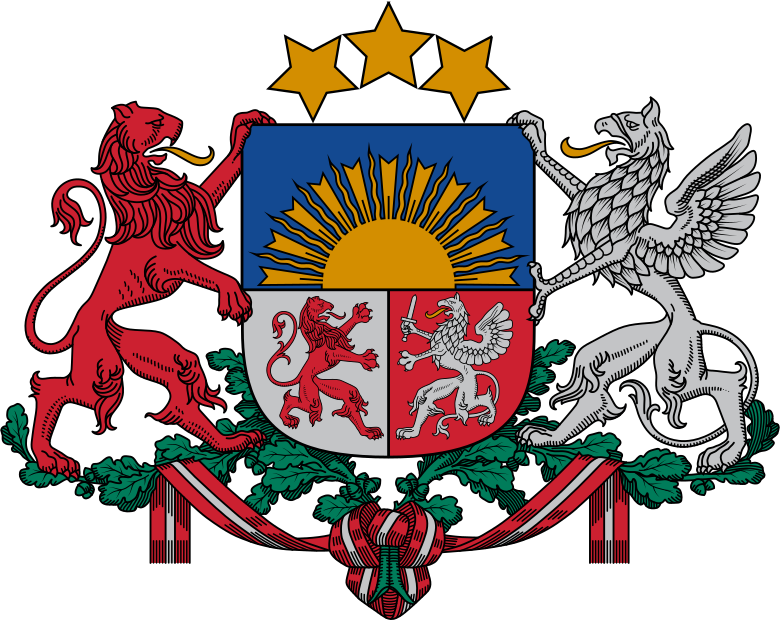
Coat of arms
The arms of Latvia