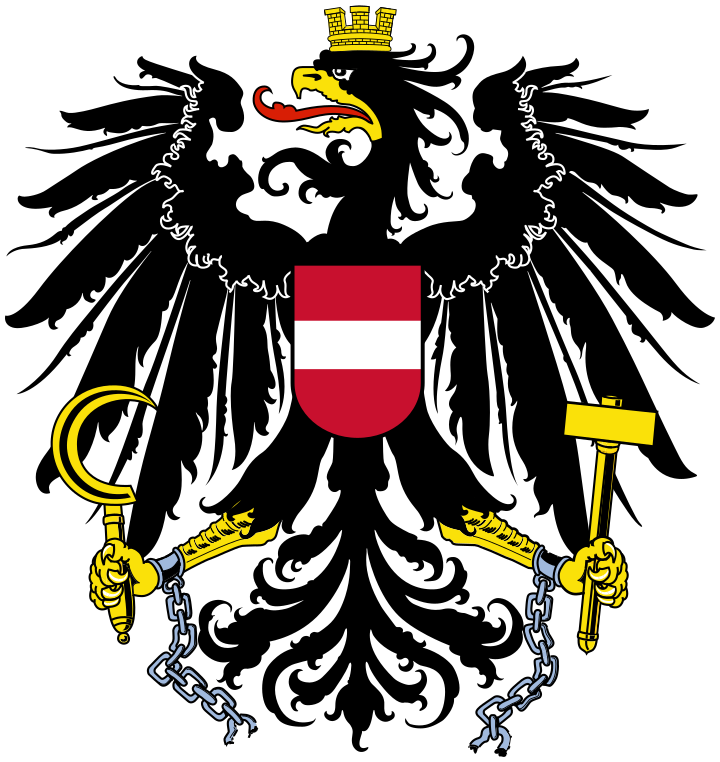
The flag of Austria
Flagge der Republik Österreich · since 1945
 Back to Austria
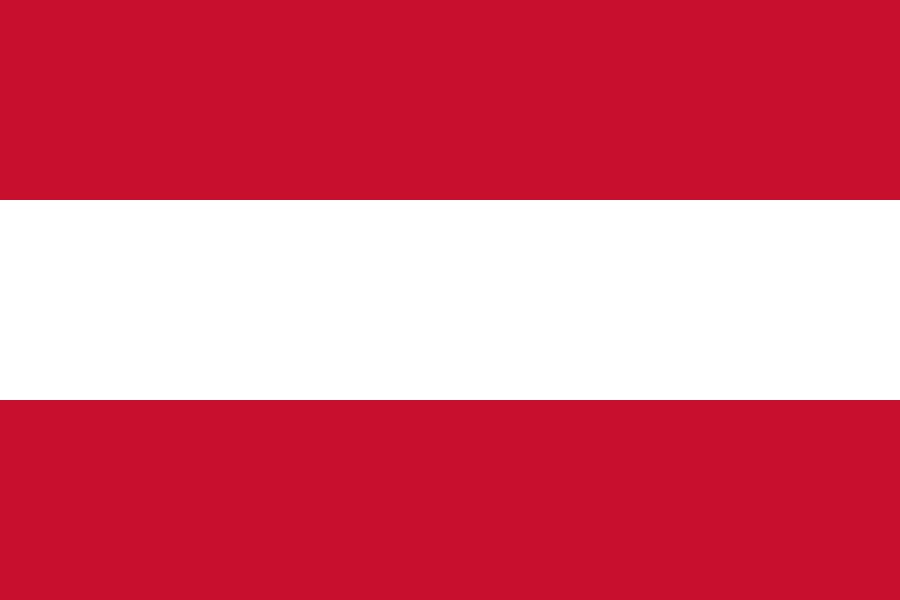
Three equal horizontal stripes of red, white and red, taken from the Babenberg shield first recorded on a seal of 1230. Under the Habsburgs the colours belonged to the country and the navy while the monarchy flew black and yellow; the republic took them as its flag in 1918 and again in 1945. The law fixes neither the shade of red nor the proportion of the national flag.
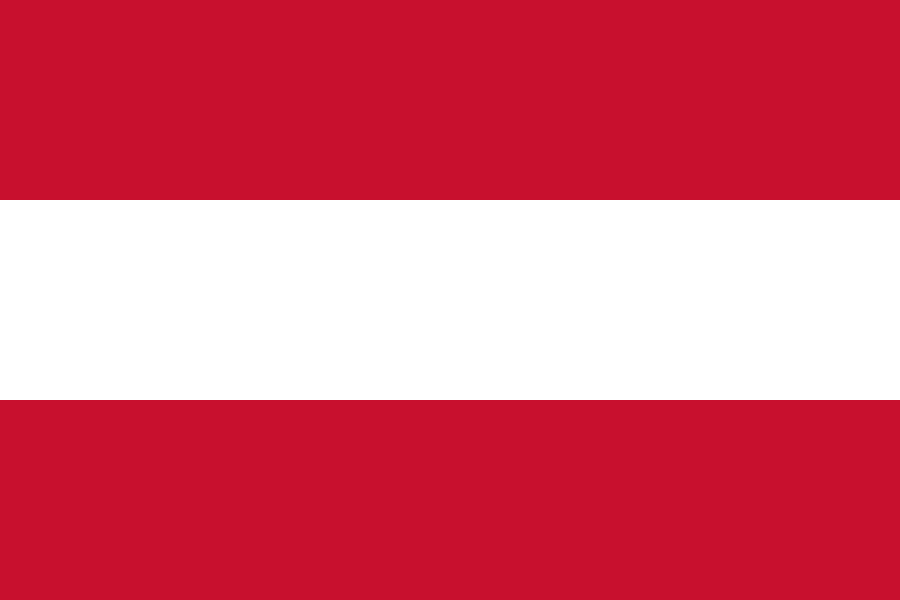
At a glance
- Adopted
- 1945
- Proportion
- 2:3
- Colours
- Earlier flags
- 5
- Designer
- 1
The colours
The colours of the flag of Austria, in the order it has them
- 0166.7%
Red
rotTop and bottom stripes
- HEX
#C8102E- RGB
200 16 46- CMYK
14 100 79 4- Pantone
186 C
- 0233.3%
White
weißMiddle stripe
- HEX
#FFFFFF- RGB
255 255 255- CMYK
0 0 0 0
No law gives these codes. HEX and RGB are the colour this site draws the flag in; CMYK, Pantone and RAL are the values most often published for it.
Construction
How the flag is drawn
Three horizontal stripes of equal width, red over white over red.
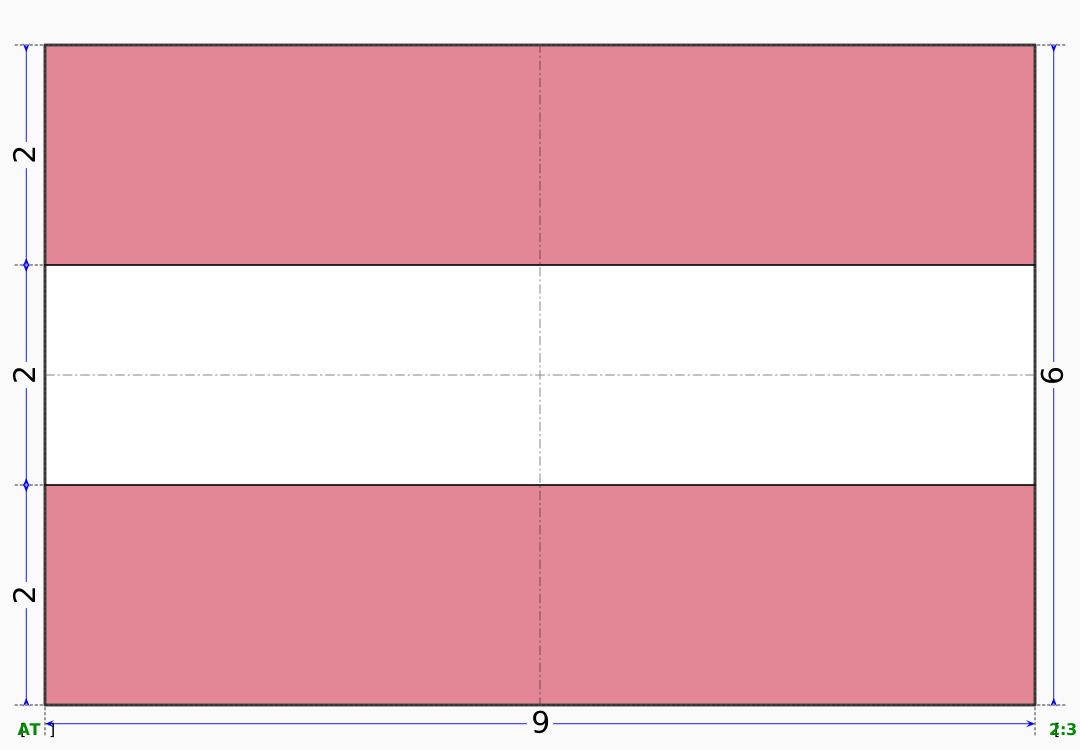
- Stripes
- Three, of equal width, the middle one white
- Shade
- Not set by law. Only the armed forces fix the red, at Pantone 186 C
Other forms
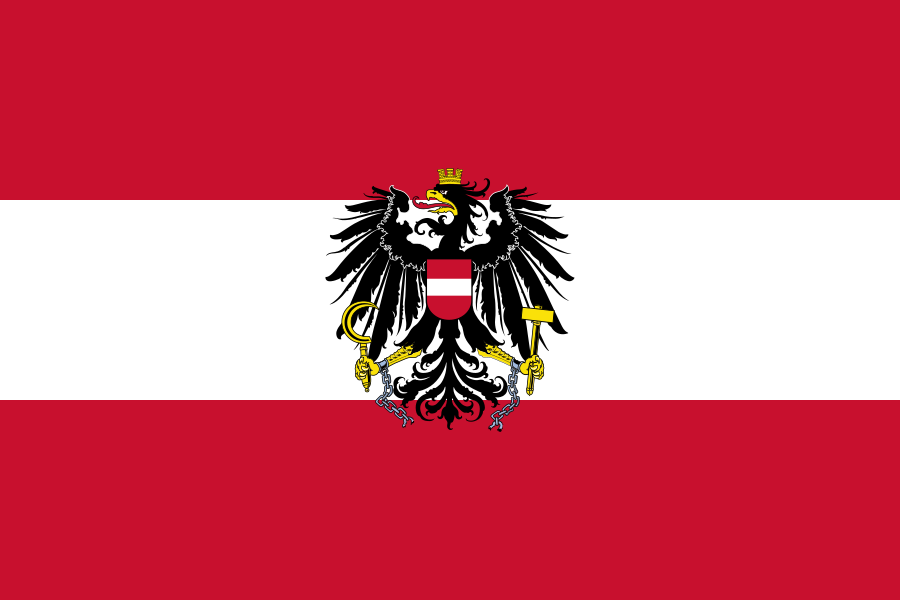
- Federal service flag
- The flag with the federal coat of arms in the centre, reaching equally into both red stripes, at 2:3. Only federal bodies, the armed forces, universities and the highest state organs may fly it; it is also the military flag. The eagle faces the hoist on both sides.
- Flag at sea
- The plain red-white-red flag at 2:3, flown by Austrian seagoing ships, which may show no other sign of Austrian nationality.
- Vertical flag
- Banner flags hung vertically are more common in Austria than the horizontal flag. On the service flag the arms are kept upright.
Meaning
What each part stands for
- Red-white-red
- The Bindenschild, the Babenberg arms of a silver band on red. From early on the colours stood for the country itself rather than for a ruling family
- The legend
- Duke Leopold V's white surcoat was soaked in blood at the Siege of Acre except for the band under his belt. The story is recorded from 1260, and the real origin of the arms is unknown
Who drew it
- Frederick II of Austria
- Last Babenberg duke, credited by the 18th-century historian Chrysostomus Hanthaler with the red-white-red arms taken up after his accession in 1230
History
How the flag of Austria got here
- 1230
The Babenberg arms
30 Nov 1230 → 1246
Red-white-red is first documented on the seal of a deed confirming the privileges of Lilienfeld Abbey, under Duke Frederick II. Leopold III had been shown with a banded shield in 1105.
- 1246
The arms of Austria
1246 → 1804
After Frederick's death the colours passed to Ottokar II of Bohemia and, after 1278, to the Habsburgs, becoming the arms of their hereditary lands. A red-white-red banner appears from the 14th century, mostly at ceremonies.
- 1786
Naval ensign
1786 → 1918
The Austrian navy, founded in 1786, took red-white-red for its ensign, with a shield in the same colours.
- 1804

Black and yellow
1804 → 1918
The Habsburg family colours served as the civil flag of the Austrian Empire and later of the Austrian half of Austria-Hungary.
- 1918
First Republic
12 Nov 1918 → 1938
Red-white-red flags were to be raised when the republic was proclaimed outside Parliament; members of the Red Guard tore out the white stripes and hoisted the red remnants. The republic took the red-white-red naval ensign as its state flag in 1919. From 28 December 1936 the Fatherland Front's flag with a crutch cross was equal to it at home.
- 1945
Second RepublicIn use
1 May 1945 → today
The red-white-red flag was adopted again in 1945 and written into the Constitution in 1981. A directive of 2000 gave the red as Pantone 032 C; the armed forces changed it to 186 C in 2018.
The law
What defines it, and who flies it
- 1 July 1981
Federal Constitutional Law, Article 8a, Article 8a(1)
Added by BGBl. No. 350/1981. The colours of the Republic are red-white-red, and the flag is three equal horizontal stripes, white between two red.
- 19 March 1981
Maritime Shipping Act (Seeschifffahrtsgesetz), BGBl. No. 174/1981, § 3
The flag at sea, in the proportion 2:3, to be flown only by Austrian seagoing ships.
- 28 March 1984
Federal Act on the coat of arms and other state insignia (Wappengesetz), BGBl. No. 159/1984, § 3 and Annex 2
Defines the national flag and introduces the federal service flag with the arms, at 2:3.
- 14 May 2018
Ministry of Defence decree on the use of the national insignia and on flags in the armed forces, Section I C, points 1 and 2
Sets the red at Pantone 186 C for military use and fixes the position of the eagle on the service flag.
In use
Anyone may fly the national flag and use its image, provided it does not suggest public authority or harm the standing of the Republic
Flagging of public buildings outside the armed forces is not set by law and is ordered by decision or decree
Insulting a flag of the Republic shown on a public occasion is a criminal offence under § 248 of the Criminal Code
Flags with the federal arms may be flown on cars only on official occasions and only by the highest state organs named in the Motor Vehicles Act
Related flags
The flags it is confused with or comes from


Coat of arms
The arms of Austria