The Polish złoty
Currency · PLN · zł · 1 country
Narodowy Bank Polski issues the złoty under Article 227 of the Polish constitution, which gives it the exclusive right to issue money. The present złoty dates from 1 January 1995, when 10,000 old złoty became one new złoty. The name means golden, and the Sejm approved a domestic złoty in 1496.
The abbreviation
zł joins the first two letters of złoty, a lowercase z and the barred ł. Unicode has no single character for it, although Polish typewriters once had a zł key. The grosz, a hundredth, is written gr.
- ISO code
- PLN
- ISO number
- 985
- Subunit
- grosz, 1/100
An amount, written out
zł 1,234.50
- zł 1,234.50English
- 1234,50 złPolishPoland
In English the sign comes before the amount. Where the Polish zloty is used, it comes after the amount in Poland.
The abbreviation in code
HTML, CSS, JavaScript, UTF-8
- HTML
złzł- CSS
content: "z\0142";- JavaScript
"z\u0142"- UTF-8
0x7A 0xC5 0x82- UTF-16
0x007A 0x0142- UTF-32
0x0000007A 0x00000142
Where the Polish zloty is the official currency
Poland uses it on its own: notes and coins that Narodowy Bank Polski issues in złoty and grosz are legal tender there.
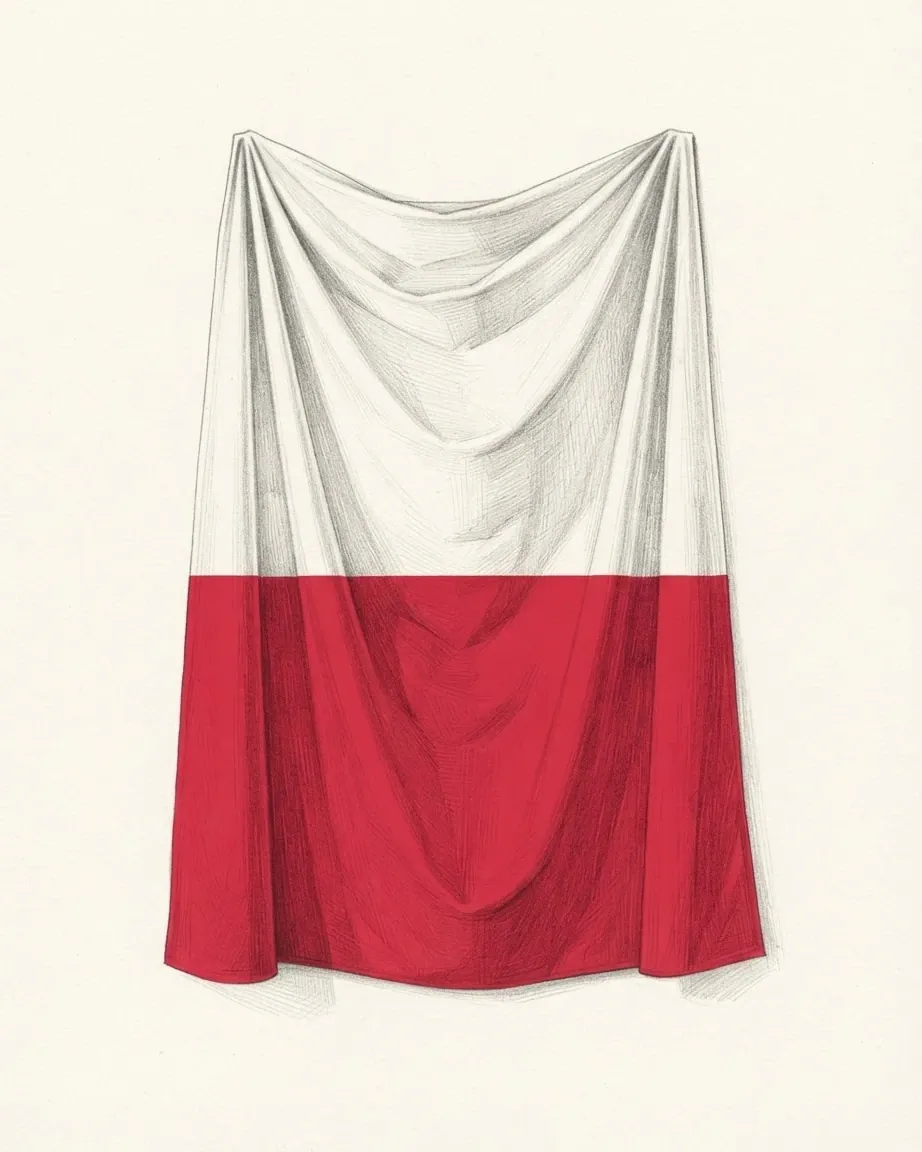
About the Polish zloty
Who holds the right to issue it
Narodowy Bank Polski was formed on 15 January 1945 as a state bank supervised by the treasury minister. The constitution of 1997 moved monetary policy to a new body inside it, the Monetary Policy Council. Under Articles 31 to 33 of the Act of 29 August 1997 on Narodowy Bank Polski, notes and coins it issues in złoty and grosz are legal tender in Poland, and ordinances of the bank's governor fix their designs, their values and, for coins, the alloy and weight.
Two Warsaw firms make them. The Polish Security Printing Works was founded on 25 January 1919, and the mint, Mennica Polska, on 10 February 1766.
How the złoty replaced the Polish mark
The restored Polish state took over the German occupation's issuing office at the end of 1918, and its Polish marks became temporary legal tender. In February 1919 the government announced a return to the złoty. Budget deficits were covered by printing money, and by mid-1923 inflation had turned into hyperinflation.
The Sejm passed a currency reform act on 11 January 1924. A statute of 20 January gave a new Bank of Poland the sole right to issue notes, set up as a private joint stock company in which the treasury held 1% of the shares, to protect its independence. The bank opened on 28 April 1924 and exchanged marks at 1,800,000 to the złoty, which stood at par with the gold franc. A poor harvest in 1924 and a balance of payments crisis in 1925 knocked it back. An international loan steadied the rate in 1927.
Where the name comes from
Złoty is the Polish adjective for golden, from złoto, gold. In the 14th and 15th centuries Poles used the word for foreign gold coins, Venetian ducats and florins among them. In 1496 the Sejm approved a domestic złoty, until then a unit of account, worth 30 grosz, and that division lasted into the 19th century. Under the partitions the name survived in daily reckoning; Narodowy Bank Polski notes that a złoty counted as 15 kopecks.
Why four zeroes were crossed out
After the war a third złoty, introduced in 1950, replaced earlier notes at 100 to one. In the planned economy the bank became a monobank and the złoty an internal currency that could not be converted. Reform began at the end of the 1980s. In the early 1990s foreign currency made up 75% of cash and deposits, according to the bank, and the proportion was reversed quickly.
The redenomination took effect on 1 January 1995, at 10,000 old złoty (PLZ) to one new złoty (PLN). Poles remember it as the crossing out of four zeroes. The bank's project was approved on 11 May 1994 and the enabling act passed on 7 July 1994.
What the notes carry
The Polish rulers series opened with the 10, 20 and 50 złoty on 1 January 1995, and the 100 and 200 followed on 1 June. De La Rue printed the first notes in London until 1997, when printing moved to Warsaw. The series gained new security features in 2014 and 2016 and a protective coating from 2017, and a 500 złoty note showing John III Sobieski has circulated since 10 February 2017. Every note issued since 1 January 1995 remains legal tender. A 1,000 złoty note was announced in 2021 and dropped in 2024.
When Poland could switch to the euro
Joining the European Union in May 2004 committed Poland to adopting the euro eventually, with no date attached and only once it meets the stability criteria. Poland is outside the ERM II exchange rate mechanism. Changing currency would require amending Article 227 of the constitution, and at the start of 2026 Poland had not begun the process.
Common questions
Questions about the Polish zloty
What is the plural of złoty?
Polish uses two plurals. Numbers ending in 2, 3 or 4, except 12 to 14, take złote, so 2 złote and 24 złote. Most other numbers from 5 upward take złotych, as in 5 złotych, 12 złotych and 100 złotych. Fractions take złotego. The grosz follows the same pattern: grosze and groszy. English writing tends to avoid all this and uses złoty, zloty or zlotys for every amount.
Why is Poland's currency called the złoty?
Złoty means golden. In the 14th and 15th centuries Poles applied it to foreign gold coins such as Venetian ducats and florins, and in 1496 the Sejm approved a złoty of their own. When independent Poland chose a new currency in 1919, Narodowy Bank Polski says the name was picked to reach back to that tradition.
Does Poland have to adopt the euro?
Poland agreed to adopt it when it joined the European Union in May 2004, but the treaty sets no date and adoption depends on meeting the stability criteria first. Poland has not joined the ERM II exchange rate mechanism. The switch would also need an amendment to Article 227 of the constitution, which gives Narodowy Bank Polski the exclusive right to issue money. At the start of 2026 the process had not begun, and Wikipedia describes public opinion as sceptical.
Are old Polish banknotes still legal tender?
Every banknote Narodowy Bank Polski has put into circulation since 1 January 1995 remains legal tender, and the older and newer versions of each value circulate together. Notes of the old złoty, the PLZ, were converted at 10,000 to one in the 1995 redenomination.