The Basic Law was written in 1949 under occupation and deliberately given that name instead of constitution, because it was meant to last only until the country was whole again. It is still the constitutional order of the reunified state. Germany's 83,577,140 people as of 31 December 2024 occupy 357,588 square kilometres and nine land borders.
At a glance
- Population
- 83 491 249
- Capital
- Berlin
- Area
- 357 588km²
- Currency
- €EUR
- Official language
- German
- Local time
- UTC+01:00
Where it is
Where Germany is, and what is around it
Germany has a coast. It shares a border with 9 countries, counted as shared borders, which includes neighbours across water.
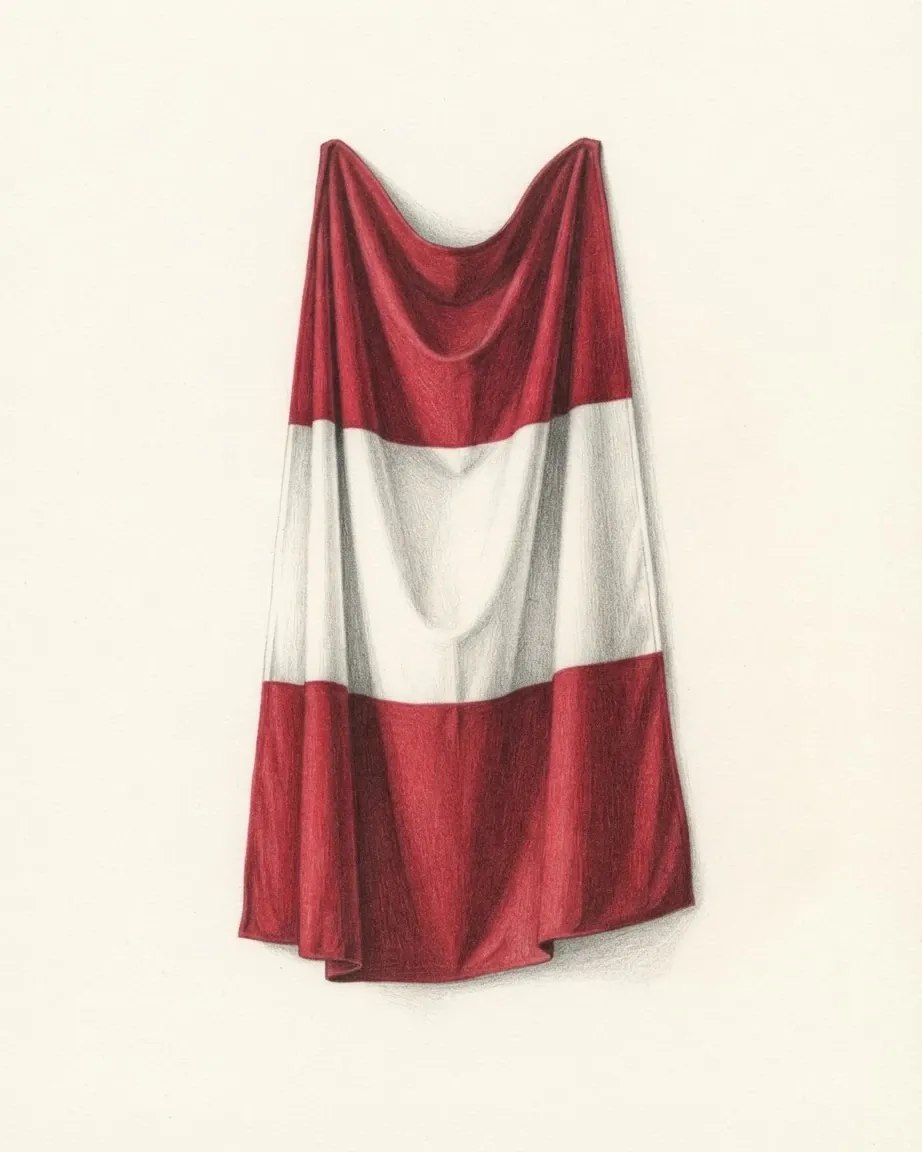
 Austria
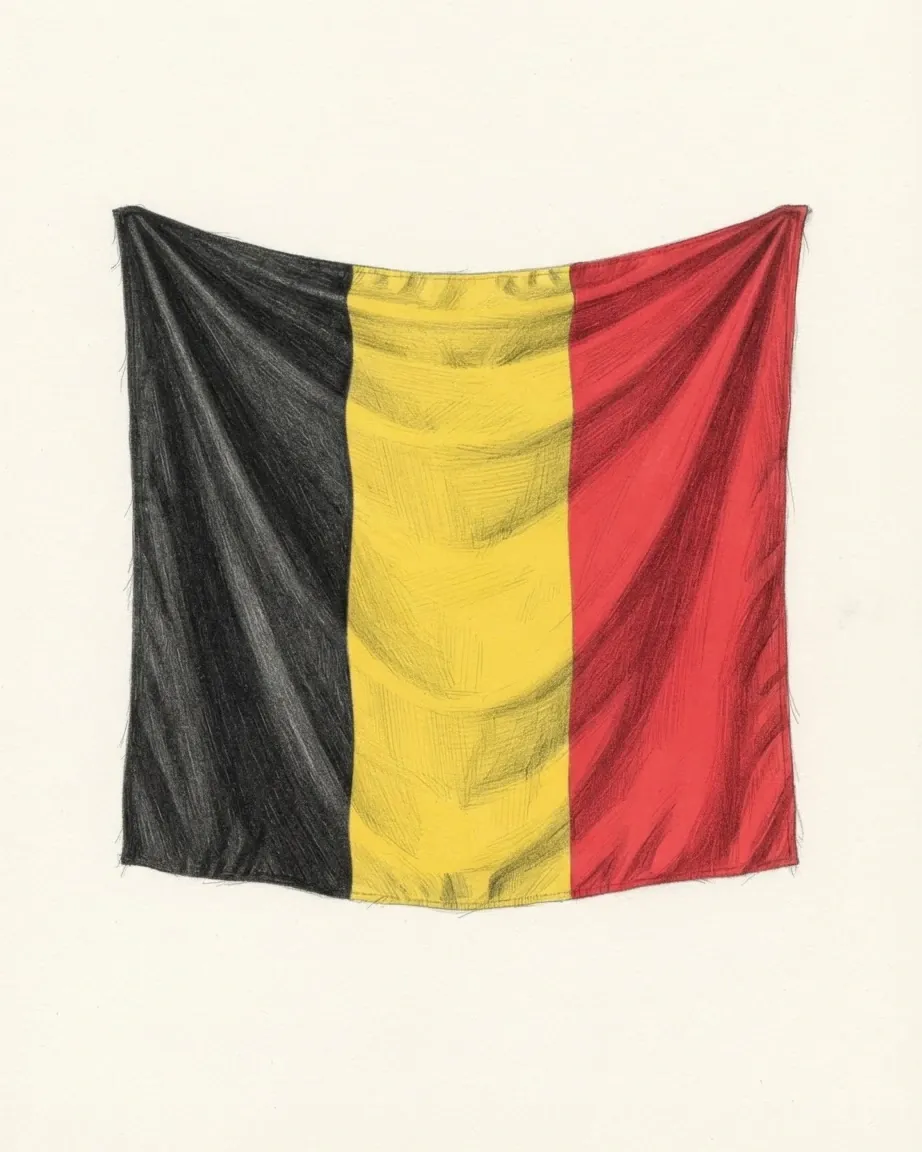
 Belgium
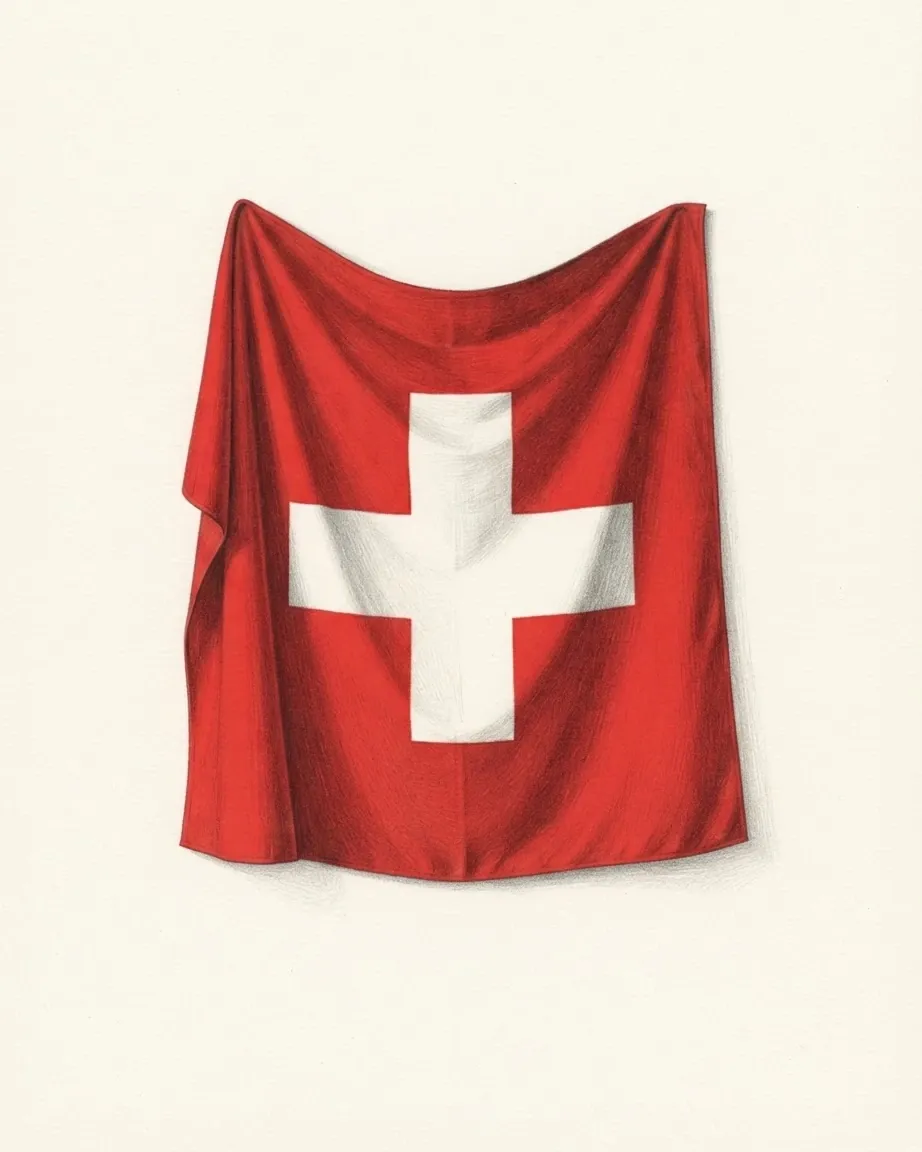
 Switzerland
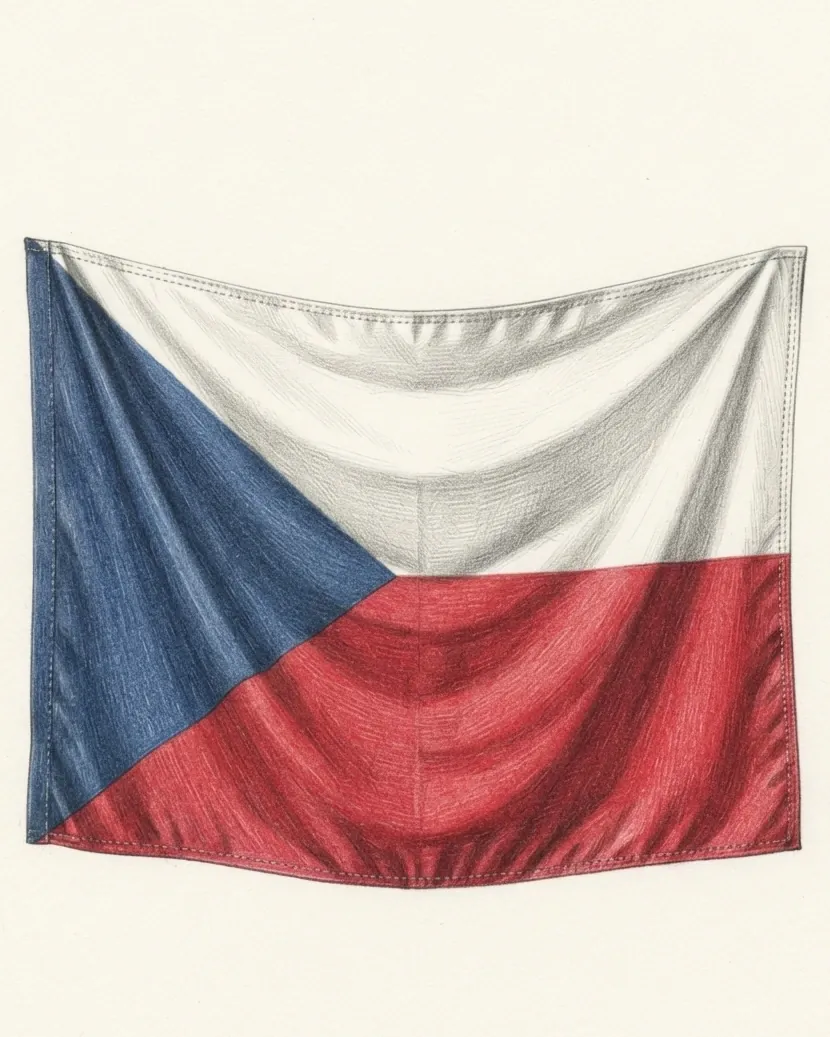
 Czechia
 Denmark
 France
 Luxembourg
 Netherlands
 Poland
Why Germany borders so much of Europe
Nine land borders running 3,714 km are the central fact of German history as well as of German geography: Denmark to the north, Poland and Czechia to the east, Austria and Switzerland to the south, France, Luxembourg, Belgium and the Netherlands to the west. Germany holds 83,577,140 people as of 31 December 2024 on 357,588 square kilometres in the middle of Europe.
The capital is Berlin, 3,913,644 people as of 31 December 2025, and it is not the economic centre; that is dispersed across Munich, Frankfurt, Hamburg, Stuttgart and the Rhine-Ruhr conurbation. The land runs from North Sea and Baltic coasts through a central belt of uplands to the Alps, where the Zugspitze reaches 2,962 metres.
| The record in short | |
|---|---|
| Population | 83,577,140 as of 31 December 2024 |
| Area | 357,588 km² |
| Capital | Berlin, 3,913,644 people as of 31 December 2025 |
| Highest point | Zugspitze, 2,962 m |
| Currency | euro |
| Language | German |
| Basic Law in force since | 23 May 1949 |
| Land borders | nine countries |
Germany: geography sets out the coasts, the uplands and the rivers that cross them.
Why the state keeps starting again
The list of dates on which a German state was founded is longer than for any comparable country: a Frankish realm in the seventh century, the North German Confederation in 1867, the German Empire in 1871, a republic in 1918, a dictatorship in 1933, and the Federal Republic on 23 May 1949. Each of those was a different constitutional order and most ended in collapse rather than reform.
The 1949 settlement was written under occupation, for what was expected to be a provisional state covering part of the country, and it was called a Basic Law rather than a constitution because its authors did not want to pre-empt a future document for a reunified Germany. The provisional arrangement outlasted the division: when the German Democratic Republic acceded in 1990, it did so under the Basic Law rather than by negotiating a new one.
What the drafters built into it was a set of defences against the specific way the previous republic had failed. A chancellor can only be removed by electing a successor. A party must clear a threshold to enter parliament. And some provisions cannot be amended at all. Germany: history follows the whole sequence and Germany: politics the machinery that came out of it.
How the federation is arranged
Germany is a federal parliamentary republic. Article 20 of the Basic Law states that it is a democratic and social federal state, that all state authority derives from the people, and that all Germans have a right to resist anyone seeking to abolish the constitutional order if no other remedy is available.
The Bundestag is the elected chamber, chosen in general, direct, free, equal and secret elections under Article 38, on a proportional system with two votes: a first vote for a constituency candidate and a second vote for a party, with the second determining the strength of the parties. The Bundesrat represents the sixteen federal states in national legislation. The chancellor is elected by the Bundestag on the proposal of the federal president and can be removed only by a constructive vote of no confidence, meaning the Bundestag must elect a successor in the same act.
Article 79 makes some of this permanent. Amendments require two thirds of the Bundestag and two thirds of the Bundesrat, and amendments affecting the division into states, their participation in legislation, or the principles in Articles 1 and 20 are inadmissible outright.
What is wrong with the economy
Germany produced 5.05 trillion United States dollars of output in 2025, which is 60,496 dollars a head, or 75,407 dollars at purchasing power parity. Growth stalled at 0.2%. Inflation was 2.2% and unemployment 3.7%. Income is distributed at a Gini coefficient of 33.7 in 2022.
Growth of 0.2% in 2025, in an economy of that size, is the story. After a decade of strong export-led expansion, the pandemic, Russia's war against Ukraine and rising trade tensions all hit an economy built on selling manufactured goods into open markets and buying energy cheaply. Productivity growth had already slowed before any of that, on weak investment and on skilled labour shortages made worse by rapid population ageing.
The OECD projects growth of 0.7% in 2026 and 1.1% in 2027, with public investment rising strongly following a reform of the fiscal rules. Its recommendations are administrative rather than macroeconomic: simplify infrastructure planning and approval, improve the financial and administrative capacity of municipalities, cut administrative burdens, digitalise public administration. Germany: economy works through the sectors and the diagnosis.
How the energy system is being rebuilt
Germany's Climate Law targets net zero emissions by 2045. The intermediate targets are that 80% of electricity comes from renewable sources by 2030 and 100% by 2035, with coal completely phased out. Germany was an early mover in offshore wind and solar, and it phased out nuclear power in 2023.
That combination, leaving nuclear while replacing coal and while losing cheap Russian gas, is the hardest version of the energy transition any large industrial economy has attempted. Legislative reforms to renewable planning and siting support targets of 100 to 110 gigawatts of onshore wind and 30 gigawatts of offshore capacity.
The consequence runs straight into the economic problem above. Higher energy prices reduce real incomes and weigh on the export-oriented manufacturing that the country's prosperity rests on, and reducing dependence on imported fossil fuel is simultaneously the cause of the cost and the way out of it.
What the country holds
Germany has 55 properties on the UNESCO World Heritage List, 52 cultural and 3 natural, on ground that was never governed as one country. It reflects a country that was politically fragmented for most of its history: cathedrals, residences, old towns and industrial sites are distributed across the whole territory rather than concentrated in a capital, because for centuries there was no capital to concentrate them in.
The cultural record is similarly decentralised. Music, philosophy, literature and science were produced in dozens of small courts, universities and cities rather than in one, and the modern federal structure preserves that: culture and education are the responsibility of the states rather than the federation.
Tourism follows the same pattern. Germany welcomed 37.1 million international tourists in 2025, down 0.8% on 2024, with the Netherlands supplying 14.0% of them, Switzerland 8.6% and the United States 8.5%. Domestic tourism is much larger and at record levels: 149.7 million domestic overnight visitors in commercial accommodation in 2025, 1.6% above 2024. Germany: culture works through the culture and Germany: travel the practicalities.
Read
Everything about Germany
Six articles, each answering one question and each written to be read on its own.
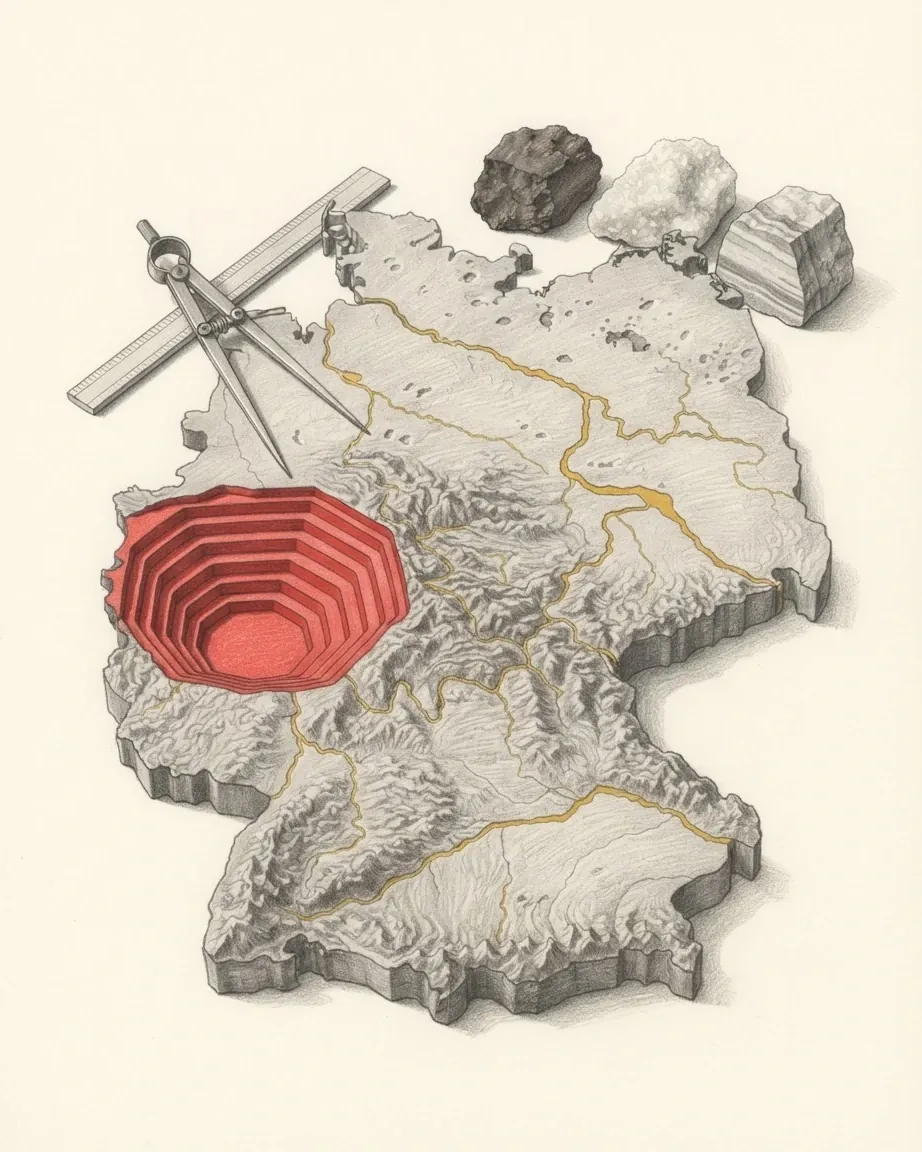
The record
What is measured about Germany
Pages that nobody writes, built from the record and from the data files beside it.
Common questions
Questions about Germany
How much ground does Germany cover?
357,588 square kilometres, holding 83,577,140 people as of 31 December 2024. It borders nine countries: Denmark, Poland, Czechia, Austria, Switzerland, France, Luxembourg, Belgium and the Netherlands.
Why is the German constitution called a Basic Law?
Because its authors in 1949 intended it to be provisional. It was written under occupation for a state covering part of the country, and the name avoided pre-empting a constitution for a future reunified Germany. When the German Democratic Republic acceded in 1990 it did so under the Basic Law, and the provisional text became permanent.
Can the German Basic Law be changed?
Partly. Article 79 requires two thirds of the Bundestag and two thirds of the Bundesrat for any amendment, and it declares inadmissible any amendment affecting the division of the federation into states, their participation in legislation, or the principles laid down in Articles 1 and 20.
Why is the German economy growing so slowly?
Growth was 0.2% in 2025. After a decade of export-led expansion, the pandemic, the war in Ukraine and rising trade tensions hit an economy built on manufacturing exports and cheap imported energy. Productivity growth had already slowed on weak investment, falling business dynamism and skilled labour shortages worsened by ageing.
Nearby in the catalogue