French territory reaches into every ocean basin, and of its 643,801 square kilometres only 551,500 lie in Europe. France holds 68,605,616 people as of 1 January 2025. Since 1789 it has been governed as two empires, two restored monarchies and five republics, and the current arrangement dates from a constitution promulgated on 4 October 1958.
At a glance
- Population
- 68 720 337
- Capital
- Paris
- Area
- 643 801km²
- Currency
- €EUR
- Official language
- French
- Local time
- UTC+01:00
Where it is
Where France is, and what is around it
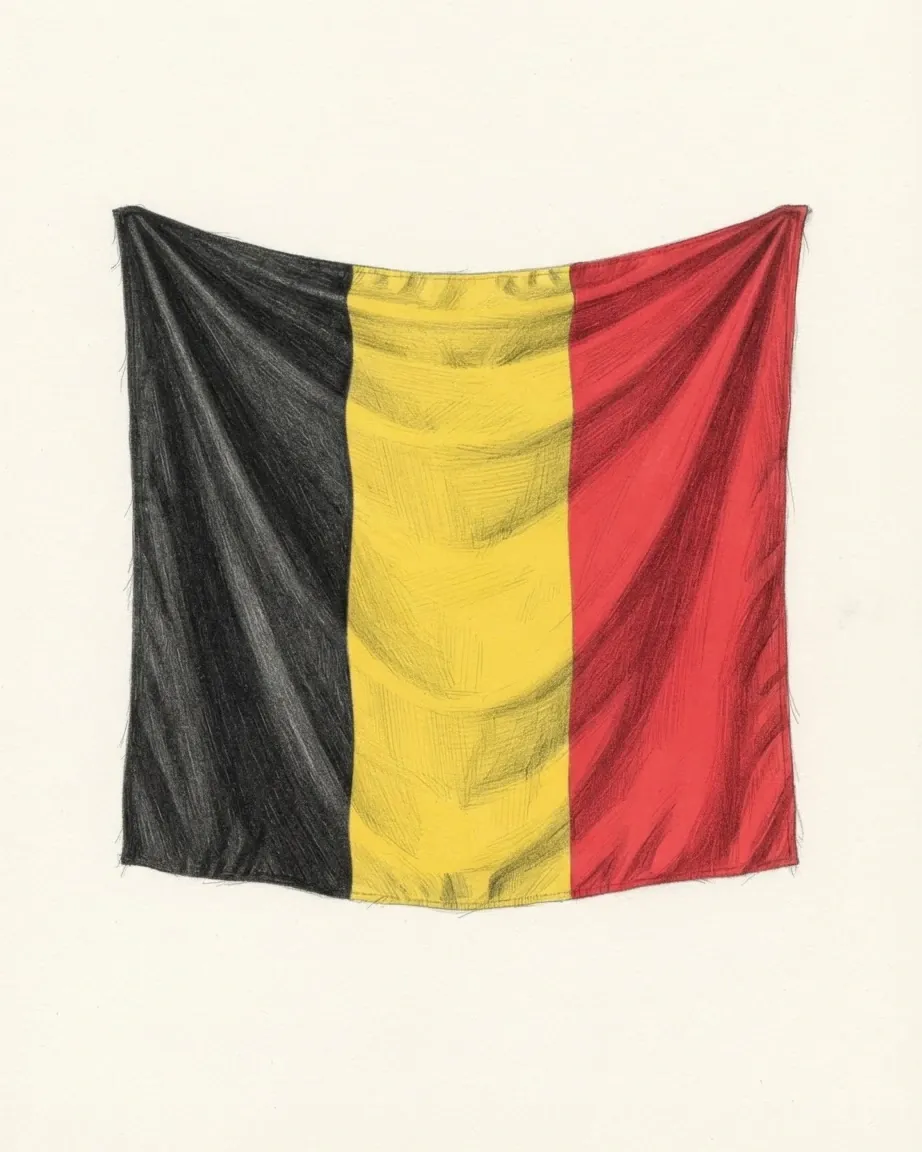
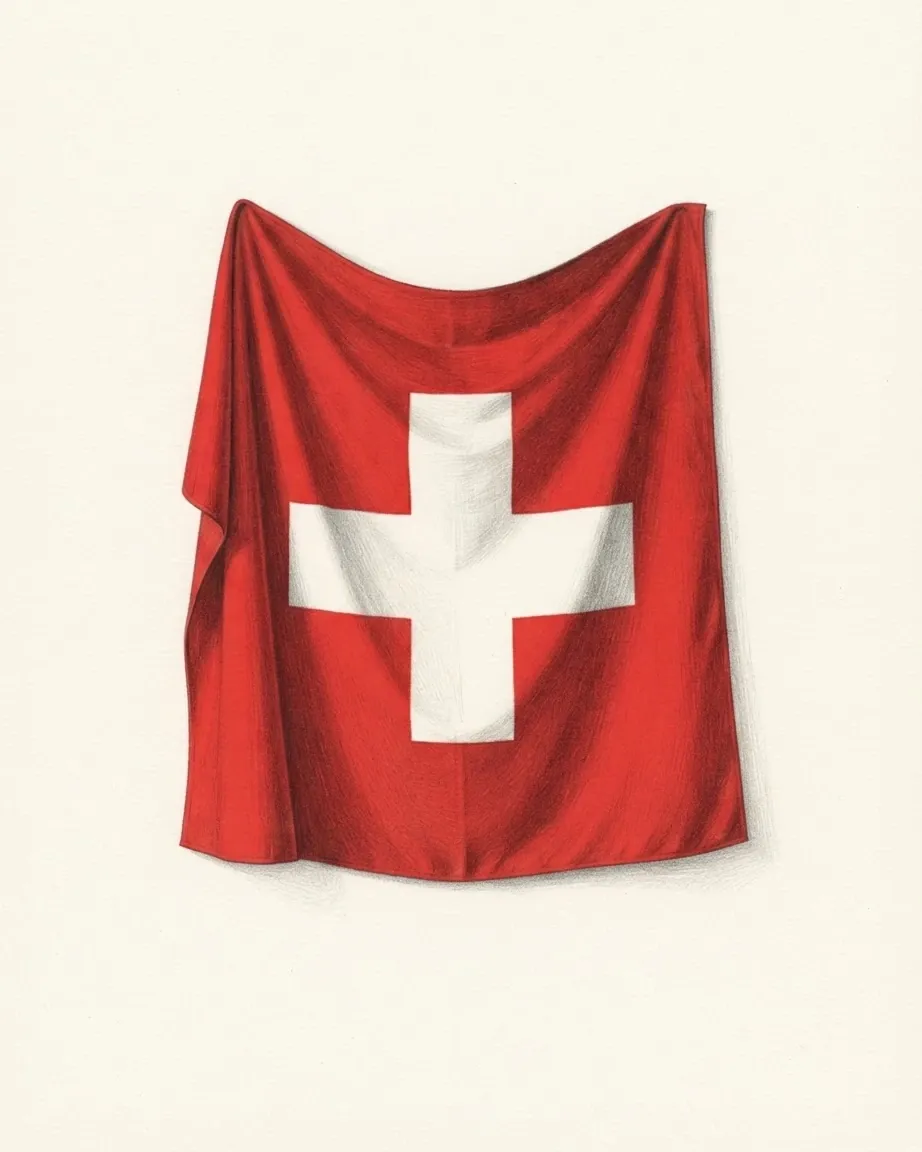
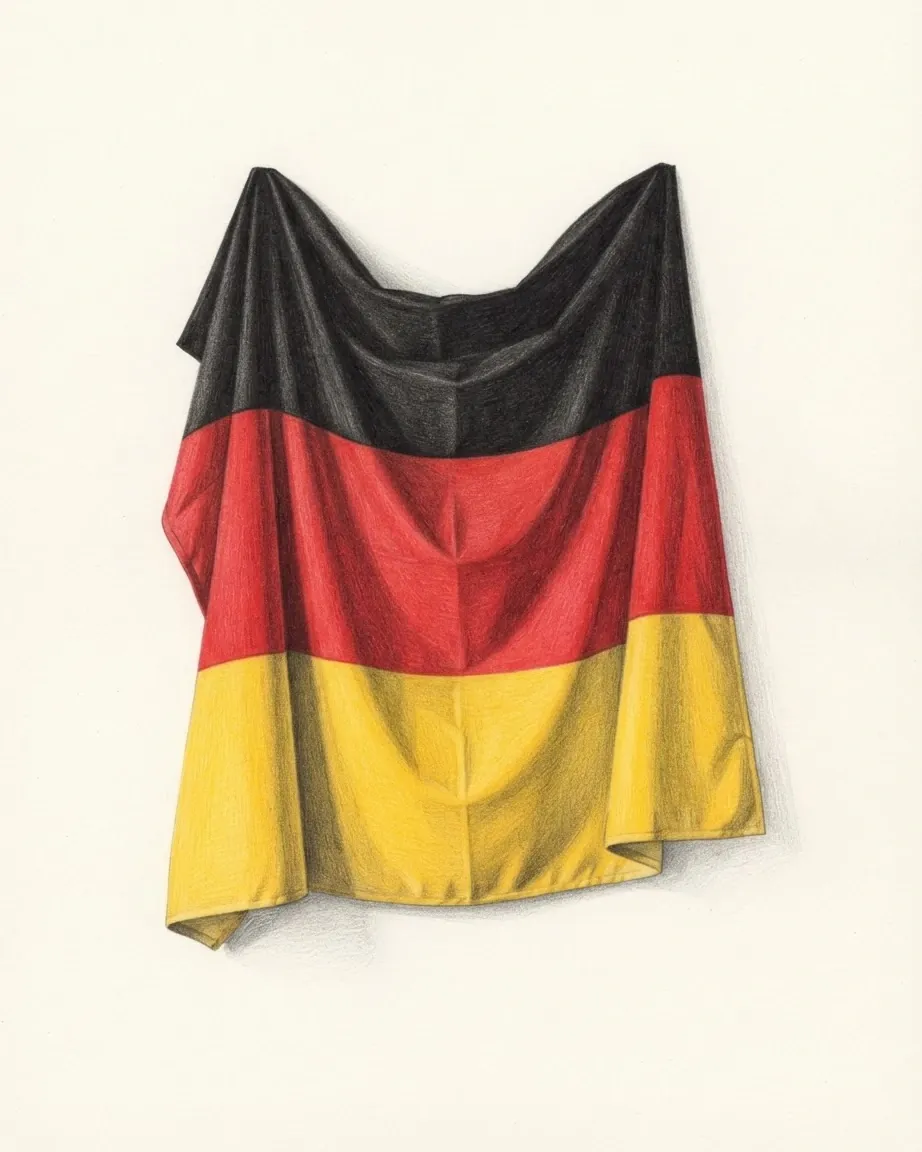
France has a coast. It shares a border with 11 countries, counted as shared borders, which includes neighbours across water.
 Andorra
 Belgium
 Brazil
 Switzerland
 Germany
 Spain
Spain Italy
Italy Luxembourg
 Monaco
 Netherlands
 Suriname
Why France is measured twice
France holds 643,801 square kilometres, of which 551,500 lie in Europe and the rest is spread across every ocean basin, with 68,605,616 people counted on 1 January 2025. The European territory runs from the Rhine to the Atlantic and from the Mediterranean to the North Sea. It borders Belgium and Luxembourg in the north-east, Germany and Switzerland in the east, Italy and Monaco in the south-east, and Andorra and Spain in the south, where the Pyrenees and the Alps do most of the work of drawing the line. The overseas departments and collectivities add land borders with Brazil and Suriname in South America and with the Netherlands in the Caribbean.
Paris, the capital, is a commune of 2,103,778 people as of 1 January 2023 at the centre of an urban region several times that size. The republic is administered as eighteen integral regions, five of which sit outside Europe, and the same body of law applies in all of them.
| The record in short | |
|---|---|
| Population | 68,605,616 as of 1 January 2025 |
| Total area | 643,801 km², of which 551,500 in Europe |
| Exclusive economic zone | 11,035,000 km² |
| Capital | Paris, 2,103,778 people as of 1 January 2023 |
| Highest point | Mont Blanc, 4,806 m |
| Currency | euro, and the CFP franc in the Pacific |
| Language | French |
France: geography deals with the mountains and the coasts in detail.
Why the state was rebuilt so often
The territory was settled in the Iron Age by Celtic peoples the Romans called Gauls, annexed by Rome in 51 BC, and reassembled after the empire by the Franks, whose kingdom of Francia became the core of the Carolingian Empire. The Treaty of Verdun of 843 split that empire in three, and the western share grew into the Kingdom of France. The kingdom spent the High Middle Ages as a decentralised feudal patchwork, then centralised sharply after Philip II broke the Angevin holdings, and spent the fourteenth and fifteenth centuries in the dynastic war with England now called the Hundred Years' War. What sets France apart from its neighbours is what happened after 1789. The Revolution abolished the monarchy, executed the king, invented the modern conscript army and the metric system, and set a pattern the country has repeated ever since: a regime falls, a constitution is written, and the new arrangement lasts a few decades. Since 1789 France has been governed as two empires, two restored monarchies, a directory, a consulate and five republics, and the current constitution is the sixteenth or so depending on how the count is kept.
The Fifth Republic dates from a referendum in 1958, held during the Algerian crisis, which produced a constitution promulgated on 4 October of that year. It moved a large share of power from parliament to the presidency, and it has now outlasted every French constitution except the one Napoleon wrote. France: history follows the whole sequence.
How the Fifth Republic divides power
Power sits with a president elected by direct universal suffrage for five years under Article 6 of the constitution, and with a prime minister who answers to the National Assembly. Where the president's party controls the Assembly, the presidency dominates. Where it does not, the president must appoint a government the Assembly will tolerate, and the arrangement is known as cohabitation. Parliament has two chambers. The National Assembly has 577 deputies elected directly for five years in single-member districts over two rounds. The Senate has 348 members chosen by an electoral college of roughly 165,000 local elected officials for six-year terms, with half the chamber renewed every three years.
Article 49 gives the government a tool with no close equivalent in Europe. A prime minister may make a finance bill or a social security financing bill an issue of confidence, and the bill then passes without a vote unless the Assembly carries a motion of no confidence within twenty-four hours. The same procedure may be used once per session on one other bill. France: politics works through the institutions and what constrains them.
What France produces and what it spends
France produced 3.37 trillion United States dollars of output in 2025, which is 48,986 dollars a head, or 63,975 dollars a head measured at purchasing power parity. Growth was 0.8% in 2025 and inflation 0.9%, with unemployment at 7.5%. Income is distributed more evenly than in most large economies, at a Gini coefficient of 31.8 in 2023.
The state is unusually large in this economy and the debt has followed. Public expenditure reached 57.2% of gross domestic product in 2025, the fiscal deficit was 5.1%, and public debt stood at 115.5%, up from 60% in 2000. Debt servicing alone rose from 1.3% of output in 2020 to 2.1% in 2025. The Organisation for Economic Co-operation and Development projects growth of 0.7% in 2026 and 0.8% in 2027.
Electricity is the part of the economy that looks least like anyone else's. France operates 56 power reactors and draws about 70% of its electricity from them, a share no other country approaches, which is why its output carries a low carbon intensity for an industrial economy of this size. Hydropower supplies most of the rest of the low-carbon share. France: economy takes the sectors and the public finances in turn.
What the culture is organised to protect
France treats culture as a matter of state administration rather than of private patronage, and the machinery is old. The Académie française was founded in 1635 by Cardinal Richelieu to rule on the French language, and it still does. A ministry dedicated to cultural affairs was created by founding decree on 24 July 1959 under André Malraux, whose brief was to open access to art across the country rather than to concentrate it in the capital. The protective instinct is written into law. The Toubon laws of 1994 require French in advertising aimed at the general public and oblige radio stations to give two fifths of their music to French-language songs. Book prices are regulated, cinema is financed through a levy on ticket sales, and 1% of the cost of a public building is set aside for art in it.
Money for culture is no longer mostly national. Local and regional authorities now provide around half of public cultural spending, a shift that followed the decentralisation laws of the early 1980s. France: culture goes through the language, the food, the cinema and the argument about who culture is for.
Where France reaches past Europe
The overseas territories are not colonies and not dependencies. French Guiana, Guadeloupe, Martinique, Mayotte and Réunion are integral regions of the republic, sending deputies to the National Assembly and using the euro, while New Caledonia, French Polynesia, Wallis and Futuna and the scattered southern territories hold other statuses and the Pacific three keep the CFP franc.
The consequence is maritime. Those territories give France an exclusive economic zone of 11,035,000 square kilometres, about 8% of the world total, most of it in the Pacific and the Indian Ocean rather than off Brittany. It is the reason a European country of middling size holds fisheries, seabed rights and military obligations in three oceans.
Visitors mostly see the other half of this. France counted more than 100 million international arrivals in 2024 and 71 billion euros of international tourism receipts, according to the ministry responsible for tourism, and it holds 56 properties on the UNESCO World Heritage List. France: travel takes up what that means for anyone going.
Read
Everything about France
Six articles, each answering one question and each written to be read on its own.

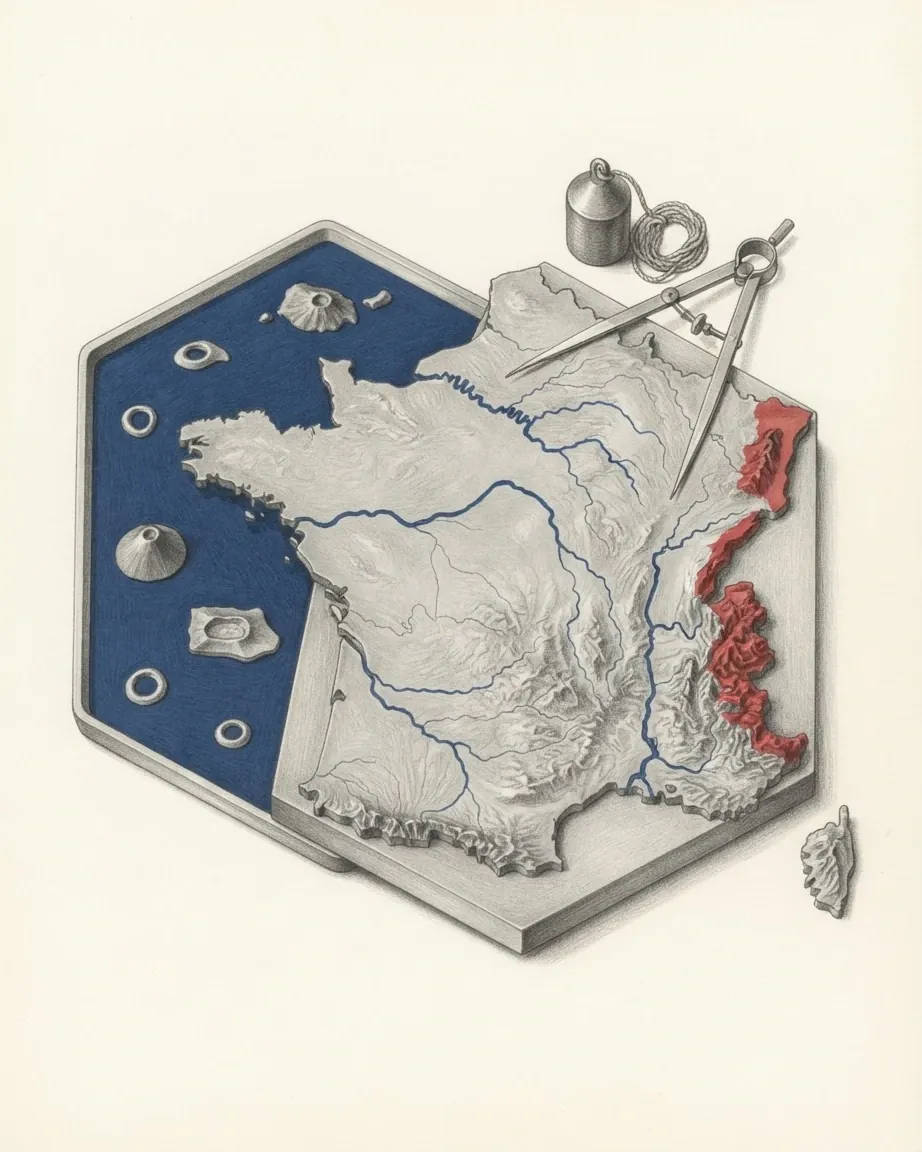

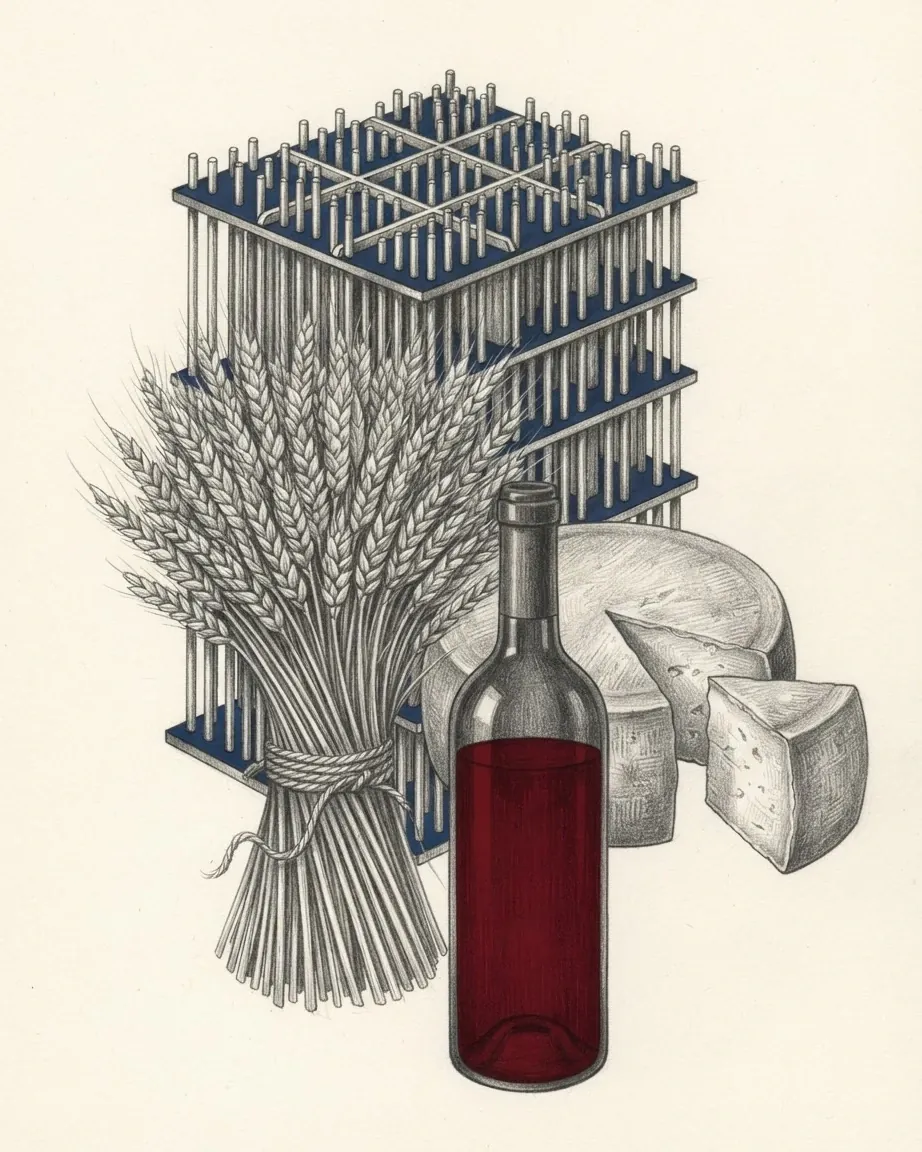

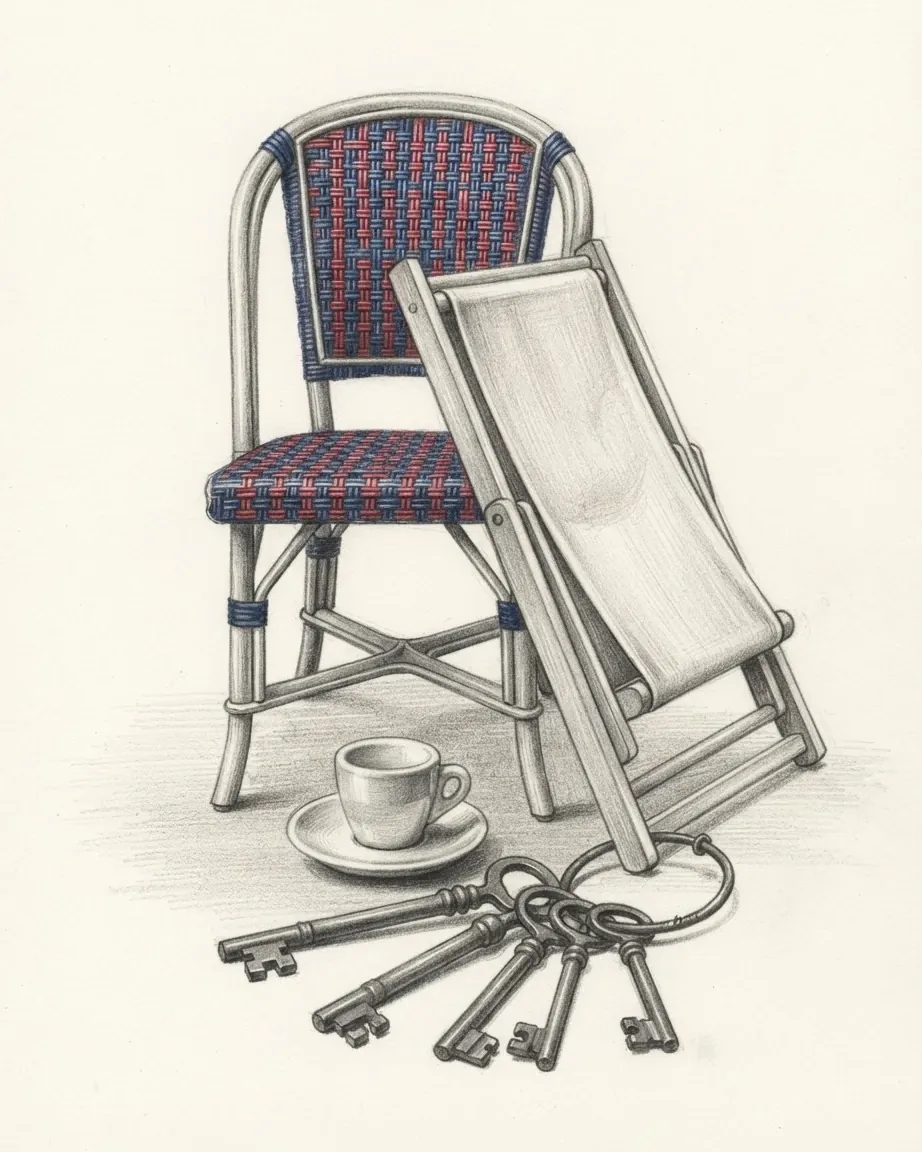
The record
What is measured about France
Pages that nobody writes, built from the record and from the data files beside it.
Common questions
Questions about France
How big is France?
643,801 square kilometres in total and 68,605,616 people as of 1 January 2025. Of that area, 551,500 square kilometres lie in Europe and the rest is spread across the Caribbean, South America, the Indian Ocean, the Pacific and the sub-Antarctic.
How many republics has France had?
Five. The First Republic followed the abolition of the monarchy in 1792, and the Fifth dates from a referendum in 1958 and a constitution promulgated on 4 October of that year. Between them France was also governed as two empires, two restored monarchies, a directory and a consulate.
Why does France use so much nuclear power?
The programme was built out after the oil crisis of 1973 as a matter of energy security, and it now supplies about 70% of French electricity from 56 reactors. The side effect is that France emits less carbon dioxide per unit of output than other industrial economies of comparable size.
What is the exclusive economic zone of France?
11,035,000 square kilometres, roughly 8% of the world total. Almost all of it comes from the overseas territories in the Pacific and Indian Oceans rather than from the European coastline.
Nearby in the catalogue