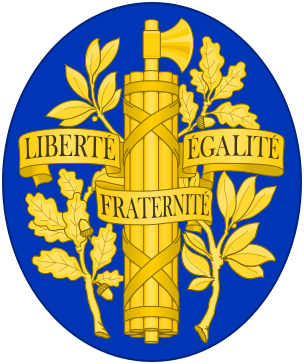
The flag of France
Drapeau de la France · since 2020
 Back to France
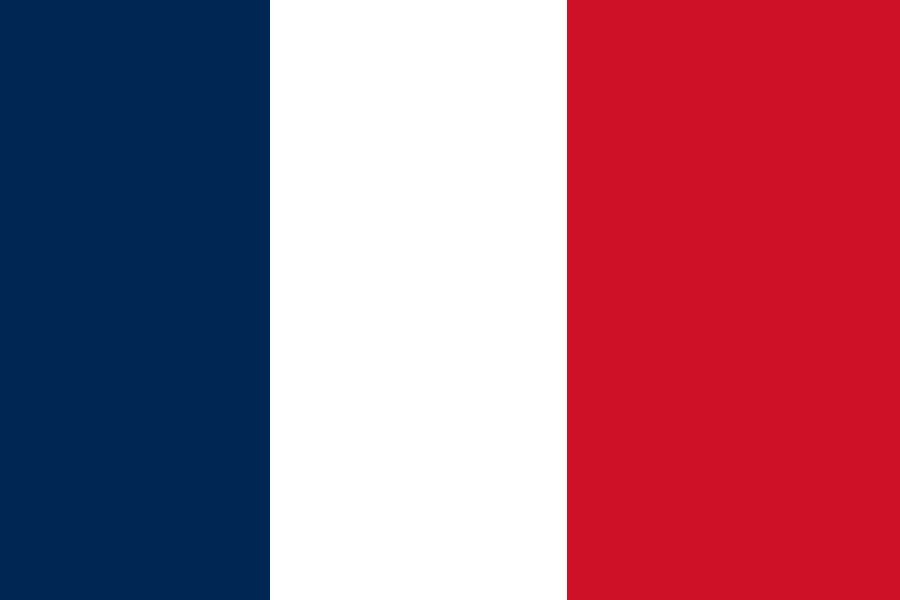
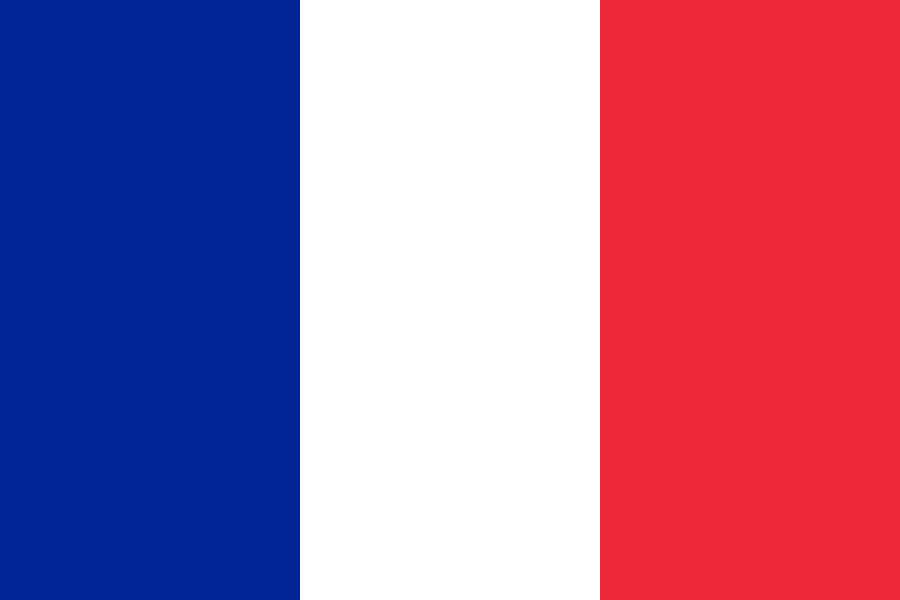
A vertical tricolour of blue, white and red, blue at the hoist. It grew out of the cockade of July 1789, the blue and red of Paris around the white of the king, and took its present order as a naval ensign in 1794. The Restoration replaced it with the white flag from 1814 to 1830; it has flown without a lasting break since 1830 and is the one national emblem the Constitution of 1958 names. No law sets its shades.

At a glance
- Adopted
- 1848
- Proportion
- 2:3
- Colours
- Earlier flags
- 7
- Designer
- 1
The colours
The colours of the flag of France, in the order it has them
- 0133.1%
Blue
bleuHoist stripe
- HEX
#002654- RGB
0 38 84- CMYK
100 70 0 50- Pantone
282 C- RAL
5020
- 0233.4%
White
blancMiddle stripe
- HEX
#FFFFFF- RGB
255 255 255- CMYK
0 0 0 0
- 0333.4%
Red
rougeFly stripe
- HEX
#CE1126- RGB
206 17 38- CMYK
0 90 80 5- Pantone
186 C- RAL
3024
No law gives these codes. HEX and RGB are the colour this site draws the flag in; CMYK, Pantone and RAL are the values most often published for it.
Construction
How the flag is drawn
Three vertical stripes of equal width, blue at the hoist, white in the middle and red at the fly.
- Stripes
- Three, of equal width: blue, white, red from the staff
- Naval ensign
- Blue 30, white 33 and red 37 parts of the length, so that the stripes look equal when it flies; used by the Navy since 17 May 1853
- Pennant
- One fifth blue, one fifth white, three fifths red
- Ceremonial flag
- Square, with equal stripes, gold fringe, gold inscriptions and a tricolour cravat
- Sizes
- Size 1 is 9 × 13.50 m, the flag under the Arc de Triomphe; size 13, thirteen times smaller, is the usual one in public offices and the army
Other forms
- Civil and naval ensign
- The tricolour with stripes of 30, 33 and 37 parts, introduced by the Navy on 17 May 1853.
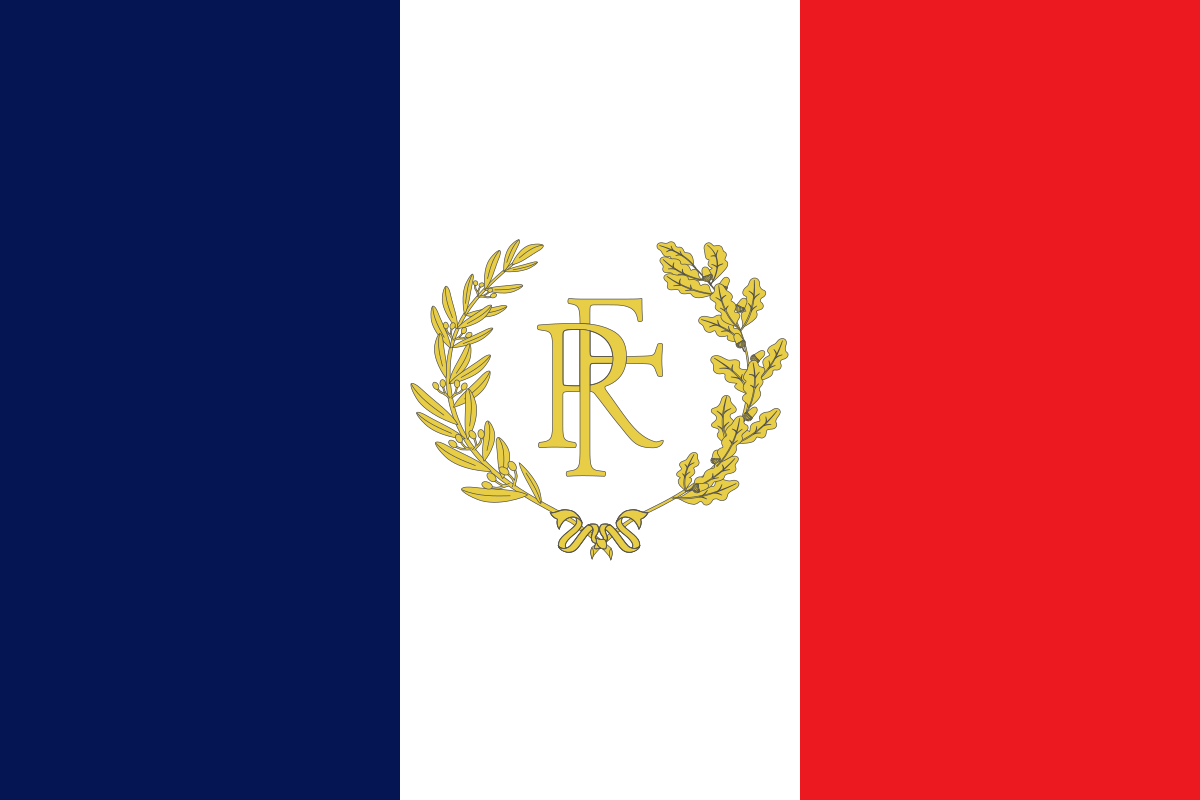
- Flag with RF
- The tricolour embroidered with the letters RF, used by the Constitutional Council and the presidency of the National Assembly.
- Lighter version
- A lighter blue, close to that of the European flag, and a lighter red, used by the presidency from 1974 and widely copied on town halls and public buildings. Dropped by the Élysée in July 2020.
Meaning
What each part stands for
- Blue and red
- The colours of Paris, worn on the cockades of the Paris militia at the fall of the Bastille. Blue is linked with Saint Martin and red with Saint Denis
- White
- The colour of the king, called by Lafayette the ancient French colour, added to the militia cockade in July 1789 to make it national
- The three together
- Sometimes read as liberty, equality and fraternity, or as the three estates of the old kingdom. Combining royal white with republican red, the tricolour came to stand for a nationalism above faction
Who drew it
- Jacques-Louis David
- Painter to whom tradition credits the design adopted by the Convention in 1794
History
How the flag of France got here
- 1790

The first tricolour ensign
24 Oct 1790 → 15 Feb 1794
The tricolour cockade was worn from July 1789. In October 1790 the Constituent Assembly gave the navy a flag in the national colours, red at the staff and blue at the end.
- 1794

Blue at the staff
15 Feb 1794 → 13 Apr 1814
The Convention reversed the order and made the stripes vertical and equal. Napoleon's regiments carried other patterns until 1812, when an imperial order gave them the design of the 1794 ensign.
- 1814

The white flag of the Restoration
13 Apr 1814 → 1 Aug 1830
The restored Bourbons brought back the white flag of the old navy, with a pause for the tricolour during the Hundred Days of 1815.
- 1830
The July Monarchy
1 Aug 1830 → 24 Feb 1848
After the three days of July 1830 Louis-Philippe restored the tricolour and the cockade, with a cockerel on the staff. The Charter of 14 August 1830 declared that France had taken back its colours.
- 1848
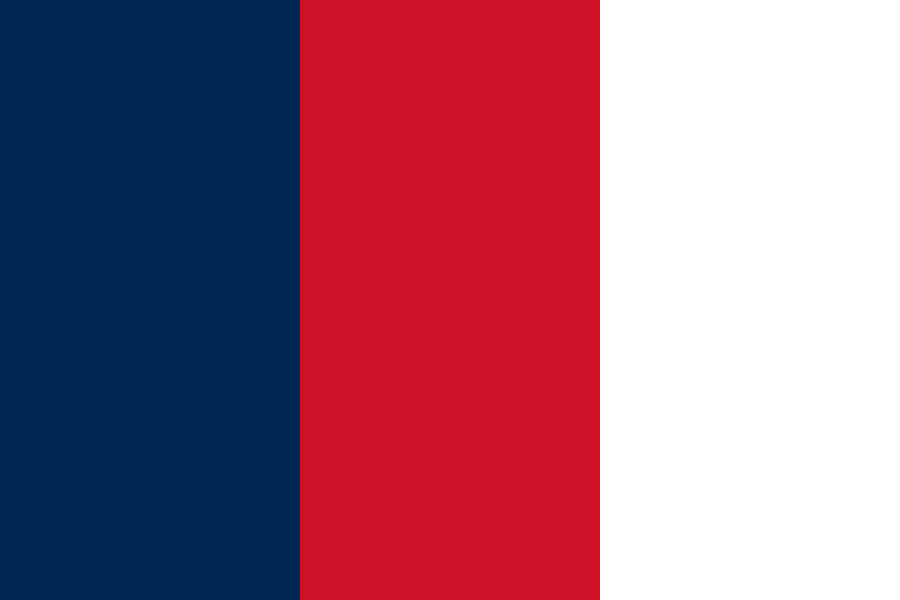
Ten days in 1848
24 Feb 1848 → 5 Mar 1848
Insurgents wanted a red flag, and on 25 February Lamartine talked the crowd round to the tricolour. For a few days it flew with the colours in another order.
Image: Titimaster, CC BY-SA 3.0
- 1848
The tricolour restored
5 Mar 1848 → 1974
The decree of 5 March 1848 restored the order of 1794, and a spearhead replaced the cockerel on the staff. The Comte de Chambord's refusal to give up the white flag in 1871 and 1873 ended the plan for another restoration. Vichy kept the tricolour, and the Free French flew it with a red Cross of Lorraine. The Constitutions of 1946 and 1958 made it the national emblem.
- 1974
Two shades of blue
1974 → 13 Jul 2020
From 1974 the presidency used a lighter blue, close to the European flag's, and a lighter red, and both versions were used side by side.
- 2020

Navy blue againIn use
13 Jul 2020 → today
The Élysée returned to the dark navy blue on all presidency buildings in July 2020 without a public statement or any order to other institutions.
The law
What defines it, and who flies it
- 24 October 1790
Decree of the Constituent Assembly
The first naval ensign in the national colours: red at the staff, white in the middle, blue at the end.
- 15 February 1794
Decree of the National Convention of 27 Pluviôse Year II
Three equal vertical stripes, blue at the staff, white in the middle, red flying at the end. The pennant a fifth blue, a fifth white and three fifths red.
- 5 March 1848
Decree of 5 March 1848
Restored the flag and the ensign as fixed in 1794, after a few days with the colours in another order.
- 1958
Constitution of the Fifth Republic, Article 2
The national emblem is the tricolour flag, blue, white, red. The Constitution of 1946 had added three vertical stripes of equal size. No text sets the shades.
- 18 March 2003
Criminal Code, article 433-5-1
Insulting the flag or the anthem publicly at an event organised or regulated by the authorities is punished by a fine of €7,500. A decree of 21 July 2010 extended the offence to degrading the flag in public or circulating images of doing so.
In use
Flown on all public buildings, often beside the European and regional flags on town halls
Takes precedence over every other flag on French territory: the centre of three, the first on the observer's left of four or more, and doubled at each end of a row of five or more
Two flags are never flown one above the other on the same mast
At half-mast it is raised to the top and then lowered by its own height; indoors a black crêpe cravat is tied to the top of the staff
A flag bearer dips it only for the call to the dead, before the President of the Republic, and before the Blessed Sacrament at mass
A tricolour may cover the coffin of veterans holding the combatant's card and certain other honours
Related flags
The flags it is confused with or comes from
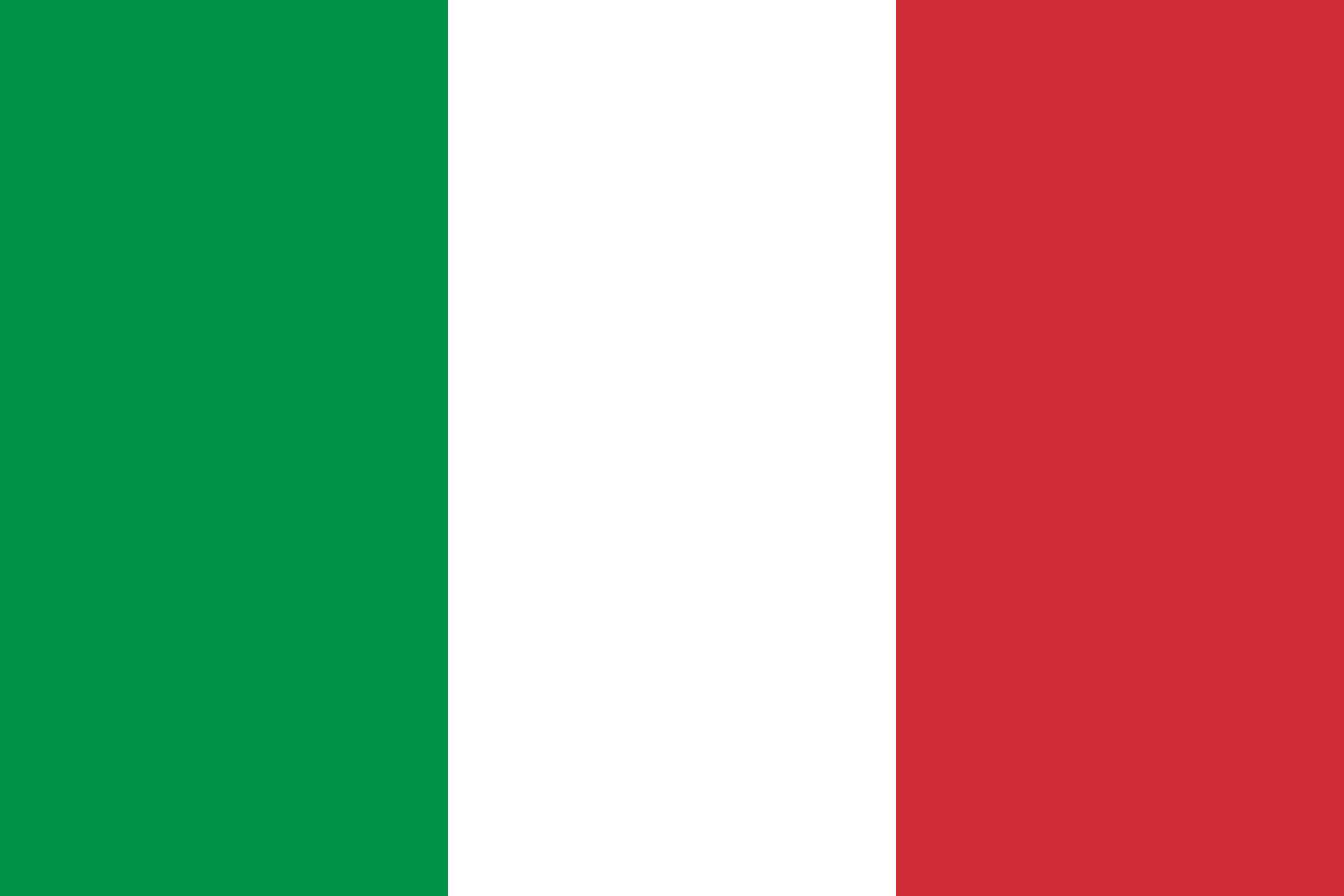 Italy
Italy- The Italian tricolour dates from the Transpadane Republic of 1796, imposed by Napoleon Bonaparte with green in place of blue.
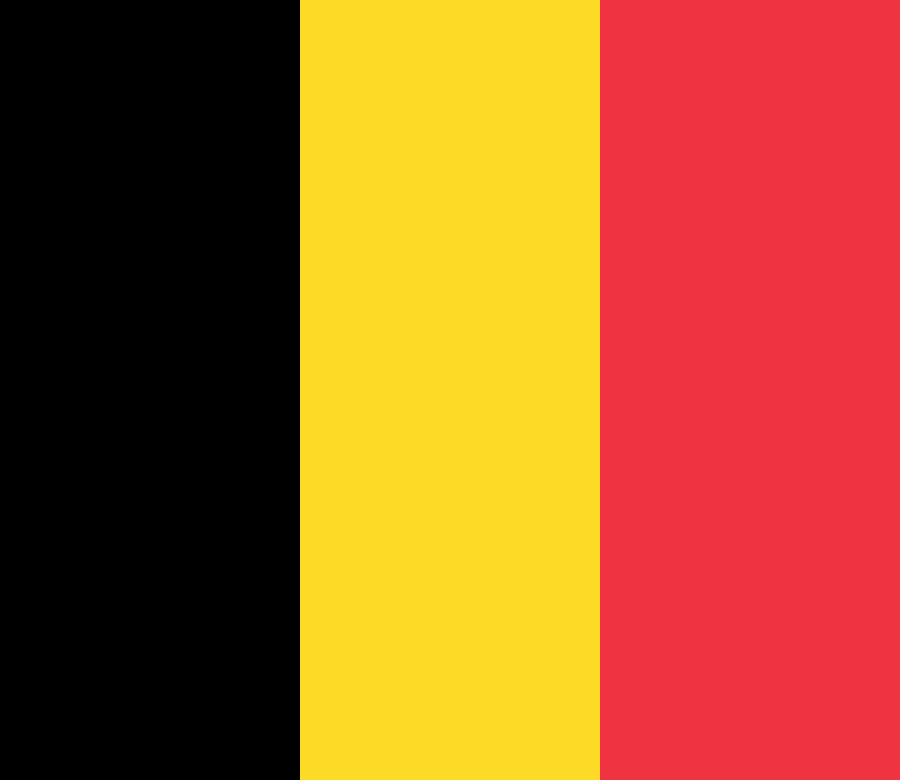 Belgium
- Adopted the vertical arrangement in 1831, in the colours of the Duchy of Brabant.
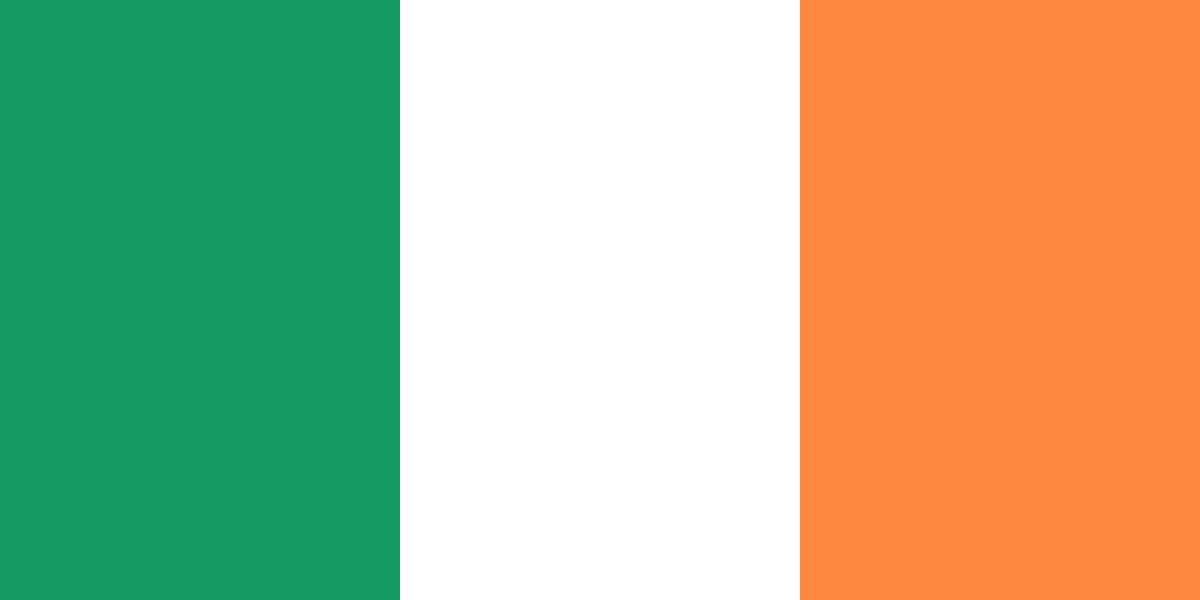 Ireland
- Irish patriots used three colours from 1830, celebrating the return of the French tricolour after the July Revolution.
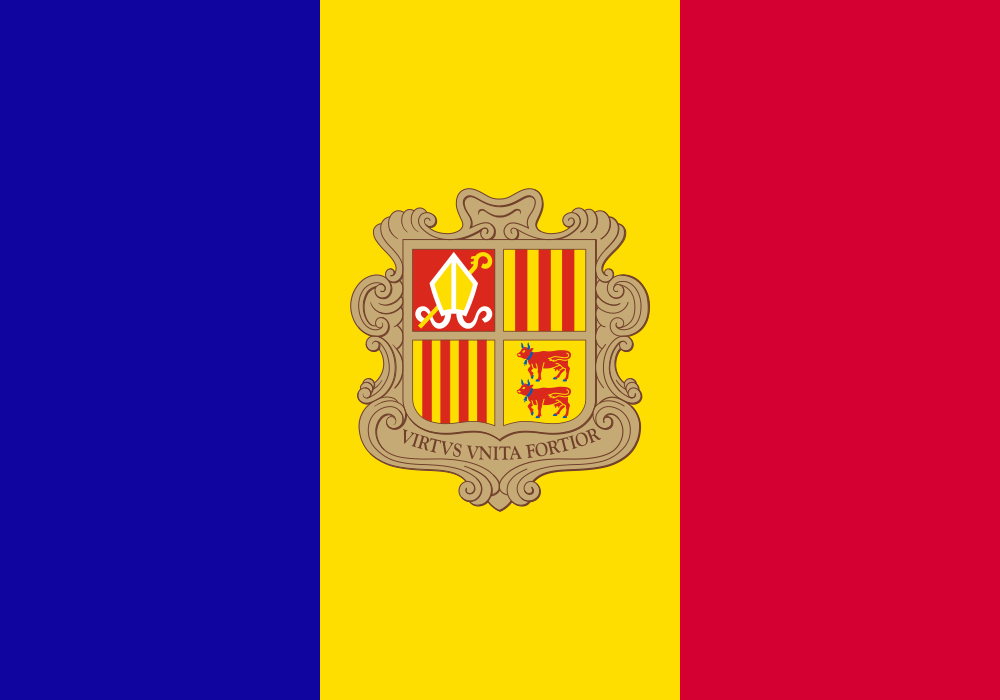 Andorra
- Its blue, yellow and red of 1866 recall the flags of Catalonia and France.
Coat of arms
The arms of France