The flag of Italy
Bandiera d'Italia · since 2006
 Back to Italy
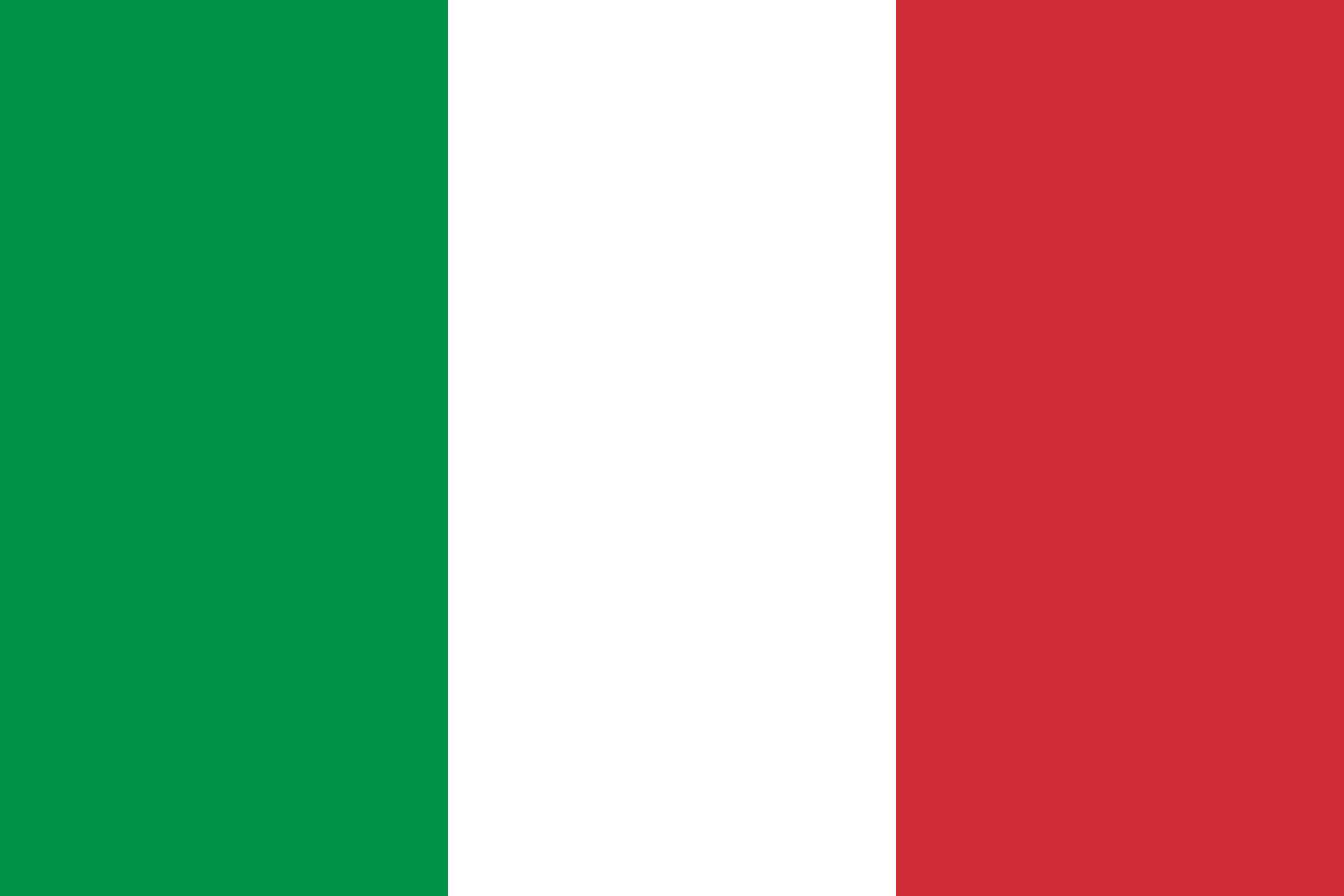
A vertical tricolour of green, white and red, green at the hoist, known as il Tricolore. The Cispadane Republic first adopted green, white and red as a national flag at Reggio Emilia on 7 January 1797; the Republic removed the Savoy arms on 19 June 1946, and Article 12 of the Constitution fixes the design. The shades were first set by the government in 2002 and 2003, and in their present form in 2006.
At a glance
- Adopted
- 1946
- Proportion
- 2:3
- Colours
- Earlier flags
- 10
- Designer
- 1
The colours
The colours of the flag of Italy, in the order it has them
- 0133.4%
Green
verde felceHoist band
- HEX
#009246- RGB
0 146 70- CMYK
100 0 100 0- Pantone
17-6153 TCX- RAL
6024
- 0233.4%
White
bianco brillanteCentre band
- HEX
#FFFFFF- RGB
255 255 255- CMYK
0 0 0 5- Pantone
11-0601 TCX- RAL
9003
- 0333.1%
Red
rosso scarlattoFly band
- HEX
#CE2B37- RGB
206 43 55- CMYK
0 100 100 0- Pantone
18-1662 TCX- RAL
3020
No law gives these codes. HEX and RGB are the colour this site draws the flag in; CMYK, Pantone and RAL are the values most often published for it.
Construction
How the flag is drawn
Three vertical bands of equal size, green at the hoist, white in the centre and red at the fly.
- Bands
- Three, vertical and of equal size: green next to the staff, white in the centre, red outside
- Vertical display
- Green at the top
- Indoor flags
- 100 × 150 cm on a 250 cm staff
- Outdoor flags
- 2 × 3 m or 3 × 4.5 m, on a 4 m staff on a balcony or an 8 m mast on the ground
Other forms
- Civil ensign
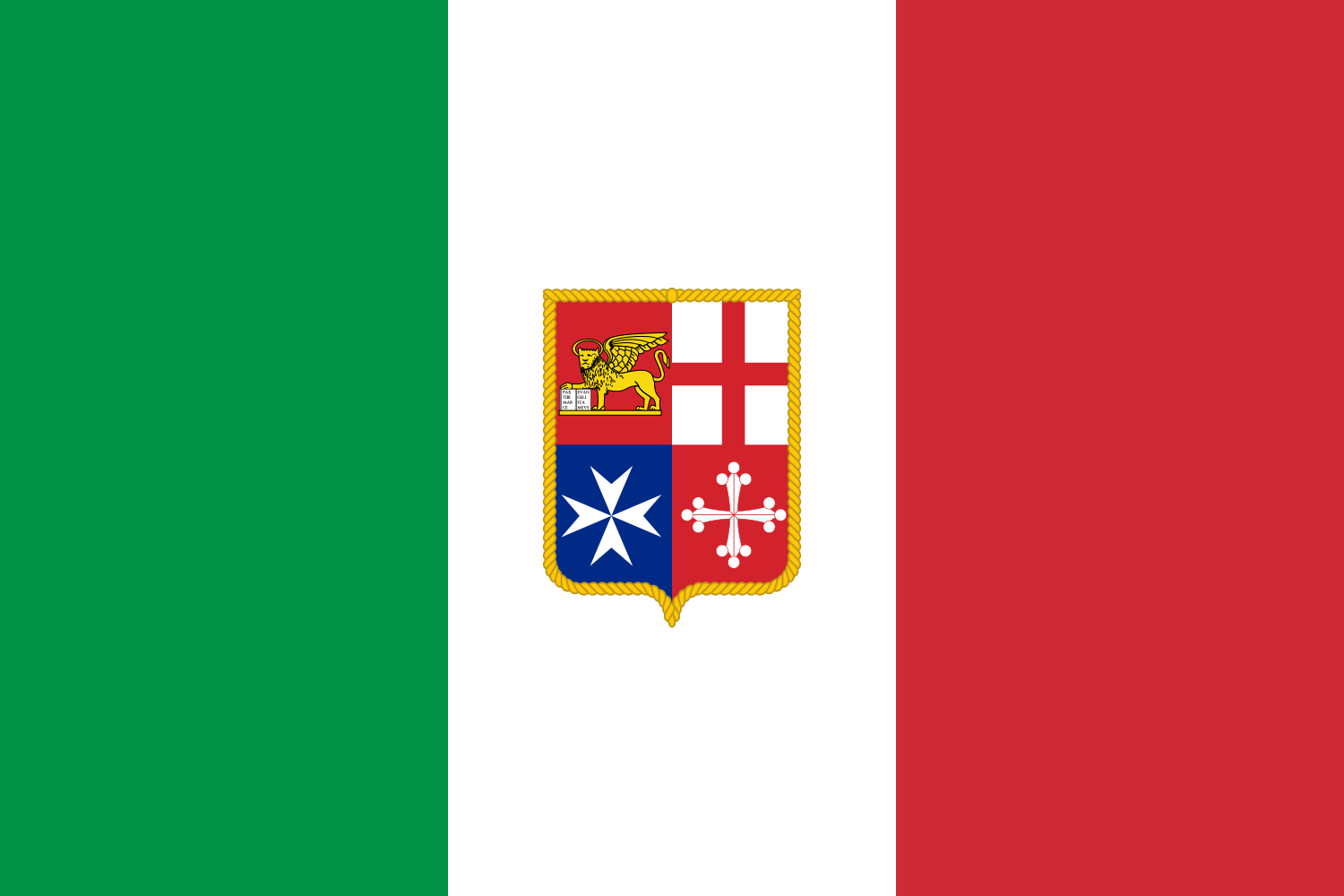
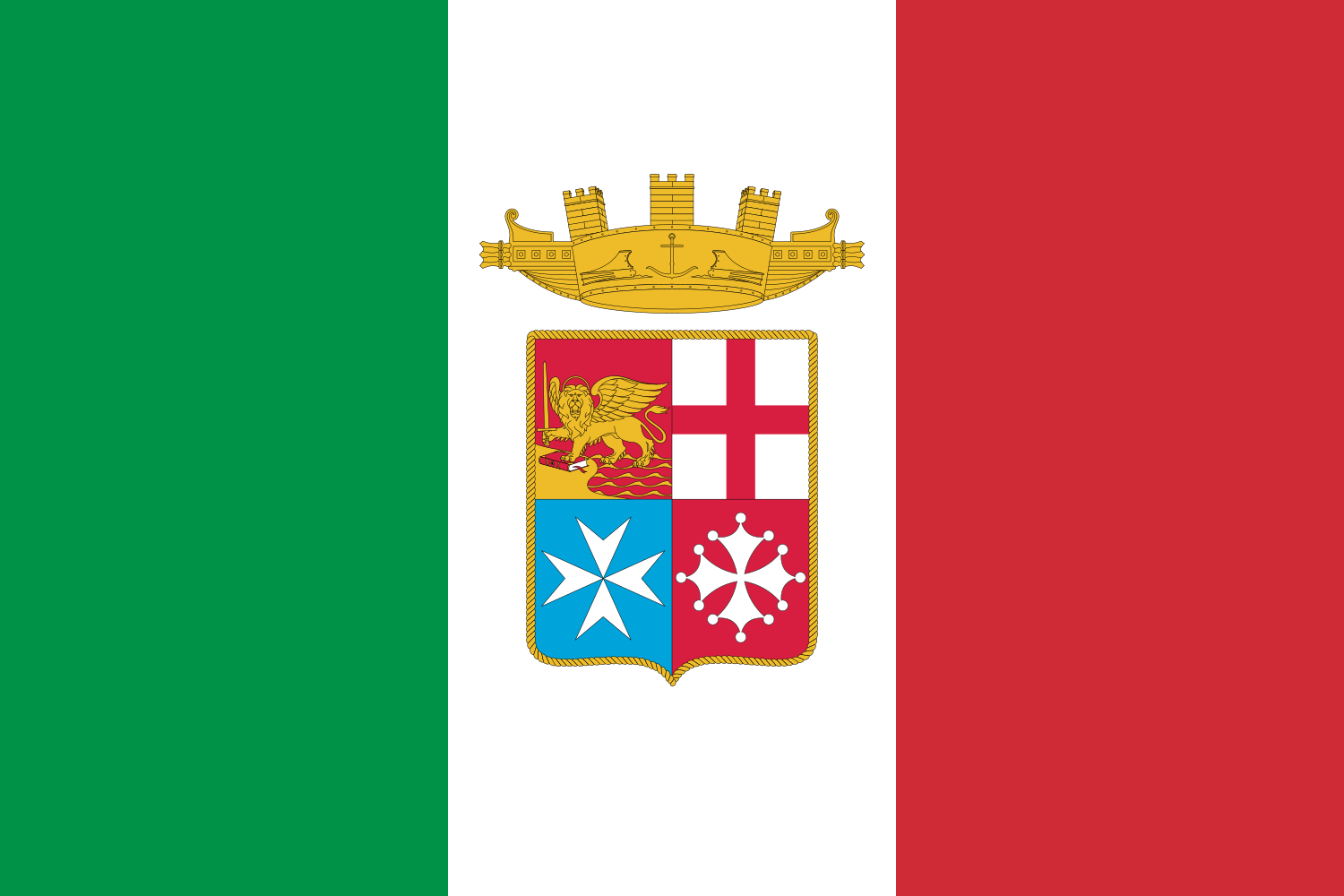
- The tricolour with the arms of the four maritime republics, Venice, Genoa, Pisa and Amalfi, in the white band, without a crown, the lion of Saint Mark holding a book.
- State ensign
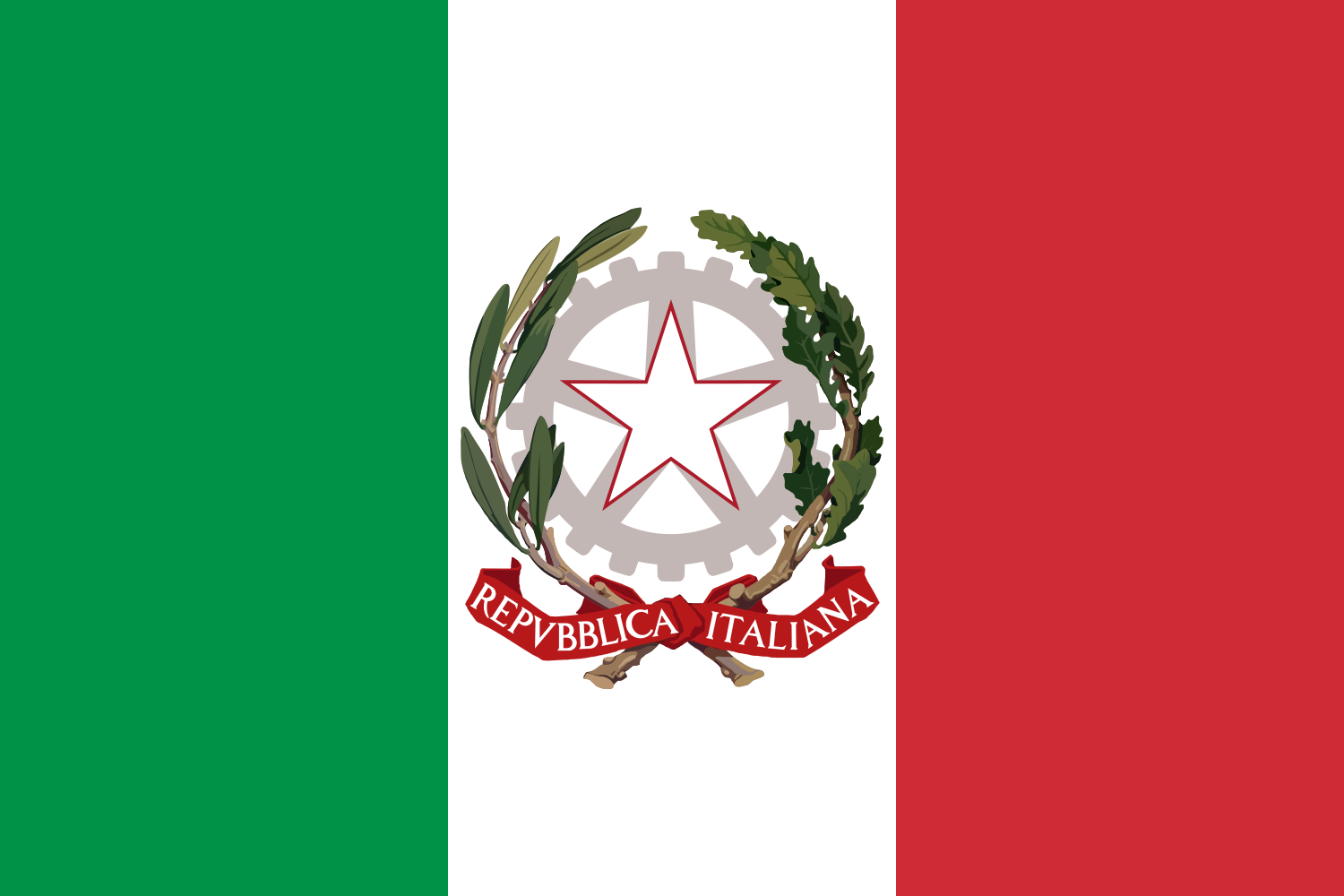
- The tricolour with the emblem of the Italian Republic in the white band.
- Naval ensign
- The arms of the four maritime republics under a turreted and beaked crown, the lion of Saint Mark holding a sword.
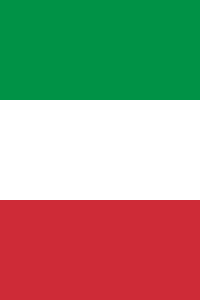
- Vertical flag
- Hung with the green at the top.
- Standard of the president
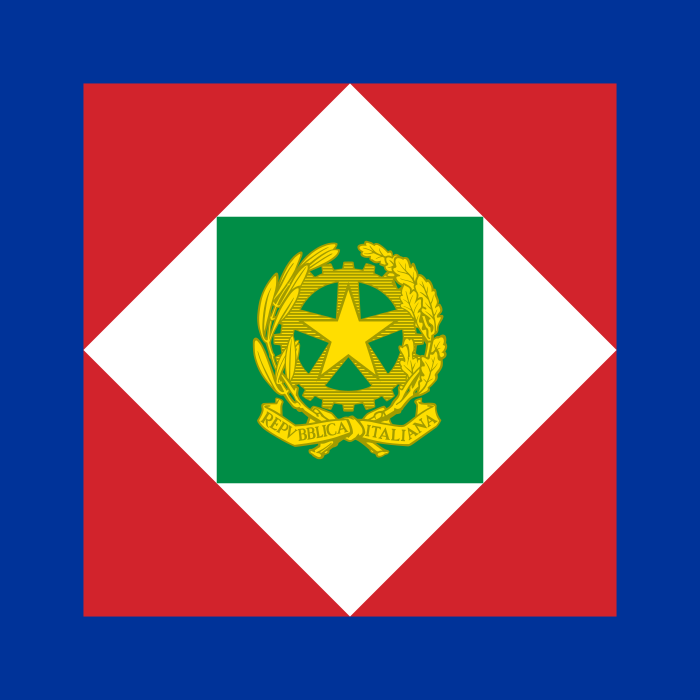
- Square, after the flag of the Italian Republic of 1802 to 1805, with a Savoy blue border standing for the four armed forces. In use since 14 October 2000.
Meaning
What each part stands for
- Tricolour form
- Taken from the French tricolour and the ideals of the French Revolution
- Green
- The green uniforms of the Milan civic militia, worn since 1782, in the most authoritative account; also read as natural rights, equality and liberty
- White and red
- The colours of the ancient arms of Milan
- Green, white and red together
- In the Napoleonic period, hope, faith and love, the three theological virtues. Giosuè Carducci in 1897 read them as the snows of the Alps, the April of the valleys and the fire of the volcanoes
Who drew it
- Giuseppe Compagnoni
- Delegate from Lugo who moved the adoption of a green, white and red flag at the Cispadane congress on 7 January 1797, remembered as the father of the tricolour
History
How the flag of Italy got here
- 1796
The Lombard Legion
11 Oct 1796 → 7 Jan 1797
Green, white and red appeared on cockades from 1789. The Lombard Legion, raised in Milan, was the first Italian military unit to carry a tricolour, in three vertical bands; its first cohort received it in Piazza del Duomo on 6 November 1796.
- 1797
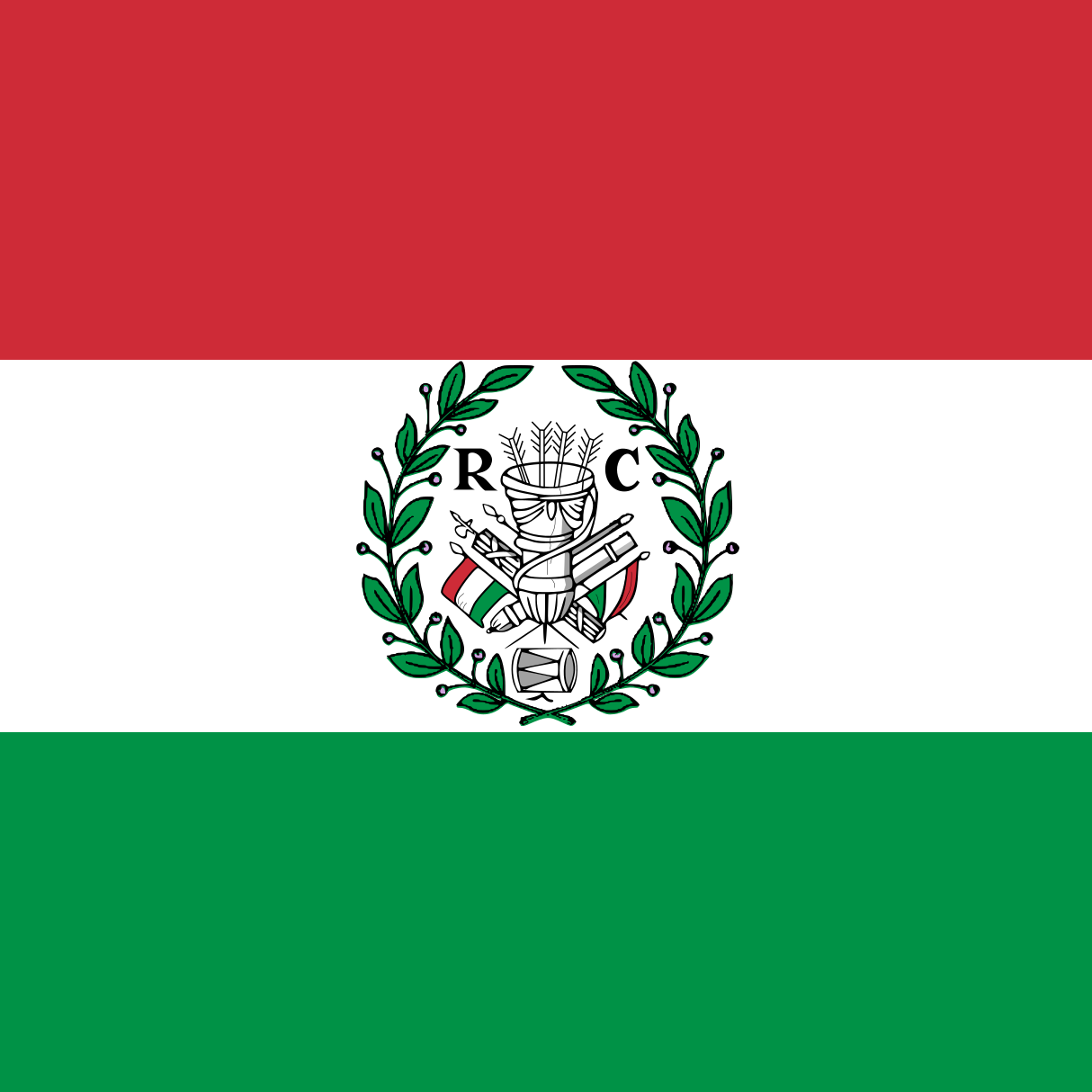
The Cispadane Republic
7 Jan 1797 → 29 Jun 1797
At Reggio Emilia the congress adopted green, white and red as the national flag, the first sovereign Italian state to do so. The flag had horizontal bands, red at the top, with the republic's emblem and the letters R and C. It was first shown in public in Modena on 12 February 1797.
- 1797
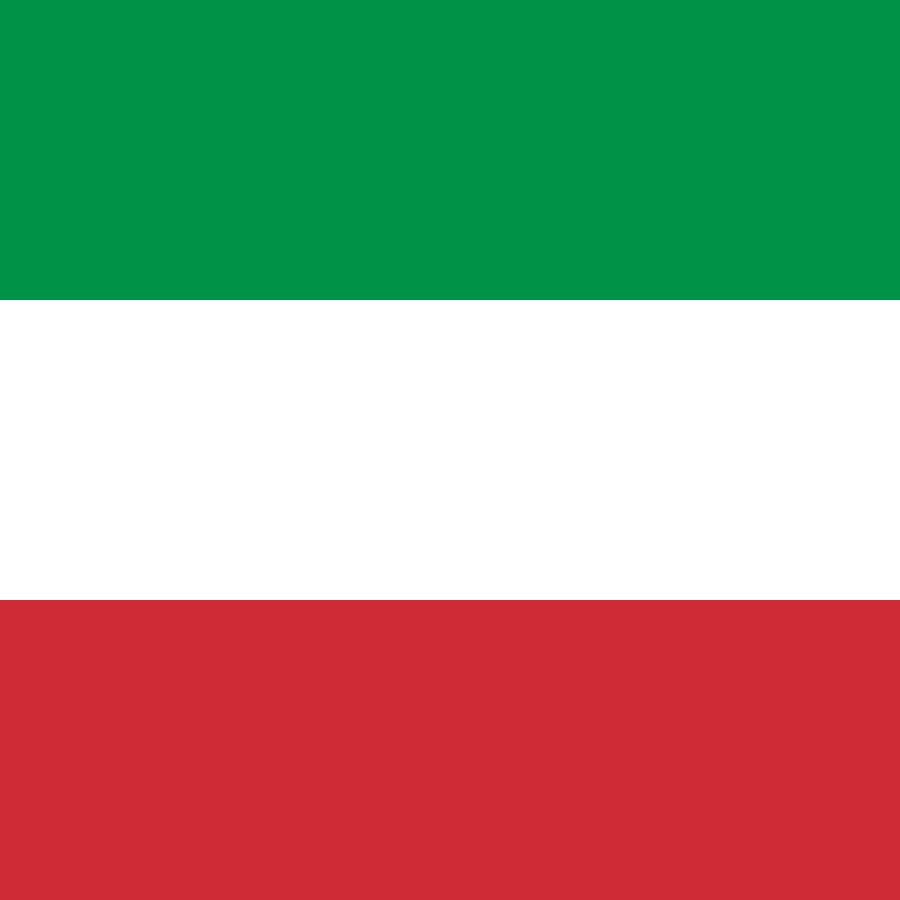
The Cisalpine Republic
29 Jun 1797 → 11 May 1798
The republic formed from the Cispadane and Transpadane republics at first flew horizontal bands, green at the top.
Image: Havsjö, CC BY-SA 4.0
- 1798
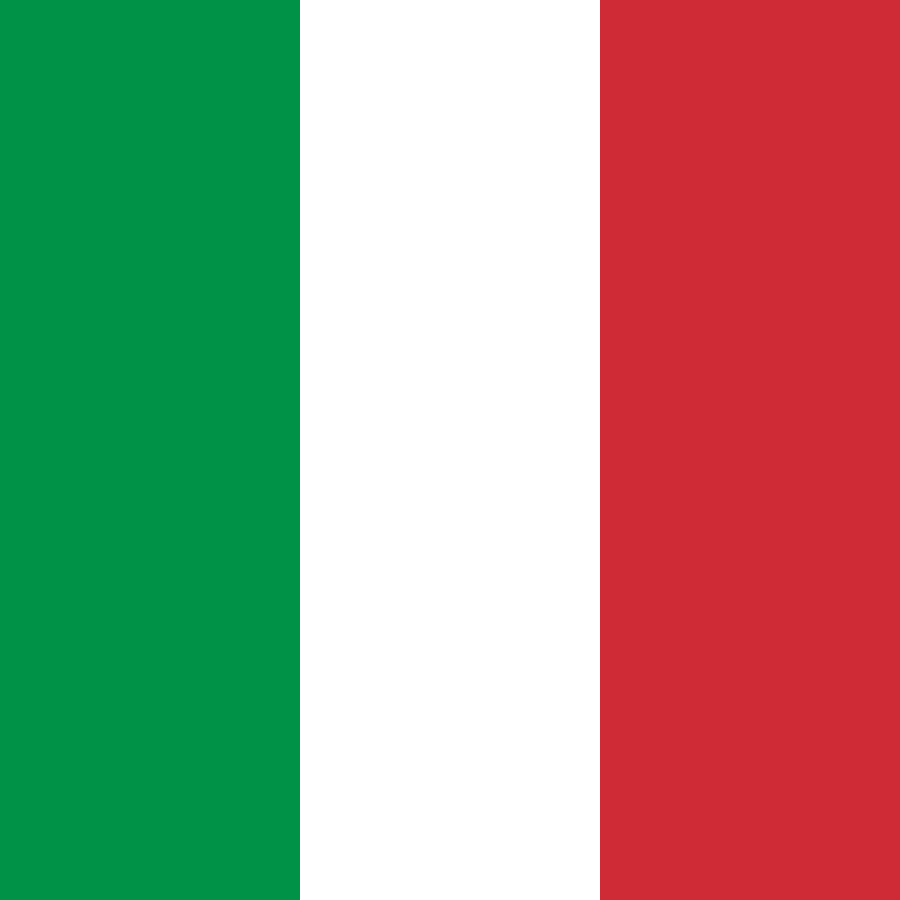
The bands turn vertical
11 May 1798 → 20 Aug 1802
The Great Council chose three bands parallel to the staff, green, white and red, on a staff striped in the three colours with a white tip.
Image: PavelD, CC BY-SA 3.0
- 1802
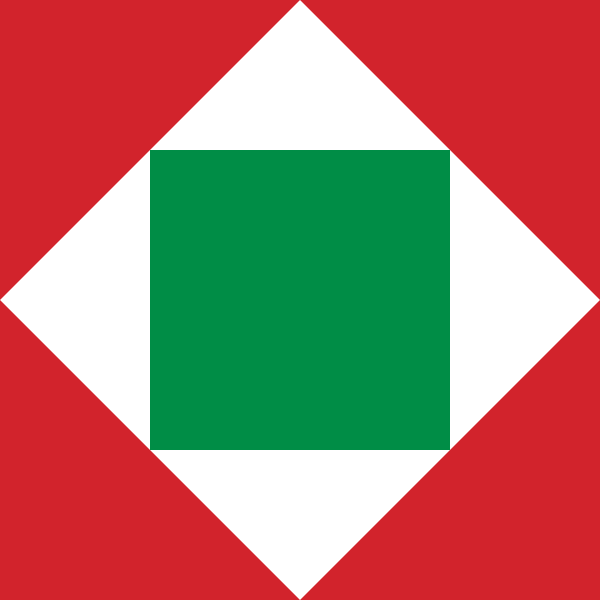
The Italian Republic
20 Aug 1802 → 1805
A red square holding a white lozenge holding a green square. The vice-president, Francesco Melzi d'Eril, wanted to drop the green, and Napoleon opposed him.
- 1805
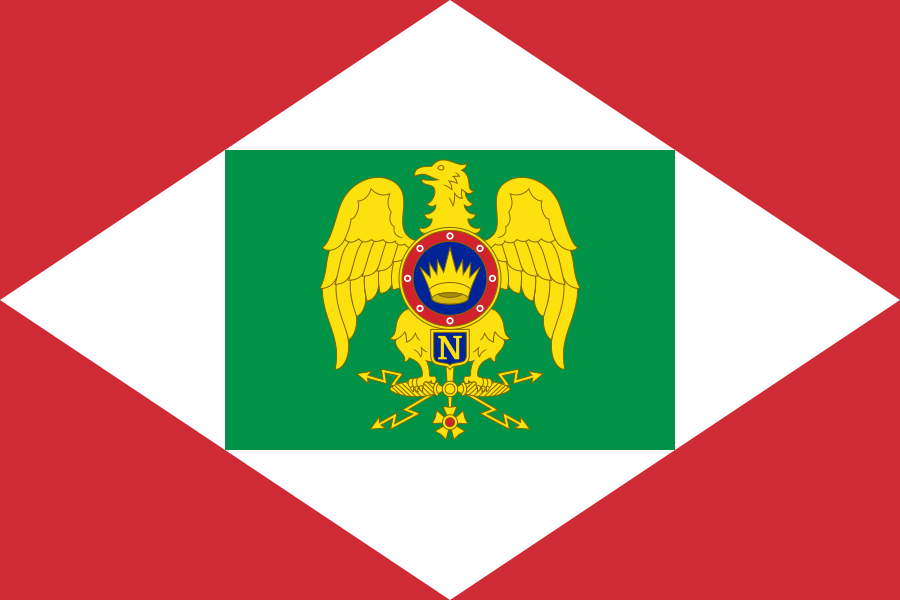
The Napoleonic Kingdom of Italy
1805 → 1814
The flag of the republic with no substantial change, while the French tricolour increasingly replaced the Italian one.
Image: Sodacan, CC BY-SA 3.0
- 1848
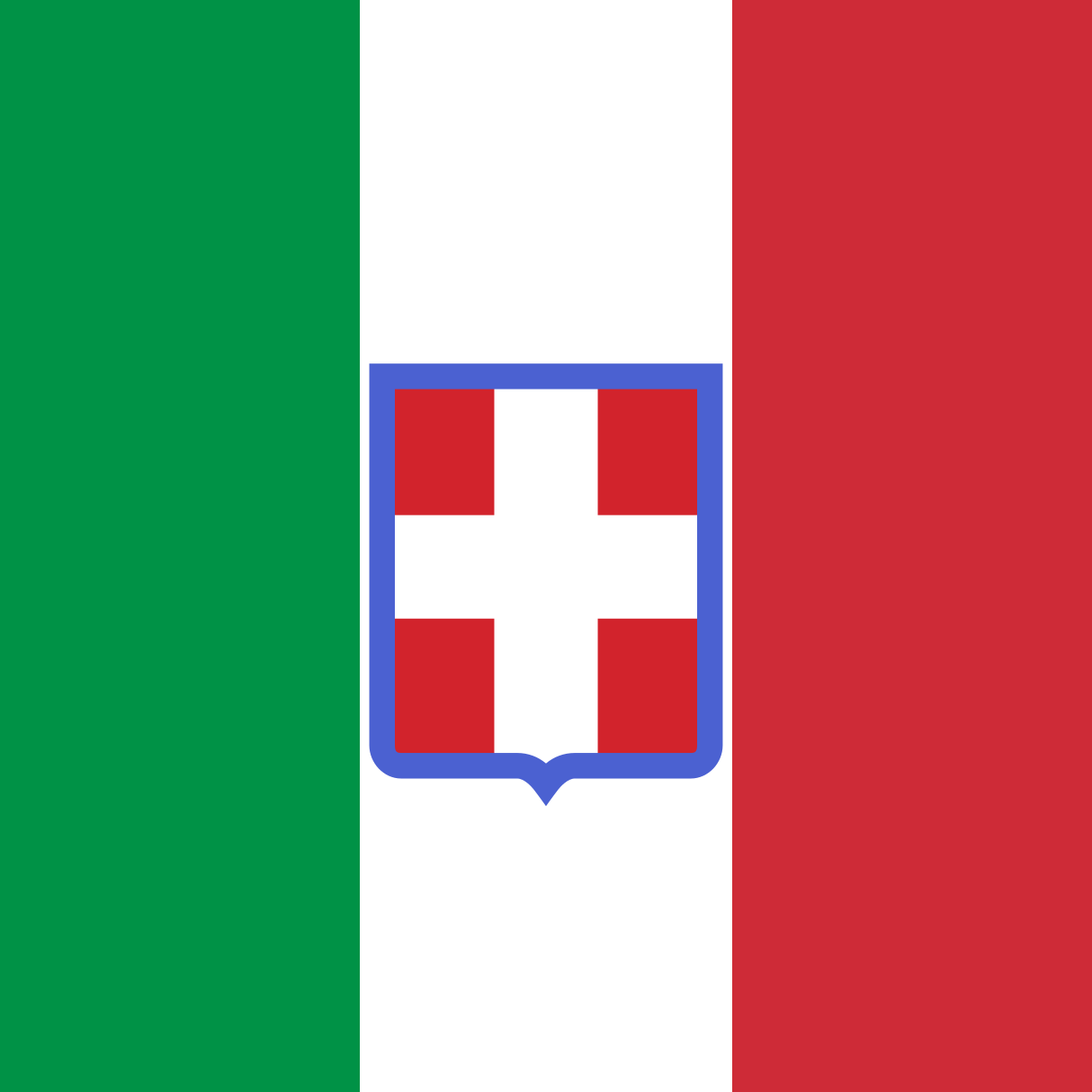
The Kingdom of Sardinia
23 Mar 1848 → 1851
Charles Albert promised the tricolour with the Savoy arms on the white to the Lombards and Venetians. It became the flag of Sardinian warships and merchant ships on 11 April 1848 and the national flag on 8 May 1848, first raised over Palazzo Madama in Turin. After the war of 1849 only Sardinia kept it.
- 1851
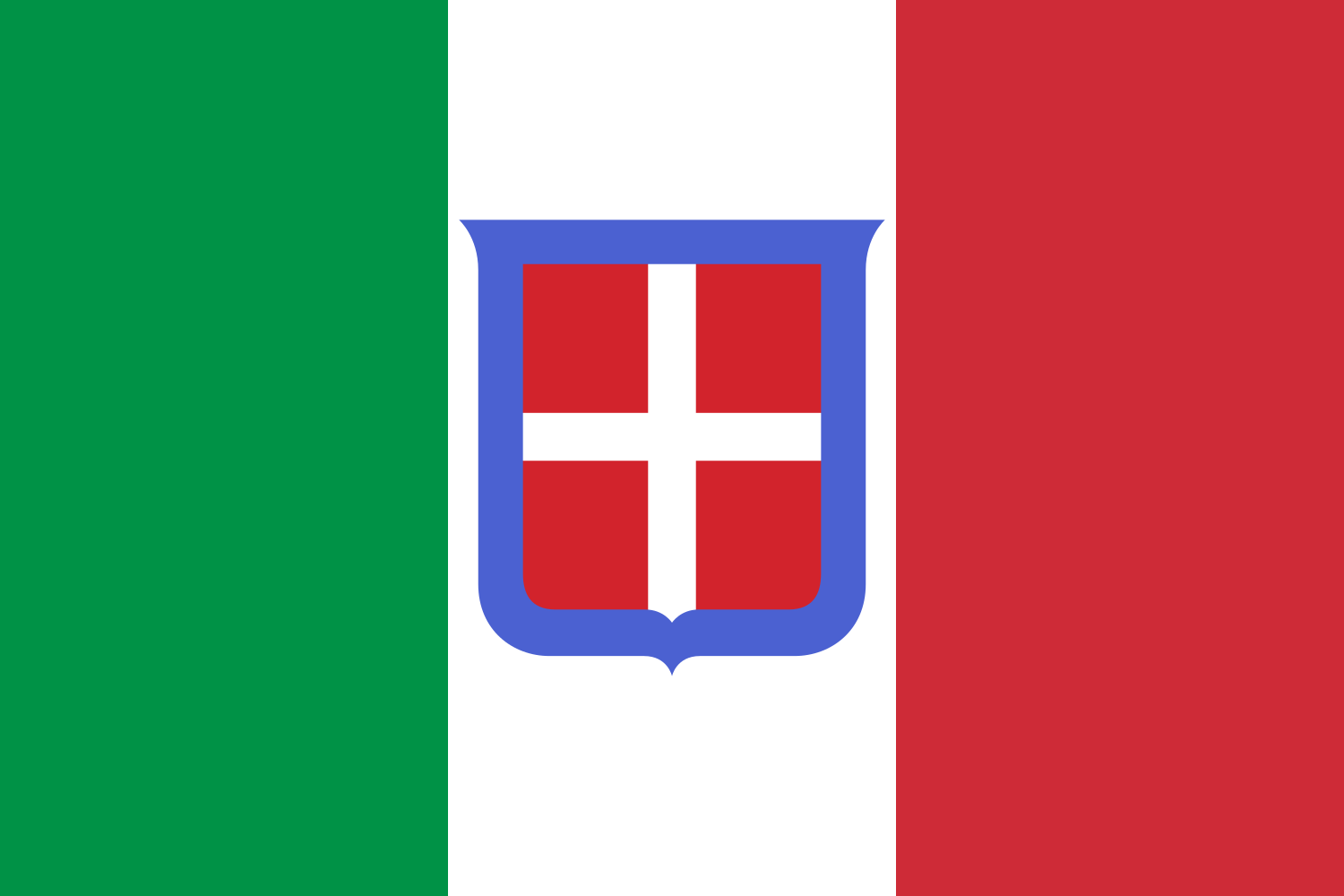
The Kingdom of Italy
1851 → 19 Jun 1946
The national and merchant flag of Sardinia, with the Savoy arms, became the flag of the Kingdom of Italy on its proclamation on 17 March 1861.
- 1946
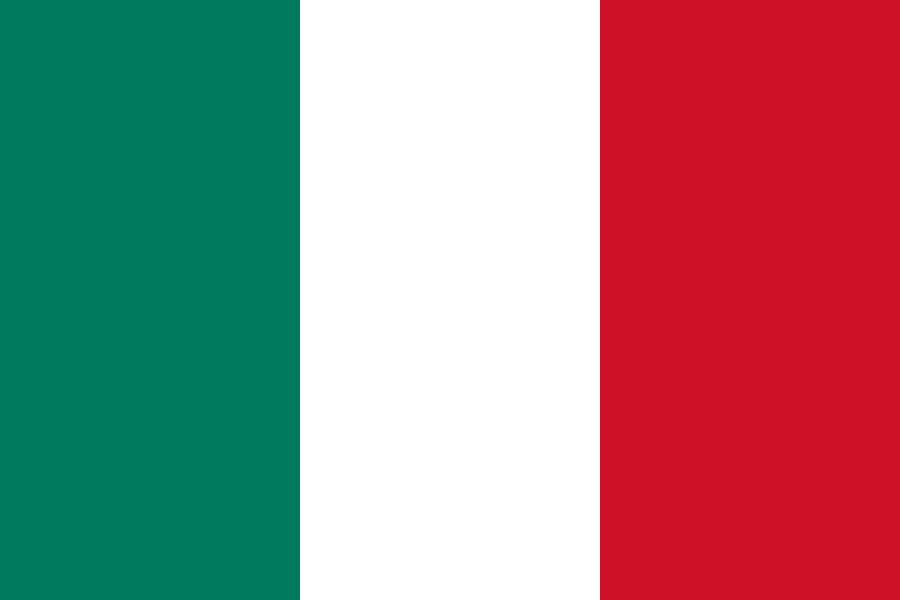
The Republic
19 Jun 1946 → 2003
The Savoy arms were removed. The republican tricolour was presented to the armed forces on 4 November 1947.
- 2003
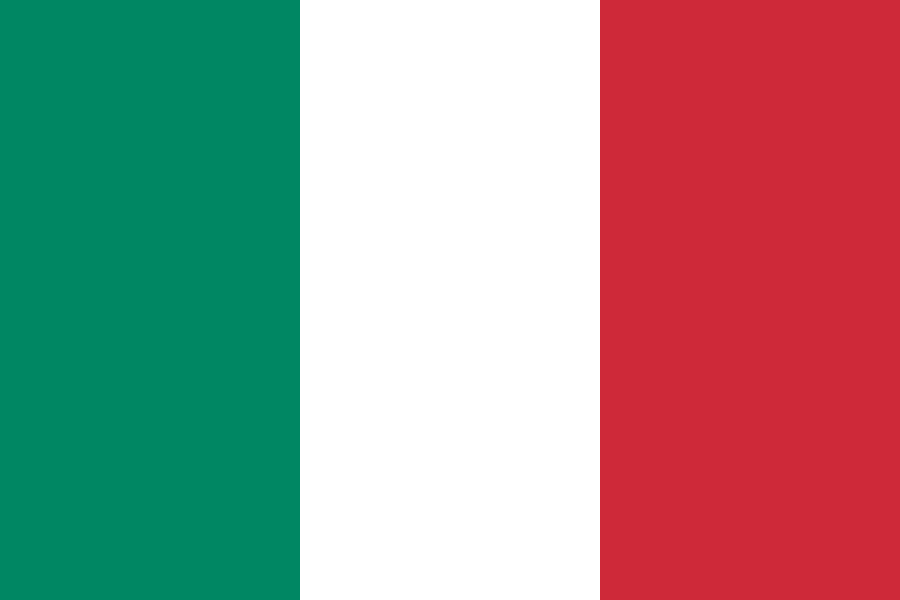
The first colour specification
2003 → 14 Apr 2006
After an Italian member of the European Parliament noticed in 2002 that the red on the flag at the Justus Lipsius building looked orange, government circulars of 2002 and 2003 set the shades for the first time: meadow green, milk white and tomato red.
Image: Zscout370, CC BY-SA 3.0
- 2006
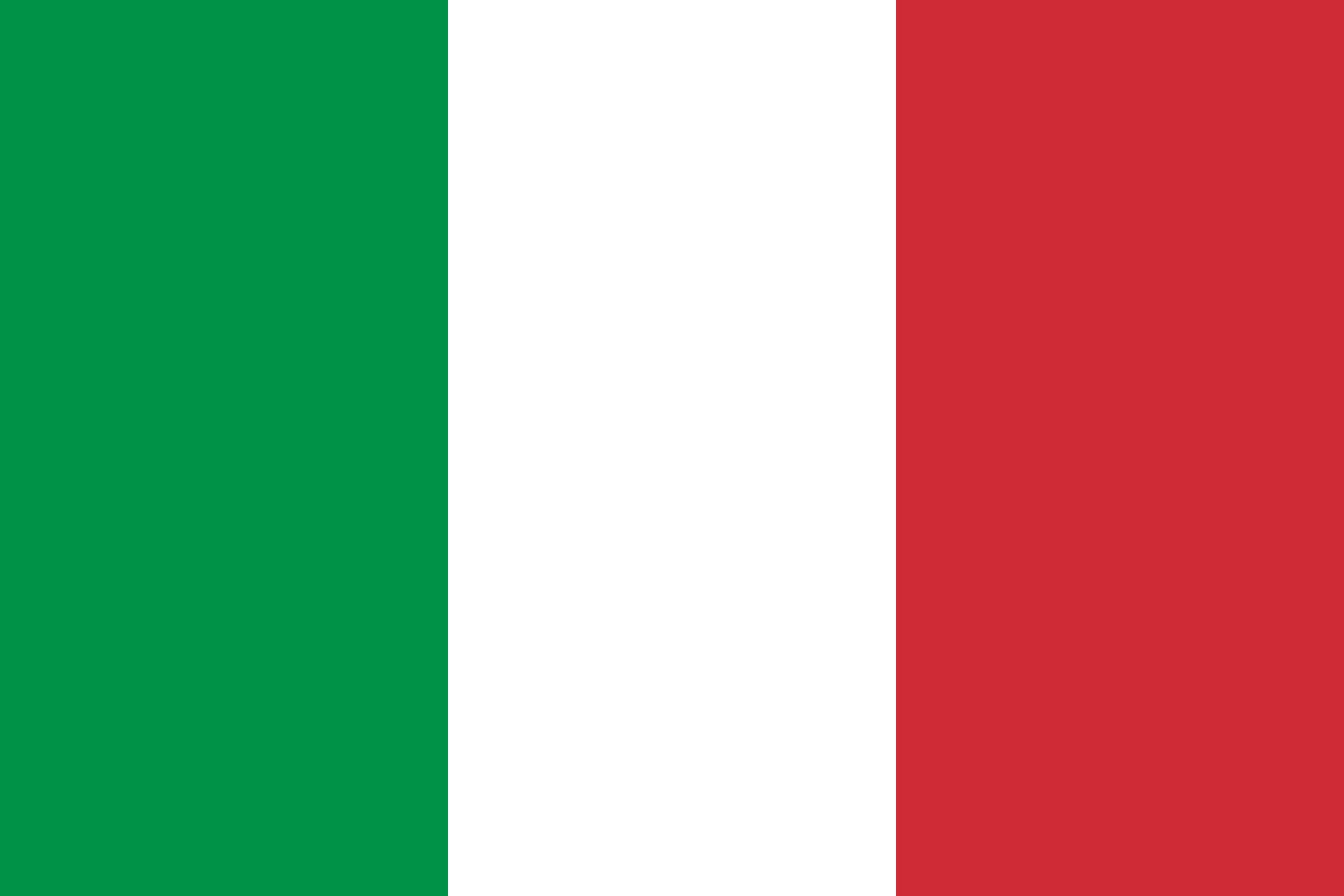
Fern green, bright white, flame scarletIn use
14 Apr 2006 → today
A circular of 2 June 2004 and the decree of 14 April 2006 replaced the earlier shades with those in use today.
The law
What defines it, and who flies it
- 19 June 1946
Decree of the President of the Council of Ministers No. 1
Removed the Savoy arms from the flag on the birth of the Republic.
- 1 January 1948
Constitution of the Italian Republic, Article 12
"The flag of the Republic is the Italian tricolour: green, white and red, in three vertical bands of equal size." Approved by the Constituent Assembly without debate on 24 March 1947.
- 31 December 1996
Law No. 671 of 31 December 1996
Made 7 January the Festa del Tricolore, the national flag day.
- 5 February 1998
Law No. 22 of 5 February 1998 and Presidential Decree No. 121 of 7 April 2000
Regulate the flying of the Italian and European Union flags by the state and public bodies.
- 14 April 2006
Decree of the President of the Council of Ministers of 14 April 2006, Article 31(1)
Sets the colours as Pantone textile shades on polyester bunting, replacing the circulars of 2002 to 2004.
- Undated
Penal Code, Article 292
Insulting the flag is fined from €1,000 to €5,000; destroying or defacing it in public carries up to two years in prison.
In use
Flown outside schools, universities, polling stations, prefectures, police headquarters, courts and main post offices
Flown on all public offices on 7 January, 11 February, 25 April, 1 May, 9 May, 2 June, 28 September, 4 October, 24 October and 4 November
With one other flag it takes the place of honour on the left as seen by the viewer, and with an odd number it flies in the centre, unless another EU state's flag is present, when the EU flag takes the centre
Hoisted first and lowered last among other flags, raised briskly at dawn and lowered slowly at dusk, and flown at night only where lit
At half-mast in public mourning, when two strips of black velvet may be attached; the strips are required at funerals
Never written or printed on, never used as drapery, and never allowed to touch the water or the ground
Folded red first, then green, over the white, so that only the green shows at the end
Related flags
The flags it is confused with or comes from
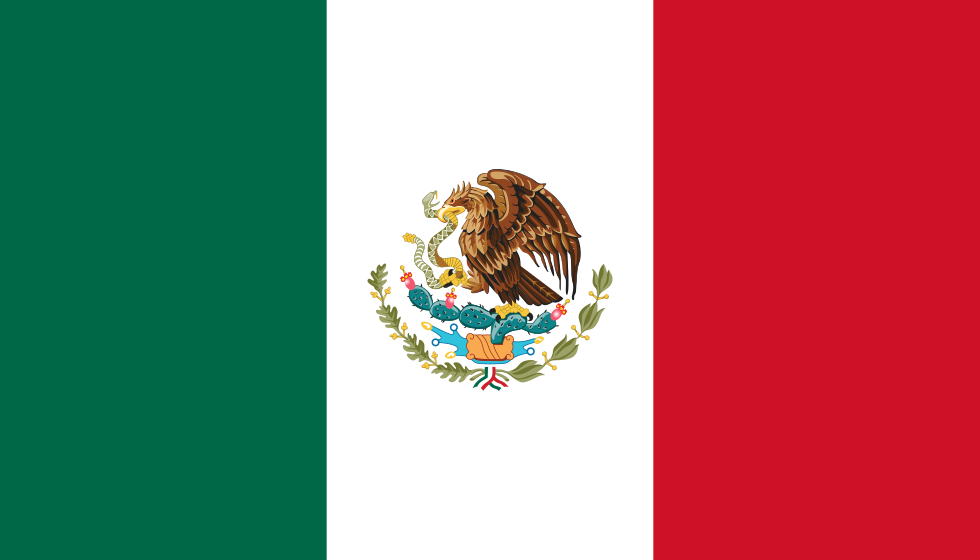 Mexico
- The same colours in the same order, with the Aztec arms added, in 4:7 and darker shades. Mexico's plain merchant flag was identical to Italy's of 1946, so both countries put arms on their ensigns.
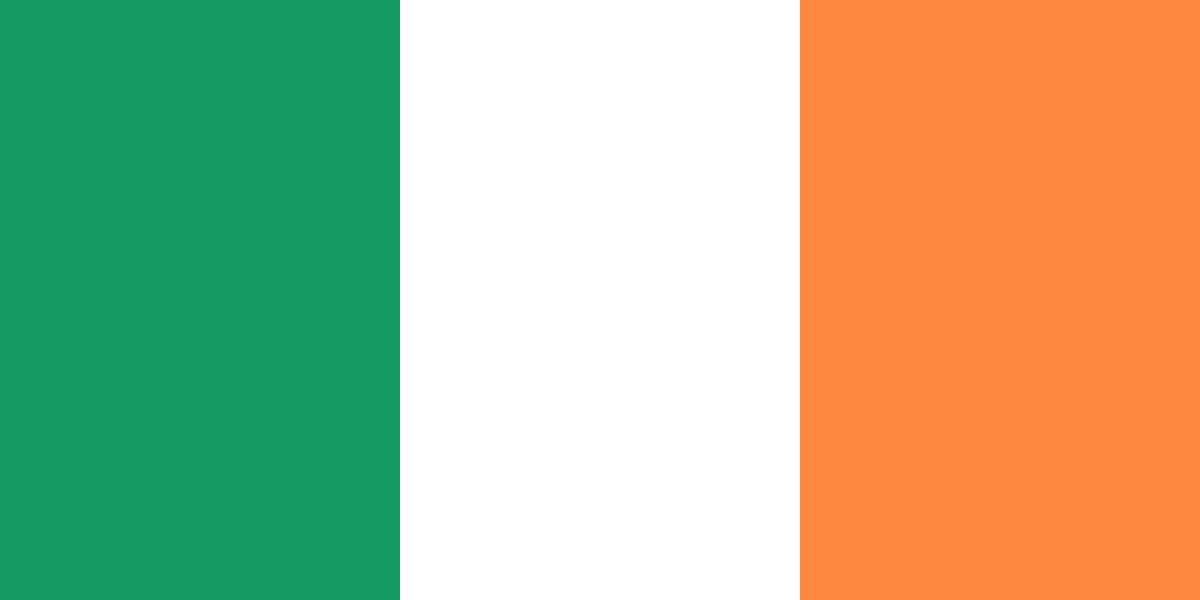 Ireland
- Also a vertical tricolour with green at the hoist, orange in place of red and at 1:2.
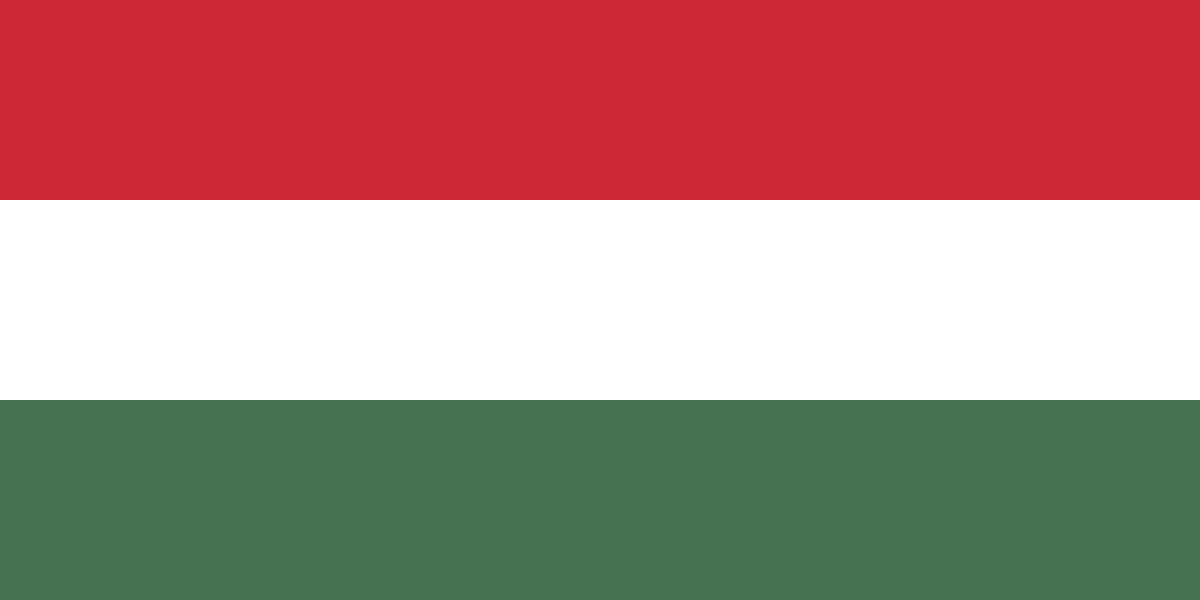 Hungary
- The same three colours, in horizontal stripes.
Coat of arms
The arms of Italy