The flag of Ireland
Bratach na hÉireann · since 1937
 Back to Ireland
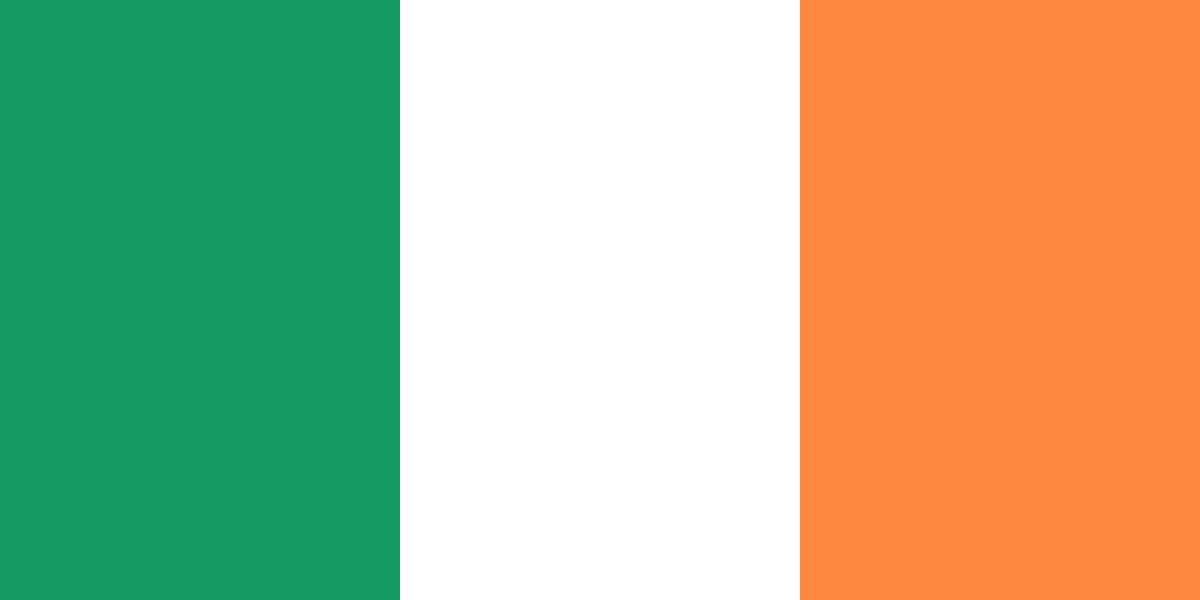
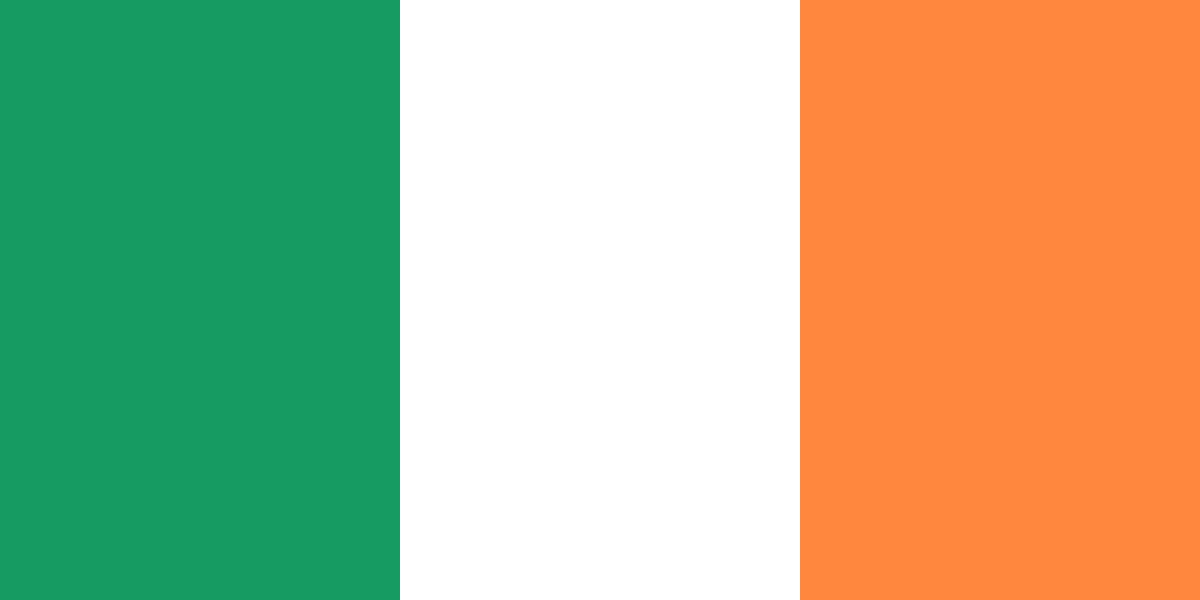
A vertical tricolour of green, white and orange, green at the hoist, twice as long as it is high. Green stands for the Gaelic and Catholic tradition, orange for the followers of William of Orange, and the white between them for a lasting truce. It was flown in the Easter Rising of 1916, adopted by the Irish Free State in 1922 and confirmed as the national flag by the Constitution of 1937.
At a glance
- Adopted
- 1922
- Proportion
- 1:2
- First hoisted
- 1848
- Colours
- Earlier flags
- 3
- Designers
- 2
The colours
The colours of the flag of Ireland, in the order it has them
- 0133.3%
Green
uaineHoist band
- HEX
#169B62- RGB
22 155 98- CMYK
81 12 76 1- Pantone
347 C- RAL
6024
- 0233.3%
White
bánCentre band
- HEX
#FFFFFF- RGB
255 255 255- CMYK
0 0 0 0
- 0333.3%
Orange
flannbhuíFly band
- HEX
#FF883E- RGB
255 136 62- CMYK
0 59 96 0- Pantone
151 C- RAL
1028
No law gives these codes. HEX and RGB are the colour this site draws the flag in; CMYK, Pantone and RAL are the values most often published for it.
Construction
How the flag is drawn
Three vertical bands of equal width, green at the hoist, white in the centre and orange at the fly.
- Shape
- Rectangular, the length twice the width
- Pales
- Three of equal size, vertically disposed, green next to the flagstaff
- Size
- Any convenient size, provided the proportions are kept
Meaning
What each part stands for
- Green
- The Gaelic tradition and Roman Catholics. Green had been an Irish colour since at least the green harp flag of the 1640s
- Orange
- Protestants, the supporters of William of Orange
- White
- A lasting truce between orange and green, in Meagher's words of 1848
- The flag as a whole
- The inclusion of, and hoped-for union between, the people of different traditions on the island of Ireland. Yellow or gold in place of orange destroys that meaning, and the Department of the Taoiseach discourages it
Who drew it
- Emelia Eleanor Hamilton
- Of Annadale, Fairview, Dublin; first combined green, white and orange, in a cockade sent to a meeting in September 1830
- Thomas Francis Meagher
- Young Ireland leader; presented a tricolour brought from France in April 1848 and set out the meaning of its colours
History
How the flag of Ireland got here
- 1642
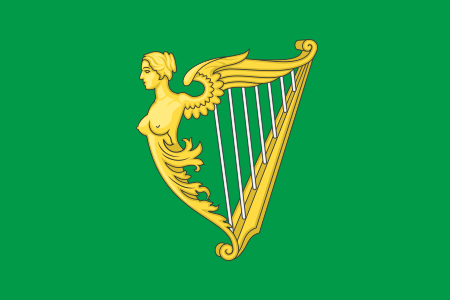
The green harp flag
1642 → 1916
Flown by Eoghan Ruadh Ó Néill in 1642 and by the Irish Catholic Confederation, then by the United Irishmen in the 1790s. It stayed the most popular national symbol up to the eve of the Easter Rising.
Image: Raymond1922A, CC BY-SA 3.0
- 1830
The early tricolours
1830 → 1916
Green and orange were joined in a device at a rally in Cork in March 1830, and white was added in a cockade that September. The Young Irelanders took up the tricolour in 1848 and fixed the white in the centre. Between 1848 and 1916 it was used sparingly, by the Fenians and the Irish Republican Brotherhood among others, and neither its colours nor their order were standard.
- 1916
The Easter Rising
1916 → 1922
Raised over the General Post Office in Dublin by Gearóid O'Sullivan in 1916, the tricolour came to be regarded as the national flag, and the Irish Republic adopted it during the War of Independence.
- 1922
The national flagIn use
1922 → today
The Executive Council adopted the tricolour for the Irish Free State in 1922, provisionally and without a statute, and the Constitution of 1937 confirmed it. Some Irish merchant ships flew the British Red Ensign until September 1939; the Merchant Shipping Act of 1947 settled the tricolour at sea.
The law
What defines it, and who flies it
- 1937
Constitution of Ireland, Article 7
"The national flag is the tricolour of green, white and orange." The Free State constitution of 1922 named no national symbols, and the flag was adopted then by decision of the Executive Council without a statute.
- 1947
Merchant Shipping Act, 1947
Formalised the tricolour as the flag of Irish merchant ships.
- September 2025
The National Flag: Guidelines, Department of the Taoiseach
Advisory, with no statutory force. Sets the proportions, the colours and the protocol for flying the flag.
In use
Flown daily at military posts and from a limited number of State buildings, among them Áras an Uachtaráin, Leinster House, the courts, embassies, consulates and Garda stations
Flown from all State buildings with flagpoles on Saint Patrick's Day, Easter Sunday and Easter Monday, and the National Day of Commemoration
Flown only between sunrise and sunset, except for public meetings, processions and funerals
No flag flies above it; carried with others it takes the place of honour, on the marching right
Draped over a coffin with the green at the head, for presidents, soldiers and Garda members killed on duty, and others given a state funeral
Hoisted to the peak before being lowered to half-mast, and raised to the peak again before being taken down
Never defaced with slogans, logos or lettering, draped on vehicles or carried flat
Related flags
The flags it is confused with or comes from
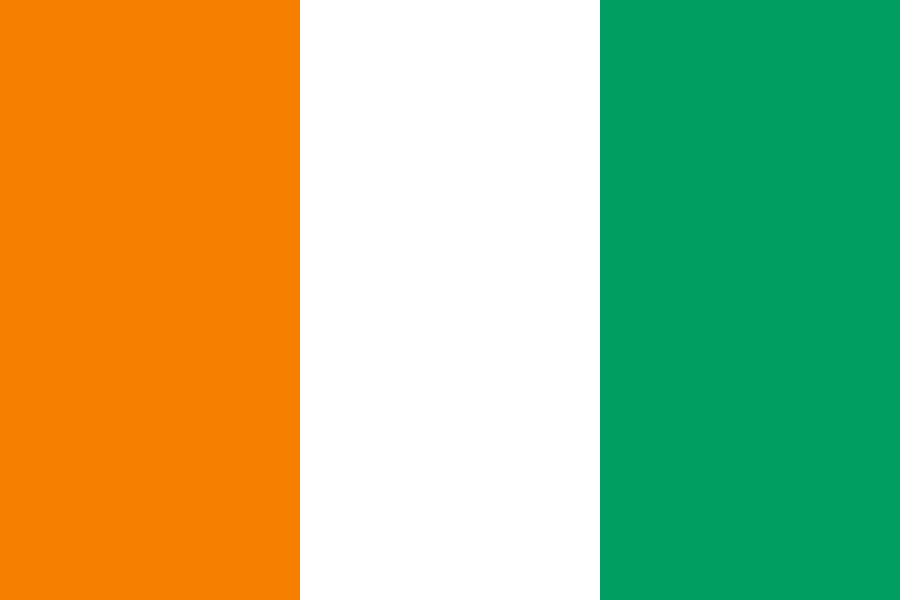 Ivory Coast
- The same colours, with orange at the hoist and in 2:3. The two flags have been mistaken for each other.
Coat of arms
The arms of Ireland