47% of the people living in Luxembourg in 2025 held the nationality of another state, and when residents were asked on 7 June 2015 whether that group should be given the vote in legislative elections, 80.5% said no. Luxembourg counted 681,973 permanent residents in 2025 on 2,586 square kilometres of land between Belgium, France and Germany. Another 223,000 people crossed a national border each working morning in 2025 to fill jobs in the country and went home again at night, so the body that elects the Chamber of Deputies is smaller than the population and a good deal smaller than the workforce.
At a glance
Where it is
Where Luxembourg is, and what is around it
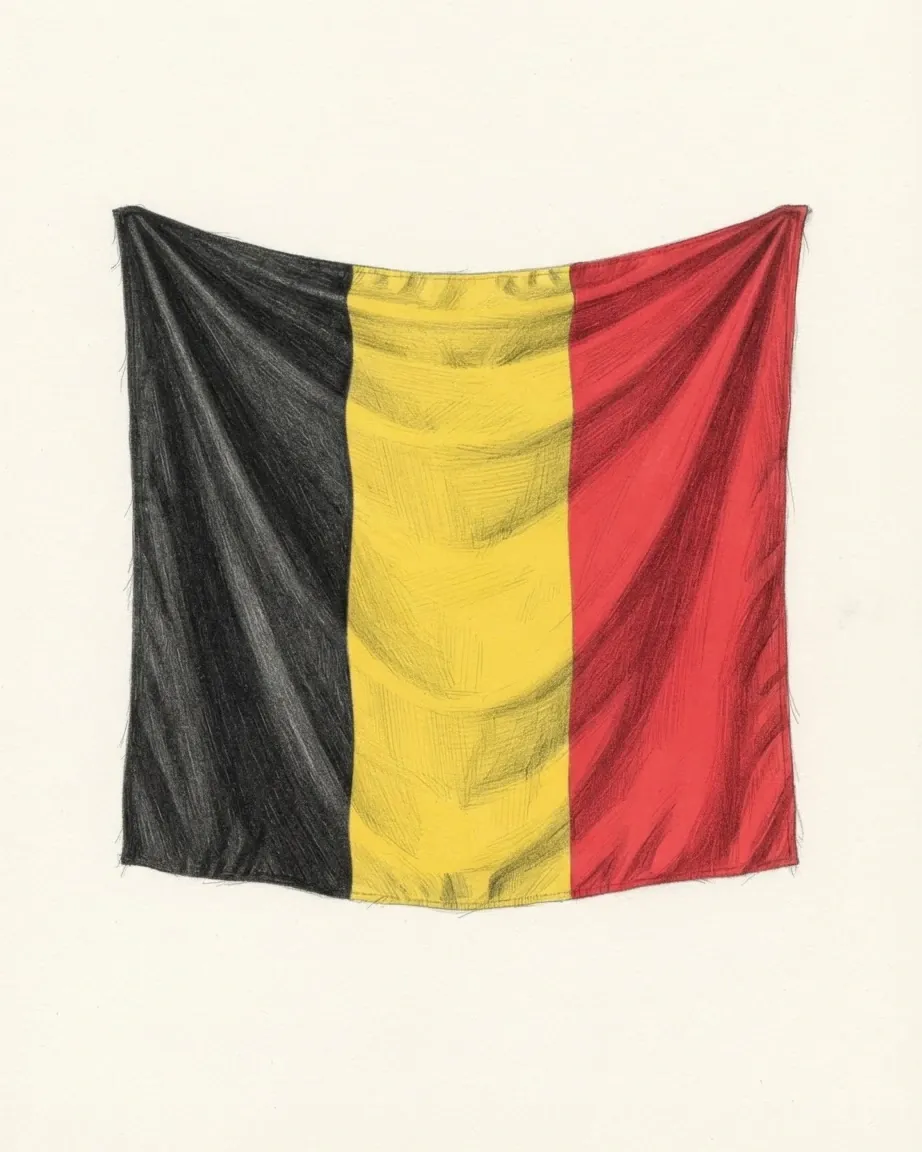
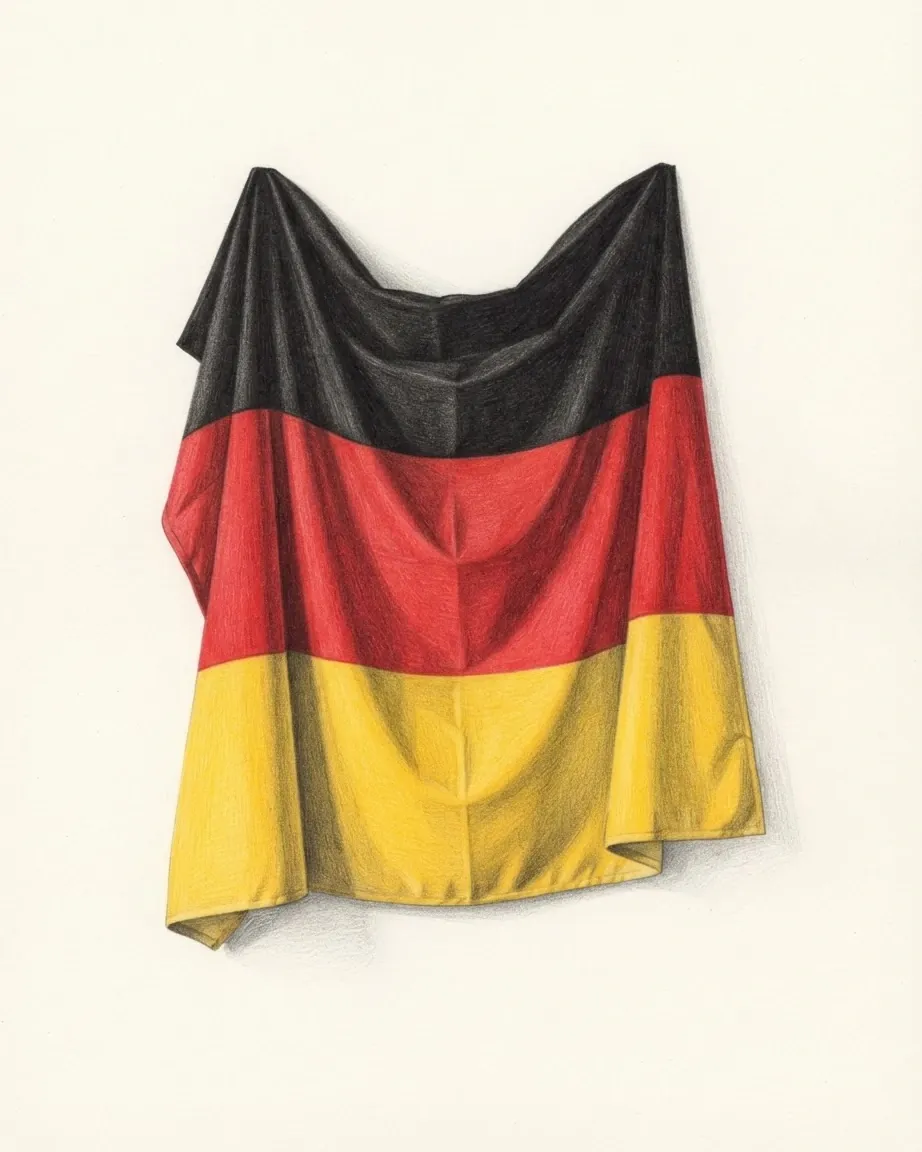
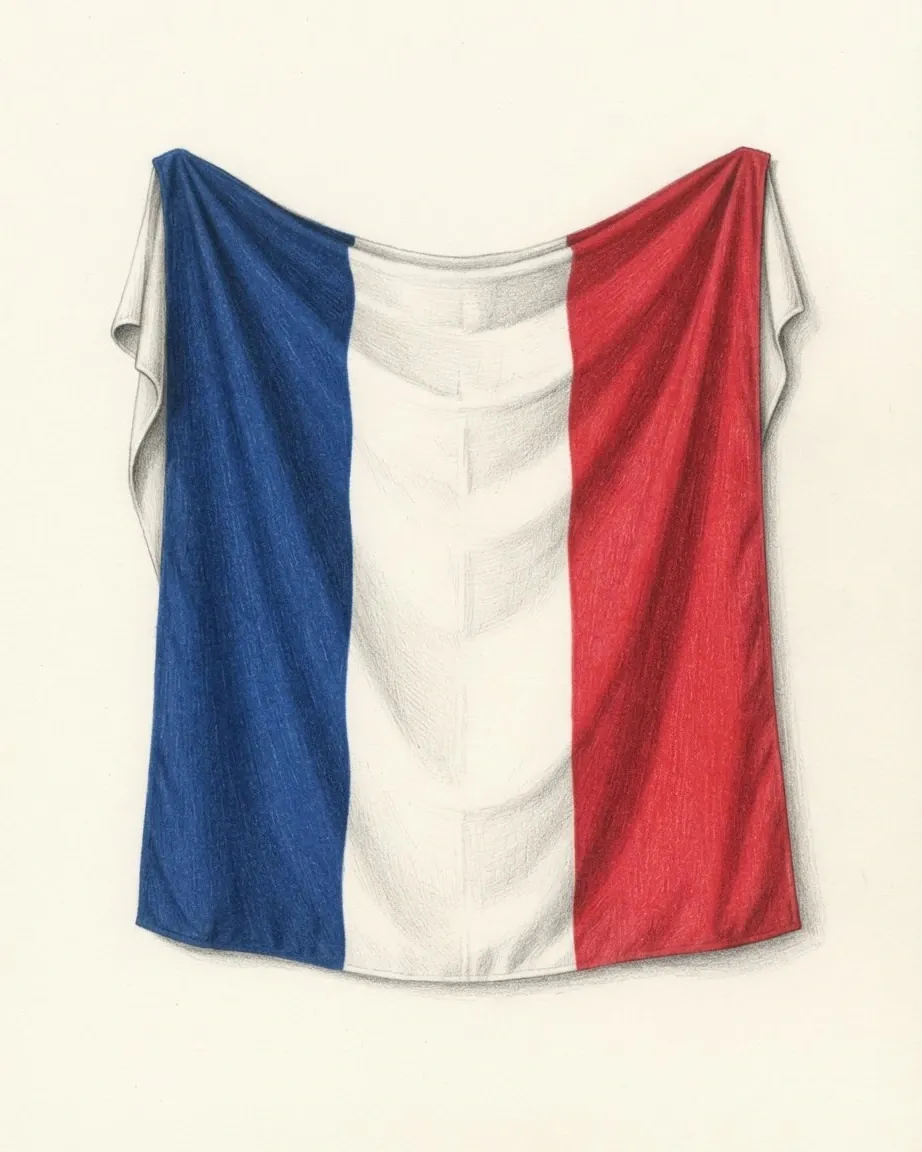
Luxembourg is landlocked. It shares a border with 3 countries, counted as shared borders, which includes neighbours across water.
 Belgium
 Germany
 France
Who the state counts and who it governs
Luxembourg had 681,973 permanent residents in 2025, and 47% of them held the nationality of another state. The Portuguese were the largest of those groups at 13.2% of the total population, followed by the French at 7.2%, the Italians at 3.7%, the Belgians at 2.7% and the Germans at 1.8%. The count for the following year gives 693,916 residents in 2026. Employment is counted on a wider footprint than residence. The International Monetary Fund put total employment at 522,200 in 2025 and resident employment at 299,200, which leaves 223,000 jobs filled by people who cross the French, Belgian or German border to reach them. Add the European institutions, sited in the capital since the judicial bodies arrived in 1952 and now employing more than 14,000 staff from across the member states on the Kirchberg plateau, and the working population of a country of under seven hundred thousand residents turns out to be a regional one.
| The people in Luxembourg | Figure | As of |
|---|---|---|
| Permanent residents | 681,973 | 2025 |
| Residents holding another nationality | 47% | 2025 |
| Total employment | 522,200 | 2025 |
| Resident employment | 299,200 | 2025 |
| Jobs filled from across a border | 223,000 | 2025 |
| Area | 2,586 km², unchanged since 1839 | |
| Cantons and communes | 12 and 100 |
Twelve cantons divide the territory and one hundred communes divide the cantons, twelve of the communes holding city status. The route from living in the country to voting in it runs through the language. After the 1999 election the government made a knowledge of Luxembourgish a criterion for naturalisation, and the census of 2021 found 48.9% of citizens naming Luxembourgish as their main language, against 15.4% naming Portuguese and 14.9% French.
Why the powers stopped redrawing the borders
The recorded history of the country begins in 963, when Siegfried, count of the Ardennes, traded ancestral land with the monks of the Abbey of St Maximin in Trier for a fort on a rock above the Alzette called Lucilinburhuc, the little castle. The castle produced a county, the county produced a house that supplied Holy Roman emperors, and the extinction of that house ended the country's independence. Burgundy held the territory briefly, the Habsburgs took it in 1477, the Austrian line inherited it in 1713, and revolutionary France conquered it in the 1790s. Then came the subtractions. The duchy was partitioned in 1659, again in 1815 when the Congress of Vienna turned it into a grand duchy in personal union with the king of the Netherlands, and a third time by the Treaty of London of 19 April 1839, which handed the larger, French-speaking west to Belgium as the province of Luxembourg and left the grand duchy with the 2,586 square kilometres it still has. The borders have stood unchanged since that date.
What stopped the subtractions was the fortress on the rock, and the price of stopping them was the fortress. In 1867 William III agreed to sell the grand duchy to Napoleon III and backed out when Bismarck objected. The second Treaty of London, of 11 May 1867, settled it: the Prussian garrison withdrew, the walls were pulled down, and the state was declared permanently neutral in return for France renouncing its claims. The dynastic tie to the Netherlands broke in 1890, when William III died leaving a daughter and the Nassau family pact of 1783 sent the Luxembourg crown to Adolphe of Nassau-Weilburg while the Dutch crown passed to Wilhelmina. Neutrality held until German troops crossed the border in 1914, and again until they crossed it in 1940. After the second occupation the country dropped neutrality and became a founding member of the North Atlantic Treaty Organization and of the United Nations. Luxembourg: history follows the partitions and the demolition that bought the independence.
Where the Ardennes give way to farmland
The northern third of the country is the Oesling, Éislek in Luxembourgish, a plateau of schists and sandstones averaging about 450 metres that forms a corner of the Ardennes. The Kneiff near Wilwerdange is the highest ground at 560 metres. Hardly anybody lives up there. Wiltz is the only town in the region with more than five thousand people, and the thin soils of the plateau were made productive in the 1890s by a basic-slag fertiliser that arrived as a by-product of the steelworks in the south.
The rest of the country is the Gutland, or Bon Pays, of broad valleys and better ground. The eastern border is a water border, formed from north to south by the Our, the Sûre and the Moselle in succession, and the Moselle slopes, cut into chalk and calcareous clay, carry the vineyards along the 42 kilometres between Schengen in the south and Wasserbillig in the north. The iron ore that built the industrial south lay in the extreme south-west, on the French border.
The most recent movement in the record is in the trees: 58.4% of them were recorded as damaged in 2024. Luxembourg: geography takes the two plateaux and the rivers that became borders.
How the constitution changed without a referendum
The constitution of 1868 governed the country for a century and a half. A single replacement text was drafted between 2005 and 2018 and then abandoned, and in 2020 four separate revision proposals were tabled in its place, covering justice, the organisation of the state, rights and liberties, and the Chamber of Deputies together with the Council of State. Each chapter was voted twice at the two-thirds majority a constitutional change requires, the first readings running from 20 October 2021 to 13 July 2022 and the second votes falling on 21 and 22 December 2022. The consolidated text entered into force on 1 July 2023. No version of it went to the country.
The Chamber of Deputies has 60 members elected for five years by proportional representation in four constituencies. The Council of State, 21 members appointed by the grand duke on proposals from the government, the Chamber and the Council itself, gives an opinion on every bill. Sovereignty has resided with the nation since 1919, the year a referendum kept the dynasty and, in the same ballot, recorded 73% in favour of an economic union with France. That union was never made. Belgium took its place in the treaty of 1921.
The referendum of 7 June 2015 put three questions and collected three refusals: the legislative franchise for non-Luxembourgers, rejected by 80.5%; an optional vote from the age of sixteen, rejected by 77%; and a limit on how long a person may sit in government, rejected by 69%. The Chamber's own account of the revision records that those results were respected in the work that followed. Luxembourg: politics takes the four chapters one by one.
Where the money in Luxembourg comes from
There is very little under the ground. The once copious iron ore deposits had been exhausted by the 1980s, water and timber are the only energy resources, and on Britannica's account almost nothing about the place predisposes it to agriculture or industry. Prosperity was built first on iron and steel, which in the 1960s accounted for as much as 80% of the value of exports. The phosphorus-rich ore of the south-west became usable for steelmaking only after the basic Bessemer process arrived in 1879. World demand slumped in the 1970s. ARBED was the last steelmaker left by the late 1970s; it merged into Arcelor in 2001 and into ArcelorMittal in 2006.
What replaced steel was registration. Holding companies were encouraged to register in the grand duchy from 1929, banking secrecy and a liberal tax climate followed, and assets under management in funds domiciled in Luxembourg stood at 8.2 trillion euros at the end of 2025.
Output grew 0.6% in 2025 on the International Monetary Fund's estimate, consumer prices rose 2.3% on the national definition, general government gross debt stood at 26.5% of gross domestic product, and the surplus on services was worth 33.8% of output. Unemployment reached 6.3% in March 2026 and passed the euro area rate for the first time, a rise the national statistical office attributed mainly to a labour force growing faster than the jobs. Luxembourg: economy works through the sectors and the arithmetic of dividing that output by a resident population.
What three languages ask of a school
The law of 24 February 1984 on the language regime made Luxembourgish the national language and set out what the other two are for. Legislative acts and their implementing regulations are drafted in French. Luxembourgish, French and German are all official languages of the administration and the courts, and nothing at all is required to be written in the national language. School hands out the three in sequence. The first years of primary school are taught in Luxembourgish, the language of instruction then changes to German, and in secondary school it changes again to French, with proficiency in all three required to graduate. English is taught on top of that.
Some 77% of residents can speak Luxembourgish. That share counts residents only, and the roughly 200,000 cross-border workers present each day sit outside it, which lowers the proportion of Luxembourgish spoken in the country on a working day. Two entries from Luxembourg sit on the UNESCO cultural lists: the hopping procession of Echternach, inscribed on the Representative List of the Intangible Cultural Heritage of Humanity in 2010, and Edward Steichen's photographic exhibition The Family of Man, kept at Clervaux and entered in the Memory of the World register in 2003. Luxembourg: culture deals with the spelling, the schooling and the food.
Who visits Luxembourg and where they go
Registered accommodation counted 1,442,035 arrivals and 3,485,954 overnight stays in 2023, across a stock of 211 hotels, inns and guesthouses as of 1 January 2024 and 69 campsites. Tourism employed 40,421 people in 2022 and contributed 0.80% of gross domestic product directly in that year. Non-residents accounted for 88% of the tourism spending on the territory in 2022.
Where visitors sleep divides sharply by region. The Centre region, which contains the capital, held more than four hotels in 10 and 61.5% of all available rooms on 1 January 2024. The campsites go the other way: 39 of the 69 stand in the Ardennes and 20 in the Mullerthal, leaving ten for everywhere else.
The old quarters and fortifications of the city of Luxembourg were inscribed on the World Heritage List in 1994, for the remains of the fortress that the treaty of 1867 ordered pulled down and for the gorges they stand over. Vianden and Clervaux hold castles in the north, and Schengen at the southern end of the Moselle vineyards lent its name to an agreement about borders. Luxembourg: travel takes up the regions and the practicalities of travelling without a car.
Read
Everything about Luxembourg
Six articles, each answering one question and each written to be read on its own.
The record
What is measured about Luxembourg
Pages that nobody writes, built from the record and from the data files beside it.
Common questions
Questions about Luxembourg
How many people live in Luxembourg?
There were 681,973 permanent residents in 2025 and 693,916 in 2026, on 2,586 square kilometres. 47% of the 2025 residents held the nationality of another state, the Portuguese being the largest group at 13.2% of the total population. None of those counts includes the 223,000 people who worked in Luxembourg in 2025 and slept in France, Belgium or Germany.
Can foreign residents vote in Luxembourg?
Extending the vote in legislative elections to residents without Luxembourgish nationality was put to a referendum on 7 June 2015 and rejected by 80.5%. The other route is naturalisation, which since the 1999 election has required a knowledge of Luxembourgish.
Why are three languages official in Luxembourg?
The law of 24 February 1984 on the language regime made Luxembourgish the national language while keeping French as the language in which legislative acts are drafted, and it left Luxembourgish, French and German as official languages of the administration and the courts. Schooling teaches all three in sequence, beginning in Luxembourgish, switching to German and then to French.
What does Luxembourg live on now that the steel has gone?
Fund administration and banking. The iron ore was exhausted by the 1980s and ARBED, the last steelmaker, merged into Arcelor in 2001. Holding companies had been encouraged to register in the country since 1929, and assets under management in Luxembourg-domiciled funds reached 8.2 trillion euros at the end of 2025. Tourism contributed 0.80% of gross domestic product directly in 2022.
Nearby in the catalogue