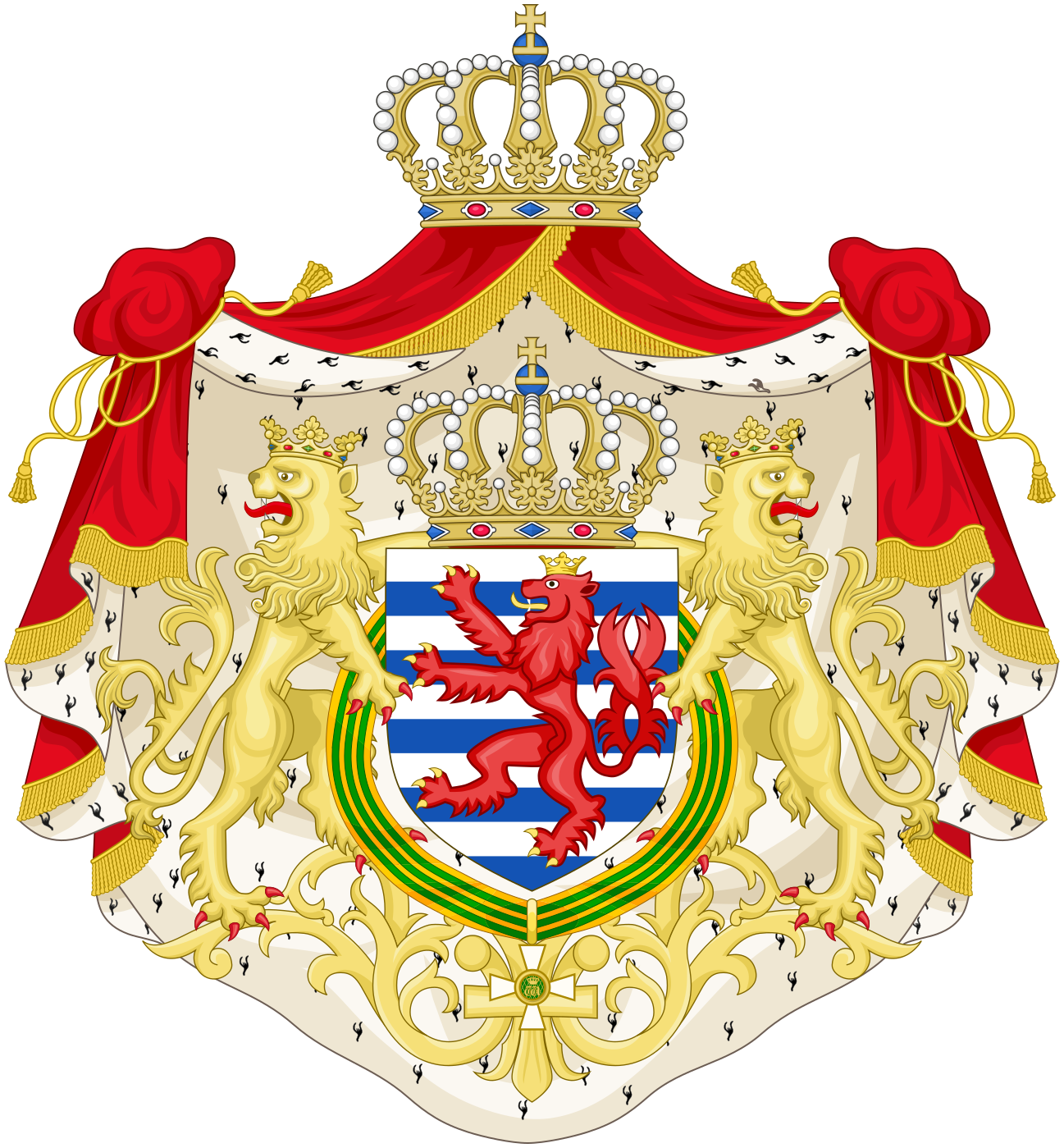
The flag of Luxembourg
Fändel vu Lëtzebuerg · since 1972
 Back to Luxembourg
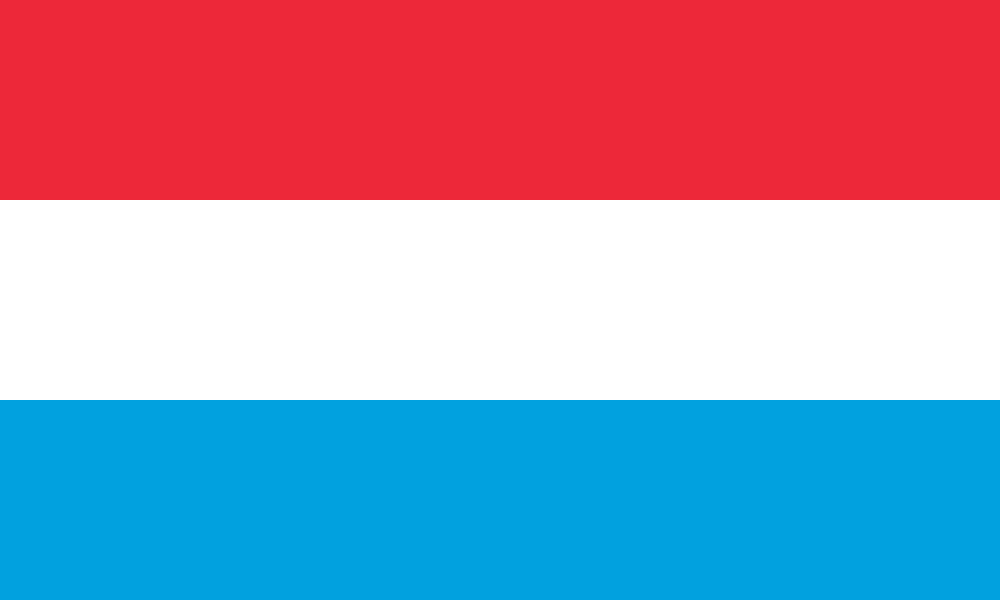
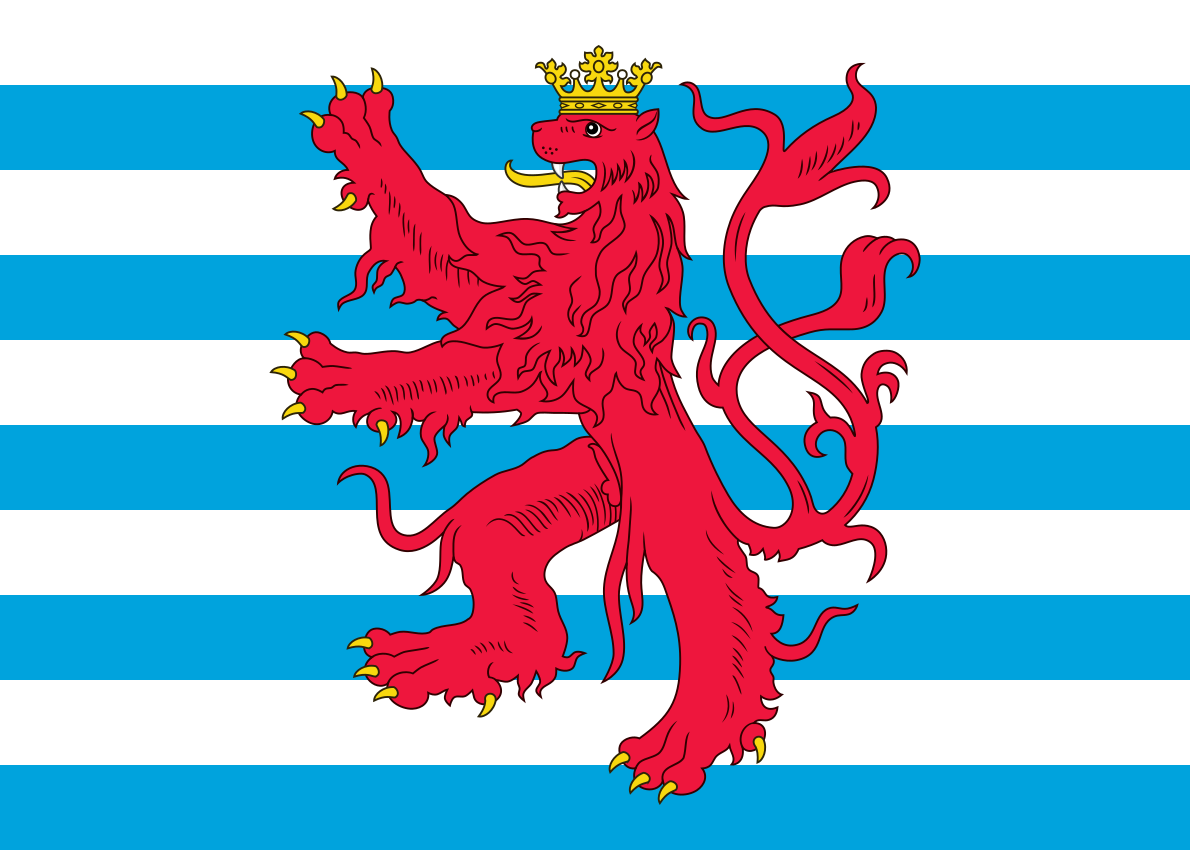
A horizontal tricolour of red, white and light blue, informally called Rout-Wäiss-Blo. The arrangement was fixed in 1845 and written into law only in 1972, and a regulation of 1993 set a bright Pantone blue that is the clearest difference from the flag of the Netherlands. The Roude Léiw, a banner of the arms, is the ensign for ships and aircraft and has twice been proposed as the national flag.
At a glance
- Adopted
- 1972
- Proportion
- 3:5
- Colours
- Earlier flags
- 2
The colours
The colours of the flag of Luxembourg, in the order it has them
- 0133.3%
Red
routTop stripe
- HEX
#ED2939- RGB
237 41 57- CMYK
0 90 85 0- Pantone
032 C- RAL
3018
- 0233.3%
White
wäissMiddle stripe
- HEX
#FFFFFF- RGB
255 255 255- CMYK
0 0 0 0- RAL
9016
- 0333.3%
Light blue
hellbloBottom stripe
- HEX
#00A1DE- RGB
0 161 222- CMYK
85 20 0 0- Pantone
299 C- RAL
5012
No law gives these codes. HEX and RGB are the colour this site draws the flag in; CMYK, Pantone and RAL are the values most often published for it.
Construction
How the flag is drawn
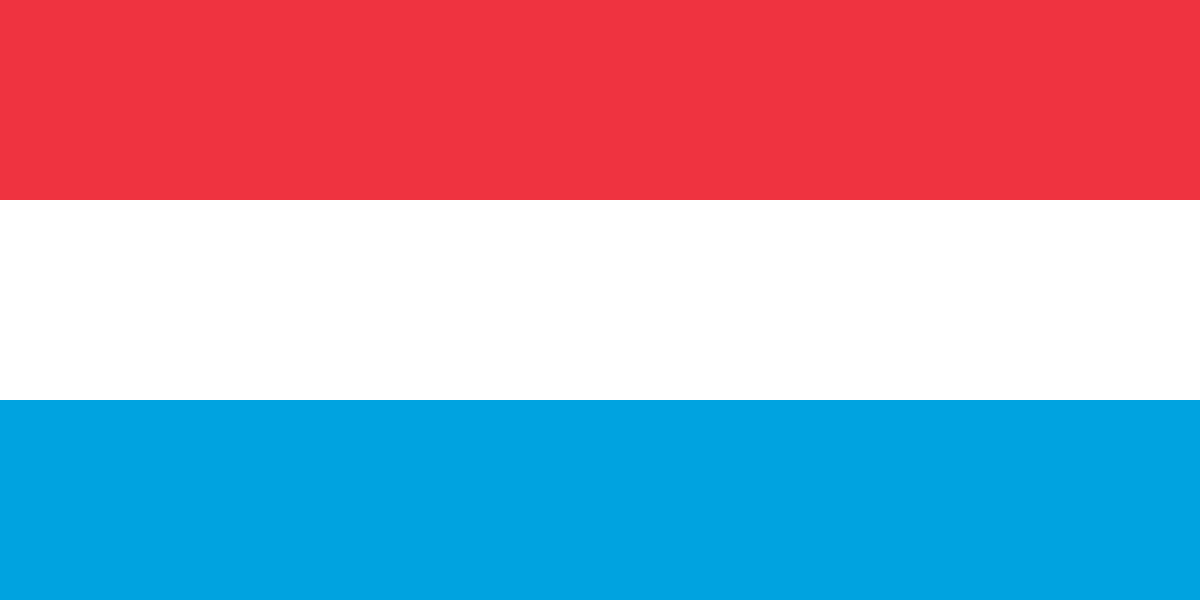
Three horizontal stripes of equal width: red at the top, white in the middle and light blue at the bottom.
- Stripes
- Three, horizontal and of equal width
- Alternative proportion
- 1:2 is also legal. The 3:5 flag is the common one
- Vertical flag
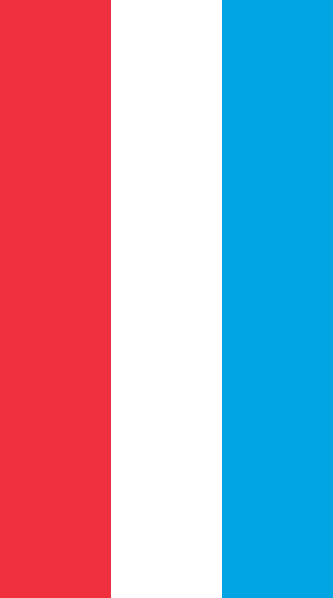
- The horizontal flag turned 90° anticlockwise
Other forms
- Flag at 1:2
- The same three stripes in the longer of the two legal proportions. Rarely seen.
- Vertical flag
- The horizontal flag turned 90° anticlockwise, which puts the red stripe on the left.
- Roude Léiw
- The ensign for ships and aircraft since 1972 and for sea-going ships since the maritime register law of 9 November 1990: ten stripes of white and blue with a red rampant lion, crowned, armed and langued in gold, its forked tail crossed in saltire, at 5:7. On 6 July 2007 the government accepted it as a civil flag on land, in the proportions of the national flag.
Meaning
What each part stands for
- Red, white and blue
- The colours of the arms of the House of Luxembourg: a red lion on a field barred in silver and blue, borne by Count Henry V from 1240. The blue bars are said to have marked that Henry was not the eldest of the House of Limburg
- Light blue
- Chosen lighter than the Dutch blue, and defined as Pantone 299 C in 1993, to set the flag apart from that of the Netherlands
History
How the flag of Luxembourg got here
- 1830
The colours of the arms
1830 → Jun 1845
Flags in the red, white and blue of the arms were first used during the Belgian Revolution, in no fixed arrangement. Until then Luxembourg had no flag of its own and, in personal union with the Netherlands, flew the Dutch flag.
- 1845
The tricolour by circular
12 Jun 1845 → 23 Jun 1972
A circular from the governor fixed the order as red, white and blue in horizontal stripes. No law protected the flag, and the shade of blue was undefined: the German Flaggenbuch of 1941 shows a dark blue stripe.
- 1972

The flag in lawIn use
23 Jun 1972 → today
The law of 23 June 1972 on the national emblems made the tricolour the national flag, and the regulation of 27 July 1993 added its proportions and Pantone colours. Bills of 2006 and 2009 to replace it with the Roude Léiw were not passed, and the second was withdrawn in 2017.
The law
What defines it, and who flies it
- June 1845
Circular Letter of Governor Ignace de la Fontaine
Told district chiefs and mayors that red, white and blue in that order was henceforth the national flag.
- 23 June 1972
Law of 23 June 1972 on the national emblems
The first law on the flag. Also established the ensign for inland shipping and aviation. Published in the Mémorial A-N51 on 16 August 1972; the illustrations annexed to it have no legal force, only the text.
- 27 July 1993
Grand-Ducal Regulation of 27 July 1993
Set the proportions at 3:5 or 1:2 and fixed the colours in Pantone, for the flag and the ensign.
In use
Flown on land as the civil, state and war flag
Flown throughout the country on the Grand Duke's Official Birthday, 23 June, including at the Gëlle Fra memorial in Luxembourg City
Lowered to half-mast for national mourning
Related flags
The flags it is confused with or comes from
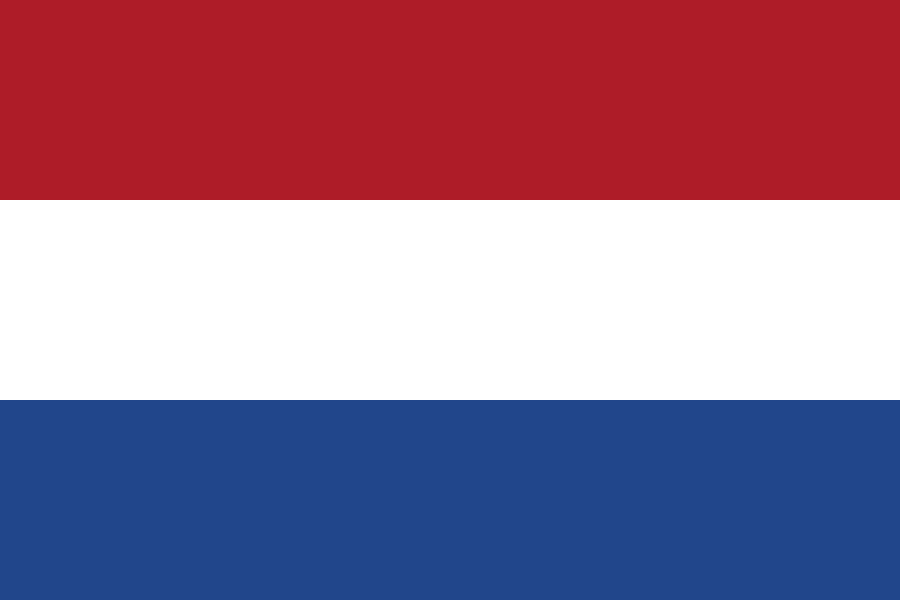 Netherlands
- The same three stripes in the same order. The Dutch flag is 2:3 with a darker red and blue, and the resemblance is the argument made for the Roude Léiw.
Coat of arms
The arms of Luxembourg