The flag of Netherlands
Vlag van Nederland · since 1690
 Back to Netherlands
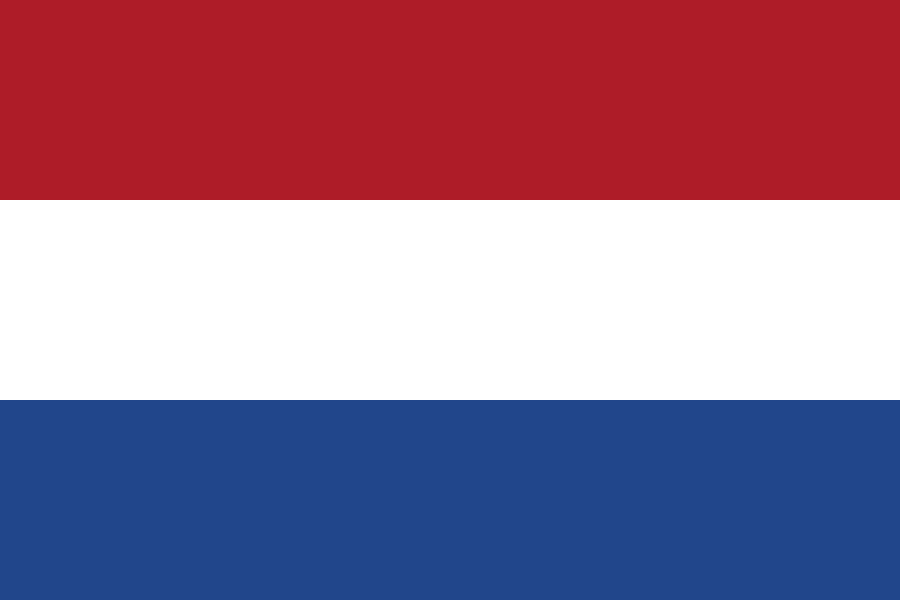
A horizontal tricolour of red, white and blue, in the official terms bright vermilion, bright white and cobalt blue. It grew out of the orange, white and blue Prinsenvlag of the Dutch Revolt, whose top stripe had turned red by the 1660s, and no law has ever defined it: a royal decree of 19 February 1937 confirmed the colours after years of dispute over whether the top stripe should be orange, and a standard of 1958 fixed the shades.
At a glance
- Adopted
- 1937
- Proportion
- 2:3
- Colours
- Earlier flags
- 6
The colours
The colours of the flag of Netherlands, in the order it has them
- 0133.3%
Bright vermilion
helder vermiljoenTop stripe
- HEX
#AE1C28- RGB
174 28 40- CMYK
0 83 78 32- Pantone
186 C- RAL
2002
- 0233.3%
White
helder witMiddle stripe
- HEX
#FFFFFF- RGB
255 255 255- CMYK
0 0 0 0- RAL
9010
- 0333.5%
Cobalt blue
kobaltblauwBottom stripe
- HEX
#21468B- RGB
33 70 139- CMYK
77 46 0 48- Pantone
286 C- RAL
5013
No law gives these codes. HEX and RGB are the colour this site draws the flag in; CMYK, Pantone and RAL are the values most often published for it.
Construction
How the flag is drawn
Three horizontal stripes of equal height: red at the top, white in the middle and blue at the bottom.
- Stripes
- Three, horizontal and of equal height
- Colours
- Red X 18.3, Y 10.0, Z 3.0; blue X 7.5, Y 6.6, Z 25.3 in CIE 1931, as set by NEN 3055. They have no direct Pantone equivalent
Other forms
- Flag with orange pennant
- The flag with an orange pennant above it, the pennant as long as the flag's diagonal or a little longer. Used only on King's Day and the birthdays of members of the royal house; on the deaths of two members it was replaced by a black mourning pennant.
Meaning
What each part stands for
- Red, white and blue
- Their origin is disputed. One account derives them from the arms of the counts of Holland of the Bavarian house, 1354 to 1433, whose treasurer bought red, white and blue velvet for a count's robe in 1409 or 1410; another from the arms of William of Orange at the start of the Revolt
- Orange replaced by red
- The top stripe of the Prinsenvlag became red around 1630 to 1664. Explanations include a change in the dye, the conflict between the States party and the Orangists, and a wish to accommodate England before the First Anglo-Dutch War
- The orange pennant
- Flown above the flag to show attachment to the House of Orange-Nassau, the accepted alternative to an orange stripe
History
How the flag of Netherlands got here
- 1572
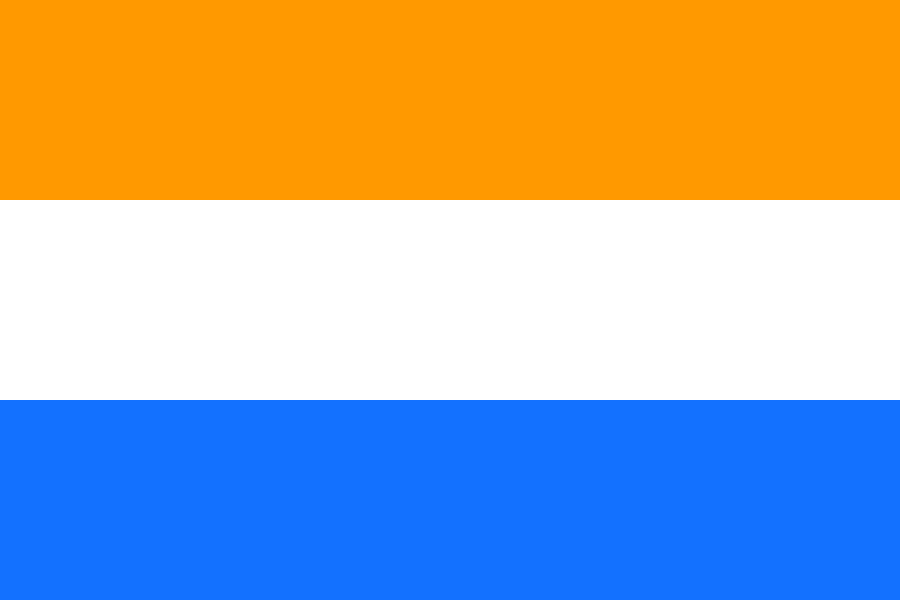
The Prinsenvlag
1572 → 1653
Orange, white and blue after William of Orange. Its forerunner, a many-striped banner in his livery of white and blue with orange, flew at the capture of Den Briel on 1 April 1572, and the Prinsenvlag is first named in June 1572. Flags of three, six and nine stripes existed until the end of the century. The navy sailed under it from 1588 to 1630 and under both flags until 1662; Holland banned it in 1652.
- 1653
The Statenvlag
1653 → 1795
Red, white and blue flags were in use before the Revolt, and merchant ships and the East and West India Companies never gave up the colours. The navy adopted the red-topped flag in 1653 and flew only it from 1663. It was called the Hollandsche vlag until Zeeland objected in 1664, and then the Statenvlag.
- 1796
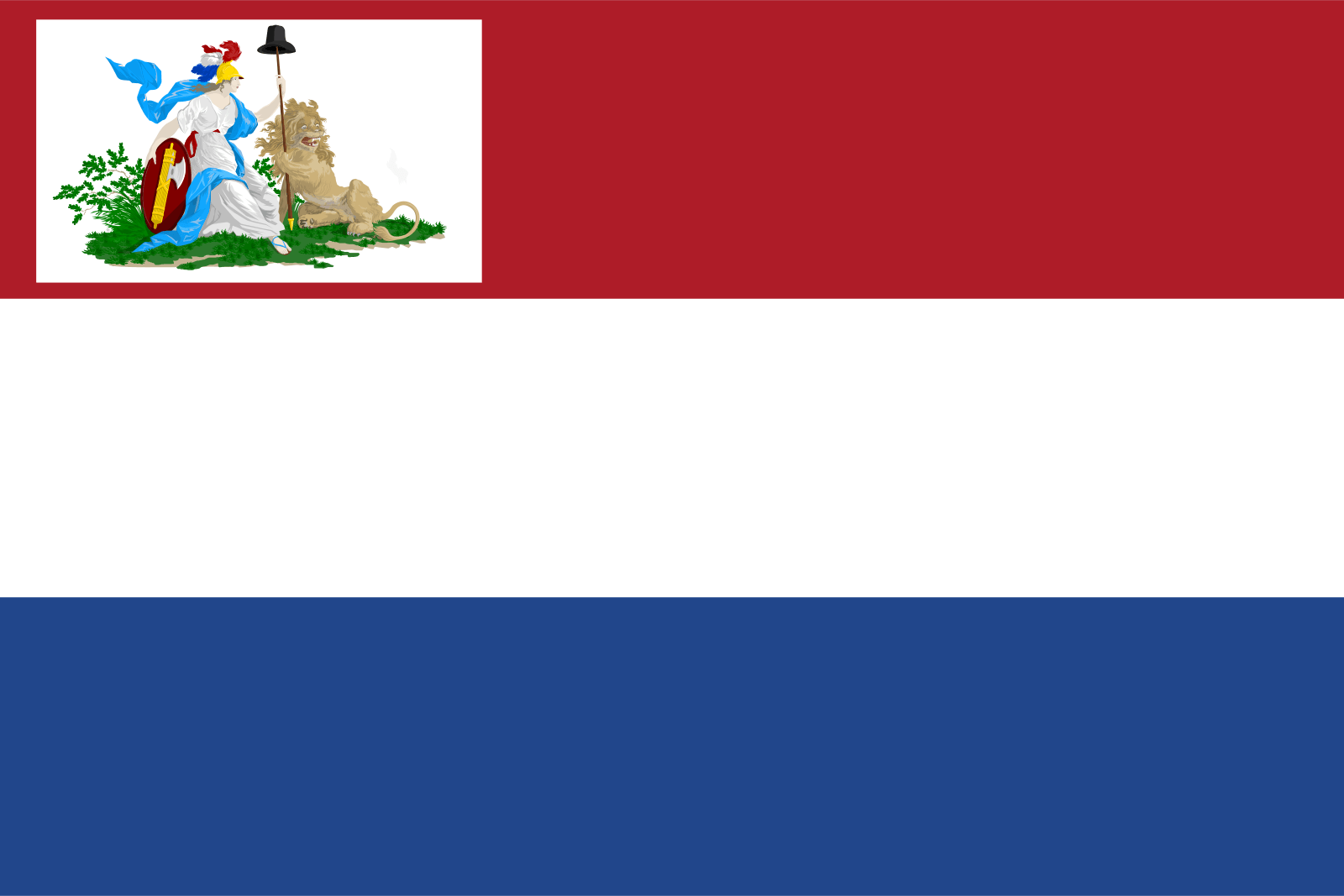
The Batavian Republic
14 Feb 1796 → 1807
A resolution of 14 February 1796 made the old red, white and blue Hollandsche vlag the national flag of the unitary state, following a Holland decree of 9 February 1795. In August 1806 crews of the Texel squadron mutinied rather than sail under the new flag and were calmed only when the Statenvlag was hoisted.
- 1807
The Kingdom of Holland
1807 → 1810
A law of 7 August 1807 kept the colours of the former state flag and removed the jack with the maiden of liberty, lion and fasces. The royal flag bore the royal arms on the white stripe.
- 1810
Part of the French Empire
1810 → 1813
With annexation the country lost its own flag and flew the vertical French tricolour. The Prinsenvlag was suppressed.
- 1813
Red or orange
1813 → 19 Feb 1937
After independence the new state chose red, white and blue, with an orange pennant allowed above it. The Prinsenvlag returned in some towns from around 1830, and from the 1860s to the 1930s a public dispute ran over which flag was the official one.
- 1937
The colours by royal decreeIn use
19 Feb 1937 → today
Royal Decree No. 93 fixed the colours as red, white and blue. During the German occupation the display of flags was increasingly restricted, and a total ban on flags followed on 1 June 1944. The shades were defined in NEN 3055 in November 1958.
The law
What defines it, and who flies it
- 19 February 1937
Royal Decree No. 93
Signed at Zell am See and published in the Staatscourant on 24 February 1937. Fixed the colours of the flag as red, white and blue, to end the dispute with supporters of the Prinsenvlag.
- November 1958
Standard sheet NEN 3055
Defines the three colours as coordinates in the CIE 1931 colour space under standard illuminant C at 45°. NEN 3203 fixed the orange of the pennant the same month.
- 22 December 1980
Flag instruction of the Prime Minister for government buildings
Sets the days and manner of flying the flag from state buildings. Revised several times, most recently on 17 May 2013. Private citizens and companies are asked, not required, to follow it.
In use
Flown as the civil, state and war flag on land and at sea
Flown from state buildings on fixed days, among them 5 May, Veterans Day, 15 August and Kingdom Day, from all buildings or only from the main ones depending on the day
Flown at half-mast from 18:00 to sunset on 4 May, Remembrance Day, and whenever the Prime Minister issues a special instruction
Hoisted at sunrise and lowered at sunset unless lit on both sides; in a row of two it takes the place of honour on the right, with the back to the flags, and in a row of three the centre
Related flags
The flags it is confused with or comes from
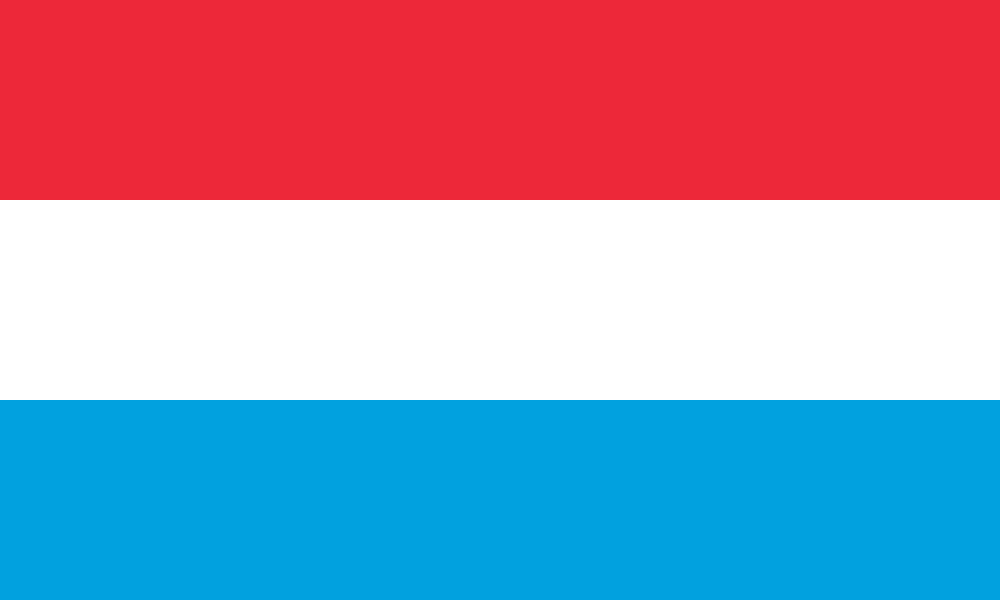 Luxembourg
- The same colours in the same order, 3:5 or 1:2 with lighter red and blue. The two flags are held to have separate origins.
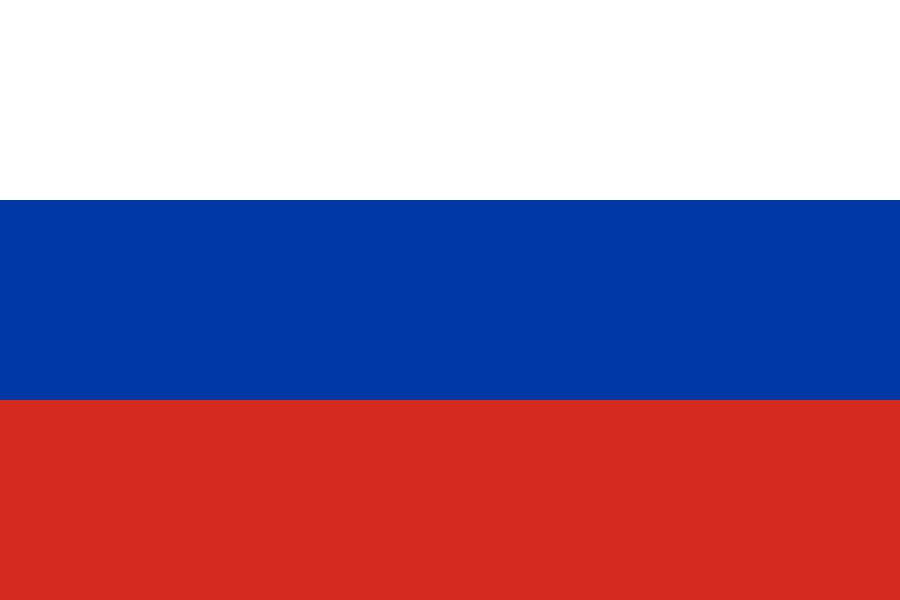 Russia
- The same three colours in a different order. One theory has Peter the Great taking the idea from the Netherlands; there is strong evidence the Russian flag was in use before his visit.
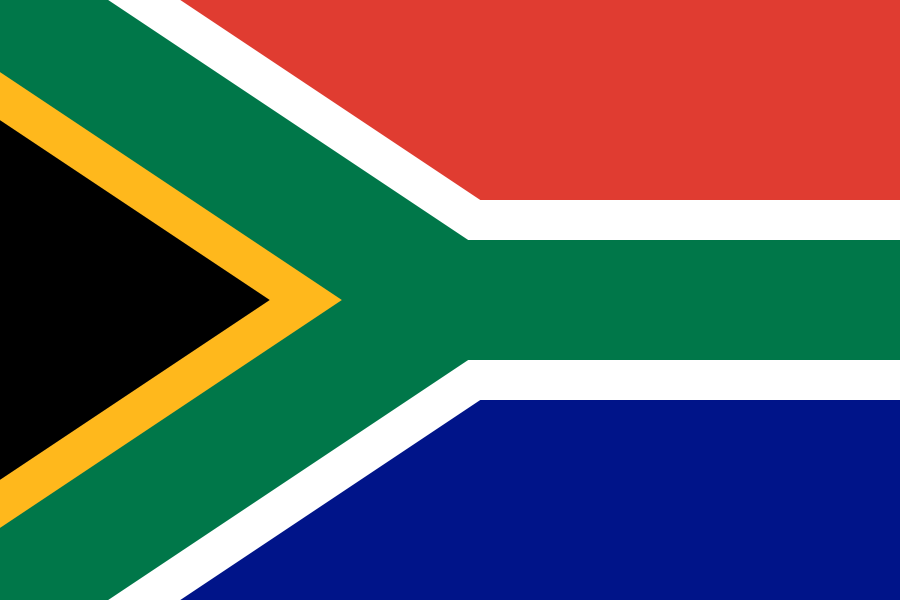 South Africa
- The national flag of South Africa until 1994 was based on the Dutch flag, as were those of the Transvaal, the Orange Free State and Natalia.
Coat of arms
The arms of Netherlands