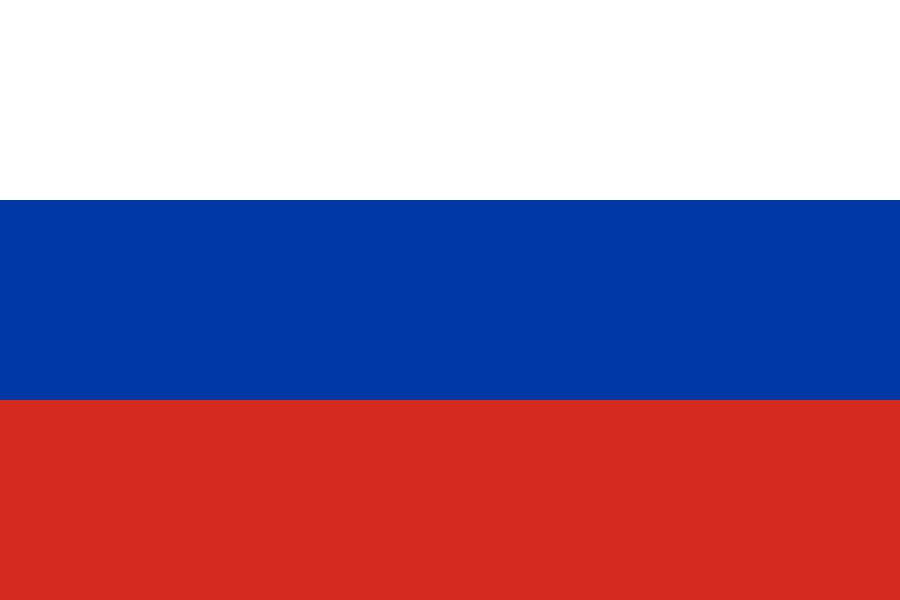
The flag of Russia
Государственный флаг Российской Федерации · since 1993
 Back to Russia
A horizontal tricolour of white, blue and red. Peter the Great flew it at sea from 1693 and made it the flag of Russian merchant ships in 1705; it became the national flag only in 1896, after almost four decades in which the state flew black, yellow and white. Banned after 1917, it was restored after the August coup of 1991, and the 2:3 proportion followed in 1993.
At a glance
- Adopted
- 1993
- Proportion
- 2:3
- First hoisted
- 1991
- Colours
- Earlier flags
- 8
- Designer
- 1
The colours
The colours of the flag of Russia, in the order it has them
- 0133.4%
White
белыйTop stripe
- HEX
#FFFFFF- RGB
255 255 255- CMYK
0 0 0 1- RAL
9016
- 0233.2%
Blue
синийMiddle stripe
- HEX
#0039A6- RGB
0 57 166- CMYK
100 100 0 1- Pantone
072 C- RAL
5005
- 0333.4%
Red
красныйBottom stripe
- HEX
#D52B1E- RGB
213 43 30- CMYK
0 100 100 1- Pantone
485 C- RAL
3028
No law gives these codes. HEX and RGB are the colour this site draws the flag in; CMYK, Pantone and RAL are the values most often published for it.
Construction
How the flag is drawn
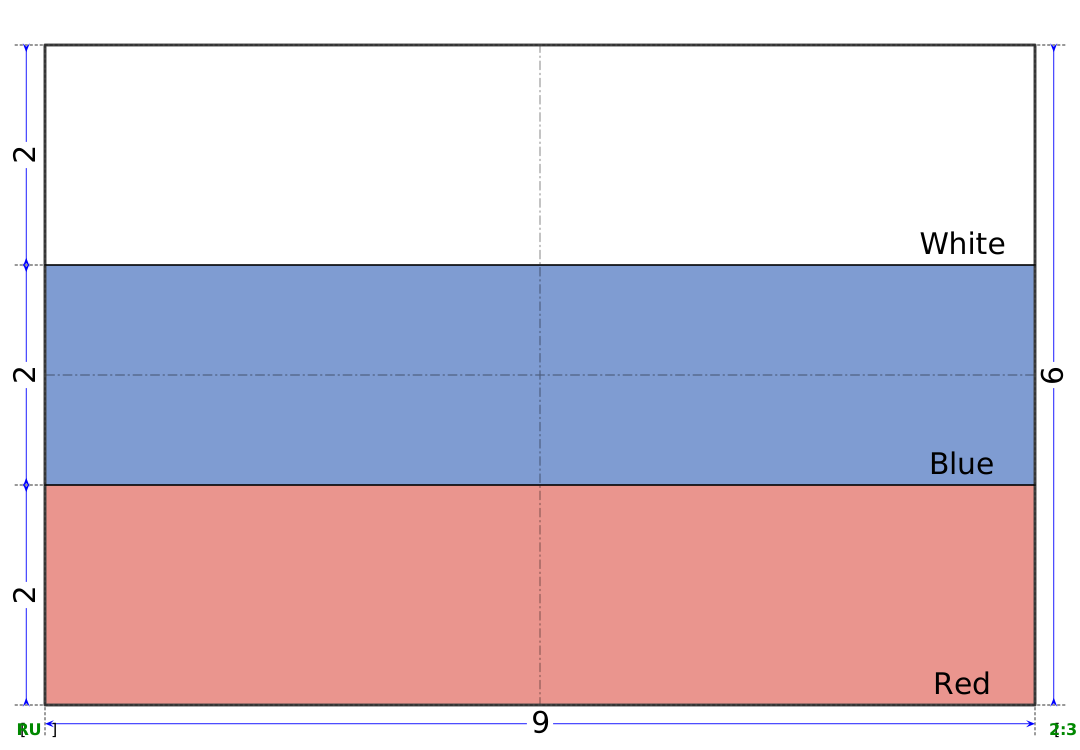
Three horizontal stripes of equal width, white over blue over red.
- Stripes
- Three, horizontal, of equal width
- Shades
- Not set by the law. The national standard of 2023 recommends them
Other forms
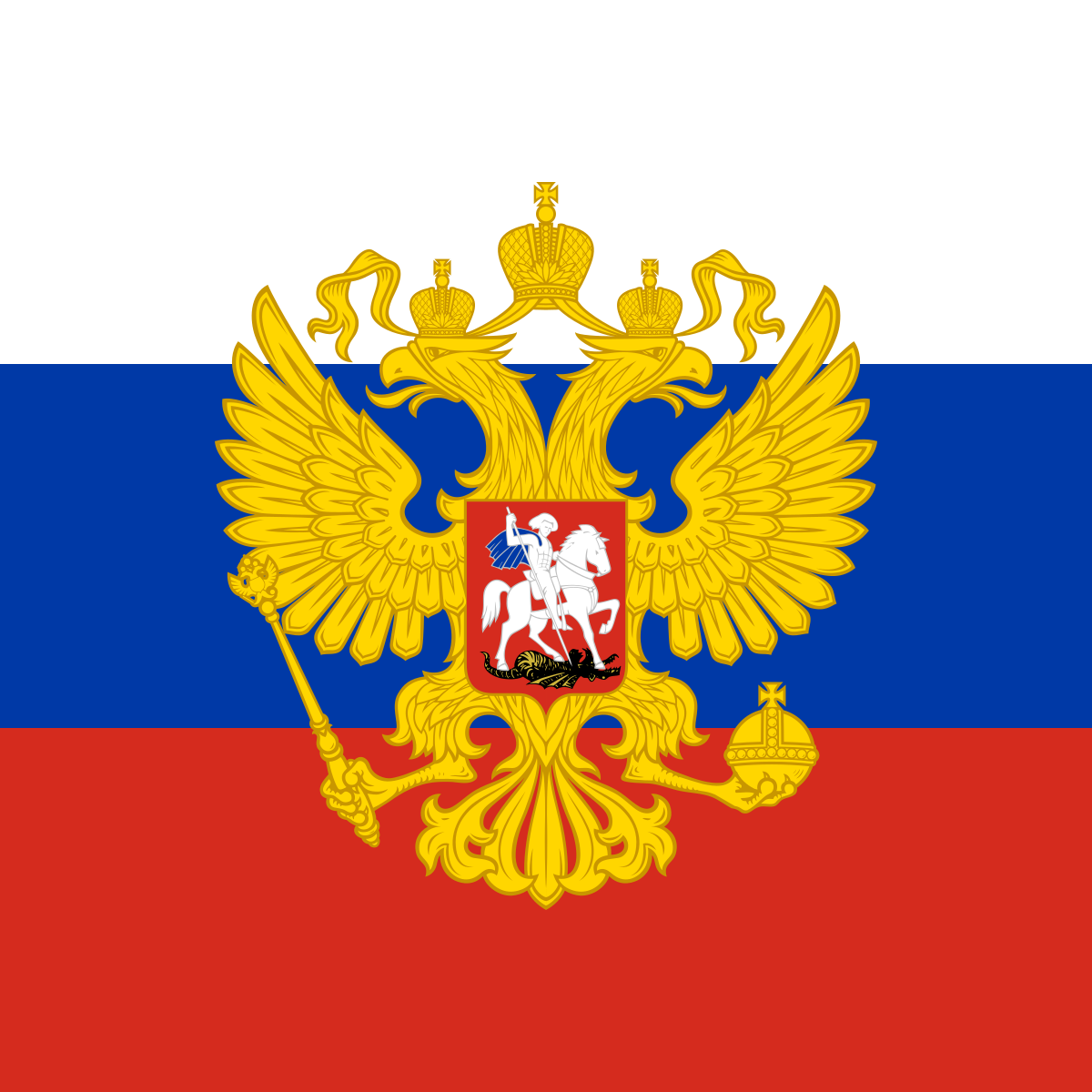
- Presidential standard
- Introduced by Decree No. 319 of 15 February 1994: the tricolour made square, with the state arms, the double-headed eagle without its shield, in the centre, and a gold fringe.
Meaning
What each part stands for
- White, blue and red
- No official interpretation exists. Under Alexander III the reading was white for nobility and frankness, blue for faithfulness and honesty, red for courage, generosity and love
- Great, White and Little Russia
- A common unofficial reading: red for Great Russia, white for White Russia, blue for Little Russia
- The tricolour as a model
- The colours inspired the Pan-Slavic colours chosen at the Prague Slavic Congress of 1848, and through them the flags of Slovakia, Slovenia and Serbia
Who drew it
- Peter the Great
- Introduced the white, blue and red tricolour at sea in 1693 and made it the merchant flag in 1705
History
How the flag of Russia got here
- 1693
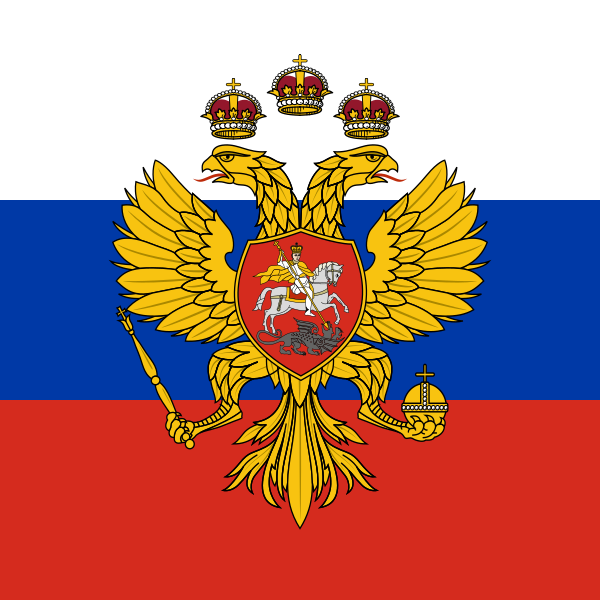
Flag of the Tsar of Muscovy
6 Aug 1693 → 1705
White, blue and red stripes with a golden double-headed eagle, first raised on the yacht Saint Peter in the White Sea. The original, 4.6 × 4.9 m, is the oldest surviving Russian flag and is kept in the Central Naval Museum in Saint Petersburg.
- 1705
The merchant flag
31 Jan 1705 → 23 Jun 1858
Peter the Great's ukaz made the white, blue and red tricolour the flag of all Russian merchant vessels. It was used mostly at sea until the 19th century.
- 1858
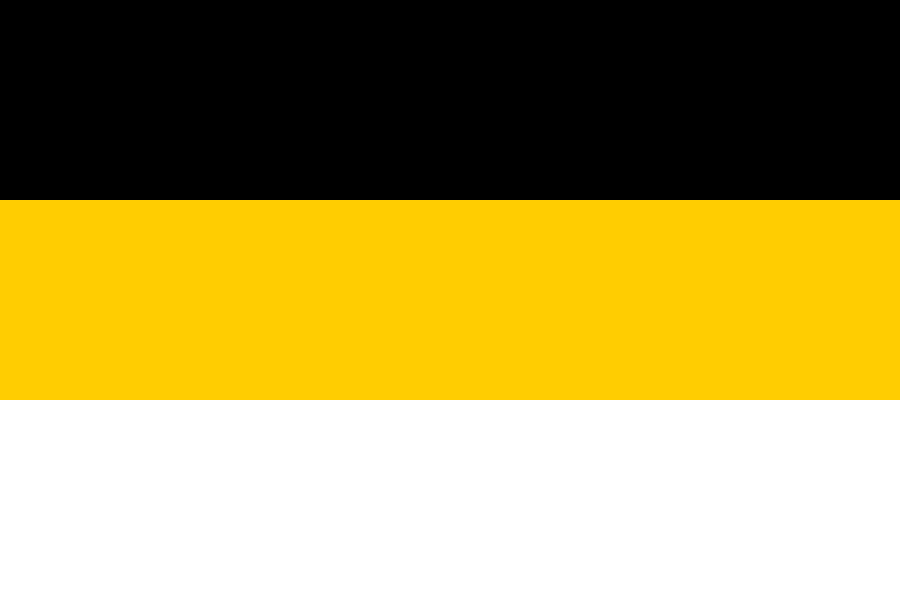
Black, yellow and white
23 Jun 1858 → 29 Apr 1896
Alexander II decreed the Romanov dynastic colours the state flag. Government buildings flew them while merchant ships and private citizens kept the tricolour, which was allowed on land for festivities from 1883.
- 1896
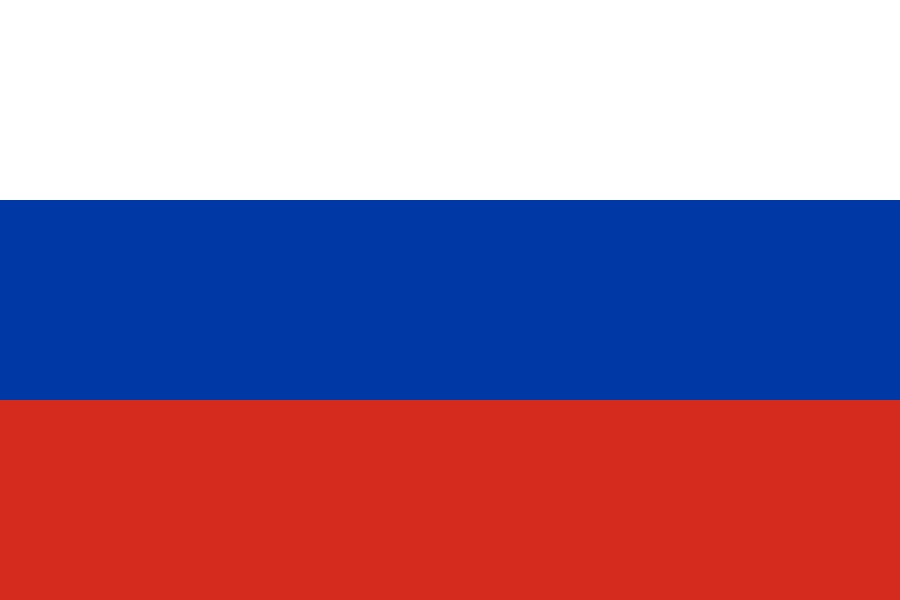
The national flag
29 Apr 1896 → 1917
Before the coronation of Nicholas II a commission found the tricolour to be the historical national flag, and an imperial order made it the sole one. The Provisional Government kept it until the October Revolution.
- 1918
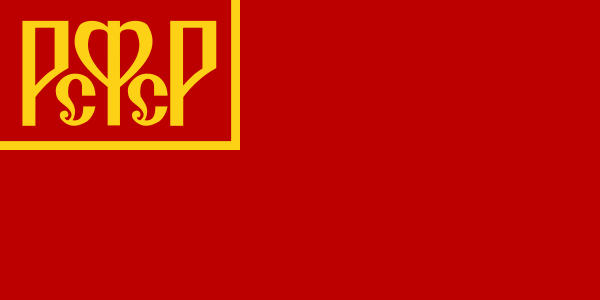
RSFSR
13 Apr 1918 → 1937
A red flag with the name of the republic, from June 1918 as the gold letters RSFSR in the upper corner, drawn by Sergey Chekhonin. The White movement kept flying the tricolour.
- 1937
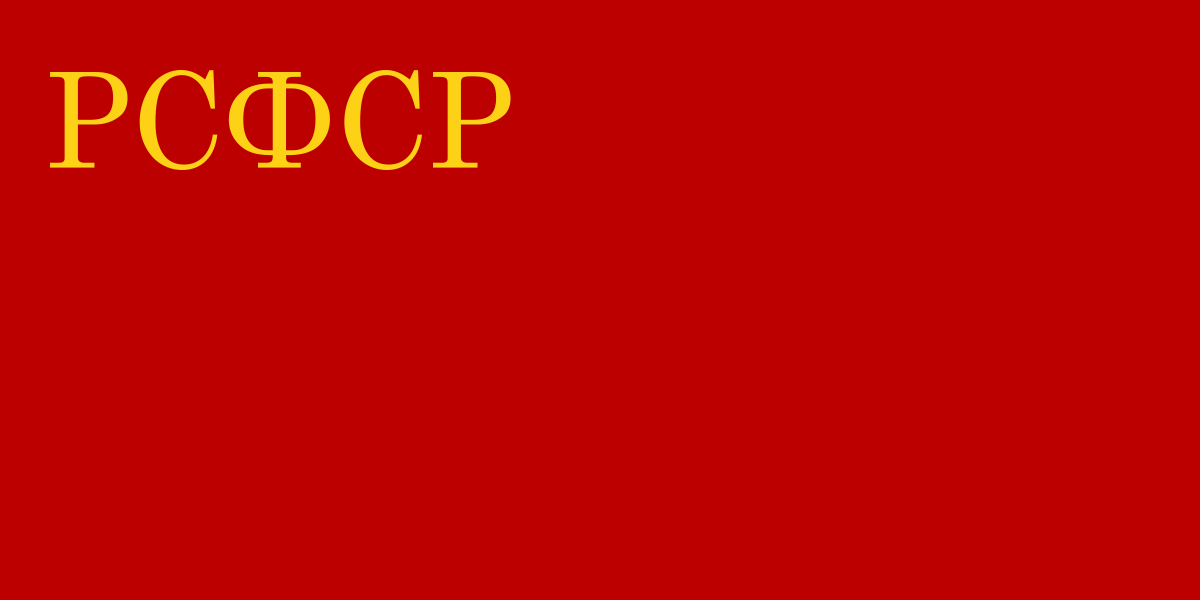
RSFSR, 1937
1937 → 1954
The red flag with the abbreviation in the canton in a new form.
- 1954
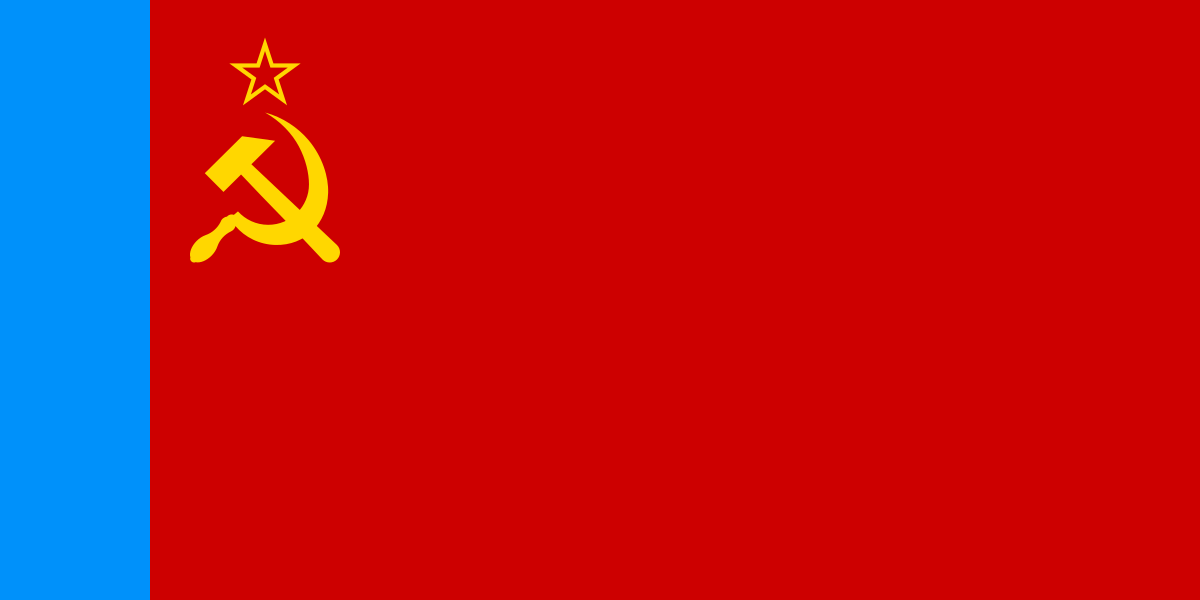
RSFSR, 1954
Jan 1954 → 22 Aug 1991
The Soviet flag with a light blue stripe along the hoist, the change that set the Russian republic apart.
- 1991
The tricolour restored
22 Aug 1991 → 11 Dec 1993
Adopted after the August coup, in the proportion 1:2 and lighter shades. It replaced the Soviet flag over the Kremlin at 19:45 on 25 December 1991, and is still the version on vehicle number plates.
- 1993
The flag of the Russian FederationIn use
11 Dec 1993 → today
Decree No. 2126 changed the proportion to 2:3, as before the revolution, and darker shades came into use. The Federal Constitutional Law of 25 December 2000 confirmed it.
The law
What defines it, and who flies it
- 22 August 1991
Resolution of the Supreme Soviet of the RSFSR No. 1627/I-I
Declared the historical flag of white, azure and scarlet stripes the official national flag until a law set new state symbols.
- 1 November 1991
Constitution of the RSFSR of 1978, Article 181 as amended
Made the white, azure and scarlet flag the state flag in the proportion 1:2. Passed by 750 of the 865 deputies voting.
- 11 December 1993
Presidential Decree No. 2126 On the State Flag of the Russian Federation
Described the flag as white, blue and red in equal stripes and changed the proportion to 2:3. Set no shades.
- 25 December 2000
Federal Constitutional Law No. 1-FKZ On the State Flag of the Russian Federation
Repeats the 1993 description and sets the rules for the flag's use. In force from 27 December 2000. It does not set the shades.
- 1 February 2024
National standard GOST R 51130-2023
The general technical conditions for the flag, with recommended shades in Pantone and other systems.
In use
May be raised by companies and organisations at their events, at family celebrations, and by individuals on their balconies or at their dachas
Flown on the left when hoisted with one regional flag, in the centre of an odd number and left of centre of an even number, and never smaller or lower than a regional flag
May not serve as the heraldic base of a regional flag or as an element of a commercial organisation's logo
Desecrating the flag is an offence under Article 329 of the Criminal Code, punishable by up to one year in prison
National Flag Day is 22 August, for the restoration of the tricolour in 1991
Related flags
The flags it is confused with or comes from
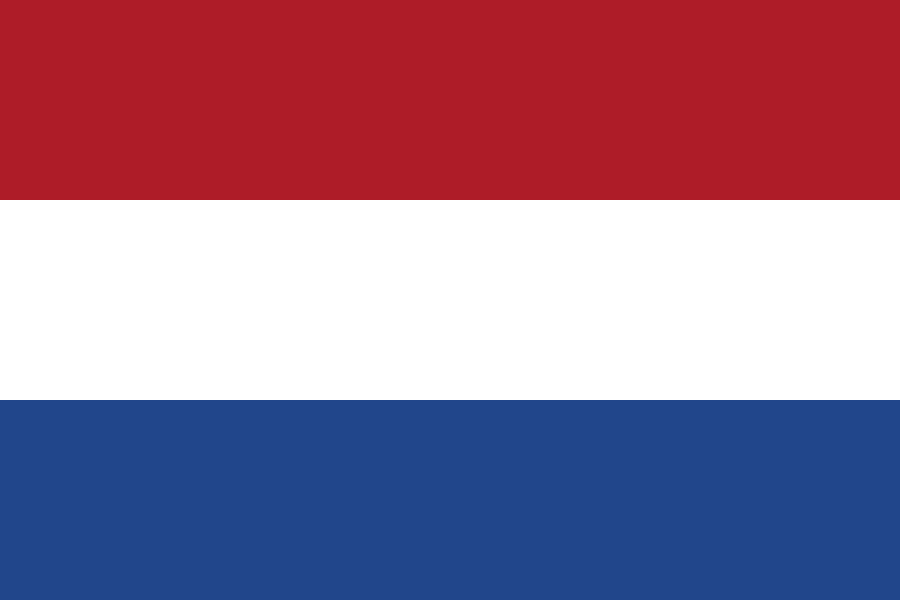 Netherlands
- Two accounts trace the tricolour to the Dutch flag, which Peter the Great is said to have reordered.
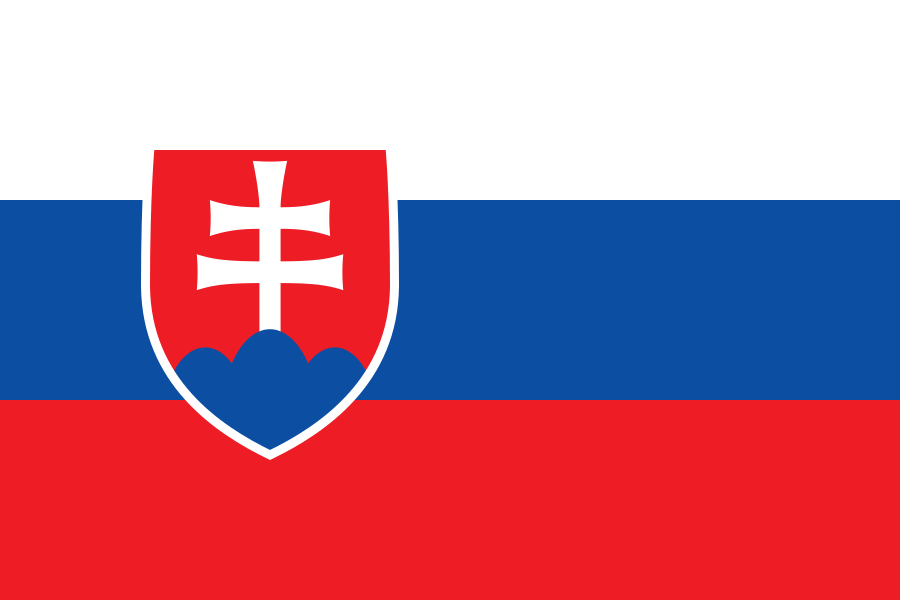 Slovakia
- White, blue and red, one of the Slavic flags whose colours trace to the Russian tricolour through the Prague Slavic Congress of 1848.
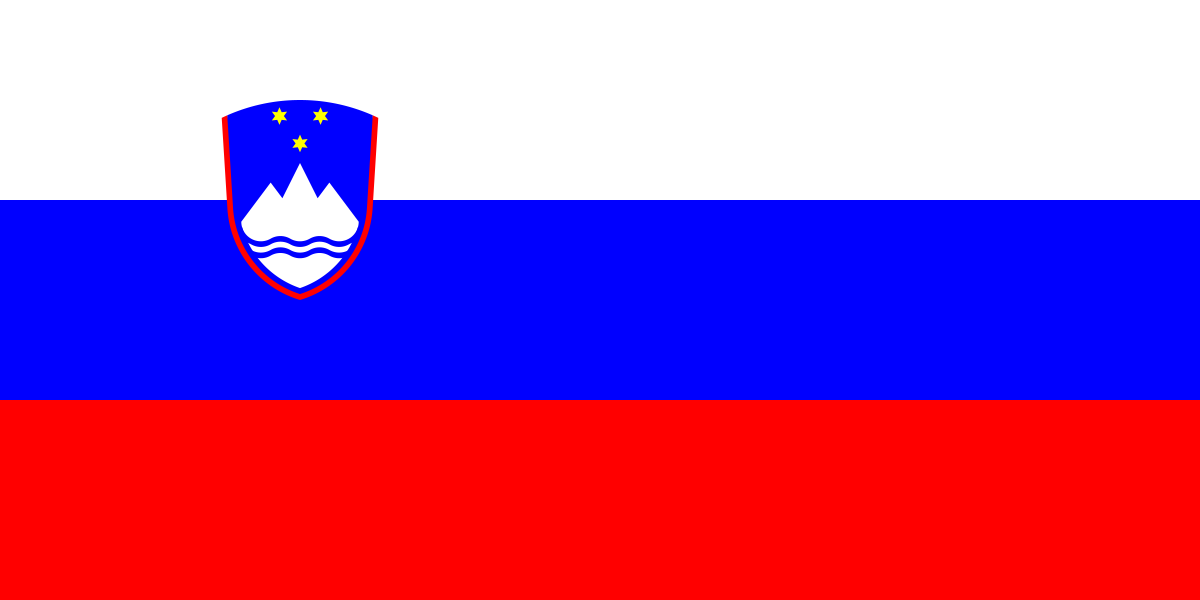 Slovenia
- White, blue and red with the arms, one of the Slavic flags whose colours trace to the Russian tricolour.
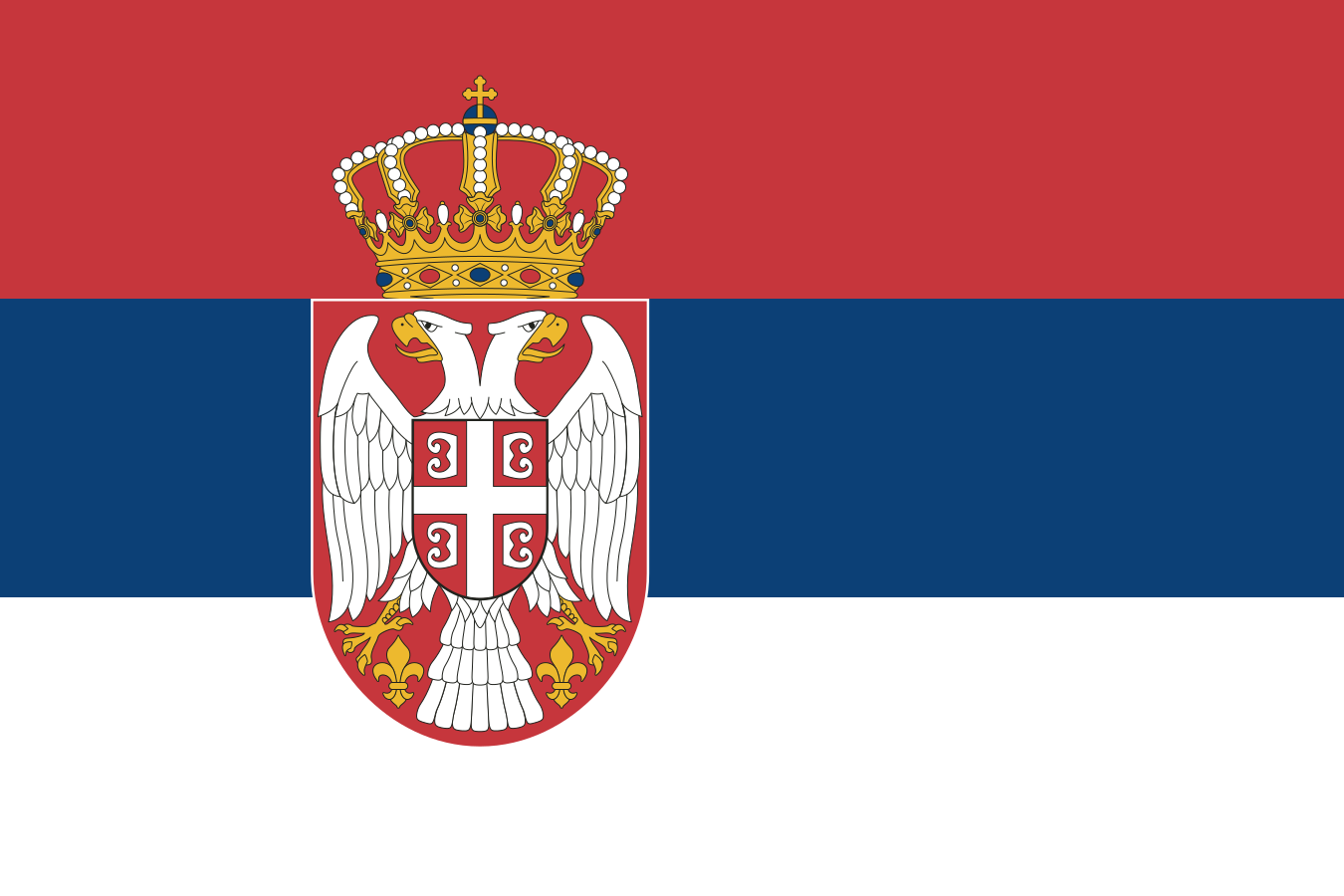 Serbia
- Red, blue and white, one of the Slavic flags whose colours trace to the Russian tricolour.
Coat of arms
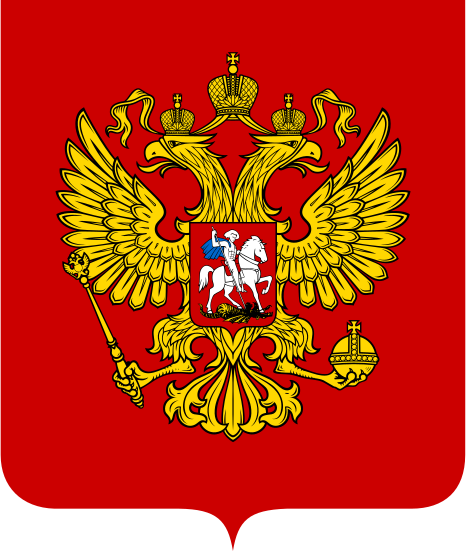
The arms of Russia