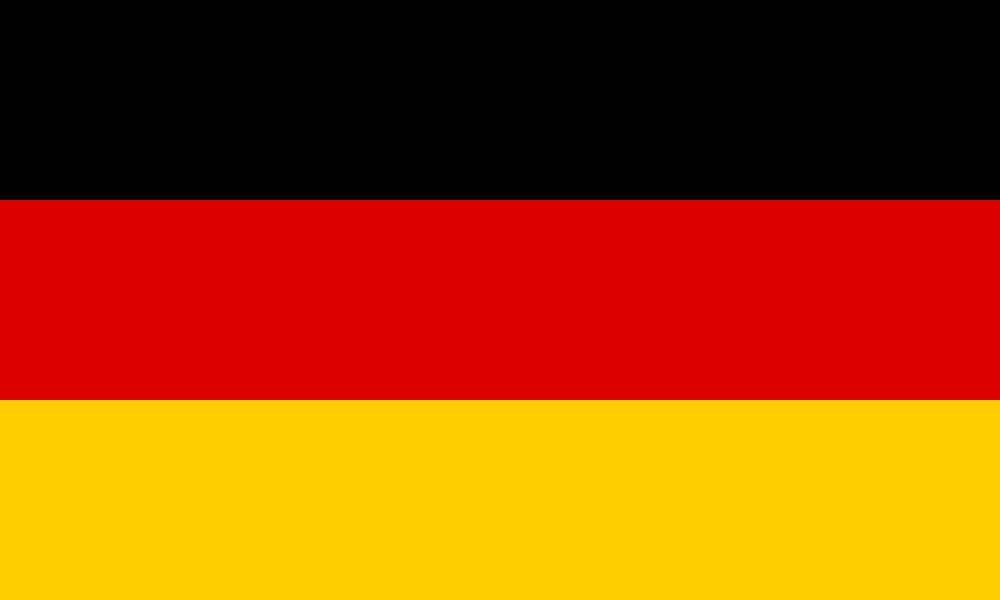
The flag of Germany
Bundesflagge · since 1949
 Back to Germany
A horizontal tricolour of black, red and gold. The colours belonged to the liberal and national movement of the 1830s and 1848, were the flag of the Weimar Republic, and were set aside twice for black, white and red, in 1867 and in 1933. The Basic Law restored them in 1949, and since 3 October 1990 the flag has been that of reunified Germany.
At a glance
- Adopted
- 1949
- Proportion
- 3:5
- Colours
- Earlier flags
- 13
The colours
The colours of the flag of Germany, in the order it has them
- 0133.3%
Black
SchwarzTop stripe
- HEX
#000000- RGB
0 0 0- CMYK
0 0 0 100- Pantone
Black- RAL
9017
- 0233.3%
Red
RotMiddle stripe
- HEX
#DD0000- RGB
221 0 0- CMYK
0 100 100 0- Pantone
485- RAL
3020
- 0333.3%
Gold
GoldBottom stripe
- HEX
#FFCE00- RGB
255 206 0- CMYK
0 12 100 5- Pantone
7405- RAL
1028
No law gives these codes. HEX and RGB are the colour this site draws the flag in; CMYK, Pantone and RAL are the values most often published for it.
Construction
How the flag is drawn
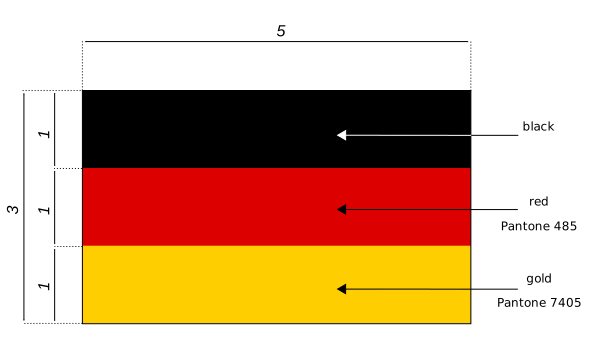
Three horizontal stripes of equal height, black over red over gold.
- Stripes
- Three, of equal size: black at the top, red in the middle, gold at the bottom
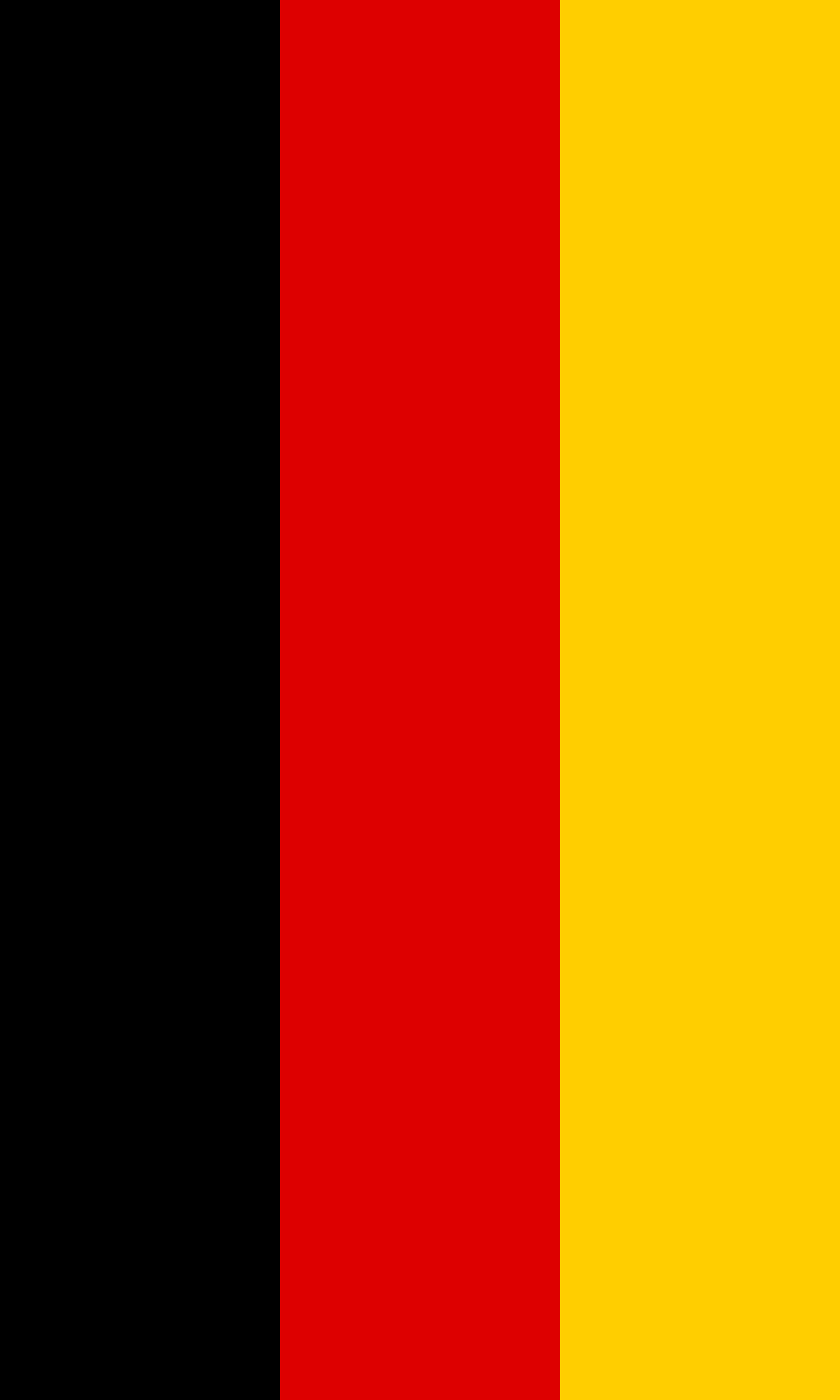
- Banner
- Three vertical stripes of equal width, black on the side next to the mast, red in the middle, gold on the far side
- Banner proportion
- Not fixed; 5:2 is the most common
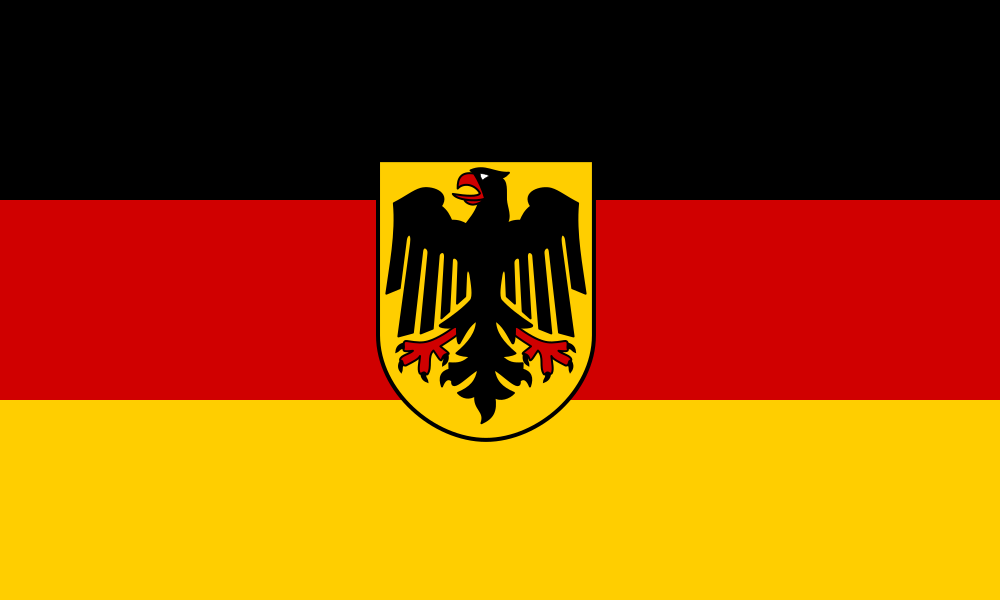
- Federal shield on the service flag
- Shifted slightly towards the mast, reaching up to one fifth into the black and the gold stripes, the eagle facing the mast
Other forms
- Service flag of the federal authorities
- The tricolour with the federal shield, the eagle on gold with a rounded base, set slightly towards the mast. Introduced in 1950, flown by federal authorities and as the war flag on land; use by anyone else can be fined.
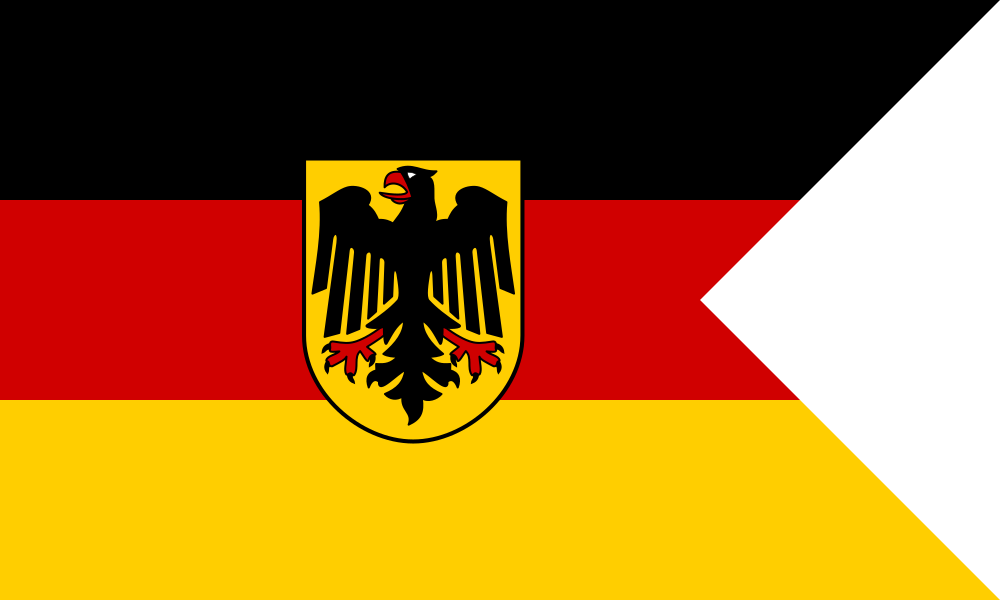
- Naval ensign
- The service flag ending in a swallowtail, introduced on 25 May 1956 and flown by every warship of the German Navy and its boats.
- Banner
- The stripes turned vertical and hung from a crossbar, black on the left as seen by the viewer. Legally set out in 1996, though in use long before.
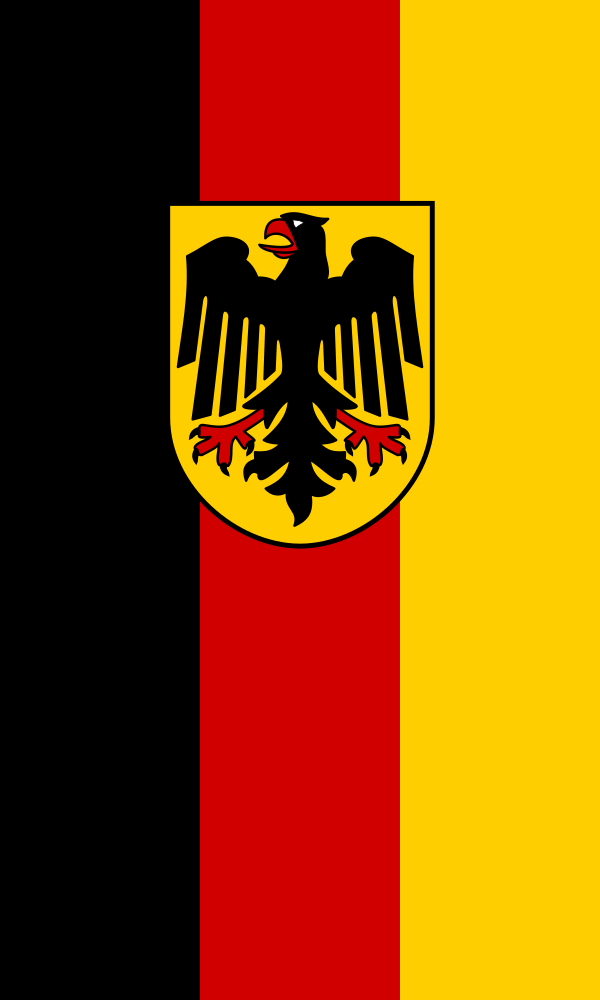
- Service banner
- The banner with the federal shield parallel to the stripes, the eagle turned towards the black stripe.
Meaning
What each part stands for
- Black, red and gold
- Traced to the uniforms of the Lützow Free Corps in the wars against Napoleon: black cloth, red facings and gold buttons. A saying of those wars reads them as out of the blackness of servitude, through bloody battles, to the golden light of freedom
- The same colours in the Holy Roman Empire
- The imperial banner showed a black eagle with red beak and claws on gold. The German public long believed, wrongly, that black, red and gold were the colours of the old empire, and that belief gave them much of their national meaning
- The tricolour as a whole
- A symbol of national unity and civil freedom since the Hambach Festival of 1832 and the revolution of 1848 and 1849
- Gold rather than yellow
- The law says gold. In 1951 the Federal Court of Justice ruled that calling the colours black, red and yellow had become a slander on the symbols of the state
History
How the flag of Germany got here
- 1778
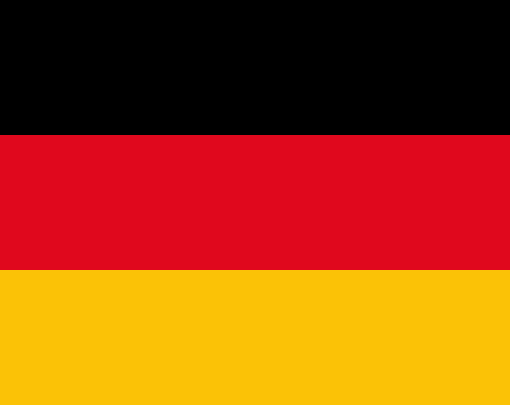
Reuss-Greiz
1778 → 1918
The Principality of Reuss-Greiz flew a black, red and gold tricolour from 1778, close to 4:5 in proportion, the first appearance of the colours in their modern order in a German state.
- 1815
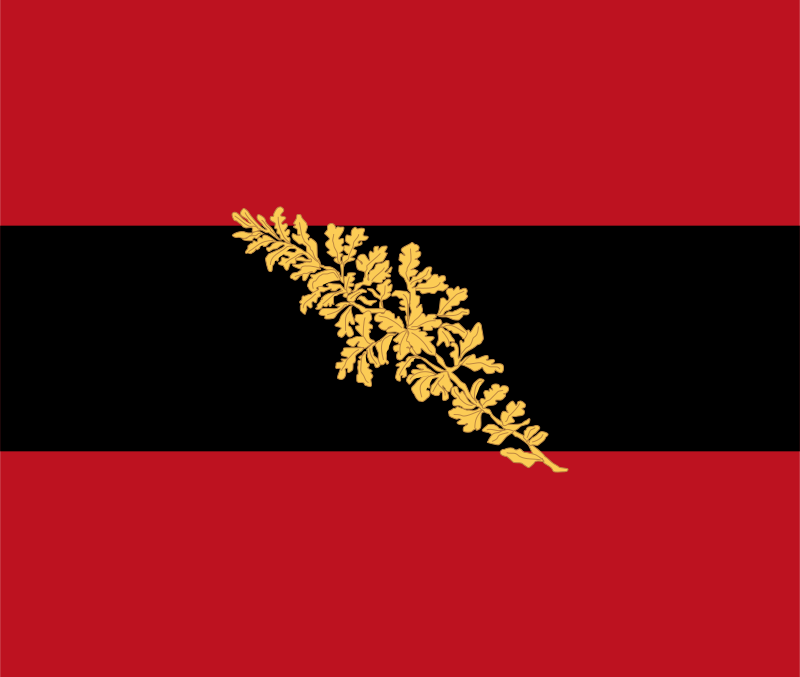
The Jena students' flag
12 Jun 1815 → 1819
Veterans of the Lützow Free Corps founded the Urburschenschaft in Jena and carried red, black and red, with gold fringes and a gold oak branch on the black, to the Wartburg Festival of 1817. The Carlsbad Decrees of 1819 banned the student leagues.
- 1832
Hambach
May 1832 → 9 Mar 1848
About 30,000 people gathered at the Hambach Festival for unity and civil rights, and a black, red and gold tricolour was carried there for the first time. The flag flown from the castle bears the words Deutschlands Wiedergeburt on its red stripe.
- 1848
The flag of 1848
9 Mar 1848 → 1852
The Federal Diet of the German Confederation adopted black, red and gold on 9 March 1848, and on 13 November 1848 the Frankfurt National Assembly passed a law making them the war and merchant flag. The fleet's war ensign lasted until 1852. The decision of March 1848 was never revoked, but after the revolution was put down in 1849 the colours were hardly used in public.
- 1867
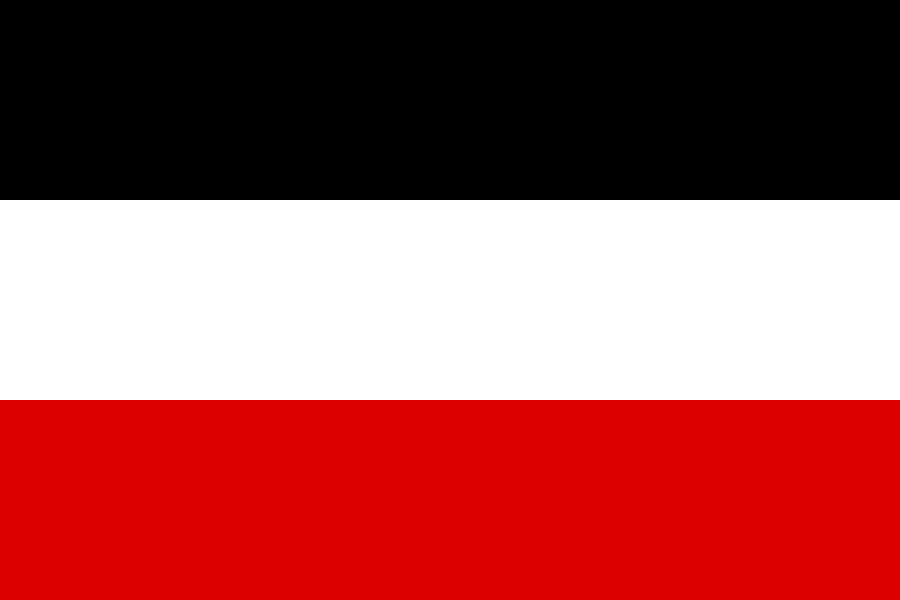
Black, white and red
1 Jul 1867 → 1919
The constitution of the North German Confederation made a black, white and red tricolour the war and merchant flag, joining the black and white of Prussia to the red and white of the Hanseatic cities. The German Empire kept it from 1871, and an ordinance of 1892 made it the national flag.
- 1919
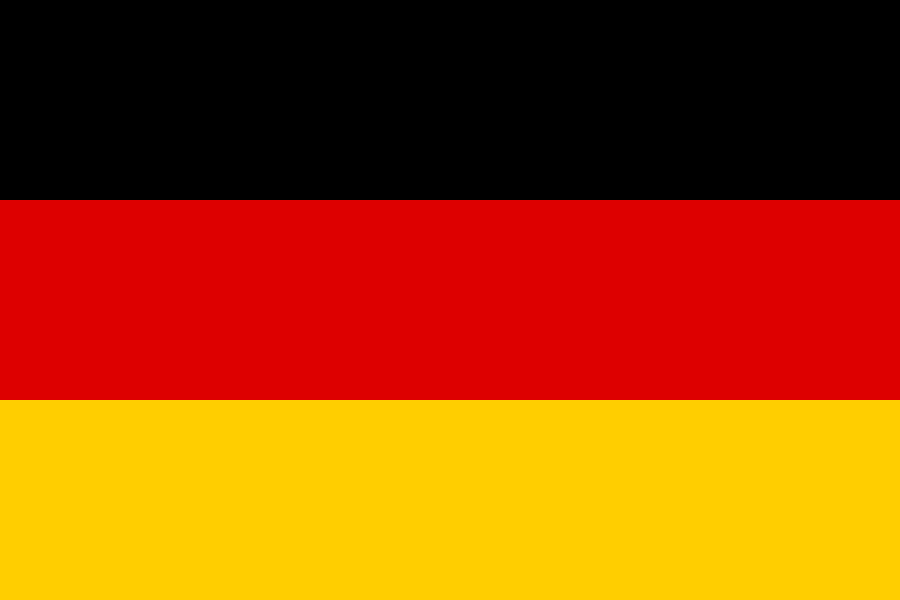
The Weimar Republic
3 Jul 1919 → 12 Mar 1933
The National Assembly voted 211 to 90 for black, red and gold, in a proportion of 2:3. As a compromise the merchant flag stayed black, white and red with the new colours in the canton, and the choice was disputed well into the 1920s.
- 1933

Two flags
12 Mar 1933 → 15 Sept 1935
A decree banned black, red and gold and ordered the black, white and red tricolour, now 3:5, to be flown together with the flag of the Nazi Party.
- 1935
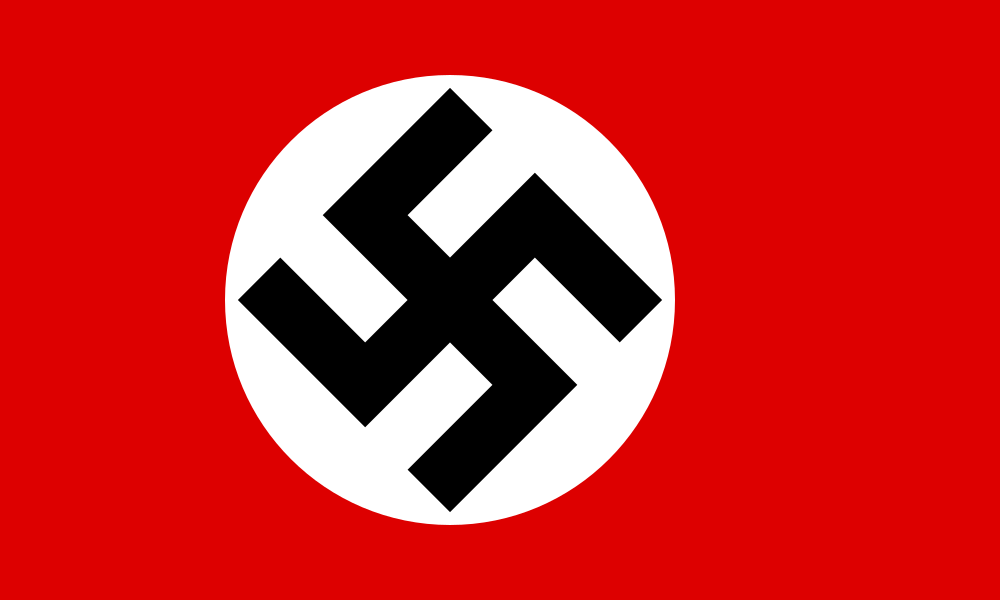
The swastika flag
15 Sept 1935 → 1945
The Reich Flag Law made the party flag the sole national flag. The Allied Control Council abolished it in 1945, and its display is forbidden in Germany.
- 1946
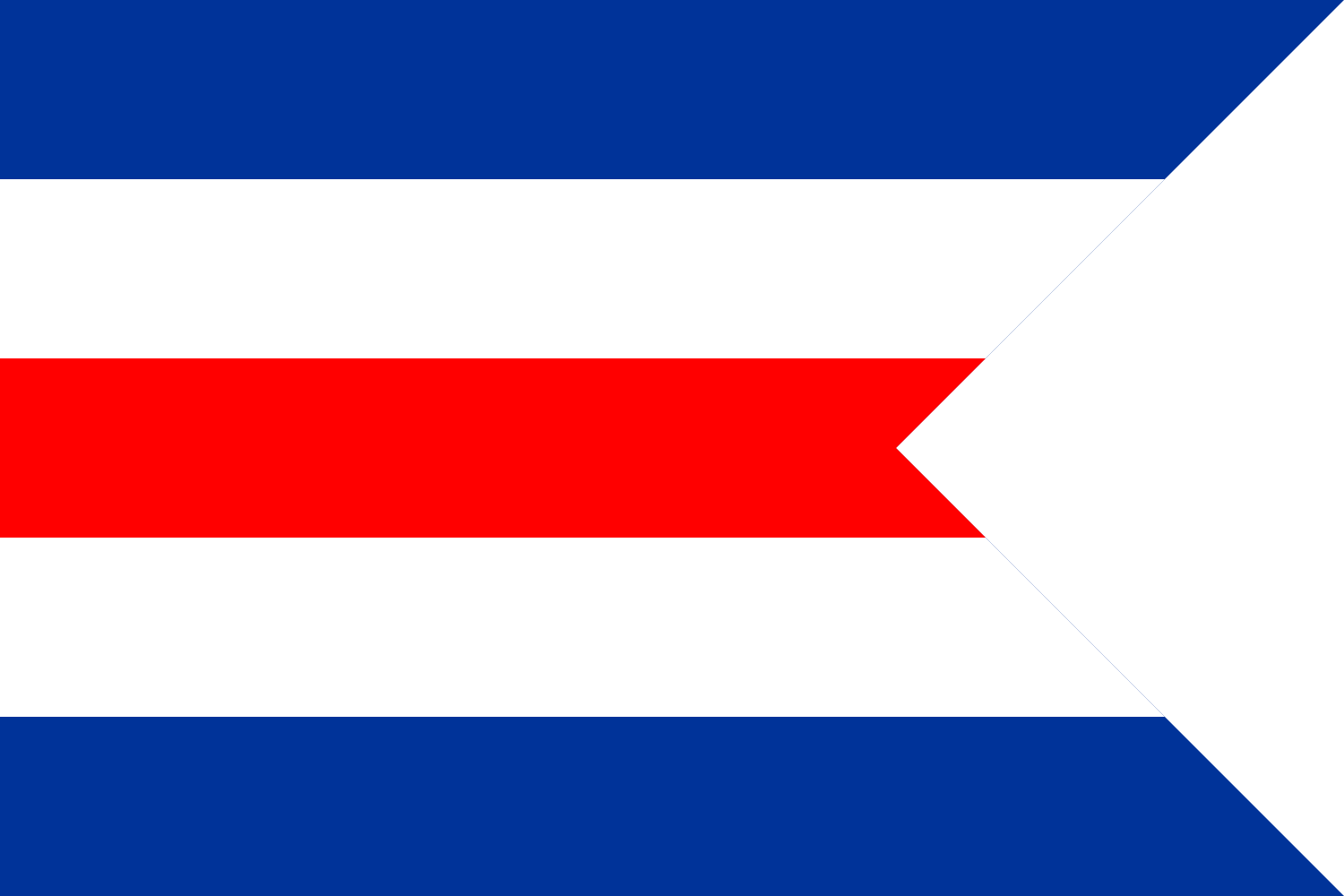
The C pennant
12 Nov 1946 → 1949
With no German state, German merchant ships flew the signal pennant for the letter C with a swallowtail cut, by order of the Allied Control Council. It could not be dipped in salute.
- 1949
The Federal Republic
23 May 1949 → 3 Oct 1990
The Parliamentary Council chose the Weimar tricolour over a Nordic-cross design by Ernst Wirmer, after his brother Josef's resistance flag of 1944, to show continuity with the first republic. The Basic Law came into force with it on 23 May 1949.
- 1949
The German Democratic Republic
7 Oct 1949 → 1 Oct 1959
The Second People's Congress had chosen black, white and red in 1948, but at the founding of the state black, red and gold was adopted instead, on a proposal by Friedrich Ebert junior. For ten years both German states flew the same flag.
- 1959
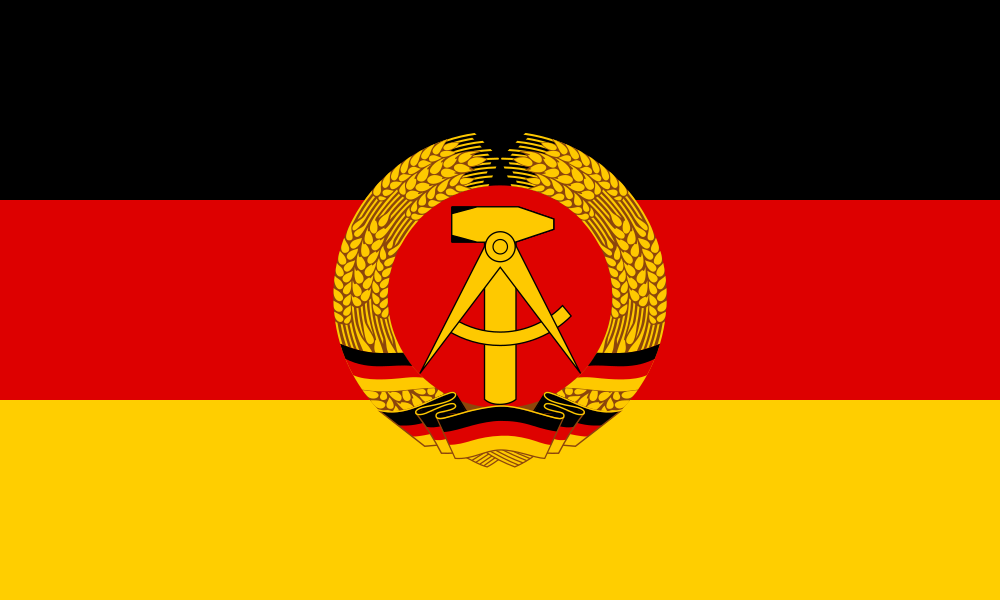
East Germany's emblem
1 Oct 1959 → 3 Oct 1990
A flag law added the state emblem, a hammer and compasses in a wreath of grain, to the centre. Until the late 1960s the police in West Germany and West Berlin prevented it from being shown. After November 1989 many East Germans cut the emblem out.
- 1960
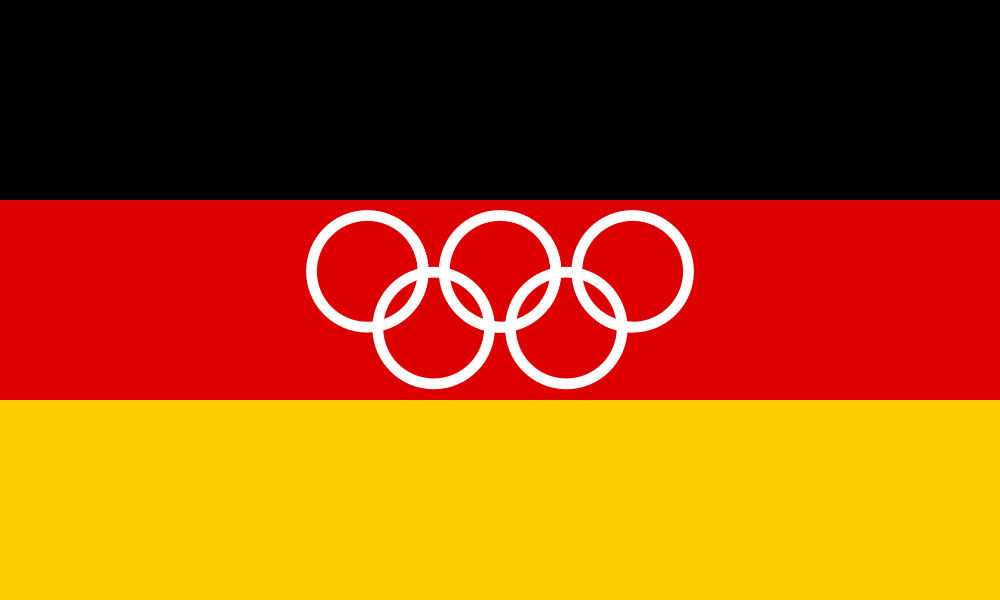
The joint Olympic flag
1960 → 1968
Neither state accepted the other's flag, so the joint German team flew the tricolour with the Olympic rings in white on the red stripe. In 1968 the two teams entered separately under the same flag.
- 1990
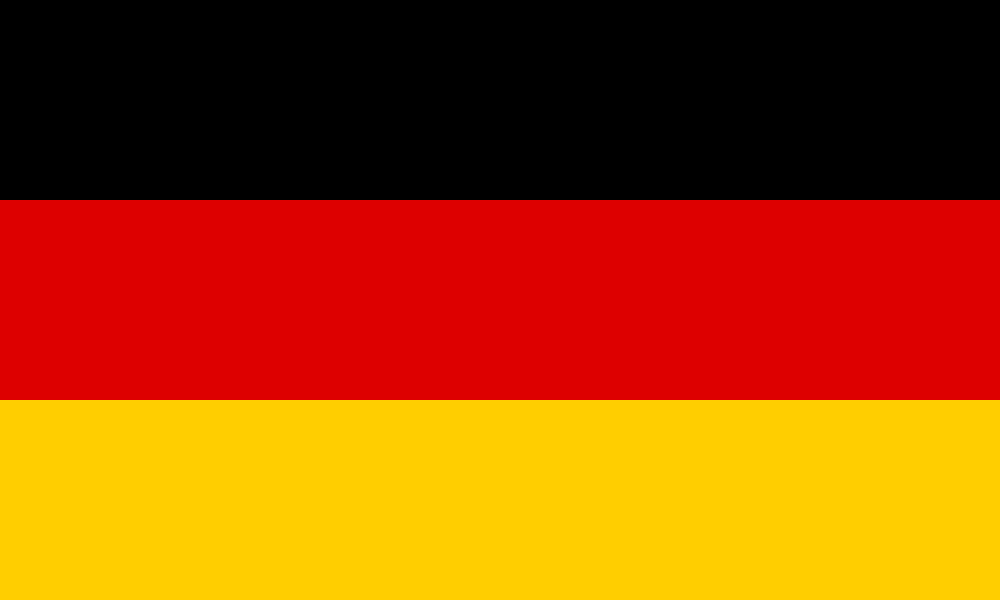
Reunified GermanyIn use
3 Oct 1990 → today
With reunification the flag of the Federal Republic became valid in the east. The Flag of Unity was raised in front of the Reichstag building at midnight. The federal cabinet set the colours for print and screen in its corporate design of 2 June 1999.
The law
What defines it, and who flies it
- 23 May 1949
Basic Law for the Federal Republic of Germany, Article 22(2)
One sentence: the federal flag is black, red and gold. Gives no proportion and no shade.
- 7 June 1950
Order on the German Flags
Three horizontal stripes of equal size, black at the top, red in the middle, gold at the bottom, in a proportion of 3:5. Also created the service flag of the federal authorities.
- 13 November 1996
Order on the German Flags
The current order. Allows the flag to be flown as a banner and fixes the position of the federal shield on the service banner.
- 22 March 2005
Federal Government decree on flying flags on federal buildings
Lists the regular flag days, two of them at half-mast.
In use
The civil flag and, since 14 August 1950, the civil ensign; the authorities of the states fly it beside their own flags
Flown on federal buildings without special order on 27 January, 1 May, 9 May, 23 May, 17 June, 20 July and 3 October, and on the second Sunday before Advent
Flown at half-mast on 27 January and on the People's Day of Mourning; a banner is not lowered but carries a black ribbon
Raised at the main entrance of the Bundestag on sitting days
Protected against defamation by section 90a of the Criminal Code, with a fine or up to three years' imprisonment
The Flag of Unity in front of the Reichstag building, raised on 3 October 1990, is a national memorial and exempt from the flag-flying rules
Related flags
The flags it is confused with or comes from
 Austria
- Black and gold, the colours of the Holy Roman Emperor's banner, passed to the Austrian Empire and were its flag until 1918.
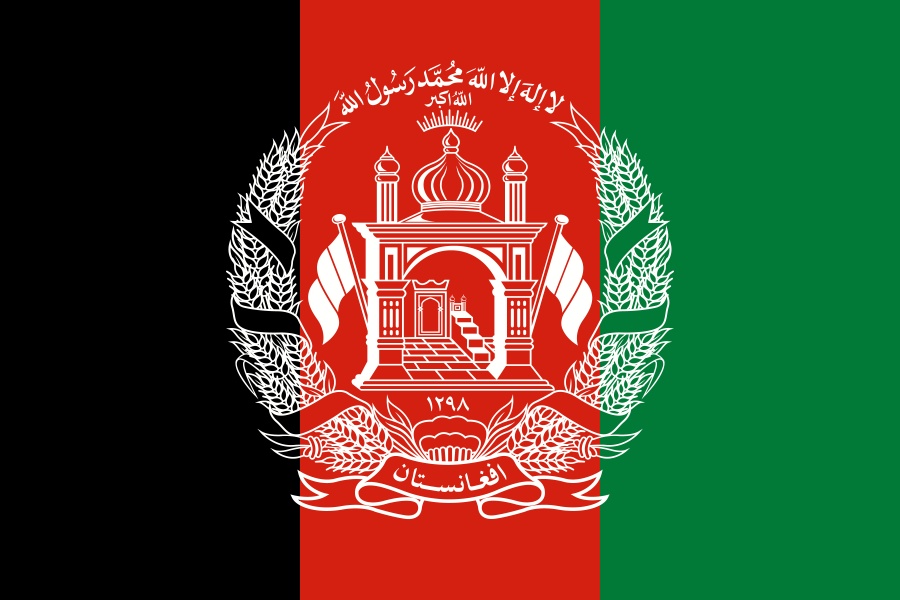 Afghanistan
- Reportedly inspired by the German tricolour after a state visit to Berlin and Munich in February 1928, Afghanistan adopted a black, red and green horizontal tricolour the same year.
 Burkina Faso
- The flag of Upper Volta, from 1958 to 1984, was visually almost identical to the black, white and red flag of the German Empire.
Coat of arms
The arms of Germany