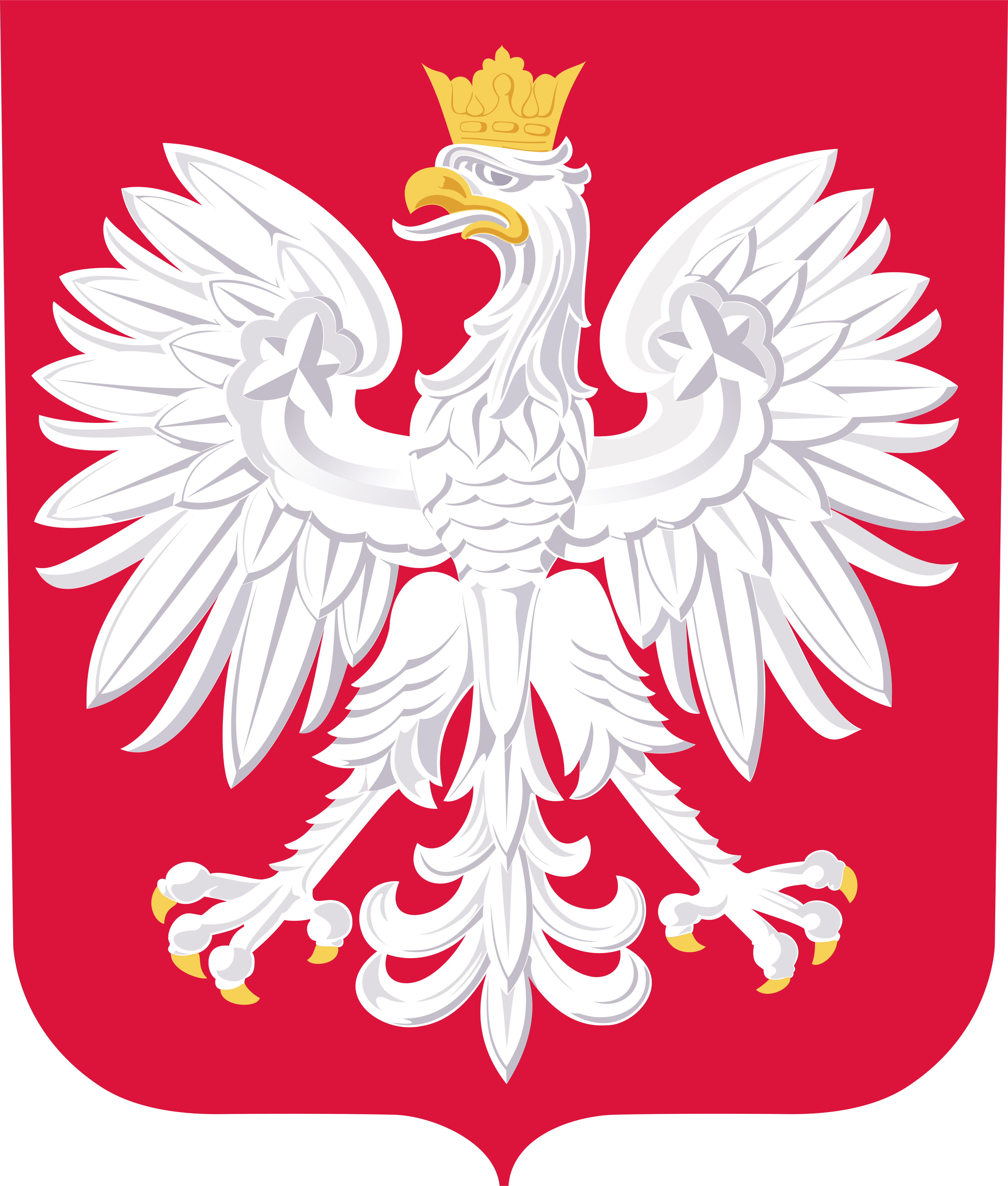
The flag of Poland
Flaga państwowa Rzeczypospolitej Polskiej · since 1980
 Back to Poland
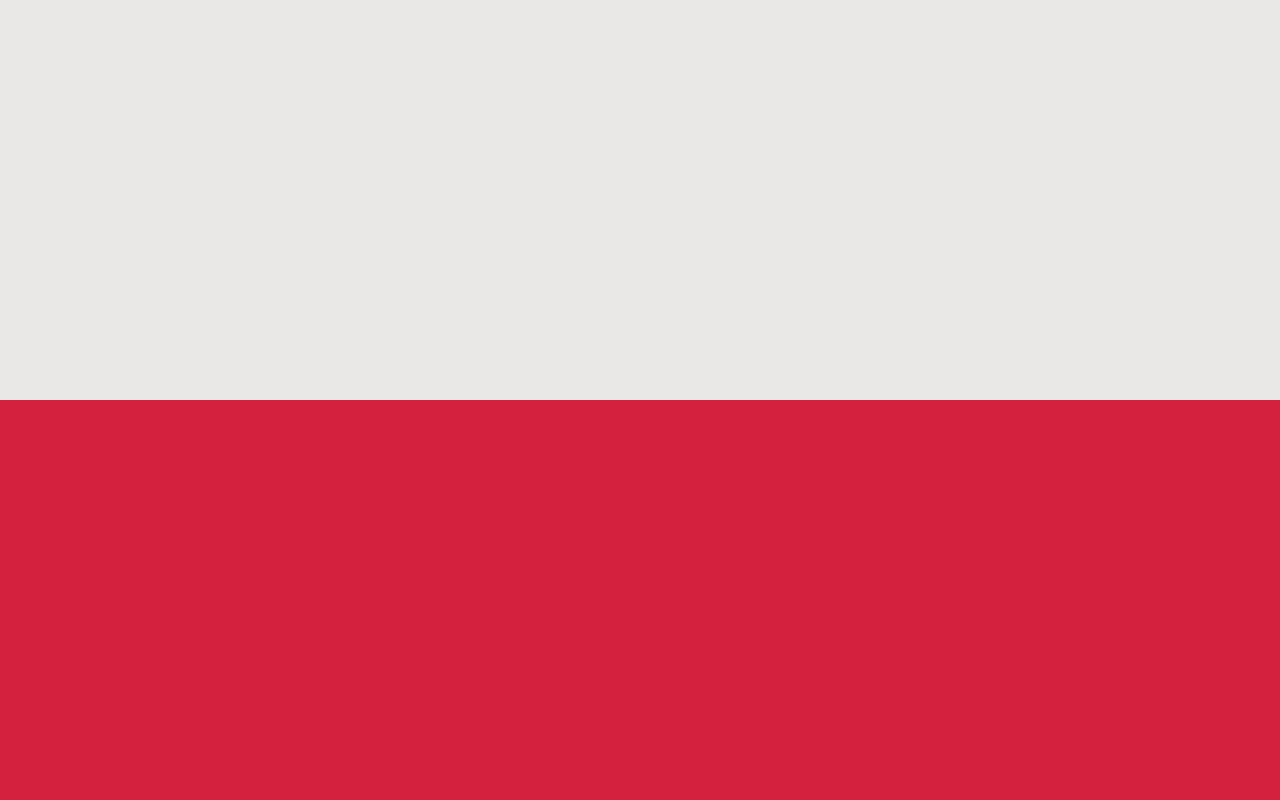
Two horizontal stripes of equal width, white over red, the colours of the white eagle on a red shield. White and red were declared the national colours in 1831 and the flag was introduced by the Sejm on 1 August 1919; the red has been crimson, then vermilion, and since the act of 31 January 1980 a shade defined by colorimetric coordinates. A variant with the coat of arms on the white stripe is reserved for use abroad, at airports and at sea.

At a glance
- Adopted
- 1980
- Proportion
- 5:8
- Colours
- Earlier flags
- 3
The colours
The colours of the flag of Poland, in the order it has them
- 0150%
White
białyTop stripe, for the white eagle
- HEX
#FFFFFF- RGB
255 255 255
- 0250%
Red
czerwonyBottom stripe, for the red field of the arms
- HEX
#DC143C- RGB
220 20 60- CMYK
7 97 84 1- Pantone
1795 C- RAL
3018
No law gives these codes. HEX and RGB are the colour this site draws the flag in; CMYK, Pantone and RAL are the values most often published for it.
Construction
How the flag is drawn
Two horizontal stripes of equal width, white at the top and red at the bottom.
- Stripes
- Two, horizontal, parallel and of equal width, white above red
- Vertical display
- White on the left, seen from the front
- White
- x 0.315, y 0.320, Y 82.0, tolerance ΔE 4.0 (CIE, illuminant C, geometry d/0). On screen this is a light grey, #E9E8E7
- Red
- x 0.570, y 0.305, Y 16.0, tolerance ΔE 8.0. On screen #D4213D, a crimson shade
- Arms on the variant
- The shield's height is 2/5 of the flag's height, centred on the white stripe
Other forms
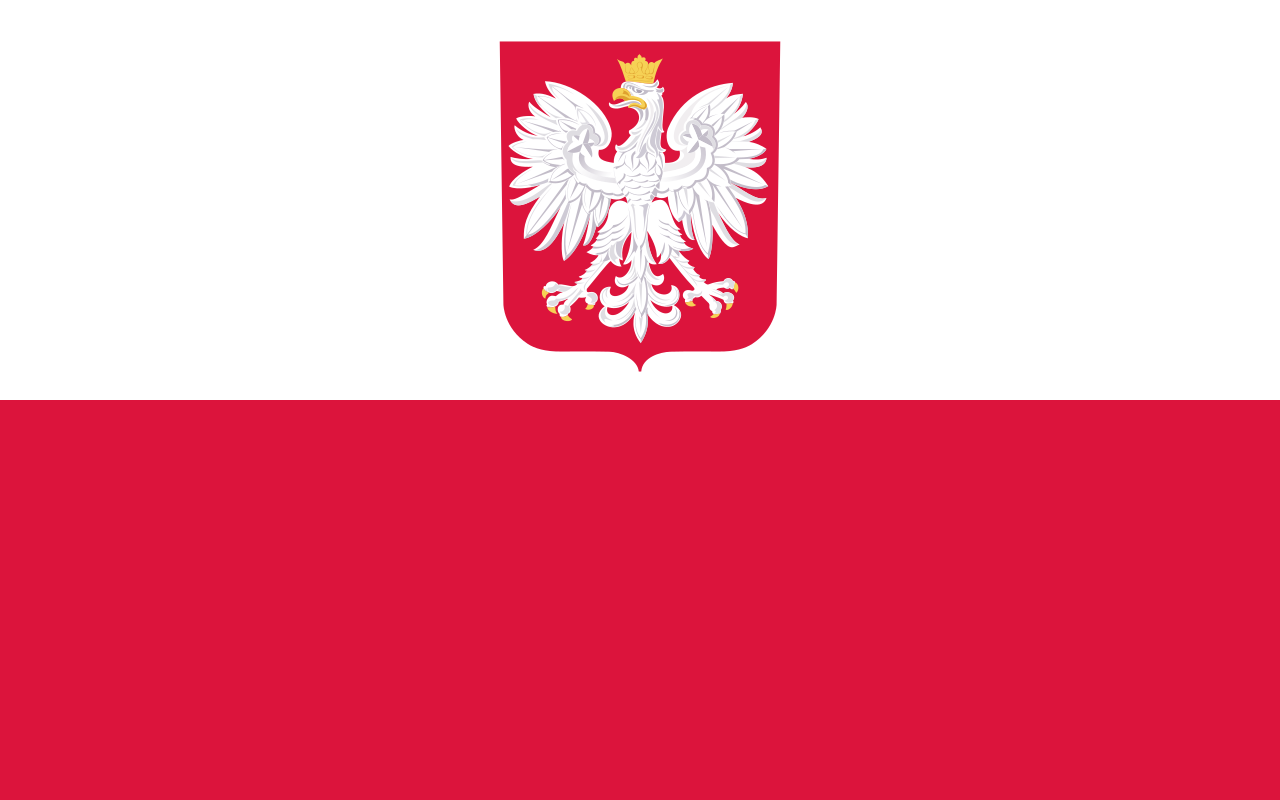
- State flag with the coat of arms
- The flag with the arms in the centre of the white stripe. Reserved by law for missions abroad, civil airports, civil aircraft on international flights, harbour masters and seagoing ships; in practice often used interchangeably with the plain flag. Added in 1919 partly so that the ensign would not be taken for the white and red signal flag H, pilot on board.
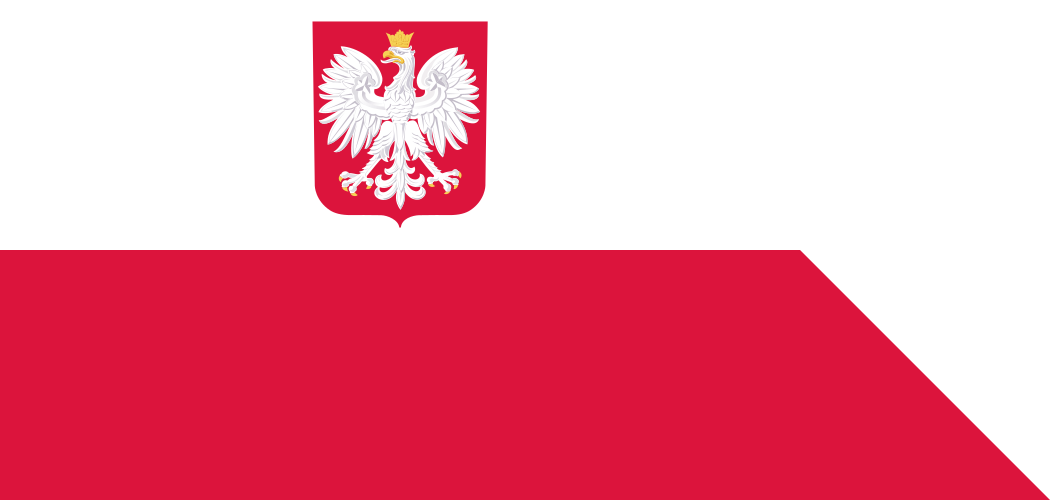
- Naval ensign
- The flag with the arms, ending in two triangular tails; ratio 1:2.1, the cut half the flag's height deep, the arms 2/5 of the height. Set by the act of 19 February 1993 on the symbols of the armed forces.
- Flag in the statutory colours
- The flag drawn from the coordinates in the 1980 act: a greyish white and a crimson red.
Meaning
What each part stands for
- White and red
- The tinctures of the arms: the white eagle of Poland and the white knight of Lithuania, both on red shields. The upper stripe stands for the eagle and the lower for the field
- White
- In heraldry silver; also water, and purity
- Red
- Fire and blood; of the virtues, courage and valour
History
How the flag of Poland got here
- 1831
The national colours
7 Feb 1831 → 1 Aug 1919
Early banners showed the crowned white eagle on red, and crimson, white and dark blue were long treated as national colours. White and red were first worn as national colours on 3 May 1792, and on 7 February 1831 the Sejm of the November Uprising made white and red the national cockade. White and red flags were waved at a demonstration in Warsaw on 3 May 1916.
- 1919

The flag in crimson
1 Aug 1919 → 28 Mar 1928
The Sejm introduced the bicolour on 1 August 1919. A brochure of the war ministry in 1921 showed the red as crimson.
- 1928

The flag in vermilion
28 Mar 1928 → 31 Jan 1980
A presidential decree of 13 December 1927, in force from 28 March 1928, changed the red to vermilion; older flags were allowed until the end of 1936. The act of 1955 kept the vermilion. Under communist rule flying the flag was restricted, and strikers took to hoisting it on their workplaces.
- 1980

The flag under the 1980 actIn use
31 Jan 1980 → today
The act of 31 January 1980 defined the white and the red by colorimetric coordinates. The red it describes is a crimson, closer to the shade used until 1930.
The law
What defines it, and who flies it
- 1 August 1919
Act of 1 August 1919 on the colours of the Republic
Introduced the white and red bicolour, and the variant with the arms for diplomatic missions, consulates and merchant ships.
- 31 January 1980
Act of 31 January 1980 on the coat of arms, colours and anthem of the Republic of Poland and on state seals, Articles 4 and 6
Defines the colours as two horizontal stripes of equal width, white above red, and the state flag as a cloth in those colours at 5:8, with or without the arms. Annex 2 gives the shades as CIE coordinates; annex 3 shows both flags. Amended several times.
- 1997
Constitution of the Republic of Poland, Article 28(2)
The national colours are white and red. The Constitution does not mention a flag.
In use
Flown on or before the buildings of the Sejm, the Senate, the President, the Council of Ministers, the provincial assemblies and other state and local bodies
State and local bodies must fly it, and citizens are encouraged to, on 1, 2 and 3 May among other days; 2 May has been Flag Day since 2004
Anyone may fly the plain flag, provided it is treated with respect; until 2004 private citizens could fly it only on national holidays
Flown outdoors from dawn to dusk unless lit, never allowed to touch the ground, and never dipped to another flag or person; public desecration is a crime
Related flags
The flags it is confused with or comes from


Coat of arms
The arms of Poland