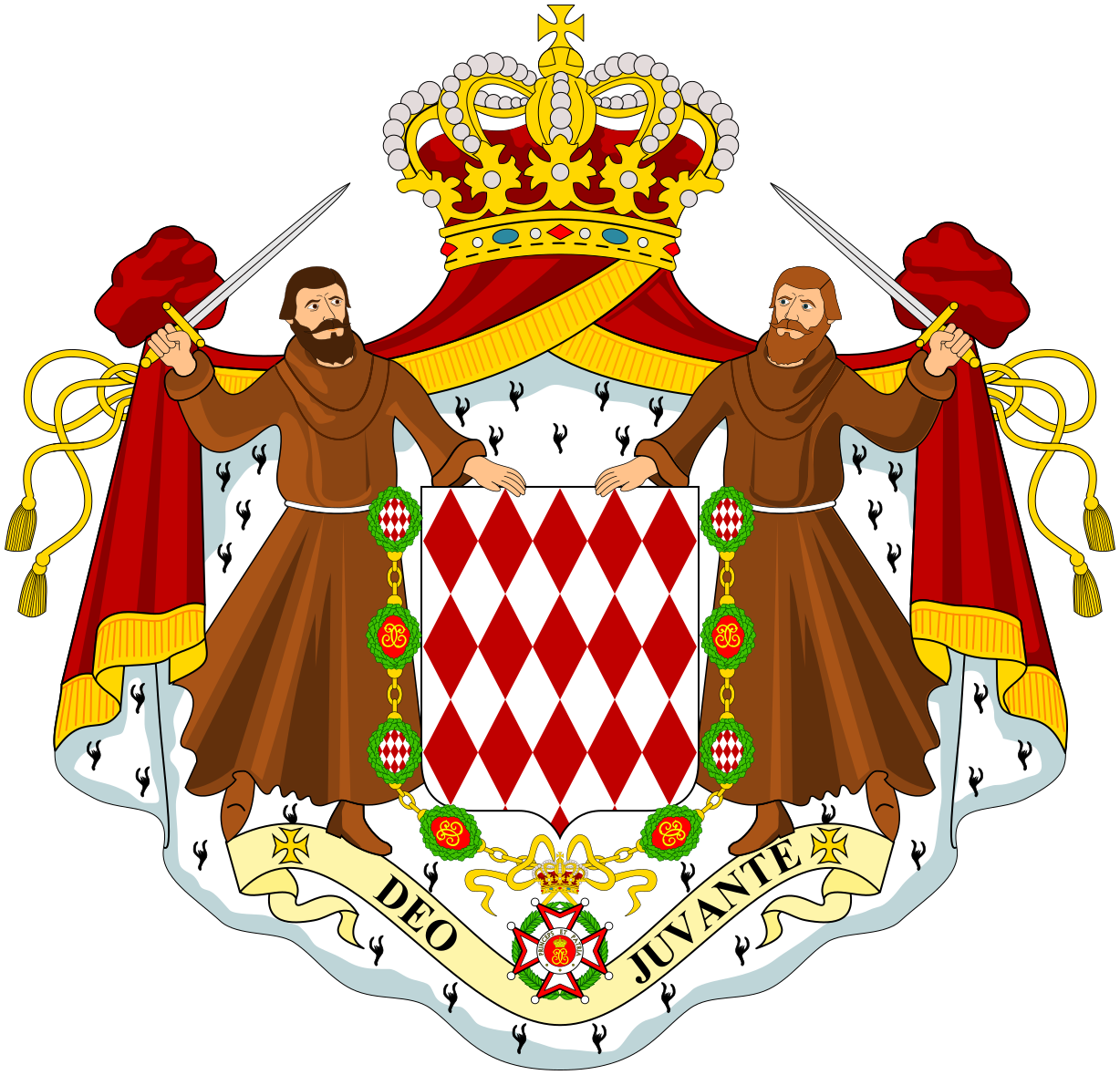
The flag of Monaco
Pavillon national de Monaco · since 1881
 Back to Monaco
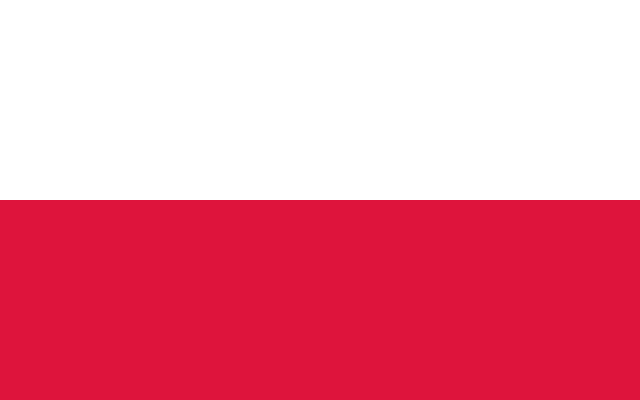
Two equal horizontal bands, red over white, the heraldic colours of the Grimaldi family since at least 1339. The bicolour was established by the Sovereign Ordinance of 4 April 1881 and confirmed in Article 7 of the Constitution of 1962. It is drawn at 4:5 in the ordinance's annex but almost always made at 2:3, and only its proportions and shade of red set it apart from the flag of Indonesia.

At a glance
- Adopted
- 1881
- Proportion
- 4:5
- Colours
- Earlier flags
- 1
The colours
The colours of the flag of Monaco, in the order it has them
- 0150%
Red
rougeUpper band
- HEX
#CE1126- RGB
206 17 38- CMYK
10 100 74 2- Pantone
186 C- RAL
3028
- 0250%
White
blancLower band
- HEX
#FFFFFF- RGB
255 255 255- CMYK
0 0 0 0
No law gives these codes. HEX and RGB are the colour this site draws the flag in; CMYK, Pantone and RAL are the values most often published for it.
Construction
How the flag is drawn
Two horizontal bands of equal width, red above white.
- Bands
- Two, horizontal and of equal width, red at the top
- Proportion in practice
- Almost always made at 2:3, although the 1881 annex shows 4:5
- Vertical flag
- The horizontal flag turned 90° anticlockwise
Other forms
- Princely flag
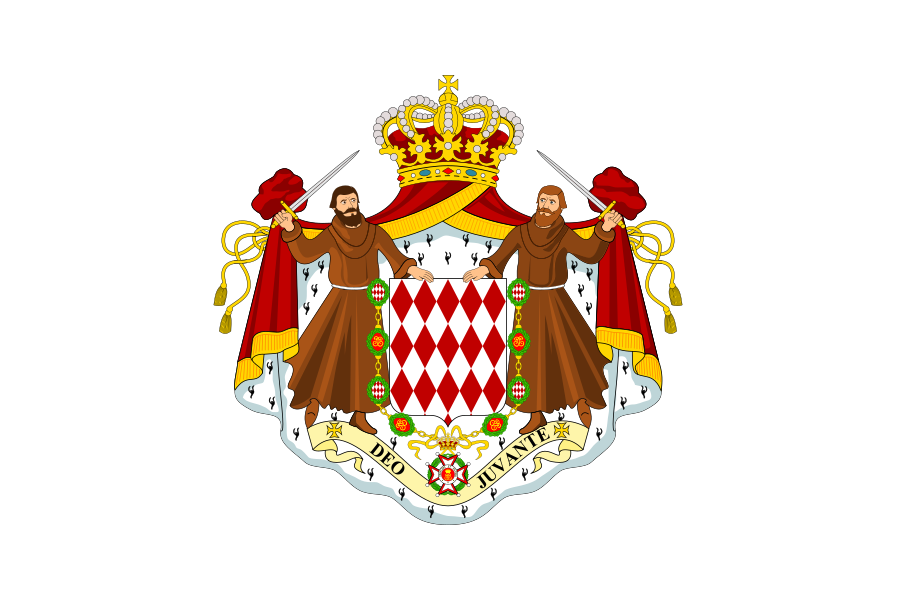
- The full achievement of the Grimaldi arms on a white field. Flown at the Prince's Palace and government offices, in the presence of state officials and as the ensign of the Prince's yacht. The 1881 annex draws the arms two thirds of the flag's length across and three quarters of its height.
- Lozenge banner
- A banner of the arms in red and white lozenges, used at times as an unofficial flag, especially in the 17th century. It has no designated use.
- Sovereign's personal standard
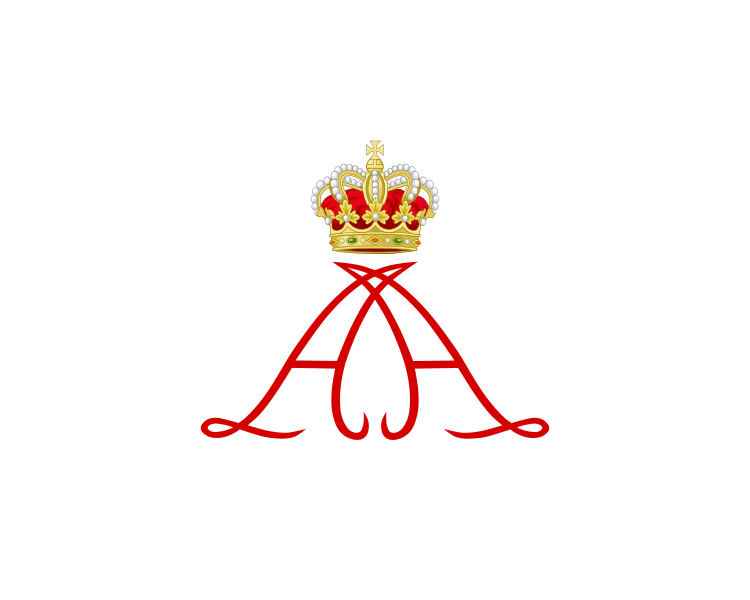
- White, with the Prince's cypher in red under the crown, often with a gold fringe. Used only in the sovereign's presence, on his car among other places, and redrawn for each new prince.

Meaning
What each part stands for
- Red and white
- The heraldic colours of the House of Grimaldi, whose arms are lozengy argent and gules, recorded since at least 1339
History
How the flag of Monaco got here
- Undated
The arms on white
Undated → 4 Apr 1881
Until 1881 the principality's flag was the white flag with an older version of the Grimaldi arms, except while Monaco was annexed to France from 1793 to 1814.
- 1881

The red and white bicolourIn use
4 Apr 1881 → today
The Sovereign Ordinance issued under Charles III established the bicolour as the national flag and kept the arms on white as the princely flag. The Constitution of 17 December 1962 confirmed both in Article 7.
The law
What defines it, and who flies it
- 4 April 1881
Sovereign Ordinance of 4 April 1881 on the princely flag and the national flag
Established the national flag and the princely flag. Its annex draws both at 4:5, flying from spirally striped flagpoles, and it still governs how they are used.
- 17 December 1962
Constitution of the Principality of Monaco, Article 7
Describes the national flag as two equal horizontal bands, red above and white below, and the princely flag as the Grimaldi arms on white. Gives no colour specification; there is no official source for the exact colours.
In use
Flown on land as the national and civil flag and at sea as the national and civil ensign
Flown by the National Council, the elected legislature, and by Monaco's missions abroad, while the princely flag flies at the seats of the Crown Council and the government
Related flags
The flags it is confused with or comes from

Coat of arms
The arms of Monaco