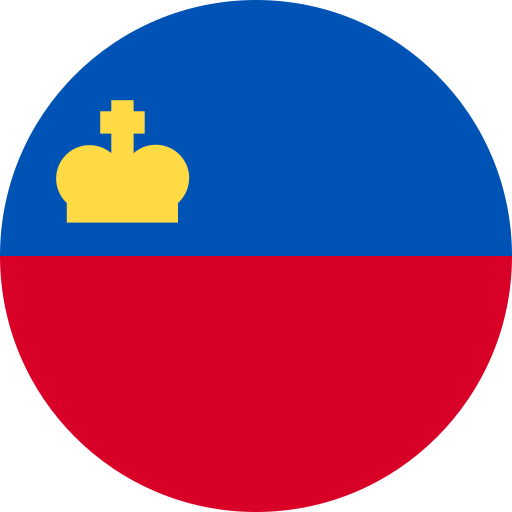
Liechtenstein takes its name from a family of Habsburg courtiers, who took theirs from a castle near Vienna and bought the lordships of Schellenberg in 1699 and Vaduz in 1712 for the seat among the imperial princes that came with them. Much of the state still arrives from across its borders: customs law and currency from Switzerland since the 1920s, and most of its workforce from Switzerland and Austria. On 160 square kilometres of the upper Rhine valley, Liechtenstein counted 41,237 residents and 43,330 people in employment at the end of 2025.
At a glance
Where it is
Where Liechtenstein is, and what is around it
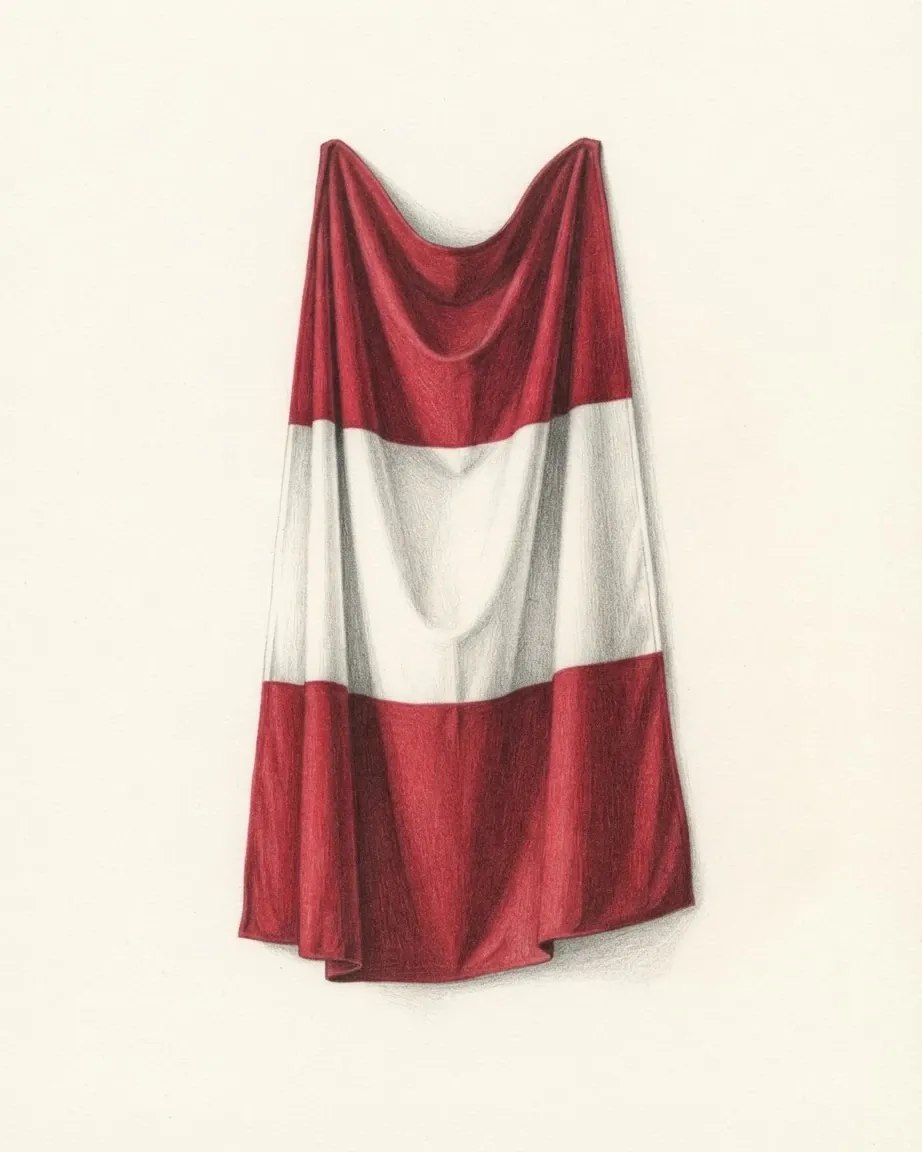
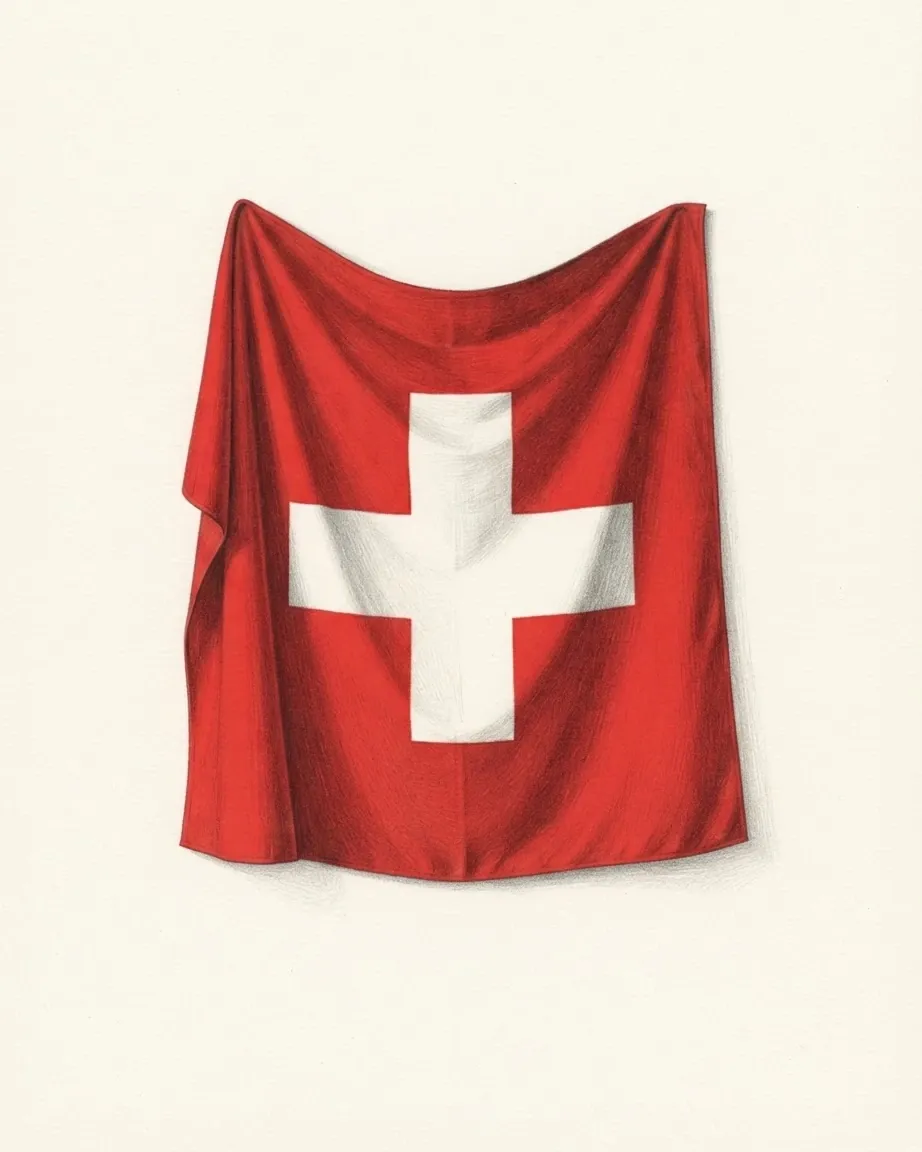
Liechtenstein is landlocked. It shares a border with 2 countries, counted as shared borders, which includes neighbours across water.
 Austria
 Switzerland
Why a Viennese family's name is on the map
The name belonged to the family first. The Liechtensteins took it from a castle in Lower Austria, built around 1122 to 1136, and over the following centuries gathered estates in Moravia, Lower Austria, Silesia and Styria, every one of them held from another dynasty. What they lacked was land held directly from the emperor, which was the condition for a vote among the princes of the Holy Roman Empire. The lordship of Schellenberg, bought on 18 January 1699, and the county of Vaduz, bought on 22 February 1712, were such land. The Historisches Lexikon des Fürstentums Liechtenstein says that only this standing justified the price of two lordships with modest revenues. On 23 January 1719 Emperor Charles VI joined them as the imperial principality of Liechtenstein.
The owners stayed in Vienna for more than a century. No reigning prince set foot in the country before 1842, and the Lexikon dates the first prince to live there, Franz Josef II, to 1938, as the family's estates in Bohemia and Moravia were being lost. Membership of Napoleon's Confederation of the Rhine had made the principality sovereign in 1806, so from then on a sovereign state was run by a bailiff's office on behalf of a ruler who lived in another country. The history of Liechtenstein follows the purchases and the absent princes into the constitutions of 1862 and 1921.
How one mountainside holds the whole of Liechtenstein
The land is a single slope. The Lexikon gives it a length of 25 kilometres from north to south and an average width of about 6, and across that width the ground climbs about 2,000 metres, from 430 metres in the Ruggeller Riet to the Grauspitz at 2,599 metres in the Rätikon. A survey of 2006 set the area at 160 square kilometres. The Lexikon splits it into three belts of roughly equal size: the valley floor, the wooded slopes facing the Rhine, and the mountains beyond the watershed, whose water leaves eastward through Austria by the Samina and the Ill.
The valley floor is the only level ground, about 30% of the country, and for most of recorded history it was fen and flood channel. A treaty with St. Gallen of 31 August 1847 fixed the border, the bank lines and a normal river width of 120 metres; the Rhine has been held to that channel since the 1870s, and the fens behind the dykes were drained once an inland canal was dug in the 1930s. The dykes last broke at Schaan on 25 September 1927. Fields and factories now share the reclaimed ground with a continuous band of towns from Triesen through Vaduz to Schaan. Higher up, Walser settlers from the Valais cleared the terraces of Triesenberg around 1300, and the village keeps features of their dialect.
| The record in short | |
|---|---|
| Area | 160 km², by the survey of 2006 |
| Residents | 41,237 at the end of 2025 |
| People in employment | 43,330 at the end of 2025 |
| Capital | Vaduz, 5,668 people on 30 June 2019 |
| Highest point | Grauspitz, 2,599 m |
| Communes | eleven, six in the Oberland and five in the Unterland |
| Principality since | 23 January 1719 |
| Currency | Swiss franc |
The two halves of the country are still the two purchases. The Oberland, the old county of Vaduz, held 78.2% of the land in the Lexikon's entry of 2011; the Unterland, the old lordship of Schellenberg, 21.8%. The line between them follows a ditch, the Scheidgraben, that barely shows on the ground. Its landscape is followed from the river to the ridge in the geography article.
Who holds state power in Liechtenstein
Article 2 of the constitution of 1921 anchors state power "in the prince and in the people", and the revision voters approved in March 2003 gave each a lawful way to overrule the other. The prince can refuse his assent to any law, including one passed at a referendum, and on 1 July 2012, 76% of voters kept that power in place. He can also dismiss the government at will. The voters can bring a motion of no confidence in the prince and can start a procedure to abolish the monarchy, and each of the eleven communes may leave the state by a majority of its own voters.
Between the two sit a Landtag of 25 members elected for four years, 15 for the Oberland and 10 for the Unterland, and a government of five that needs the confidence of both prince and Landtag. Women gained the vote on 1 July 1984, in a referendum in which only men took part, by 51.3%. The politics article sets out the veto and the popular rights in detail, along with the coalition of two parties that lasted from 1938 to 1997.
Why Switzerland handles Liechtenstein's customs and defence
The economic frontier runs along the Austrian border. Liechtenstein gave notice on its customs treaty with Austria on 2 August 1919, the same year Switzerland began representing it abroad wherever it had no mission of its own, and signed a customs treaty with Switzerland on 29 March 1923, in force from 1 January 1924. Swiss customs law and every Swiss trade treaty have applied in the principality since, and Swiss officers guard the frontier with Austria. The sources give three dates for the Swiss franc: 1920 in Wikipedia's history, 1921 in Britannica and 1924 in the Lexikon, which says the franc was adopted unilaterally after the Austrian crown had lost its entire value by 1922.
There has been no army since 12 February 1868, when the Landtag refused to pay for one after the German Confederation dissolved, and Britannica records that defence is the responsibility of Switzerland. The European Economic Area tested the arrangement. Liechtenstein voted to join with 55.8% in December 1992 while Switzerland voted no, the treaties with Switzerland were revised in 1994, and the principality became a member on 1 May 1995, with a special arrangement that lets it go on limiting immigration by number.
Why Liechtenstein has more jobs than residents
The government's economic brochure of 2026, compiled by the Liechtenstein-Institut, counted 43,330 people employed in Liechtenstein at the end of 2025 and 41,237 residents. The two lines crossed in 2017. In 1970 there had been about half as many people in work as there were residents. In 2024 about 57% of those working in the country crossed a border to get there, 61% of them from Switzerland and 35% from Austria.
That is why the World Bank's figure of 220,167 United States dollars of output per resident in 2024 answers a narrower question than it seems to. A large share of that output is earned by people who take their wages home to another country, and the brochure sets gross national income beside it, about 175,000 Swiss francs a head in 2023. The work is mostly industrial: manufacturing, construction and the other goods-producing trades generated 40.4% of value added in 2023, and finance and insurance 10.1%. The industrial members of the chamber of commerce employed 85% of their workforce in subsidiaries abroad in 2025.
The financial centre changed after February 2008, when German investigators used client data taken from LGT, a bank owned by the princely house. On 12 March 2009 the government committed the country to the OECD standard on tax transparency. The economy article goes through the factories and the financial centre.
What the princes' paintings and the village calendar keep
Culture here has two origins. The Princely Collections, known above all for their Rubens and van Dyck canvases, were gathered in Vienna and brought to Vaduz during the Second World War; they remain the reigning family's private property, housed in the castle above Vaduz. The villages kept a calendar of their own, written into a code of local custom, the Landsbrauch, of which a copy from 1667 survives. Fasnacht still opens on Schmutziger Donnerstag, and on Funkensonntag guilds burn a bonfire topped with the figure of a witch. At the Alpabfahrt the best milkers come down from the summer pastures with a small wooden heart on the forehead, later nailed to the outside wall of the cowshed.
German was the main language of 92% of the population in 2020, and 73% speak an Alemannic dialect close to those of neighbouring Switzerland and Vorarlberg. Catholicism is the state church, and the 2010 census counted 75.9% of the population as Catholic. The culture article also follows the state's own art museum, begun with a gift of ten paintings in 1967 and given a building in 2000.
Why visitors to Liechtenstein seldom stay long
Liechtenstein's accommodation recorded 116,759 arrivals and 222,266 overnight stays in 2023, fewer than two nights a guest, and the Lexikon found the same two-night average in the 1950s. Vaduz lies close to the motorway over the San Bernardino, and coaches on European circuits stop there for an hour or two. The longer stays are up the slope. A whey cure house opened on the Alp Gaflei in 1875, and Malbun, a summer pasture, gained five ski lifts, two chairlifts and nine hotels between 1962 and 1979.
There is no airport. The railway between Feldkirch and Buchs, open since 1872, runs for 9.5 kilometres across the north of the country. The travel article covers how visitors reach the country and where they stay.
Read
Everything about Liechtenstein
Six articles, each answering one question and each written to be read on its own.
The record
What is measured about Liechtenstein
Pages that nobody writes, built from the record and from the data files beside it.
Common questions
Questions about Liechtenstein
What currency is used in Liechtenstein, and since when?
The franc came with the turn from Austria to Switzerland after the First World War. The sources differ on the year: Wikipedia's history gives 1920, Britannica 1921, and the Historisches Lexikon says Liechtenstein adopted it unilaterally in 1924, after the Austrian crown had lost its entire value by 1922. The customs treaty with Switzerland, signed on 29 March 1923, took effect on 1 January 1924.
Does Liechtenstein have an army?
No. The Landtag refused to pay for one after the German Confederation dissolved in 1866, and the army was abolished on 12 February 1868. Britannica records that defence is the responsibility of Switzerland.
What language do people in Liechtenstein speak?
German is the official language and was the main language of 92% of the population in 2020. At home 73% speak an Alemannic dialect, close to the dialects of neighbouring Switzerland and Vorarlberg and far from Standard German. Triesenberg, settled by Walsers from the Valais around 1300, keeps a Walser German dialect that the commune promotes.
How has Liechtenstein's population changed?
It rose from 12,141 in 1945 to 34,905 in 2005 and reached 41,237 at the end of 2025. Foreigners made up 20% of residents in 1950 and 34% in 2003. Since 2017 the number of people working in the country has been larger than the number living there, because most jobs are filled by commuters from Switzerland and Austria.
Nearby in the catalogue