The map was drawn by other people. Almost every line of Slovenia's border was fixed at a conference or in a treaty the Slovene-speaking population had no vote in, from the Treaty of Rapallo in 1920 to the return of the Littoral in 1947, and the last contested stretch was settled by five arbitrators at the Peace Palace in The Hague on 29 June 2017. What happened inside those lines was decided at home, and it was decided by counting. Slovenia is a country in Central Europe with a population of 2,133,852 as of October 2025, independent from Yugoslavia since 25 June 1991 and a member of the European Union, NATO and the eurozone, and each of those steps was put to the voters before it was taken: a plebiscite on 23 December 1990 that 93.2% of the electorate turned out for and 88.5% of it approved, then referendums on Union and NATO membership in March 2003.
At a glance
Where it is
Where Slovenia is, and what is around it
Slovenia has a coast. It shares a border with 4 countries, counted as shared borders, which includes neighbours across water.
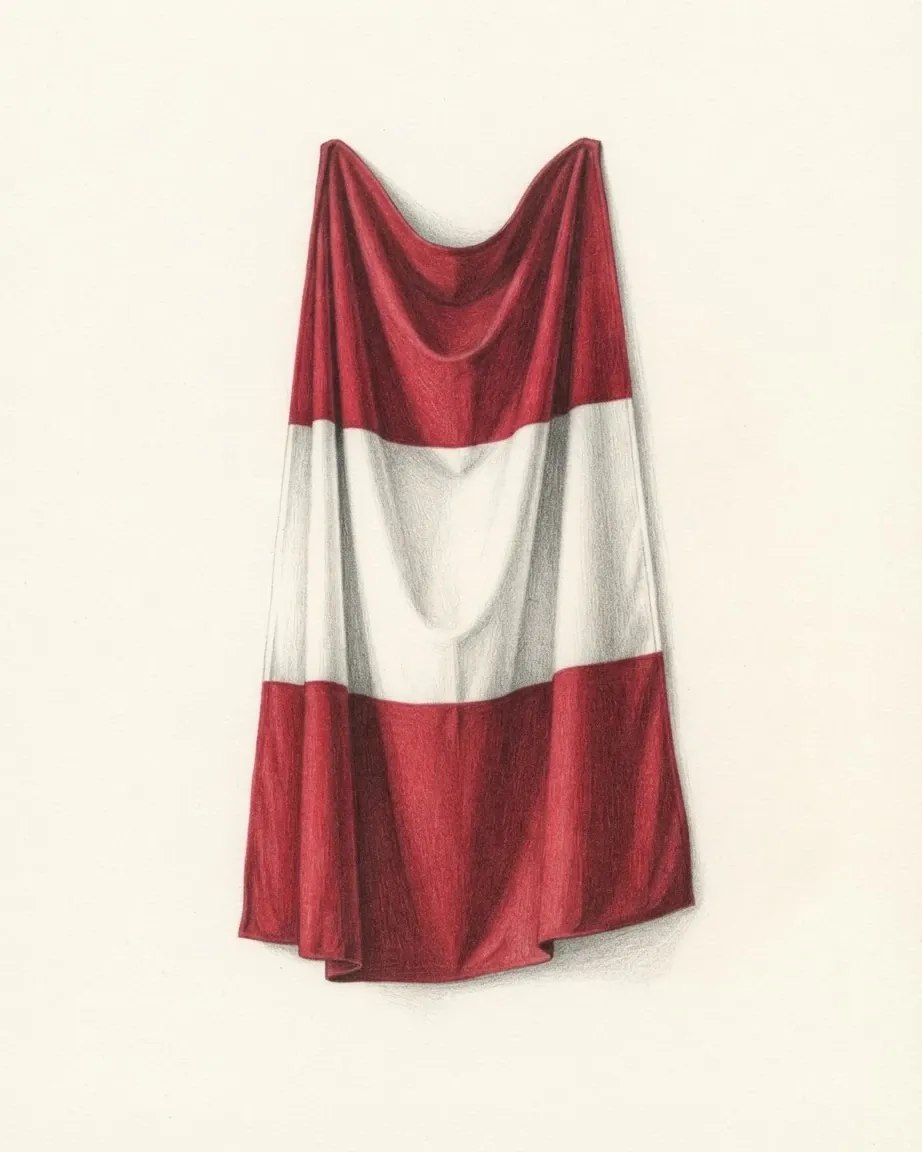
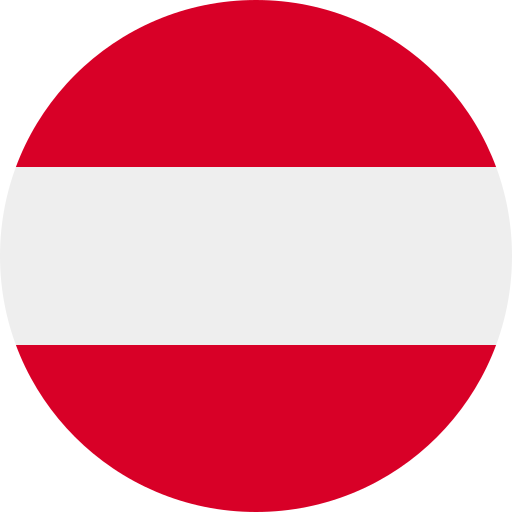 Austria
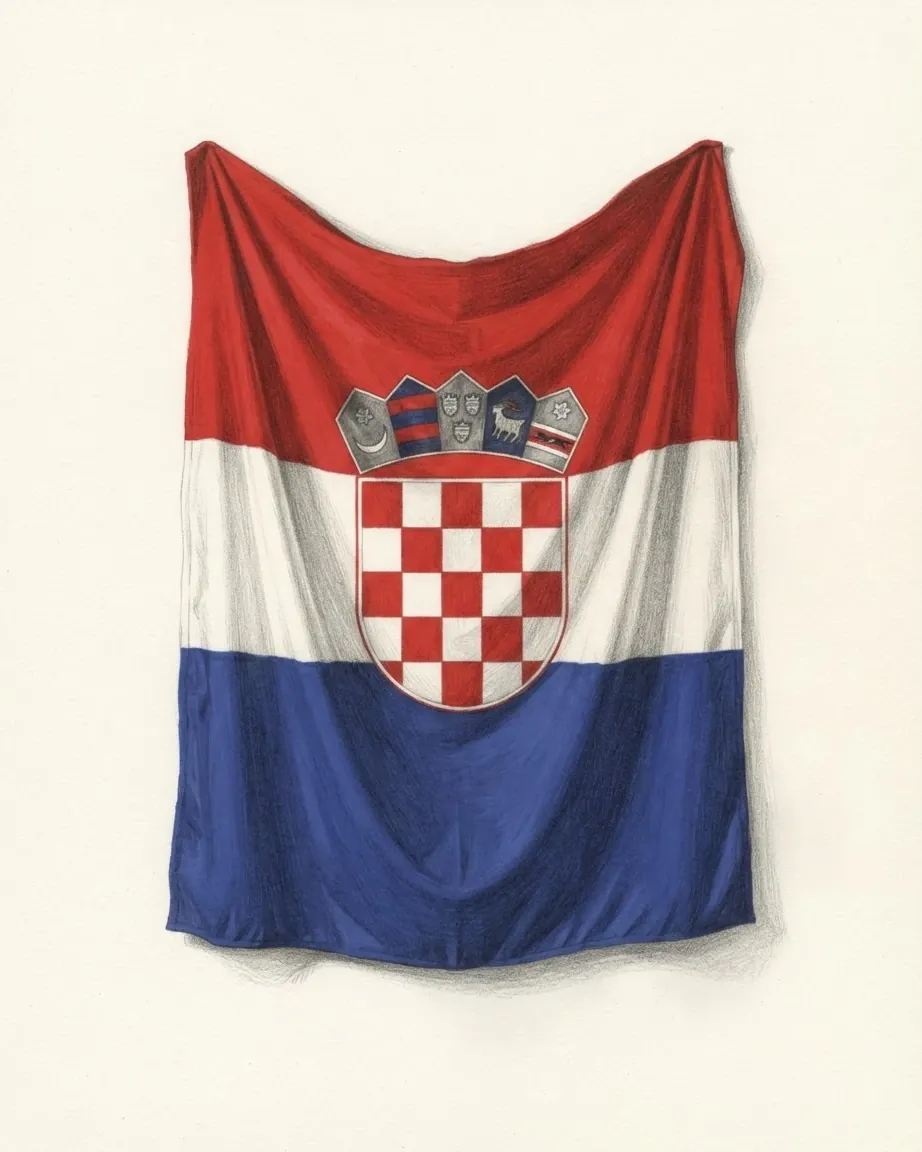
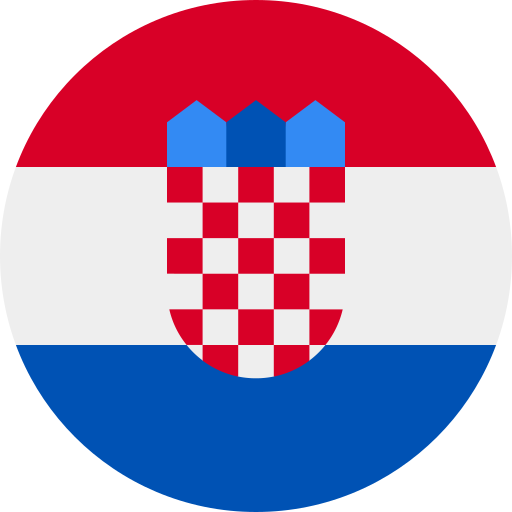 Croatia
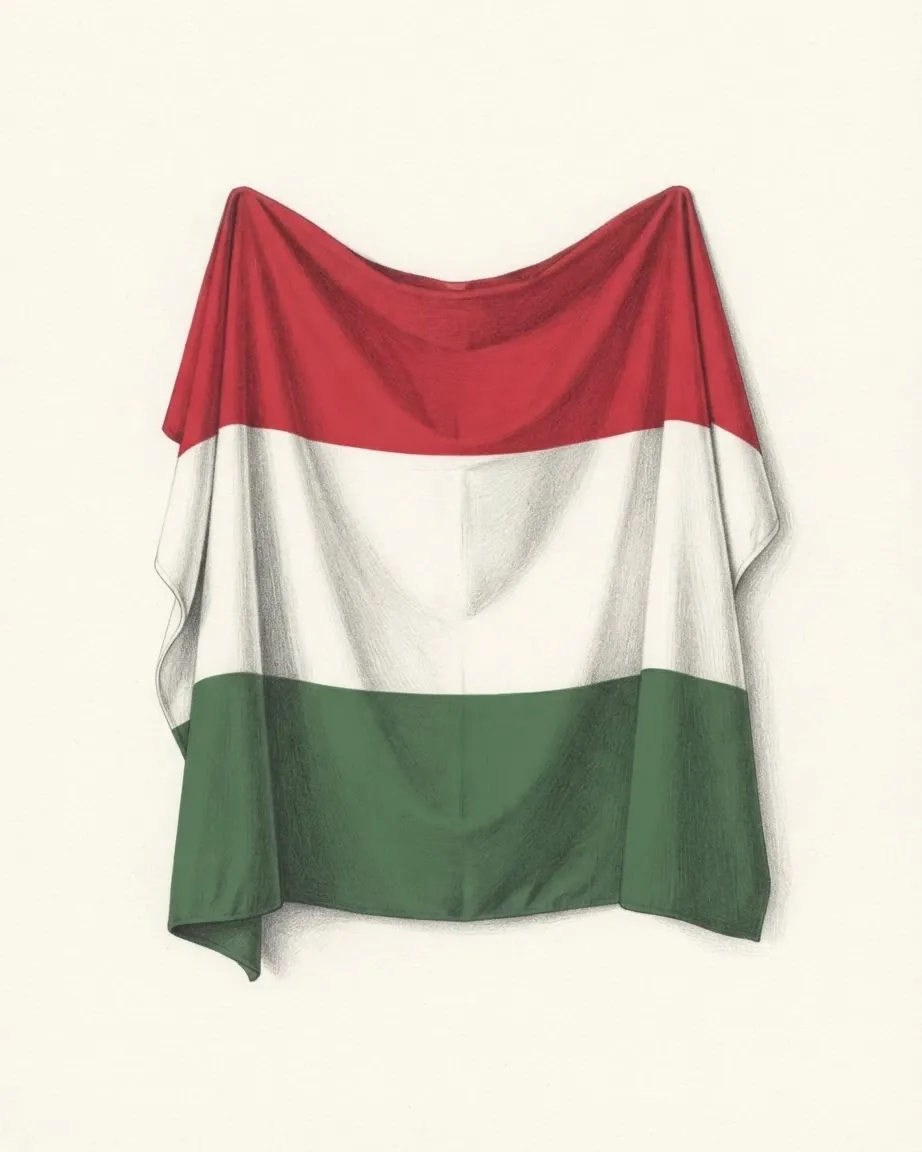
 Hungary
 Italy
ItalyWhy other people drew Slovenia's borders
The Slovene lands were Habsburg territory from the mid-fourteenth century until 1918, and when that empire dissolved the question of which state the Slovene-speaking population would live in was answered elsewhere. The Treaty of Rapallo of 1920 left approximately 327,000 of a total 1.3 million Slovenes inside Italy, where the minority held no protection in international or domestic law until 1947. A plebiscite in October of the same year kept Slovene-speaking southern Carinthia in Austria. The Treaty of Trianon moved Prekmurje the other way, into the Kingdom of Serbs, Croats and Slovenes formed in December 1918, which took the name Yugoslavia in 1929.
Then came the partition of 1941, when the territory was divided among Nazi Germany, Fascist Italy, Horthyist Hungary and the Independent State of Croatia. Around 8% of the population died between 1941 and 1945. The Slovene Littoral and the western half of Inner Carniola, annexed by Italy after the First World War, were attached to Slovenia in 1947, inside a Yugoslav federation of six republics. The history article follows the whole sequence, from Carantania to the arbitral award.
How Slovenia voted itself into existence
The founding act was a count. Turnout at the plebiscite of 23 December 1990 reached 93.2% of those eligible to vote, 88.5% of the whole electorate said yes to a sovereign and independent Slovenia, and the results were announced three days later. Independence was declared on 25 June 1991. The Yugoslav People's Army moved on the early morning of 27 June, the fighting stopped with the Brijuni Agreement of 7 July, and rough estimates put the army's losses at 44 dead and 146 wounded and the Slovene side's at 19 dead and 182 wounded, with 12 foreign citizens killed. The constitution was adopted on 23 December 1991, one year to the day after the vote that authorised it.
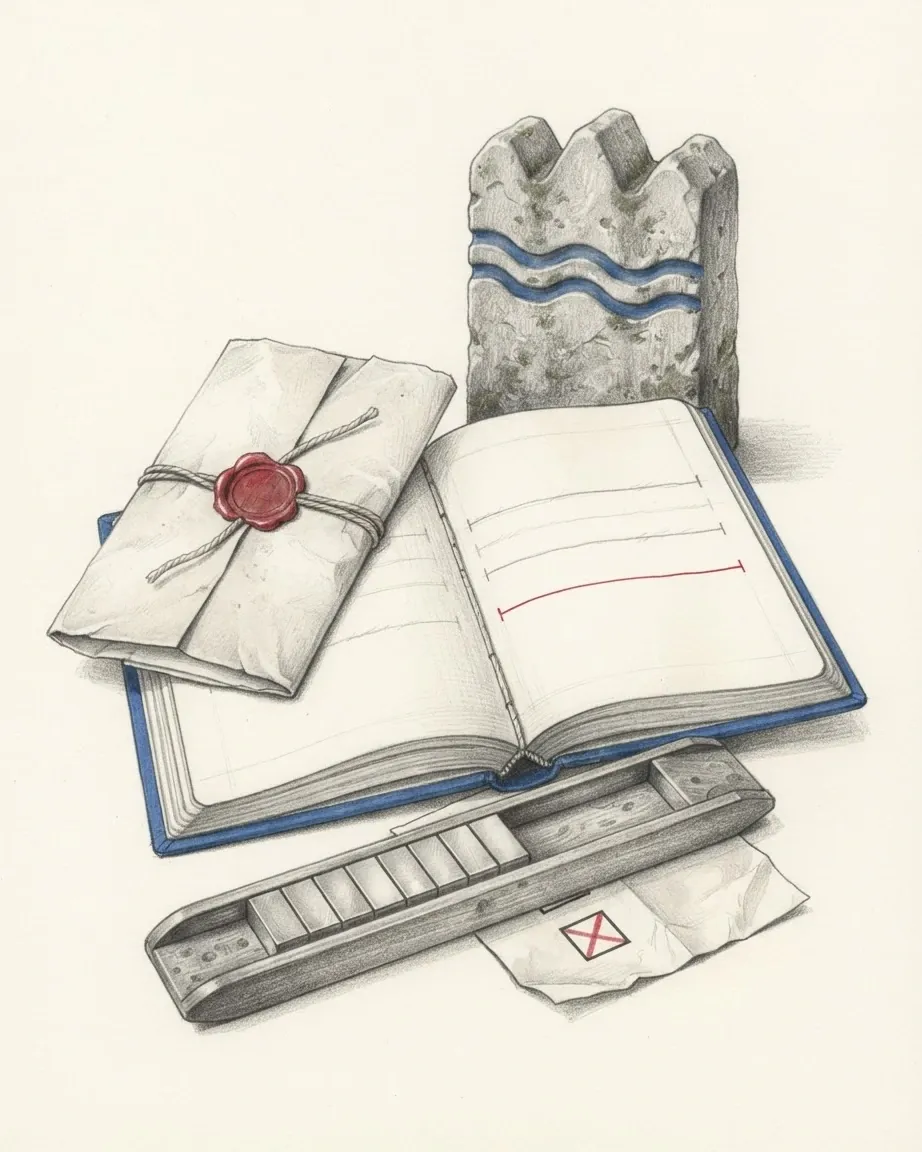
The referendum stayed in ordinary use after that. Membership of the European Union and of NATO each went to a vote in March 2003, ahead of the accessions. The agreement submitting the border with Croatia to an arbitral tribunal, signed by the two prime ministers on 4 November 2009, was approved by voters as well. The instrument runs in the other direction just as readily: a proposal to raise the retirement age from 57 for women and 58 for men was rejected at a referendum in 2011, and the same government's wider economic reforms were blocked by referendums that year.
| Question put to the voters | When | What followed |
|---|---|---|
| Independence and sovereignty | 23 December 1990 | Turnout 93.2%, 88.5% of the electorate in favour |
| Joining NATO | March 2003 | Accession on 29 March 2004 |
| Joining the European Union | March 2003 | Accession on 1 May 2004 |
| Sending the border with Croatia to arbitration | After the agreement of 4 November 2009 | Final Award at The Hague on 29 June 2017 |
| Raising the retirement age | 2011 | Rejected |
The border case sat at the Permanent Court of Arbitration as case 2012-04, with five arbitrators, a hearing at the Peace Palace from 2 to 13 June 2014, three departures from the tribunal in 2015 and two replacements appointed on 25 September 2015. This catalogue records that the boundary was submitted to arbitration and that a Final Award issued on 29 June 2017, and takes no position on the boundary itself. The chamber, the courts and the referendum law behind all of this are set out in the politics article.
Where the Alps meet the karst and the sea
Four of Europe's major physical regions meet inside 20,271 square kilometres: the Alps along the Austrian and Italian borders, the Dinarides through the south, the Pannonian plain in the north-east, and the Adriatic at one corner, where the coastline runs 46.6 kilometres. Triglav reaches 2,864 metres and carries the country's name on its coat of arms and its flag. Average height above sea level is 557 metres, about 90% of the surface lies at 200 metres or more, and forest covered 60.4% of the country as of 2020.
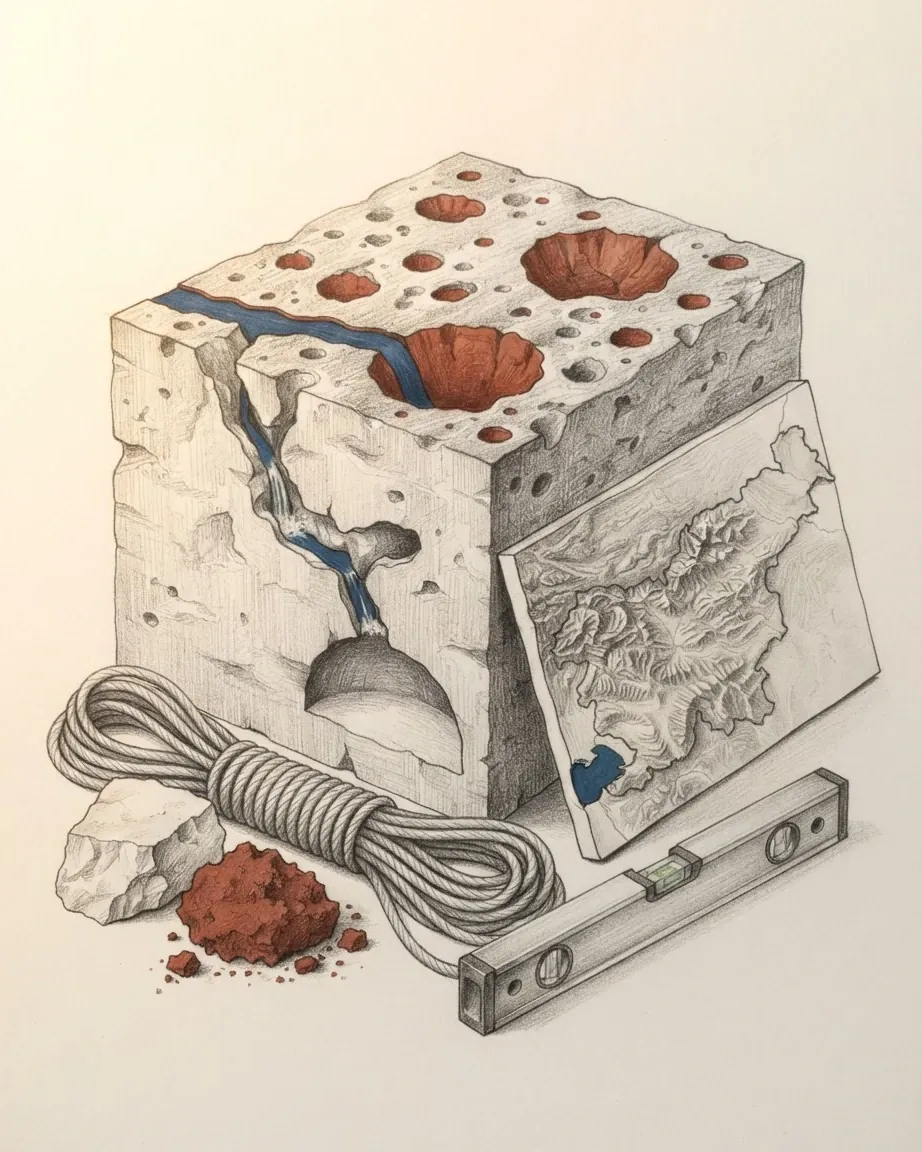
The word karst was taken from the Kras plateau in the south-west, where the Reka river vanishes underground into a canyon reaching 150 metres in height and more than 120 metres in width, and where the Martel Chamber exceeds two million cubic metres. Doline was fixed there too. The limestone has a consequence a country with a coast would not otherwise have: 81% of the territory drains away from the Adriatic and into the Black Sea basin. What that leaves on the surface, from the beech forests to the thin soils, is in the geography article.
Why the language arrived before the state
Slovene literature begins in the sixteenth century with Primož Trubar, a Protestant reformer who wrote the first books in the language, Abecednik and Katekizem, and assembled a written standard out of the dialects of central Carniola. The Counter-Reformation then extinguished Protestantism across the Habsburg lands, and Lutheran communities survived mainly in Prekmurje, under the protection of Hungarian nobles who were often Calvinist themselves. Fewer than 1% of the population was Protestant by 2002. The alphabet held.
The second founding figure is France Prešeren, born in 1800 and dead at Kranj on 8 February 1849, an attorney the Austrian authorities would not permit to practise until almost the end of his life. His 1844 poem Zdravljica is the national anthem, and the anniversary of his death is the public holiday for Slovene culture. The language he wrote in keeps the dual, a grammatical number used for exactly two of something, which most Indo-European languages dropped. Kurenti rounds went onto the UNESCO intangible heritage list in 2017 and beekeeping in 2022, and more than forty regional cuisines have been identified inside those 20,271 square kilometres. The culture article takes the books, the songs and the food in turn.
What Slovenia makes and who owns it
Yugoslav firms were socially owned, run by workers' councils and belonging to nobody in particular, so the state that inherited them in 1991 had nothing straightforward to sell. The Ownership Transformation of Companies Act, adopted in November 1992 and applied from 1994, gave the shares to the people already inside each firm. 20% went to employees, 20% to the Development Fund, 10% each to the pension and restitution funds, and the workers' council or board allocated the remaining 40%, usually to insiders. Capital inflows were restricted at the same time, and direct foreign investment was worth 0.8% of GDP in 1998.
The bill arrived in December 2013, when the banking system needed 4.8 billion euros of capital to stay open, and the sales that followed changed the ownership map. Foreign investment stock reached 34.6% of GDP by 2023. Both kinds of company now sit in the same small town: Krka at Novo Mesto is a Slovene pharmaceutical firm that reported 1.91 billion euros of sales in 2024, and Revoz, at the same address, is the country's only car plant, which built 61,431 Renault Clios in 2025 to a design decided in France. Exports and imports together are worth about 120% of GDP, and 42% of goods exports in 2025 were processing operations, meaning goods brought in, worked on and sent out again under somebody else's ownership.
Two dated figures show where that leaves households. GDP per head was 37,376 US dollars in 2025. The Gini coefficient of equivalised disposable income was 23.8 in 2024, against a European Union average of 29.4. The economy article follows the money from self-management to the state holding company.
What a short drive reaches from Ljubljana
Slovenia measures 248 kilometres east to west and 163 north to south, and its geometric centre lies at Slivna in the municipality of Litija, close to the capital. That is a small enough box for the alpine north, the caves of the south-west, the Adriatic towns and the flat north-east to be reached from a single base, and the weather changes faster than the distances suggest: more than 3,500 millimetres of precipitation falls on the western mountains against about 800 millimetres in Prekmurje.
The capital is itself a listed object. The works of Jože Plečnik in Ljubljana, an interwar rebuilding of a provincial Habsburg town into a national capital, were inscribed on the World Heritage List in 2021. The Škocjan Caves were inscribed for their geological value under a natural criterion applied before 1994. Lake Bled sits under the Julian Alps at the north-western corner, Piran keeps its Venetian street plan on the coast, and the country has around 1,000 castles, ruins and manor houses along with the hayracks, the kozolci, that stand in the fields. The travel article takes up the seasons, the regions and what arriving involves.
Where to read the rest
A country whose borders were settled by other people's treaties and whose state was settled by its own ballots, holding four European physical regions and 2,133,852 people as of October 2025 inside 20,271 square kilometres. Each part of that has its own article: the history, the land, the institutions, the economy, the culture and what visiting involves.
Read
Everything about Slovenia
Six articles, each answering one question and each written to be read on its own.
The record
What is measured about Slovenia
Pages that nobody writes, built from the record and from the data files beside it.
Common questions
Questions about Slovenia
Where is Slovenia?
In Central Europe, bordered by Italy to the west, Austria to the north, Hungary to the north-east and Croatia to the south and south-east, with 46.6 kilometres of coast on the Adriatic in the south-west. It covers 20,271 square kilometres.
Is Slovenia the same as Slovakia?
No. They are separate states with separate histories. Slovenia was one of the six republics of socialist Yugoslavia and became independent on 25 June 1991, after a plebiscite on 23 December 1990 in which 88.5% of the electorate voted for sovereignty. Its language is Slovene, its capital is Ljubljana, and it joined the European Union on 1 May 2004.
What is Slovenia known for?
The word karst, which geologists took from the Kras plateau in the south-west, where the Reka river runs underground through the Škocjan cave system. Forest covered 60.4% of the country as of 2020. Triglav, at 2,864 metres, appears on the coat of arms and the flag. The works of Jože Plečnik in Ljubljana were inscribed on the World Heritage List in 2021.
What language is spoken in Slovenia?
Slovene, a South Slavic language with affinities to Czech and Slovak. It keeps the dual, a grammatical number used for exactly two of something, which most Indo-European languages lost. The first books in it were written in the sixteenth century by the Protestant reformer Primož Trubar. Italian and Hungarian are spoken by the two recognised communities, each of which holds a reserved seat in the National Assembly.
Is Slovenia in the European Union?
Yes. Slovenia joined the United Nations on 22 May 1992, NATO on 29 March 2004 and the European Union on 1 May 2004, both memberships having been approved at referendums held in March 2003. The euro replaced the tolar on 1 January 2007, the Schengen Area opened to Slovenia on 21 December 2007, and it joined the Organisation for Economic Co-operation and Development on 21 July 2010.
Nearby in the catalogue