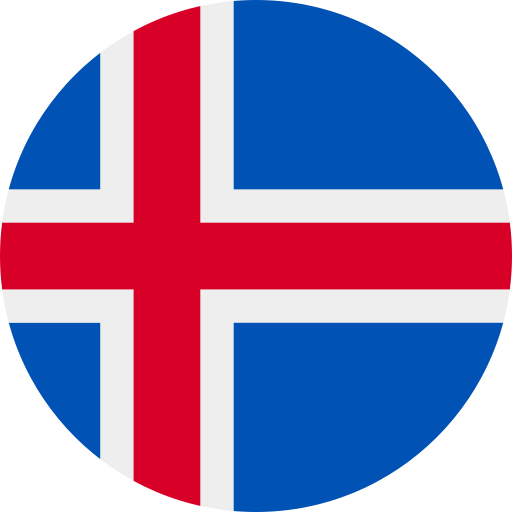
Iceland's beginning sits inside its own written record. The island had no earlier population when Norse settlers arrived in the ninth century, the usable land was claimed within about sixty years, and Landnámabók went on to list 1,500 farm and place names and more than 3,500 of the people who took them. Everything after that is layered on the same habit of writing things down: an assembly founded at Þingvellir in 930, a law code written down in 1117, a republic proclaimed on the same field in 1944, and 376,248 people counted at the start of 2022 living on crust that the Mid-Atlantic Ridge pulls apart by some 19 millimetres a year.
At a glance
- Population
- 392 404
- Capital
- Reykjavík
- Area
- 103 004km²
- Currency
- krISK
- Official language
- Icelandic
- Local time
- UTC
Where it is
Where Iceland is, and what is around it
Iceland has a coast. It shares a border with 2 countries, counted as shared borders, which includes neighbours across water.
 Faroe Islands
 Greenland
What the settlers wrote down about themselves
Norse settlers reached an island with no earlier population, which is what makes the Icelandic record unusual. There was nobody to displace, and the only thing worth arguing about afterwards was who had arrived first. Written sources place the first permanent settlement in 874, with the Norwegian chieftain Ingólfur Arnarson building a farm at a steaming inlet he named Reykjavík. Archaeology agrees in part. A cabin at Hafnir on the Reykjanes peninsula was abandoned some time between 770 and 880, and a longhouse at Stöðvarfjörður in the east may date to about 800, so the island was probably in seasonal use before anyone stayed through a winter.
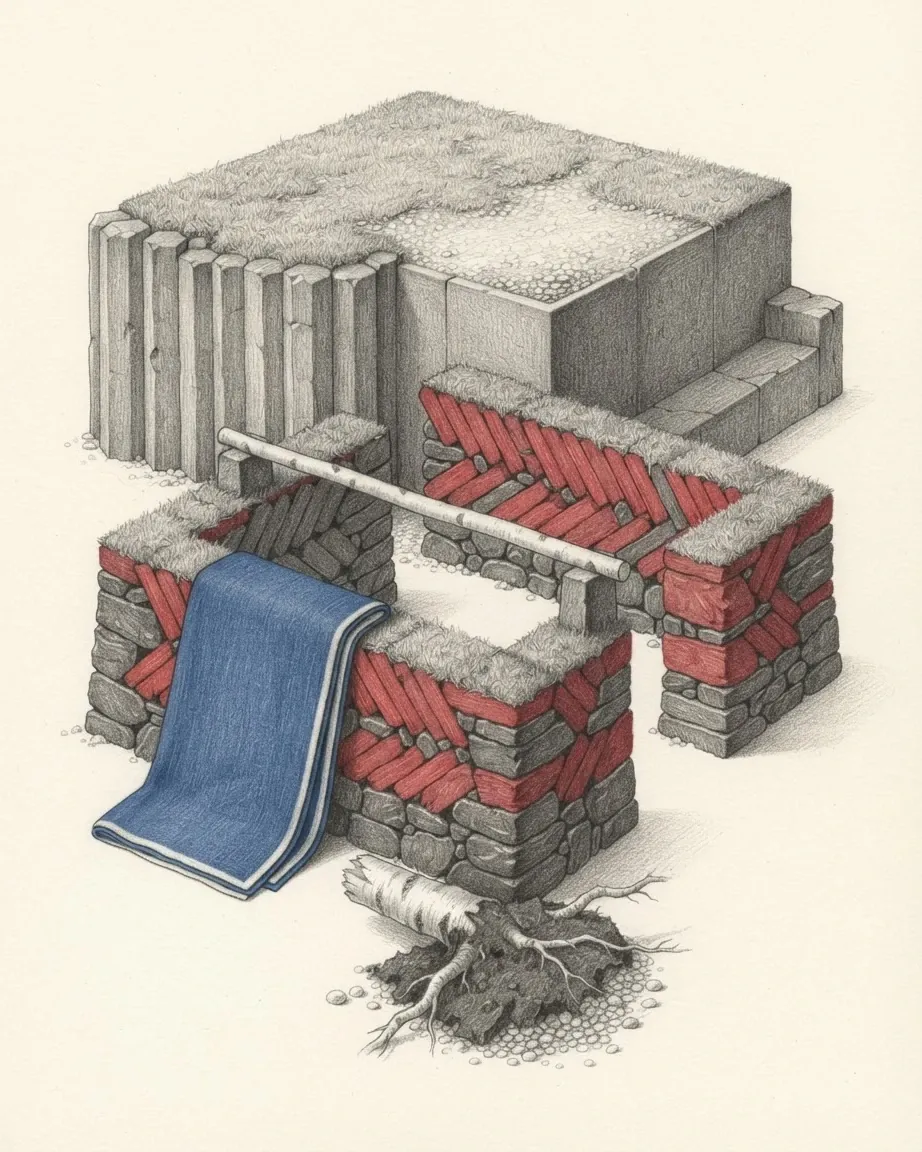
The claiming took roughly sixty years. Íslendingabók states that the country was fully settled by 930, and Landnámabók, compiled in the twelfth century, lists 1,500 farm and place names and more than 3,500 people, arranged geographically. In that same year the chieftains founded the Althing at Þingvellir, where an open-air assembly met for two weeks each summer to set laws and settle disputes, and went on meeting there until 1798. Christianity was adopted at the assembly in the year 1000, by arbitration, with the lawspeaker Thorgeir Thorkelsson taking the decision on condition that both sides accepted it. The law itself was put into writing in 1117 as the Grey Goose laws. Iceland: history follows the chain from the first claim to the republic.
What the ground underneath keeps doing
Iceland's 103,004 square kilometres of land and 4,790 kilometres of coast hold the stretch of the Mid-Atlantic Ridge that stands above sea level. The plates on either side move apart by some 19 millimetres a year, and a mantle plume beneath the rift supplies the magma. Over the past 500 years Icelandic volcanoes have produced a third of the total global lava output. The Reykjanes peninsula began erupting on 19 March 2021, when a fissure opened near Fagradalsfjall, and lava from an eruption that began in December 2023 destroyed three houses in the town of Grindavík the following January.
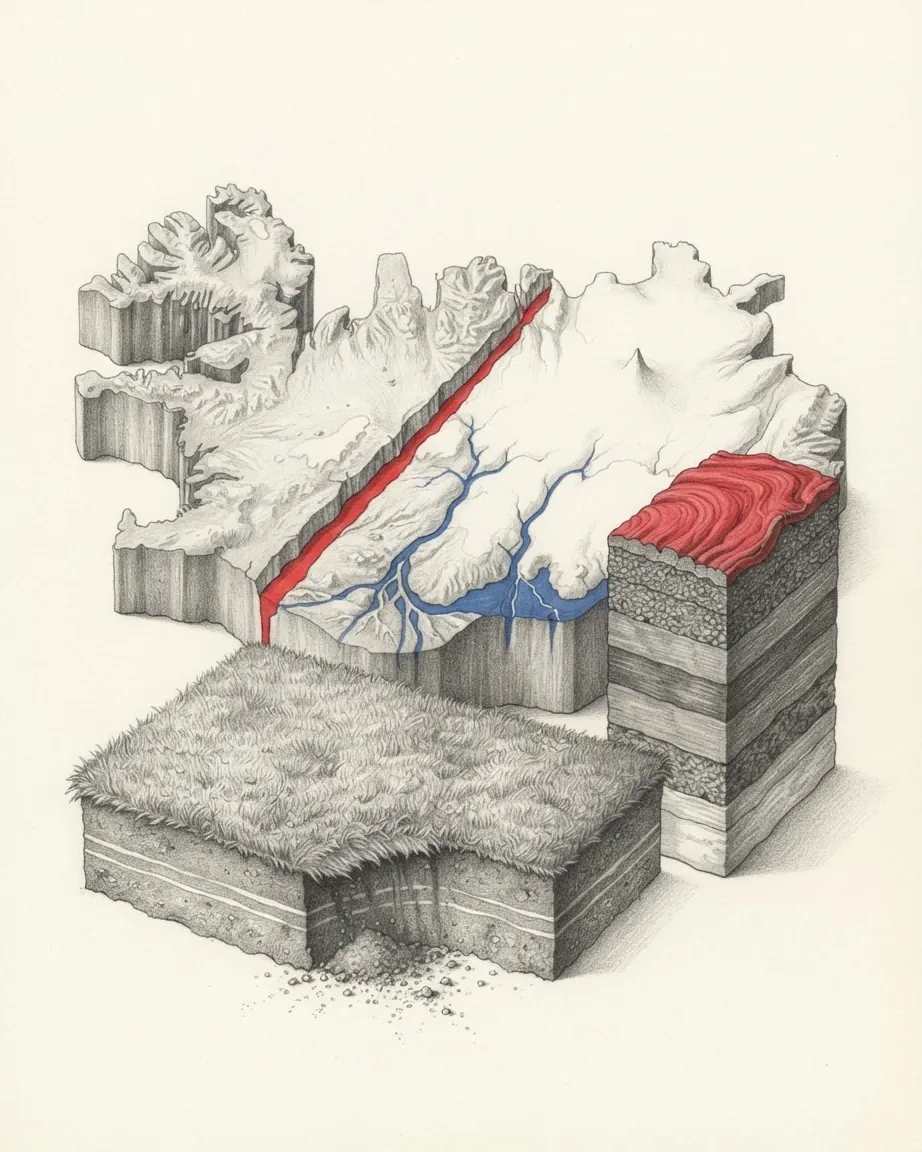
The land the settlers found has not survived them. Woodland covered between 30 and 40% of the island before settlement and survives in small patches of birch, Hallormsstaðaskógur and Vaglaskógur among them. A soil erosion survey run over 25 to 30 years found 39% of the country subject to considerable or extensive erosion, and a more recent survey found 45% of land ecosystems in bad condition; the Soil Conservation Service, a state agency founded in 1907, reseeds and restores about 8,000 hectares a year. 20% of the land is grazed and 1% is cultivated. Hvannadalshnúkur reaches 2,110 metres, Vatnajökull covers 7,764 square kilometres, and the central highlands are all but uninhabited. Iceland: geography measures the rift and the erosion.
Where Icelanders actually live
The population was 376,248 at the start of 2022, and 94.2% of it was urban in 2025. Reykjavík, on the inlet Ingólfur is said to have chosen, held 138,772 people at the start of 2025. Settlement runs along the coast and concentrates in the south-west, because the interior is a volcanic plateau of sand, lava and ice with no farmland in it. The population grew by 1.5% in 2025.
Scale shows up in the national accounts. When an electrical fault stopped work at the Norðurál smelter in October 2025, national aluminium inventories fell by 5.4 billion krónur over the fourth quarter, against a fall of 797 million krónur in the same quarter of 2024, and Statistics Iceland named the fault in its national accounts release. One plant's switchgear is a line in the country's books.
How Icelanders govern a state this small
Icelanders voted over four days from 20 May 1944 on ending the personal union with the Danish crown: 97% were in favour of ending it and 95% approved the new republican constitution. The republic was proclaimed on 17 June 1944 at a session of the Althing held at Þingvellir, on the field where the assembly had first met. That constitution, amended in 1984, 1991, 1995 and 1999, gives legislative power to an Althing of 63 members, sitting in one chamber since May 1991 and elected for four years from six constituencies by proportional representation.
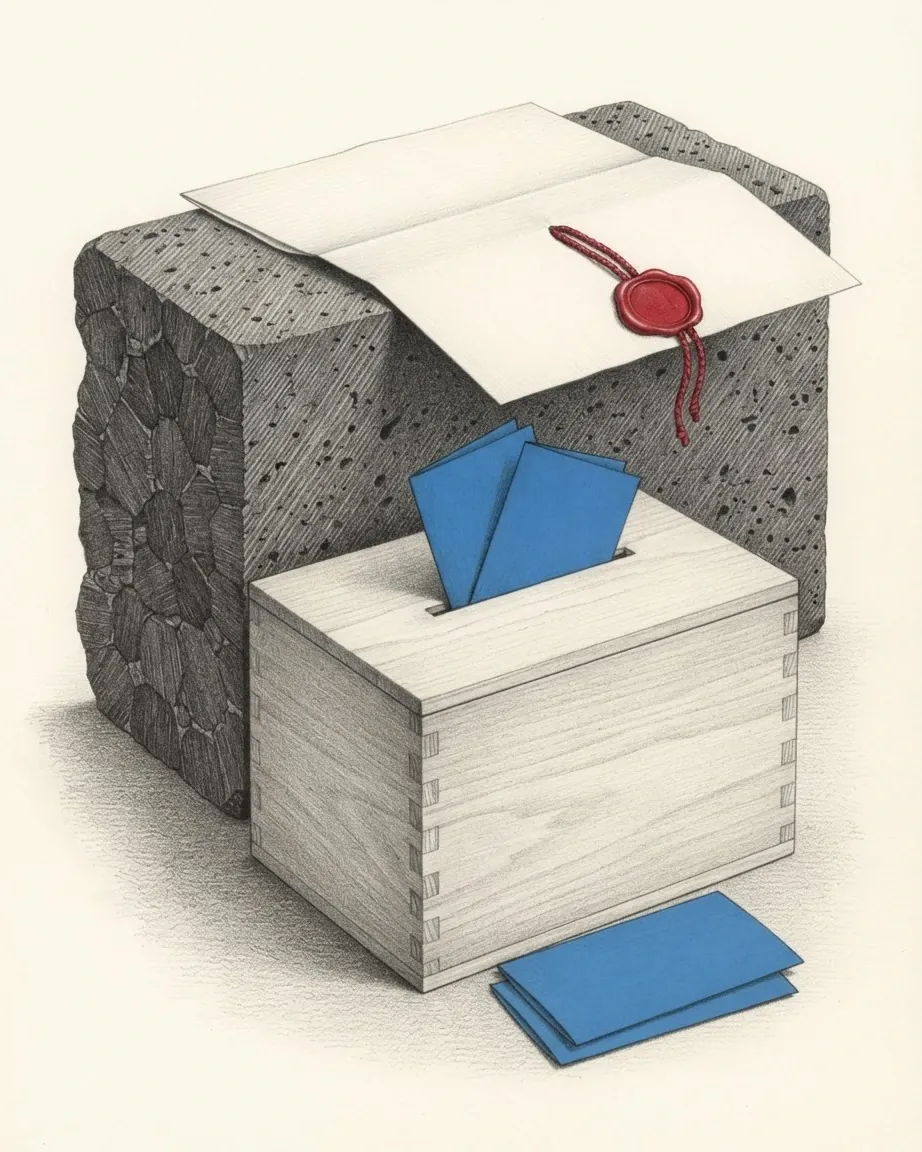
Article 26 is where a directly elected president can stop the Althing. If the president refuses to confirm a bill, it takes force anyway but goes to a secret ballot of everyone eligible to vote, and becomes void if rejected. It was used twice over Icesave, the settlement of British and Dutch depositor claims after the bank failures of 2008. The Althing passed a bill on 30 December 2009 by 33 votes to 30, a petition signed by 56,089 people reached the president, who announced on 5 January 2010 that he would not sign, and the referendum of 6 March 2010 rejected the bill with 98.1% of valid votes against. A renegotiated deal passed on 16 February 2011 was refused on 20 February and defeated on 9 April by 59.8% to 40.2. Iceland: politics follows what a president can do alone, and what the Althing does with the rest.
What Iceland sells besides the fish
| Indicator | Value | Measured |
|---|---|---|
| Output | 38.6 billion USD | 2025 |
| Output per person | 98,323 USD | 2025 |
| Output per person, at purchasing power | 83,431 USD | 2025 |
| Growth | 1.3% | 2025 |
| Inflation | 4.1% | 2025 |
| Unemployment | 3.6% | 2025 |
| Gini coefficient | 26.8 | 2019 |
| Life expectancy | 82.8 years | 2024 |
The exclusive economic zone covers 758,000 square kilometres of water against 103,004 square kilometres of land, and the fleet landed close to 1.04 million tonnes of fish in 2025, 4% more than in 2024. Fish stopped being the whole account some time ago. In 2017 the export mix was 42% tourism, 17% seafood, 16% aluminium and 24% everything else. About 0.7% of the surface is arable.
Electricity is the other commodity, and it cannot be loaded onto a ship. It leaves in solid form instead: smelting began at Straumsvík in 1969, and since the early 2020s data centres have bought the same power and sent their output down a fibre. Renewable sources supplied about 85% of total primary energy as of the mid-2020s, with imported oil covering most of the transport and the fishing fleet. Provisional national accounts put output at 4,956 billion krónur for 2025, growing 1.3% in volume.
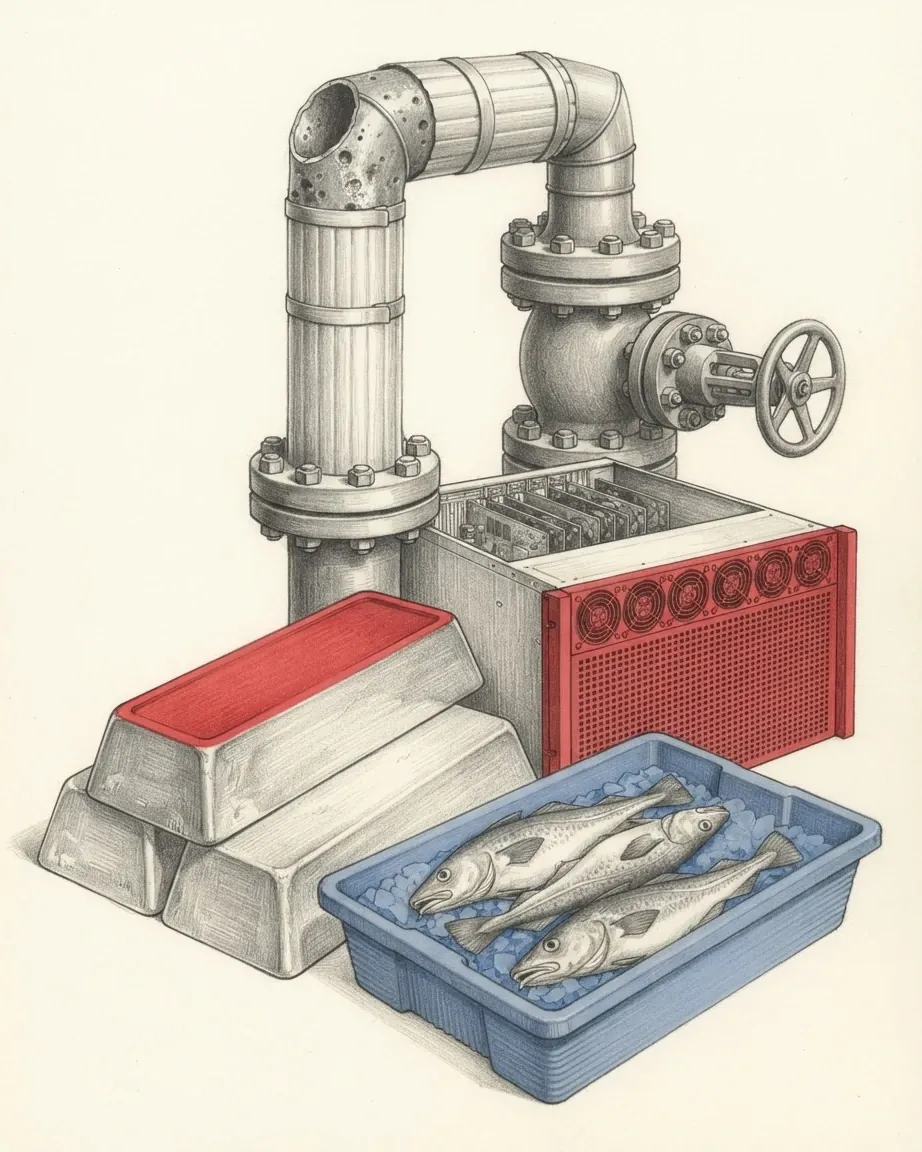
Banking ran on the same logic at a scale the state could not cover. Assets of Kaupthing, Landsbanki and Glitnir reached 14.437 trillion krónur at the end of the second quarter of 2008, more than eleven times national output, external debt stood at 9.553 trillion krónur, and all three banks were in receivership within October, with more than half a million depositors outside Iceland losing access to their accounts. The route from waterfall to metal to server rack is in Iceland: economy.
What Icelanders read and speak
The Icelanders' sagas were written between 1200 and 1220 and describe families living in Iceland from 930 to 1030, and Icelanders read them today with updated spelling and footnotes and nothing else in the way. Written Icelandic has changed little since the eleventh century. The language keeps four cases, three genders and a wide assortment of irregular declensions that the other Germanic languages shed, and new words are built from Icelandic roots instead of borrowed, which is why the word for a computer is tölva, a compound of the old words for number and seer. Act No. 61 of 2011 makes Icelandic the national language, obliges public authorities to keep it usable in every area of society, and gives Icelandic Sign Language the same standing for those who depend on it.
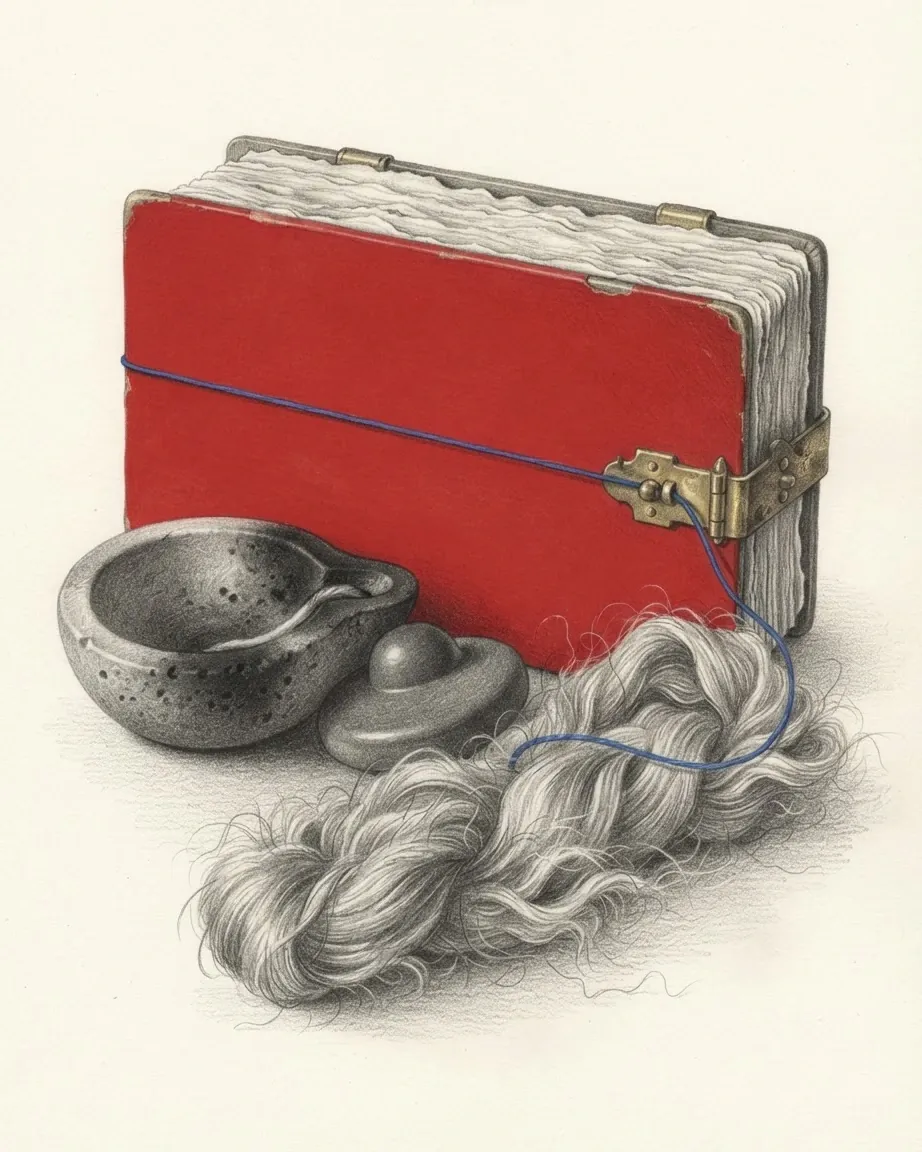
Getting the manuscripts back took twenty-six years. Most had gone to Copenhagen with the collector Árni Magnússon, a Danish law returning them was contested in court and settled by the Danish Supreme Court on 19 March 1971, a treaty followed on 1 April, and on 21 April the Codex Regius of the Poetic Edda and Flateyjarbók were received in Iceland with public ceremony. The division of the collection was completed in 1986 and the last manuscripts arrived in 1997. Iceland: culture takes up the sagas, the food and the swimming pools.
Why the visitors keep arriving
The Icelandic Tourist Board counted 2,250,066 foreign departures through Keflavík in the twelve months to July 2026, 1.7% fewer than in the twelve months before. Holiday travel accounted for 92.8% of them and the average stay was 6.8 nights. Visitors from the United States were 636,052 of the total, or 28.3%, ahead of the United Kingdom at 244,637 and Germany at 150,397.
Where they sleep is concentrated. Of 183 hotels operating in July 2026, holding 12,696 rooms between them, 59 were in the Capital Region with 5,670 rooms and 55 were in the South with 3,215. Foreign guests took about 593,000 hotel nights that month, 92% of the total, and guests from the United States alone took 206,000 of them. Two national parks carry World Heritage inscriptions, Þingvellir for the assembly site and the rift it sits in, and Vatnajökull for an ice cap holding ten central volcanoes, eight of them subglacial. Iceland: travel sets out the seasons and the ring road.
Where Iceland stands among other states
Iceland joined the United Nations on 19 November 1946, and the Althing voted to join NATO on 30 March 1949 amid domestic controversy and rioting. The country has no standing army. A lightly armed coast guard also operates the air defence system, a United States command held the base at Keflavík from 1951 until the last American forces left on 30 September 2006, and NATO members have flown periodic air policing patrols since May 2008.
Fishing limits produced the longest running quarrel. Iceland extended its fishing zone from 3 to 4 nautical miles in 1952, to 12 in 1958, to 50 in 1972 and to 200 in 1975, and each extension brought confrontations between the coast guard and British trawlers escorted by the Royal Navy.
Europe remains the open question. Iceland entered the European Economic Area in 1994 and the Schengen area in 1999, which give it access to the single market and passport-free travel without membership. The Althing voted on 17 July 2009 to apply for membership of the European Union, the government dissolved its accession team on 13 September 2013, and on 12 March 2015 the foreign minister, Gunnar Bragi Sveinsson, wrote to the Union withdrawing the application without the approval of the Althing, which the Union answered by stating that the application had not been formally withdrawn. A referendum on resuming negotiations was held on 29 August 2026, and 52.8% voted against restarting them.
Read
Everything about Iceland
Six articles, each answering one question and each written to be read on its own.
The record
What is measured about Iceland
Pages that nobody writes, built from the record and from the data files beside it.
Common questions
Questions about Iceland
When was Iceland settled?
Written sources date the first permanent settlement to 874 and Ingólfur Arnarson's farm at Reykjavík, and Íslendingabók says the country was fully settled by 930. Archaeology pushes the earliest traces back a little: a cabin at Hafnir was abandoned between 770 and 880, and a longhouse at Stöðvarfjörður may date to about 800.
Why can Icelanders still read the sagas?
Written Icelandic has changed little since the eleventh century. The Icelanders' sagas were composed between 1200 and 1220, and modern editions update the spelling and add footnotes while leaving the language itself intact. Grammar carried the weight: Icelandic kept four cases, three genders and a long list of irregular forms that the other Germanic languages lost, and new vocabulary is coined from Icelandic roots instead of borrowed.
Is Iceland in the European Union?
No. Iceland joined the European Economic Area in 1994 and the Schengen area in 1999, which give it the single market and passport-free travel. The Althing voted to apply for membership on 17 July 2009, the accession team was dissolved in September 2013, and a letter withdrawing the application followed on 12 March 2015. A referendum on 29 August 2026 rejected restarting negotiations, with 52.8% voting no.
Does Iceland have an army?
No standing army. A lightly armed coast guard runs the air defence system and a crisis response unit handles peacekeeping duties. Iceland joined NATO on a vote of the Althing on 30 March 1949, a United States command held the Keflavík base from 1951 until the last American forces left on 30 September 2006, and NATO members have flown periodic air policing patrols over the island since May 2008.
How does Iceland make its money?
Output was 38.6 billion dollars in 2025, or 98,323 dollars a head. Fishing landed close to 1.04 million tonnes in 2025 from an exclusive economic zone of 758,000 square kilometres. Cheap renewable electricity is sold in solid form, as aluminium since 1969 and as data centre capacity since the early 2020s. In 2017 tourism was 42% of exports, seafood 17% and aluminium 16%.
Nearby in the catalogue