A border 1,300 kilometres long with the Soviet Union shaped the whole of the Finnish twentieth century. Forest, lake and low granite fill 390,905 square kilometres in the far north-east of Europe, and 5,652,881 people lived on them as of 31 December 2025. It became independent on 6 December 1917 and joined NATO on 4 April 2023.
At a glance
- Population
- 5 652 881
- Capital
- Helsinki
- Area
- 390 905km²
- Currency
- €EUR
- Official languages
- Swedish
- Local time
- UTC+02:00
Where it is
Where Finland is, and what is around it
Finland has a coast. It shares a border with 3 countries, counted as shared borders, which includes neighbours across water.
 Norway
 Russia
 Sweden
How much space Finland has for its people
Finland has 390,905 square kilometres for the 5,652,881 people counted on 31 December 2025, which leaves most of it empty. It borders Sweden, Norway and Russia, and it faces Estonia across the Gulf of Finland.
The capital is Helsinki, 694,392 people as of 31 December 2025, on the southern coast, and the population is concentrated in the south while the north is close to empty. The land is low and forested throughout, rising only in the far north-west arm of the country, where Halti reaches 1,361 metres.
Two languages are national: Finnish, which is Uralic and unrelated to the Indo-European languages around it, and Swedish, which is Germanic and the language of a minority concentrated on the coasts and in Åland.
| The record in short | |
|---|---|
| Population | 5,652,881 as of 31 December 2025 |
| Area | 390,905 km² |
| Capital | Helsinki, 694,392 people as of 31 December 2025 |
| Highest point | Halti, 1,361 m |
| National languages | Finnish and Swedish |
| Currency | euro |
| Independent since | 6 December 1917 |
| NATO | joined 4 April 2023 |
Finland: geography takes up the forest and the ground under them.
How the country came to exist
A Finnish political identity and a distinctively Finnish politics first developed under Russian rule, which ran from 1809 to 1917. During that period Finland held an autonomous position within the Russian Empire, with its own legislative powers, which is the unusual circumstance that made independence possible: the institutions existed before the state did.
Independence was declared on 6 December 1917 and was followed by a civil war and a brief experiment with monarchy. An attempt to make Prince Frederick Charles of Hesse king of Finland failed, a republican constitution was adopted instead, and K. J. Ståhlberg was elected first president in 1919.
The twentieth century then tested the result. The Molotov-Ribbentrop Pact of 23 August 1939 divided Europe into spheres of influence between the Soviet Union and Nazi Germany, and in accordance with it the Soviet Union launched the Winter War on 30 November 1939 to annex Finland. The country survived as an independent state, at the cost of territory and of a foreign policy constrained for the following half century.
That constraint ended with the Soviet Union. Finland joined the European Union in 1995, adopted the euro in 2002, and joined NATO on 4 April 2023, ending a policy of military non-alignment that had lasted since the war. Finland: history follows the sequence.
How the republic is arranged
Finland is a parliamentary representative democracy and a republic. Parliament has 200 members elected for four-year terms by proportional representation in multi-seat constituencies, and it is the centre of the political system.
The presidency is the distinctive part. The head of state is elected directly for a six-year term and leads foreign policy and is supreme commander of the defence forces, which is a narrower role than the office once held and a wider one than most European presidencies retain.
The current constitution was written on 1 March 2000, replacing an order whose first iteration had been adopted on 17 July 1919 and which comprised four constitutional laws and several amendments. The 2000 text consolidated them and shifted power from the president towards parliament and the government.
Åland is the exception inside the system. The islands, lying near the 60th parallel between Sweden and Finland, hold local autonomy by virtue of an international convention of 1921, implemented most recently by the Act on the Autonomy of Åland of 1951. Finland: politics sets out all of it.
What the economy is doing
Output in 2025 came to 317.0 billion United States dollars, which is 56,149 dollars a head, or 65,884 dollars at purchasing power parity. Growth stalled at 0.2% and inflation at 0.3%, while unemployment stood at 9.5%, which is high for a Nordic country and the standing weakness of the Finnish record. Income is distributed very evenly, at a Gini coefficient of 27.4 in 2023.
The economy stagnated in 2025 and the OECD describes the recovery in 2026 as fragile and uneven, constrained by higher energy prices and global volatility. Elevated energy prices are eroding household purchasing power, raising production costs and weakening confidence, and growth is projected at 0.8% in 2026 before strengthening to 1.2% in 2027 as energy pressures ease and lower interest rates take effect.
The underlying structure rests on forest, engineering and technology. Finland is heavily forested and the forest industries built the modern economy, and the country's later reputation rests on electronics and software. Finland: economy takes the sectors and the labour market.
What the culture holds
Finnish culture combines an indigenous inheritance, represented by the two national languages and by the sauna, with common Nordic and European elements.
The national romantic period of the 1890s is where modern Finnish identity was assembled. Finnish nationalism based on the Kalevala, the compiled national epic, spread through that decade, and Jean Sibelius became internationally known writing music explicitly connected to it. A country still inside another empire built a cultural case for itself before it had a political one.
Finland holds 8 properties on the UNESCO World Heritage List, seven cultural and one natural, which is a small number reflecting a country whose built heritage is mostly wooden and whose landscape is vast and uniform rather than dramatic.
The education system is the country's best-known modern export, and the sauna is the oldest and most universal domestic institution. Finland: culture works through the languages, the epic, the design tradition and the sauna.
Where visitors go
Finnish tourism divides between the southern cities and Lapland, and the two run on opposite seasons. Helsinki and the south work in summer, when the days are almost endless and the archipelago and lakes are usable; Lapland works in winter, on snow, darkness, northern lights and a set of activities available nowhere further south.
The distances are the planning constraint. A country 1,100 kilometres long with most of its population in the southern fifth means reaching Lapland is a flight or an overnight train rather than a drive.
The lake district in the centre is the third destination and the one foreign visitors most often miss, and it is where the summer cottage culture that defines the Finnish year actually happens. Finland: travel covers the seasons and the practicalities.
Read
Everything about Finland
Six articles, each answering one question and each written to be read on its own.
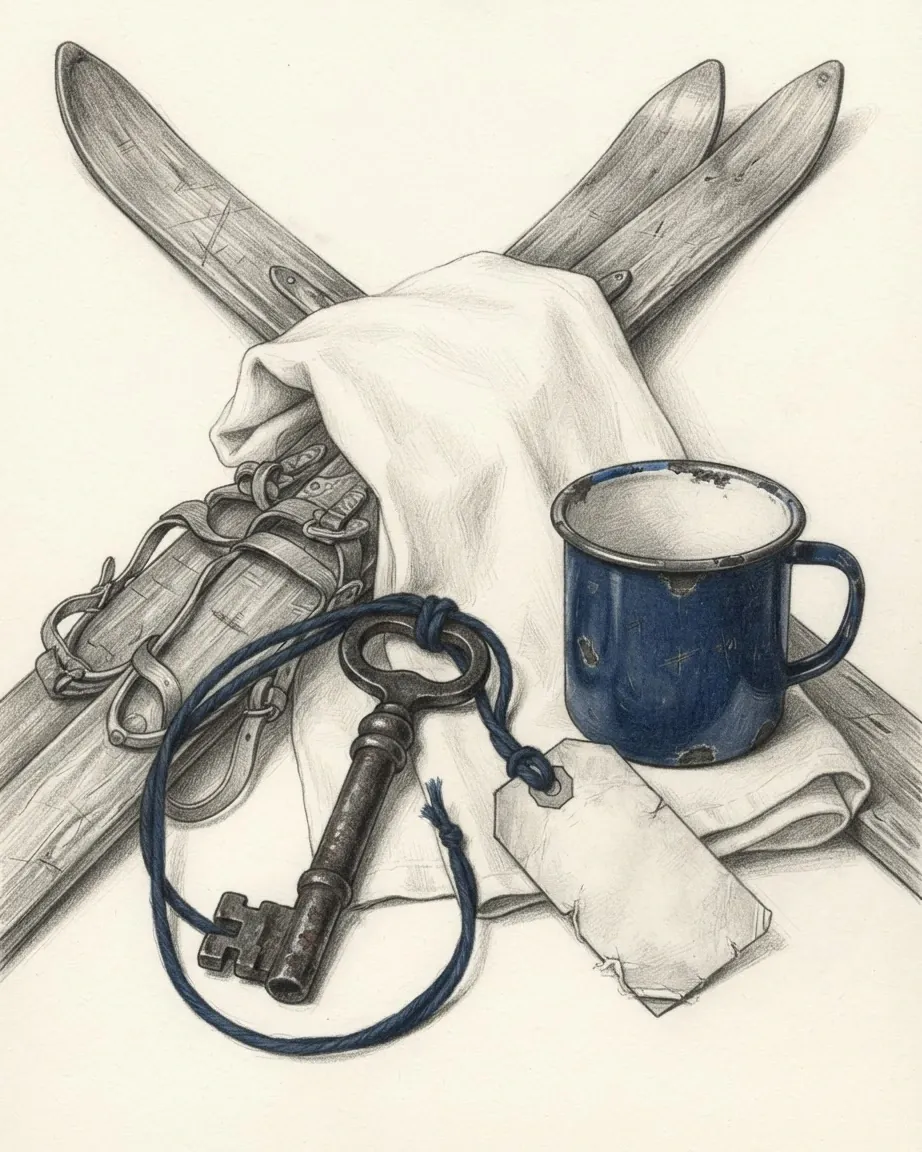
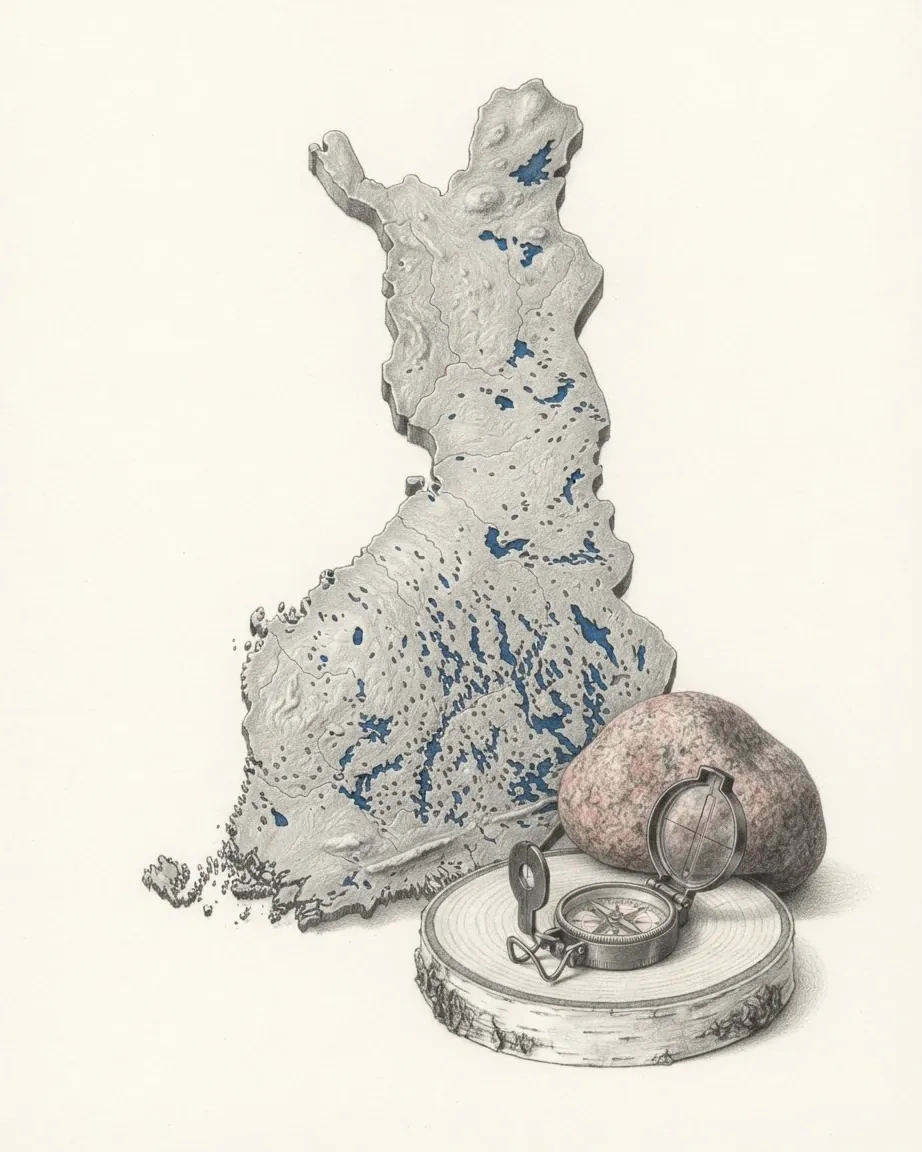
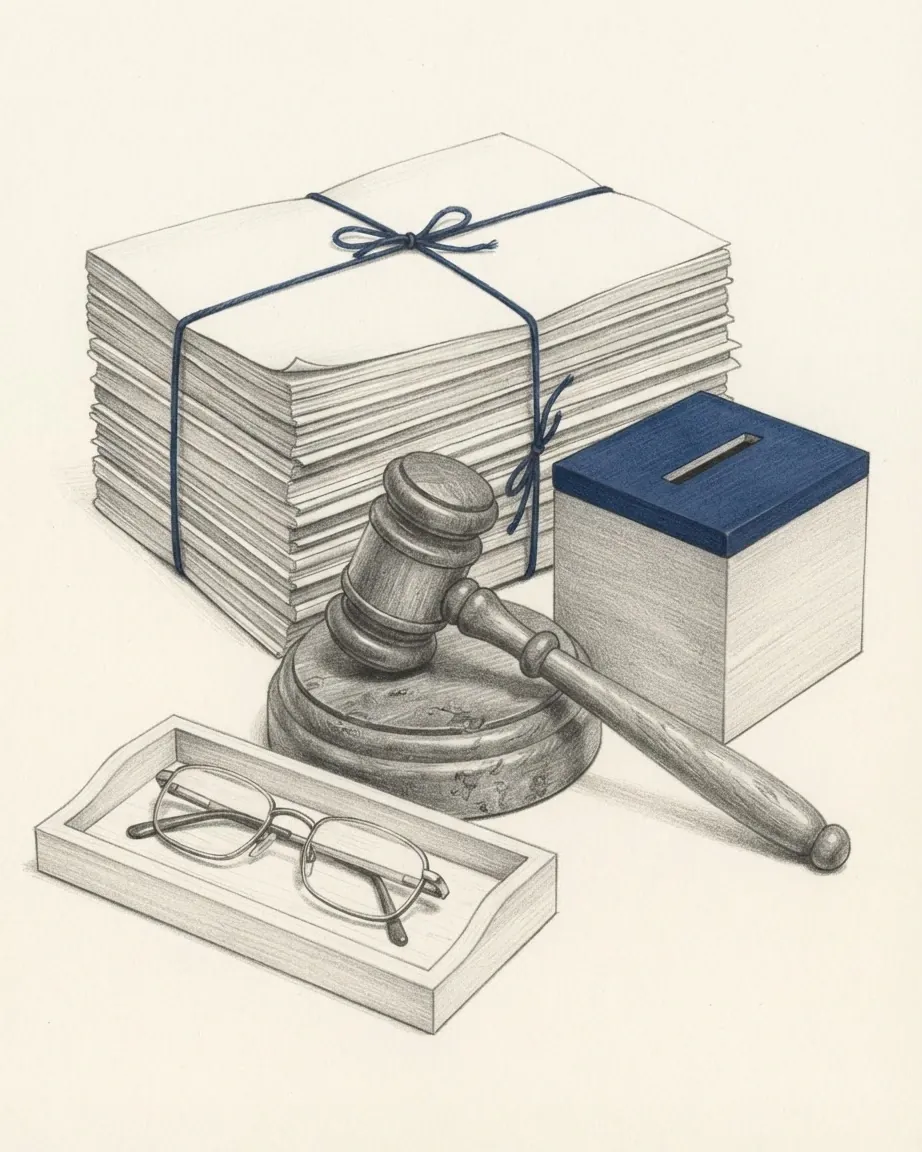
The record
What is measured about Finland
Pages that nobody writes, built from the record and from the data files beside it.
Common questions
Questions about Finland
How big is Finland?
390,905 square kilometres, which is large by European standards, for the 5,652,881 people counted on 31 December 2025. It borders Sweden, Norway and Russia and faces Estonia across the Gulf of Finland.
What made Finland independent?
On 6 December 1917, after more than a century as an autonomous grand duchy within the Russian Empire from 1809. A civil war and a failed attempt to install a German prince as king followed, and a republican constitution was adopted with K. J. Ståhlberg elected first president in 1919.
What brought Finland into NATO?
It joined on 4 April 2023, ending a policy of military non-alignment maintained since the Second World War. Finland had survived the Winter War, launched by the Soviet Union on 30 November 1939 under the Molotov-Ribbentrop Pact, and spent the following half century with its foreign policy constrained by that neighbour.
What languages are spoken in Finland?
Finnish and Swedish are both national languages. Finnish is Uralic and unrelated to the Indo-European languages around it; Swedish is Germanic and is the language of a minority concentrated on the coasts and in the autonomous islands of Åland.
Nearby in the catalogue