The Icelandic króna
Currency · ISK · kr · 1 country
Iceland's króna began as the Danish krone, brought in during 1874, and went its own way after the Scandinavian Monetary Union broke up and Iceland won sovereignty in 1918. The Central Bank of Iceland, founded in 1961, holds the exclusive right to issue notes and coins. A reform in 1981 swapped 100 old krónur for one new króna.
The abbreviation
Iceland writes kr, often with a full stop, as the central bank does in 100 kr., after the amount. The letters abbreviate króna, which means crown and comes from the Latin corona, a name shared with the other currencies of the old Scandinavian Monetary Union.
The same abbreviation stands for 3 other currencies, among them the Danish krone and the Norwegian krone.
- ISO code
- ISK
- ISO number
- 352
- Fraction
- None, amounts are whole units
An amount, written out
kr 1,234
- kr 1,234English
- 1.234 kr.IcelandicIceland
In English the sign comes before the amount. Where the Icelandic króna is used, it comes after the amount in Iceland.
Where the Icelandic króna is the official currency
Iceland keeps the króna to itself, though a 2009 government report weighed the euro and a 2012 idea proposed the Canadian dollar instead.
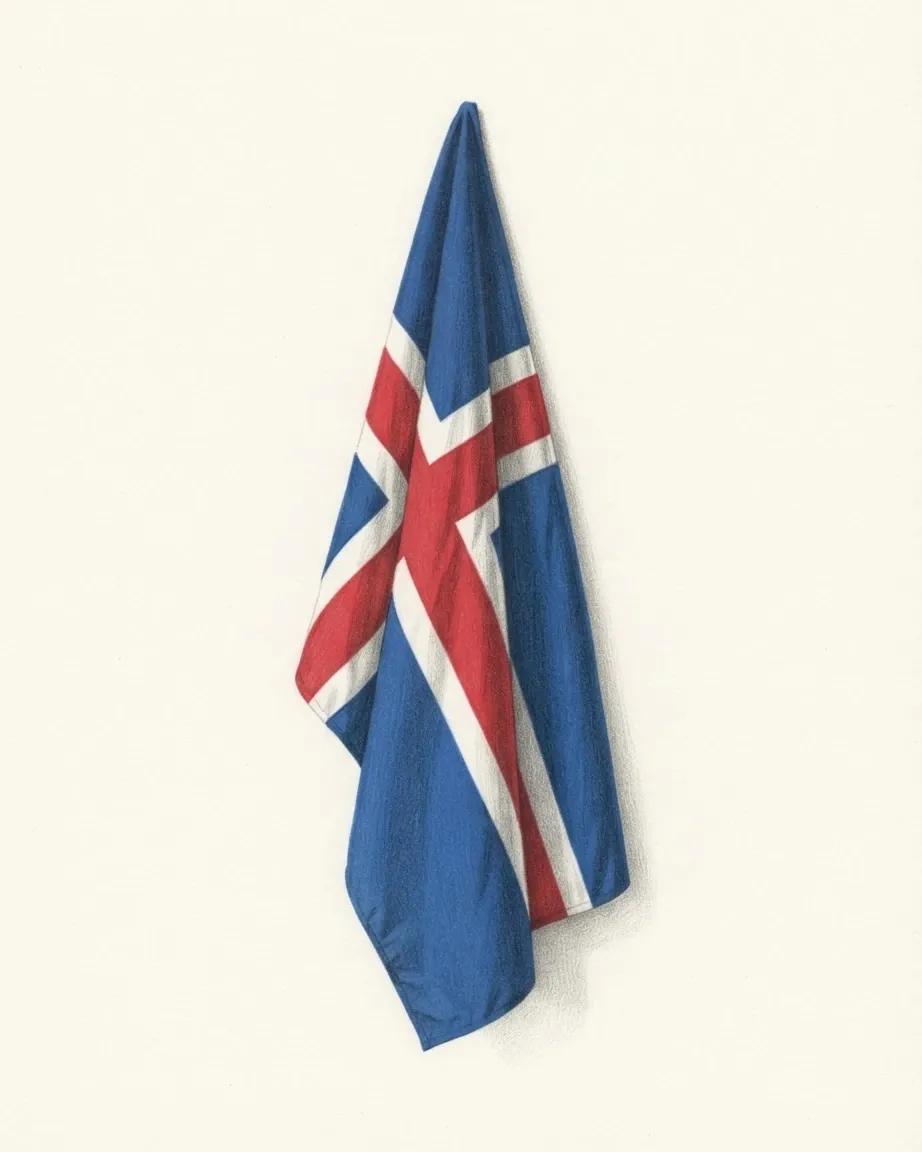
About the Icelandic króna
Who has issued Icelandic money
Several bodies printed Icelandic notes before there was a central bank. The Landssjóður Íslands issued 5, 10 and 50 krónur notes from 1885. The Bank of Iceland took over in 1904, the state treasury, Ríkissjóður Íslands, began its own notes in 1921, and from 1928 the Landsbanki Íslands issued everything from five krónur up.
The Central Bank of Iceland, Seðlabanki Íslands, got the sole right to issue notes when it was established in 1961, and its first notes were made in England by De La Rue. The right to issue coins passed to it from the National Treasury in 1967. Each note carries the date of the law its legal basis derives from: the notes of 1981 cite the law of 29 March 1961, and the reissues from 1994 cite the law of 5 May 1986.
How the króna split from the Danish krone
Denmark's krone reached Iceland in 1874 and replaced the rigsdaler. Iceland printed its own notes from 1885 while still using the Danish unit. The two separated after the Scandinavian Monetary Union dissolved at the start of the First World War and Iceland gained sovereignty from Denmark in 1918.
Iceland's first coins followed in 1922, 10 and 25 aurar pieces. So did a 23% devaluation against the Danish krone, the start of an independent monetary policy. The króna was pegged to the British pound from 1925 until the spring of 1939, and then to the US dollar until 1949. The coins carried a royal monogram until 1946, two years after Iceland abolished the monarchy it had shared with Denmark in a personal union.
Why the króna lost two zeros
Inflation drove the reform of 1981, when 100 old krónur became one new króna and the currency code moved from ISJ to ISK. New coins of 5, 10 and 50 aurar came with it, but they did not last. In September 2002 the government issued two regulations requiring invoices and financial claims to be stated and paid in whole krónur and withdrawing every coin worth less than one króna. Banks stopped accepting aurar coins from 2003, and the eyrir ceased to exist as a subunit in 2007.
What the coins and notes show
The central bank lists five coins as legal tender: 1, 5, 10, 50 and 100 krónur. Þröstur Magnússon designed them. Every obverse carries the guardian spirits of Iceland, and the reverses are sea creatures: a cod on the króna, two dolphins on the five, four capelin on the ten, a shore crab on the fifty and a lumpfish on the hundred, which entered circulation in 1995. The small coins moved from cupronickel to nickel-plated steel, the króna in 1989 and the five and ten in 1996.
The notes run 500, 1000, 2000, 5000 and 10,000 krónur, designed by Kristín Þorkelsdóttir with Stephen A. Fairbairn, and every one is watermarked with a portrait of Jón Sigurðsson. The 10,000 arrived in 2013. The bank no longer produces the 2000, though it remains legal tender.
How the banking crash reopened the currency question
The banking sector collapsed in October 2008. On 7 October the central bank tried to peg the króna at 131 to the euro and gave up the next day; trade in the currency was then suspended. A report from the Minister for Foreign Affairs in March 2009 weighed keeping the króna, adopting the euro outside the EU, and adopting it through membership, and recommended membership. The Alþingi voted narrowly in July 2009 to apply. The application has been frozen since 2013, and in March 2015 the government wrote to the Council of the EU that Iceland should not be seen as a candidate.
A second idea surfaced in 2012: adopting the Canadian dollar unilaterally. Canada's ambassador said Iceland could do so if it wished. A deputy governor of the central bank argued in January 2012 that it would be prudent only if Iceland's banks were owned by a strong foreign bank able to supply liquidity. As of 2018 the authorities had no plans to adopt a foreign currency.
Common questions
Questions about the Icelandic króna
Why doesn't Iceland have coins worth less than one króna?
Two regulations signed in September 2002 required invoices and financial claims to be stated and paid in whole krónur and withdrew every coin worth less than one króna. Banks had stopped taking aurar coins by 2003, and the eyrir, the hundredth of a króna, formally ceased to exist in 2007. Prices in Iceland are whole numbers.
Did Iceland ever consider using the Canadian dollar?
It came up in 2012, when Icelanders debated adopting a foreign currency on their own. The Canadian dollar had support, and Canada's ambassador to Iceland said Iceland could adopt it if it wished. A deputy governor of the Central Bank of Iceland set conditions: Iceland's banks would need a strong foreign owner, and the switch would cost the purchase of new base money for the banking system. The euro had been the other candidate since the 2008 crash, through an EU application the Alþingi approved in July 2009 and that has been frozen since 2013. No plans to adopt a foreign currency existed as of 2018.
What are the fish on Icelandic coins?
Each coin has a sea creature on the reverse. The one króna shows a cod, the five two dolphins, the ten four capelin, the fifty a shore crab and the hundred a lumpfish. The obverse of every coin shows the guardian spirits of Iceland; on the one króna it is the giant alone. Þröstur Magnússon designed the set.
Is the Icelandic króna the same as the Danish krone?
It started as the same money. The Danish krone came to Iceland in 1874; the two parted after 1918. A devaluation against the Danish krone in 1922 began Iceland's own monetary policy, and a reform in 1981 made 100 old krónur into one new one.