The flag of Denmark
Dannebrog · since 1748
 Back to Denmark
A red flag with a white Nordic cross, the upright of the cross set towards the hoist. A cross banner in these colours is attested with the kings of Denmark from the 14th century, and the proportions of the flag still rest on a regulation of 1748. No law defines its shade of red; a Danish standard gives Pantone 186 C.

At a glance
- Adopted
- 1748
- Proportion
- 28:37
- Colours
- Earlier flags
- 4
The colours
The colours of the flag of Denmark, in the order it has them
- 0176.8%
Red
dannebrogsrødThe field
- HEX
#C8102E- RGB
200 16 46- CMYK
11 100 85 2- Pantone
186 C- RAL
3028
- 0223.2%
White
hvidThe cross
- HEX
#FFFFFF- RGB
255 255 255
No law gives these codes. HEX and RGB are the colour this site draws the flag in; CMYK, Pantone and RAL are the values most often published for it.
Construction
How the flag is drawn
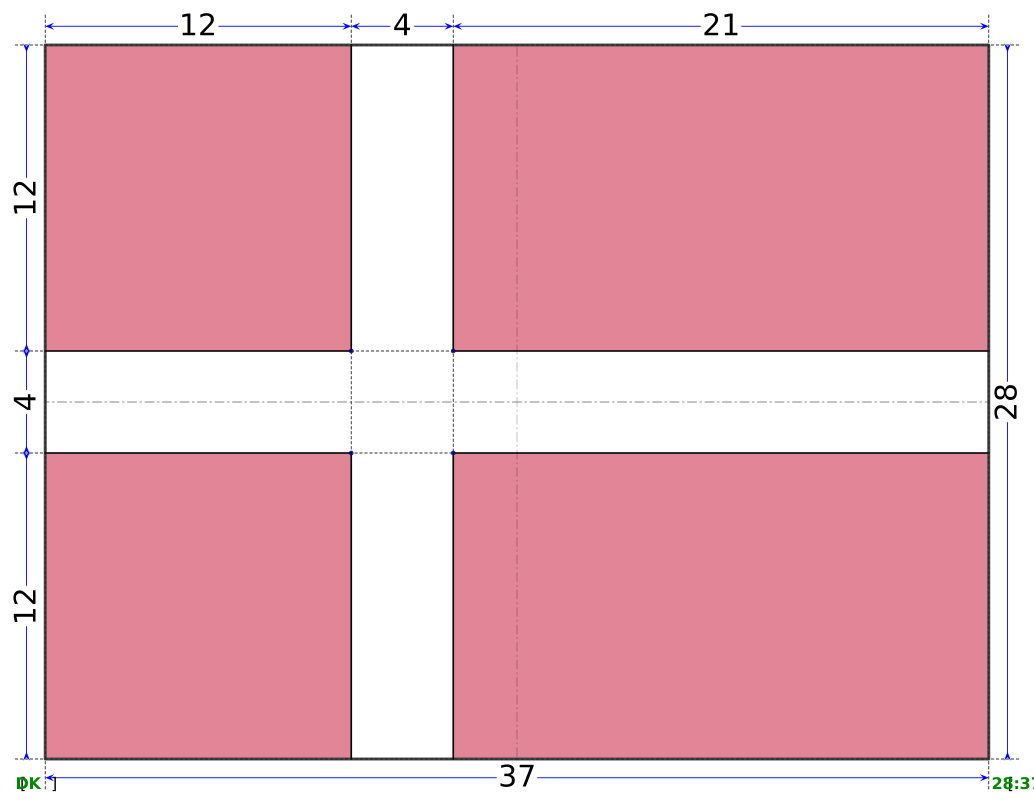
A red field with a white cross that reaches all four edges, the upright of the cross set towards the hoist so that the two fields at the hoist are square and the two in the fly are longer.
- Cross width
- 1/7 of the flag's height, 4 parts in 28
- Height
- 12, 4 and 12 parts
- Length
- 12, 4 and 21 parts: square fields at the hoist, longer fields in the fly
- The 1748 length
- Fly fields 6/4 of the hoist fields, 12, 4 and 18 parts, a flag of 28:34. Never cancelled
- Ministry of Defence
- Its ceremonial book gives the rectangular flag as 24, 8 and 36 parts in length and 24, 8 and 24 in height
- Flagpole
- The pole should be five times the height of the flag: a 10 m pole carries a flag 200 cm high
Other forms
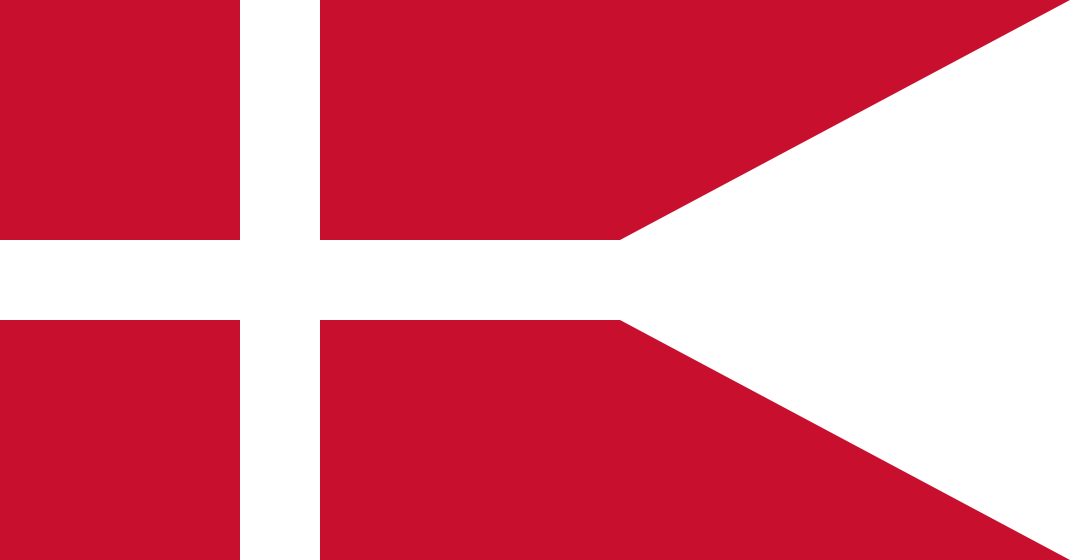
- Splitflag, the flag of the Kingdom
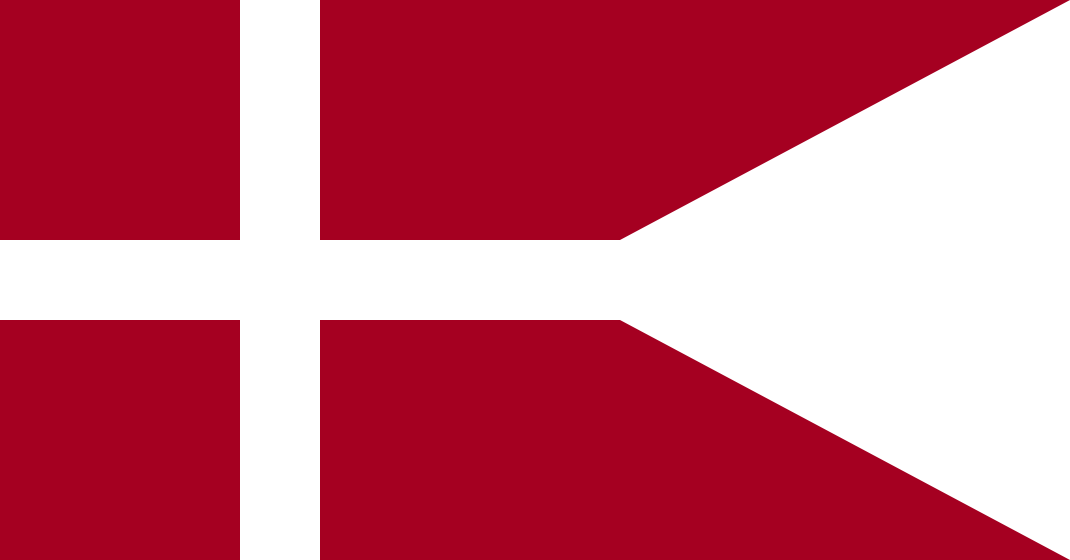
- The flag ending in a swallowtail, at 56:107, in the same red as the civil flag. Reserved for the state, the armed forces and the royal house, with individual exceptions granted to institutions and companies.
- Naval ensign
- The Orlogsflag: an elongated swallow-tailed flag at 7:17, in a darker madder red, Pantone 194 C. Flown only at sea, by the Royal Danish Navy.
- Royal standard
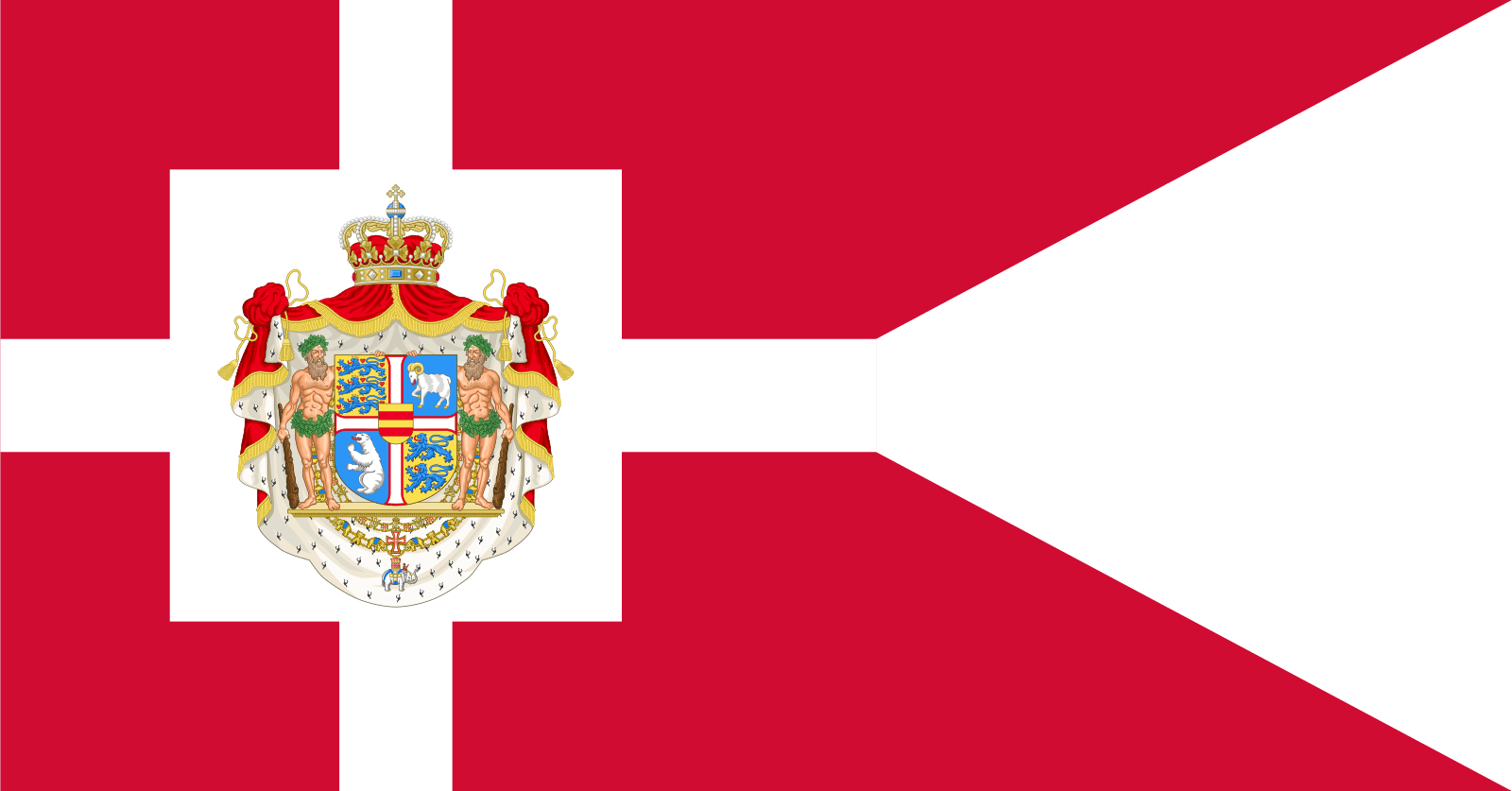
- The swallow-tailed flag with the monarch's coat of arms on a white square panel of 32 parts at the centre, in a flag of 56:107. The current version dates from 1 January 2025.
- Yacht flag
- A swallow-tailed flag in naval red with the letters Y.F. in gold in the upper hoist field, for privately owned pleasure boats.
Meaning
What each part stands for
- The cross
- Christianity. The white cross on red dates from the age of the Crusades and was used by others, the Holy Roman Empire among them, before it became Danish
- Red and white
- Read in the Middle Ages as blood and purity, and so tied to the story of Christ
- The name
- The second part, brog, means a piece of cloth. The first is read either as the Danes' or as an old Frisian word for red, which gives either the banner of the Danes or the red banner
- The legend of 1219
- Recorded in the 1520s, it has the flag fall from the sky to give Valdemar II victory in Estonia, first dated to Fellin in 1208 and later to Lindanise on 15 June 1219. Since 1913, 15 June has been celebrated as Valdemar's Day
History
How the flag of Denmark got here
- 1340
The kings' cross banner
1340 → 11 Jul 1748
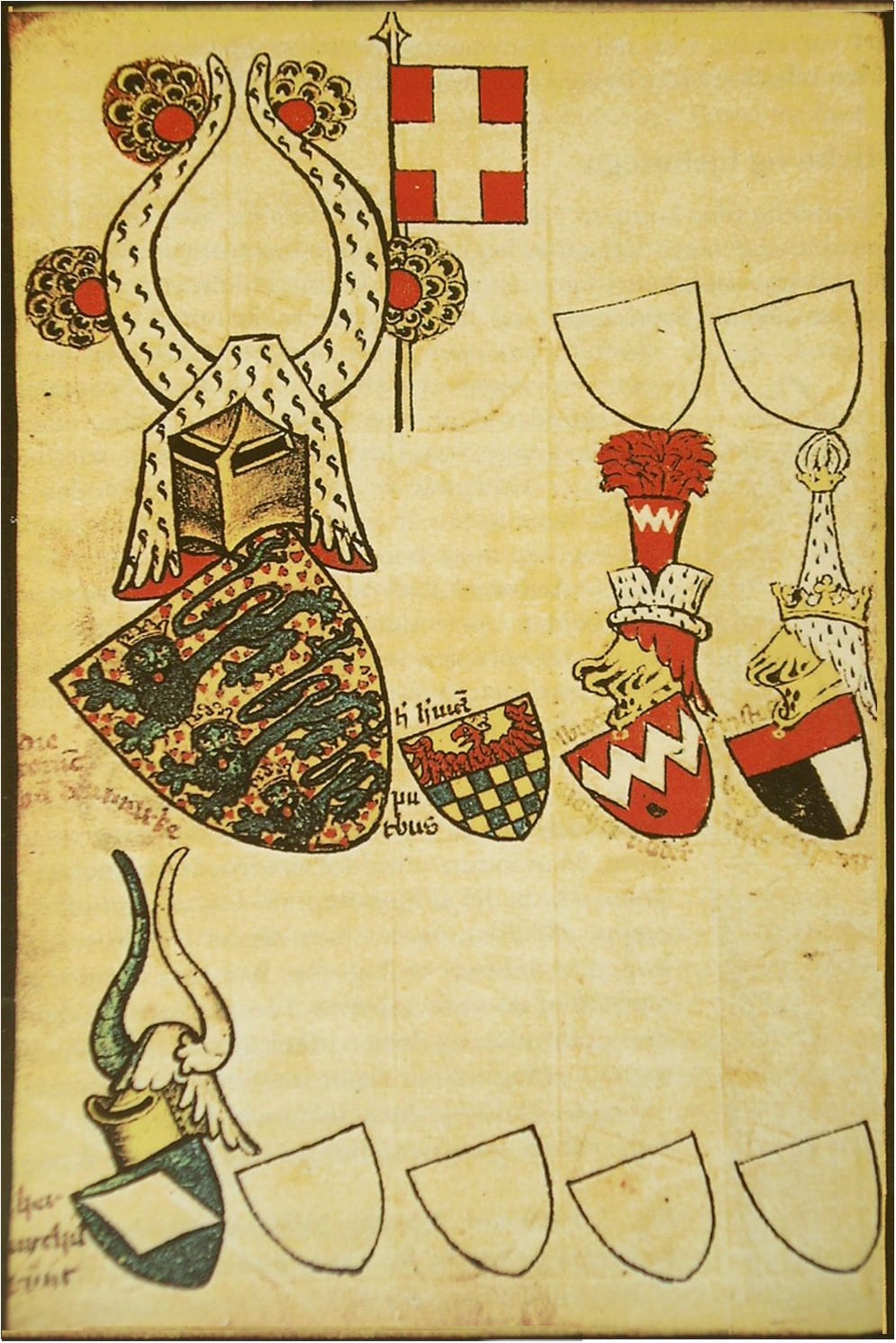
The Gelre Armorial, of about 1340 to 1370, shows a square red banner with a white cross beside the arms of the king of Denmark, the earliest undisputed colour image of it. Valdemar IV bore a cross on his seal in 1356. The banner was square at first and took its elongated cross after the Reformation, and from the 16th century it marked Danish ships.
- 1748
The merchant flag regulated
11 Jul 1748 → 7 Jan 1834
The regulation of 1748 fixed the flag of merchant ships at 28:34. The flag became a regimental colour in the army in 1785, and of the militia in 1801.
- 1834
Banned for private use
7 Jan 1834 → 7 Jul 1854
By the 1830s the military flag had become a popular national flag, and a circular forbade citizens to fly it. It was flown widely all the same during the First Schleswig War of 1848 to 1850, and a regulation of 1854 allowed citizens the rectangular flag, though not the swallow-tailed one.
- 1854
A flag for citizens
7 Jul 1854 → 1 May 1893
Private use was allowed again. Permission to fly the swallow-tailed flag was granted to individual institutions and companies, especially after 1870.
- 1893

The longer flagIn use
1 May 1893 → today
Flags had been getting longer in use, and the regulation of 1893 accepted any length up to 28:37 without cancelling the 1748 proportions. In 2005 Danish Standard DS 359 gave the red as Pantone 186 C.
The law
What defines it, and who flies it
- 11 July 1748
Regulation on the flags of merchant ships
A red flag with a white cross and no split end. The cross is 1/7 of the height, the two fields at the hoist are square and the two outer fields are 6/4 of their length. Still in force, and the basis of the national flag.
- 1 May 1893
Regulation of 1 May 1893
Allowed the flag to be longer, up to 28:37, without cancelling the 28:34 of 1748.
- 25 October 1939
Royal resolution for the Danish Navy
Defines the naval ensign as a swallow-tailed flag in deep red or madder red, and corrects its dimensions.
- 2005
Danish Standard DS 359, Flag cloth
A standard, not a law. Gives the red of the flag as Pantone 186 C and that of the naval ensign as Pantone 194 C, and sets the cloth: 100% polyester, 130 to 175 grams per square metre.
In use
No law regulates how citizens fly the plain flag; custom and rules for particular cases cover it
Any citizen may fly the plain rectangular flag on land, and ships not owned by the state fly it at sea
By custom it is raised at sunrise but not before 08:00 and lowered by sunset, unless it is lit
At half-mast the lower edge of the flag sits at the middle of the pole. Before 1743 a black and white cross flag was used for mourning instead
By custom it should never touch the ground, and the Danmarks-Samfundet society recommends burning a worn-out flag
From 10 April 1915 no other flag could be hoisted on Danish soil; the ban was lifted on 24 June 2023 after a Supreme Court ruling
Related flags
The flags it is confused with or comes from
 Sweden
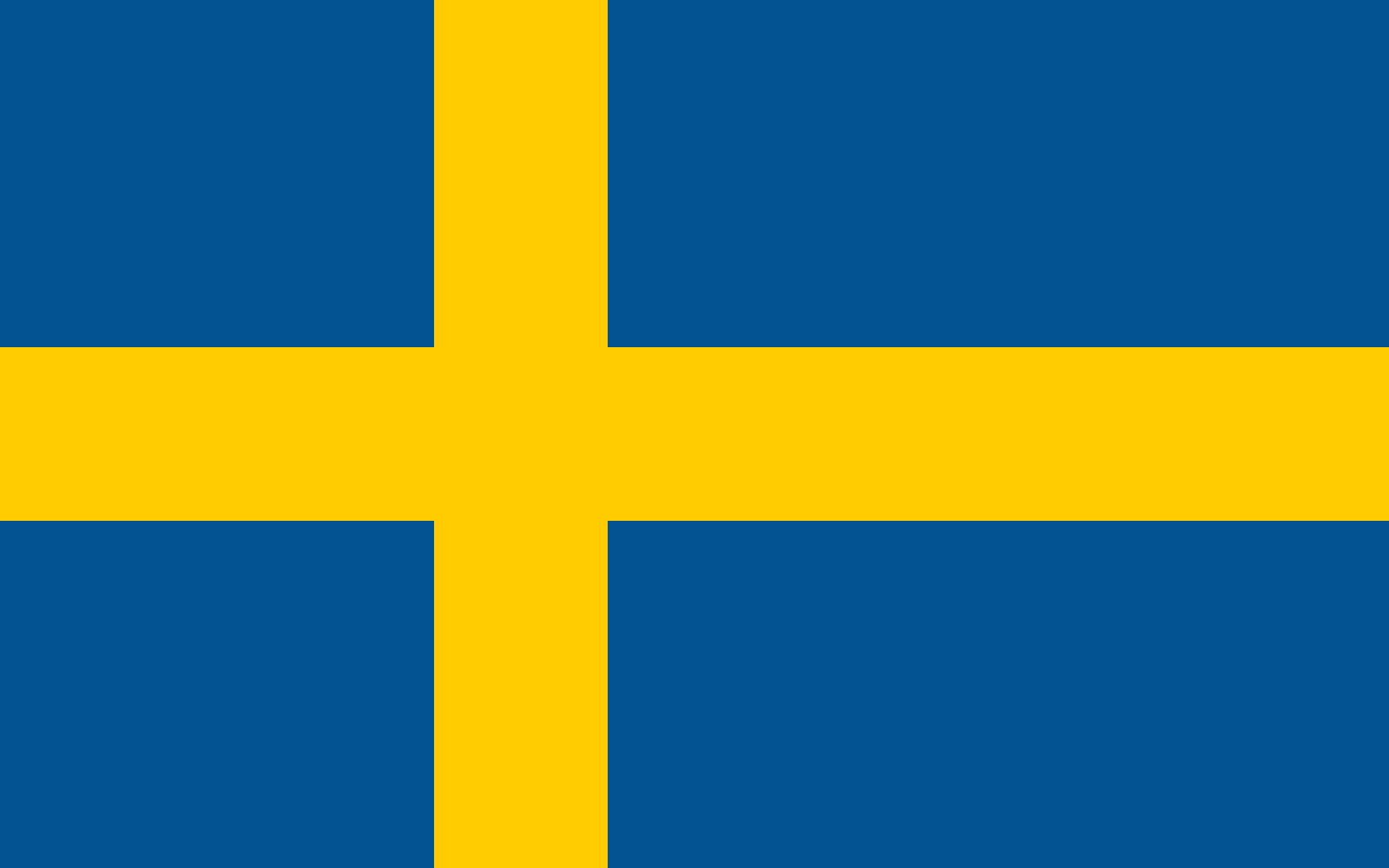
- A Nordic cross flag. The Danes were the first to adopt the cross design, which is now on all the Nordic flags.
 Norway
- A Nordic cross flag. A regulation of 1630 already let armed Norwegian merchant ships fly the Danish swallow-tailed flag in Danish war service.
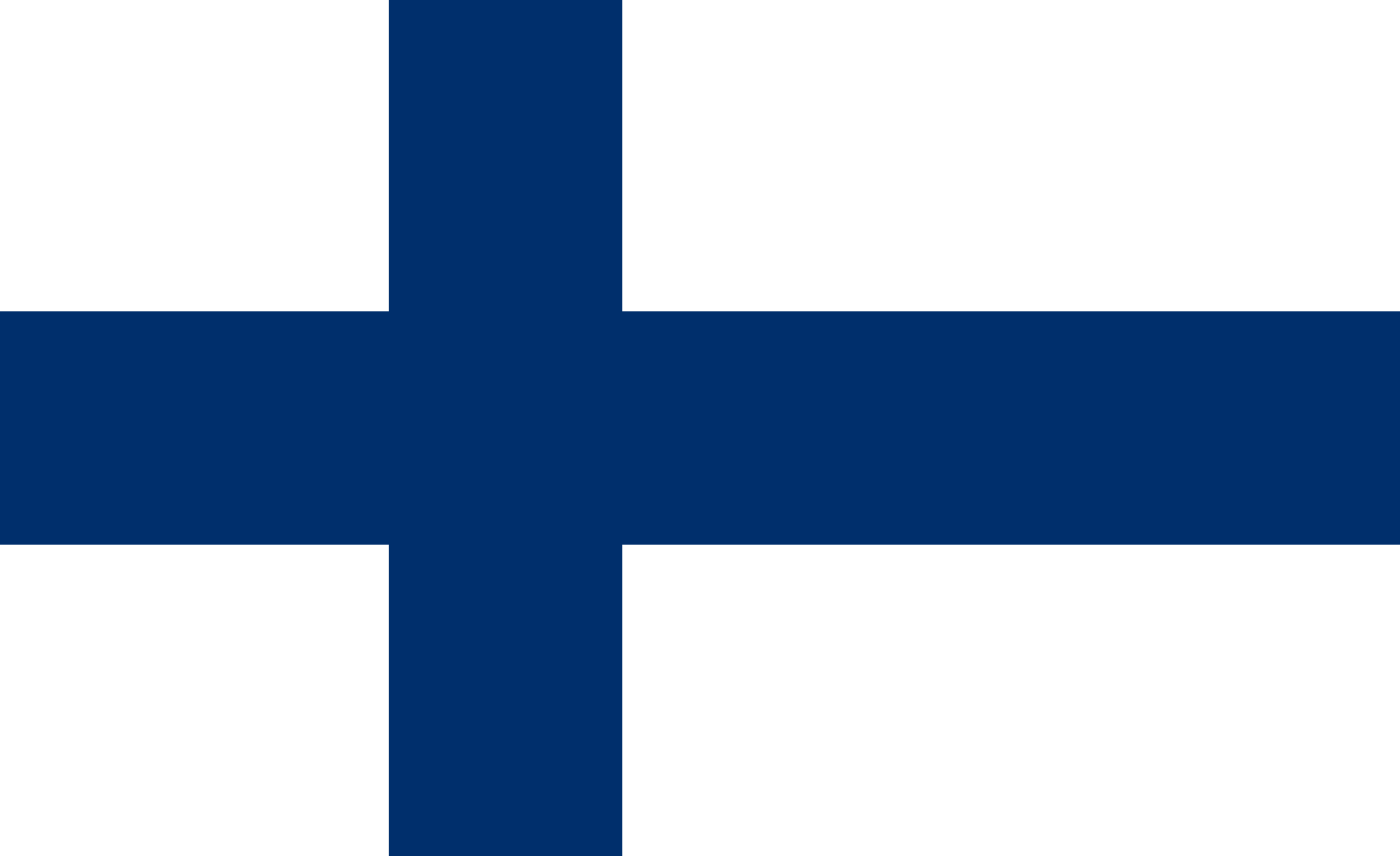 Finland
- A Nordic cross flag.
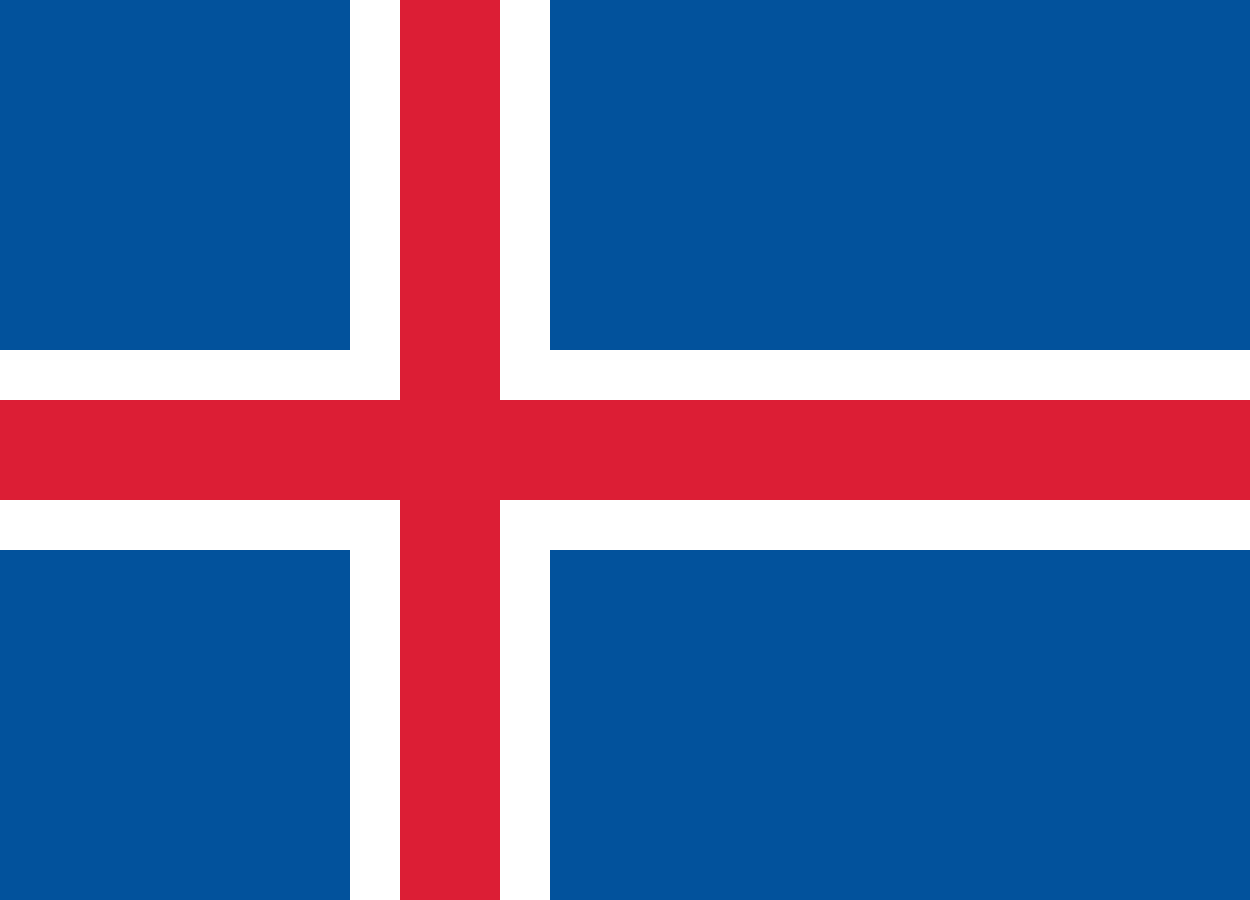 Iceland
- A Nordic cross flag.
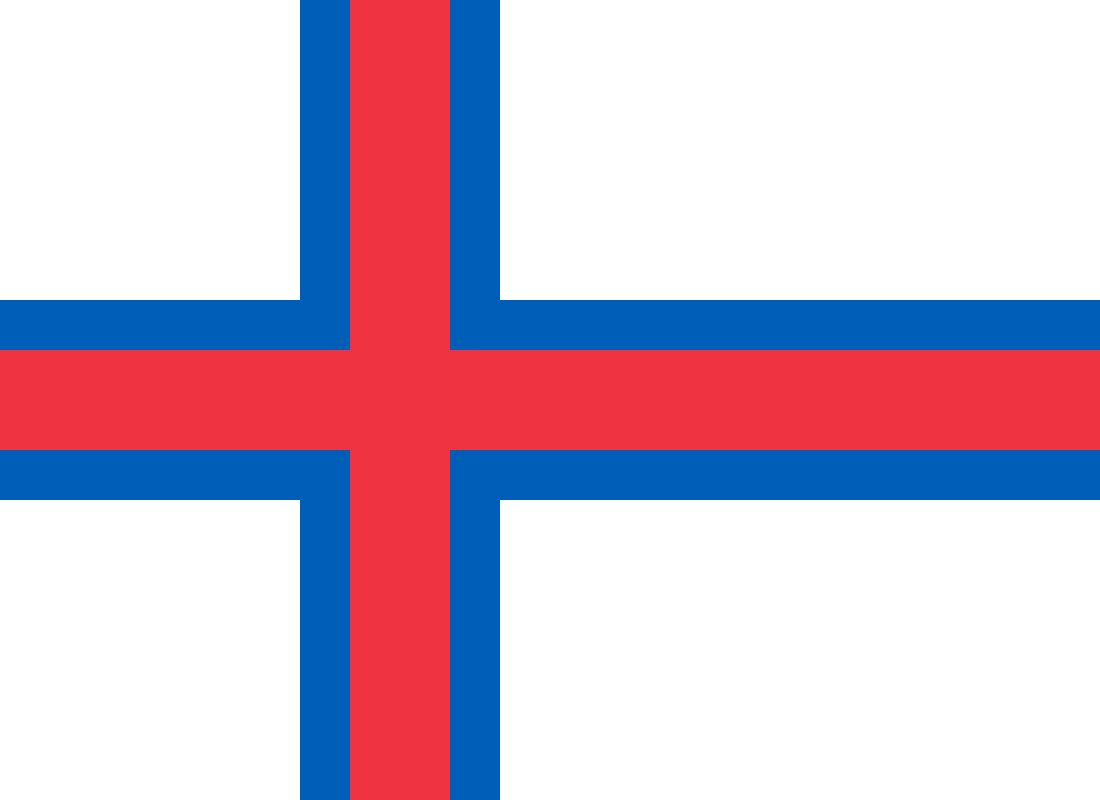 Faroe Islands
- An autonomous territory in the Kingdom of Denmark, with its own Nordic cross flag.
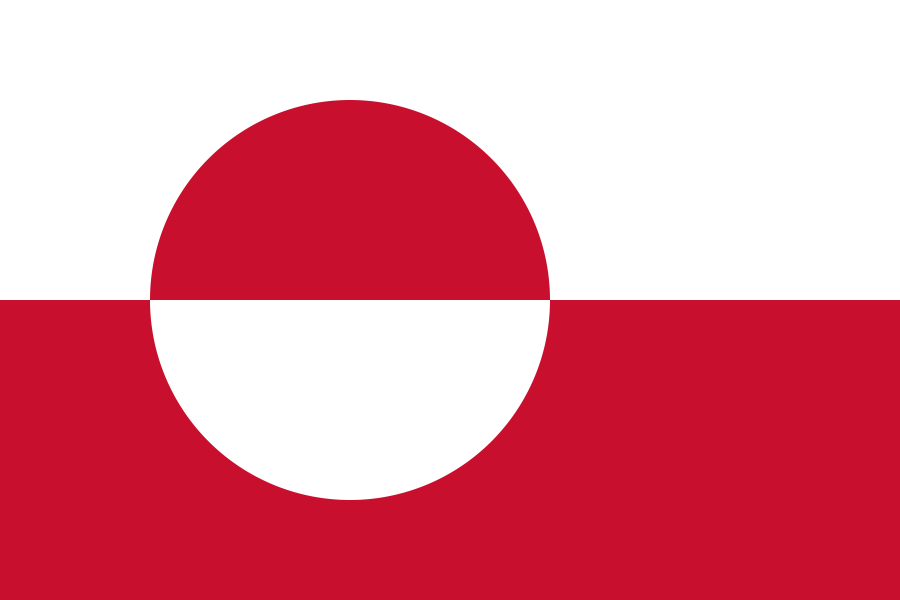 Greenland
- An autonomous territory in the Kingdom of Denmark, with its own flag.
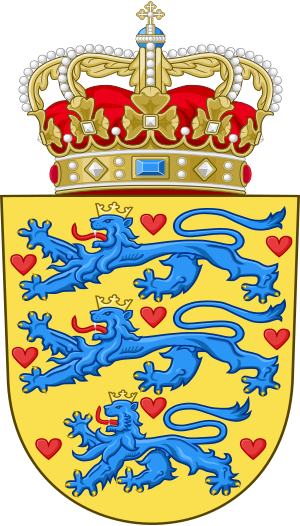
Coat of arms
The arms of Denmark