The flag of Greenland
Kalaallit erfalasuat · since 1985
 Back to Greenland
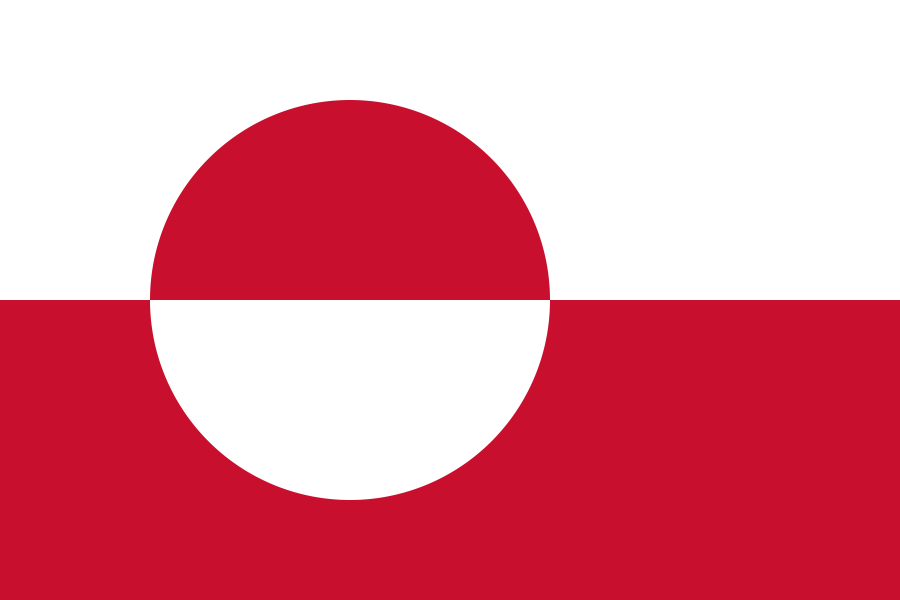
A white over red bicolour with a disc set towards the hoist, its colours counterchanged: red above the line, white below. Thue Christiansen's design was adopted on 21 June 1985 after a vote of 14 to 11 over a green and white Nordic cross. It is the only flag of a Nordic country or territory without a Nordic cross. In Greenlandic it is called Erfalasorput.
At a glance
- Adopted
- 1985
- Proportion
- 2:3
- Colours
- Earlier flags
- 2
- Designer
- 1
The colours
The colours of the flag of Greenland, in the order it has them
- 0150.2%
White
Upper stripe, the lower half of the disc
- HEX
#FFFFFF- RGB
255 255 255- CMYK
0 0 0 0
- 0249.8%
Red
aappalaartoqLower stripe, the upper half of the disc
- HEX
#C8102E- RGB
200 16 46- CMYK
0 89 68 0- Pantone
032 C- RAL
3028
No law gives these codes. HEX and RGB are the colour this site draws the flag in; CMYK, Pantone and RAL are the values most often published for it.
Construction
How the flag is drawn
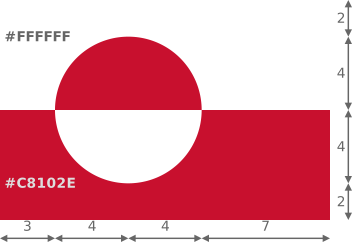
Two horizontal stripes of equal width, white over red, with a disc centred on the dividing line and set towards the hoist; the upper half of the disc is red and the lower half white.
- Stripes
- Two, of 6 parts each
- Disc
- Radius 4 parts, a diameter of 8
- Disc position
- Centre on the line between the stripes, 7 parts from the hoist
- Counterchange
- The upper half of the disc is red, the lower half white
- Flag sizes
- The flag association lists sizes slightly shorter than 2:3, from 96 × 142 cm for a 4.8 m flagpole to 180 × 268 cm for a 9 m flagpole
Other forms
- Pennant
- The national flag in its usual proportions, extended at the fly end. The flag association sets no length for it.
Meaning
What each part stands for
- White stripe
- The glaciers and the ice cap, in the designer's own account of 1995
- Red stripe
- The ocean
- Red half of the disc
- The fjords in the designer's brochure, and more widely read as the sun half sunk below the horizon, with the light and warmth that return at midsummer
- White half of the disc
- The icebergs and the pack ice
- Red and white
- The colours of the Danish flag, standing for centuries as part of the Kingdom of Denmark
- No cross
- Read by the Nordic Council as a sign of political freedom and of affinity with the other Inuit peoples around the pole
Who drew it
- Thue Christiansen
- Greenlandic politician and artist; later designed the stamp for the flag's 25th anniversary in 2010
History
How the flag of Greenland got here
- Undated
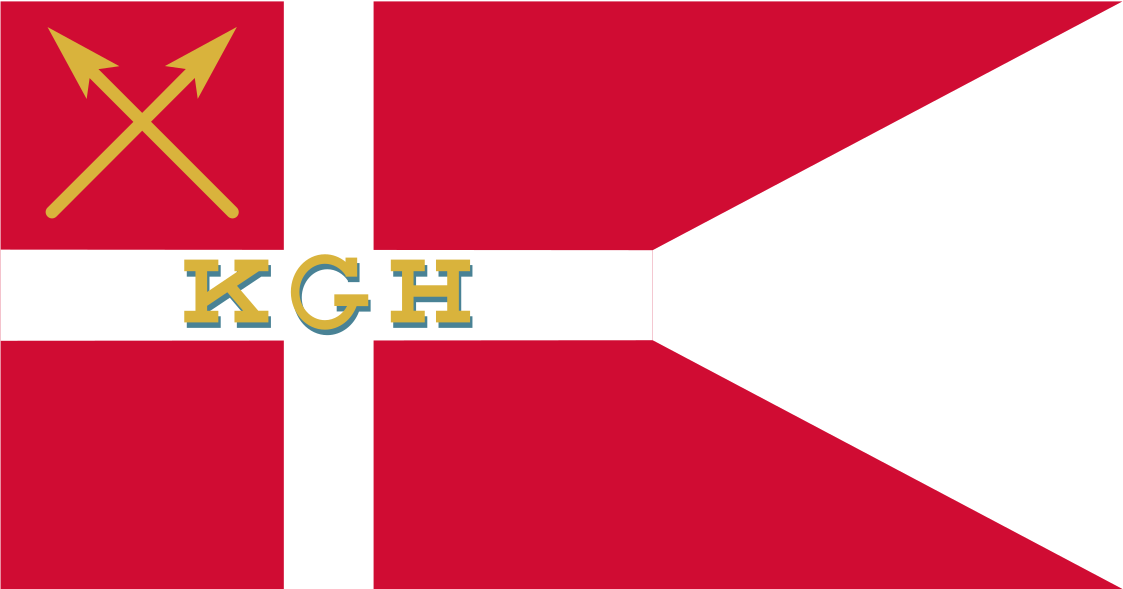
The Royal Greenland Trading Department
Undated → 1908
The flag of the Royal Greenland Trading Department, used before 1908.
- Undated

The Danish flag
Undated → 21 Jun 1985
The Dannebrog was used before Greenland had a flag of its own. Five Greenlanders proposed a green, white and blue flag in 1973; a newspaper published 11 proposals in 1974, all but one of them a Nordic cross, and its readers still preferred the Dannebrog.
- 1985
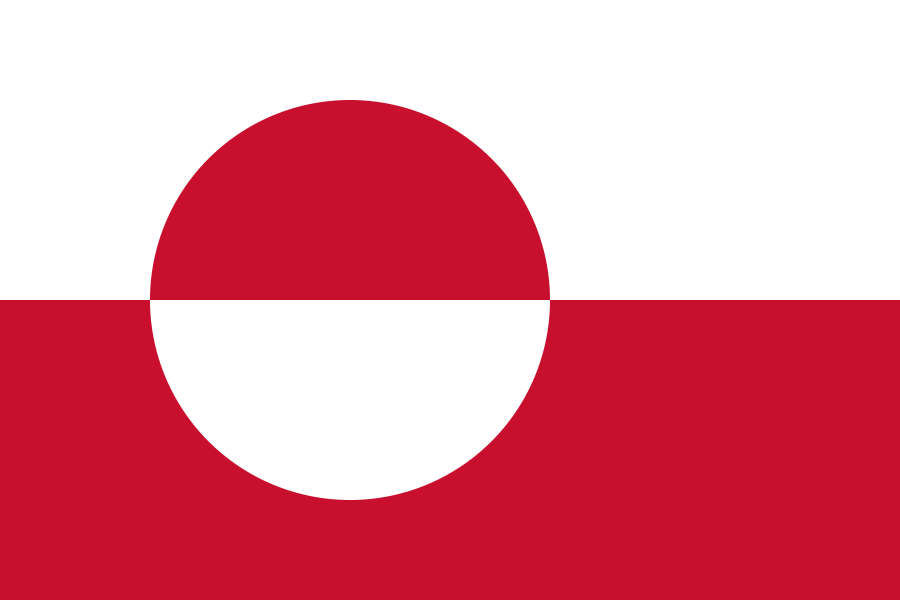
ErfalasorputIn use
21 Jun 1985 → today
The Home Rule government's contest of 1980 drew 555 proposals, 293 of them from Greenland, without agreement, and artists were invited to submit more. Christiansen's red and white design beat Sven Tito Achen's green and white cross by 14 votes to 11. In 1985 it was reported that a Danish rowing club, HEI Rosport, already flew the same motif; the club gave Greenland permission to use it.
The law
What defines it, and who flies it
- 24 June 1985
Ministry of Greenland Order No. 305
Sets the proportions: 12 by 18 parts, two stripes of 6 parts, and a disc of radius 4 centred 7 parts from the hoist.
In use
Used as the national flag and as the civil ensign
Greenlanders fly it together with the Danish flag, often side by side
Related flags
The flags it is confused with or comes from
 Denmark
- The same red and white. Aappalaartoq, "the red", is the Greenlandic name for both flags.
Coat of arms
The arms of Greenland