What to know before travelling around Denmark
1 920 words · 9 min · updated 2026-09-10
 Back to Denmark
Denmark received 30 million international arrivals and 16.6 million overnight visitors in 2018, with Germans, Norwegians and Swedes making up the majority of foreign visitors. It is a small, flat, expensive country that is easy to cross and rewards a visitor willing to leave Copenhagen, and its own residents travel abroad in large numbers.
In short
- International arrivals
- 30 million in 2018
- Overnight visitors
- 16.6 million in 2018
- Main source markets
- Germany, Norway and Sweden
- World Heritage properties
- 13
- Currency
- Danish krone, pegged to the euro
- Emergency number
- 112
- Electricity
- 230 V, Europlug, Schuko and a national three-pin type
- Driving
- on the right, vehicle code DK, tolled bridges
Who comes and where from
Denmark received 30 million international arrivals in 2018 and 16.6 million overnight visitors, and the number of overnight visitors has been rising slowly since 2014. Tourists from the neighbouring countries, Germany, Norway and Sweden, made up the majority of foreign visitors that year.
That composition explains a great deal about how the country is visited. A large share of arrivals are Germans driving north to the west coast and the islands, and Swedes and Norwegians crossing for shorter city trips, which means much of Danish tourism is regional and self-catering rather than long-haul and hotel-based. The summer house rented by the same German family for twenty years is a more representative Danish tourism product than anything in Copenhagen.
The traffic runs strongly the other way too. Denmark has a relatively large outbound tourism for its size, with Spain the primary destination, accounting for 14% of all overnight stays abroad of four days or more in 2013, and Turkey the leading destination outside Europe at 7%. A country with a short summer sends a lot of people south in it.
| Figure | Value | As of |
|---|---|---|
| International arrivals | 30 million | 2018 |
| Overnight visitors | 16.6 million | 2018 |
| Main source markets | Germany, Norway, Sweden | 2018 |
| Outbound leading destination | Spain, 14% of long stays abroad | 2013 |
| World Heritage properties | 13 | |
| Currency | Danish krone | |
| Emergency number | 112 | |
| Driving | on the right, vehicle code DK |
Where to go outside the capital
Copenhagen absorbs most first visits and it is a genuinely good city, compact enough to cross on foot, and it holds the museums, the design shops, the restaurants and the royal buildings. It is also the least representative part of the country and much the most expensive.
Southern Zealand and the neighbouring islands are among the most popular areas for visitors, helped by proximity to Germany. Møn is the principal draw, with chalk cliffs, Liselund Park and sandy beaches, and Falster carries a set of beaches of its own along the same stretch.
Jutland is where most of the land is and where the fewest foreign visitors go. Aarhus is the second city and has the museums and the student population to justify a stay, the west coast has enormous empty beaches and the dunes and light that made a school of painters, and the north tip at Skagen is where two seas meet visibly.
Funen sits between the two with Odense, Andersen's birthplace, and a countryside of manor houses and small towns, and Bornholm lies out in the Baltic east of everything else, closer to Sweden and Poland than to the rest of Denmark, with its own granite geology and its round churches.
What to eat and drink
Danish eating divides between the traditional and the recent, and both are worth doing for different reasons.
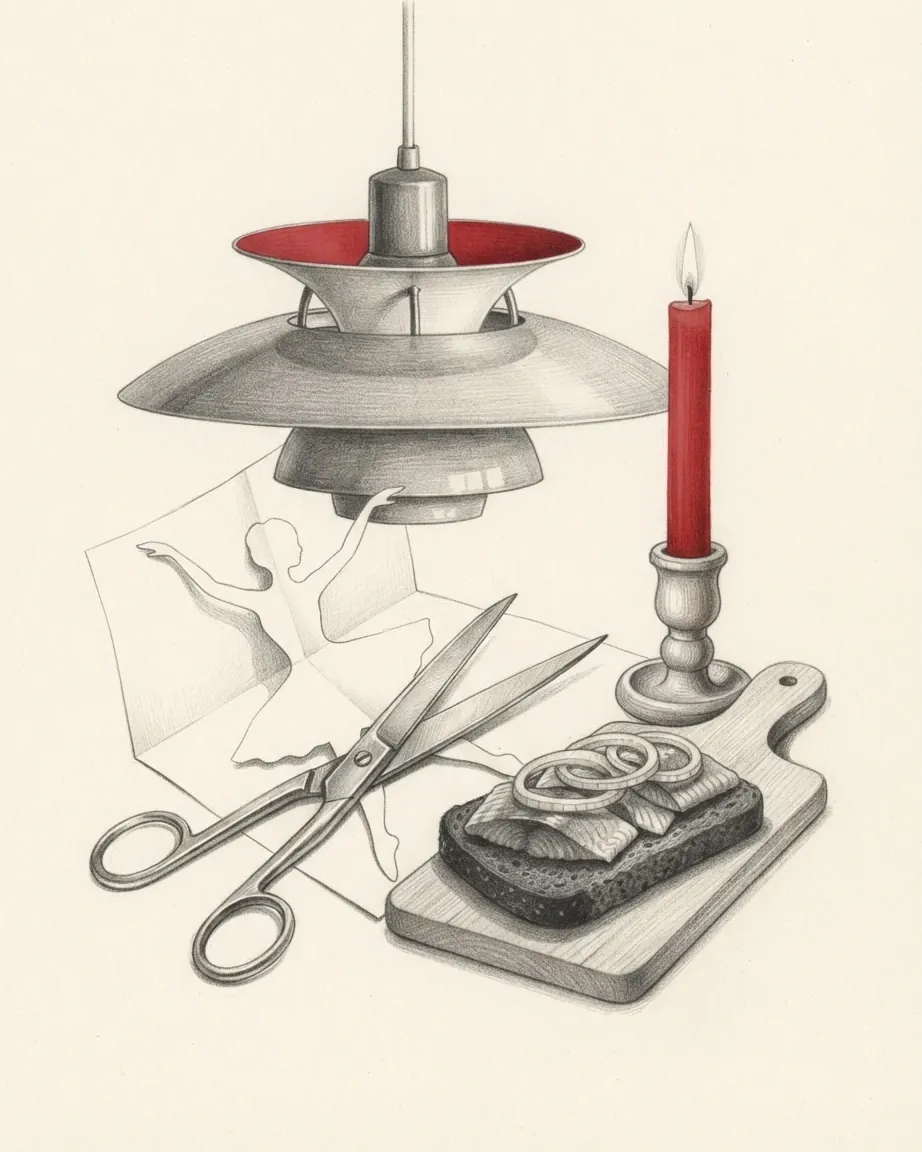
The traditional side is smørrebrød, the open sandwiches on dense rye bread that constitute the classic lunch, taken in order from marinated herring and smoked eel through meat to cheese. A proper smørrebrød lunch is a sit-down meal of an hour or more and is one of the few genuinely distinctive things to eat in northern Europe.
The recent side is what changed the region's reputation. Restaurants working with local and foraged ingredients rebuilt Nordic cooking from the same raw materials the traditional kitchen had always used, and the results range from the very expensive to the surprisingly reasonable. Booking well ahead is necessary at the top end of that range and unnecessary below it.
Between the two sits the everyday. Bakeries are excellent and cheap, street food markets in the cities carry good food at moderate prices, hot dogs from stands are a genuine institution rather than a tourist item, and beer is good and priced like everything else in the country.
What is worth the detour
The 13 World Heritage properties split eight cultural and five natural, and the natural ones are the surprise in a country with no mountains.
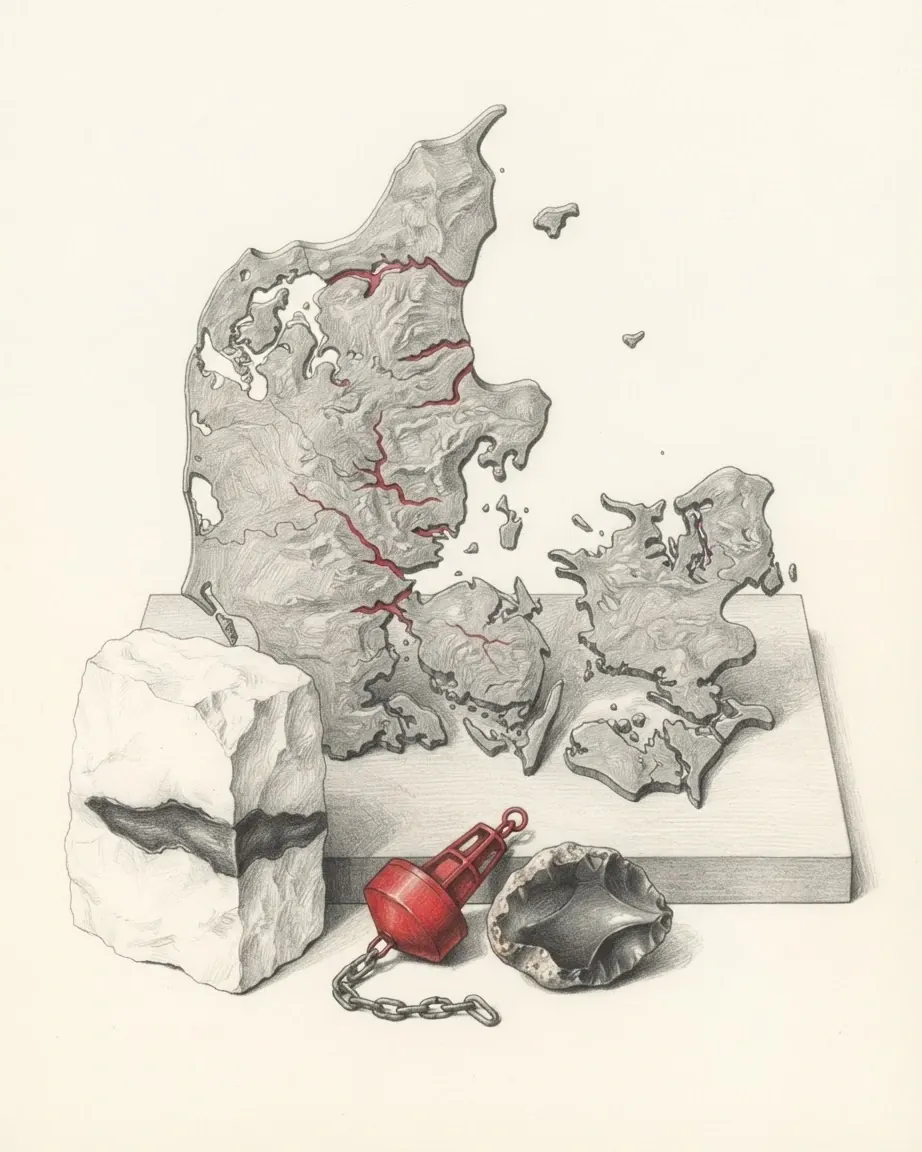
The Wadden Sea on the south-west coast, shared with Germany and the Netherlands, is a tidal system where the sea withdraws several kilometres twice a day, and guided walks out onto the exposed flats are the way to see it. Stevns Klint is a chalk cliff on the east coast of Zealand recording the asteroid impact that ended the Cretaceous, which is a geological boundary visible as a dark line in white rock.
Jelling in central Jutland is the cultural site with the most weight and the least visual drama: runic stones and burial mounds recording the conversion of Denmark to Christianity in the tenth century, commissioned by a king, in what amounts to a founding statement of the country carved in rock.
The rest of the cultural list runs through royal palaces, a Viking ring fortress, an early Christian church landscape and an industrial site, and almost all of it is reachable as a day trip from Copenhagen or Aarhus, which is what a country 234 kilometres across in circle-equivalent terms allows.
When to come
The season is short and it is not a secret. June, July and August have the long days, the workable sea temperatures and the open seasonal businesses, and they carry the crowds and the prices to match.
For anyone not tied to school holidays, May and September are better. Days are still long in May, the weather is as reliable as it gets, and accommodation on the coast is a fraction of the July price.
Winter is a city proposition and a good one. Copenhagen and Aarhus work in the dark, the museums and the restaurants are at their best when nobody is outside, and the Christmas period, with its markets, lights and food, is when the domestic culture described elsewhere is most visible to a visitor. What does not work in winter is the coast and the islands, where seasonal accommodation and transport shut down.
The weather is the constraint in every season. A maritime climate whose mean July temperature has run at 16.5 °C since records began in 1874 is not a beach climate by Mediterranean standards, rain is possible in any month, and wind is constant, which is why Danish summer houses are built with shelter in mind and why the west coast beaches are used differently from southern European ones.
What a short trip should look like
The country's size makes the planning easy. Copenhagen to Aarhus is a train ride of a few hours, most of the island destinations are within two hours of one or the other, and a visitor can base themselves in one place and travel out rather than moving hotels.
Three days is Copenhagen and one day trip, which is what most first visits are. Five days allows Copenhagen plus either Aarhus and eastern Jutland or the southern islands, and a week allows the west coast or Bornholm, both of which need their own time and neither of which is a detour.
The mistake to avoid is treating the whole country as an extension of the capital. Copenhagen is a European city that happens to be Danish, and the version of the country most Danes actually live in is the towns and the flat farmland between them, which is cheaper and considerably more revealing.
Bornholm is the outlier worth planning around. It sits in the Baltic closer to Sweden and Poland than to the rest of Denmark, has granite rather than glacial deposits underfoot, and holds round churches, smokehouses and a food culture of its own, and reaching it takes a ferry or a flight rather than a train.
How the fixed links carry Danish trains
Trains connect the cities and cross the water on the fixed links, so Copenhagen to Aarhus or Odense is a straightforward ride rather than an expedition, and the network reaches most towns of any size. Fares are moderate and booking ahead saves money.
Cycling is the mode the country is organised around and it is not a leisure claim. Danish cities have separated cycle infrastructure as standard, bikes can be hired everywhere and taken on most trains, and the national route network covers the whole country on flat ground with signposting designed for people who do not know where they are.
Driving is on the right and the vehicle code is DK. Roads are good, distances are short, the bridges across the Great Belt and to Sweden are tolled and expensive, and ferries connect the smaller islands on published timetables that thin out sharply in winter.
Copenhagen's own transport runs on an integrated ticket across metro, train and bus, with a driverless metro that runs all night at weekends. A visitor staying in the capital does not need a car and will find one an active nuisance, given the parking charges and the fact that the cycle lanes work better than the roads.
What things cost
Denmark is expensive and there is no way around that, only ways to manage it. High wages and heavy taxes put Danish prices above almost any comparable destination, and eating out is where a visitor meets that first. Accommodation is the second place, and neither of them is a tourist premium: residents pay the same. The mitigations are structural rather than clever. Lunch is cheaper than dinner in the same kitchens, and bakeries and street food markets carry the middle of the market, supermarket food is good and self-catering is normal, and the free or cheap things, harbour swimming, beaches, parks, and the design and architecture that are simply there in the street, are a substantial part of what the country has to offer.
Alcohol is where the cost is most visible and where Danish prices are still lower than Norwegian or Swedish ones, which is why the ferries north and the shops on the German border do the trade they do.
Card and mobile payment work everywhere and cash is barely used, which is worth knowing in the other direction: a visitor arriving with krone notes may find shops unenthusiastic about taking them.
Why the krone is not the euro
The currency is the Danish krone. It is pegged closely to the euro, so the rate is stable, and euros themselves are not legal tender. Some tourist businesses accept euros at poor rates, and relying on that is a mistake.
The emergency number is 112 for all services and works throughout the country. Electricity runs at 230 volts, and Danish sockets accept Europlug and Schuko and also use a national three-pin type, so a continental European plug generally fits and a British or North American one needs an adapter.
The country keeps one time zone, an hour ahead of Coordinated Universal Time in winter and two in summer. Danish is the language and English is spoken to a high standard almost universally, so a visitor will not need the local language anywhere.
Two habits are worth adopting. Bicycle lanes are for bicycles moving at speed and standing in one is genuinely dangerous, and Danish social manners are informal and understated, so the tone that works is direct and unfussed rather than effusive. Denmark: culture goes into why, and Denmark: geography the coast the routes run along.
Common questions
Questions about Denmark
What are Denmark's visitor numbers?
30 million international arrivals and 16.6 million overnight visitors in 2018, with the number of overnight visitors rising slowly since 2014. Germans, Norwegians and Swedes made up the majority of foreign visitors.
How short is the Danish summer?
May, June and September for the coast and the countryside, when days are long and prices are below the July peak. Winter suits Copenhagen and Aarhus, where the museums and restaurants are at their best, but seasonal accommodation and transport on the coast and the smaller islands shut down.
Where in Denmark does a car become useful?
Not in Copenhagen, where a car is a nuisance and the integrated metro, train and bus network covers everything. Elsewhere trains reach most towns and the national cycle network covers the country on flat ground, and a car mainly helps for the west coast and the smaller islands, where ferry timetables thin out in winter.
What does Denmark cost a visitor?
Yes. High wages and heavy taxes make eating out and accommodation cost more than in almost any comparable destination. Lunch is cheaper than dinner, self-catering is normal, and a great deal of what the country offers, harbour swimming, beaches, parks and the architecture in the street, costs nothing.