The flag of Faroe Islands
Merkið · since 1940
 Back to Faroe Islands
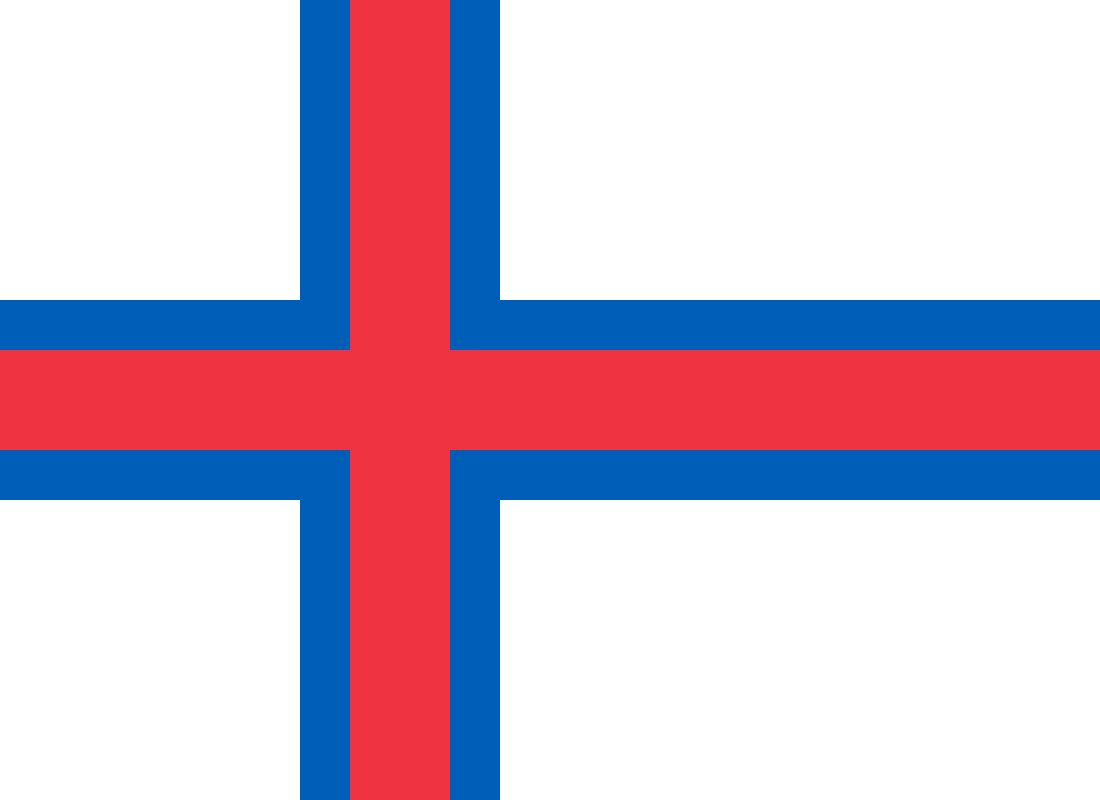
A white flag with a red Nordic cross edged in blue, called Merkið, the banner. Faroese students in Copenhagen drew it in 1919 on the model of the Norwegian and Icelandic flags, and it flew unofficially for twenty years against Danish refusal. The British occupation authorities recognised it for Faroese ships on 25 April 1940, now Flag Day, and the Home Rule Act of 1948 recognised it as the flag of the Faroe Islands.
At a glance
- Adopted
- 1940
- Proportion
- 8:11
- First hoisted
- 1919
- Colours
- Earlier flags
- 5
- Designers
- 4
The colours
The colours of the flag of Faroe Islands, in the order it has them
- 0162.1%
White
hvíttThe field
- HEX
#FFFFFF- RGB
255 255 255- CMYK
0 0 0 0
- 0220.4%
Red
fagurreyðurThe cross
- HEX
#EF3340- RGB
239 51 64- CMYK
0 89 68 0- Pantone
032 C- RAL
3024
- 0317.5%
Blue
azurblárThe border of the cross
- HEX
#005EB8- RGB
0 94 184- CMYK
90 62 0 0- Pantone
300 C- RAL
5015
No law gives these codes. HEX and RGB are the colour this site draws the flag in; CMYK, Pantone and RAL are the values most often published for it.
Construction
How the flag is drawn
A white field with a red Nordic cross bordered in blue, reaching all four edges, the upright set towards the hoist.
- Red cross
- 1/8 of the flag's height
- Blue borders
- Each half the width of the red
- Height
- 6, 1, 2, 1 and 6 units
- Length
- 6, 1, 2, 1 and 12 units: the white fields at the hoist square, those in the fly twice as long
- In practice
- 5:7 is also common
Other forms
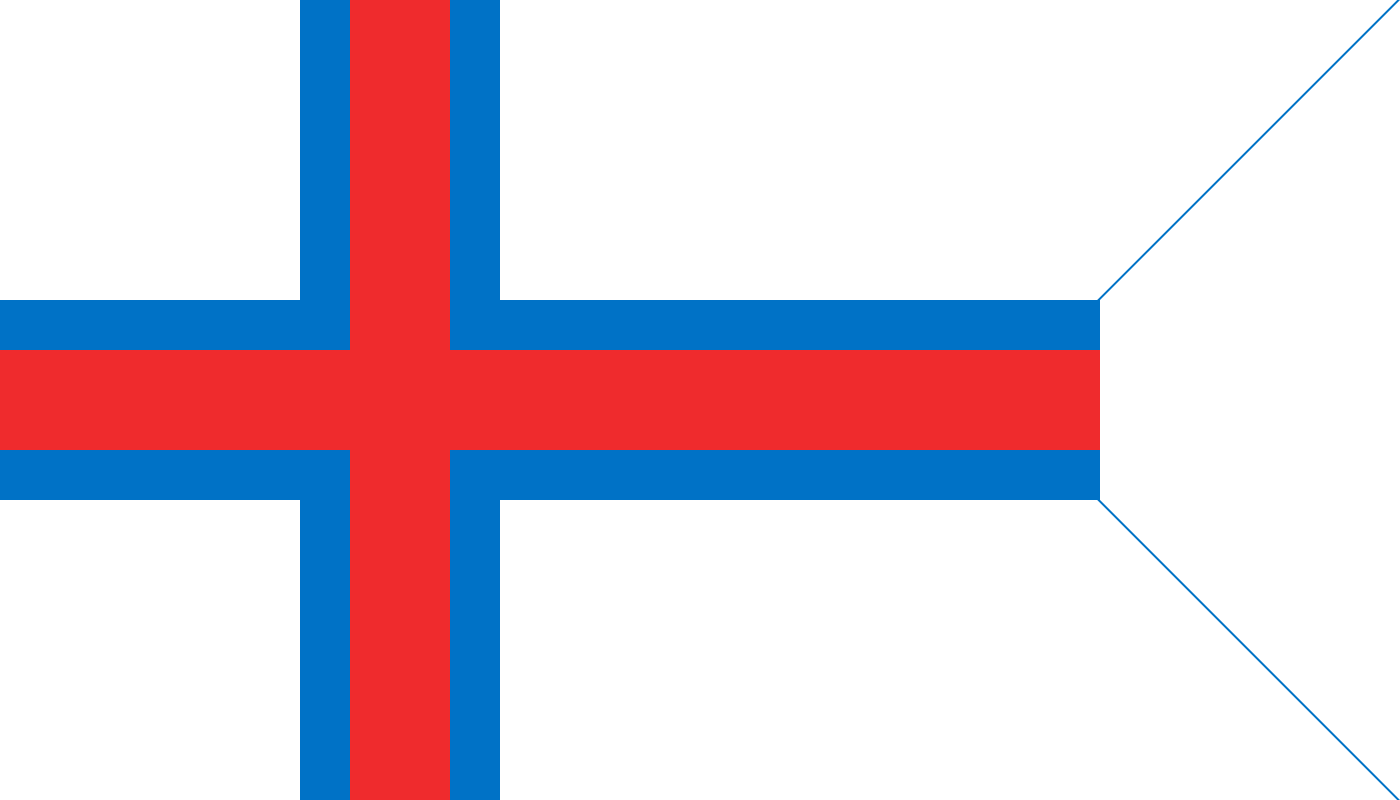
- Swallow-tailed flag
- The flag ending in a swallowtail.
Meaning
What each part stands for
- White
- The clear sky and the foam of the waves breaking on the coast
- Red and blue
- Colours of traditional Faroese dress and headscarves, shared with the flags of Norway and Iceland, which the designers took as their model
- The Nordic cross
- Keeps the link to the other Nordic countries, and is commonly read as a Christian symbol
- Sjá, tú blánar
- The flag song, words by Hans Andrias Djurhuus in 1920: blue as the sky, red as blood, the white of waterfalls, surf and winter
Who drew it
- Jens Oliver Lisberg
- Student in Copenhagen who decided the cross should be red with a blue border, and took the flag home to Fámjin in 1919
- Janus Øssursson
- Fellow student at Regensen who took part in the design
- Paul Dahl
- Fellow student at Regensen who took part in the design
- Emil Joensen
- Named by the Faroese Wikipedia among the students who first put the flag forward in June 1919
History
How the flag of Faroe Islands got here
- 1888
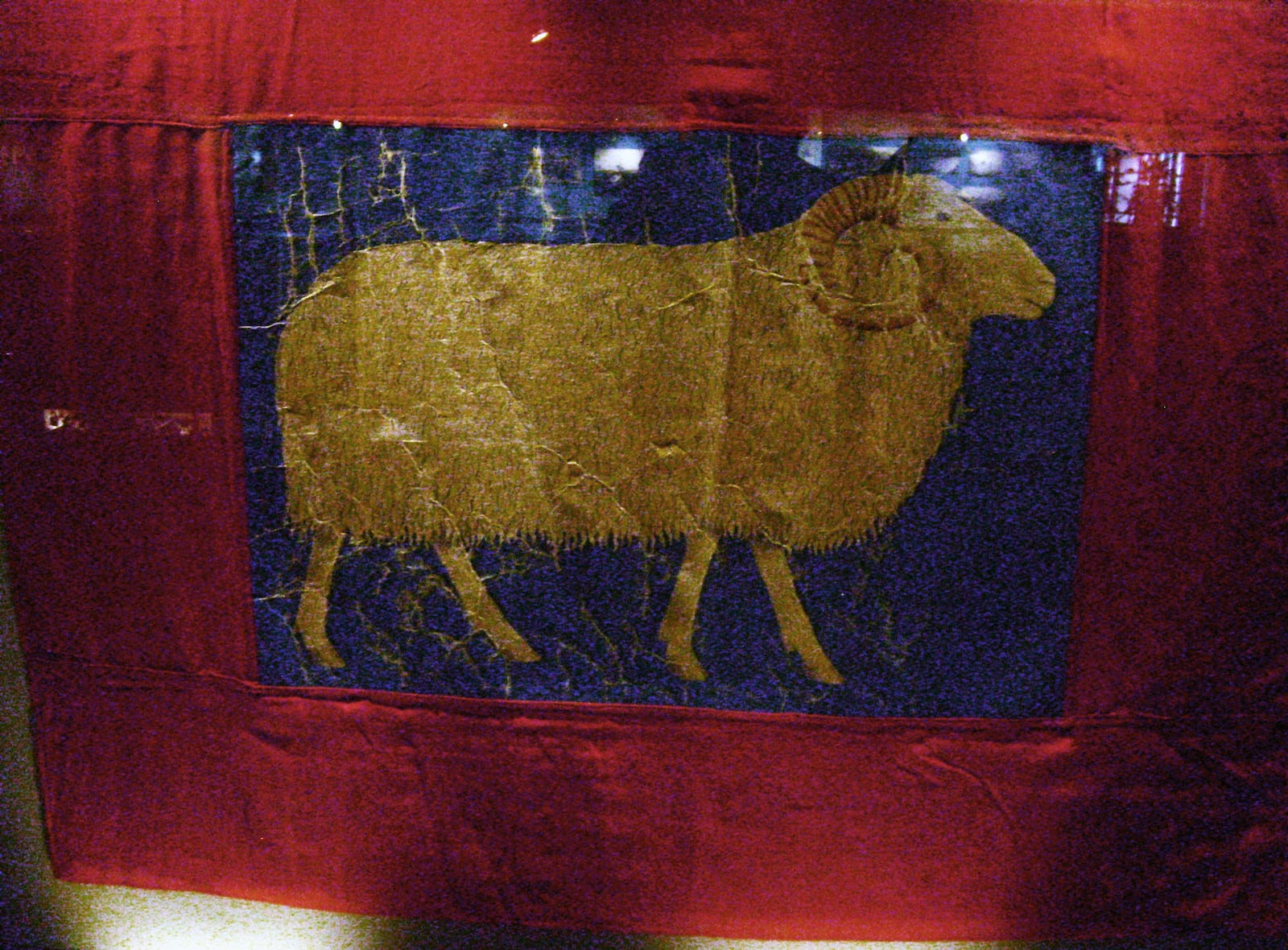
The oystercatcher and the ram
1888 → 22 Jun 1919
After the Christmas meeting of 1888 created a need for a common symbol, banners with the oystercatcher, Tjaldursmerkið, and the ram, Veðramerkið, were used at public meetings.
Image: FunkMonk, CC BY-SA 3.0
- 1919
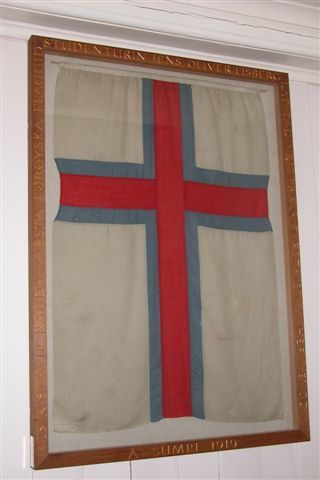
An unofficial flag
22 Jun 1919 → 25 Apr 1940
Drawn at Regensen in Copenhagen in spring 1919, the flag was first raised at Fámjin and the original now hangs in the church there. It was used on an official occasion at Ólavsøka in 1930 and in general use from 1931, but a proposal in the Løgting in 1931 found no majority, and Denmark refused a recommendation to recognise it in 1938.
Image: Erik Christensen, CC BY-SA 3.0
- 1940
Recognised by Britain
25 Apr 1940 → 23 Mar 1948
With Denmark occupied by Germany and the islands occupied by Britain, Faroese ships could no longer fly the Dannebrog. The British authorities recognised Merkið on 25 April 1940 and required it on every Faroese vessel with Faroes and Føroyar painted on the hull. A third of the fishing fleet was lost in the war.
- 1948
Home rule
23 Mar 1948 → 17 Jul 1959
The Home Rule Act recognised the flag. Its blue was described as dark blue, the same shade as the Norwegian flag, and its red as high red.
- 1959
The azure blue
17 Jul 1959 → 29 Dec 1998
The Faroese Flag Act changed the blue to a lighter azure, a step away from the Norwegian shade.
- 1998
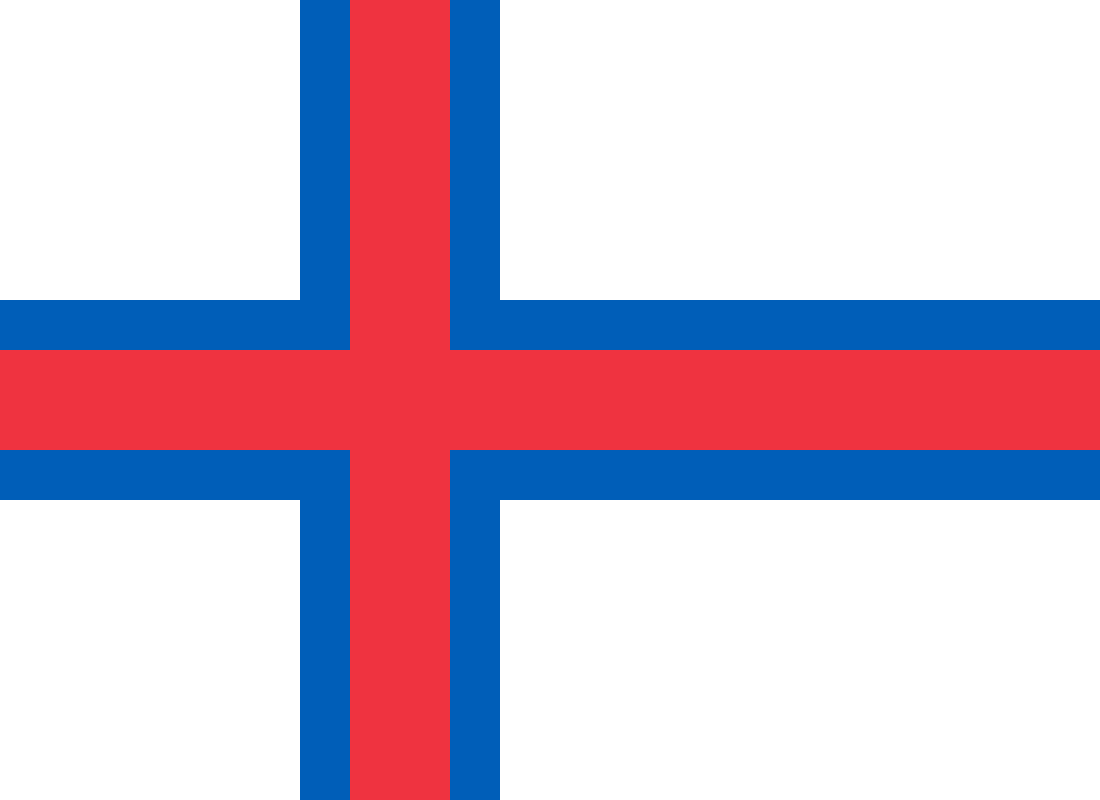
Pantone coloursIn use
29 Dec 1998 → today
An amendment to the Flag Act set the colours as Pantone 032 red and Pantone 300 blue, a darker blue again than the azure of 1959.
The law
What defines it, and who flies it
- 23 March 1948
Home Rule Act
Recognises a special Faroese flag. The blue was then described as dark blue.
- 17 July 1959
Løgtingslóg nr. 42 um flaggið
The Faroese Flag Act. Describes the cross as fair red with azure borders and fixes the geometry and the proportion of 8:11. Last amended in December 2023.
- 29 December 1998
Løgtingslóg nr. 109
Inserted the colours into the Flag Act in Pantone: red 032, blue 300.
In use
Anyone may fly it in the Faroe Islands and in Denmark
25 April, Flag Day, is a national holiday, with meetings, flag speeches and the flag song across the islands; schoolchildren have the day off
Since 2016 the state authorities of the Kingdom of Denmark fly it on the Faroese national day, 29 July
Two flags are not flown on the same rope or pole; flags flown side by side are of the same size, or as close as possible
Flown at the masthead when Faroese ships enter a foreign port, and stands beside the other Nordic flags in the Nordic Council
Related flags
The flags it is confused with or comes from
 Norway
- One of the two flags the designers took as their model. The construction of the cross is the same, and until 1959 so was the blue.
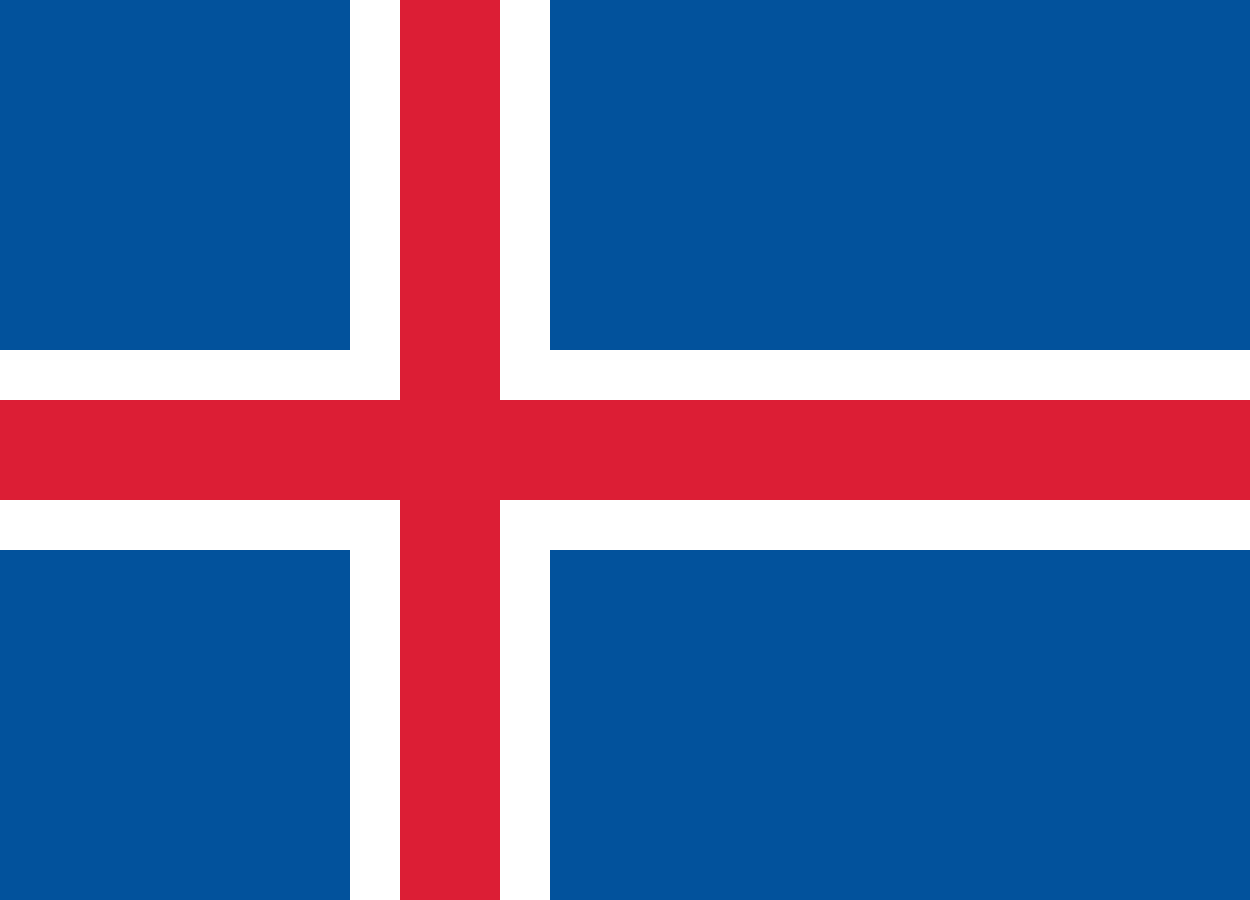 Iceland
- The other model. Norway has a red field and Iceland a blue one, so the Faroese flag took white.
 Denmark
- The Faroe Islands are part of the Kingdom of Denmark, and Faroese ships flew the Dannebrog until 1940.
Coat of arms
The arms of Faroe Islands