The flag of Sweden
Sveriges flagga · since 1906
 Back to Sweden
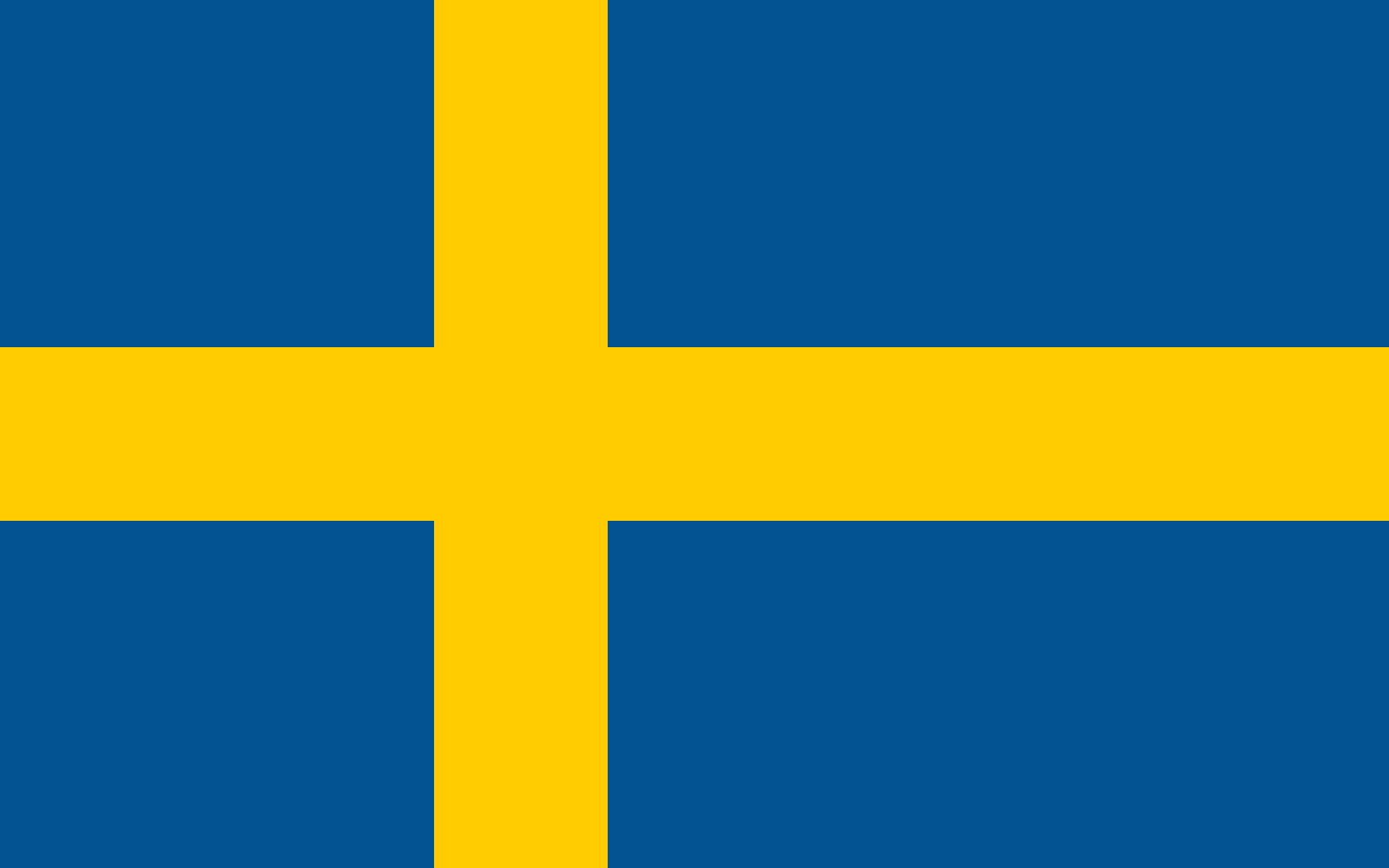
A yellow Nordic cross on a blue field, the cross set towards the hoist. The first official description is a royal letter of 19 April 1562, and the colours were in Swedish heraldry long before that. The shades have been fixed since the flag law of 1906, which chose a light blue closer to the historical flag than the near-black blue common in the late 19th century.
At a glance
- Adopted
- 1906
- Proportion
- 5:8
- Colours
- Earlier flags
- 5
The colours
The colours of the flag of Sweden, in the order it has them
- 0170%
Blue
ljust mellanblåField
- HEX
#005293- RGB
0 82 147- CMYK
100 50 0 10- Pantone
301 C
- 0230%
Yellow
guldgulCross
- HEX
#FECB00- RGB
254 203 0- CMYK
0 20 100 0- Pantone
116 C
No law gives these codes. HEX and RGB are the colour this site draws the flag in; CMYK, Pantone and RAL are the values most often published for it.
Construction
How the flag is drawn
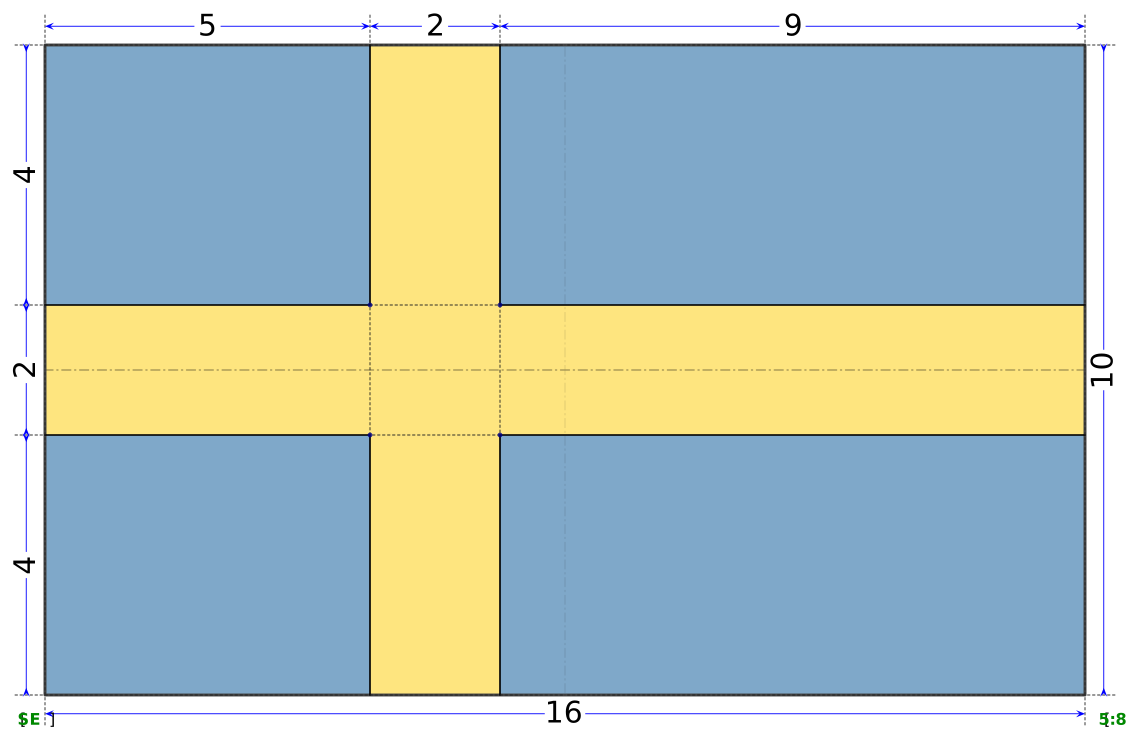
A blue field with a yellow Nordic cross running to the edges, the upright set towards the hoist: the blue fields nearest the pole are 5 by 4 units and the outer fields 9 by 4.
- Length
- 5 blue, 2 yellow, 9 blue
- Height
- 4 blue, 2 yellow, 4 blue
- Cross
- Its arms half as wide as the height of a blue field
- Triple-tailed flag
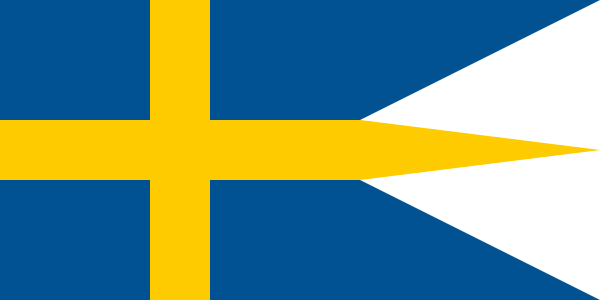
- 5:2:5:8 along the length and 4:2:4 in height, an overall ratio of 1:2 including the tails
Other forms
- Naval ensign
- The triple-tailed flag, used by the armed forces as ensign and naval jack. Admirals add a mark in the upper hoist corner.
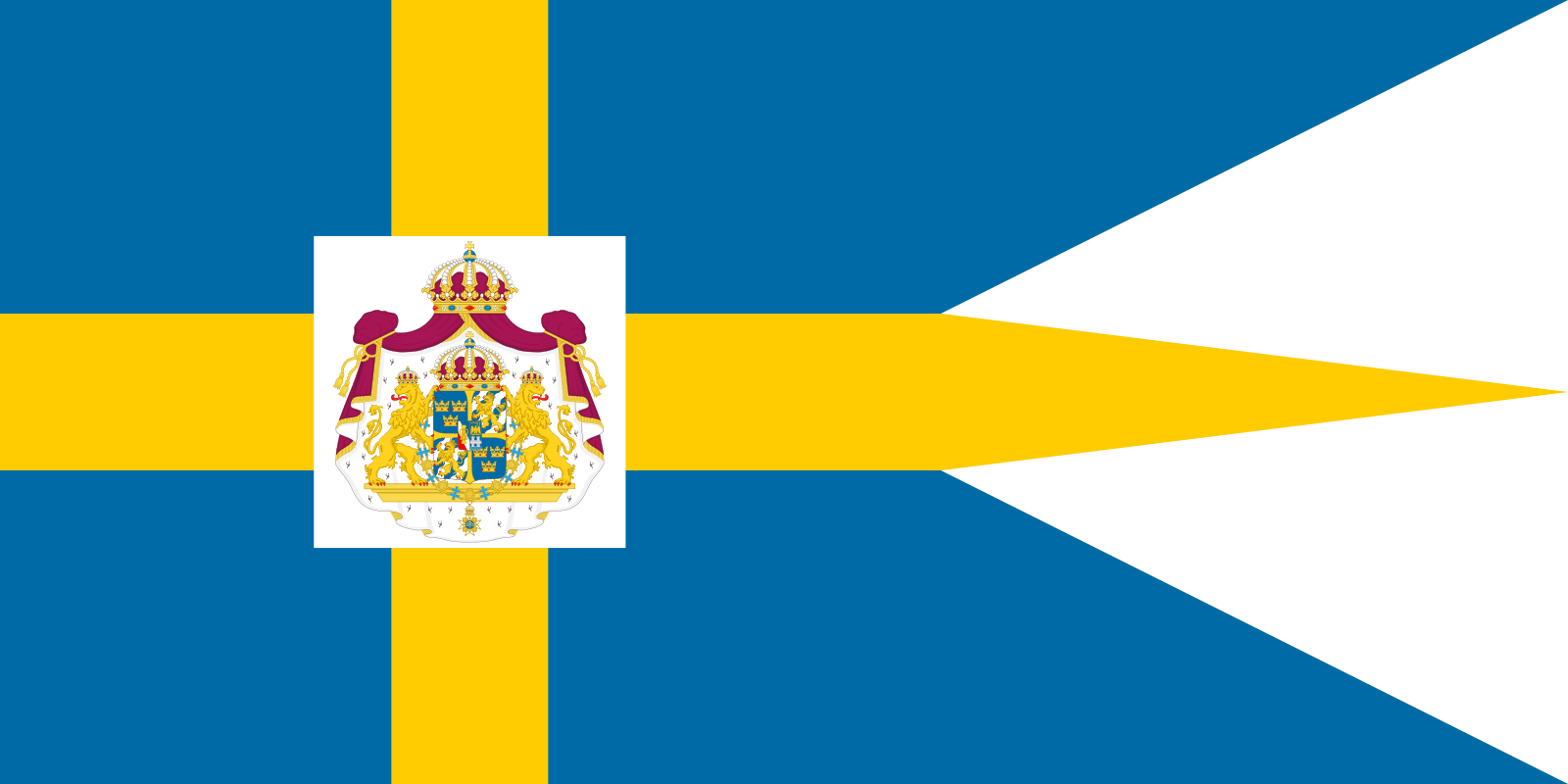
- Royal flag
- The triple-tailed flag with the national arms on a white field at the centre of the cross, the greater arms for the monarch and consort and the lesser arms for the other members of the royal house. Hoisted every morning on Stockholm Palace since 1873.
- Pennant
- Two long fields, blue above and yellow below, flown when the flag is not hoisted and never together with it. Unlike the flag it may fly day and night.

Meaning
What each part stands for
- Cross
- Christianity. Its offset form comes from the medieval cross banners and, through the Danish flag, is shared by all the Nordic flags
- Blue and yellow
- Of uncertain origin. Blue and gold appear early in Swedish heraldry, in the Three Crowns and in the arms of Magnus Ladulås, which became the royal arms in 1275
- Legend of Erik the Holy
- A legend has Erik see a yellow cross in a blue sky on landing in Finland in 1157. No contemporary record of the crusade exists, and no picture of the flag survives from before the mid-16th century
History
How the flag of Sweden got here
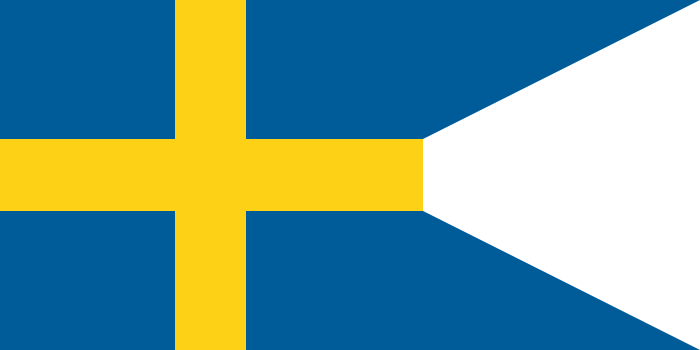
- 1562
The crown flag
19 Apr 1562 → 1663
A royal letter describes the flag as yellow crosswise on blue. It was used mainly as the crown's flag and naval flag, at first with two tails. The earliest images are 1550s provincial arms for southern Finland and a flag for Gotland at Gustav Vasa's funeral in 1560.
- 1663
Triple tails and square cut
6 Nov 1663 → 1815
A royal placard kept the triple-tailed flag for the crown and allowed private ships the yellow cross only square cut.
- 1815
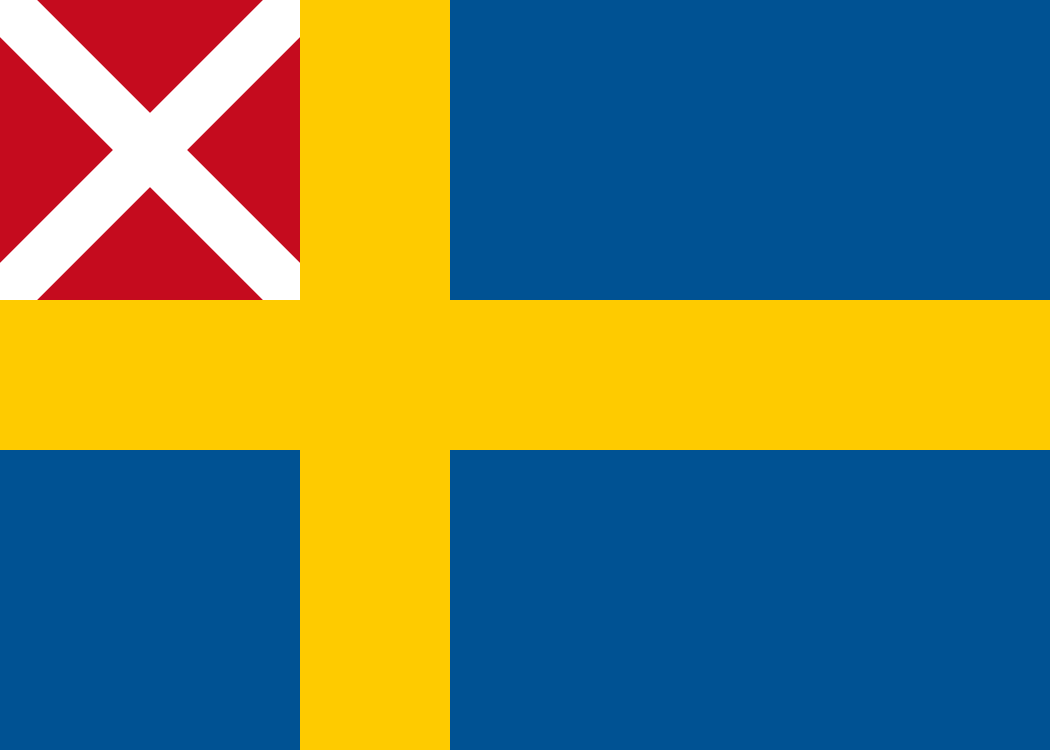
Union with Norway
7 Mar 1815 → 1844
A common naval ensign with a white saltire on red in the canton for Norway. The same flag, square cut, served as the merchant flag of both kingdoms from 1818.
- 1844
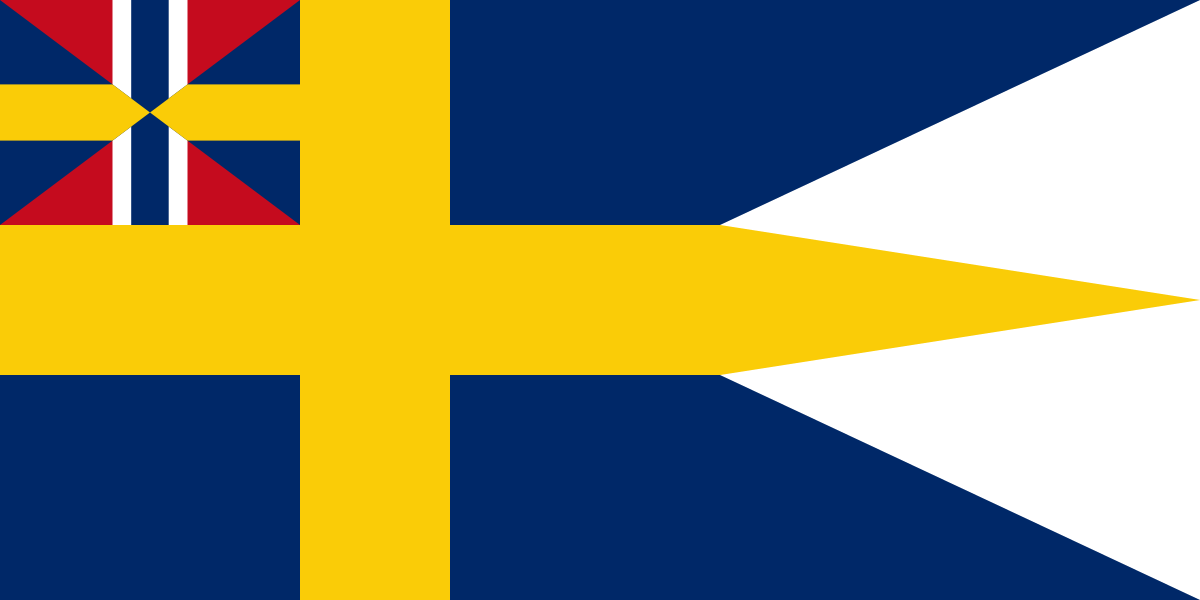
The union mark
20 Jun 1844 → 1 Nov 1905
Each kingdom got its own flags with a union mark in the canton combining the colours of both. Norway removed it in 1899, Sweden only after the union ended.
- 1905

The pure flag
1 Nov 1905 → 22 Jun 1906
A blue field replaced the union mark and the new flag was hoisted at 09:00 under gun salute on fortresses and in Stockholm. Its blue was still the dark shade of the late 19th century.
- 1906
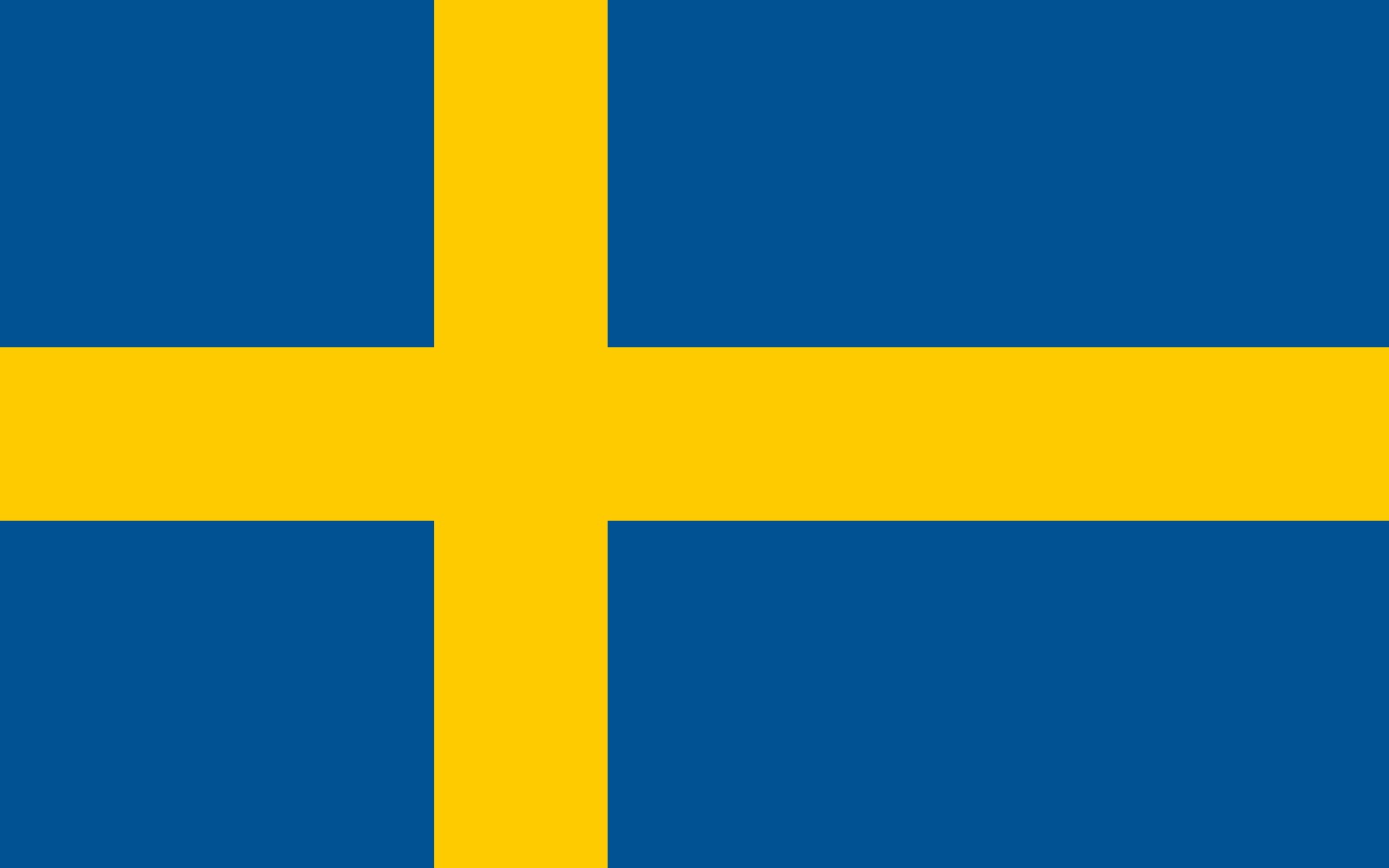
The flag lawIn use
22 Jun 1906 → today
The Act on the Flag of the Realm fixed the form and set the blue as light medium blue and the cross as golden yellow, which the government argued matched the flag's historical colours. Earlier flags could be flown until the end of 1908.
The law
What defines it, and who flies it
- 19 April 1562
Royal letter of 19 April 1562
The first official description: yellow divided crosswise on blue.
- 27 October 1905
Royal ordinance of 27 October 1905
Replaced the union mark with a blue field in the merchant and naval flags from 1 November 1905.
- 22 June 1906
Act on the Flag of the Realm
Blue with a yellow cross dividing the flag into four right-angled fields, the blue light medium blue and the cross golden yellow. In force from 1 July 1906.
- 1982
Act on the Flag of Sweden
The current law. Sets the design, the colours and the proportions 10:16.
- 1983
Ordinance 1983:826 with guidelines for the shades of the flag
Defines the shades in NCS and CIE. The National Archives give the print equivalents in Pantone and CMYK.
In use
No general rules bind private flying; custom follows naval practice and the recommendations of the national day foundation
Hoisted at 08:00 from 1 March to 31 October and at 09:00 otherwise, and lowered at sunset but no later than 21:00
North of the Arctic Circle, while the sun stays below the horizon, the armed forces hoist at 09:00 and lower at 12:00
Best about a quarter as long as the flagpole is high
Flag Day on 6 June has been celebrated since 1916 and became the National Day in 1983
Related flags
The flags it is confused with or comes from
 Denmark
- The offset cross first appears on the Dannebrog in the 14th century, and the Swedish design is probably taken from it.
 Norway
- Shared a naval ensign with Sweden from 1815 and a union mark on both flags from 1844 until 1899 in Norway and 1905 in Sweden.
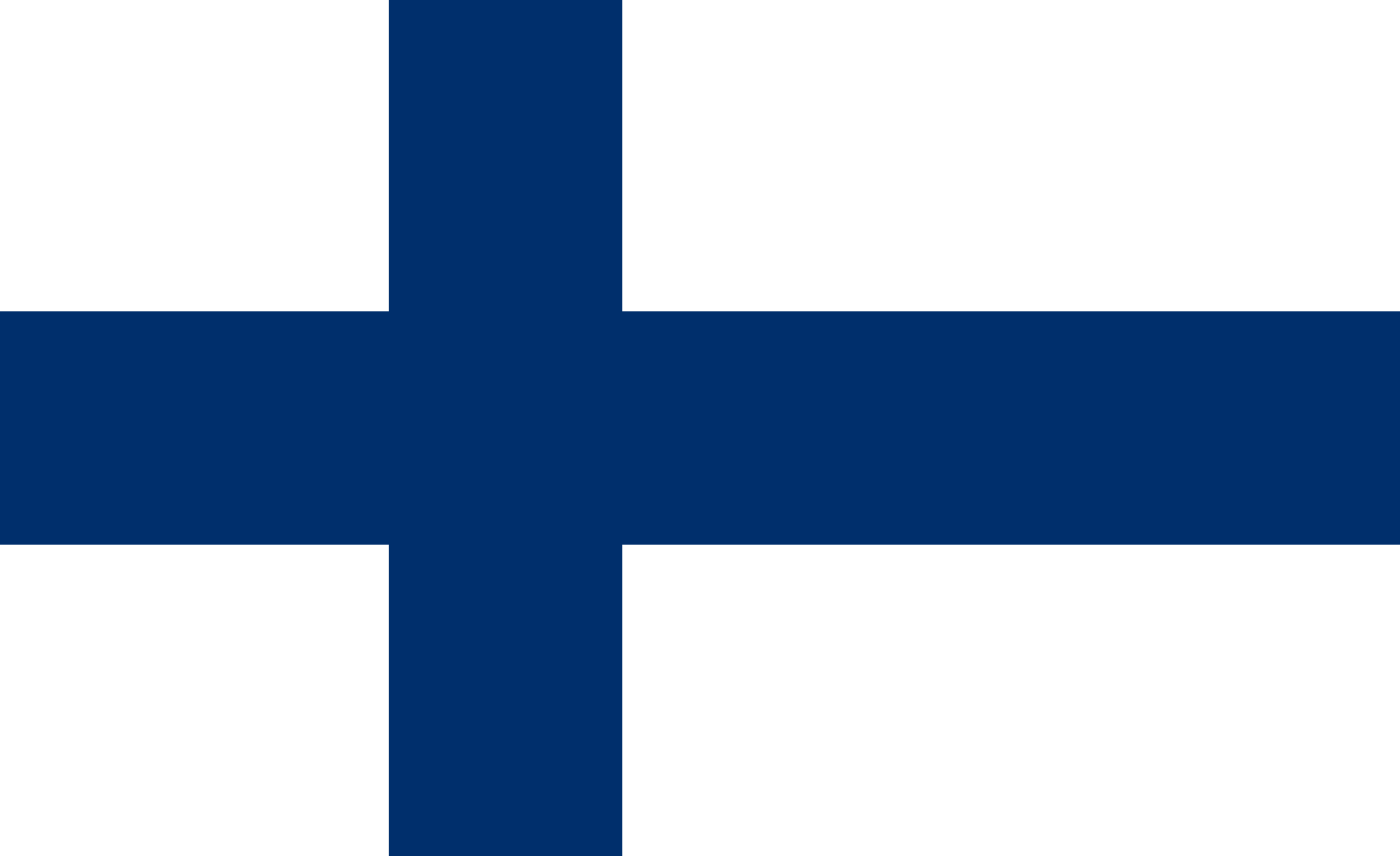 Finland
- Two blue and yellow flags survive in the arms of Finland Proper, from the time John III was Duke of Finland at Turku from 1556 to 1569.
Coat of arms
The arms of Sweden