Nordic Council
Regional
In 1397 the crowns of Denmark, Norway and Sweden were joined at Kalmar. Sweden was out of that union by 1523. The binding instrument now is the Helsinki Treaty of 23 March 1962, which commits its parties to maintaining a single passport-control area and a common labour market. Seven of the member flags carry the off-centre cross of the Dannebrog, and Greenland's carries a disc.
8 countries
- ÅlandA Swedish-speaking, demilitarised region of Finland with its own parliament, a regional citizenship and a tax border, home to 30,836 people at the end of 2025.
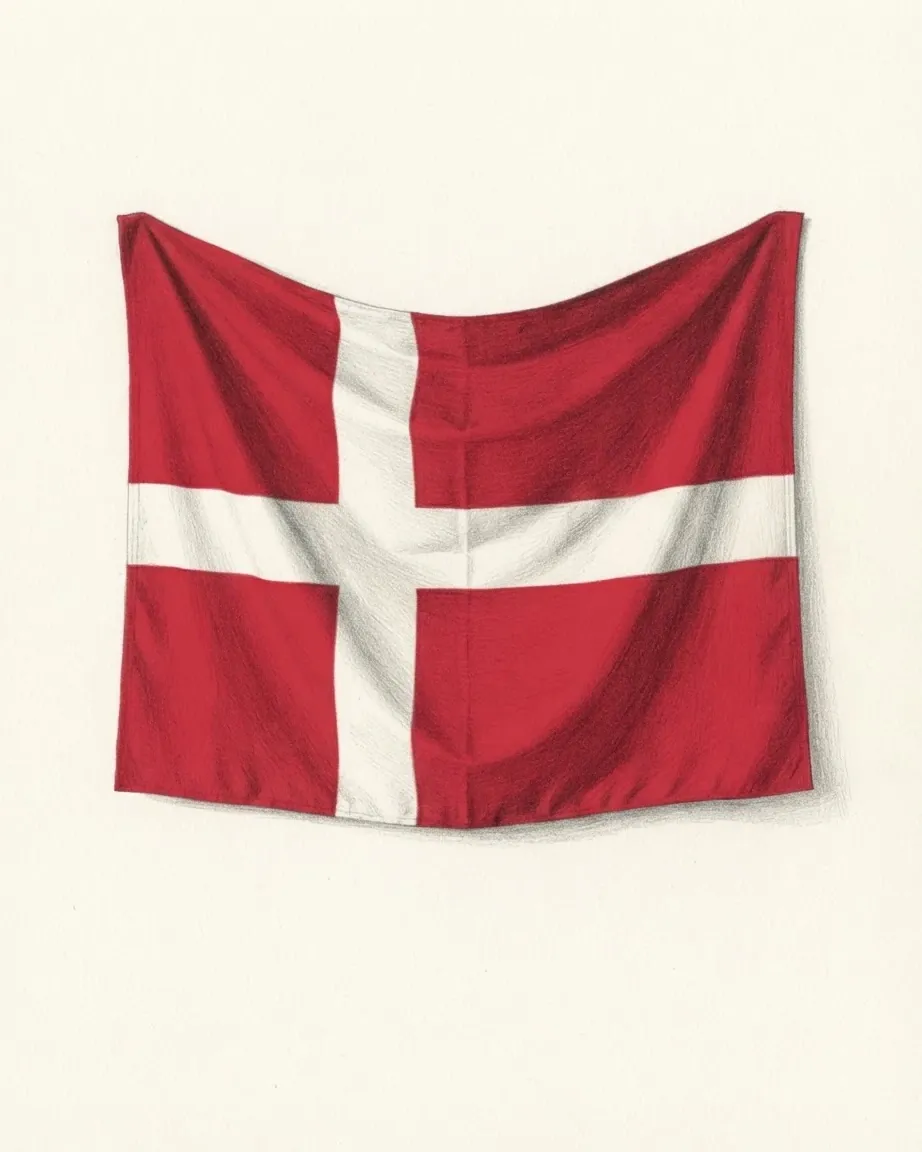
- Denmark5.8 million people on 42,925 square kilometres of peninsula and islands, highest point 171 metres. A 179-seat parliament, four of whose seats sit in the Arctic.
- Faroe Islands54,149 people in 2023 on 18 islands that run their own fisheries, taxes and trade while Denmark keeps nationality, defence and the currency.
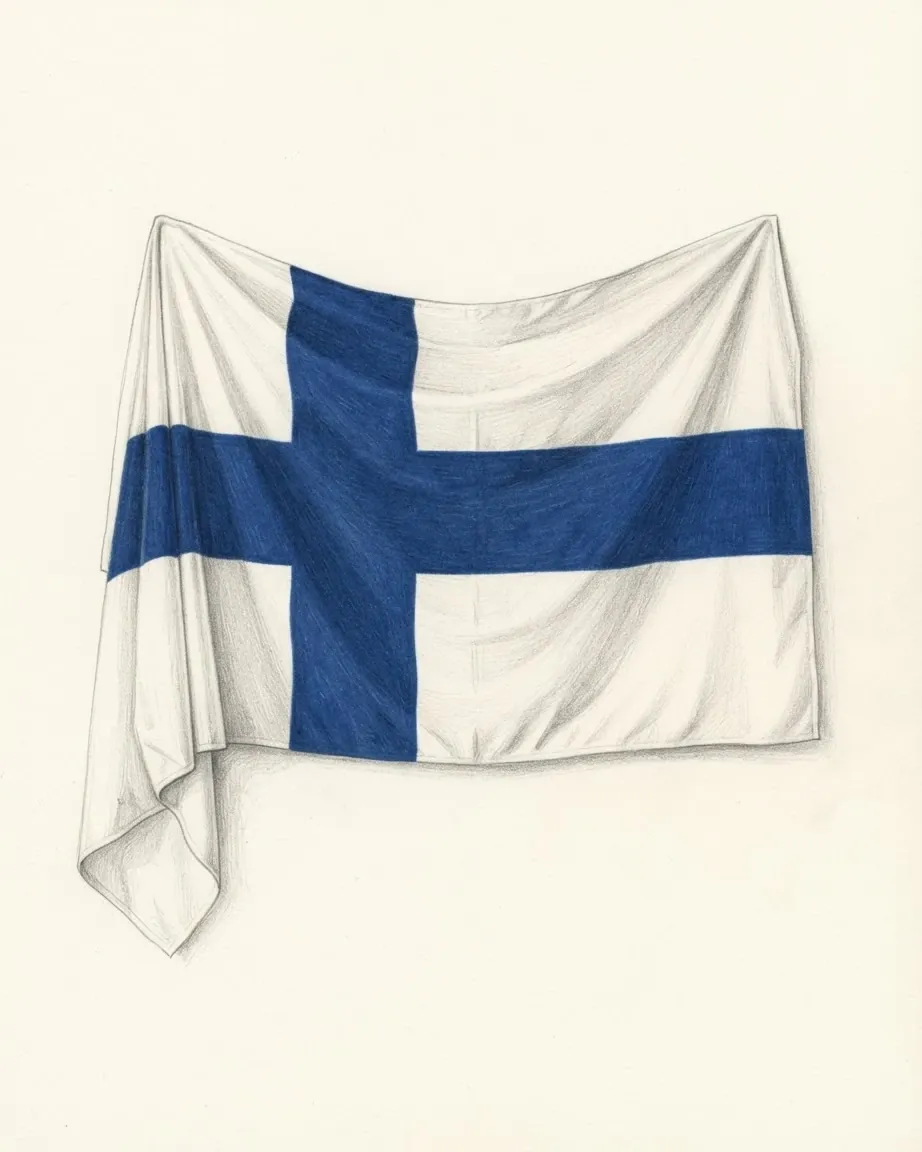
- FinlandJoined 1955.
- Greenland56,740 people on 1 January 2026, more than a third in Nuuk. A self-governing part of Denmark since 2009, on an island mostly under ice.
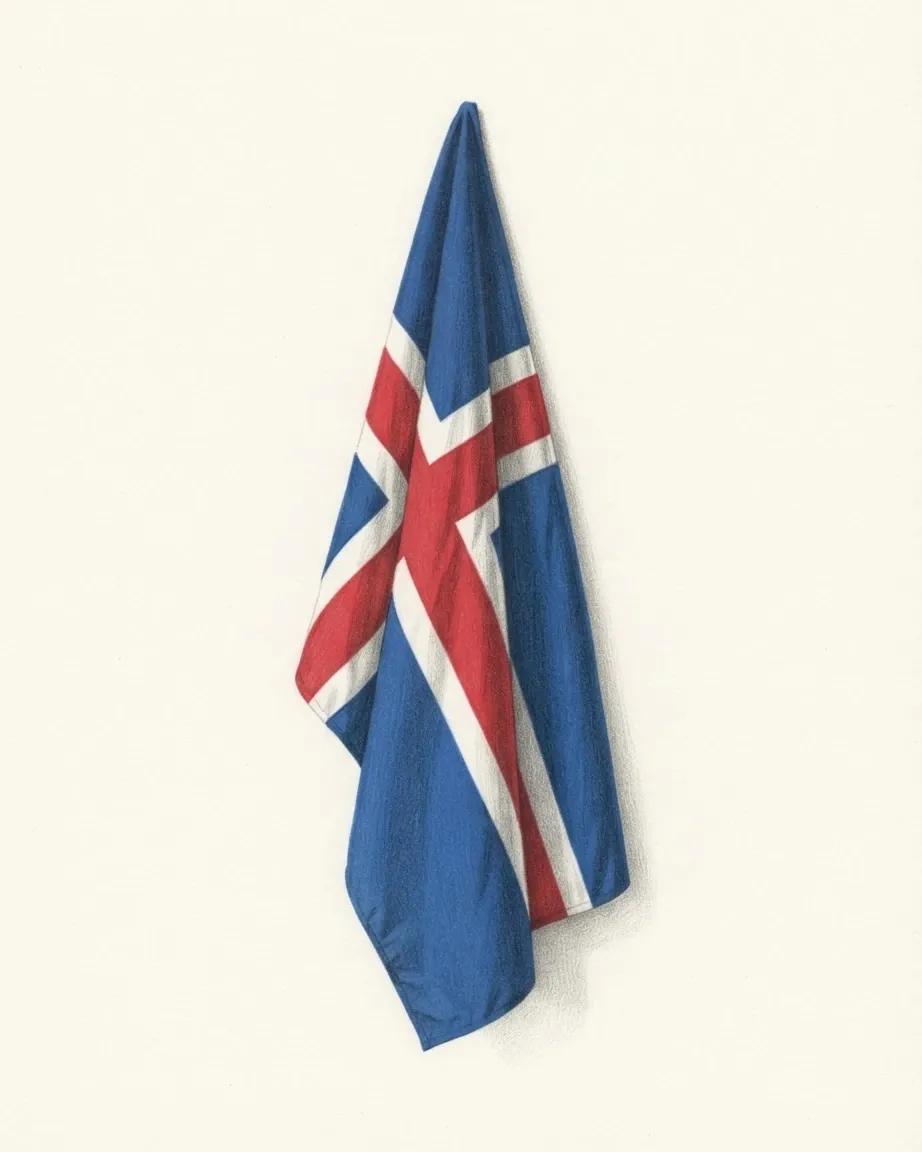
- IcelandAn empty island claimed in sixty years and written down as it happened: 376,248 people counted in 2022, on crust the Mid-Atlantic Ridge pulls apart by 19 millimetres a year.
- NorwayA Nordic monarchy of 5.6 million that wrote its constitution before it was independent and claimed its seabed six years before anyone found oil under it.
- SwedenJoined 1952.
Common questions
Questions about Nordic Council
Which countries are in the Nordic Council?
Denmark, Finland, Iceland, Norway and Sweden are the parties to the Helsinki Treaty. Three autonomous areas elect members to the Council alongside them: the Faroe Islands and Greenland inside the Danish delegation, and Åland inside the Finnish one. This page is built on the wider reading and holds 8 countries. A narrower one counts only the five states that signed the treaty, and both readings are in ordinary use.
Is Finland part of Scandinavia?
It depends which word is being used. Scandinavia in its ordinary sense names Denmark, Norway and Sweden, whose crowns were joined at Kalmar in 1397 and whose languages are mutually intelligible. Norden, the term the treaty parties use for themselves, takes in Finland and Iceland as well as the three autonomous areas. Finland is Nordic on every reading and Scandinavian only on the loosest one.
Does the Nordic Council make law?
No. Article 45 of the Helsinki Treaty allows the Council to adopt recommendations, make other representations, and state its views to the governments or to the Nordic Council of Ministers. None of that is binding inside a member country. Article 49 goes further and denies a vote to the government representatives who attend, so the assembly that votes is drawn from parliaments alone.
How long has travel between the Nordic countries been passport-free?
A protocol signed on 14 July 1952 removed the passport for Danish, Finnish, Norwegian and Swedish travellers, five days before the Olympic Games opened in Helsinki. An agreement of 1954 dropped residence and work permits with it. The decision to lift passport control at the internal borders for everyone came in 1957 and took effect in 1958, reaching Iceland in 1965 and the Faroe Islands in 1966.
Why are Iceland and Norway in the Schengen Area when they are outside the European Union?
Because the older free-travel area would otherwise have been cut in two. Denmark, Finland and Sweden carried a commitment to preserving the Nordic passport-free area into their Schengen applications, and Iceland and Norway were associated by separate cooperation agreements instead of being left outside a new external border. Both records date that association to 18 May 1999, and the rules were applied from 25 March 2001.
Why is Greenland's flag the only one here without a cross?
Greenland used the Danish flag until it adopted its own on 21 June 1985, and the design chosen carries a half-red, half-white disc rather than the off-centre cross the other member flags took from the Dannebrog. Greenland had left the European Communities earlier the same year, on 1 February 1985, and remains outside the Schengen Area as well.
Sources
- The Helsinki Treaty: Treaty of Co-operation between Denmark, Finland, Iceland, Norway and Sweden · Nordic Council of Ministers, ANP 2018:746. The signature of 23 March 1962, the seven amending agreements, and Articles 1, 14, 28, 45, 47, 48 and 49.
- The Nordic Passport Union and the Nordic Council · Handbook of Nordic Cooperation, chapter 7, open access. The protocol of 14 July 1952, the agreement of 1954, the 1957 decision implemented from 1958, Iceland in 1965 and the Faroe Islands in 1966, and the merge with Schengen.
- The Helsinki Treaty · Nordic co-operation. The treaty's entry into force on 1 July 1962 and the amendment of 13 February 1971 that created the Nordic Council of Ministers.
- The Nordic Language Convention · Nordic co-operation. Done at Svaneke on 17 June 1981, in force 1 March 1987, and the right to use a Nordic language before another party's authorities.
- Agreement concluded by the Council of the European Union and the Republic of Iceland and the Kingdom of Norway concerning the association of those two States with the implementation, application and development of the Schengen acquis · EUR-Lex. The agreement of 18 May 1999 that associated Iceland and Norway with the Schengen acquis.
- Treaty amending, with regard to Greenland, the Treaties establishing the European Communities · EUR-Lex. The instrument under which Greenland left the European Communities on 1 February 1985.
- NATO member countries · North Atlantic Treaty Organization. Denmark, Iceland and Norway among the signatories of 4 April 1949, Finland's accession on 4 April 2023 and Sweden's on 7 March 2024.
- The Scandinavian Currency Union, 1873 to 1924 · Stockholm School of Economics. The coin convention of 1873, Norway's accession in 1875, and the breakdown during and after the First World War.