The flag of Czechia
Státní vlajka České republiky · since 1920
 Back to Czechia
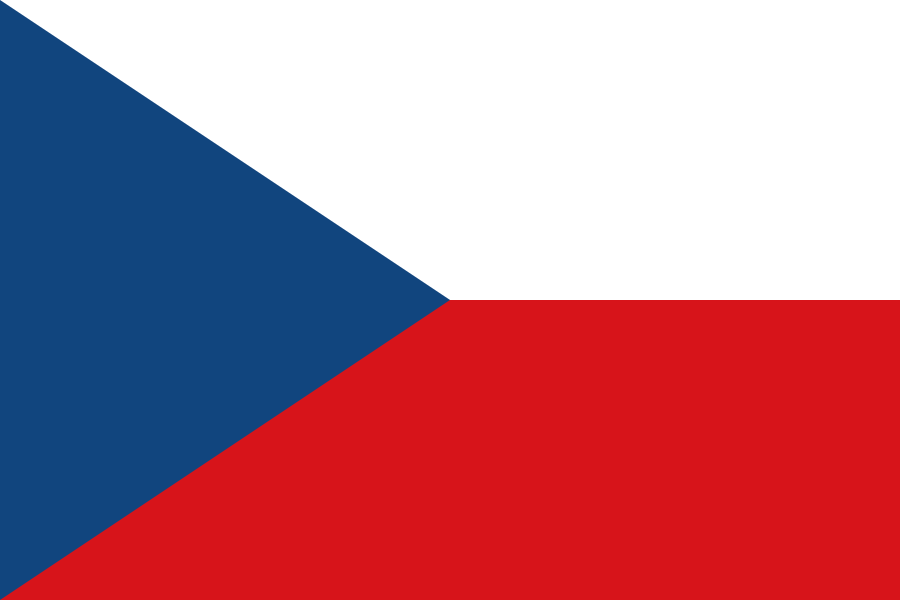
White over red, with a blue wedge at the hoist that reaches halfway along the flag. It was made the flag of Czechoslovakia on 30 March 1920, and the Czech Republic kept it from 1993 even though the act dissolving the federation barred both successor states from using federal symbols. No law gives its colours a code.
At a glance
- Adopted
- 1920
- Proportion
- 2:3
- Colours
- Earlier flags
- 8
- Designer
- 1
The colours
The colours of the flag of Czechia, in the order it has them
- 0137.6%
White
bíláUpper stripe
- HEX
#FFFFFF- RGB
255 255 255- CMYK
0 0 0 0
- 0237.7%
Red
červenáLower stripe
- HEX
#D7141A- RGB
215 20 26- CMYK
0 90 80 5- Pantone
186 C- RAL
3028
- 0324.7%
Blue
modráWedge at the hoist
- HEX
#11457E- RGB
17 69 126- CMYK
100 60 0 0- Pantone
286 C- RAL
5010
No law gives these codes. HEX and RGB are the colour this site draws the flag in; CMYK, Pantone and RAL are the values most often published for it.
Construction
How the flag is drawn
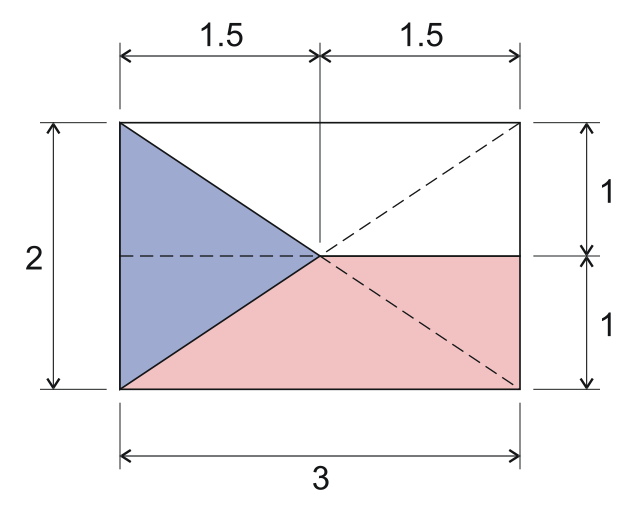
Two equal horizontal bands, white over red, with a blue isosceles triangle based on the hoist side whose point reaches the middle of the flag.
- Stripes
- Two, of equal width: white above, red below
- Wedge
- Blue, set between the stripes from the hoist, its length half the length of the flag
- Wedge shape
- An isosceles triangle. English Wikipedia notes that it is often drawn too short
- Other proportions
- Act No. 3/1993 allows an imitation of the flag with a different ratio of width to length to be used in its place
Other forms
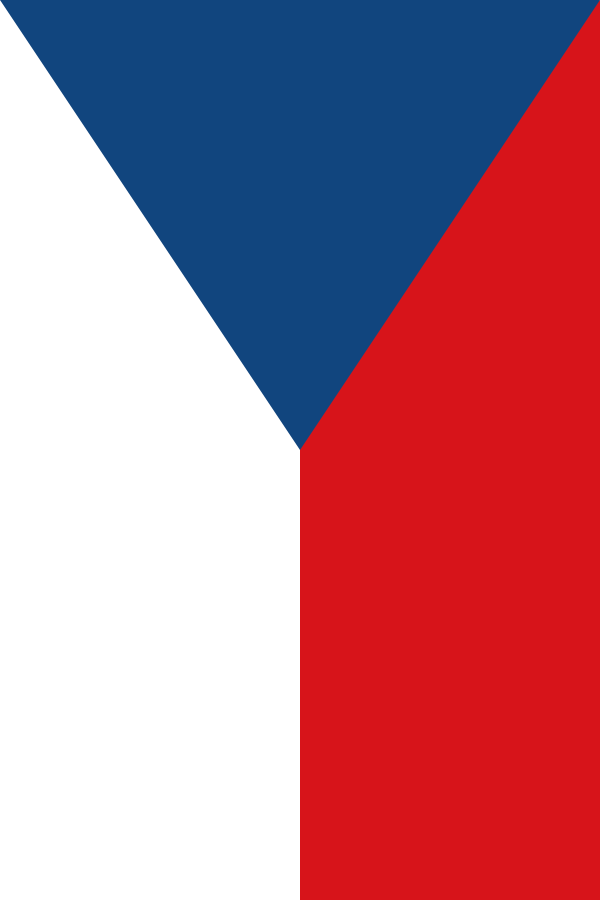
- Vertical flag
- Hung vertically, the white stripe is on the observer's left and the wedge is at the top, pointing down.
- Unit colour
- A square flag, in proportion 1:1, adopted in 1993.
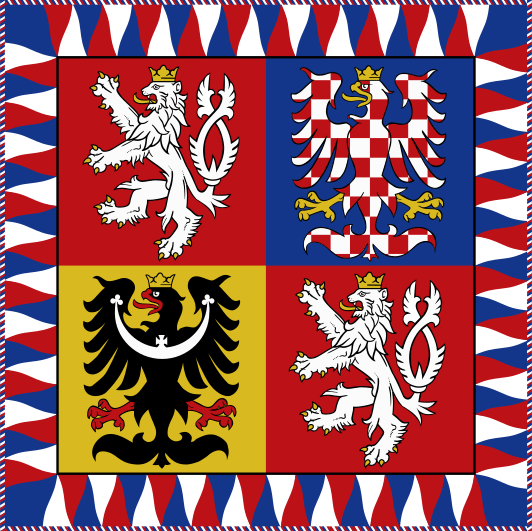
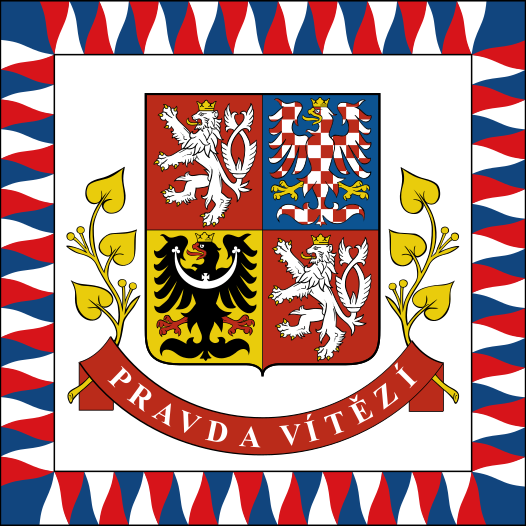
- Presidential flag
- Square, in proportion 1:1. A presidential flag was first introduced in 1918 for the president of Czechoslovakia; the current version, designed by the heraldist Jiří Louda, was adopted when the independent Czech Republic was created in 1993.
Meaning
What each part stands for
- The law
- No official reading of the colours or the design is written into Czech law
- White and red
- The colours of the Bohemian arms: white for the silver lion, red for the red field of the shield
- White
- The traditional colour of Bohemia, standing for the sky
- Red
- Moravia and "bloodshed for the freedom of the state"
- Blue
- Once read as Slovakia; now as impartiality and sovereignty
- Blue
- Sometimes read as Slovakia, and as Moravia once the Czech Republic took the flag over, Moravia having fought under blue
- Blue
- The third Slavic colour. Red, white and blue were counted as the traditional Slavic colours in the 19th century and taken up by pan-Slavic movements, the Czech Sokol among them
- The wedge
- The 1920 law made the blue a wedge reaching the middle of the flag to set it apart from the many tricolours that divide national colours into stripes
Who drew it
- Jaroslav Kursa
- Archivist in the Czechoslovak Ministry of the Interior, whose design a committee picked for the new state's flag
History
How the flag of Czechia got here
- Undated
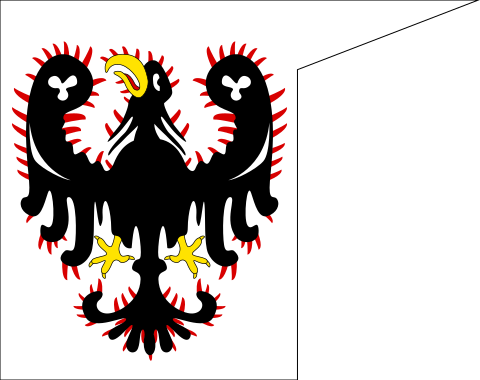
The Přemyslid banner
Undated → Undated
A medieval banner of the Duchy of Bohemia under the Přemyslid dynasty.
Image: Samhanin, CC BY-SA 3.0
- 1192
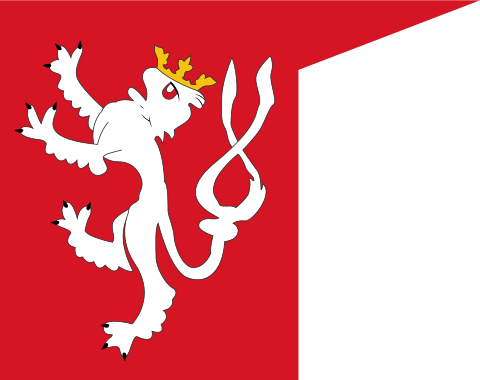
The Bohemian lion
1192 → Undated
The colours of the Czech lands come from a coat of arms of 1192: a rampant lion with a double silver tail on a red field. The Kingdom of Bohemia flew the same arms as its royal banner.
Image: Samhanin & Havsjö (change the color of the 'Royal banner of the Kingdom of Bohemia.svg'), CC BY-SA 4.0
- 1836
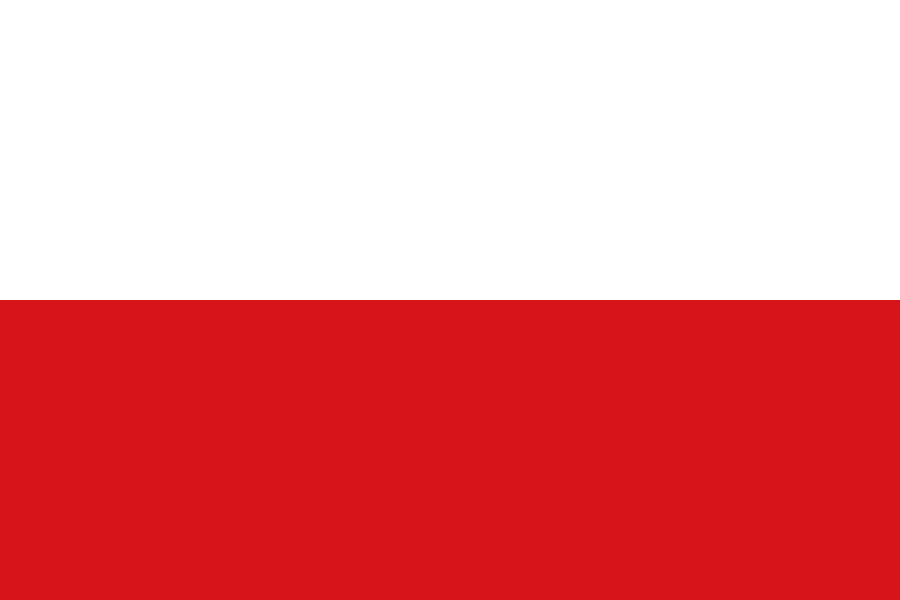
The white and red bicolour of Bohemia
7 Sept 1836 → 1918
White over red, from the silver lion on the red shield. Its use before the 19th century is disputed; the first common use on record is at the Prague coronation of Ferdinand I on 7 September 1836, and it then spread with the Czech national revival.
- 1918
Czechoslovakia's first flag
1918 → 30 Mar 1920
The new state flew the white over red bicolour of Bohemia, identical to the flag of Poland. It was first officially hoisted on 18 October 1918 in Washington, on the house where Tomáš Garrigue Masaryk lived.
- 1920
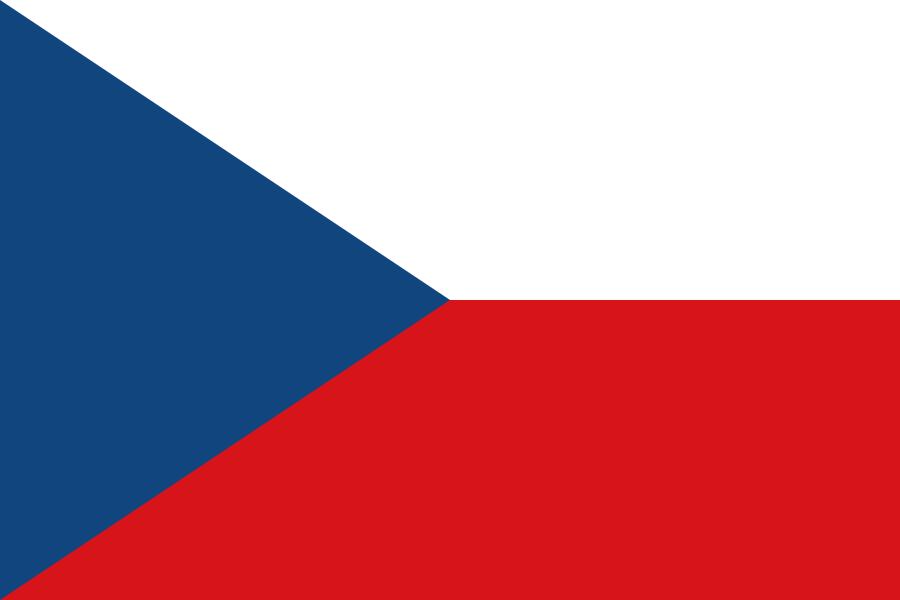
The flag of Czechoslovakia
30 Mar 1920 → 1939
A committee set up in 1919 chose Jaroslav Kursa's bicolour with a blue wedge, which was lengthened to reach half the flag. Deputies proclaimed it at 18:45 on 30 March 1920.
- 1939
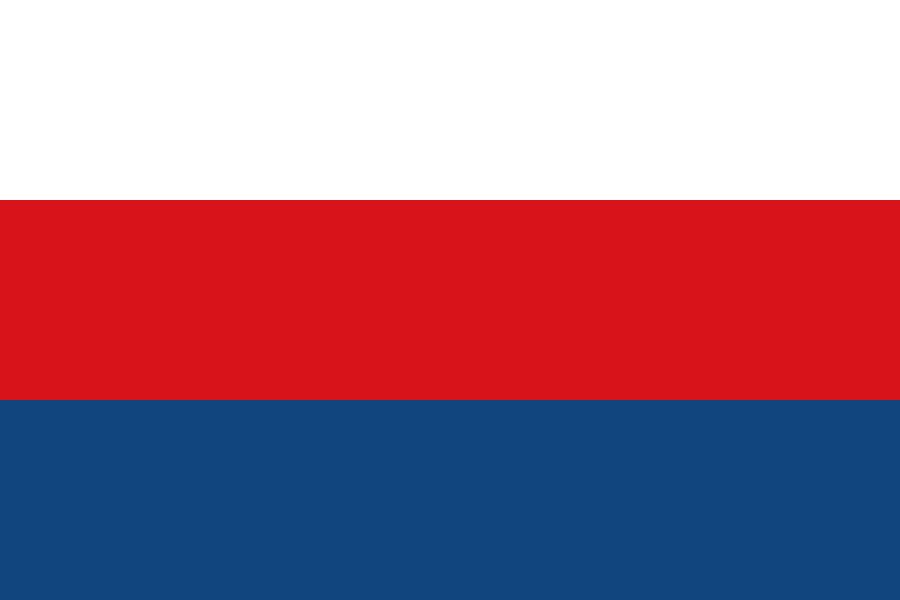
Protectorate of Bohemia and Moravia
1939 → 1945
The occupation authorities replaced the national colours with three horizontal stripes of equal width, white, red and blue. The resistance abroad kept the Czechoslovak flag.
- 1945
Czechoslovakia again
1945 → 1992
The flag of 1920 was restored in 1945. It was one of only three flags of a socialist country in Europe without a coat of arms in the centre.
- 1990
The Czech Republic within the federation
13 Mar 1990 → Dec 1992
Constitutional Act No. 67/1990 gave the Czech Republic its own flag: two stripes of equal width, white over red, in 2:3. It differed from the Polish flag only in proportion, Poland's being 5:8, and was rarely flown, even where the law required it.
- 1993
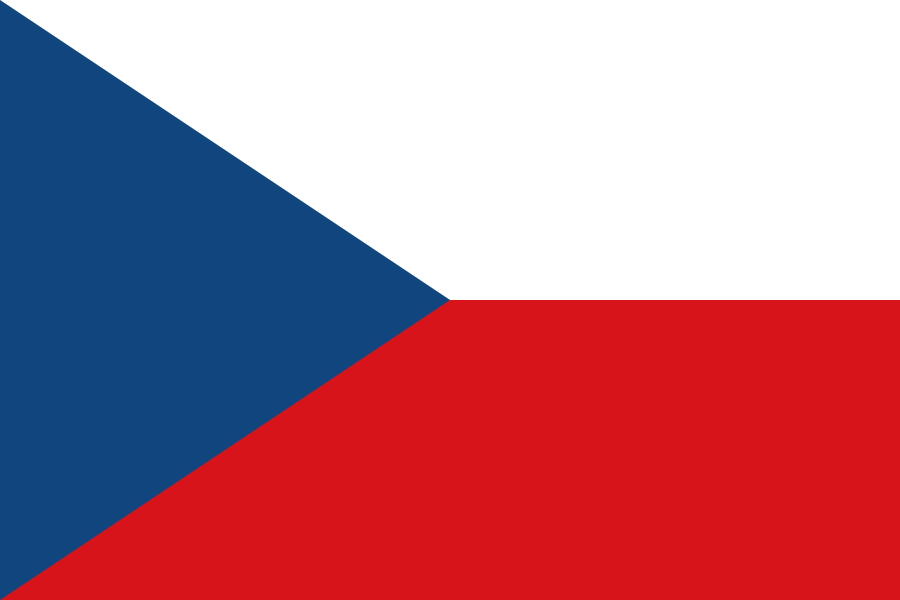
The flag of the Czech RepublicIn use
1 Jan 1993 → today
On the dissolution of Czechoslovakia the Czech Republic kept the Czechoslovak flag, through Act No. 3/1993 on the state symbols, in force from 1 January 1993. This ran against Article 3(2) of Constitutional Act No. 542/1992, which barred both successor states from using federal symbols.
The law
What defines it, and who flies it
- 30 March 1920
Constitutional law of the Czechoslovak Republic
Defined the flag as an upper white field and a lower red field with a blue wedge between them from the hoist, the ratio of width to length 2:3 and the wedge half the length of the flag.
- 1992
Constitutional Act No. 542/1992 Coll. on the dissolution of the Czech and Slovak Federative Republic, Article 3(2)
Forbids the Czech Republic and the Slovak Republic to use the state symbols of the federation after its dissolution.
- 1993
Constitution of the Czech Republic, Constitutional Act No. 1/1993 Coll., Article 112(3)
Turns the earlier constitutional laws, with named exceptions, into ordinary laws. Czech Wikipedia reads this as letting the later Act No. 3/1993 prevail over the 1992 ban.
- 1 January 1993
Act No. 3/1993 Coll. on the state symbols of the Czech Republic
Describes the flag and sets the 2:3 ratio. It gives no colour codes; the shades exist only as the coloured pattern printed as Annex 3. It allows an imitation with a different ratio of width to length in place of the state flag.
- 2001
Act No. 352/2001 Coll. on the use of the state symbols of the Czech Republic, Sections 7 to 9
Sets how and when the flag is flown. It replaced Act No. 68/1990 Coll. and was amended by Act No. 213/2006 Coll.
In use
Flown horizontally with the white stripe on top and the wedge on the left, its point towards the observer's right
Flown by state bodies, local government and the other bodies the law lists on the buildings they occupy, on public holidays and on occasions of national importance, including a day of mourning or state mourning declared by the government
Since Act No. 213/2006 the government declares the special occasions for flying the flag; the Ministry of the Interior did so before, and occasions of local importance declared by a region or municipality were dropped
Flag decoration usually runs from 16:00 on the day before to 08:00 on the day after
May be flown permanently on the seats of the listed state bodies and local government. Any other person or organisation may use the flag in a fitting and dignified way at any time
Must not be used to cover plaques or monuments or be tied into a rosette. The pole must not be decorated, and no image, symbol or text may be placed on the flag
For mourning it is raised to the top of the pole and then lowered slowly to half-mast, and must not touch the ground
Related flags
The flags it is confused with or comes from
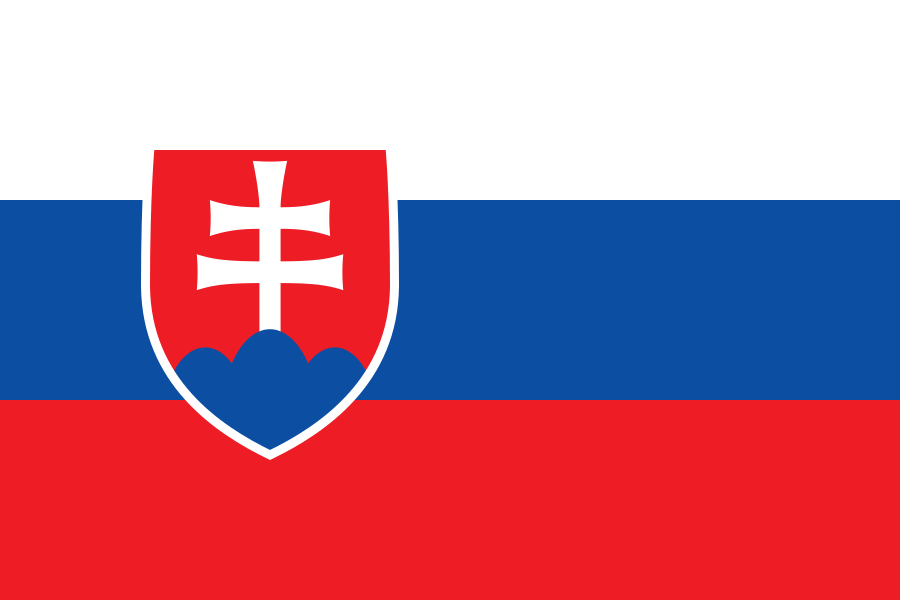 Slovakia
- Slovakia shared the flag until 1992 and its blue was often read as Slovakia. Both republics agreed not to keep federal symbols, and the Czech Republic kept the flag regardless.
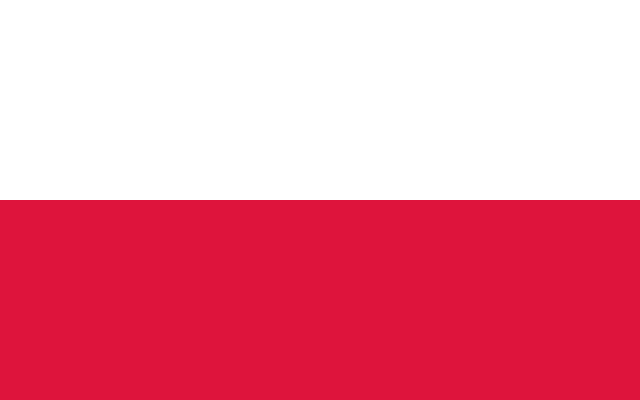 Poland
- The white over red bicolour of 1918 to 1920 and of 1990 to 1992 differed from Poland's flag only in proportion, 2:3 against 5:8.
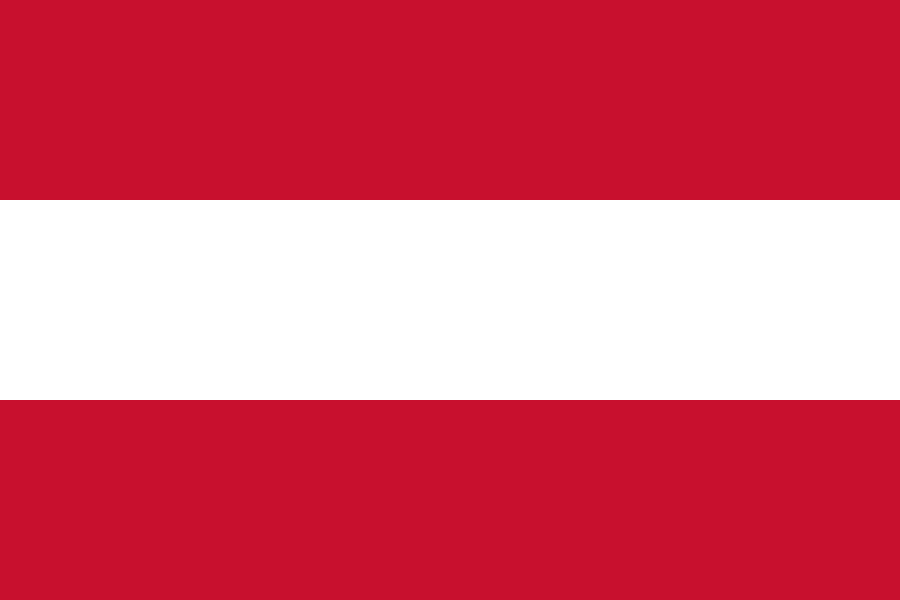 Austria
- The likeness of the white and red colours to Austria's, as well as Poland's, was one reason the 1918 flag was replaced.
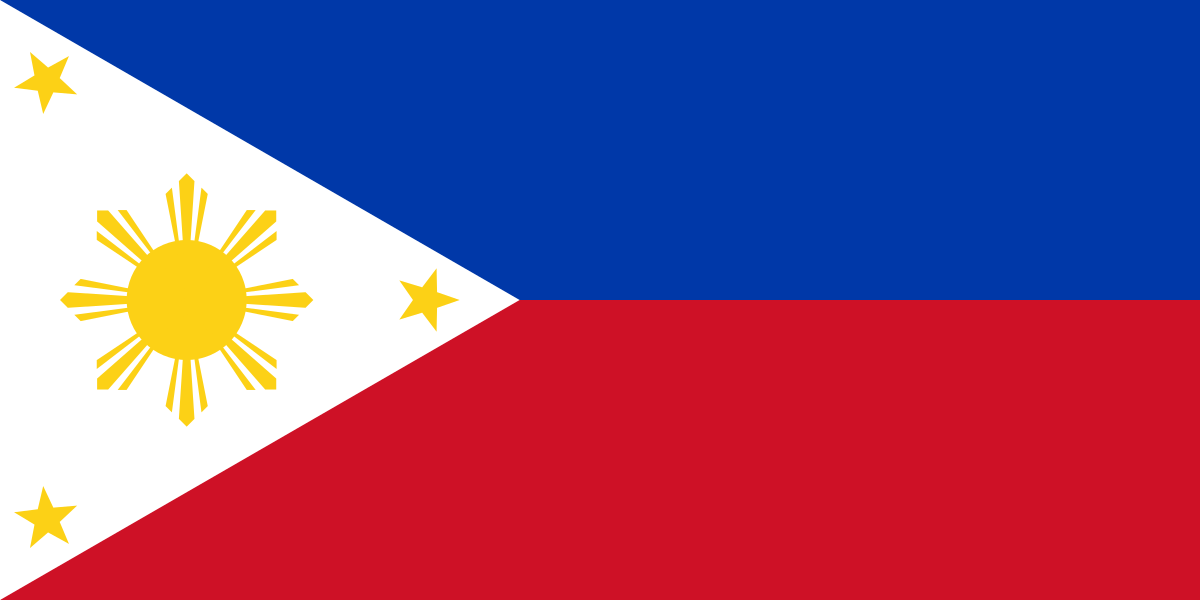 Philippines
- The most similar foreign flag, though it is 1:2, has the three colours in a different arrangement and carries golden-yellow symbols.
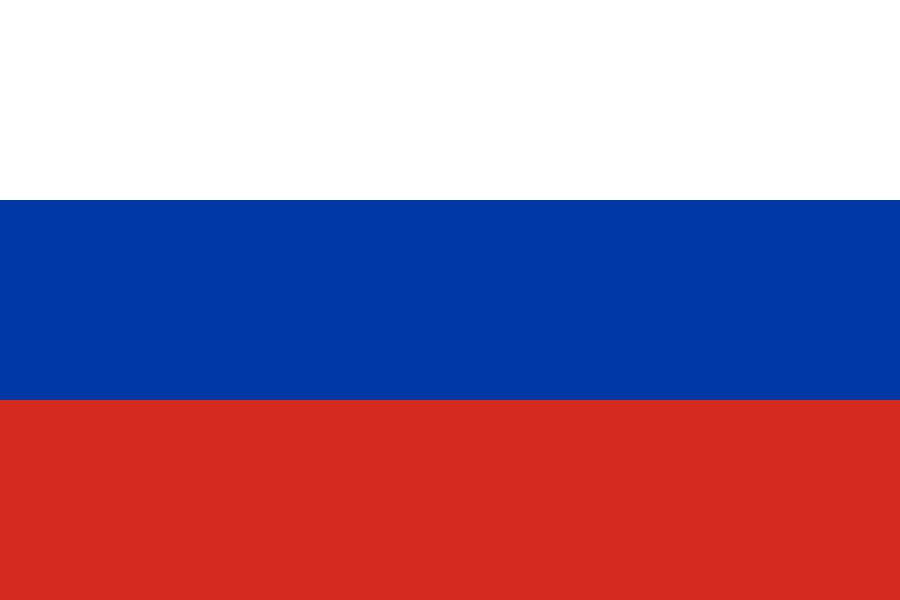 Russia
- The blue came in with the pan-Slavic tricolour, originally Russian.
Coat of arms
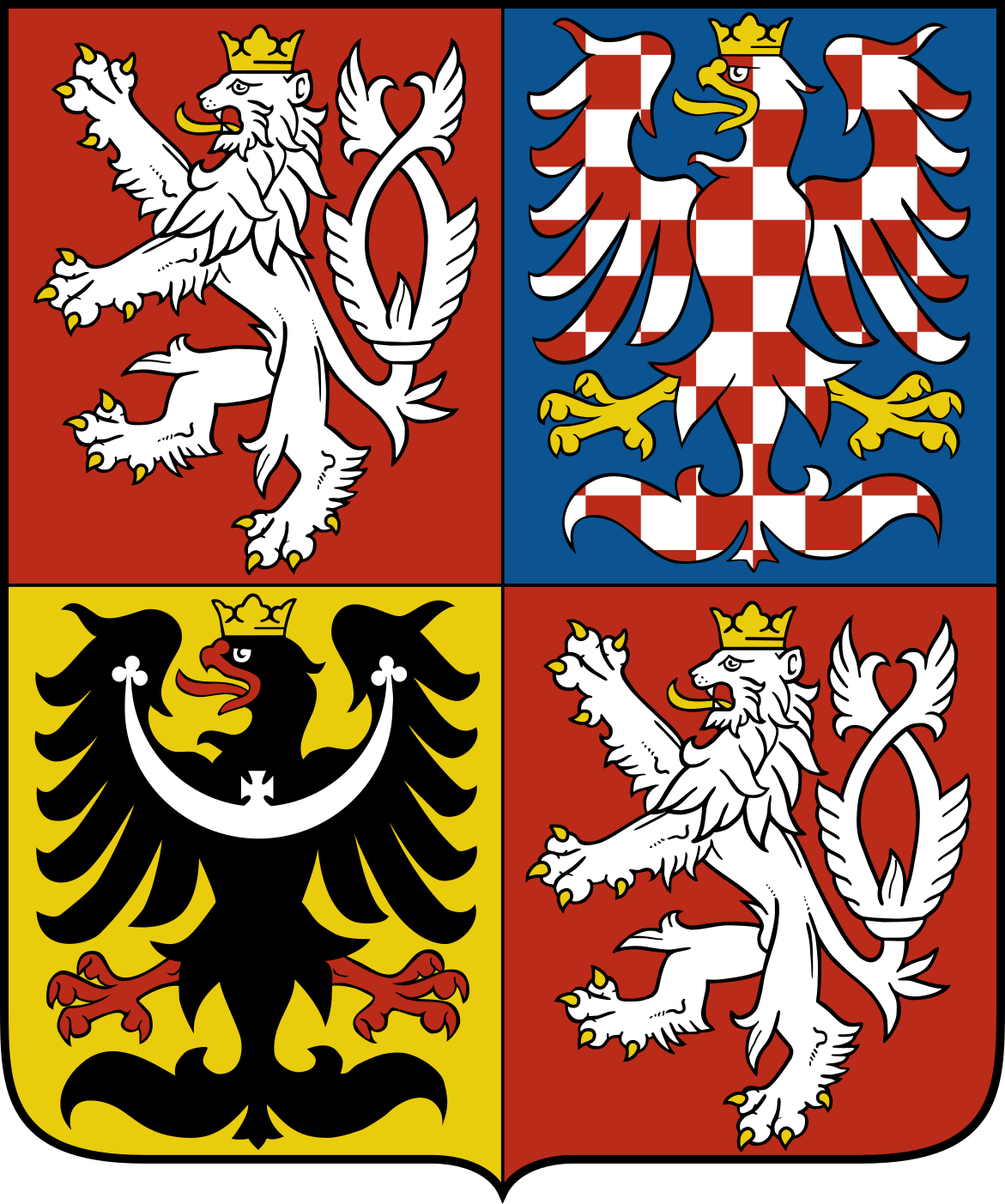
The arms of Czechia