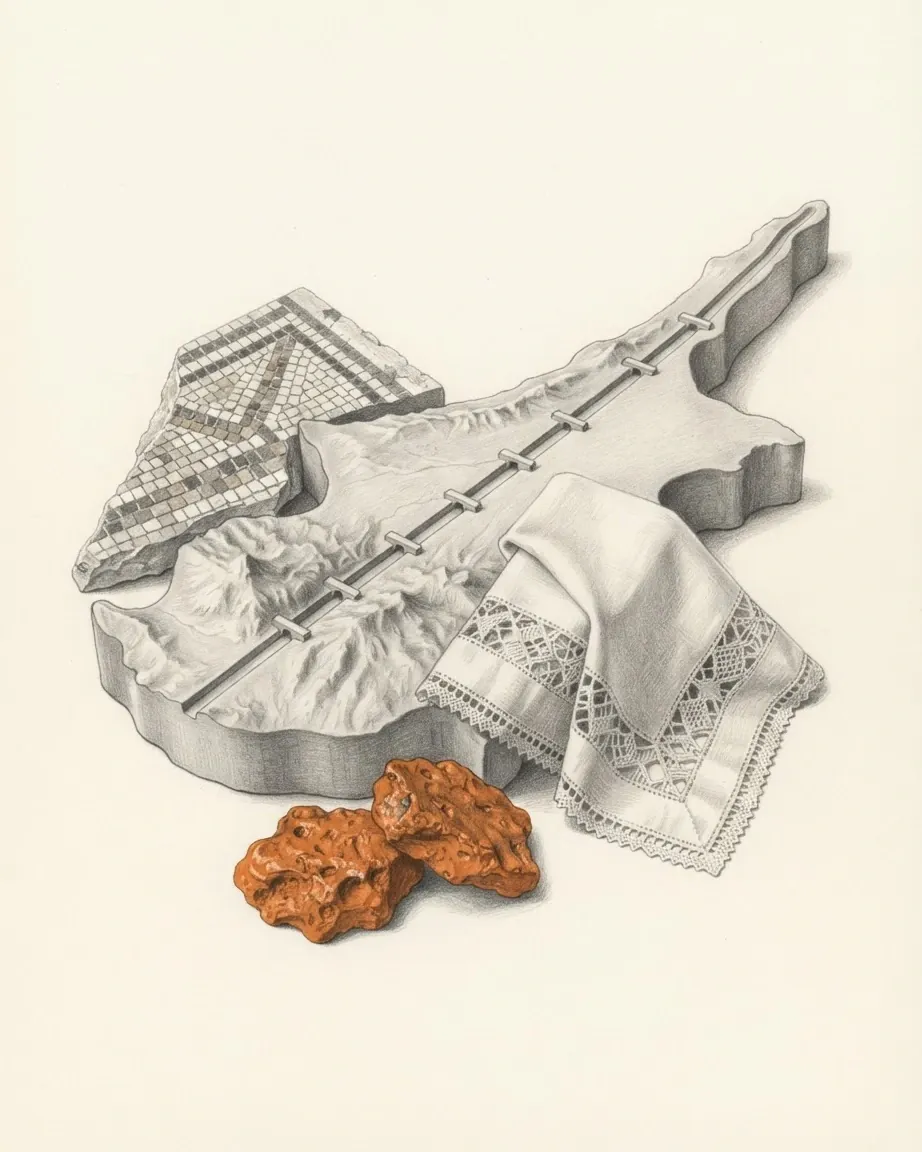
Cypriot history: the republic that outlawed what both sides wanted
3 188 words · 14 min · updated 2026-09-10
 Back to Cyprus
Article 185 of the constitution that founded the Republic of Cyprus on 16 August 1960 states that the territory of the Republic is one and indivisible, and that the integral or partial union of Cyprus with any other State or the separatist independence is excluded. Those two clauses rule out enosis and taksim: the union with Greece that an armed campaign had been fought for since 1955, and the partition Turkish Cypriots had organised to obtain. Article 182 places them among the basic articles that cannot in any way be amended, whether by variation, addition or repeal. The government built on that document stopped functioning in December 1963, three years and four months after independence, and the constitution has never been replaced. Cypriot history is the record of an island whose rulers were chosen somewhere else for three thousand years, and whose one negotiated settlement was agreed between Greece and Turkey before either Cypriot community was brought to the table.
In short
- Independence
- 16 August 1960, on terms agreed at Zurich on 11 February 1959
- What the constitution excludes
- Union with any other state, and separate independence. Article 185
- Articles that cannot be amended
- Those carried over from the Zurich agreement of 11 February 1959. Article 182
- Power sharing lasted
- Three years and four months, to 21 December 1963
- Turkish Cypriot shares written in
- 30% of parliament and the public service, 40% of the army
- Occupied after August 1974
- Between 36 and 37% of the island
- Displaced in 1974 and 1975
- About 150,000 Greek Cypriots north to south, about 60,000 Turkish Cypriots south to north
- Seats standing empty
- 24 of the 80 in the House of Representatives, since 1964
Why copper made the island worth taking
Farmers from the Near Eastern mainland reached Cyprus around the beginning of the ninth millennium BC. What survives of them is the village at Choirokoitia on a hillside above the Maroni river, occupied from the seventh to the fourth millennium BC, about three hectares at its widest and ringed by heavy enclosure walls. UNESCO inscribed the site in 1998, and the French mission digging there since 1976 has cleared only part of it. At a separate Neolithic site an eight-month-old cat was found buried with a human body in a grave dated to about 7500 BC, the earliest known association of that animal with people.
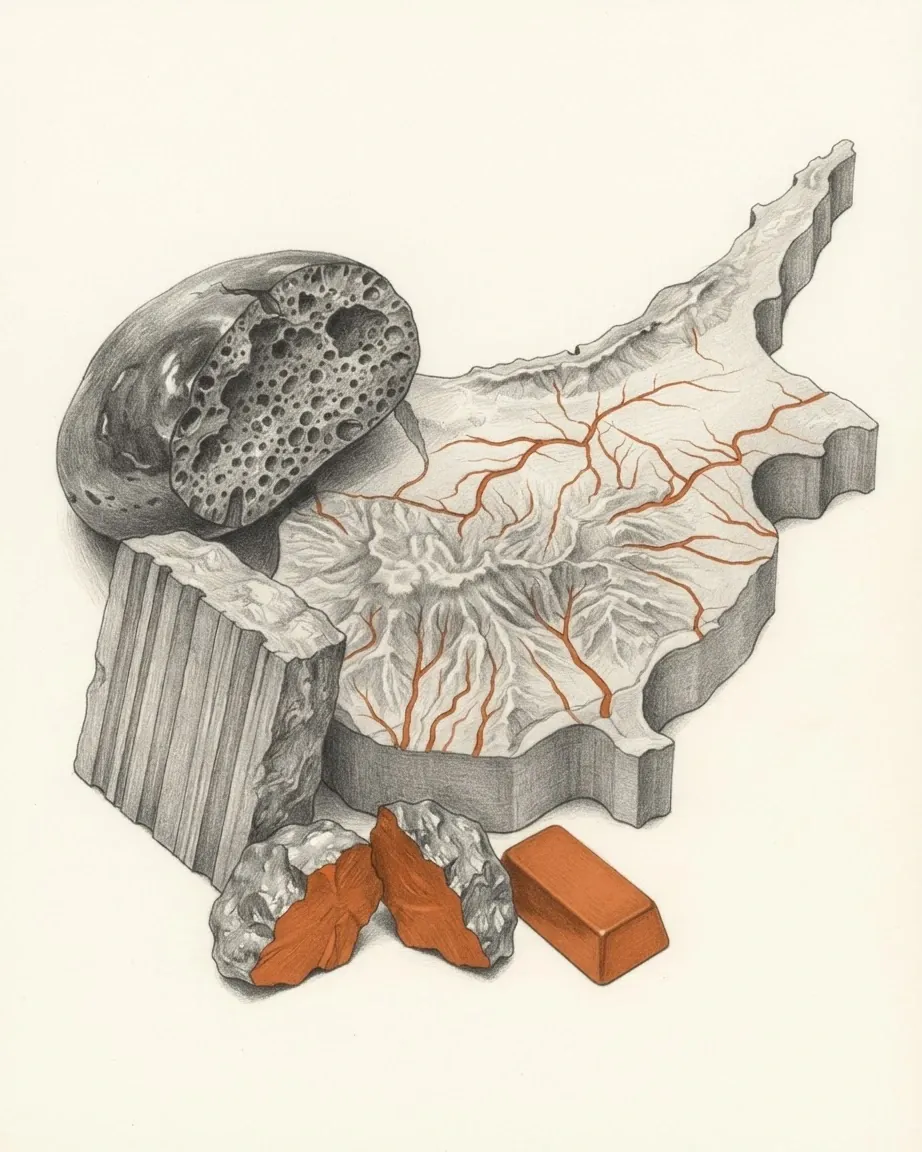
What made the island matter to everyone else was under it. Systematic copper mining in the Troodos began in the Bronze Age, and from around 1650 BC the island, called Alashiya in the correspondence of the period, was trading the metal across the eastern Mediterranean. Its rulers wrote to the pharaohs of the New Kingdom, and the earliest Cypriot king recorded by name, Kushmeshusha, appears in letters sent to Ugarit in the thirteenth century BC. Ingots cast in the shape of an oxhide have come out of the wrecks at Uluburun, Iria and Cape Gelidonya.
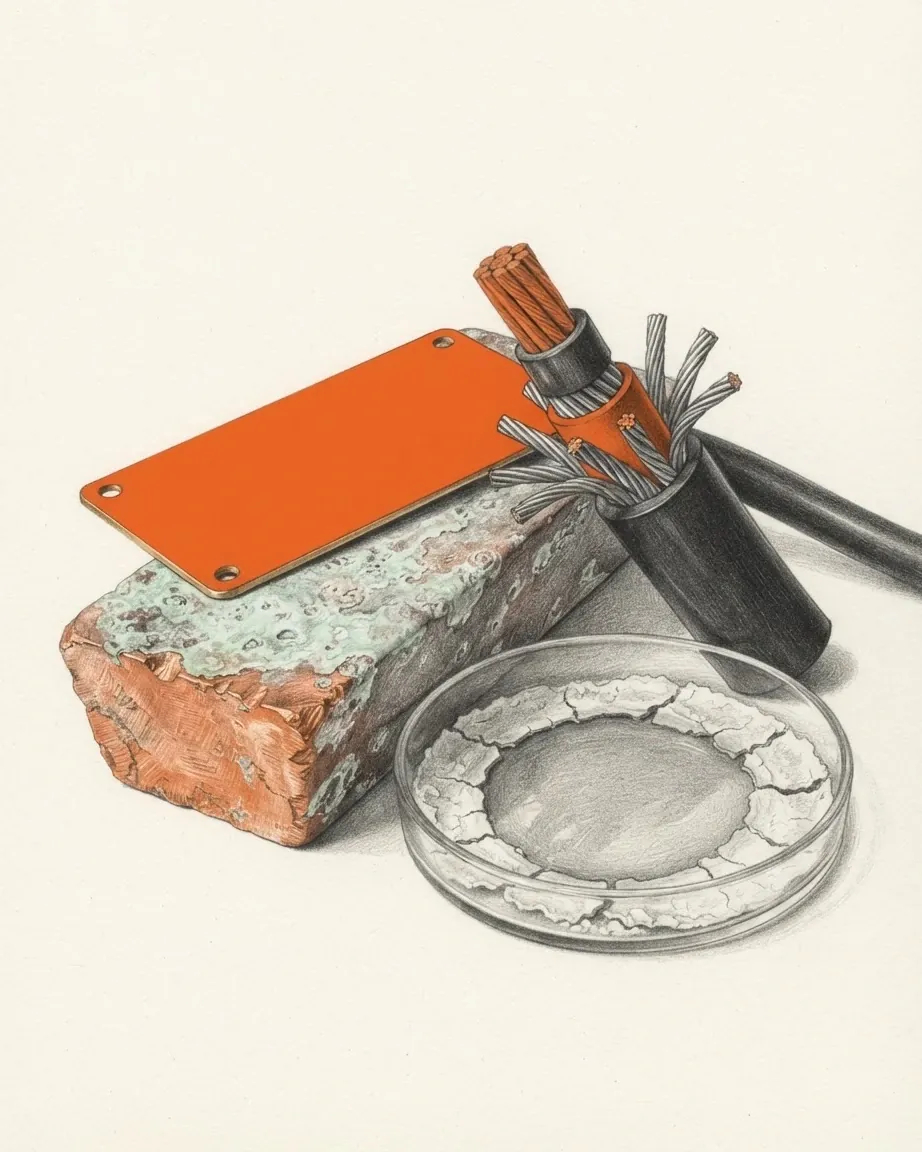
The metal took the island's name with it. Classical Latin called copper aes Cyprium, the metal of Cyprus, and the phrase was shortened to cuprum. Which direction the borrowing ran is unsettled; the candidate roots include a Sumerian word for the metal, a plant and a figure in myth. Mycenaean Greeks were settling the island by the end of the Bronze Age, and its Greek name is attested in Linear B from the fifteenth century BC.
Who ruled Cyprus before the Ottomans came
Assyrians, Egyptians and Persians each held Cyprus in turn, and Alexander the Great took it from the Persians in 333 BC. What followed was two and a half thousand years in which the island's government was decided by whoever held the sea around it.
| Held by | From |
|---|---|
| Ptolemaic Egypt | to 58 BC |
| Rome, and after the fourth century AD the Greek-speaking eastern empire | 58 BC |
| The Umayyad Caliphate and Byzantium jointly, as a condominium | 668 |
| The Byzantine Empire | about 965 |
| The house of Lusignan, as the Kingdom of Cyprus | 1192 |
| Venice | 1489 |
| The Ottoman Empire | 1571 |
| British administration | 1878 |
The condominium is the arrangement with the fewest parallels. Arab armies of the Umayyad Caliphate invaded in 649, and in 668 the two sides agreed to hold and tax the island jointly. That lasted close to three hundred years, until a Byzantine army took it outright around 965.
The Latin centuries began by accident. Richard the Lionheart landed at Limassol on 1 June 1191 looking for his sister and his bride Berengaria, whose ship had been separated from the fleet in a storm. The island's ruler Isaac Komnenos refused to give up the shipwrecked party, so Richard took the island instead and sold it to the Knights Templar. By 1192 the French house of Lusignan held it and had founded the Kingdom of Cyprus. Latin was declared the official language, French replaced it, and Greek was recognised as a second official language only much later. Latin dioceses were established in 1196, and the Orthodox Church of Cyprus, which answered to no patriarch, was permitted to continue while the Latin church displaced it in standing and in property.
Genoese merchants dominated the kingdom through the fourteenth century, the Mamluks made it a tributary state in 1426, and in 1489 the last queen, Catherine Cornaro, was obliged to sell the island to Venice. Ottoman raiding began at once.
How Ottoman rule made two communities
An Ottoman force landed in 1570 and took Nicosia. Famagusta fell the following year after a long siege, and Cyprus became an eyalet of the empire until 1878. The conquest reversed the religious order of the previous three centuries: the Latin church was suppressed, the Orthodox hierarchy restored, feudal tenure abolished, and the Greek peasantry acquired inalienable and hereditary rights to land. Thousands of Muslims were settled on the island immediately after the conquest, and the Turkish Cypriot community descends from them.
The change that mattered most for what came afterwards was administrative. During the eighteenth century the Ottoman authorities made the Orthodox archbishop responsible for collecting taxes, which turned the head of a church into the civil head of a population. The office carried the title of ethnarch into the twentieth century, and Makarios III held both it and the presidency. Cyprus was an unimportant province to the sultans, whose governors Britannica describes as indolent, inefficient, somewhat oppressive and corrupt. There were Turkish uprisings in 1764 and in 1833. In 1821 the Orthodox archbishop was hanged on suspicion of sympathy with the rising on the Greek mainland.
Why Britain took the island and kept it
The Cyprus Convention of 4 June 1878 handed the administration of the island to Britain while sovereignty stayed Ottoman, in return for British support of the empire at the Congress of Berlin. What Britain wanted was a base in the eastern Mediterranean for possible operations in the Caucasus or Mesopotamia. Within weeks of the first high commissioner's arrival in July 1878, the Archbishop of Kition asked him to transfer the island to Greece.
Britain annexed Cyprus on 5 November 1914, after the Ottoman Empire entered the war on the other side. In 1915 it offered the island to Greece as the price of Greek entry alongside the allies, and the offer was refused. Turkey renounced its claims under the Treaty of Lausanne in 1923, and Cyprus was declared a crown colony in 1925.
Enosis was the demand across the whole period, and British proposals for local autonomy under continued British rule were refused. On 21 October 1931 about 5,000 Greek Cypriots, mostly students, priests and city notables, marched in Nicosia, besieged Government House and set it on fire after three hours of stone throwing. Seven protesters were killed and thirty injured. Ten men were exiled for life and 2,606 people received punishments ranging from fines to prison terms. The constitution was suspended, parties were banned, and municipal elections were stopped, with every municipal official appointed by the government until 1943. A reserve police force composed entirely of Turkish Cypriots was formed.
In January 1950 the Church of Cyprus organised its own plebiscite. Open books were placed in churches on 15 and 22 January for anyone over eighteen to sign for or against union with Greece, Turkish Cypriots took no part, and 95.7% of the signatures were in favour. Neither Britain nor the United Nations was moved by the result. A British enquiry into the future of the empire's smaller territories concluded in 1951 that Cyprus should never be independent of Britain, and that position hardened when Britain withdrew from the Suez Canal base in 1954 and moved its Middle East headquarters to the island.
What EOKA fought for and what it got
Georgios Grivas, a Cypriot who had served as an officer in the Greek army, founded the National Organisation of Cypriot Fighters, EOKA, in January 1955. Enosis was the whole of its programme. The campaign opened thirty minutes after midnight on 1 April 1955 with eighteen bomb attacks across Nicosia, Famagusta, Larnaca and Limassol. Over the four years that followed, attacks on police, military and government installations killed 387 British servicemen and personnel, along with Greek Cypriots suspected of collaborating.
Britain deported Archbishop Makarios III to the Seychelles on 9 March 1956; he was released in March 1957 and made his headquarters in Athens. The first two EOKA prisoners were hanged on 10 May 1956, and three more on 9 August. From January 1957 Grivas began attacking Turkish Cypriot policemen deliberately, which produced intercommunal rioting and pulled British troops out of the mountains and into the towns.
Turkish Cypriots organised in answer. The Turkish Resistance Organisation, TMT, went into action in 1957, and its aim was taksim: partition of the island into a Greek sector in the south and a Turkish sector in the north.
By the end of 1958 each party had a reason to settle: Greek Cypriots feared partition was becoming likelier the longer the fighting ran, Greece was anxious about a war with Turkey, and Britain did not want NATO destabilised. Greece and Turkey opened talks in December 1958 and reached agreement at Zurich on 11 February 1959. The scene shifted to London, where Makarios and Kucuk joined the two governments and the British with no significant decision-making power, and the compromise was accepted on 19 February. Grivas issued a leaflet accepting it on 9 March 1959. Cyprus became independent on 16 August 1960, and under the Treaty of Establishment Britain kept sovereignty over 256 square kilometres: the Akrotiri base area southwest of Limassol and the Dhekelia base area northeast of Larnaca.
How the constitution divided the new republic
Article 1 states the offices before it states the state: the President being Greek and the Vice-President being Turk, each elected by his own community. Article 2 defines those communities by origin, mother tongue, cultural tradition and religion, and required every citizen belonging to neither to opt into one of them within three months of the constitution coming into force. The island-wide census of 1960 counted 450,000 Greek Cypriots and 102,000 Turkish Cypriots. Greek Cypriots were 78% of the population and Turkish Cypriots 18%; Latins, Maronites and Armenians made up the remaining 4%.
The shares written into the institutions were not those shares.
| Institution | Greek Cypriot | Turkish Cypriot |
|---|---|---|
| House of Representatives, fifty seats | 70% | 30% |
| Council of Ministers | seven of ten | three of ten |
| Public service | 70% | 30% |
| Police and gendarmerie, two thousand men | 70% | 30% |
| Army, two thousand men | 60% | 40% |
Article 62 says so in terms: the proportion of representatives it lays down "shall be independent of any statistical data". President and Vice-President each held a veto, absolute over foreign affairs, defence and internal security and delaying elsewhere, in the Council of Ministers and over legislation alike. A law imposing duties or taxes needed a simple majority of the representatives of each community counted separately. The Supreme Constitutional Court had one Greek Cypriot judge, one Turkish Cypriot judge and a president contracted from a neutral country. Article 173 required separate Turkish municipalities in Nicosia, Limassol, Famagusta, Larnaca and Paphos, with a coordinating body in each town for whatever the two councils had to do jointly. De Smith, an authority on constitutional law, called the result unique in its tortuous complexity and in the multiplicity of the safeguards it provides for the principal minority.
Then the two prohibitions of Article 185, and Article 182, which lists the provisions carried over from the Zurich agreement as basic articles beyond amendment. Everything outside that list could be changed only by two-thirds of the representatives of each community.
Why the power sharing collapsed within three years
The first disputes were about taxation and about the separate municipalities, and the veto meant that a dispute could not be closed by counting votes. Many Greek Cypriots read the separate municipalities as the first stage of the partition the whole settlement was supposed to have prevented. Greek Cypriot leaders drew up the Akritas plan, which proposed to amend the constitution in their favour, persuade the international community that the amendments were correct, and subdue Turkish Cypriots by force within a few days if they refused.
On 30 November 1963 Makarios put thirteen proposed amendments to the three guarantor powers, among them the abandonment of the veto by both the President and the Vice-President. Turkey rejected them. Three weeks later, on 21 December 1963, two Turkish Cypriots were killed in an incident with Greek Cypriot police in Nicosia and fighting spread across the island. By the end of 1964, 364 Turkish Cypriots and 174 Greek Cypriots had been killed, 109 Turkish Cypriot or mixed villages destroyed and between 25,000 and 30,000 Turkish Cypriots displaced. Nicosia was divided by a line the peacekeepers called the Green Line.
How the partnership government actually ended is the most contested question in modern Cypriot history, and this catalogue records both accounts and adjudicates neither. Greek Cypriots record that Turkish Cypriots withdrew in order to form an administration of their own. Turkish Cypriots record that they were forced out. Both are documented in individual cases: some left in response to calls from the Turkish Cypriot leadership, some stayed away because they feared for their lives, and some who wanted to keep their posts were prevented from doing so.
Security Council Resolution 186 of 4 March 1964 created UNFICYP, which is still on the island. The Vice-Presidency and the three Turkish Cypriot ministries have been vacant since 1964. The Cypriot government's own account is that it has operated ever since under the Law of Necessity, with the President appointing eleven ministers in place of the ten-member council the constitution describes.
How a coup brought the Turkish invasion
Four rounds of intercommunal talks ran from May 1968 to 1974 and settled nothing. Makarios had by then accepted that union with Greece was unobtainable, telling voters during the 1968 presidential campaign that enosis was desirable and independence possible. The pro-enosis paramilitary EOKA B was formed in 1971 and began attacking his government.
On 2 July 1974 Makarios wrote an open letter to the Greek president complaining that cadres of the Greek military regime were directing EOKA B, and ordered the removal of about 600 Greek officers from the Cypriot National Guard. Athens answered by ordering a coup. On 15 July 1974 sections of the National Guard led by their Greek officers overthrew the government, installed Nikos Sampson and proclaimed a Hellenic Republic of Cyprus. Makarios, safe in London, described the coup to the Security Council as an invasion of Cyprus by Greece.
Turkey invoked the Treaty of Guarantee, invited Britain to act jointly, was declined, and landed forces on 20 July. The first phase took about 3% of the island before a ceasefire on 23 July. The Greek junta collapsed the same day and Sampson gave up the presidency. The Geneva conference broke down over proposals presented on 13 August by the Turkish foreign minister Turan Gunes, and on 14 August a second Turkish operation extended the occupied area to between 36 and 37% of Cyprus.
Around 150,000 people were displaced from the north, more than a quarter of the island's population and a third of its Greek Cypriots; the north had been 80% Greek Cypriot before the landings, and estimates of the refugee total run from 140,000 to 160,000. Over the following year roughly 60,000 Turkish Cypriots, about half that community, moved from south to north under the Third Vienna Agreement with UNFICYP's help. The Committee on Missing Persons, working under United Nations auspices, is mandated to investigate about 1,600 cases of Greek Cypriot and Greek missing persons. It began returning identified remains to families in the summer of 2004.
The ceasefire line of 16 August 1974 became the buffer zone UNFICYP patrols: about 180 kilometres across the island, a few metres wide in parts of old Nicosia and a few kilometres wide elsewhere. On 15 November 1983 the north declared independence as the Turkish Republic of Northern Cyprus. Security Council Resolution 541 called the declaration legally invalid and asked for its withdrawal, and Resolution 550 of 1984 condemned the exchange of ambassadors with Turkey and called for Varosha to be handed to United Nations administration. Turkey is the only state that has recognised the declaration.
What has been tried since the partition
Every proposal since 1974 has been a proposal to replace the 1960 arrangement, and each has failed at a different point. In August 1983 the Secretary-General Javier Perez de Cuellar offered a rotating presidency, a bicameral assembly and 60:40 representation in the central executive, in return for the Turkish Cypriot side giving up 8 to 13% of the land it held. Both leaders accepted, and in November the north declared independence instead.
The Annan Plan went furthest. It would have made a United Cyprus Republic of two component states, the northern one covering about 28.5% of the island, each with its own parliament under a federal bicameral one in which Turkish Cypriots held a quarter of the lower house and half the senate. A presidential council with a rotating chairmanship would have held executive power, each community would have kept a veto over all legislation, and the Treaty of Guarantee would have stayed in force. Put to simultaneous referendums on 24 April 2004, it was supported by about 65% of Turkish Cypriot voters and opposed by about 74% of Greek Cypriot voters, whose stated objection was that it favoured Turkish Cypriots disproportionately and gave Turkey unreasonable influence. Counted together, 66.7% of voters rejected it. Cyprus joined the European Union a week later, on 1 May 2004, as a whole island, with the body of EU law suspended in the north.
Movement across the line had begun the year before the vote. In April 2003 the northern authorities eased checkpoint restrictions and Cypriots crossed for the first time in thirty years. The wall that had closed Ledra Street in the middle of Nicosia was demolished in March 2008 and the street reopened on 3 April. Two further crossing points, at Dherynia and at Lefka, opened on 12 November 2018, the first in eight years. Talks relaunched in 2015 collapsed at Crans-Montana in 2017, after which the Turkish Cypriot leadership and Turkey moved from a bizonal, bicommunal federation to a two-state position. United Nations talks in 2021 failed as well.
The constitution written at Zurich in February 1959 is still the constitution of the Republic of Cyprus, revised to 2013 and fitted to European Union membership by an Article 1A providing that nothing in it annuls what membership requires. The House of Representatives has 80 seats. Fifty-six are elected by the Greek Cypriot community, three of those reserved for the Latin, Maronite and Armenian religious groups. Twenty-four are elected by the Turkish Cypriot community, and they have been empty since 1964.
Timeline
The dates in order
- 9th millennium BC
- Farmers from the Near Eastern mainland settle the island. Choirokoitia is occupied from the seventh millennium.
- 1650 BC
- Copper from the Troodos makes Alashiya a trading power whose kings write to the Egyptian court.
- 333 BC
- Alexander the Great takes Cyprus from the Persians. Ptolemaic Egypt rules it until 58 BC.
- 668
- Byzantium and the Umayyad Caliphate agree to hold and tax the island jointly for close to three hundred years.
- 1192
- The house of Lusignan founds the Kingdom of Cyprus after Richard the Lionheart sells the island on.
- 1489
- Catherine Cornaro, the last queen, is obliged to sell the island to Venice.
- 1571
- Famagusta falls and Cyprus becomes an Ottoman eyalet. Muslim settlement begins at once.
- 1878
- The Cyprus Convention of 4 June hands the administration to Britain while sovereignty stays Ottoman.
- 1914
- Britain annexes the island on 5 November. It becomes a crown colony in 1925.
- 1931
- Government House is burned on 21 October. The constitution is suspended and parties are banned.
- 1950
- A church plebiscite in January records 95.7% of Greek Cypriot signatures for union with Greece.
- 1955
- EOKA opens its campaign against British rule on 1 April with eighteen bomb attacks.
- 1959
- Greece and Turkey agree the terms at Zurich on 11 February. London accepts them on 19 February.
- 1960
- The Republic of Cyprus is founded on 16 August. Britain keeps 256 square kilometres.
- 1963
- Makarios proposes thirteen amendments on 30 November. Fighting begins on 21 December.
- 1964
- Security Council Resolution 186 of 4 March creates UNFICYP. The Vice-Presidency falls vacant.
- 1974
- A coup on 15 July is followed by the Turkish landings of 20 July and a second operation on 14 August.
- 1983
- The north declares independence on 15 November. Resolution 541 calls the declaration legally invalid.
- 2003
- Checkpoint restrictions ease in April and Cypriots cross the line for the first time in thirty years.
- 2004
- The Annan Plan is rejected on 24 April. Cyprus joins the European Union on 1 May.
- 2017
- Talks collapse at Crans-Montana. United Nations talks fail again in 2021.
Common questions
Questions about Cyprus
Who arranged Cypriot independence?
On 16 August 1960. The terms were settled between Greece and Turkey at Zurich on 11 February 1959 and accepted at a London conference on 19 February, where the Greek Cypriot and Turkish Cypriot representatives had no significant decision-making power. Cyprus joined the United Nations on 20 September 1960 and the European Union on 1 May 2004.
What are enosis and taksim?
Enosis is the Greek word for union, and it named the demand that Cyprus be joined to Greece. It was raised with the first British high commissioner in July 1878 and pursued by EOKA in arms from 1955. Taksim is the Turkish word for partition, and it named the counter-demand that the island be divided into a Greek sector in the south and a Turkish sector in the north. Article 185 of the 1960 constitution excludes both.
Why has the Cypriot vice-presidency been vacant since 1964?
The constitution reserves it for a Turkish Cypriot elected by the Turkish Cypriot community, and it has had no holder since the Turkish Cypriot Vice-President and the three Turkish Cypriot ministers left the government during the crisis that began on 21 December 1963. The Cypriot government states that it has functioned since then under the Law of Necessity, with the President appointing eleven ministers. Twenty-four of the 80 seats in the House of Representatives are reserved for Turkish Cypriots and stand empty for the same reason.
What happened in Cyprus in 1974?
On 15 July the Cypriot National Guard, led by its Greek officers and backed by the military government in Athens, overthrew President Makarios and installed Nikos Sampson. Turkey invoked the Treaty of Guarantee and landed forces on 20 July. A second operation on 14 August left between 36 and 37% of the island under Turkish control. About 150,000 Greek Cypriots were displaced southward and about 60,000 Turkish Cypriots moved north over the following year.
What made Greek Cypriot voters reject the Annan Plan?
About 74% voted against it on 24 April 2004, the stated objection being that the plan favoured Turkish Cypriots disproportionately and gave Turkey unreasonable influence over the island, in part because it kept the Treaty of Guarantee and its right of military intervention in force. About 65% of Turkish Cypriot voters supported the plan, and 66.7% of all voters rejected it.