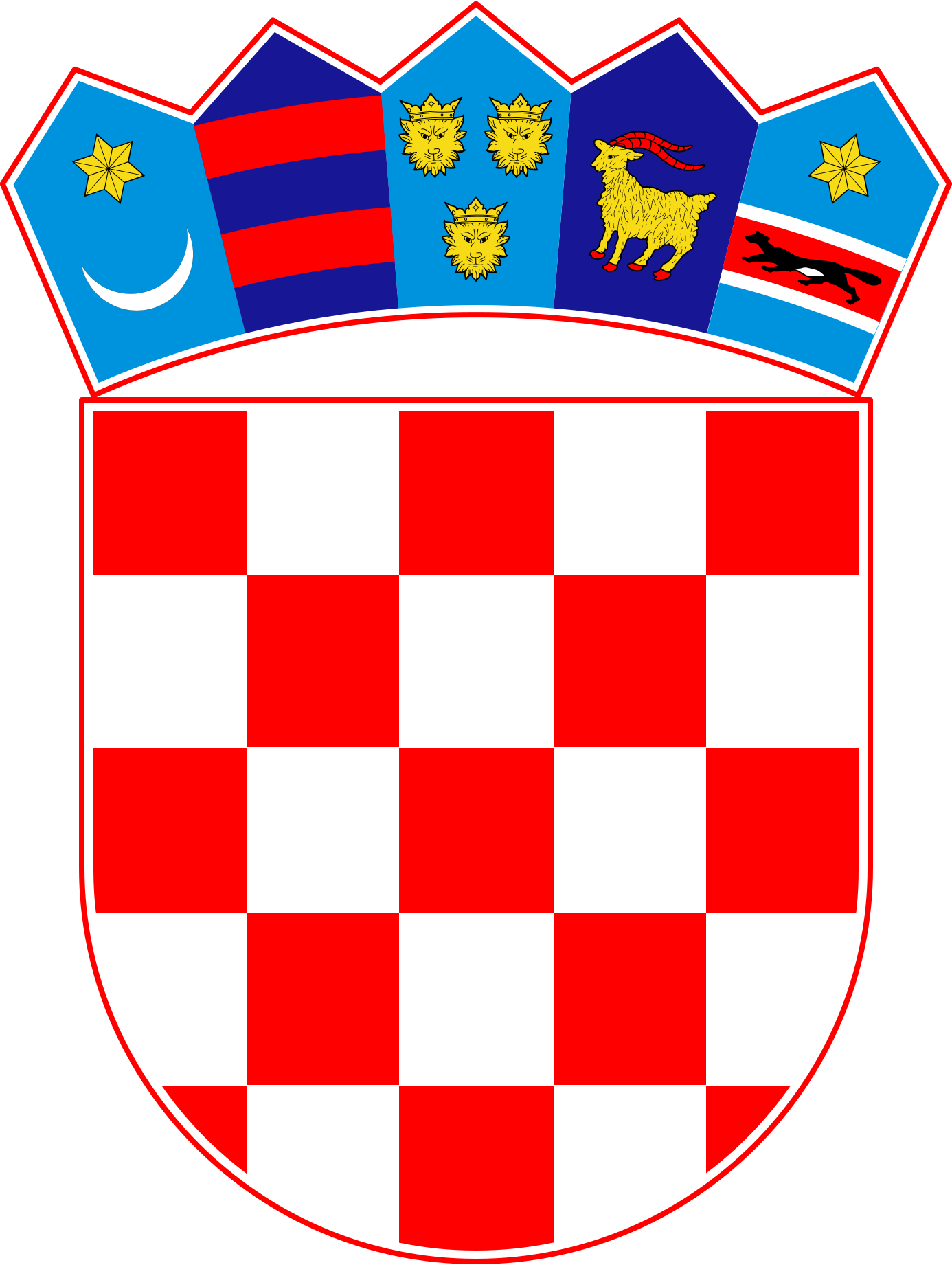
The flag of Croatia
Zastava Republike Hrvatske · since 1990
 Back to Croatia
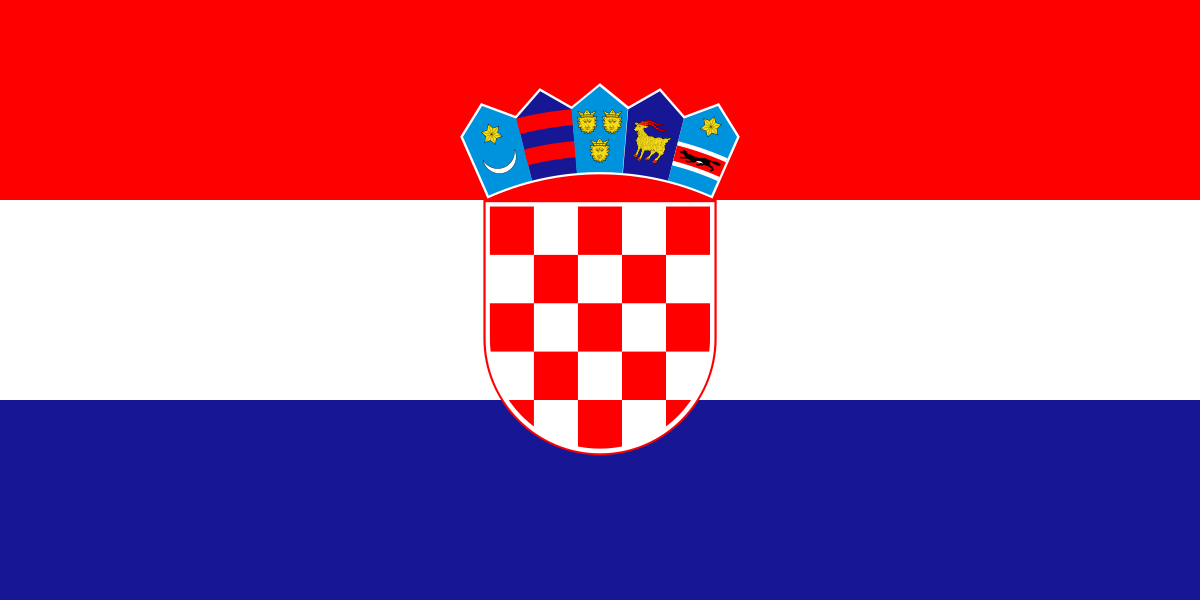
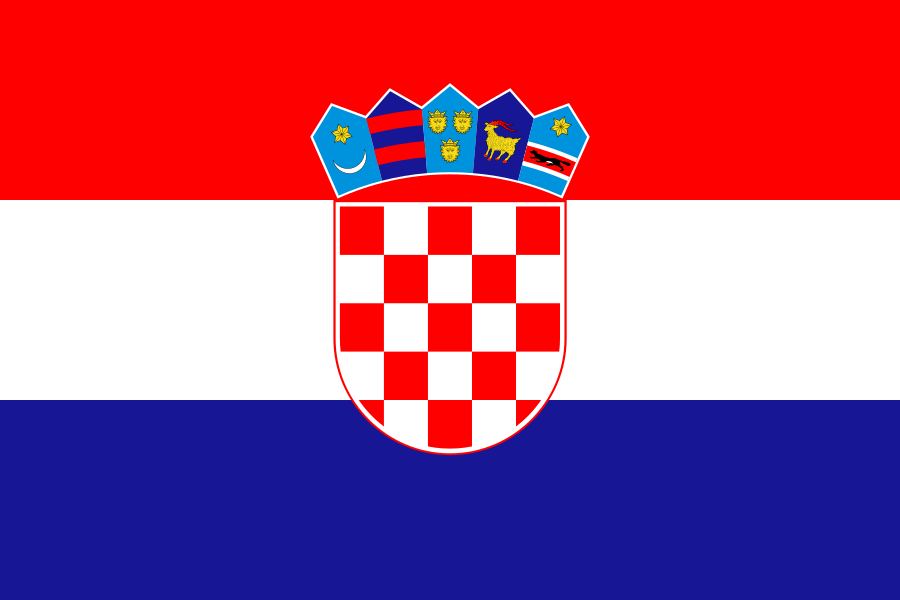
A red, white and blue horizontal tricolour with the Croatian coat of arms at the centre, the red and white chequy shield reaching into the red and blue stripes under a crown of five regional arms. The tricolour dates from 1848; the arms were put back in place of a red star in July 1990 and fixed in their present form by law on 21 December 1990. Its common names are the trobojnica and crven-bijeli-plavi.
At a glance
- Adopted
- 1990
- Proportion
- 1:2
- Colours
- Earlier flags
- 9
- Designers
- 2
The colours
The colours of the flag of Croatia, in the order it has them
- 0134.8%
Red
crvenaTop stripe, the red squares of the shield
- HEX
#FF0000- RGB
255 0 0- CMYK
0 100 100 0- Pantone
485 C- RAL
3026
- 0230.9%
White
bijelaMiddle stripe, the white squares of the shield
- HEX
#FFFFFF- RGB
255 255 255- CMYK
0 0 0 0
- 0334.3%
Blue
plavaBottom stripe
- HEX
#171796- RGB
23 23 150- CMYK
100 90 20 7- Pantone
072 C- RAL
5026
No law gives these codes. HEX and RGB are the colour this site draws the flag in; CMYK, Pantone and RAL are the values most often published for it.
Construction
How the flag is drawn
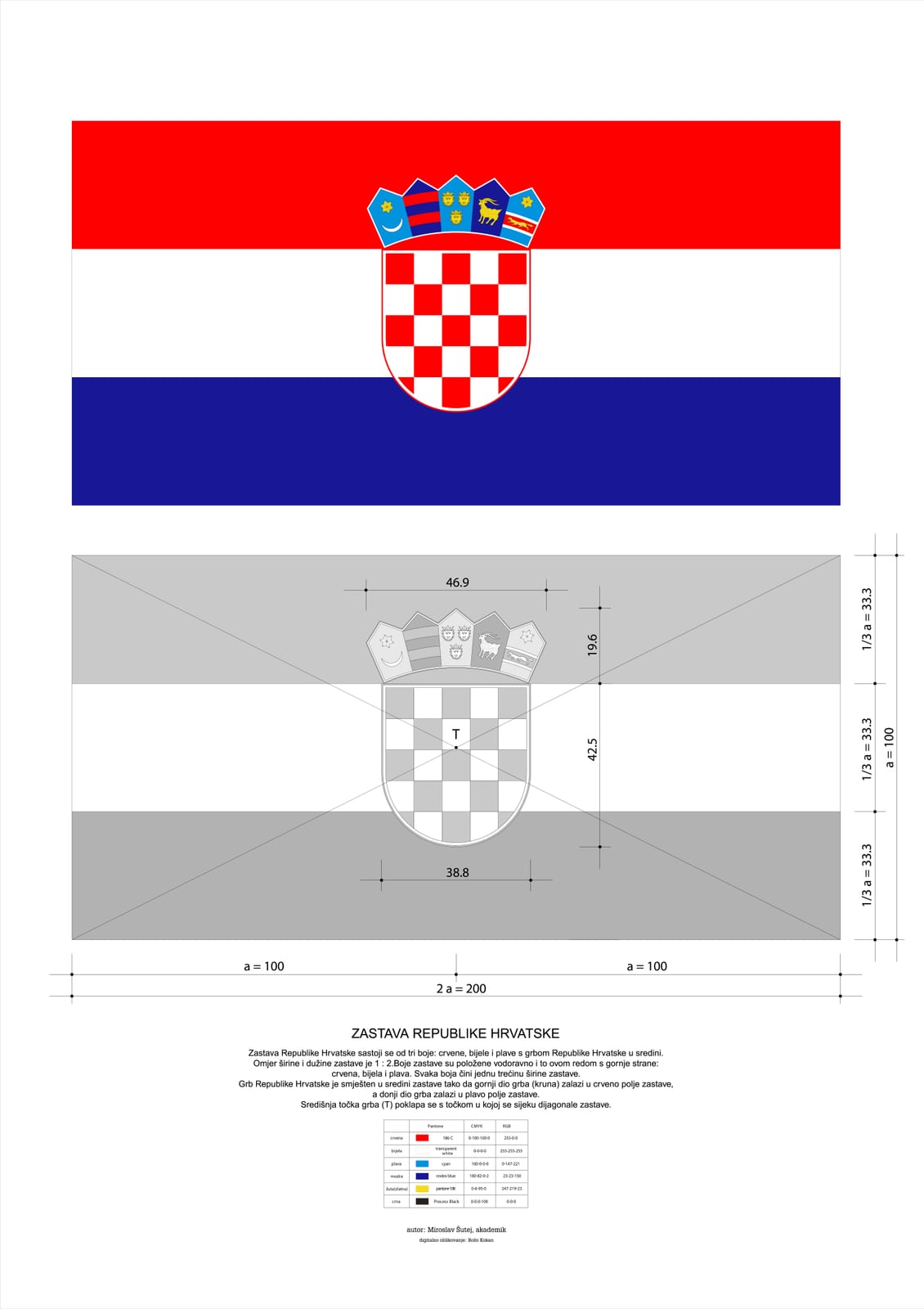
Three horizontal stripes of equal width, red over white over blue, with the coat of arms at the centre: a shield of 25 red and white squares, the first square red, crowned by five small shields and reaching from the red stripe into the blue.
- Stripes
- Three, each a third of the flag's height, red at the top
- Arms position
- The centre of the arms is where the flag's diagonals cross; the crown sits in the red stripe and the base of the shield in the blue
- Shield
- Its upper edge runs along the line between the red and white stripes, and the line between its fourth and fifth rows of squares along the line between the white and blue stripes
- Border
- On the flag the shield has no white field between it and its red border
- Crown
- Its red border merges with the red stripe, so that it appears outlined in white only
Other forms
- Civil ensign
- The national flag at 2:3, flown by ships and yachts on the Croatian registers.
- Naval ensign
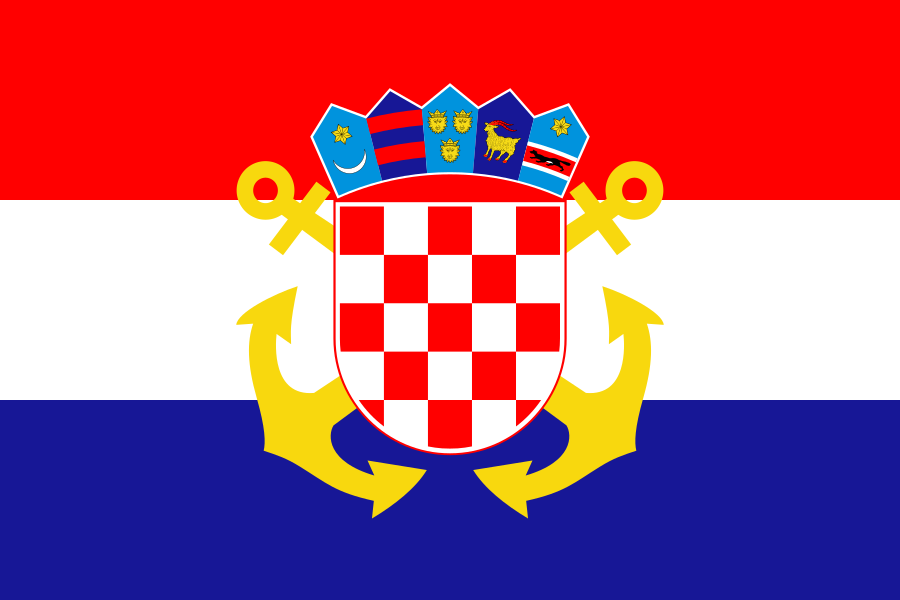
- The civil ensign with two crossed yellow anchors behind the arms, flown at the stern of navy ships throughout a voyage and in battle.
- Naval jack
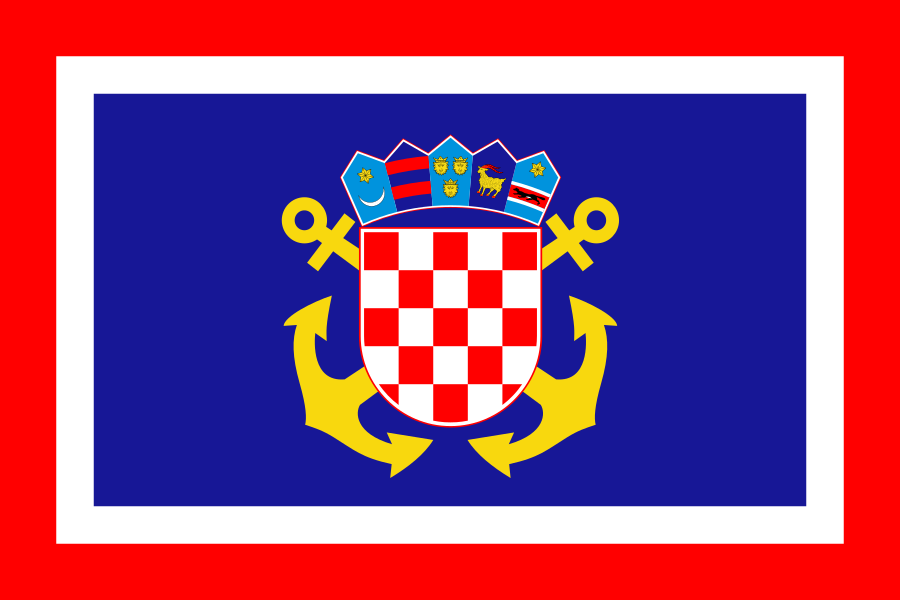
- Flown at the bow of navy ships on holidays and ceremonial occasions, and every day in a foreign port.
- Flag of the president
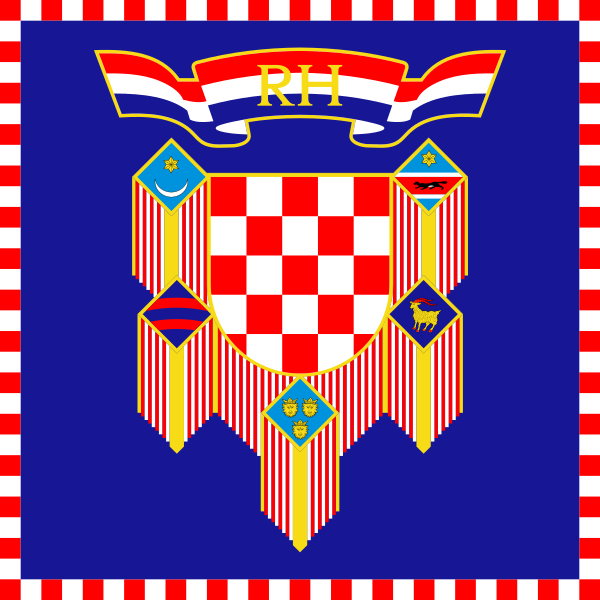
- Square, with a thin border of 29 by 29 alternating red and white squares; at the centre on dark blue, the historical arms ringed by medallions of the regional arms, with a ribbon in the flag's colours lettered RH in gold.
Meaning
What each part stands for
- Red, white and blue
- Taken from the arms of the Triune Kingdom: red and white from Croatia, blue and white from Slavonia. A late 19th-century reading gives red and white to Croatia and blue to Slavonia
- Chequy shield
- The historical arms of Croatia, 25 red and white squares
- Crown of five shields
- From left to right the oldest known arms of Croatia, then Dubrovnik, Dalmatia, Istria and Slavonia. They carry five animals: three lions for Dalmatia, a goat for Istria and a marten for Slavonia
Who drew it
- Miroslav Šutej
- Painter and graphic artist; drew the coat of arms and the flag in Motovun in the summer of 1990
- Božo Kokan
- Designer; prepared the digital graphic standards the parliament's presidency ordered in 2011
History
How the flag of Croatia got here
- 1848
The tricolour of 1848
1848 → 10 Sept 1852
Announced in Gaj's Narodne novine and taken up at once by the Zagreb National Guard, the tricolour was first used officially on 5 June 1848 at the installation of Josip Jelačić as ban, carried at the head of his procession into Zagreb.
- 1852
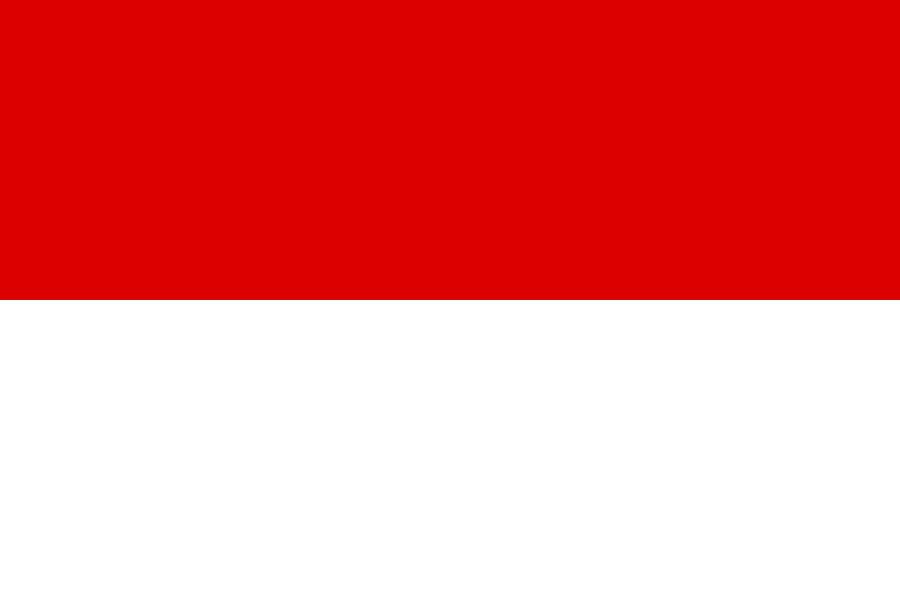
The land colours
10 Sept 1852 → 1860
Under Bach's absolutism national flags were banned throughout the monarchy. Croatia was allowed a white and red bicolour, Slavonia blue and white, Dalmatia blue and yellow.
Image: DIREKTOR, CC BY-SA 3.0
- 1860
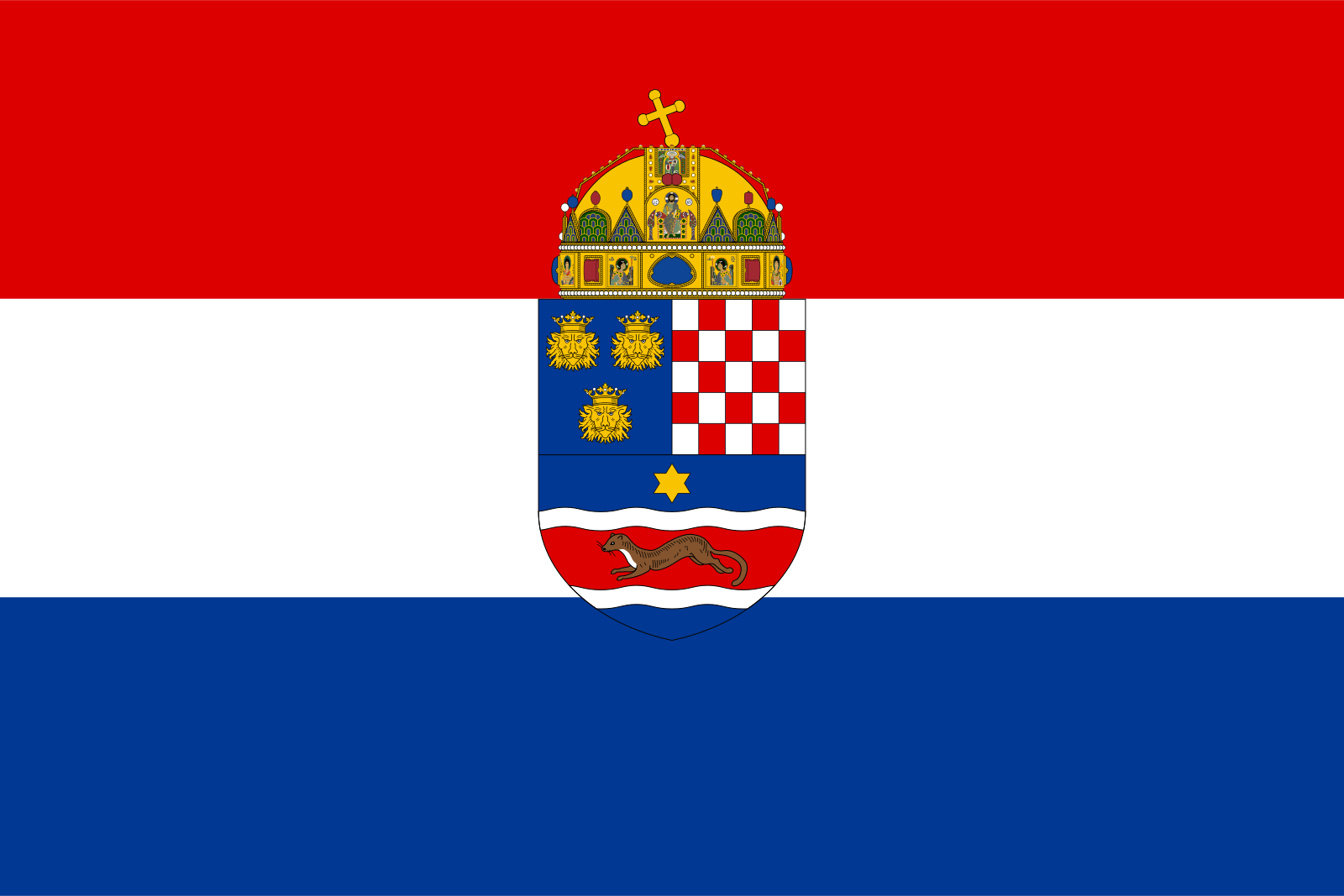
The Triune Kingdom
1860 → 1918
The tricolour returned in 1860. After the Croatian-Hungarian Settlement of 1868 it was used in autonomous affairs with the united arms of Croatia, Slavonia and Dalmatia under the Crown of Saint Stephen, regulated by orders of 1876, 1899 and 1914.
Image: DIREKTOR (parts derived from User:Ex13 's images), CC BY-SA 3.0
- 1918
Yugoslavia
1918 → 1939
The plain tricolour was briefly the state flag in 1918. It stayed in use in the Kingdom of Serbs, Croats and Slovenes until pressure from the regime and the dictatorship led to its ban.
- 1939
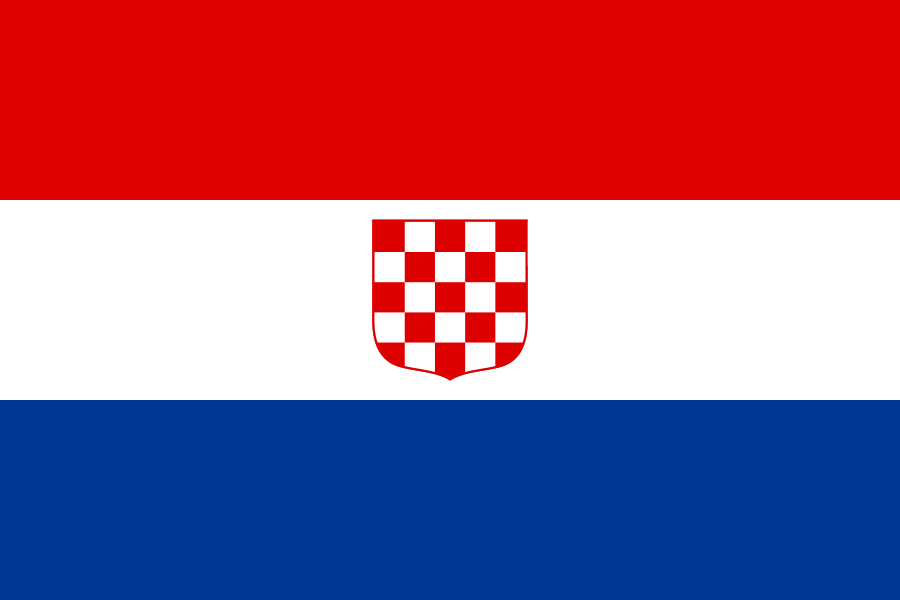
The Banovina of Croatia
1939 → 1941
The tricolour was official again as the flag of a territorial unit inside the Kingdom of Yugoslavia. Photographs show it flown on public buildings without arms.
- 1941
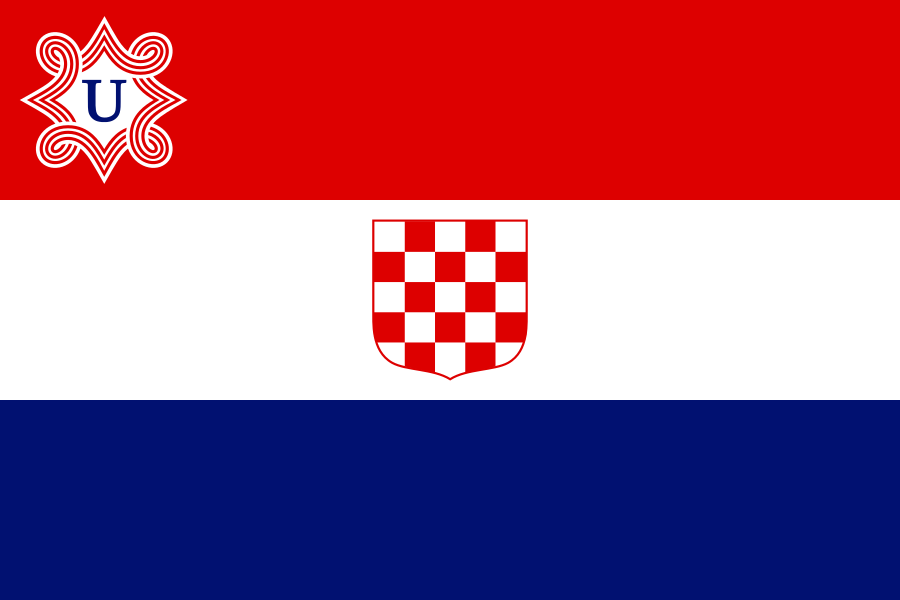
The Independent State of Croatia
28 Apr 1941 → 1945
The tricolour at 2:3 or 2:5 with the arms, the first square white, in the white stripe, and in the red stripe at the hoist an interlace ornament with a dark blue letter U.
- 1945
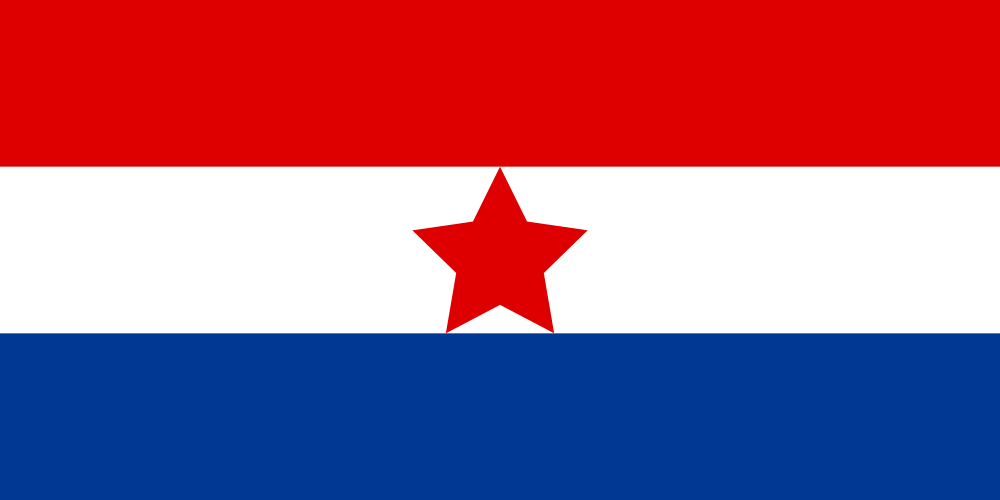
The red star
26 May 1945 → 18 Jan 1947
The Federal State and then the People's Republic of Croatia put a red five-pointed star at the centre, ordered by the Partisan high command as early as 1 October 1941.
- 1947
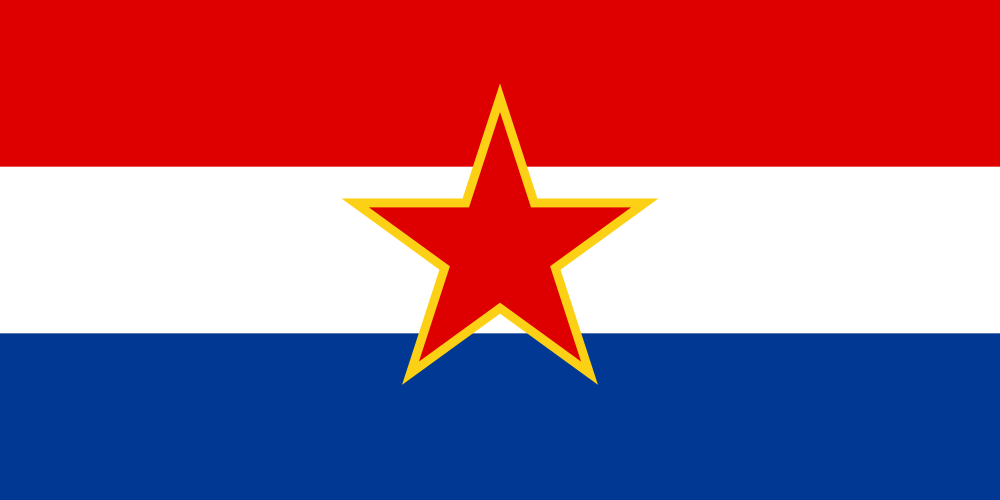
The Socialist Republic of Croatia
18 Jan 1947 → 25 Jul 1990
The tricolour at 1:2 with a red star edged in gold at the centre, its upper point reaching halfway into the red stripe, as set out in Article 7 of the 1974 constitution.
- 1990
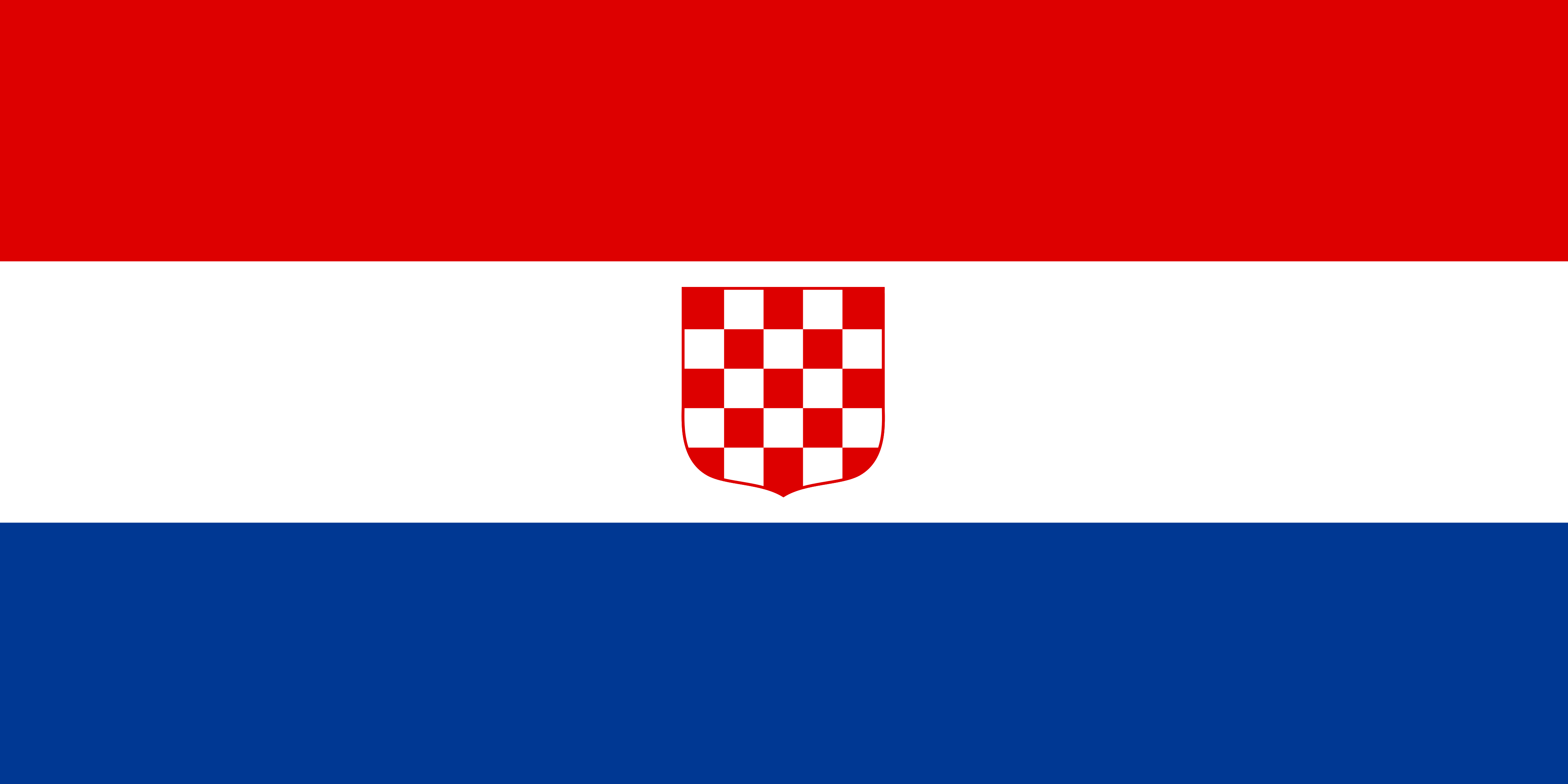
The arms replace the star
25 Jul 1990 → 21 Dec 1990
Constitutional amendments put the historical arms in place of the star, first shown officially on 30 May 1990. They did not say which square came first, and many of the flags hoisted began with a white one.
- 1990
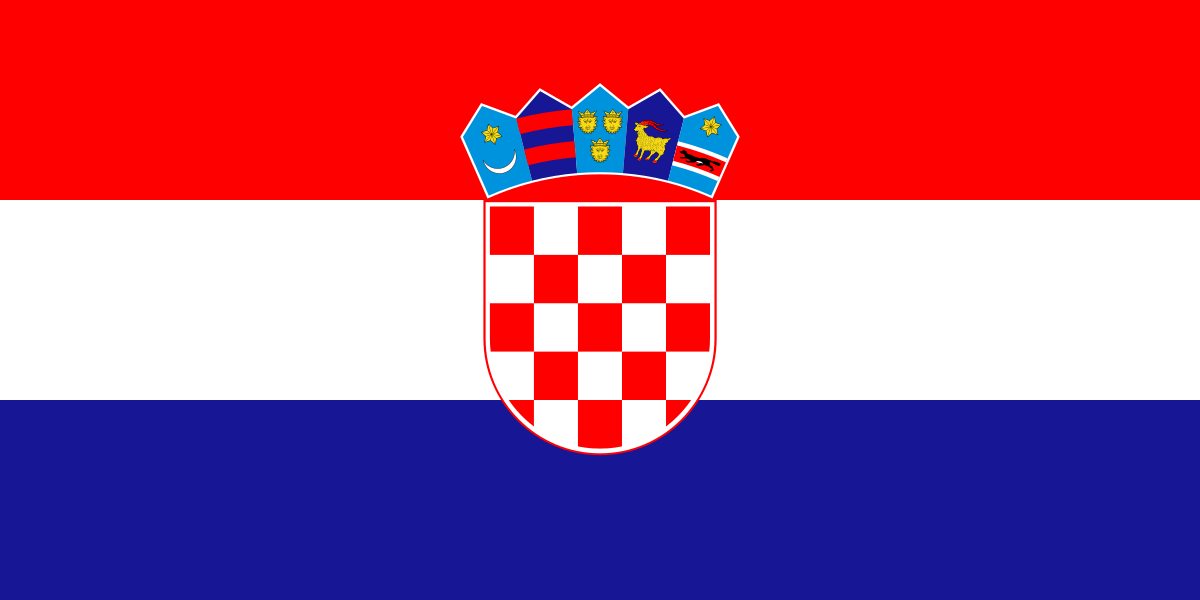
The flag of the Republic of CroatiaIn use
21 Dec 1990 → today
The law of 21 December 1990 fixed Šutej's design and made the first square of the shield red, a day before the Constitution was adopted and months before independence from Yugoslavia.
The law
What defines it, and who flies it
- Undated
Constitution of the Republic of Croatia, Article 11(2)
The flag consists of red, white and blue with the historical Croatian coat of arms in the centre; the details are left to a law.
- 21 December 1990
Law on the Coat of Arms, the Flag and the Anthem of the Republic of Croatia and on the Flag and Sash of the President of the Republic of Croatia, Article 10
Passed by all three chambers of the Sabor, proclaimed and published the same day. Sets the order and width of the stripes, the 1:2 proportion and the position of the arms; its drawings are part of the law.
In use
Flown permanently on the buildings of all state bodies
Flown on public holidays, and at half-mast for the length of a period of mourning
Hung vertically across a street, the red is on the north side of an east to west street and on the east side of a north to south street
Shown vertically at a table or tribune, the red is first on the left seen from the front
A county flag flies to its left and a town or municipal flag to its right, seen from the street
Ships and yachts must fly it by day in port, at anchor, in sight of Croatian or foreign warships and in Croatian waters
Related flags
The flags it is confused with or comes from
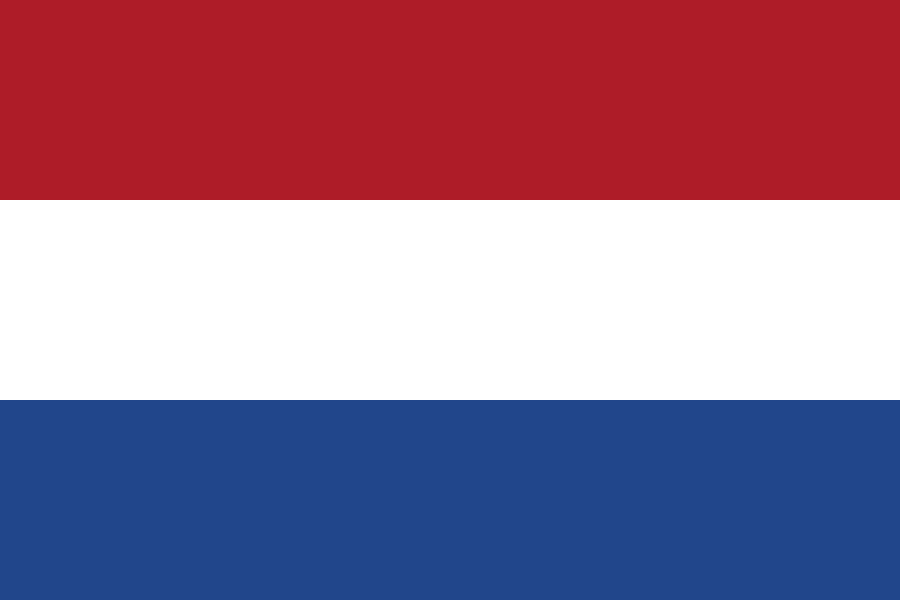 Netherlands
- Red, white and blue stripes in the same order. The plain tricolour, without arms, could be taken for the Dutch flag.
Coat of arms
The arms of Croatia