Italian
Language · official in 4 countries and territories
Standard Italian is literary Florentine: the vernacular Dante wrote in the early 14th century became the model for a written language all educated Italians could understand. Italian, italiano, is a Romance language of the Italo-Dalmatian group, and it is official in 4 countries on record: Italy, San Marino, Switzerland and Vatican City.

The language on record
- Own name
- italiano
- ISO 639-1
- IT
- ISO 639-3
- ITA
- Script
- Latin
- Family
- Romance
- Official in
- 4 countries
Where Italian is official
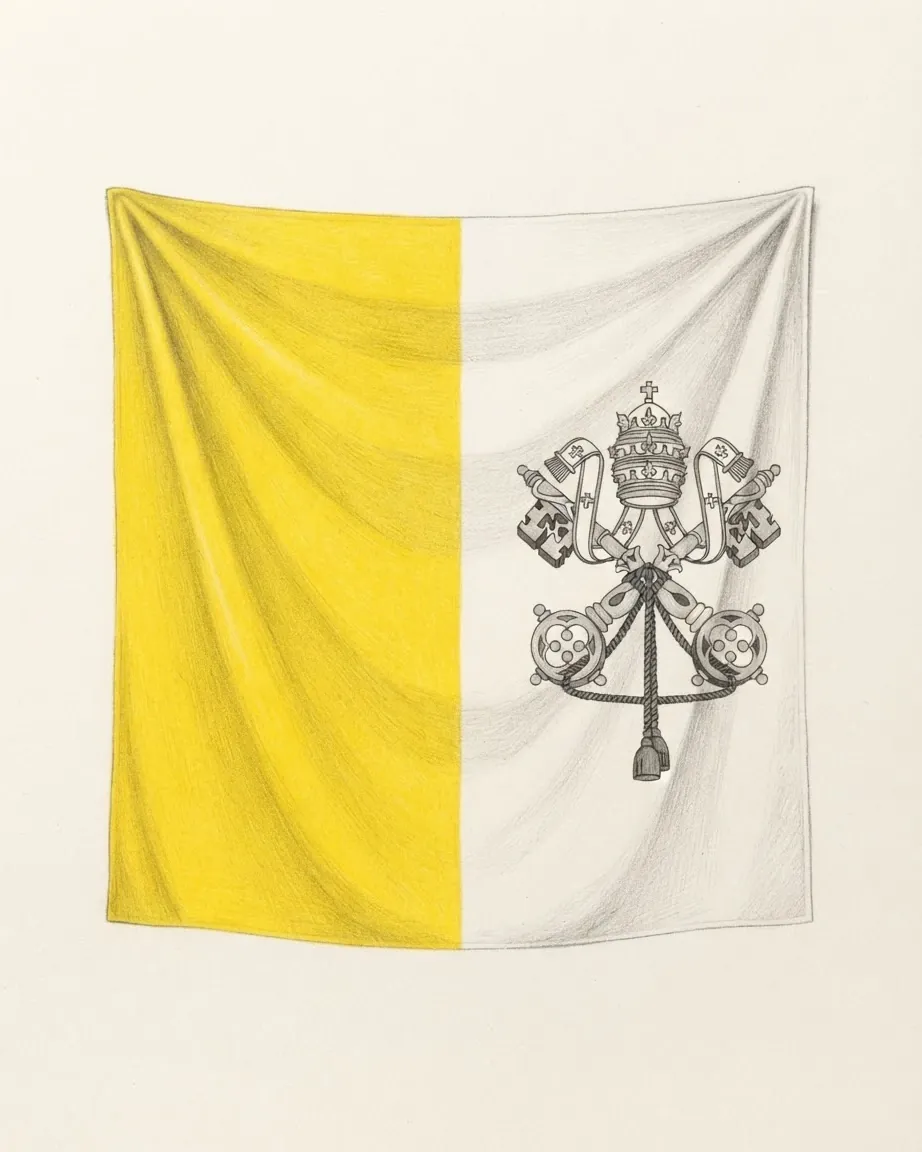
Italy and San Marino have Italian as their official language. Switzerland makes it official nationally and in the cantons of Ticino and Grisons, and Vatican City uses it in administration.
Official beside Italian
About Italian
Why Florentine became the standard
Dante's Commedia, written in his native Florentine and later given the title Divina by Boccaccio, was read across the peninsula. Florence's wealth and prestige, and the position of its speech between the northern and southern dialects, gave that choice weight. In the 16th century Pietro Bembo held up Petrarch as the model for vernacular writing, and the argument over what Italian should be, the questione della lingua, ran until the end of the 19th century. Bembo's side prevailed. The Accademia della Crusca was founded in Florence in 1582 and 1583, and the first Italian dictionary followed in 1612.
Alessandro Manzoni, a Milanese, wrote I promessi sposi in Florentine. In the preface to his 1840 edition he described the choice as rinsing his Milanese in the waters of the Arno, and the novel became the model for later Italian fiction.
How few Italians spoke Italian at unification
Not many. The linguist Tullio De Mauro estimated that only 2.5% of the population could speak standard Italian properly in 1861; Arrigo Castellani put the figure at 10%. Literacy rose from 25% in 1861 to 60% in 1911 and 78.1% in 1951, and by 1951, on De Mauro's count, 87% could speak Italian, although 63.5% still usually spoke their local language.
Those local languages are often called dialects, which is misleading. They grew from spoken Latin before Italian existed and are sister languages of the Tuscan that became the standard. Italian law recognises twelve groups as historical language minorities.
Where else Italian holds official standing
Switzerland makes Italian official nationally and in Ticino and Grisons, and Ticino is the only canton where it predominates. In Vatican City it is the language of administration and official documents, and the Holy See works in it. Beyond the list, Italian has official minority status in Croatia, Slovenia, Romania, Bosnia and Herzegovina and six municipalities of Brazil. It was the official language of Corsica until 1859, and of Nice, Savoy and Monaco until 1860.
Common questions
Questions about Italian
Why are the Italian dialects called sister languages?
Because they are not offshoots of standard Italian. Each grew from the spoken Latin of its own area before Italian existed, and some belong to different branches of Romance.
When did Italian stop being official in Monaco?
In 1860, when French replaced it after France annexed the surrounding County of Nice under the Treaty of Turin.
How many people speak Italian?
About 64 million people spoke it as a native language in 2024.