Latin
Language · official in 1 country
Latin never died in the usual sense: between the 6th and 9th centuries its spoken forms turned into the Romance languages, and its written form stayed the common language of European scholarship into the early 19th century. It began as the speech of the Latins of Latium, around Rome, and belongs to the Italic branch of Indo-European.

The language on record
- Own name
- Lingua latina
- ISO 639-1
- LA
- ISO 639-3
- LAT
- Script
- Latin
- Family
- Italic
- Official in
- 1 country
Where Latin is official
Vatican City alone, as seat of the Holy See. Hungary, Poland and Croatia once governed in Latin and dropped it long ago.
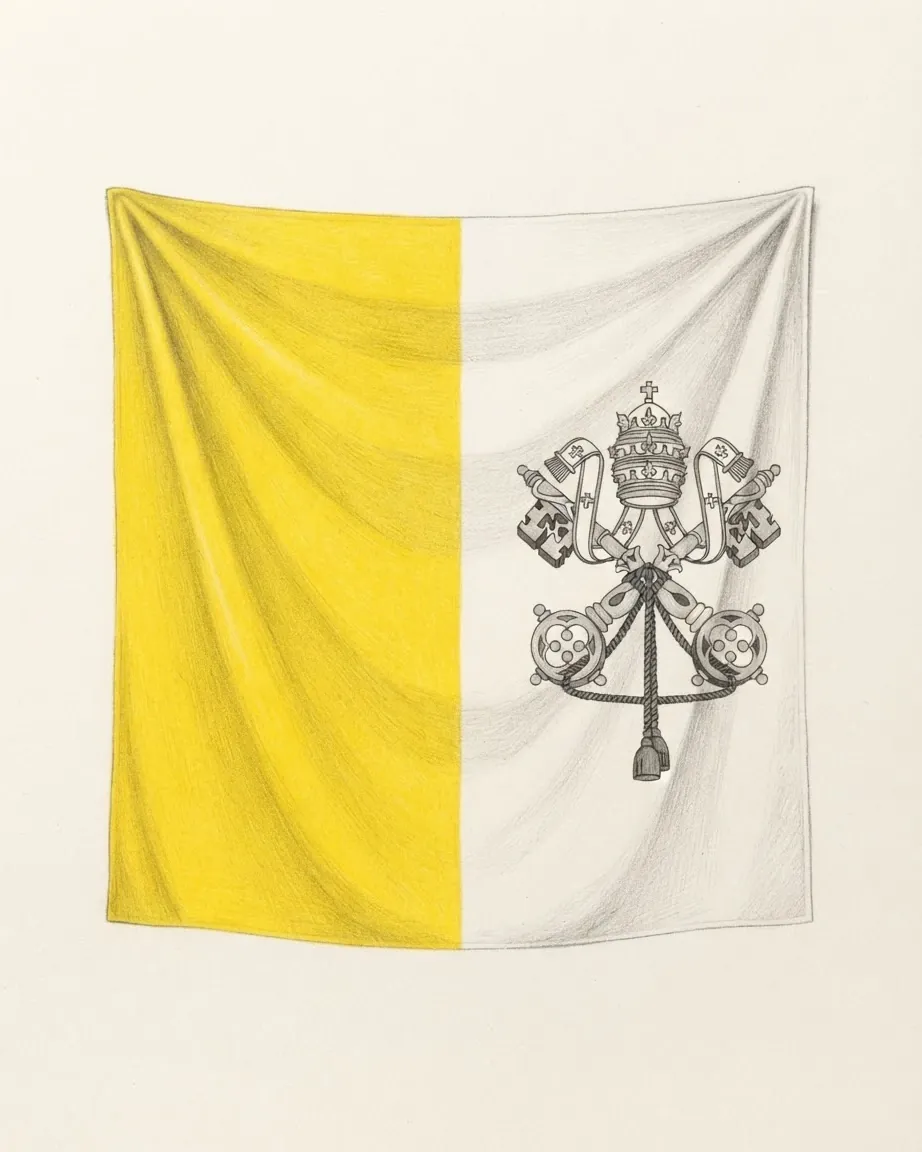
Official beside Latin
About Latin
How Latin turned into the Romance languages
By the late Roman Republic, Old Latin had become standardised Classical Latin. Beside it ran Vulgar Latin, the colloquial registers found in inscriptions and in the comedies of Plautus and Terence and the prose of Petronius. As the Republic and then the Empire expanded, Latin spread across the Italian peninsula and the Roman world, and the everyday Latin of each region slowly became a separate Romance language.
The written language went its own way. Late Latin is the literary form from the 3rd century AD, Medieval Latin the working language of Western and Catholic Europe from the 9th century to the Renaissance, and Renaissance Latin the classicising form behind Neo-Latin. People were taught to speak Latin as well as write it until the late 17th century. Contemporary Latin is mostly read.
Which states once governed in Latin
Latin was official in the Kingdom of Hungary from the 11th century until 1844, when Hungarian took its place. In the Kingdom of Poland and the Polish and Lithuanian Commonwealth it was recognised from the 10th to the 18th century and served in foreign relations. The Croatian Parliament worked in Latin from the 13th century to 1847, and its oldest surviving session records, from Zagreb, date from 19 April 1273. Croatian coins carried Latin on even years until the country adopted the euro on 1 January 2023.
What the Holy See still does in Latin
Ecclesiastical Latin is the official language of the Holy See and the language of the Roman Rite. It is the main language of the Acta Apostolicae Sedis, the Holy See's public journal, and the working language of the Roman Rota. Mass had to be said in Latin until the Second Vatican Council of 1962 to 1965 permitted the vernacular. Pontifical universities teach postgraduate canon law in Latin, and Vatican City has a cash machine that gives its instructions in Latin.
Common questions
Questions about Latin
Is Latin a dead language?
It is often called one, but it did not undergo language death: its spoken forms changed gradually into the Romance languages. It has no native speakers today.
Why is Latin official in Vatican City?
Ecclesiastical Latin is the official language of the Holy See and of the Roman Rite of the Catholic Church. The Holy See's journal and its court, the Roman Rota, both work in it.
Where did the Latin alphabet come from?
It derives directly from the Etruscan and Greek alphabets.