The flag of Türkiye
Türk bayrağı · since 1844
 Back to Türkiye
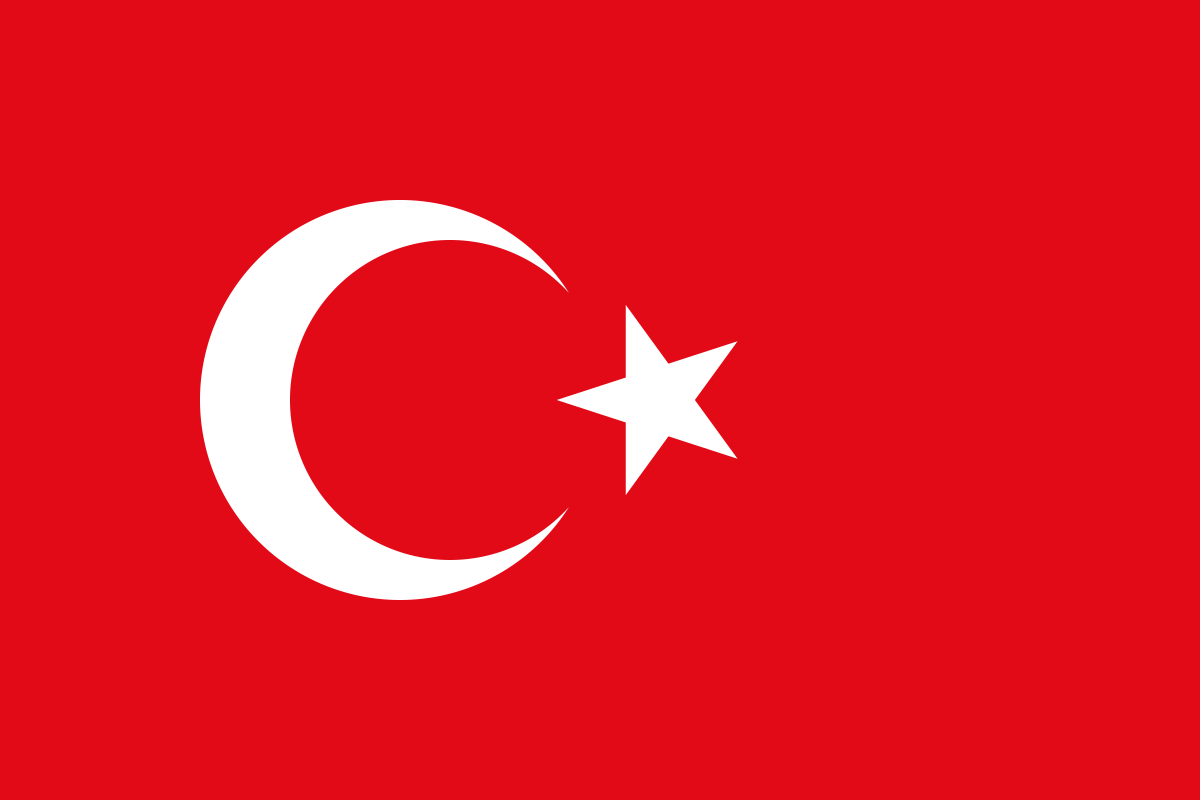
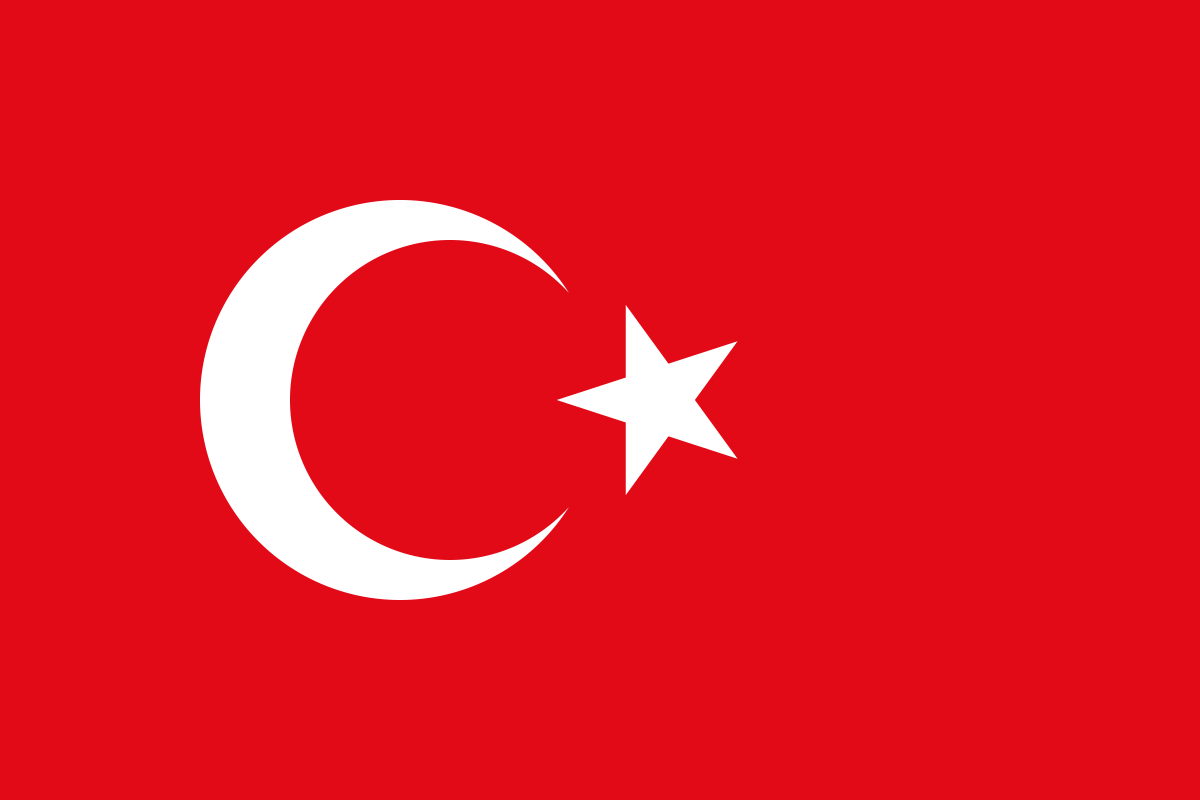
A red field with a white crescent and five-pointed star set towards the hoist. It is the Ottoman flag of 1844, kept unchanged by the Republic in 1923 and fixed in law, with its geometry, on 29 May 1936. It is known as al bayrak, the red flag, and al sancak, the red banner, in the national anthem.
At a glance
- Adopted
- 1936
- Proportion
- 2:3
- Colours
- Earlier flags
- 3
The colours
The colours of the flag of Türkiye, in the order it has them
- 0194.3%
Red
alField
- HEX
#E30A17- RGB
227 10 23- CMYK
0 90 80 5- Pantone
186 C- RAL
3028
- 025.7%
White
beyazCrescent, star and hoist hem
- HEX
#FFFFFF- RGB
255 255 255- CMYK
0 0 0 0
No law gives these codes. HEX and RGB are the colour this site draws the flag in; CMYK, Pantone and RAL are the values most often published for it.
Construction
How the flag is drawn
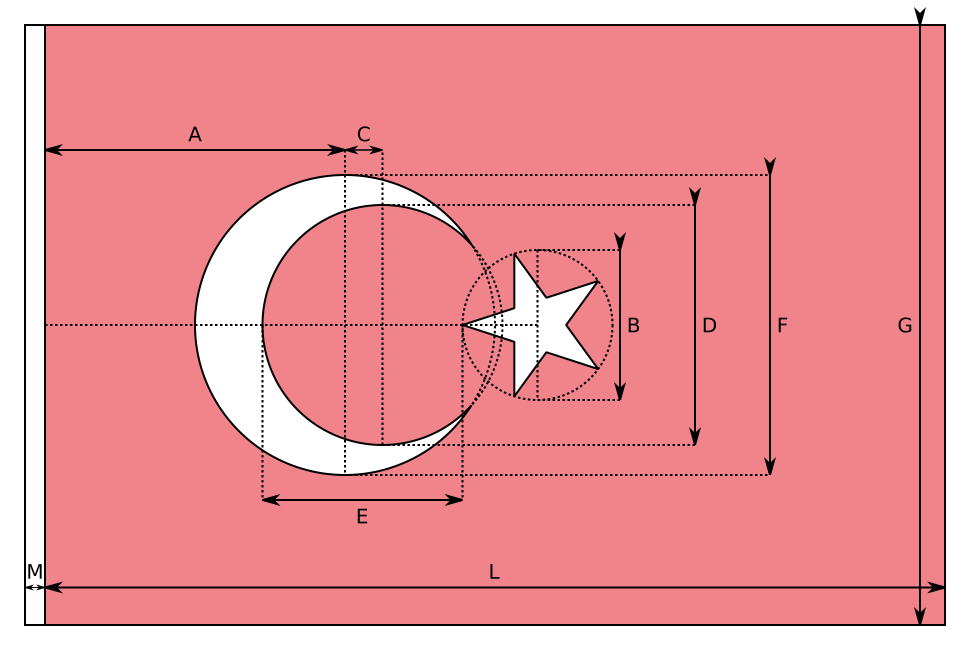
A red field with a white crescent opening towards the fly and a white five-pointed star beside it, both set left of centre, and a narrow white hem at the hoist.
- Crescent, outer circle
- Diameter 1/2 of the width G, its centre 1/2 G from the hoist hem
- Crescent, inner circle
- Diameter 2/5 G, its centre 1/16 G towards the fly from the outer centre
- Star
- Drawn in a circle of diameter 1/4 G, that circle 1/3 G from the inner circle of the crescent
- Length
- 1 1/2 G
- Hoist hem
- White, 1/30 G wide
- Star point
- The law's figures place the star's left point about 0.0154 G beyond the line joining the tips of the crescent
Other forms
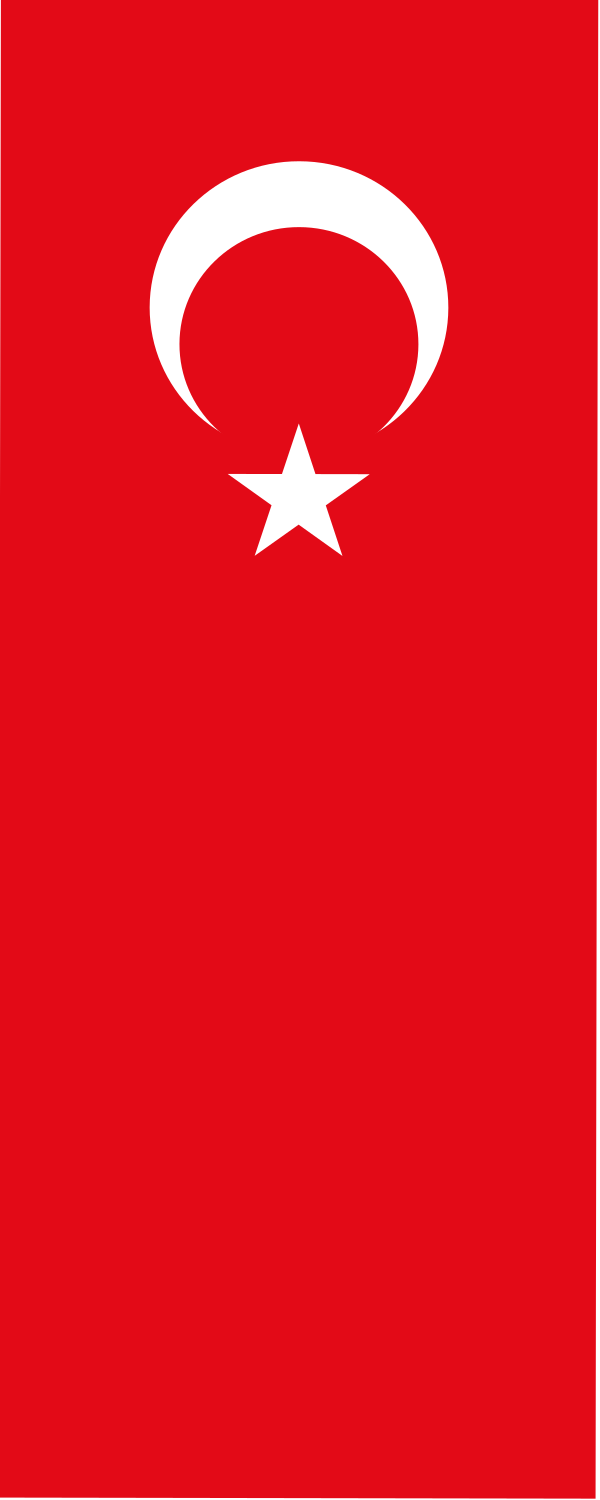
- Vertical flag
- The flag hung vertically, the crescent and star kept upright.
Meaning
What each part stands for
- Red
- By legend the blood of the fallen, in which a crescent moon and a star were reflected at midnight after the first Battle of Kosovo in 1389
- Eight-pointed star
- Victory, on the flag under Selim III
- Five-pointed star
- Humankind, the form taken in 1844
History
How the flag of Türkiye got here
- 1793
Crescent and eight-pointed star
1793 → 1844
The closest form to the present flag appears under Selim III: a white crescent with an eight-pointed star on red, replacing the green flags used until then.
- 1844
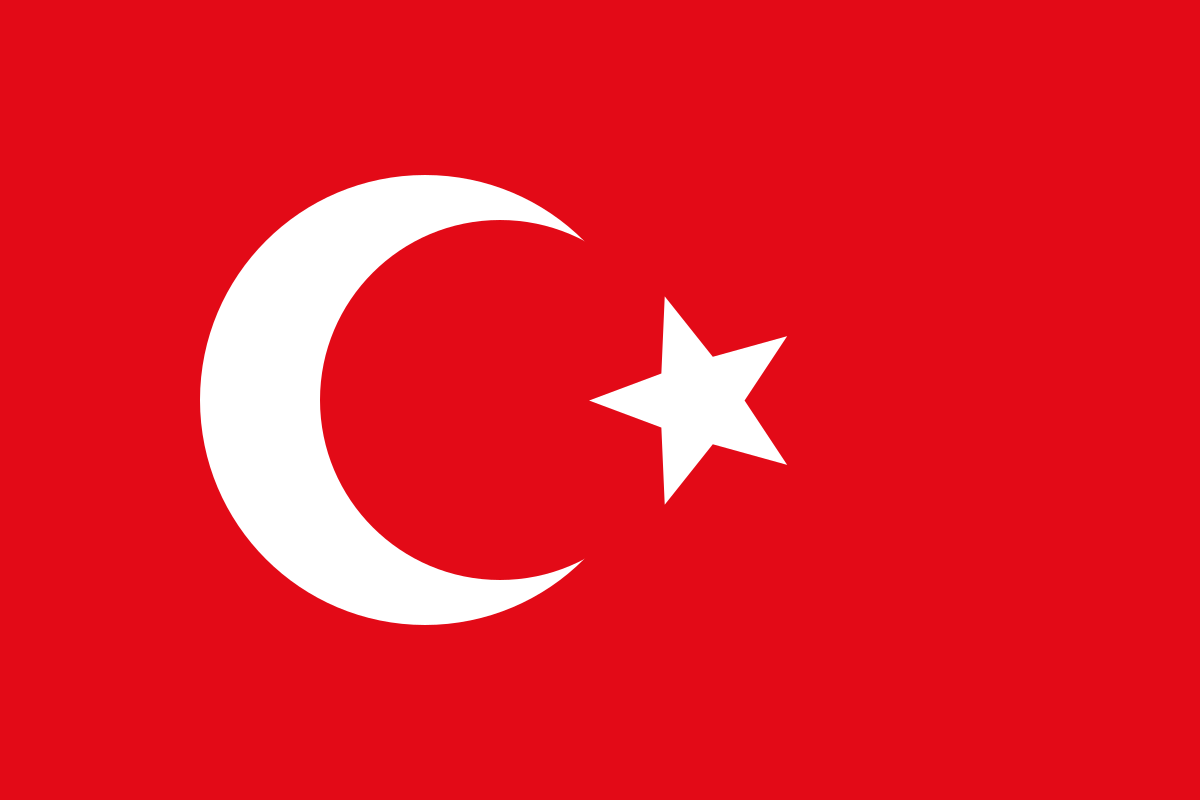
The Ottoman flag
1844 → 1923
Adopted during the Tanzimat reforms under Abdülmecid, when the star took its five points.
- 1923
The Republic
1923 → 29 May 1936
After the Republic was declared the new state kept the last Ottoman flag.
- 1936
The Turkish Flag LawIn use
29 May 1936 → today
Law No. 2994 fixed the shape of the flag and its proportions. Law No. 2893 of 1983 replaced it and gave the flag its final dimensions.
The law
What defines it, and who flies it
- 29 May 1936
Turkish Flag Law No. 2994
Made the Ottoman flag of 1844 the national flag of the Republic without alteration and set its measures.
- 28 July 1937
Turkish Flag Regulation No. 2/7175
How the flag is used. Supplemented by Regulation No. 11604/2 of 29 July 1939.
- 22 September 1983
Turkish Flag Law No. 2893
Replaced the 1936 law. Published on 24 September 1983 and in force six months later. Details of manufacture go to the mandatory Turkish Standard.
- 25 January 1985
Turkish Flag Regulation, Council of Ministers Decision No. 85/9034, Article 4
Sets the dimensions of the flag.
In use
Flown permanently at all public institutions and kept on officials' desks
Lowered to half-mast across the country on 10 November the day Mustafa Kemal Atatürk died, and on other days of mourning the Presidency sets
May not be used torn, patched, dirty, faded or creased, spread as a cover on tables or lecterns, placed where people sit or step, or worn as clothing
Violations of the law are punishable by one to three years in prison
Draped over the coffin at state and military funerals
Related flags
The flags it is confused with or comes from
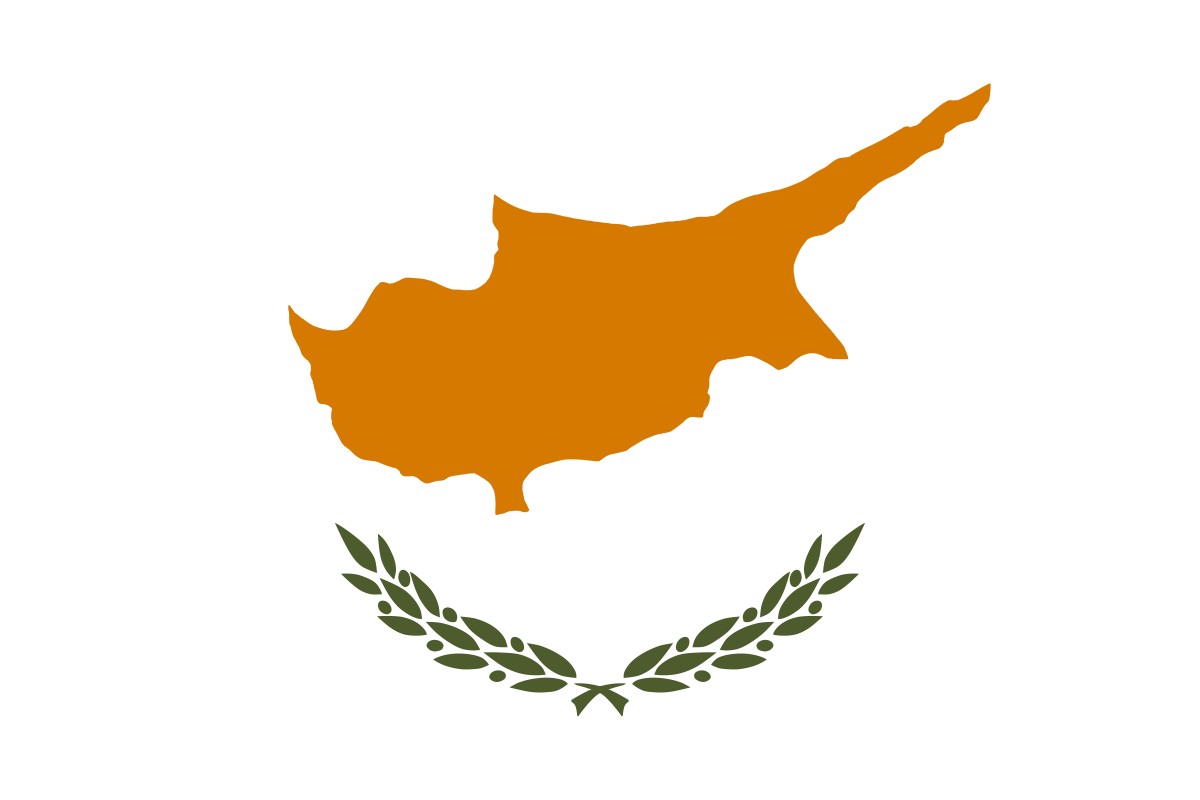 Cyprus
- The Constitution of Cyprus allows the Turkish flag to be flown beside the flag of Cyprus on holidays.