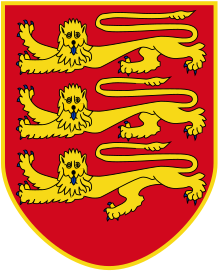
The flag of Jersey
Flag of Jersey · since 1981
 Back to Jersey
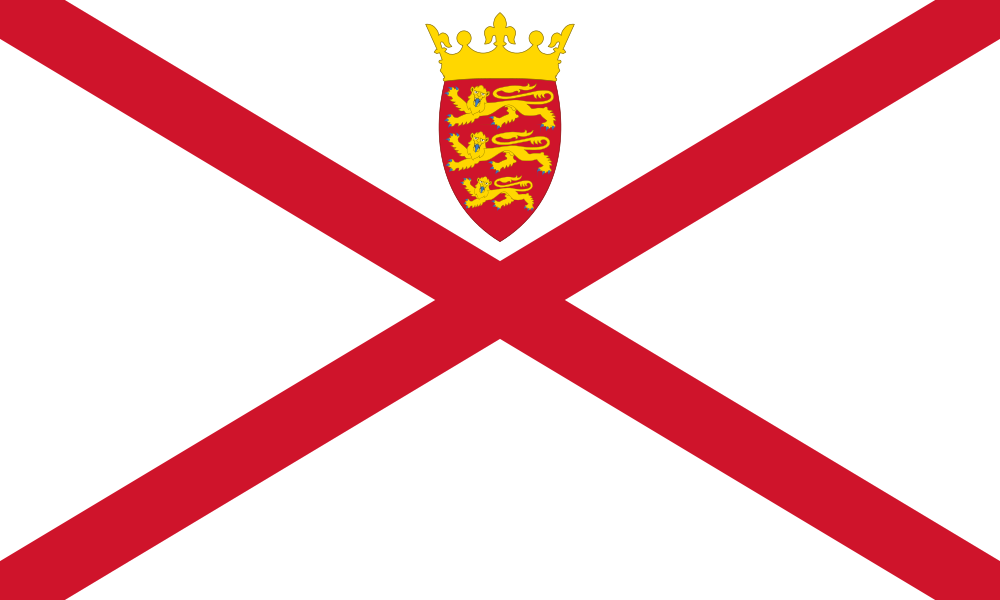
A red saltire on white, with the badge of Jersey, three gold leopards on red, in the upper quarter under a yellow Plantagenet crown. The plain saltire had been flown unofficially since at least the 1830s; the States of Jersey adopted the badge and crown on 12 June 1979, and the flag was first officially hoisted on 7 April 1981, the bicentenary of the Battle of Jersey. It is the first flag Jersey has adopted officially.
At a glance
- Adopted
- 1981
- Proportion
- 3:5
- Colours
- Earlier flags
- 1
The colours
The colours of the flag of Jersey, in the order it has them
- 0174.9%
White
The field
- HEX
#FFFFFF- RGB
255 255 255
- 0225.1%
Red
The saltire, the field of the shield
- HEX
#CF142B- RGB
207 20 43- CMYK
0 90 79 19- Pantone
186 C- RAL
3028
No law gives these codes. HEX and RGB are the colour this site draws the flag in; CMYK, Pantone and RAL are the values most often published for it.
Construction
How the flag is drawn
A white field with a red saltire running corner to corner; in the upper quarter, a red shield with three gold leopards, surmounted by a yellow Plantagenet crown.
- Saltire
- Red, running from corner to corner
- Badge
- The arms of Jersey, gules three lions passant guardant or, in the upper triangle between the arms of the saltire
- Crown
- The Plantagenet crown, of ancient type, above the shield. It is not part of the arms
- Other ratio
- A 2:3 version is also made
Other forms
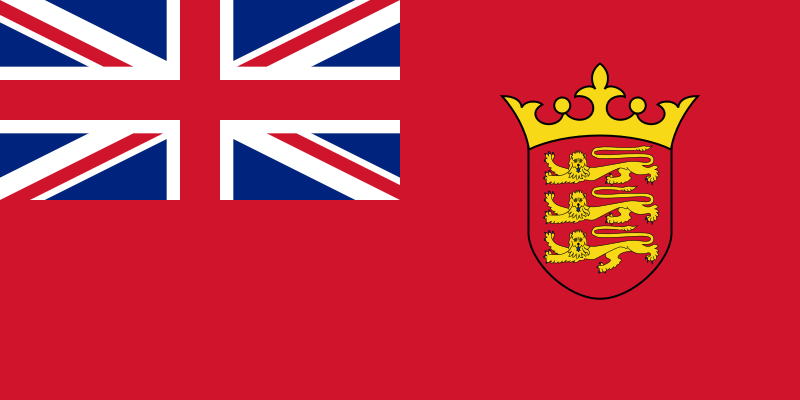
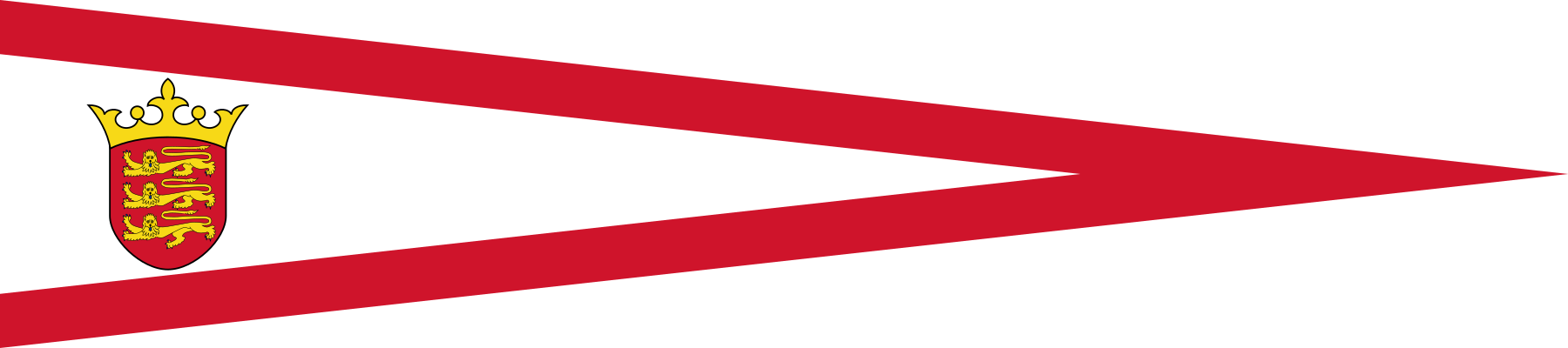
- Civil ensign
- The British Red Ensign with the badge and crown in the fly, approved by the Queen and then unanimously by the States on 23 June 2010. Optional for Jersey-registered vessels, which may still fly the plain Red Ensign.
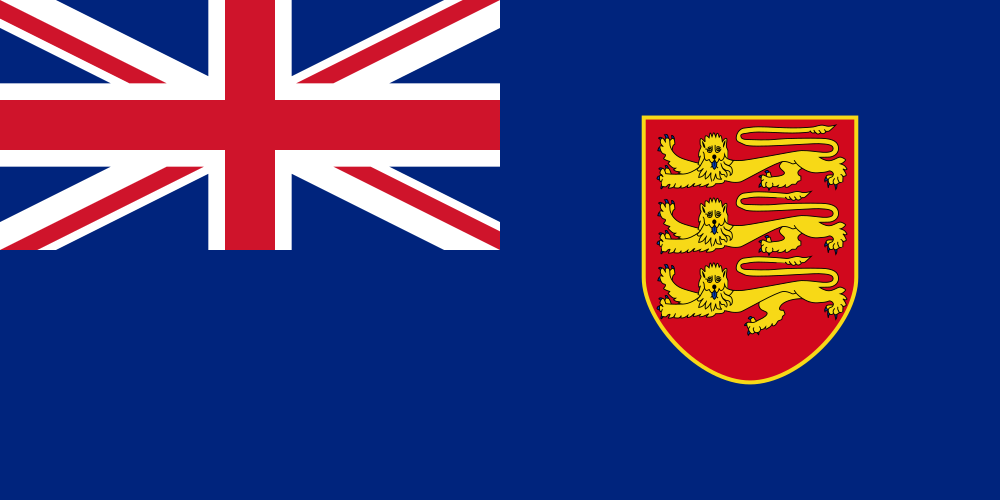
- Government ensign
- The Blue Ensign with the badge, without the crown, in the fly. Issued by warrant in March 1907 for the States-owned tug Duke of Normandy, and given a general warrant in 1997; worn by harbour and fishery protection vessels.
- Storm flag
- Designed in 2010 to withstand stormy weather, flown from the island's flagpoles when the standard flag is not, except on official flag days.
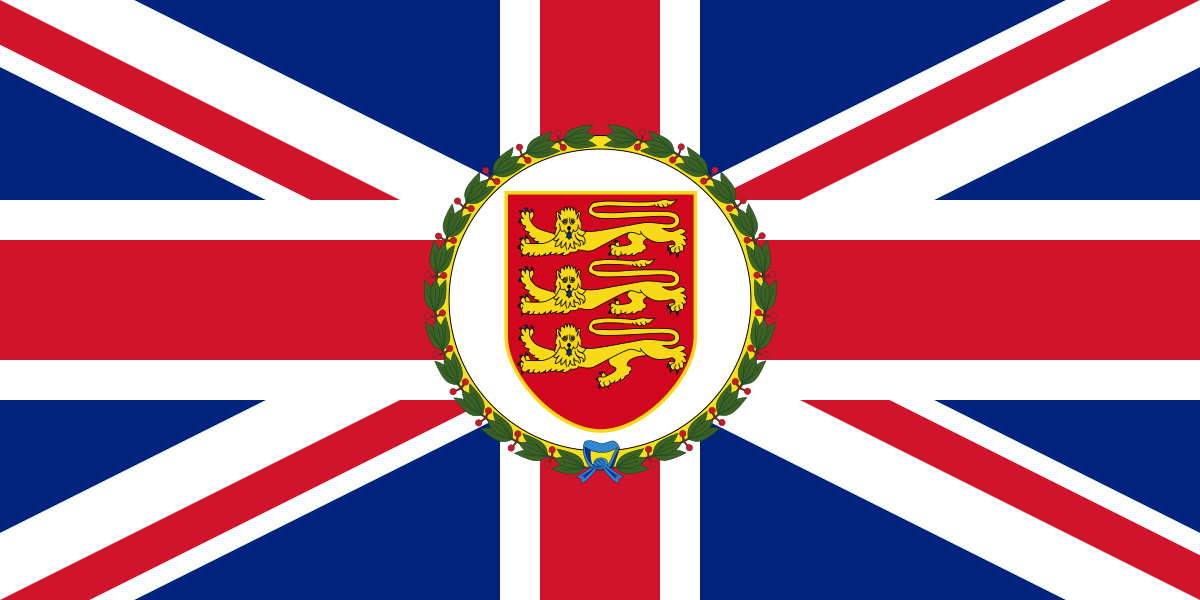
- Flag of the Lieutenant Governor
- The Union Flag with the shield of arms on a white disc within a garland at the centre.
Meaning
What each part stands for
- Red saltire
- Its origin is unknown. A letter of the Bailiff in 1906 says it signalled the neutrality of the Channel Islands in wars between England and France; it may be a variation of the St George's Cross
- Three leopards
- The arms of Jersey, the same as the royal arms of England, granted as a seal by Edward I
- Plantagenet crown
- The link between Jersey and the British Crown. It was added partly to distinguish the badge from the arms of England
History
How the flag of Jersey got here
- 1830
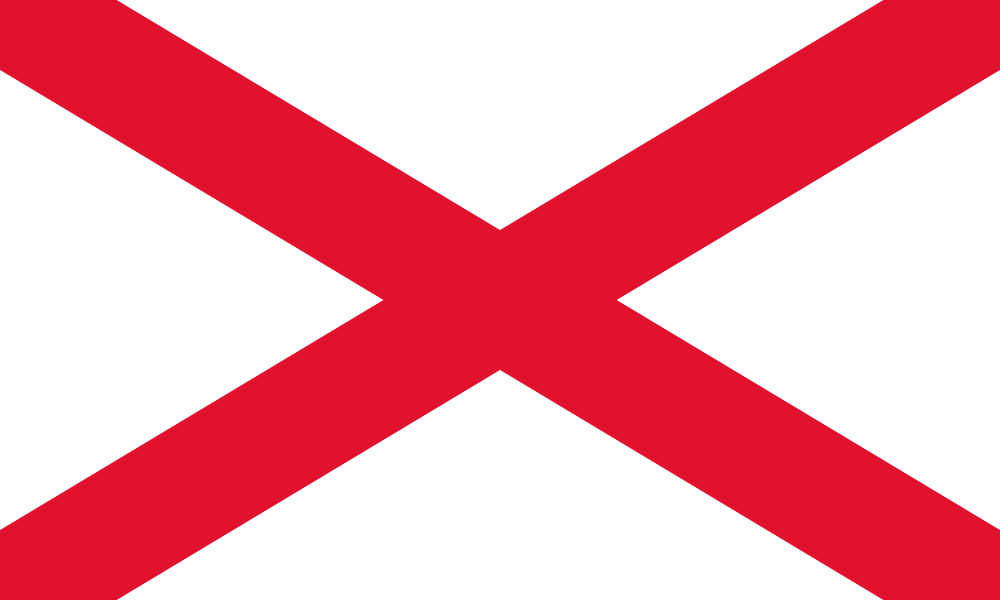
The plain saltire
1830 → 7 Apr 1981
A red saltire on white, used by custom and never proclaimed. French charts attributed it to Jersey in 1757, and Carington Bowles showed it as Jersey's flag in 1783; N. V. L. Rybot argued in 1951 that Bowles had misread the Dutch Ierse, Irish. It became more common during the German occupation, when the Union Flag could not be shown.
- 1981
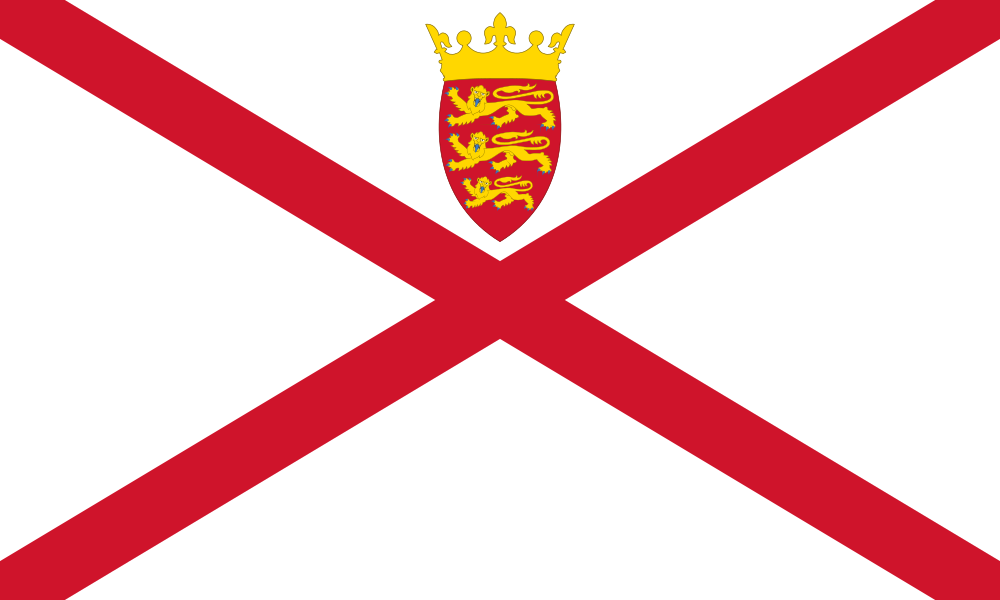
The saltire with the badgeIn use
7 Apr 1981 → today
The change began with the Silver Jubilee of 1977. Many felt the plain saltire was not distinctive, was confused with the Irish St Patrick's Cross and had been taken as an international maritime signal flag; others wanted to keep it, and a third group wanted a banner of the three leopards. The badge and crown were the compromise.
The law
What defines it, and who flies it
- 12 June 1979
Resolution of the States of Jersey
Adopted the new design, with two votes against.
- 10 December 1980
Royal proclamation of Elizabeth II
Proclaimed the flag for use in the Bailiwick of Jersey as the island's flag.
In use
The Union Flag may also be flown, but the flag of Jersey takes precedence
The Bailiff requests the flag on government buildings on official flag days, when it flies from the seat of the judiciary and legislature; individuals are encouraged to do the same
The pre-1981 plain saltire is still flown in the re-enactments of Liberation Day on 9 May
Related flags
The flags it is confused with or comes from
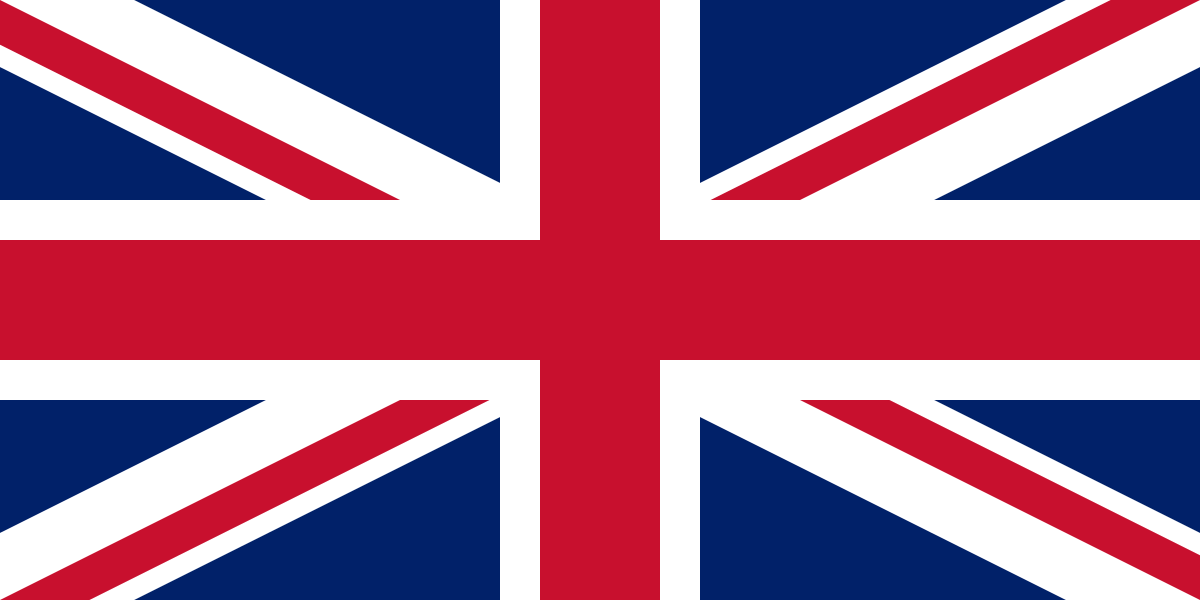 United Kingdom
- The plain red saltire is the St Patrick's Cross of the Union Flag, and the three leopards are the royal arms of England.
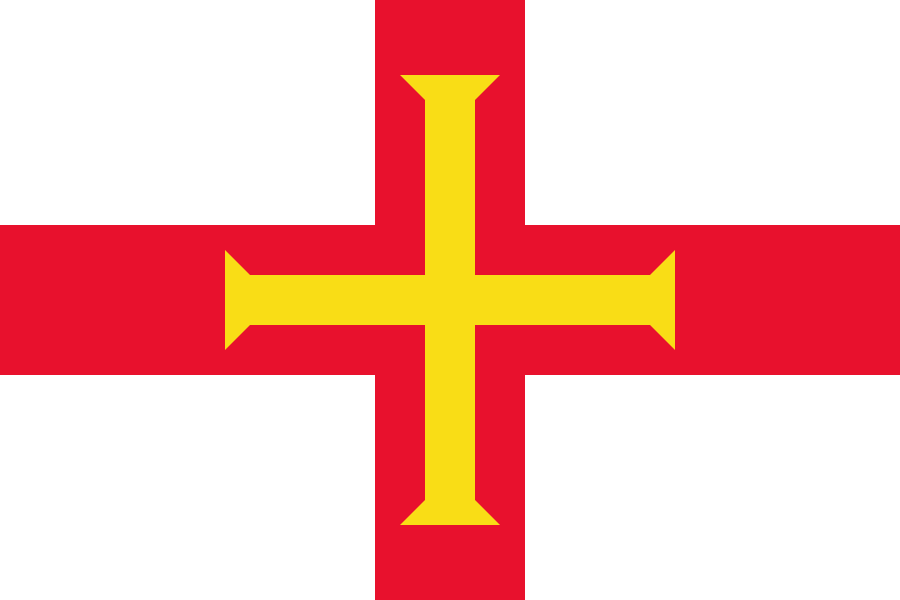 Guernsey
- The other Channel Island bailiwick, also granted arms by Edward I.
Coat of arms
The arms of Jersey